 Posted: 06/24/2014 | June 24th, 2014
There are a lot of ways to fund your travels: we’ve met readers who’ve taken odd jobs, worked on yachts, volunteered, saved for their trip, and more. What I love about reader success stories is that they highlight the diversity of ways to make travel a reality — it doesn’t always have to be “have a good job, make lots of money, save, travel.” All you really need is the will. Plus the stories are great motivation!
Today, we’re talking to Emily, a 25-year-old Canadian who moved to South Korea with her boyfriend to teach English. South Korea pays English teachers really well, and she used her earnings to fund her world travels.
Nomadic Matt: Tell everyone about yourself!
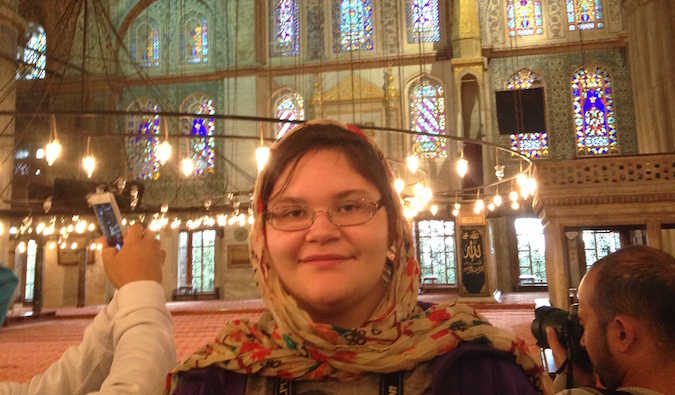
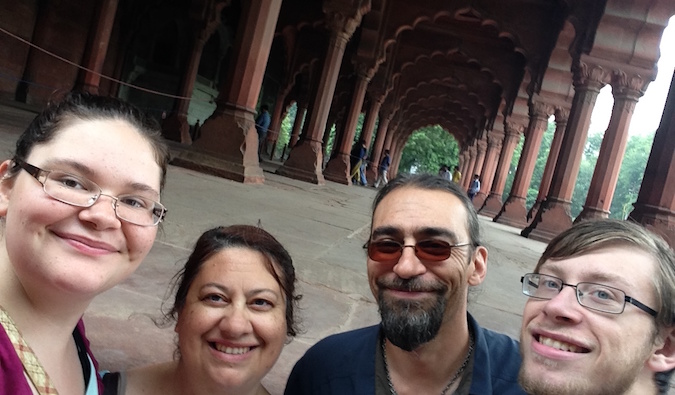
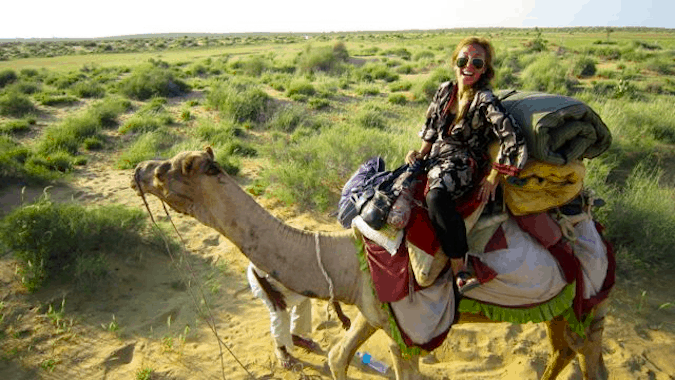
Emily: After I finished university in 2012, I moved to South Korea with my boyfriend to teach English. Although my educational background wasn’t in teaching and I don’t want to be a teacher my entire life, I knew I wanted to travel and that teaching jobs pay well. On August 31, 2012, I left my hometown of Toronto, Canada, and, after finishing teaching in South Korea in September 2013, I traveled through Asia, came home for a bit, and then left to travel again for four months. I recently finished my trip and am heading back to South Korea to work and save again.
What inspired you to do this?
I’m a huge believer in living life to the fullest and doing what makes you happy. I’d always known I wanted to teach English overseas so I could travel more (it pays well), and after moving abroad and realizing how easy it was to save while working, I decided to travel long-term after my contract was up. For me, it was never a big decision; it just kind of happened. I’ve been fortunate enough to have a great support network that has encouraged me to pursue my travel dreams and like-minded friends who have the same desire to travel as me (and with me!).
How did you save for your initial trip?
I lived with my parents to keep my costs low and saved at least 20% of my paycheck (I worked at a nonprofit for financial literacy), but it wasn’t until I actually got to South Korea and began working full-time that I realized how far my money would actually take me. While living in Korea I was able to save over 70% of my paycheck! (Matt says: South Korea is cheap and teaching jobs there pay well!)
Although I didn’t make a lot of money by North American standards, because the cost of living in Korea was so low and I was mindful of my spending, I was able to save close to $14,000 by the end of my contract.
What advice about saving money do you have for others?
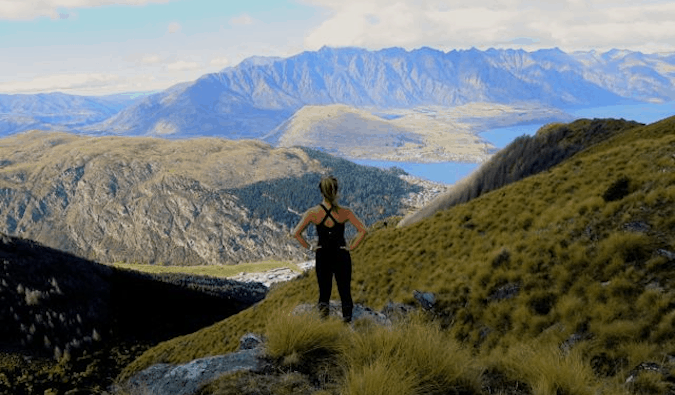
Research, research, research. One of the biggest mistakes I made was not looking into the activities I wanted to do in certain countries ahead of time, and determining how much things were going to cost. Whereas activities and excursions in Southeast Asia probably won’t break your bank, skydiving in New Zealand and sailing in the Whitsundays in Australia will. It’s important to think ahead and get a rough idea of how much things are going to cost.
I’m not saying you need to plan out your whole itinerary to a T, but knowing approximately how much the big activities will cost makes a huge difference. For example, one of the biggest mistakes was not pricing out the cost of car rentals in New Zealand. My friend and I were set on getting a camper van, but we never actually researched how much it was going to cost to fill up the tank — the $100 a day for gas was definitely a rude awakening! We also didn’t think through the campsite fees to park our vehicle, which were usually $20 per night. I ended up over budget by $1,500!
Had I taken the time to crunch the numbers earlier, I would’ve done things differently, such as planning my trip around car relocation postings on TransferCar, a car relocation service (you drive for free). Although this would have required a lot more preplanning, it would’ve saved me hundreds of dollars.
Planning is definitely important. You need to know what you are getting in to. How did you manage to stay close to being on budget?
I found the one thing that helped me stay on track was keeping a running tally of how much I spent every day. I marked down everything – hostels, food, and drinks, even $2 souvenir purchases. I then plugged everything into a spreadsheet in Excel that I set up with different spending columns, such as “food,” “accommodation,” and “entertainment.” (If you don’t have access to a computer you could easily do this in a notebook.) Visually looking at the numbers is a great way to see exactly where your money is going, and also helps identify where you can cut costs.
Also, sign up for a travel rewards card! I’m all about getting the biggest bang for my buck, and pay tribute to my rewards credit card and my airline miles reward card for helping me travel so extensively (miles equal free flights).

What made you decide to teach in Korea?
For years I’d known I wanted to teach English overseas, the primary reason being to travel. Originally I wanted to teach in China to improve my Mandarin skills and immerse myself more in my Chinese heritage, but after doing some research, I realized teaching in South Korea not only paid better but also came with a bunch of other perks that no other country offered (i.e., housing, round-trip airfare, pension, bonus pay, health insurance, and good vacation time). The final push was when my boyfriend realized he needed better teaching experience to get into his graduate teaching program. South Korea seemed like the best option for both of us because I could save money for traveling, and he could get the teaching experience he needed.
What was your experience like? Was it hard to find a job?
Teaching in South Korea was hands-down the best decision I’ve ever made. Although I don’t want to be a teacher, the soft skills I gained at my local middle school were unlike anything I ever would’ve gotten sitting in a lecture hall or working in a traditional corporate environment. I had to teach 30-40+ students every day and was constantly looking for new, creative ways to keep them engaged despite the language barrier. Korean society is very, very different from Canada, so overcoming the cultural differences was a life lesson in itself. I also made lifelong friends, got to travel around Korea extensively, and now have a life experience on my résumé that sets me apart from the competition.
In terms of finding a job, it actually wasn’t that difficult. I went through a North American recruiter company called Teach Away that specializes in placing people in overseas teaching jobs. After filling out a detailed application and making it through the prescreening process, my recruiter helped me find my job — and at no cost to me (the entire process was free). I ended up working for a public Korean school in Incheon, South Korea, but many people also work for “hagwons” (private academies). It just depends on your preference, your previous teaching experience, and where you’d like to be geographically placed.
Matt’s note: If you’d like to teach English around the world, here’s a great resource for you.
What advice would you have for others trying to do what you did?
If you’re trying to find a teaching job overseas, my biggest tip would be to take your time and do thorough research. I’ve heard horror stories of people applying to the first company they find and not taking the time to do a bit of background checking and comparing different recruiters. Dedicating a few hours to finding a good recruiter or company, and figuring out what country you want to teach in and what type of teaching you want to do takes time but is worth the effort.
What was the hardest part about travel?
The lack of privacy has been a big point of contention for me. Four months is the longest I’ve ever traveled, and not having my own personal space was something I really struggled with. Sometimes I wasn’t in the mood to make small talk, make dinner in a crowded hostel kitchen, or listen to people snore all night. What’s saved me was occasionally switching up the accommodation (or room style) and not staying in a dorm. I was really lucky, and throughout my recent travels was able to stay with friends at least once a month. I was also fortunate enough to have a travel buddy for 95% of my trip, so occasionally splurging on a private room was affordable.
I recommend taking occasional “lazy days” and dedicating an entire day to just relaxing in a café or park, or even at your hostel. Don’t feel guilty about taking time off from traveling. Traveling is a full-time job and can get exhausting. Yes, it’s definitely a great job, but there’s no denying it can be draining. Recently I was visiting a friend in Scotland, and one day all we did was watch TV and relax — I was in heaven. Downtime is essential; don’t let yourself feel guilty for wanting to take a day off, especially if you aren’t in the mood to do sightseeing.
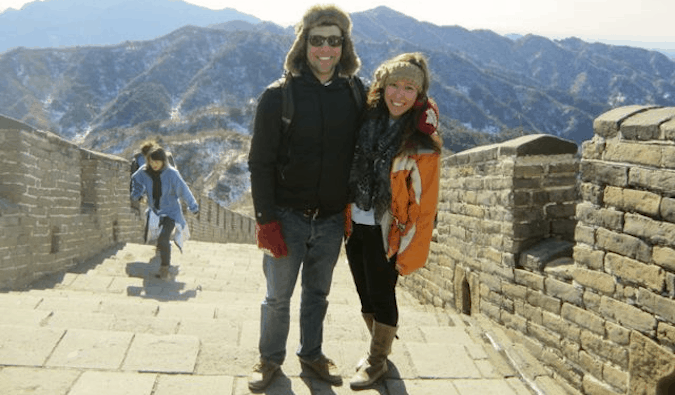
What was it like traveling with your boyfriend? Did you have any “I’m going to kill you” moments?
No matter who you’re traveling with, there will always be moments where you need some space. Lucky for me though, the only fights my boyfriend and I ever had revolved around food and dining out with friends. I myself am not a red meat–eater, so finding a restaurant that satisfied all palates — especially in Korea, where they eat primarily beef — was often an issue. Although we’ve tried to learn from our past arguments, blowups still happened from time to time. We did our best to be respectful of each other’s dietary wants, but when you’re hungry, sometimes a little argument is inevitable. Lucky for us, we were very good at letting things go and didn’t ever let it ruin our experience.
Other than that though, traveling with my boyfriend was amazing. By far one of the biggest highlights of all my travels was when I took my boyfriend throughout China. Although most of the destinations weren’t new for me, it was so special to show him my Chinese roots and watch him fall in love with the country.
Any parting advice?
Although I’m all for saving money and budgeting while traveling, I think it’s really important to strike a balance between enjoying your trip and actually doing things, versus penny pinching. Obviously this varies depending on the length of your trip and your budget, but at the end of the day, you don’t hop on a plane to eat PB & J every meal and sit in a dorm room. Trying new food, sightseeing, and going out with your new friends are essential components of the backpacking experience, and something not to be missed out on.
Become the Next Success Story
One of my favorite parts about this job is hearing people’s travel stories. They inspire me, but more importantly, they also inspire you. I travel a certain way, but there are many ways to fund your trips and travel the world, and I hope these stories show you that there is more than one way to travel and that is within your grasp to reach your travel goals. Here are more examples of people who found work overseas to fund their trips:
We all come from different places, but we all have one thing in common:
We all want to travel more.
Make today the day you take one step closer to traveling — whether it is buying a guidebook, booking a hostel, creating an itinerary, or going all the way and buying a plane ticket.
Remember, tomorrow may never come so don’t wait!
Want More Information on Teaching?
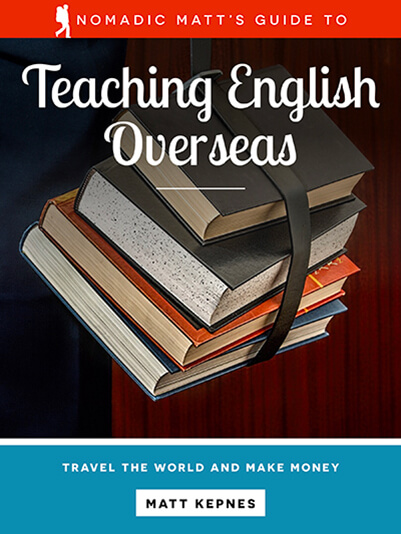 I wrote an in-depth, 186-page guide to teaching overseas. This book will help show you those tricks and eliminate your stress, fear, and anxiety about finding a job. It will save you weeks of online research and give you the most accurate and updated information you need. It is written by teachers for teachers, featuring dozens of interviews with teachers from around the world sharing their experiences, as well as job recruiters to help you cinch your interview and get hired.