I first met Staci when she came to one of my meet-ups in NYC. She wanted to thank me for helping her travel the world. See, for her, it’s not as simple as just getting on a plane and going somewhere. Staci was born with a rare genetic condition that has left her deaf, with fused fingers, jaws, and a host of other medical issues. Determined to not sit on the sidelines, Staci has worked hard to overcome the obstacles before her so that she can make her travel dreams a reality. So, without further ado, here’s Staci!
Nomadic Matt: Hi Staci! Tell us about yourself!
Staci: My name is Staci and I’m 28 years old. I happen to have Nager syndrome, a super rare genetic condition wherein I was born with fused jaws, fused elbows, four fingers, and deafness, to name some fun facts about it. I’ve had many surgeries to correct a lot of issues and increase my quality of life.
I was born in Seattle and moved to an incredibly rural town in New York when I was ten. I’ve always had an interest in languages and other cultures. Even though I’m deaf, I easily excelled in Spanish past my third-grade hearing classmates because I found it fun and challenging. My other loves are history and art and yes, they got combined into a bachelor’s in art history and museum professions.
I like anything that challenges me, and I hate being stagnant.
How did you get into travel?
When I was growing up, my family made various trips around the US, but it wasn’t until my senior year at a small high school for the deaf that I went to Italy and Greece with the senior and junior classes. There, I finally experienced what it’s like to travel, even though I felt stifled by the chaperones and the itinerary. But it gave me a taste, and I wanted more. I became addicted to the idea of freedom.
In 2010, I was supposed to go to Montreal with a friend for spring break, but she had to drop out. I went ahead anyway and experienced the freedom of solo travel: I could do whatever I wanted without any set plans. I loved it.
I took off for Germany, in March 2011, which kick-started my months-long trip through Europe. I didn’t tell my family for a few weeks, because I didn’t want to be discouraged and made to stay home. I explored Germany, Austria, Slovenia, Croatia, Bosnia, and Serbia (I easily fell in love with Belgrade and stayed there for two months) until I had to return home in August due to a broken arm.
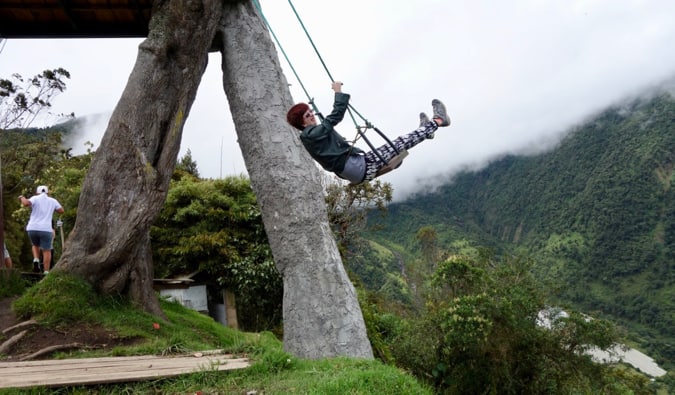
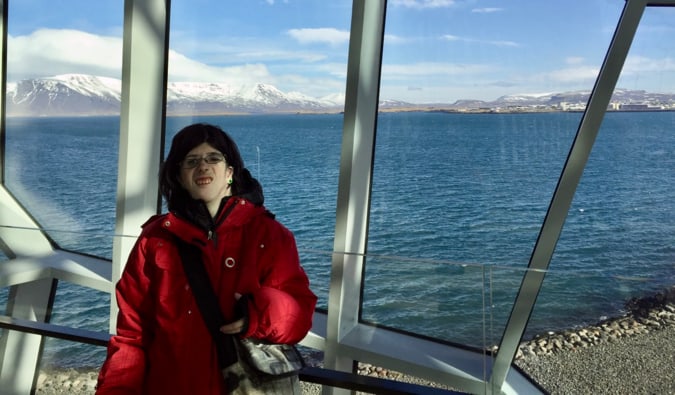
In 2012, I went to Nicaragua for spring break. It was my first taste of Latin America, and I knew I wanted to learn more Spanish. Then in 2013 and 2014, I went to Mexico, which quickly became my favorite country—one that I want to move to in the future. I felt connected there and I could be as independent as I wished. It was also easy to get more of my special food at a large grocery store, even if it was expensive compared to local food. In 2015, I headed to Ecuador on spring break, and in 2016, I found a cheap flight to Iceland—seeing the northern lights was easily the highlight of my week there.
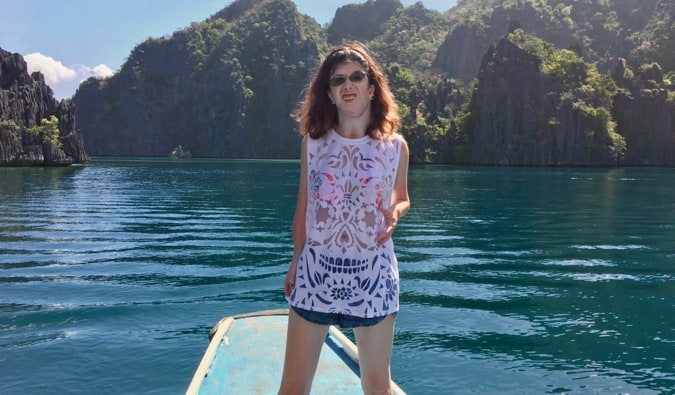
2017 so far has featured a birthday trip to the Philippines, my first Asian country. Recently I spent a month in Mexico visiting my friends and hanging out like a local.
What’s been the biggest lesson so far?
Budgeting. I had zero ideas about budgeting on my first huge trip and overspent so much. I have gotten better with it, but I still struggle. For example, my mom had to help me with a $130 domestic flight in Iceland because I was so horrible at budgeting.
Another struggle is overpacking. Even if I manage to pack a just week’s worth of clothes, it’s too much, because I have to also bring many bottles of my special food.
How did you fix these mistakes? How did you get better at them?
Well, as for budgeting, I learned that I need more money than I thought, so I saved more. Now I also tend to focus on places that are cheap for the most part, and if my original plans fall through, I have backup plans so I don’t have to spend unexpectedly or borrow money. I have gotten better with money, but I do still slip up.
When it comes to packing, I try my best to pack only 3-4 bottoms and several dresses, but I still have a tendency to pack too many shirts. Being short in height, a lot of my clothes are on the small side, which it makes it easy to overpack my backpack. I do try to pack two pairs of shoes max, besides flip-flops, but my favorite waterproof Dr. Martens shoes definitely take up a lot of room when I’m not wearing them. I stuff socks into my shoes, and I always roll my clothes.
Since I do have a habit of going shopping while traveling, I try to not pack too much, only to end up with an even heavier backpack when I return. When I was in Europe the first time, I shipped things home because my backpack was getting heavy with stuff I got for my family and with cold-weather clothes I no longer needed in warmer weather. Now, I basically layer as much as I can if heading to a cooler place.
What resources are out there for deaf travelers?
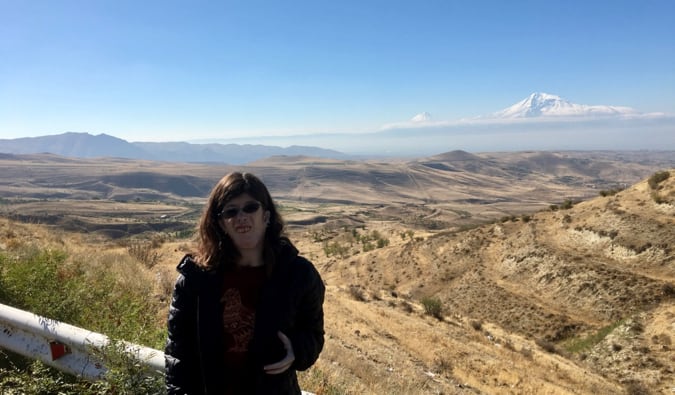
Seek the World by Calvin Young is a good resource for deaf travelers since he is deaf himself. He has a very active Facebook page, and he shows the different finger-spellings and signs of various countries. He also links to other helpful resources that encourage more deaf people to travel.
Another option is No Barriers by Joel Barish. He posts vlogs in which he meets deaf locals around the world and asks them about their jobs and lives. He’s also the founder of DeafNation, which is focused on deaf “language, culture, and pride.”
How do you communicate if sign language is different in every other language?
I always have my iPhone with me, but I also carry my notepad in my purse when using a phone is not ideal (safety or it not being charged). There’s also international sign language, but I don’t know it, although I do know a little bit of Mexican Sign Language. I also used to be able to speak, but a medical complication happened so at this moment, speaking is not possible. I am the worst at lip-reading, and even though I wear hearing aids, I just prefer to type things out.
You mentioned you have a fused jaw so it’s hard to eat. Do you only travel for short periods?How do you get around your medical needs when you travel? Do you just carry everything with you?
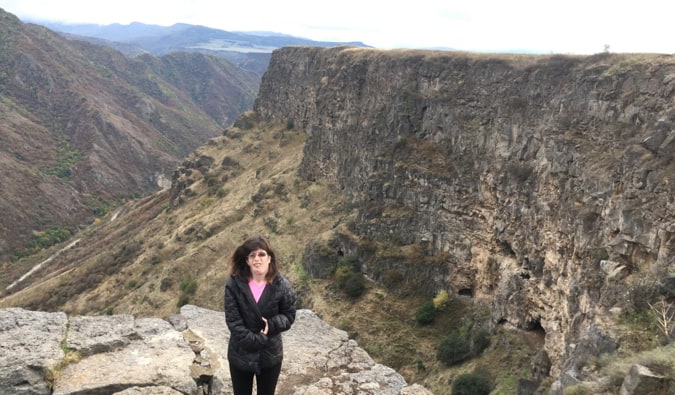
Nager syndrome makes eating difficult. I recently had surgery to open my jaws, and it was the first successful surgery to do that; however I still can’t eat solid food because I need therapy to get those unused muscles to work and other fun medical stuff.
All the challenges I faced were related to my food. Running out is easy to do, and I can’t just bring five boxes or 16 bottles since I travel solo and it would exceed the check-in weight limit for flights and make packing impossible for me. Everywhere in Europe, and even in some other countries, I cannot find my special food and I’m left without many options for nutrition due to my fused jaws. Soups cannot fill me up, and smoothies, milkshakes, etc. are not a solution either, because it’s too easy to lose weight, which is a very bad thing for me. It’s also extremely easy for me to choke on a small pieces of food, so I can’t just eat peas, rice, or corn, and I don’t like mashed potatoes.
My food is for nutrition purposes, and I drink about 7+ bottles a day to fill me up. Traveling for several months at a time depends on if I’m able to get my food or not. I cannot find Ensure Plus anywhere in Europe, whether at pharmacies or large grocery stores, so forget about my staying there long-term. At least in Mexico, I could find it easily and therefore can stay there for several months if I wish, but it’s expensive and the cost eats into my budget.
As for taking my food with me when I fly, I always hold up the TSA line because they need to test my food—and on occasion open a bottle (then I drink that bottle at my gate). I always carry a doctor’s note to show to the agents, and I try to be as pleasant as I can to make everything go smoother and quicker. When I had a layover in Taipei on the way to the Philippines, security and customs were more intense with my food, and I was nervous that they would not allow me to bring it with me even though I showed my doctor’s note, but luckily I had no issues.
I do carry everything with me when I travel. I love that international flights allow free checked bags so I take advantage of that, but even so, I often have no room for food in my checked backpack. So my carry-on bags are incredibly heavy with the many bottles I bring. If I do manage to pack food in my checked backpack, even when they’re stuffed in a garbage bag to prevent food from spilling all over my things, I always find the garbage bag ripped apart because of TSA inspections to make sure everything is OK.
Is there a big community of travelers with your condition that you can get support and information from?
Well, since my condition is incredibly rare and requires so many surgeries to improve our lives, it’s not a large group, probably hundreds of people. However, every two years, the Foundation for Nager and Miller Syndrome hosts a conference somewhere in America. I do not go to these much, because usually I’m one of very few who use ASL (or the only one), and often it’s hard to relate to others whose experiences are very different from mine. There’s also a private, international Facebook group for people with Nager syndrome and their family members, but since it’s a private group, I’m not going to share it because we don’t want bullying.
What have been some of your favorite experiences?
One of my favorite experiences was seeing the northern lights in Iceland. That week, it rained pretty much every day and snowed one day. But on my last day there, it was sunny for once and that night was clear, so I was able to see them. My other favorite experience was the Philippines, because it was an amazing country, even if I couldn’t stand the heat. I got to see tarsiers [a kind of primate] and the Chocolate Hills, and swam in the comfortable waters of Palawan.
But my number one favorite thing to do is to travel to many amazing places and learn about them and their culture. I’m a huge history and art nerd, and I get so excited when I visit historical sites and museums such as El Tajín, Teotihuacán, Museo Nacional de Antropología, and Museo El Tamayo in Mexico, or El Museo de Arte Precolombino Casa del Alabado, a museum dedicated to pre-Columbian history in Quito, Ecuador.
What’s your number one piece of advice for new travelers?
Make the effort to meet locals on your travels. Couchsurfing and Airbnb are my favorite ways to meet locals when I travel. It’s awesome to learn about the culture of a place you visit. But again, I’m a huge art and history nerd and so am incredibly interested in learning about cultures and languages. Even though I’m deaf, I’ve never had any problems communicating, and for some odd reason, even though I’m shy as hell, I’m more outgoing and willing to chat it up with people outside of America.
Become the Next Success Story
One of my favorite parts about this job is hearing people’s travel stories. They inspire me, but more importantly, they also inspire you. I travel a certain way but there are many ways to fund your trips and travel the world. I hope these stories show you that there is more than one way to travel and that it is within your grasp to reach your travel goals. Here are more examples of people who overcame obstacles and made their travel dreams a reality: