显示标签为“set”的博文。显示所有博文

2019年7月26日星期五

Patagonia: Thoughts on Getting Offline and Trying to Camp

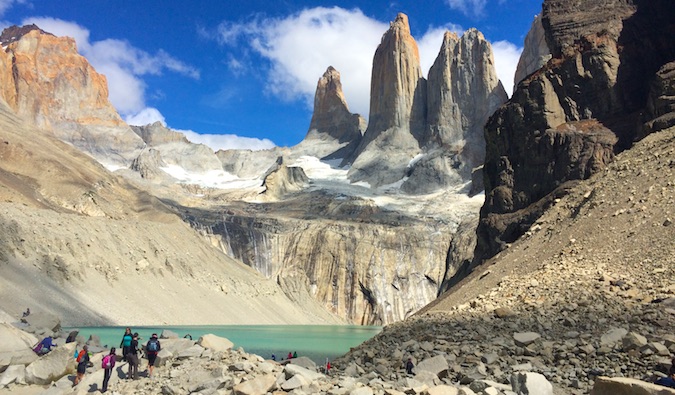
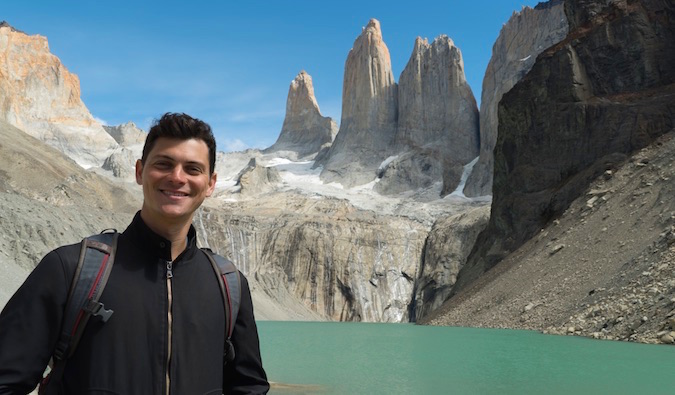
Torres Towers in Torres del Paine National Park
I came to Patagonia to tune out, clear my mind, hike, and learn to camp. I hate camping, though, and can count on one hand the number of nights I’ve spent in a tent. As an insomniac, I much prefer beds, hot water, and flush toilets. Even as a kid, when my friends and I went camping, I never enjoyed the experience — I only went to be with my friends. But I signed up for the Intrepid Patagonia tour (with fellow blogger Hey Nadine, no less!) as a way to ease myself into the experience again.

After a night in Santiago, my tour group flew down to Patagonia, where we geared up for the famous “W Trek” in Torres del Paine National Park. The park, founded in 1959, is home to tons of glaciers, glacial lakes, deep valleys, famous granite mountains, and beautiful pine forests. More than 100,000 people visit each year, making it one of the top destinations in South America. The W Trek is so named because it follows the natural formations of three valleys, thereby forming a W shape. It’s the most popular circuit in the park, as it hits all the major sights: Glacier Grey, the French Valley, and the picture-perfect Torres Towers.

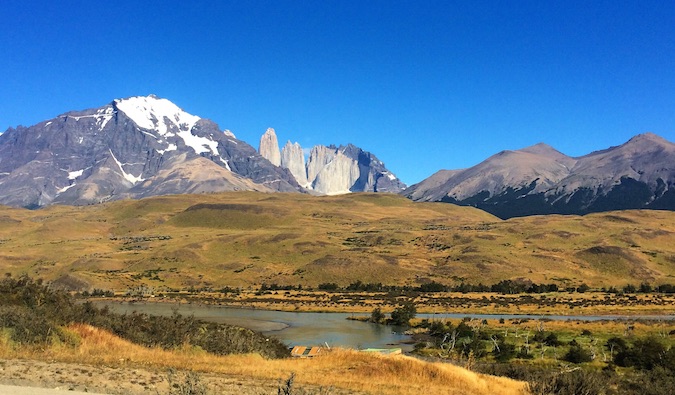
As we approached the park on the first day, giant gray mountains rose high above us and a cloudless blue sky stretched to infinity. Everyone on the bus gave a collective gasp. While our guides stopped to get our camping and hiking permits, we piled out for photographs. The crisp air, grass waving in the wind, and sheer mountainsides made me excited to get connected to nature again.

The paved road then became dirt, and the bus — lacking any shocks — jostled us like a carnival ride. After a choppy ferry ride, we arrived at Paine Grande camp, our home for the first two nights of four days of hiking. Instead of doing the W in a continuous line, we would hike two portions from this camp, doubling back each night to rest our bones.

We dropped our bags and set off on the first trek, to Glaciar Grey, so named for its gray hue produced from light being reflected by the soil and the dirt it smashes and carries as it proceeds down the mountains and into the lakes. Behind us was Lake Pehoe with its deep, crystal blue water. The wind picked up and we came to a lookout point high above Lago Grey. Battling gusts that kept pushing us off balance, we took photos of the glacier before scrambling down from the lookout. After a quick snack among the rocks, we stepped back on the path, and the wind died down as we descended into the pine forest.

My last experience setting up a tent, on a trip to Africa, didn’t go well: I couldn’t get my tent poles to arch and often seemed to have one left over. Now, I was hoping for some practice when we got back to camp, so I could reduce my tent-pitching time from 30 confused minutes to something more reasonable. Alas, it was not to be. When we returned to Paine Grande hours later, it turned out the camp handlers had set up the tents for us!
Glacier Grey in Patagonia

After dinner, we retired. I can see why our ancestors of yore were the “early to bed, early to rise” types: when there’s no power or light, there’s not much to do. But as an insomniac, it’s hard for me to sleep in a normal bed, let alone a tent. With the temperature dropping, the wind whipping, and only a thin mattress pad underneath me, it took me hours to fall asleep. When my eyes finally closed, I wondered if I would ever have it in me to fall in love with camping.

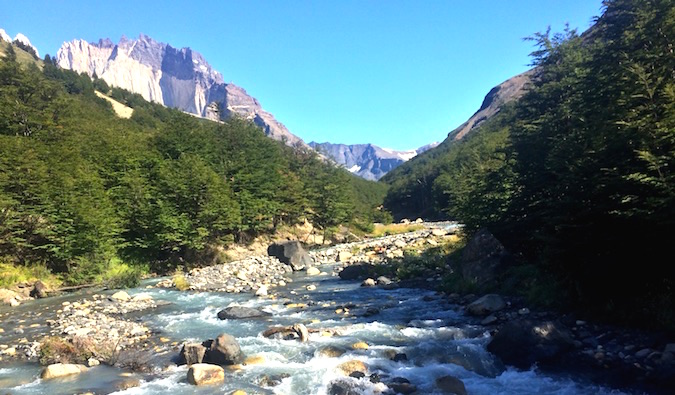
The next morning, we woke to a warm and clear day. On our 22 km hike through the French Valley, we ascended through burned forest, across rivers, and along a valley before arriving at Glaciar Francés. There, melting ice came crashing off cliffs like intense thunder. We stood in the glacier’s shadow, eating lunch and waiting to spy the cracking ice.

We would hear the boom and hope to quickly spot the ice and snow cascading down the mountain. We stayed an hour before descending but looked back at the sound of each new crash, hoping to catch just one more glimpse of the glacier’s ice falling.

Back at camp that night, the temperature was colder, the rain came pouring down, and the wind whipped so hard it blew part of our tent down, causing Nadine to scramble out and pound the poles back in with her hiking shoes. I wondered how people got used to this. There would be no sleep for me for a second night in a row.
Glacier Grey in Patagonia

The next day, the rain continued as we made our way to the ferry taking us to our final camp, Refugio Las Torres. There wasn’t much hiking that day, and as the wind blew and rain came at us sideways, I was glad I had called ahead and booked a dorm bed in the campground’s hostel.

After two nights in a cold, wet tent, I needed a change. Patagonia was beautiful and the relaxing break I needed, but I also needed sleep — and I wasn’t getting any. But in bed that night, it was as if I was sleeping on a cloud. I was warm and comfy, and even the loudest snorer in the world in the next room didn’t ruin my sleep. I realized then that I am a camping wimp and that staying in a tent is not for me. Maybe I should try glamping. As much as I love the outdoors, I also love beds and hot showers!

On the last day, we set out to tackle the park’s most famous hike: the 22km round-trip to the Torres Towers, one of the most difficult I’ve done since the 20km Tongariro Crossing in New Zealand. But these three towers set on a glacial lake are picture perfect, with their granite, ice-covered spires set above an aquamarine lake. I could swear it was a photo used as computer wallpaper.
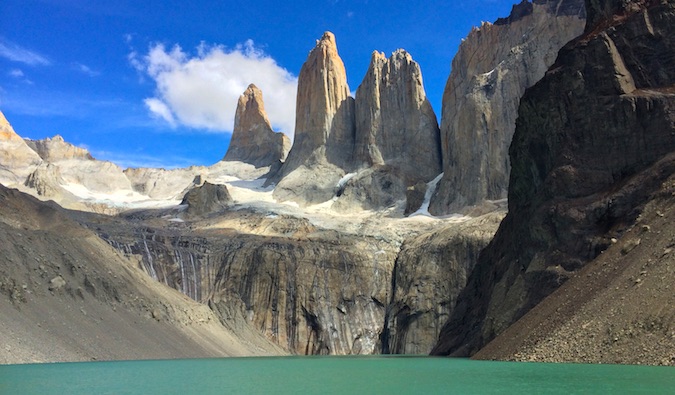
Las Torres in Torres del Paine National Park

After my group ascended to the top of the lookout, ate lunch, and started the descent, I opted to stay longer. I wasn’t ready to leave. Two hours later, as the clouds rolled in and the wind picked up, I finally began my descent back to camp, the last to leave the viewpoint. The time I spent there allowed me to clear my head, still my mind for a moment, and enjoy the present — something I hadn’t done in a long time.
Hiking up to Glacier Frances in the French Valley

As we headed out of the park the following day, I was thankful for the trip. Being offline and in nature was a much-needed mental break, and Patagonia was one of the most beautiful places I’ve ever been to. It’s one of those locations on earth that makes you realize how small you are and just how grand and significant nature is. Camping may not have won me over, but nature always warms my heart and brings me perspective.

Logistics
To get to Torres del Paine, you can take a tour or head down on your own by going from Puerto Natales, Chile, where buses leave regularly and drop you off at the ferry to Paine Grande camp or the camp gate itself.

If you’re visiting solo, check out this blog by Breakaway Backpacker, who did the trek solo last year. He has a lot of information on prices, booking, and what gear you’ll need. (Since I was on a tour, that was provided for me.)

The park is easy to explore, but as someone with little camping experience, I was glad to have a guide who knew the trails, gave us a history of the park, and added information and facts about the flora and fauna. You don’t get that when you’re alone! If you’re like me and not big into camping, I suggest a tour!

Note: I went on this trip in Chile as part of my ongoing partnership with Intrepid Travel. They covered the cost of this tour and any additional costs during the course of the trip. I received no money for going on this trip.

Let’s Send Another Set of Students Abroad (Exciting Updates from FLYTE)

students from Anacostia D.C. Public School in Cuba
Travel is a powerful agent for change. It broadens our horizons, fills our lives with friends, gives us incredible memories, and (sometimes) helps us find purpose in our lives (at least it did with me).

Not everyone can travel and it’s a great privilege to do what we are able to do. Whether you saved up for a year, found work overseas, won a trip, or struck it rich buying Bitcoin, to be able to travel is to do something few in this world get to do.

Think about the first time you traveled overseas. Remember those feelings of freedom, possibility, and excitement? Remember what got you hooked and made you say “I need to do more of this!”?

Well, for kids, travel can be even more life changing than for adults, because it exposes them to different ideas, cultures, and people at a crucial developmental time in their life.

And, over the last few years, I’ve been focusing on trying to get more high school students overseas.

I remember the school group I met on my first ever trip abroad in 2003 and thinking about how lucky those kids were to have that experience. I remember meeting Conor and Carolyn, kids of my friends Dani and Craig, while in Bangkok. They were all on a year abroad and being homeschooled along the way. Now, as adults, they still view that trip as one of their most formative life experiences. It made them better people.

But not everyone has parents to take them on round-the-world adventures or send them to study abroad. Most high schools don’t have the resources to maintain their art and gym classes, let alone send students on trips outside their community.

BEST Academy students visiting Chichen Itza, Mexico

Two years ago, I started FLYTE, the Foundation for Learning and Youth Travel Education, as a way to make travel and study abroad possible for those who lack the resources to do it on their own. Since then, we’ve run three trips: we’ve sent a class from Atlanta to Mexico; one from DC to Cuba; and one from Newburgh, NY, to Ecuador. And we’ve raised over $100,000 in donations to make that happen.

All told, we’ve helped send around 45 students overseas on educational trips, helping to create a positive impact on their lives.

And none of this could have been possible without YOU. Over 1,000 readers have helped get this organization off the ground!

So let me say right away: thank you, thank you, thank you! Like it’s amazing! More than me, the students, parents, and teachers of the schools you’ve helped are blown away by your generosity.

Today, I want to mention FLYTE again for two reasons:

First, we used the summer to make some improvements to the website and organization. We have a brand-new website that now features our past trips, a new volunteer program folks can join, and a new system that now allows for annual donations (yay!). Additionally, we’re now more active on social media, so follow us for updates on our students, teachers, news, and pictures from the student trips. You can follow us on Facebook, Twitter, and Instagram to stay updated on our programs!

With interns and volunteers helping us out, the organization is moving forward. We’re going to have in-person fundraising events in early 2018, we’ve set a goal of applying for two grants per month, and we are reaching out for more corporate donations. In fact, we got an $11,000 donation from the Golden Rule Foundation! (Yay!)

We’re an organization on the move – and I wanted to share that with you!

students from Excelsior Academy in Quito, Ecuador

Second, and perhaps more importantly, we’re now accepting applications for our next grant award. If you are a high school teacher in the United States and would like to take your students on an overseas trip, come apply for funding and let us help make that trip a reality!

As a school partner, some of our requirements include:

  1. At least 40% of your students are receiving free or reduced-price lunches.
  2. Your students are aged 14-18 and enrolled in high school at the time of the program.
  3. All of your students are legal residents of the U.S.
  4. You have support from your school administrators and leadership to take your students abroad.
  5. You will be able to have at least three chaperones for your trip who will be able to pay or raise the funds for some or all of their expenses.

If you’re a teacher who would like to send your kids on an overseas trip, click here to learn more and apply. You’ll see more of our requirements and expectations there.

(If you are not a teacher but know teachers who might be interested, share tat link! Help us spread the word and reach more people and students.)

Finally, like all nonprofits, we work off of donations. During this giving season, let’s help kids experience the world and turn them into life long travelers and global citizens! The more funding we have, the more students we can send around the world.

You can do one time or reoccurring donations! You can click here to donate.

Moreover, if you sign up on a recurring basis, you’re helping to make a much more profound long-term impact by enabling us to fund trips to even more schools. Plus, you’ll also get the following benefits:

  • Exclusive announcement of our selected partner school and destination before anyone else
  • Quarterly newsletters with updates from our schools and partners
  • Lifetime 25% discount on my guidebooks
  • Members only access to follow along on the trip via photos and videos

To sign up, simply click here, select monthly and your desired donation amount. (Again, you can click here to donate.)

This summer, we sent a group of students to Ecuador. It had a profound impact on them – all because of FLYTE and how’ve you made that possible. Here’s a video of the students talking about their experience:

***In a time when everyone is closing their borders – physically and metaphorically, I think it helps teach kids there is a bigger world out there, there’s a real world application to what they are learning, and the world is full of opportunity. For kids who come from socially and economically depressed communities, this idea we take for granted is often a life-changing revelation.

In a time when everyone is closing their borders – physically and metaphorically, I think it helps teach kids there is a bigger world out there, there’s a real world application to what they are learning, and the world is full of opportunity. For kids who come from socially and economically depressed communities, this idea we take for granted is often a life-changing revelation.

So let’s change someone’s life – and the world – together.

P.S. – I’m hosting a meet-up in Bangkok on Christmas Day! Let’s grab drinks and talk travel. Details are TBD, but it will be held somewhere on Khao San Road. Follow the Facebook event for updates.

2019年7月25日星期四

This 26-year-old could become the youngest American to visit every country

 cleanString alt

Courtesy of Sal Lavallo

Originally published on May 8th, 2017.

Sal Lavallo, a 26-year-old who has already been to 175 countries around the world, is on his way to becoming the youngest American to travel to all 193 member states in the United Nations.

Lavallo is currently planning a trip to the last 18 countries on the list — a trip that will span five continents. If he's able to do so before his 27th birthday in September, he could set the record for the youngest American to to accomplish the feat.

 cleanString alt

Courtesy of Sal Lavallo

He won't, however, be the youngest person to do so: British traveler James Asquith was 24 when he set the Guinness World Record for youngest person to travel to all of the world's sovereign countries.

Lavallo is therefore not after a Guinness record: The organization does not recognize titles for travelers based on their nationality.

There are, however, unofficial recordholders for being the youngest American. Connecticut native Lee Abbamonte, who left Wall Street to travel the world, made it to all UN member states by the time he was 32, in 2011. And Cassie De Pecol, also from Connecticut, set the Guinness World Record as the fastest person to visit all of the world's sovereign countries at the age of 27.

 cleanString alt

Courtesy of Sal Lavallo

Though possibly setting a record is exciting for Lavallo, it's not why he set out to travel the globe.

“I really just want to show the beauty of the world and the way people connect to one another, whether or not the record happens,” Lavallo told Travel + Leisure. “It’s more that I see myself as somebody involved in the world in a global way, so it’s not about being an adventurer or tourist, but being productive in finding the best ways to help economies develop.”

Lavallo studied economic development and identity during his time at school, leading to a curiosity to travel, and eventually a wide network of friends across the globe. During school he traveled to Tel Aviv, Abu Dhabi, Berlin, Mumbai, and East Africa, and then through work to Egypt, Pakistan, Saudi Arabia, New Zealand, and Kenya.

%image4

“What’s nice about having such a global network is I won’t be staying at hotels that can be dangerous, or on a tourist bus in locations where that can be unsafe,” Lavallo said. “It’s usually staying at someone’s home that I’ve known for years, which means I don’t need to worry but that I also get more of an authentic experience.”

During his travels, Lavallo found some destinations are more tourist-friendly than others, including Socotra in Yemen, the Virunga National Park in the Democratic Republic of Congo, Ishkashim in Afghanistan, and Kish Island in Iran since it doesn't require a visa.

Of all of the countries he has been to, Lavallo said his favorites are Tanzania, because of the people, and Abu Dhabi, because of the striking economic development.

“They came from living in the desert in tents less than 50 years ago to now having some of the world’s biggest cities and most impressive buildings,” he said.

So what does a guy who's visited most countries in the world have to say about making travel even better?

Appreciate what a place has to offer...

“Some places can be struggling in terms of their way of life in ways that people don't really understand,” Lavallo said.

“It's important that you don't expect luxury but rather appreciate that you have big and beautiful sunsets, nice beaches, and incredible nature.”

...and listen to the people.

“Traveling is about learning and about seeing new things, and I think that too often, we don’t stop to just observe, but rather want to participate in things,” Lavallo told T+L.

“It’s hard to examine what you’re doing and do it differently until you remove from your mindset the way you've always done things,” he added. “ˆf you take a step back and slow down, you’ll be able to have a more authentic experience because you’ll find yourself able to see and live the way people there do.”