显示标签为“american”的博文。显示所有博文

2019年8月2日星期五

Why You Shouldn’t Overlook the American South

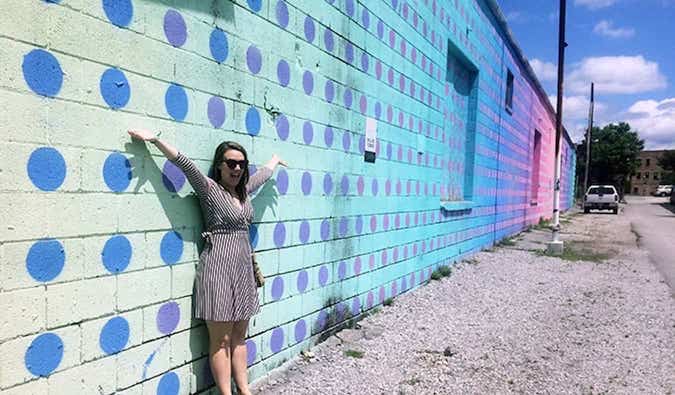
Caroline Eubanks standing in front of murals in Chattanooga, TennesseeCaroline Eubanks standing in front of murals in Chattanooga, Tennessee
Posted: 2/18/2019 | February 18th, 2019

I love the South. Over the years, it has become one of my favorite parts of the United States. Before I went traveling, I always had this perception that the southern states were backward. They were filled with racists, yokels, and obese, gun-loving, Jesus freaks. It was a perception born out of a quarter-century of living in New England and consuming mass media and stereotypes about a people and place I really didn’t know anything about.

Then, at the start of my grand trip in 2006, I drove across the United States. As I made my way through the South, I fell in love with the region. I loved the food, the people, the scenery, the architecture. My perception of the South was wrong.

Yes, it has a lingering history of racism, poverty, and is more conservative than I personally am, but no place is perfect — and no place is like the stereotypes you see. Driving through the South was the first instance in which I really confronted the stereotypes about people and places I grew up with.

I repeated the road trip in 2015 and fell deeper in love with the region. And I oddly found Mississippi to be a complete hidden gem. As a Northerner, I did not expect that.

I realized that the Southern states — which encompass a massive section of the country — are not as culturally and politically monolithic as they once were. Every state is different, each offering the attentive traveler an eclectic mix of incredible food, foot-stomping music, and heart-warming hospitality.

Today, I want to introduce you to Caroline Eubanks. She’s a friend and fellow travel writer whose work primarily focuses on the American South. Caroline has called the South home for her entire life, and in her new guidebook, This Is My South, she shatters all the stereotypes about the Southern United States while sharing her expert tips and suggestions to help you make the most of your next visit.

In this interview, we discuss all things Southern, why this book needed to be written, and why you shouldn’t overlook this region of the country!

Nomadic Matt: Tell everyone a bit about yourself! How did you get into what it is you do?
Caroline Eubanks: I’m Caroline Eubanks, a native of Atlanta, Georgia. I went to college in Charleston, South Carolina and it was there I really fell in love with the American South, especially driving back and forth from my hometown past small towns on country roads. I started working for a newspaper when I lived there and started reading travel blogs (including Matt’s!) so I was inspired to create my own. I leveraged guest posts into paid work and one job led to another. I’ve since been published by BBC Travel, Lonely Planet, Thrillist, Roads & Kingdoms, and Fodor’s. I also started my own blog, Caroline in the City, in 2009, and later This Is My South in 2012. This is basically the only job I’ve ever had and the only one I wanted!
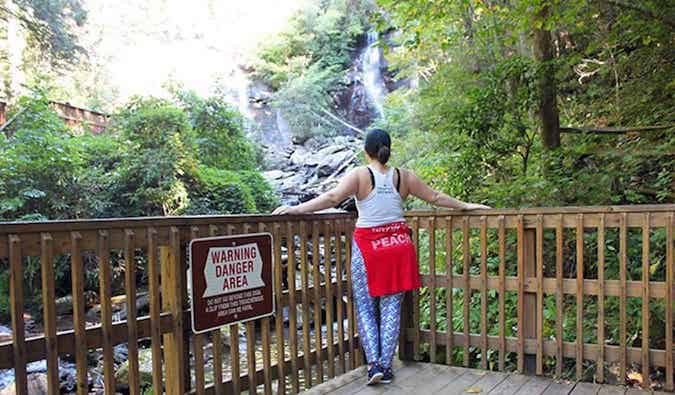
Caroline Eubanks chasing waterfalls in Helen, GeorgiaCaroline Eubanks chasing waterfalls in Helen, Georgia

How did you start writing about the Southern USA?
I grew up taking road trips around the region with my family, whether that was to the Outer Banks or the Panhandle of Florida. After graduating from college, I went on a working holiday in Australia where I worked with a lot of people from all over the world. I would try to explain to them where I came from but most of the time they were only familiar with places like Miami and New York. And most travelers went to a few well-known destinations but nothing in between. So I started my website, This Is My South, to tell people about the lesser-known destinations that I love from my corner of the world. I also started focusing on the region in my freelance writing since the market wasn’t quite so saturated.

Why do you think the south gets such a bad wrap?
A lot of it comes from the news. Of course, bad things happen here, but it’s a large region so that’s bound to happen. It becomes polarizing with elections but there are lots of different opinions, not just the ones that are the loudest.

I also think people assume that the movies and television shows about it are accurate. Gone with the Wind and Deliverance are not accurate representations at all. These remain what people most associate the region with, but there are large cities like Atlanta, Charlotte, and Nashville as well as the small towns. You wouldn’t assume every Australian is like Crocodile Dundee or that every person from New Jersey was Tony Soprano, right?

What about the stereotypes about the South?
When I lived in Australia, I went to an expat July 4 party and I was talking to a guy from Ohio. When I said I was from Georgia, he joked that he was surprised to see I had all my teeth. When my parents were traveling in New York, someone asked about their crops. I realized how little people know about this part of the world. I started thinking about these perceptions of the South from both Americans and the world as a whole.

I wouldn’t say that some of the stereotypes aren’t true. There are obviously political divides, but I think there’s a lot more to the South than what you read in the news. The people are overall welcoming and friendly. The region is home to some of the nation’s top universities like Duke and Emory. There are young people creating murals in their small towns (like Kristin!) to drive tourism as well as immigrants from everywhere to Korea to India to Syria bringing their cuisines to meld with traditional regional dishes. And I think there’s something just about everyone can come together on, especially in the South, like food.
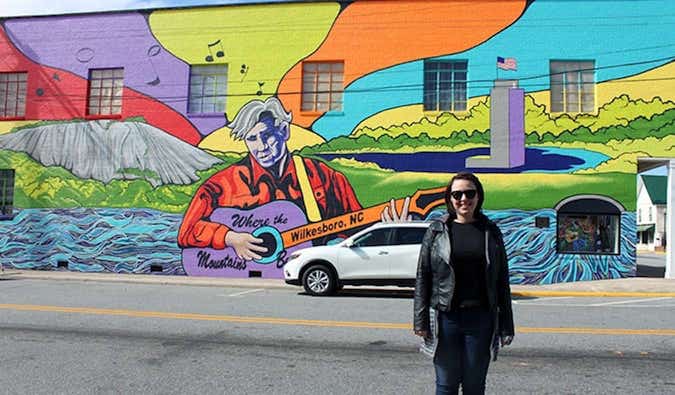
Caroline Eubanks standing in front of a mural for Doc Watson in Wilkesboro, North CarolinaCaroline Eubanks standing in front of a mural for Doc Watson in Wilkesboro, North Carolina

What are some of your favorite things about the south?
I always say the food, which is certainly one element. You’ll find both comfort food like fried chicken and collard greens and “healthy” food as well as the cuisines of dozens of cultures. For example, there’s a large Korean community near where I live in Atlanta so I can have authentic Korean barbecue before relaxing at a Korean spa. I love how food is a way that people show their affection.

I also love the general attitude and friendliness. People tend to know their neighbors and offer help when needed. And the music is unmatched by anywhere else in the country. Every genre can be found here. You don’t have to go to a stadium to see impressive artists since there’s usually someone playing at the local dive bar or coffee shop.

Why did you write this book?
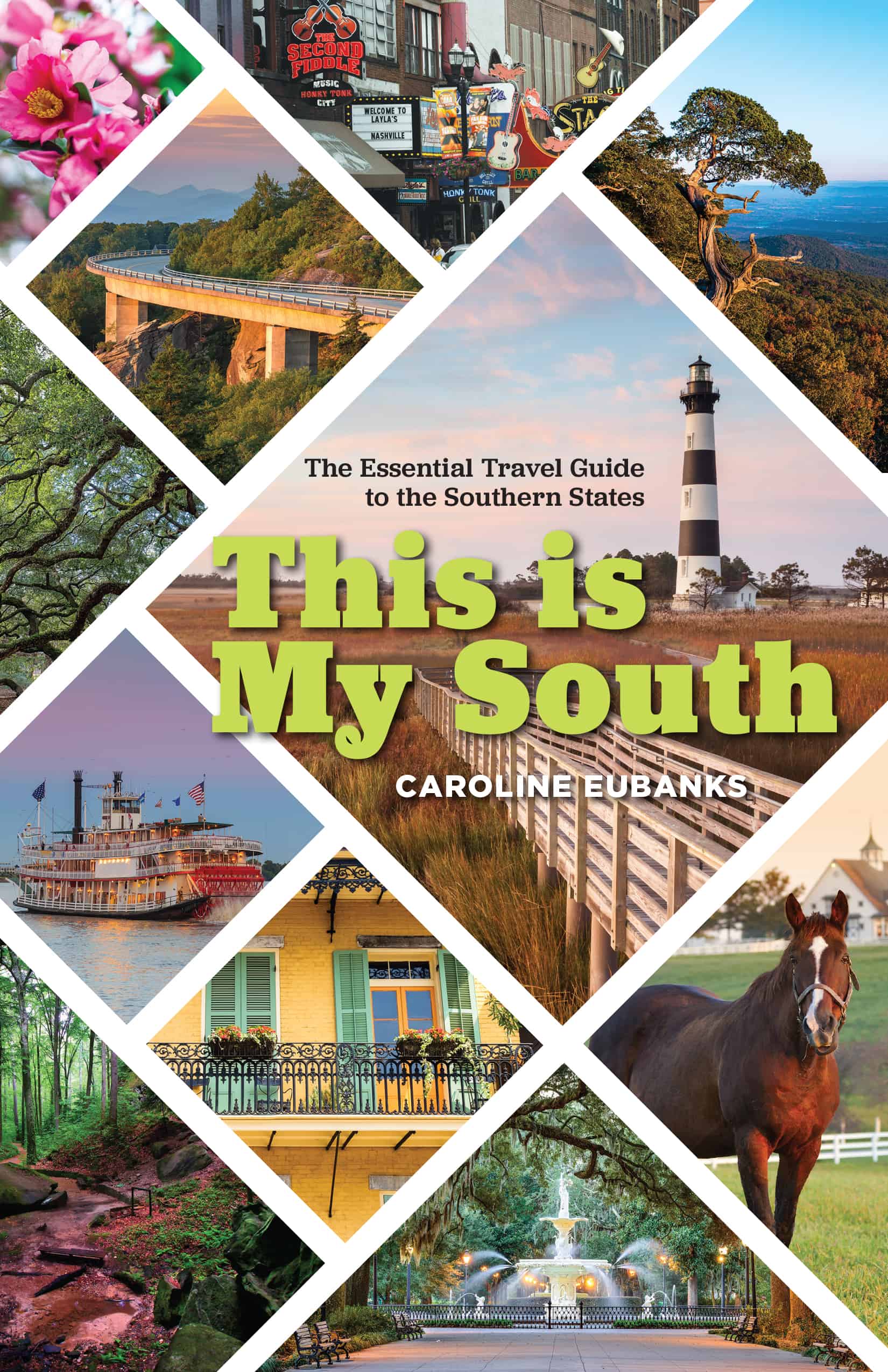
This Is My South by Caroline EubanksThis Is My South by Caroline Eubanks I wanted to show people the South that I know and love. I had thought about the idea of writing a guidebook but it actually came to life when I was contacted by a publisher after six years of running my website. They saw my work and wanted to create a guidebook in a similar format. Ever since I started writing, I’ve wanted to write a guidebook, so it was definitely a dream come true.

It was important to me that I have the flexibility to include the places I had fallen in love with in my travels, not just the popular ones. I have a section on the must-eat dishes from every state, quirky roadside attractions, unique accommodations like historic hotels and treehouses, and tours. I tried to emphasize responsible travel and small businesses, so you won’t find those double decker bus tours or your big chain hotels.

I also wanted to include elements that I find lacking in other books, namely the history and odd pieces of trivia. For example, I have sections on the title of “Kentucky Colonel” and the legal loopholes that allow for casinos on and near the Mississippi River.

What do you hope travelers will walk away knowing from your book?
That it’s more than one story. I hope that travelers will be inspired to visit some of the places they’ve heard about as well as ones not previously on their radar. I hope they’ll challenge some of their preconceived notions about the region and give it a chance. I hope they’ll come back for more since there’s no way to see it all at once. And, of course, I hope that travelers will visit the places I write about and tell others about them!

What makes the south special?
So many things. There is unmatched biodiversity including the barrier islands on the North Carolina coast to the swamps of Louisiana to the Great Smoky Mountains of Tennessee. The Appalachian Trail runs through much of the region, starting in Georgia at Springer Mountain. It’s a region where connecting with nature is a part of everyday life.
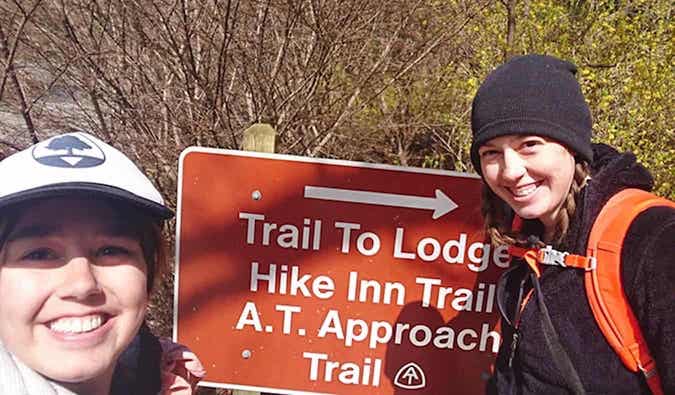
Caroline Eubanks on the Appalachian Trail Approach TrailCaroline Eubanks on the Appalachian Trail Approach Trail

Food is also affordable and you can find it in unique places. Similar to the bodega eats in New York, the South sells surprisingly good food at gas stations, including fried chicken, Cajun meats, and Delta hot tamales. Dining is a major part of visiting the region as it’s home to many different styles of cuisine that have influenced American food. You can find “Southern food” in both award-winning restaurants and mom-and-pop casual spots, so there’s something for everyone.

The region is also important when it comes to history. It’s where European travelers first arrived in America, specifically South Carolina and Virginia, and where they were met with Native American tribes. Much of the Civil Rights Movement took place here like the 16th Street Baptist Church in Birmingham, the Lorraine Motel in Memphis, and the Woolworth’s counter in Greensboro. A number of notable politicians, including presidents Jimmy Carter and Woodrow Wilson, hailed from these states.

There’s also a lot to offer music lovers since nearly every type of American music has roots in the blues of Mississippi. Icons like Elvis Presley and Johnny Cash were influenced by these musicians and infused their styles into their own music. In addition to rock and blues, the mountains of the South were where bluegrass and “old time” music started, eventually becoming modern country music. And, of course, Atlanta is known for its music industry, especially when it comes to hip hop and R&B. Artists like TLC, Usher, Goodie Mob, and Outkast rose to fame there.
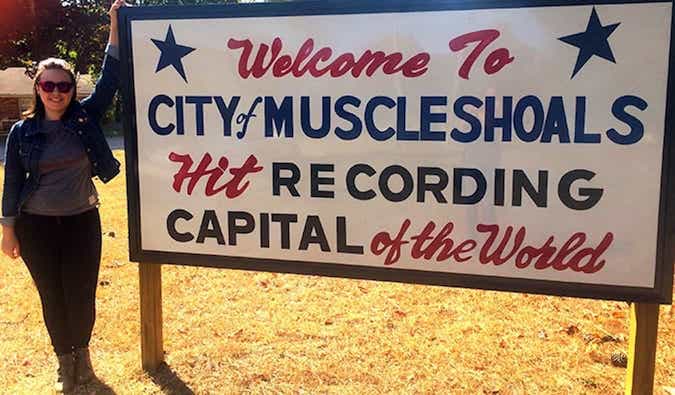
Caroline Eubanks in Muscle Shoals, AlabamaCaroline Eubanks in Muscle Shoals, Alabama

What are some budget travel tips for the area?
The South is generally a fairly cheap place to travel. The main expenditures are transportation and accommodation. Flights into major airports like Atlanta, Charlotte, Orlando, and New Orleans will be cheaper than smaller ones. The same goes for car rentals. Once in the South, it is possible to get around without a car by taking Amtrak and Megabus, but by car is certainly the preferred method of travel.

Certain cities will be more expensive for accommodations, especially Charleston. But you can look for alternative options like small bed and breakfasts, campgrounds with cabins, hostels, and Airbnb rentals. Keep in mind that rentals are limited in cities like New Orleans because of how it affects the local housing market. New Orleans is also great because you can stay at a trendy boutique hotel for under $100 per night.

Meals are cheap at most places unless you’re visiting a fine dining restaurant. If you’re looking for a meal on the go, visit a grocery store to save money. Most have deli counters and prepared foods. Lunch is a good time of day to try the more expensive restaurants, especially those award-winners that can be tough to get a reservation at.

What are some of your favorite off the beaten path destinations?
You don’t have to go far from the well-known destinations like Charleston, New Orleans, and Nashville to see places not in most of the guidebooks. One of the places I always say is a favorite of mine is the Mississippi Delta, which is a number of towns that follow the river south of Memphis. This part of the country is highly important when it comes to music. It was here that artists like BB King and Robert Johnson found their sound and where the blues was developed. There are some funky accommodations like the Shack Up Inn, a collection of sharecropper cabins transformed into guest suites.
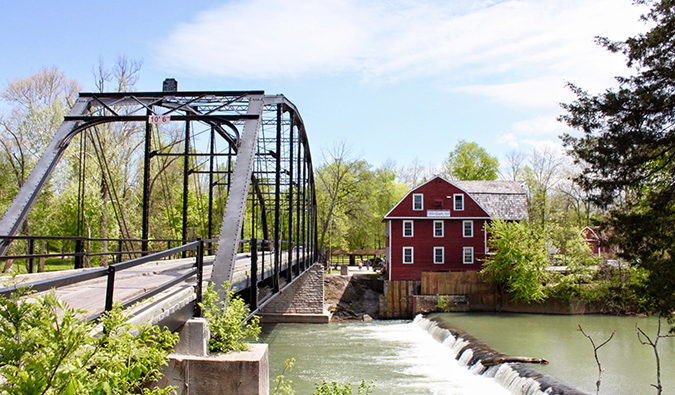
War Eagle Mill in Northwest ArkansasWar Eagle Mill in Northwest Arkansas

I was also surprised by Northwest Arkansas. This region is known for mountain biking, with trails connecting the towns, but also has an incredible craft brewery scene. Crystal Bridges Museum of Art has one of the best collections in the nation, if not the world, focusing on American works like those by Andy Warhol and Frank Lloyd Wright. Eureka Springs is a funky mountain town that looks straight out of a postcard from the 1800s.

I’ve also found some off-the-beaten-path areas within well-known destinations. In my hometown of Atlanta, I always recommend that visitors check out Buford Highway, the city’s international dining corridor. When I lived in Charleston, I spent most of my time downtown, but on subsequent visits, I end up in the Park Circle area of North Charleston, an underrated part of the city. Just outside of Nashville is Franklin, a town with deep ties to the Civil War. It’s just off the Natchez Trace Parkway and hosts musicians nearly every night of the week at Puckett’s Grocery. They also host Pilgrimage, an annual music festival that has hosted the likes of Justin Timberlake and Jack White.

In every small town in between, there are quirky museums and landmarks you might miss if you limit your trip to the “big” destinations, like a museum devoted to ventriloquism in Kentucky and a memorial to the victims of the Trail of Tears in Alabama. You never know what you might find!

***

Caroline Eubanks is a travel writer and the author of This Is My South: The Essential Travel Guide to the Southern States. She writes about all things Southern at ThisisMySouth.com. You can also find her on Facebook, Twitter, and Instagram.

Book Your Trip: Logistical Tips and Tricks

Book Your Flight
Find a cheap flight by using Skyscanner or Momondo. They are my two favorite search engines because they search websites and airlines around the globe so you always know no stone is left unturned.

Book Your Accommodation
You can book your hostel with Hostelworld as they have the largest inventory. If you want to stay somewhere other than a hotel, use Booking.com as they consistently return the cheapest rates for guesthouses and cheap hotels. I use them all the time.

Don’t Forget Travel Insurance
Travel insurance will protect you against illness, injury, theft, and cancellations. It’s comprehensive protection in case anything goes wrong. I never go on a trip without it as I’ve had to use it many times in the past. I’ve been using World Nomads for ten years. My favorite companies that offer the best service and value are:

  • World Nomads (for everyone below 70)
  • Insure My Trip (for those over 70)

Looking for the best companies to save money with?
Check out my resource page for the best companies to use when you travel! I list all the ones I use to save money when I travel – and I think will help you too!

The State Department Issued a New Travel Advisory for Peru — Here's What You Need to Know (Video)

The U.S. State Department is once again warning Americans about traveling to certain parts of Peru.

According to TravelPulse, the department re-issued its warning ahead of two major sporting events involving American athletes — the Pan American Games taking place fom July 26 to Aug. 11, as well as the Parapan American Games from Aug. 23 to Sept. 1.

In the level two warning the State Department said in part, “Crime, including petty theft, carjackings, muggings, assaults, and violent crime, is a concern in Peru, and can occur during daylight hours, despite the presence of many witnesses. The risk of crime increases after hours and outside the capital city of Lima where more organized criminal groups have been known to use roadblocks to rob victims.”

While the country itself comes with the level two warning some regions come with a level four alert, meaning travel is outright banned for official American personnel.

Along the Colombian and Peruvian border in the Loreto Region the State Department said, “Drug trafficking and other criminal activity, combined with poor infrastructure, limits the capability and effectiveness of Peruvian law enforcement in this area.” It added, “The U.S. government has limited ability to provide emergency services to U.S. citizens as U.S. government personnel are restricted from traveling within 20 kilometers of the border with Colombia in the Loreto region, except on the Amazon River itself, without permission. This includes travel on the Putumayo River, which forms most of the Peru-Colombia border.”

The other region that is now off-limits to official American representatives is the Valley of the Apurímac, Ene, and Mantaro Rivers, or VRAEM.

“Remnants of the Shining Path terrorist group are active in the VRAEM,” the State Department said. “The group may attack with little or no warning, targeting Peruvian government installations and personnel. Drug trafficking and other criminal activity, combined with poor infrastructure, limit the capability and effectiveness of Peruvian law enforcement in this area.”

While the warning certainly sounds dire it does not include popular tourist destinations in Peru including Machu Picchu and the Sacred Valley.

In those regions — and really any tourist destination — the State Department encourages travelers to exercise normal precautions. That includes staying alert, not carrying large amounts of cash, securing personal items like purses and backpacks, and only using app-based taxi services or ordering a taxi by phone. So, don’t put off your dream trip to Machu Picchu, just make sure to stay aware of your surroundings when you go.

2019年8月1日星期四

Mandy Moore’s Dad Is an American Airlines Pilot — and She Finally Got to Go to Work With Him

 cleanString alt

FilmMagic

Actress Mandy Moore has become quite the travel sensation in recent months. After all, she has scaled both Mount Kilimanjaro and reached Everest base camp with ease. And now, Moore is sharing a bit more about her travels, only this time she made it a true family affair.

Over the weekend, Moore posted a series of images on her Instagram account of herself in the cockpit of a plane alongside the pilot. However, this wasn’t just any old pilot, but rather, it was her own father flying the plane.

“I was today years old when I finally visited my dad at work,” Moore wrote about her special time with her dad, who was celebrating a major workplace milestone with his famous daughter.

“He’s been a captain at @americanair since before I was born (he just celebrated his 40 year anniversary at the company- go dad!) and today was my first time ever flying with him,” she explained.

Moore also noted her stepmother is also an American Airlines crew member, who also happened to be working on the flight as well.

“I got some face time with both them on their breaks and took the requisite cockpit shots before we left London,” she said adding, “the landing was [thumbs up], dad. BEST TRIP HOME EVER.”

As proud as Moore was for her father, it appears the airline was just as proud of him too.

"We are truly proud of the American Airlines family, and Mandy is also a member of our family as well," Ross Feinstein, spokesman for American Airlines told USA Today. "Captain Don has been a pilot with American since 1979 – and is currently a Boeing 777 captain; you can see they are on a 777 in the photo. Mandy’s stepmother has also been a flight attendant with American for nearly 30 years.” Feinstein added, “We are thrilled they were able to spend the flight together from London to Los Angeles."

2019年7月26日星期五

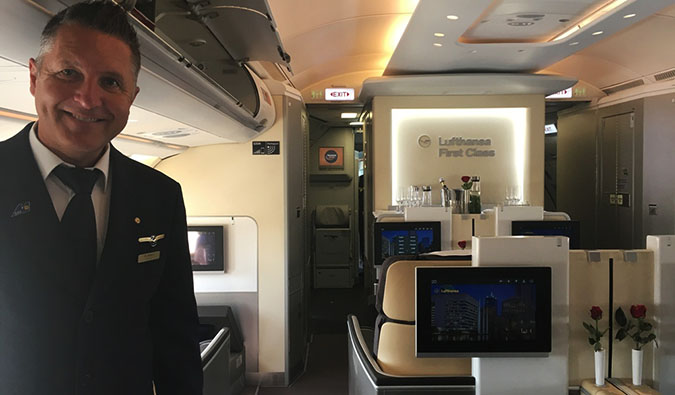
How Pat Got a Free Business Class Ticket (and You Can Too!)

business class in British Airways
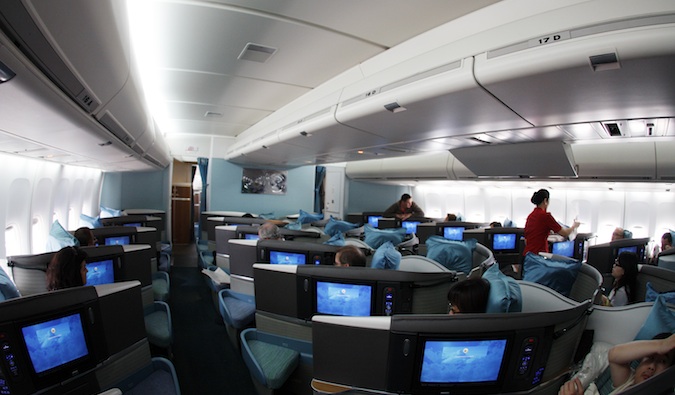
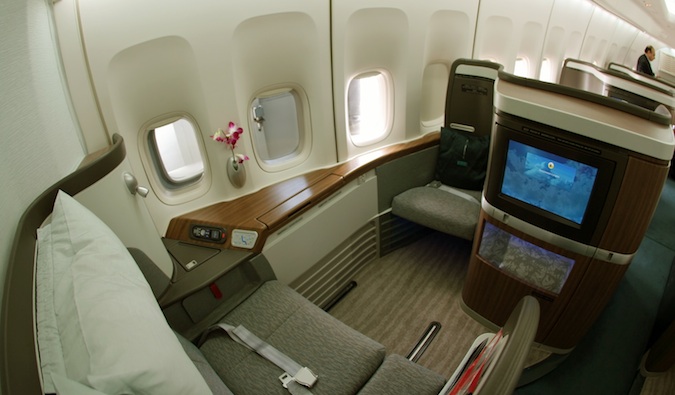
Last month, my friend Pat came to me with a problem: he wanted to fly Cathay Pacific business class round-trip from the US to a conference in the Philippines. He had only a few frequent flyer miles and was all like “travel hacking, what?”

He needed help.

In the words of Barney Stinson: “Challenge accepted!”

I had two months to get Pat the 110,000 miles he needed.

I’ve written about traveling business class for free before, but as with everything in travel, methods and tricks that worked in the past might not work now, especially when it comes to airlines. They change their rules all the time.

As you know, I am an avid travel hacker because I hate flying coach. To me, there is nothing worse than being in coach on a 10-hour flight — and if I can avoid it, I will. When you are up in the air as much as I am, you want comfort.

So I collect points in order to upgrade or redeem for business- and first-class tickets, have a lie-flat bed, and enjoy some luxury before staying in my $10 a night dorm room. (Yes, I’m a bundle of contradictions. I’m a Gemini.)

Pat was an easy test subject, since he spends a boatload of money on his business each month and has great credit. I used all this to his advantage:

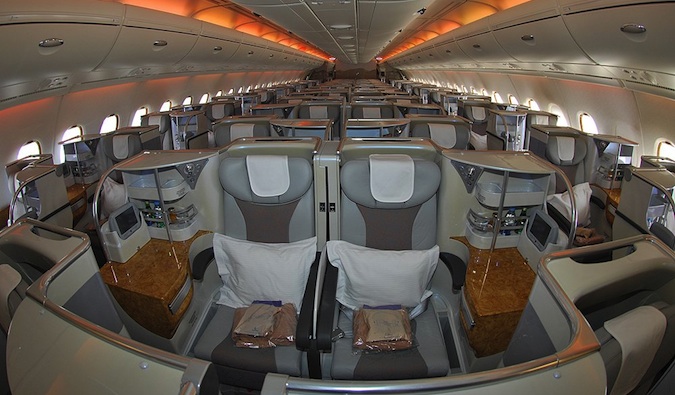
business class on A380

Since Cathay is part of the Oneworld Alliance, their US partner is American Airlines, and so we worked on getting him American AAdvantage miles.

First, he signed up for an American Airlines Citi card, which offered a 30,000-point sign-up bonus when he spent $1,000 USD in 90 days.

Second, he signed up for the business version of the same card with the same deal. (Note: you don’t need to be a business owner to get a business card. I used to sign up for these cards as a sole proprietor. The credit card companies never seemed to care.)

Third, I made him open a Starwood American Express card, which offers 25,000 Starwood points when you spend $5,000 USD in 90 days. He then transferred those points to American Airlines. Since Starwood gives you a 20% transfer bonus on 20,000 points, in the end 35,000 points (30,000 from the bonus, 5,000 from the spending) were transferred to his AAdvantage account.

Pat met all the minimum spending requirements with his regular spending. It was money he was going to spend anyway. (Never spend extra just to meet one of these spending requirements!)

After it was all said and done, Pat had 97,000 frequent flier miles.

But how to get those last 13,000 miles? There were a couple of ways to do this:

Pat could have “faked” his spending (which he also could have done to meet the spending requirements). He could have sent $1,000 every month via Amazon Payments to his wife without any fees and then she could have cashed the money back into their bank account.

business class on A380

Or he could have walked into a CVS and bought Vanilla Reload cards with his credit cards, then loaded the balance onto his American Express Bluebird account (maximum of $5,000 per month), and then used that money to pay off his credit card balance.

He also could have used online shopping portals to earn 3-4 miles per dollar spent (Christmas is coming!), meaning instead of spending $13,000 USD, he would have had to spend only $3,200-4,300 USD.

In the end, Pat used his business expenses as well as online shopping to get those final miles (he told me he found faking the minimum spending too time consuming).

Within a month, Pat had 110,000 miles he needed and I converted someone else to travel hacking (score!!!). He’s already set out to earn miles for a family trip to Hawaii!

“That sounds great, Matt, but I don’t want to open three credit cards nor can I spend that much money! Is there another way?”

Good question! What if you don’t want to open three credit cards? What can you do that doesn’t rely so heavily on credit cards?

I’ll tell you.

But first this point: you should open at least one rewards credit card because credit cards are the best way to jump-start your balance, and if you’re going to put money a card, you might as well get points for it. I mean, I bet you already have at least one card, right? Why not get free trips from it? Use your everyday spending to gain points for travel, even if you aren’t traveling until next year!

Moreover, you get a big sign-up bonus. My American AAdvantage card gave me 40,000 miles just for joining. That’s a free round-trip domestic ticket or miles I can use for an upgrade. United Airlines gives you 30,000 miles for signing up. Lufthansa is offering a 50,000 miles sign-up bonus right now!

I charge everything because of the miles it gets me. I am like Ryan Bingham from Up in the Air — I don’t spend any money without earning miles from it.

Non–Credit Card Ways to Earn Miles

business class on A380
But what else can you do to get miles that doesn’t require a credit card? Here are a couple of ways:

Shop with an airline’s preferred partners — All major airlines have a preferred shopping partner where you can get 3-20 points per dollar spent. If I am going to go shopping anyway, I might as well do it online and get four points per dollar spent than just the one I would have earned if I walked into the store. Do your shopping online, avoid crowds, get more points, fly quicker.

A good site to find which shopping portal is offering the best deals is Evreward.

Use your family — My parents might fly once a year. My sister might fly twice. They don’t really need or use their miles, so they give them to me. My parents use my credit card to purchase all their tickets, and when they fly, they transfer their miles over to my account. There is a small fee for the transfer, but it’s worth the extra miles. After they visited Israel last year, the miles they both earned ended up in my American Airlines account.

Sign up for newsletters — I sign up for all the airline newsletters as well as those for their credit cards so I can stay up-to-date on special fares, deals, and offers. Many of the best deals in the world are only sent via a newsletter, and if you don’t sign up, you’ll never know. Recently, I got triple miles on purchases on my Citi American AAdvantage card through an alert sent via e-mail.

Take surveys — Every little bit counts. And for signing up for surveys, liking Facebook pages, and more, many companies offer 250-1,000 points. I always participate in these stupid online contests because they add up over time. Airlines usually send this via their newsletters, but I also follow companies on Twitter and Facebook just to make sure I don’t miss anything.

Stay up-to-date on bonus offers — Be sure to constantly check for bonus offers on airline websites. Many brands, especially airlines, offer bonus offers on selected flight routes, fare classes, and dates. By flying during these times, you can maximize your miles for future redemptions. You can stay up-to-date via newsletters or following some of the sites listed in the resources section of this blog.

Airlines love when people actually fly to earn their miles, and they treat those who do with extra special care. However, they make it so easy to earn the frequent flier miles that it’s silly to not take advantage of the situation while it lasts. Business class is no longer out of reach for even the most infrequent flier.

Even if you only fly once or twice a year, why not put in a couple of extra hours a month to ensure that when you do fly, you fly in style, like Pat!

How to be a Travel Hacker in the United Kingdom

robert aka raffles from head for your pointsUpdated: 08/17/2018 | August 17th, 2018

I’ve been writing about travel hacking a lot lately, and one question that keeps popping up is “Matt, how can we travel hack in the UK?” Well, while I know a lot about doing this in the UK, I don’t know as much as Robert (aka Raffles) from Head for Points, the premier travel hacking website for the UK. Today, I sit down with him and he explains in great detail how those of you from the UK can get free flights and hotels like the rest of us across the pond!

Nomadic Matt: How did you get into travel hacking?
Robert: The idea of “getting a deal” was ingrained in me literally from childhood, as my family never had much money. This also meant that my parents never traveled, as it was very expensive to fly in the 1970s. My dad never had a passport, and my mum only got one when she was 50.

I think I first flew when I was 18 in 1988 on a charter to Spain with friends. My first “hack” was when I was 20, when I “arranged” to win a flight to Paris in a British Airways competition. This was 1990, and BA gave away every seat on every flight for one day to boost business. You could pick your route, and I was smart enough to realize that 99% of people would pick a long-haul route with a minimal chance of winning. I picked Paris and, despite literally millions of entries, got my free seat — and even in 1990 flights to Paris from London were expensive.

It was only when I discovered FlyerTalk that I realized that I was only scratching the surface. I contributed heavily to FlyerTalk beginning in 2004 — and still do — and in 2012 started Head for Points as the first UK miles-and-points blog.

In January 2016, Head for Points hit one million monthly page views for the first time, almost all from the UK. I also launched Shopper Points to focus on UK supermarket loyalty schemes.

In the United States, it’s easy to be a travel hacker because we have so many ways to get points. Describe travel hacking in the UK.
It’s true that the UK market is not as generous as the US. However, it is still the second-best place in the world for travel hacking!

The advantage of doing it from the UK is that you can see a lot more of the world for a lot less. Whilst the low-level US airline saver reward is 25,000 miles (and even they are hard to find), British Airways will fly you to France, Germany, the Netherlands, etc., from 8,000 Avios return [round-trip]. Even a flight to Spain is only 13,000 Avios on an off-peak date. You can get to over 20 countries and see some of the world’s greatest sights for less than the cost in miles of a US domestic reward flight!

The typical UK “travel hacker” — someone who wants to earn reward flights but doesn’t earn miles traveling for business — will generally focus on credit card churning, primarily with American Express (Amex), and exploiting the promotions run by Tesco. Tesco is the UK’s largest supermarket chain, and its loyalty points can be converted into British Airways Avios points or Virgin Flying Club miles.

Can you explain the Tesco trick a bit more?
Tesco has a loyalty scheme called Clubcard. On the face of it, it is rather dull: spend £1 in their stores and you earn 1 point. One point gets you 1p off your shopping or you can swap it for other things, including 2.4 Avios points or 2.5 Virgin Flying Club miles.

The real value comes from regular bonus point promotions run by Tesco. These can be hugely aggressive. For example, they regularly offer 150 bonus points for buying selected CDs or DVDs, which can be as cheap as £3. That means you’re getting 360 Avios points for £3. They also like to offer bonus points on printer ink, which can be easily resold on eBay, often at cost price — which means the miles are free.

It scales up as well. They often offer 5,000 points (12,000 Avios) for taking out Tesco life insurance — with a minimum commitment of just £5 per month for a year. In late 2015 they offered a computer printer for £39 with 2,000 bonus points — that was 4,800 Avios.

All of these deals can be bought online, so you don’t even need to enter a Tesco store. Tesco also offers a free MasterCard credit card, which earns Avios (it works out to 0.3 Avios per £1 spent) This isn’t a great rate but it is the best Avios MasterCard or Visa deal available.

My new site Shopper Points is 75% devoted to Tesco Clubcard, not just for miles collectors but also for people who use the points for non-travel redemptions.

UK-based flights have hefty fuel surcharges (i.e., big taxes and fees) when you book award tickets. How does this impact travel hacking in the UK?
The key difference between the UK and US frequent flyer scene is that, in the UK, you cannot genuinely “fly for free,” at least not easily. Both British Airways and Virgin Atlantic (and indeed all of the other major European carriers) impose heavy fuel surcharges on redemption tickets.

This is compounded in the UK by Air Passenger Duty, a departure tax levied by the UK government that can add up to £166 to a business-class ticket. If you redeem your British Airways Avios points for a Club World (flat-bed business class) seat to New York, you will be asked to pay over £500 per person in taxes and surcharges for your “free” ticket.

This is still a good deal, of course, compared to the cost of buying a similar ticket for cash. However, when a couple needs to find £1,000 to cover the additional charges on a pair of long-haul reward seats, you are obviously restricting your market to people on a decent salary. Unlike the US, this is not a hobby for students or the low paid.

The other issue with the heavy taxes and surcharges is that it has made long-haul redemptions in economy fundamentally pointless, except in peak periods. Who would redeem 40,000 Avios points and £350 in taxes for a return economy flight to New York, when the same ticket can be bought for £400 in cash?

You can work around this, but it’s not easy. Air Berlin is an Avios partner and fellow Oneworld member, and has low-tax (£75 return) redemptions from Germany to the US and Abu Dhabi.

Aer Lingus also has low-tax redemptions from Dublin to the US. However, you need to ring British Airways to book these — and the BA website doesn’t tell you this. Only a handful of people know about it as a result.

Similarly, Iberia has low-tax (£150 instead of £500 for business class) redemptions from Madrid to North and Latin America. However, booking these on ba.com incurs a £500+ surcharge. Move your Avios to Iberia Plus (for free, online) and you can book the same seat for just £150 in taxes. BA doesn’t tell you that either!

Does the UK have a lot of good credit card offers like we do here? What are the bonuses typically like?
It has improved massively in the last couple of years. American Express has become very aggressive. It runs (for the UK) very high bonuses on the British Airways Premium Plus card — typically 20,000 to 25,000 points or miles — and is happy for you to churn their cards as long as you wait six months to reapply for the same one.

As long as you know, for example, that the points from the Starwood Amex, American Express Gold, and American Express Platinum cards can be turned into Avios points, then you can do very well. However, I reckon that 90% of Avios collectors are not aware of this.

You get occasional great deals from other issuers. MBNA/Bank of America offered 35,000 American Airlines miles as a sign-up bonus back in 2013, and that card was fee free. That would have gotten you a one-way ticket in business class on Etihad from London to Abu Dhabi!

Are there other cards beyond American Express?
The other big issuer is MBNA/Bank of America. They handle the UK credit cards for American Airlines, Etihad, Virgin Atlantic, Miles & More, and United, amongst others.

The standard MBNA bonus offers are pretty weak: the basic Virgin Atlantic credit card only offers 3,000 miles for signing up. You need to time it right and apply during a good bonus promotion. You also cannot churn MBNA bonuses, as these days they limit you to one bonus per card per lifetime.

That said, MBNA is a well-run business — they post your miles promptly, and their promos always work as promised.

Lloyds and Barclays, the two “mainstream” banks, also have some loyalty card operations. Lloyds runs cards for avios.com (as opposed to British Airways), and Barclays runs cards for Hilton and IHG Rewards Club. In general, though, their operations are shoddy. I receive lots of complaints about Lloyds not honoring sign-up bonuses, and Barclays has a habit of posting your points 3-4 months late.

The writing may be on the wall for non-Amex cards, however. In late 2015, the EU capped “interchange fees” (a proxy for what shops pay to accept credit cards) at 0.3% for Visa, MasterCard, and third-party–issued American Express cards. The previous rates were around 0.75%.

It is simply not possible to run a free credit card that earn miles with an interchange fee of 0.3%. That doesn’t even pay for the cost of funds for the card issuer, let alone the miles, bad debts, statement costs, etc. You don’t make much in interest payments from airline cards because you have a wealthy customer base.

In future, we are likely to see more annual fees and lower earning rates. However, the airline and hotel companies are desperate to keep their logo in your wallet, so compromises will be made. Cards may start to offer elite status, for example, or extra perks such as priority boarding. It will take a couple of years for the market to adjust.

If someone in the UK was looking to get into travel hacking, what advice would you give them?
Focus on something simple, because once you’ve got your first good redemption under your belt, it will encourage you to become more ambitious.

The Hilton Visa, for example, is free and gives you a free night in any global Hilton Family hotel for spending £750. Using that at, say, the Waldorf-Astoria in Rome or the Conrad in New York or Hong Kong would be a great result. If a couple each got this card, the two free nights would cover a long weekend.

For your first flight redemption, there is nothing wrong with a European redemption on British Airways. Perhaps pay the extra miles for Club Europe on the way out, and spend an hour or so before the flight in BA’s lounges at Heathrow. It will whet your appetite to scale up your collecting.

Do you see travel hacking getting easier or harder in the UK?
Ignoring BA’s fuel surcharges — which can be mitigated via Air Berlin, Aer Lingus, and Iberia — this is a golden age. As long as your credit is good, it has never been so easy for a UK resident to rack up a large pile of Avios points via credit card sign-up bonuses.

The expansion of Oneworld — with Qatar, Malaysian, and Sri Lankan joining in recent years — also continues to open up great opportunities for redeeming your miles.

Some of the great deals of the past have gone away — it was once ridiculously easy to get free Star Alliance flights via BMI Diamond Club miles, for example. There is now no UK airline in Star Alliance. All in all, though, these are still good times to be playing the game.

Are there online shopping or dining portals like in the US? Where are some ways to multiply your points per dollar spent so as to rack up points more easily?

Both British Airways and Virgin Atlantic have online shopping portals called Gate 365 and Shops Away, respectively. The problem is that they were late to the game.

The UK has two large cash-back websites, Quidco and TopCashback. The majority of merchants on the airline shopping portals are on those cash-back sites, so you are essentially “buying” Avios at a poor rate when you choose not to use them and instead take miles.

The only reason I would use the airline sites is for shopping at a merchant that refuses to work with cash-back sites. The most popular merchant that does this is the department store chain John Lewis.

There is another tweak, where shopping at TopCashback is far more attractive for earning Avios than using BA’s own Gate 365 portal. As I explained in this article , TopCashback lets you send £50 of cash-back per year to Tesco Clubcard. This can itself be converted into 12,400 Avios points. You have basically paid 0.4p each for those 12,400 Avios (£50.00 / 12,400 Avios), which is an excellent deal.

In the US, we have a lot of ways to manufacture spending to artificially get miles. Can you do that in the UK?

No, not at the moment. The main option — buying pre-paid Visa cards at face value in grocery stores using an American Express card and then redeeming them into your bank account — has gone.

It is a fluid situation, however. There are a lot of innovative products being launched in the UK financial services market at the moment, and new opportunities are bound to emerge. As we know from the US, they are unlikely to last for long when they do.

With US-based cards like Citi, Chase, or AMEX, you have many transfer partners, so you can move points to where the best deal is. Is that possible in the UK? What is the best way to use points on non-UK–based airlines?

If you are based in the UK but collect miles in a non-UK airline program, there are a couple of options.

(However, for a beginner, this is not something I would recommend. British Airways and — to a lesser extent — Virgin Atlantic offer far more options for redeeming if you are UK based. Only expats or people who end up flying other airlines with their jobs should put substantial efforts into building up miles elsewhere.)

Some non-UK airlines have UK credit cards: Lufthansa, Etihad, Emirates, United, and American. Others are American Express transfer partners, so you can send over points from an Amex Gold or Amex Platinum card: Emirates, Etihad, KLM, Air France, Singapore, Delta.

The other option many people forget is Starwood Preferred Guest. Starwood has over 30 airline partners, so you can earn points with the Starwood Amex card and transfer them across. The rate is pretty good, although the card has a £75 annual fee.

You can also transfer from American Express Membership Rewards to Starwood Preferred Guest to your preferred airline. The rate is not great because Amex to Starwood is only 2:1, but I have done this in the past to get Lufthansa miles.

Unless you have substantial credit card spend, it is unlikely that you would ever earn enough miles purely for a decent redemption. There are some amazing redemptions you can get — Emirates A380 business or first class, Etihad A380 business or first class, Lufthansa first class, etc. — but you will need at least 100,000 miles to redeem for any of those.

If you don’t fly these airlines for work and can’t build up your balance that way, credit card spend alone is unlikely to get you enough.

If you want to learn more about travel hacking in the UK, check out Robert’s website, Head for Points, and follow him on Twitter. We have it really good here in the United States with lucrative point deals and credit card bonuses, but there is clearly a lot of opportunity in the UK.

The Ultimate Guide to Travel Hacking

ultimate guide to travel hackingThis book shows you how to take money out of the travel equation and and master the points and miles game. It will show you how to easily collect and redeem travel points for free airfare and accommodation so you can get you out of your house faster, cheaper, and in comfort. Click here to learn more about the book, how it can help you, and you can start reading it today!
&npsp;

The Saturday City: Quito

Quito, Ecuador
Set high up in the mountains, Quito is the capital city of Ecuador. Outside of Rio, Buenos Aires, or Bogotá, I have always pictured South American cities to be past their prime — built up in the past and left to just decay. I had always imagined Quito to be dirty, grimy, and a bit unsafe, with a pocket of modernity. I’m not sure why I thought this way — probably too much American media and experiences in Central America that I lumped together.

Regardless, I came to Quito without high expectations. And in the end, I loved this city. It was phenomenal! Throughout town, I discovered amazing food: from delicious outdoor stalls to food markets to good Western food. Any city with good food is a city I love.

Despite the altitude, I walked and walked around the city, though sometimes my lungs felt like they were going to explode. I enjoyed the mix of Old World Spanish architecture and modern buildings. Moreover, the city was a lot cleaner than I expected. (After spending considerable time this year in Central America, it was nice to visit a city that didn’t have trash littered everywhere!) One day I was at Ejido Park and I came across an Ecuadorian version of The Three Stooges (an old American slapstick comedy group). My Spanish isn’t good enough to understand what they were saying, but their slapstick was funny. I sat watching them for a while.

If you are looking for things to do in Quito, I suggest the following activities:

El Panecillo – El Panecillo, or “The Bread Roll,” is a hill overlooking the city. It’s famous for its views and used to contain a temple before the Spanish arrived. On the hill is the statue of the Virgin Mary that was constructed in 1976 and is 41 meters tall.

Enjoy the architecture – Quito is home to a number of colonial and excellently preserved houses. The two best can be found in an alley called La Ronda: Casa de Benalcázar (one of the early founders of the city) and Casa de Sucre, where Field Marshall José de Antonio de Sucre, a leader of Latin American independence, lived.

Quito architecture

The equator – Given the country’s name, it shouldn’t be surprising that the equator is in the country. It’s located near Quito, and you can visit the real one and the fake one. The fake one is a 30-meter tall monument, constructed between 1979 and 1982. However, when they got GPS and checked it, it turned out they were off. Now you can visit a mini-museum paying homage to indigenous Ecuadorian culture that has the REAL equator in it. They have a few fun science experiments there too.

Plaza de San Francisco – Though you’ll see many churches in the city, San Francisco is one of the oldest and prettiest. The city’s oldest building (begun in 1534), it is baroque in its design. There is a huge plaza outside the church that is good for people-watching.

Cotopaxi – Approximately two hours south of Quito is the world’s highest active volcano (19,348 feet). It is a brilliant location for outdoor activities such as mountain climbing, hiking, horseback riding, and even camping.

Cotopaxi

Parque Metropolitano – Parque Metropolitano’s height provides the best views of the city. You can get a lot of good photos from here, and the surrounding neighborhood is quite nice. I recommend asking where the entrance is before you walk there or you’ll find yourself (maybe like me) using the tourist map only to find out that all the “entrances” are locked except the main one.

The Old Town – Most visitors concentrate their time in Old Town, which is a UNESCO site. Here you’ll find the city laid out according to Spanish planning requirements, with the central plaza at the heart. The plaza features the Palacio de Gobierno, the Cathedral, and the Palacio Presidencial. You will also find Independence Square here.

Old Town Quito

Museo del Banco Central – The Central Bank Museum has a good collection of artifacts from all of Ecuador’s regions and cultures. There are many pre-Incan artifacts too. I wouldn’t have thought a bank museum would have such things, but this one does and it’s not that expensive to get into.

La Mariscal – This is where all the expats and tourists seemed to be. I couldn’t walk five feet without a Texas BBQ or Irish pub popping up. This neighborhood was trendy, filled with bars and posh restaurants. It seemed like the place to be at night, what with all the bars and clubs, but during the day it was simply filled with tourists eating overpriced food. The houses in the area are nice and colorful though.

Quito was a lot different than I thought it would be. I expected a grimy South American city but instead found one rich in culture and architecture, and filled with good food. There’s a lot to do here, there’s plenty of history, good nightlife, and friendly locals. And what more could you ask for from a city? I would definitely like to go back there.

(However, I met a guy who worked for the American embassy while there. He and his girlfriend had nothing nice to say about Quito. To them, it was a dangerous place where people try to cheat you. I inquired what he did for the embassy and he said he dealt with all the emergency calls American tourists place. That experience probably colored his perception of the city since he only hears the bad stories. I was glad I met him at the end of my trip. His slanted view might have made me more guarded while I was there.)

I loved Quito. If you make your way to Quito, spend some extra time here to enjoy the city. Don’t just use it as a place to fly to the Galápagos Islands from.

Photo credits: 3

7 Things I Learned While Driving Through the American South

sunset of the Mississippi river in Natchez, MSThe American South has a mixed reputation in U.S. popular culture: it’s home to sweet tea, greasy but delicious food, country music and the blues, friendly and helpful people, and beautiful and diverse landscapes. However, it’s also supposedly filled with guns, racists, bigots, and rednecks, and it’s the subject of other negative stereotypes.

The first time I visited the South was in 2006 on a road trip across the United States. As a liberal Yankee, I wanted the negative stereotypes to be true and my beliefs to be validated. Instead, I found an incredible region of helpful people, a countryside dotted with rolling hills, farms, and forests, and hearty food rich in flavor. From Charleston to New Orleans and everything in between, the South was extraordinary.

Now, nine years later, on another road trip through the South, I wondered if it would provoke the same warm feelings. America is a more politically divided country. The South has drifted to the right politically, and I wondered about heated debates about “that president,” gay rights, and more. Would I feel like a stranger in a strange land?

After spending months exploring the region, I realized that the Southern states, encompassing a large area of the United States, are not as culturally and politically monolithic as they once were. There is prodigious variety here, and the region left me with many impressions:

The food will make you happy

southern bbq
Food plays a central role in Southern life and is rich in both flavor and diversity. Each region has its own specialties — barbecue in Missouri, Memphis, and North Carolina; Creole food and oysters in New Orleans; Cajun food on the Bayou; fried chicken in Nashville; the growing organic food scene in Atlanta; and upscale dining in Oxford, Mississippi. I pictured Southern food as greasy, fried, and heavy fare. While much of it is hearty, the richness in flavor and variety was outstanding. There is something for everyone, and if you go hungry while visiting, it’s your own fault.

Music makes the region go ’round

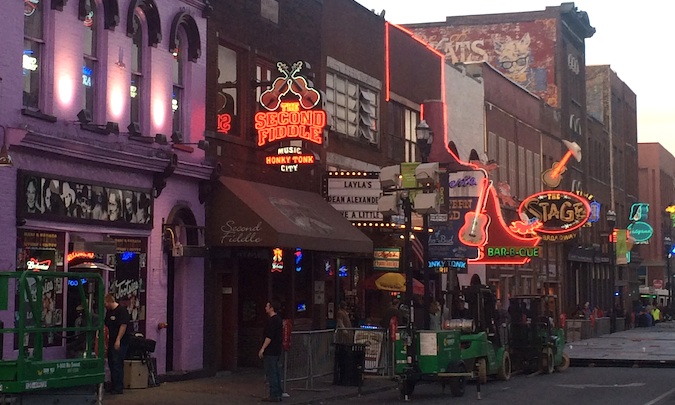
honkey tonks in NashvilleMusic is a way of life here. The sound of live music filled the air everywhere. Nashville, Memphis, and New Orleans are famous music haunts, but even the tiniest towns have robust live music scenes. From jazz to country to blues to bluegrass, there’s a music soul to this region. I danced, jammed, and sang, and it was wonderful.
The people really are friendly — There’s a common belief that the South is home to the friendliest people in the country. I’m not sure I believe that, but I would agree that Southerners are certainly friendly. They are cheerful, talkative, and incredibly helpful. Strangers waved hello, inquired about my day, were quick with invites for drinks, and generally made an effort to make me feel welcome. The folks here have hospitality down to an art. Plus, they seem to have an endless supply of sweet tea and I can’t get enough of that stuff!

The landscape is stunning

the bayou in Louisiana
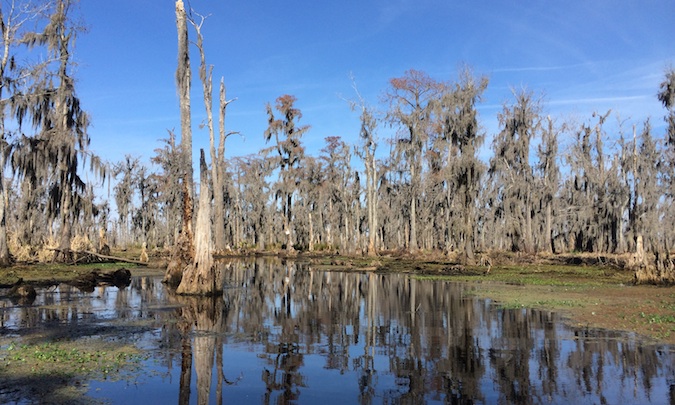
The Southern landscape is beautiful and diverse. The Smoky Mountains are a vast, dense forest filled with inviting rivers, lakes, and trails. The Louisiana bayou is haunting with moss-covered trees and eerie calm. The hills of Appalachia stretch for wooded miles, and the whole Mississippi Delta, with its swamps, marshes, and biodiversity, is gorgeous. And the beaches of Florida are so white they sparkle. I could spend months hiking and exploring all the parks and rivers in the region. (Mental note to future self: Do that.)

To understand it, you have to understand its past

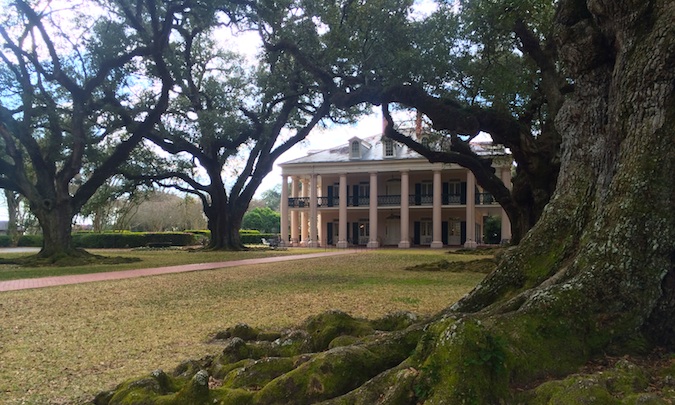
historic homes in natchezAs a former high school history teacher (I taught right out of college), I was excited to explore the area’s colonial cities and Civil War sites. Cities like Natchez, New Orleans, Vicksburg, Savannah, Memphis, Richmond, and Charleston helped shape the country, and their history and influence are important to the story of America. It was in these cities that many American cultural and political leaders were born, the Civil War began, battles were won and lost, the rise and fall of slavery was sown, and many of the biggest names in American cultural history were born. These cities and their history help explain a lot about Southern pride, culture, and current feelings.

It’s politically conservative — Though the Ashvilles, Nashvilles, Atlantas, Austins, and other big cities of the region have become more liberal (thanks in part to open-minded college students, Northern transplants, and hipsters), the rest of the region has moved more to the right recently. Besides country music, radio options seem to consist only of Christian lectures and music or right-wing talk radio warning of immigrants bringing in polio, evil Muslims, and Obama the antichrist. I overheard many conversations about “that guy” (the President) and “queers.” The big cities may be liberal, but in the rest of the South, it’s as conservative as conservative can be.

It’s racist (but it’s not 1950s violent racist) — I found the racism in the modern South to be more an “off-the-cuff racism” than a deep-seated hatred. It was based on stereotypes that lingered because they simply became habit. From the B&B owner who made an offhand comment about Jews to the guys in Nashville who talked about blacks being workers because “that’s the way it is,” to the folks in Atlanta making fun of gays, to college kids in Mississippi telling me racist jokes (or singing racist songs on buses), most came across simply as unthinking. If asked if their remarks were prejudiced, they would probably say “No, it was just a joke.” But it’s still very offensive. No one seems to question these ideas, which is why these attitudes seem to linger. Does this mean I think everyone is a deep-seated racist? No, not at all. I think the South has made incredible strides towards equality and racism is an issue in many places. While better than it used to be, it’s still very prevalent, and with the move toward the political right, I don’t see it going away anytime soon. I had hoped this stereotype would turn out to be outdated but sadly, it was not.

Despite its flaws, I grow to love the area more with each visit. It’s one of the most culturally rich areas in the country. There’s a reason why its cities are booming.

Go visit the region, get out of the cities, travel through the mountains, and find your way into the small towns. You’ll discover friendly people, heavenly food, amazing music, and an appreciation for a slow pace of life.

Travel breaks down barriers and misconceptions about people and places. The more you travel, the more you understand people (even when you don’t agree with them). The South and I may not agree on a lot of issues, but it’s not the region the negative stereotypes make it out to be. It’s a vibrant, lively, interesting, and friendly part of the United States.

And one more people should get to know.

2019年7月25日星期四

Why the American Express Platinum Card Is One of the Best for Frequent Fliers

 cleanString alt

Courtesy of American Express

Originally published on April 10th, 2018.

One of the most deluxe, high-end credit cards currently available to the public, the American Express Platinum Card is a perennial favorite of Brian Kelly, a points and miles expert.

Despite the unusually high $550 annual fee (the American Express Centurion card has an exorbitant $2,500 yearly maintenance charge, but that's an invite-only option), this card confers an excellent value for travelers who are frequently on the road. 

The Platinum Card offers several perks that are unmatched by similar comparable cards, such as the Chase Sapphire Reserve Card. (The cost, $100 more per year, reflects this.) For instance, Platinum cardholders can access a 24/7 concierge service, available by phone, to assist cardholders with almost anything they need or want.

Platinum cardholders also gain immediate elite membership status in five major rewards programs: Hilton Honors, Starwood Preferred Guest Gold, Avis Preferred, Hertz No.1 Club Cold, and National Emerald Club Executive. All of these exclusive tiers offer deluxe perks that might otherwise take years to accrue through conventional methods.

And though several cards offer Priority Pass Select membership (which gives the cardholder and a guest complimentary access to more than 100 lounges in airports across the world), the Platinum Card also opens the doors to American Express' exclusive — and downright lavish — Centurion Lounges.

Cardholders also get complimentary access to Boingo Wi-Fi, up to $200 per year in Uber credits, and Delta Sky Club access when flying Delta Air Lines.

Other reasons to add this particular credit card to your wallet? American Express Platinum cardholders earn Membership Rewards points that can be transferred to the bank's partner hotel and airline loyalty programs; spent on goods or services in the Membership Rewards online marketplace; used to pay for Amazon purchases; credited to eligible charges on your billing statement; redeemed for (more) free Uber rides; and exchanged for gift cards.

Though the value of the Platinum Card annual fee can be easily recuperated (and exceeded) by taking advantage of some of its many benefits, it will serve most useful for frequent travelers. Some of its simplest perks, for example, like zero foreign transaction fees and guaranteed 4:00 p.m. late checkout through the Fine Hotels & Resorts program, will be best appreciated by serious globetrotters.

Add benefits like a $200 credit for checked bag fees and inflight meals, as well as a $100 fee credit for Global Entry or TSA Precheck, and any card applicant may sense the strong travel theme.

To make this particular piece of plastic so appealing, Amex has even added a 60,000-point sign-up bonus. Though travelers should be sure to confirm all the benefits and incentives before applying, as they can change with some frequency. 

Benefits:

  • No foreign transaction fees
  • Five points for every dollar spent on flights booked directly with airlines or with American Express Travel
  • Five points for every dollar spent on eligible hotels booked with American Express Travel
  • Complimentary access to the American Express Global Lounge Collection
  • $15 in Uber credit for U.S. rides every month — and $35 in Uber credits in December
  • $100 credit for Global Entry or TSA Precheck every four years
  • An annual $200 credit for checked bag fees and inflight meals on the qualifying airline of your choice
  • Complimentary access to Boingo Wi-Fi
  • A $75 dining, spa, or resort credit and room upgrade (if available) when you book a stay with The Hotel Collection
  • Free Hilton Honors Gold Status membership
  • Free Starwood Preferred Guest Gold membership
  • Free Avis Preferred membership, including complimentary vehicle upgrades when available
  • Free Hertz No. 1 Club Gold membership, including up to 20 percent off car rental rates and complimentary vehicle upgrades when available
  • Free National Emerald Club Executive membership, which allows cardholders to bypass the counter and head directly to National’s car-holding area (the “Emerald Club Aisle”), choose any vehicle there, and depart
  • Rental car insurance
  • 24/7 Platinum Card Concierge service
  • Specially-curated culinary experiences and events with world-renowned chefs, including Thomas Keller, Daniel Humm, Massimo Bottura, Stephanie Izard, and José Andrés
  • Exclusive access to reservations at hundreds of restaurants across the globe through the Global Dining Collection
  • Exclusive access to one-of-a-kind events across the globe through the By Invitation Only program
  • Complimentary daily breakfast for two and guaranteed 4:00 p.m. late checkout through the Fine Hotels & Resorts program, offering an average total value of $550 when booking through American Express Travel

Sample Sign-up Bonus: 60,000 points after you spend $5,000 in the first three months.

Annual fee: $550

This 26-year-old could become the youngest American to visit every country

 cleanString alt

Courtesy of Sal Lavallo

Originally published on May 8th, 2017.

Sal Lavallo, a 26-year-old who has already been to 175 countries around the world, is on his way to becoming the youngest American to travel to all 193 member states in the United Nations.

Lavallo is currently planning a trip to the last 18 countries on the list — a trip that will span five continents. If he's able to do so before his 27th birthday in September, he could set the record for the youngest American to to accomplish the feat.

 cleanString alt

Courtesy of Sal Lavallo

He won't, however, be the youngest person to do so: British traveler James Asquith was 24 when he set the Guinness World Record for youngest person to travel to all of the world's sovereign countries.

Lavallo is therefore not after a Guinness record: The organization does not recognize titles for travelers based on their nationality.

There are, however, unofficial recordholders for being the youngest American. Connecticut native Lee Abbamonte, who left Wall Street to travel the world, made it to all UN member states by the time he was 32, in 2011. And Cassie De Pecol, also from Connecticut, set the Guinness World Record as the fastest person to visit all of the world's sovereign countries at the age of 27.

 cleanString alt

Courtesy of Sal Lavallo

Though possibly setting a record is exciting for Lavallo, it's not why he set out to travel the globe.

“I really just want to show the beauty of the world and the way people connect to one another, whether or not the record happens,” Lavallo told Travel + Leisure. “It’s more that I see myself as somebody involved in the world in a global way, so it’s not about being an adventurer or tourist, but being productive in finding the best ways to help economies develop.”

Lavallo studied economic development and identity during his time at school, leading to a curiosity to travel, and eventually a wide network of friends across the globe. During school he traveled to Tel Aviv, Abu Dhabi, Berlin, Mumbai, and East Africa, and then through work to Egypt, Pakistan, Saudi Arabia, New Zealand, and Kenya.

%image4

“What’s nice about having such a global network is I won’t be staying at hotels that can be dangerous, or on a tourist bus in locations where that can be unsafe,” Lavallo said. “It’s usually staying at someone’s home that I’ve known for years, which means I don’t need to worry but that I also get more of an authentic experience.”

During his travels, Lavallo found some destinations are more tourist-friendly than others, including Socotra in Yemen, the Virunga National Park in the Democratic Republic of Congo, Ishkashim in Afghanistan, and Kish Island in Iran since it doesn't require a visa.

Of all of the countries he has been to, Lavallo said his favorites are Tanzania, because of the people, and Abu Dhabi, because of the striking economic development.

“They came from living in the desert in tents less than 50 years ago to now having some of the world’s biggest cities and most impressive buildings,” he said.

So what does a guy who's visited most countries in the world have to say about making travel even better?

Appreciate what a place has to offer...

“Some places can be struggling in terms of their way of life in ways that people don't really understand,” Lavallo said.

“It's important that you don't expect luxury but rather appreciate that you have big and beautiful sunsets, nice beaches, and incredible nature.”

...and listen to the people.

“Traveling is about learning and about seeing new things, and I think that too often, we don’t stop to just observe, but rather want to participate in things,” Lavallo told T+L.

“It’s hard to examine what you’re doing and do it differently until you remove from your mindset the way you've always done things,” he added. “ˆf you take a step back and slow down, you’ll be able to have a more authentic experience because you’ll find yourself able to see and live the way people there do.”

Americans Are the Worst-behaved Travelers in the World

 cleanString alt

Mark Peterson/Getty Images

While we’d love to say the idea that many Americans are terrible travelers is a fallacy, we can’t, because time and time again this theory is proven to be true.

Seriously, undoing Americans' traveling reputation will be an uphill battle thanks to our less than stellar behavior abroad. Don’t believe us? Consider the fact that 64 percent of Americans admitted to urinating in public pools in a 2016 survey, while 69 percent admitted to stealing extra hotel toiletries and 13 percent admitted to skipping out on a bill.

Related: The One Thing You Absolutely Need to Do to Move Abroad, According to Expats

Yeah, we are bad. Really, really bad. Keep scrolling for a few more horror stories of Americans abroad.

Steven Cho, arrested in Thailand for throwing feces at airport staff

In a recent example of American tourists behaving badly, Steven Cho, a man from New York, was arrested in January 2018 after he allegedly stripped down to his birthday suit, began screaming at the staff at Phuket International Airport, and even threw his feces at them. According to the Daily Mail, Cho told local authorities he had “taken too many sex drugs,” which included Viagra, before the incident. Cho apologized for the incident and agreed to pay damages.

Unidentified couple, arrested in Italy for carving their names into Rome’s Colosseum

Just file this under “reasons we can’t have nice things.” In 2015, two unidentified American women from California were arrested in Rome after they allegedly carved their initials into the city’s Colosseum. The women were caught red-handed by staff as they took a selfie right next to their crime scene.

“There’s a difference in perception. Museums are treated like churches, sacred places where there are things of great value. Whereas the Colosseum is an incomplete building which has already been robbed,” a spokesman for the Special Superintendency for the Archaeological Heritage of Rome told the Guardian at the time. The women were both fined for “aggravated damage.”

Louis DiNatale, arrested in Canada for gun smuggling

Louis DiNatale swears he didn’t know he had a gun on him when he attempted to cross the border into Canada. However, it didn’t matter, because he was arrested for gun smuggling anyway.

"I told him I was retired military, I had respect for weapons, and I had a concealed carry license to do so," DiNatale said in a statement about his 2014 conversation with Canadian Border Patrol. However, when the patrol officer searched his car, he found the weapon in the center console. In total, DiNatale spent four days in a Canadian jail before he could post bail and go home. Not so surprisingly, DiNatale isn’t the only American tourist to ever be arrested for carrying guns outside the country. So next time you travel, make sure to leave your firearms at home.

Marian O., arrested in Spain for disobeying authority

Someone really needs to teach Marian O. a lesson or two on manners. According to the Olive Press, an American woman only identified by her first name and last initial was arrested in Spain in August after she allegedly verbally assaulted a ticket seller at the Palma Cathedral for not being able to speak English. She then attempted to re-enter the cathedral, but was denied.

Joseph Dasilva and Travis Dasilva, arrested in Thailand for mooning a Buddhist statue

In December 2017, both Joseph Dasilva and Travis Dasilva, two grown men from the United States, apparently thought it would be appropriate to take off their pants and moon a sacred religious statue in Thailand. Before leaving the country, the pair was arrested and fined for indecent exposure.

“Once they are through with the charges, the Thai immigration police will revoke their visas and push for deportation,” the deputy spokesman of the Thai immigration police, Col. Choengron Rimpadee, told BBC. “They will also be blacklisted from coming back to Thailand.”

Just in case it’s somehow unclear what is appropriate behavior, the U.S. Department of State’s Bureau of Consular Affairs has a few tips for you. On its site it lists the following tips to avoid being arrested in a foreign country:

  • Understand that you are subject to the local laws and regulations while visiting or living in the country – follow them.
  • Learn which laws might be different from the laws in the United States. We provide some information for each country on our Country Specific pages. For further information on laws within the foreign country before you go, contact that country’s nearest embassy or consulate within the United States.

And if you are arrested, the department says you should immediately “ask the prison authorities to notify the U.S. embassy or consulate.” And maybe just say you’re sorry.