显示标签为“cars”的博文。显示所有博文

2019年7月26日星期五

A Lesson in Kindness While Hitchhiking Through Iceland

westfjords in iceland
“Where are you going?” he asked from the driver’s seat.

“Thingeyri,” I replied. A confused look appeared on the man’s face.

“Thingeyri,” I said again, this time changing the intonation in my voice.

“Ahh, Thingeyri! Yes, I can take you there!”

I had been standing alone by the side of the road for two hours, hoping someone would give me a lift. Earlier that morning I’d taken the ferry to Brjánslækur, where I naïvely assumed the bus would align with the ferry’s arrival. But after landing, the dock master corrected that assumption: there wasn’t a bus until 6:30 p.m.

I looked at my watch. It was 11 a.m.

Crap, I thought.

I raced to the top of the dock in hopes a car would pick me. But as the cars exited the ferry, driving off to complete their journey, none did. Scores of other people walked toward waiting cars filled with friends and family. They too ignored my jutted-out thumb.

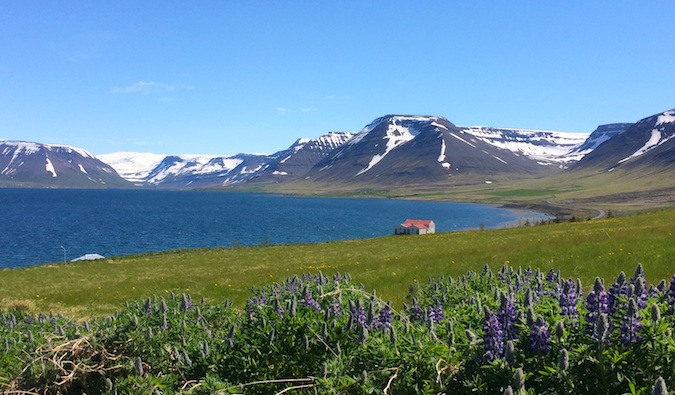
Alone, I went into the ferry terminal, ate some soup, and ventured back to the road. To my left was the empty dock and, past that, a vast, tranquil bay that shimmered on this sunny day. To the right side of the road were farms, sheep, and rolling hills. The only sign of human activity was the little red ferry building where, if all else failed, I could stay until the bus came.

No cars passed.

I waited.

And waited some more.

In the distance, a car.

I stuck out my thumb.

As the car passed, the driver looked at me but didn’t slow down.

A few more cars passed as if I wasn’t there.

It was a beautiful, warm, clear day — the first that entire week. The sun shone bright above, and the sheep grazed in the meadows. I decided to walk to the gas station, six kilometers away. Maybe I would have better luck at the crossroads.
westfjords in iceland

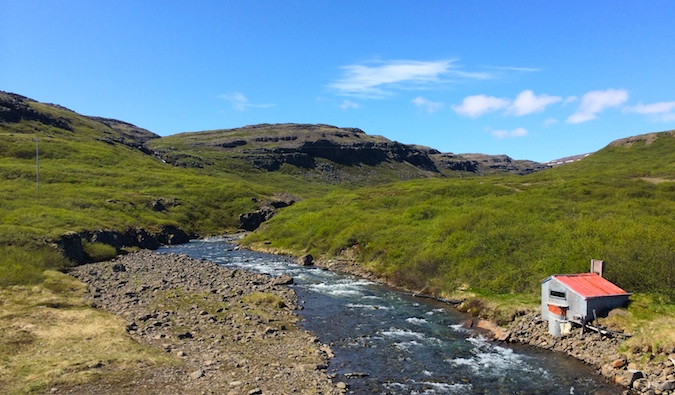
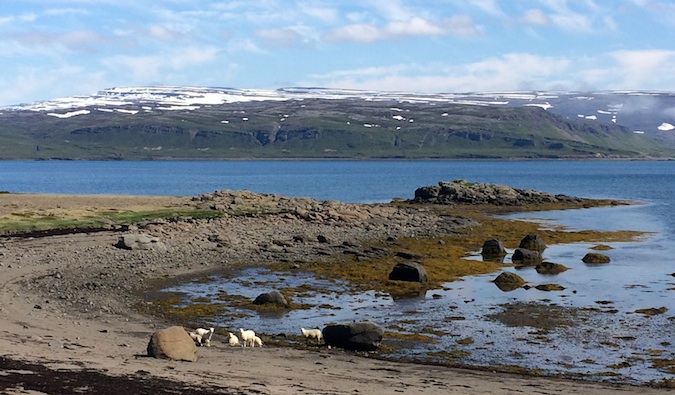
I stopped often along the way to marvel at how quiet it was. The only sounds were the wind and my footsteps. I was in no rush, and the serenity and calm of my surroundings made the long walk bearable. I passed black sand beaches filled with sheep — even they knew to take advantage of the weather. Streams that started in the glacial mountains ended their journey in the salty bay.
westfjords in iceland

At the crossroads I saw a family eating at the picnic area. Maybe they would give me a lift. I made sure to look in their direction often.

Hours passed. Cars came up the main road. I stuck out my thumb but the drivers shrugged, turned on their blinkers, and headed off in the wrong direction. The family continued to have the longest picnic ever.

Finally, as they packed up their picnic, the family looked over at me. This is my chance, I thought. Please go my way!

They got in their car, turned toward the crossroads…but then went right, heading to Reykjavik. I needed them to go left, toward me and Thingeyri!

I was defeated and hungry. When I had hitched Iceland’s main ring road, rides were abundant, but here they were nonexistent.

I was ready to give up, trudge back to the ferry building, and wait for the bus, but then, like an Icelandic angel descending from heaven in a gigantic steel cage, Stefan stopped his SUV and picked me up.

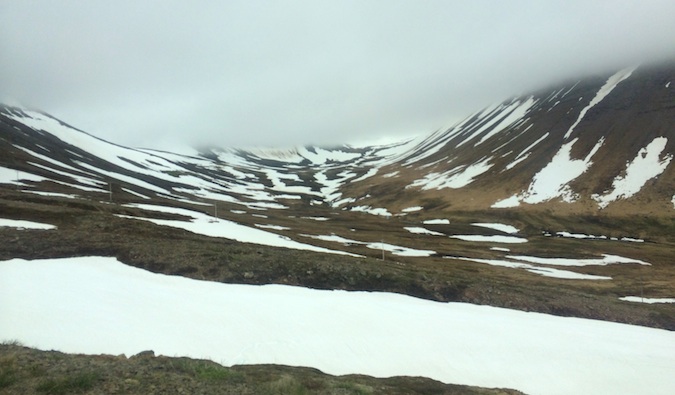
Stefan drove like Speed Racer. The road was in rough condition, opened only a few weeks ago due to a late winter and cold spring. There was still a lot of snow on the ground. “In the winter, this is all snow and you can’t drive here,” he said.
westfjords in iceland

The road turned to gravel as we whizzed through the mountains. I was jostled up and down as we hit a few potholes, and I closed my eyes as we took turns too fast for comfort, hoping he would notice that and slow down.

He did not.

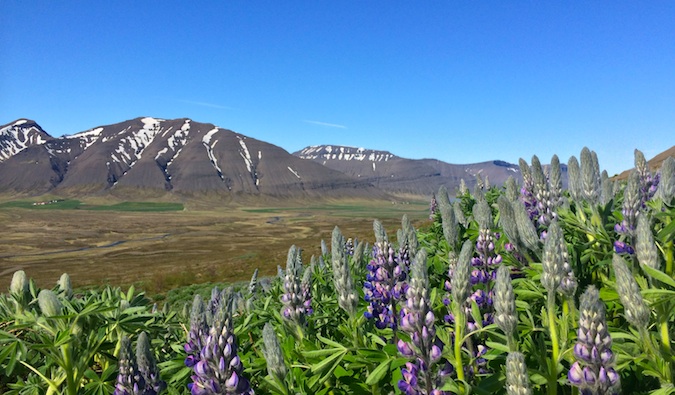
But for all the discomfort, I stared agape at the landscape that unfolded before me. Around me were melting glaciers, with rivers of clear blue water cutting into the snow. To my left were huge valleys where waterfalls fell down mountains into rivers and snows disappeared under the summer sun, leaving the growing grass a bright green. On flatter ground, the water pooled into lakes, and travelers stopped to take pictures.
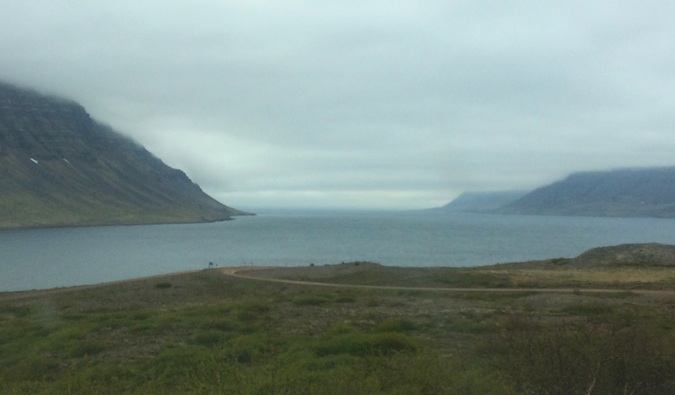
westfjords in iceland

Stefan and I talked a bit. His lack of English and my lack of Icelandic made long conversation difficult but we shared the basics. He was a fisherman from Reykjavik and married with four kids. “Triplets,” he says giving me a “right, I know” look. He was returning to Thingeyri to prepare for another ten days at sea.

During the journey, he pointed out landmarks and searched for the English word to describe them. I helped him when I could. I’d poorly repeat the word in Icelandic, Stefan would correct me, and I would fail again.
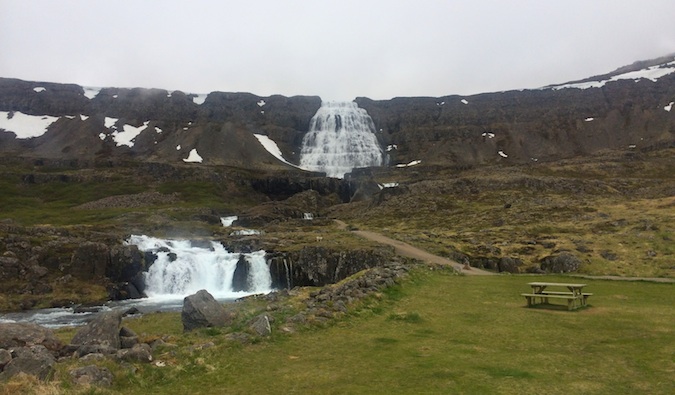
westfjords in iceland

We drove through the mountains into a thick fog. When we could barely see a meter ahead, he slowed down, taking his time to drive the mountain road. As we crept along, I occasionally glimpsed the snow-covered precipices we would careen over if he wasn’t careful. I was relieved Stefan had finally decided to drive with caution. As we made our way down the mountain, the fog lifted and he pointed to a small town ahead. “Thingeyri.”
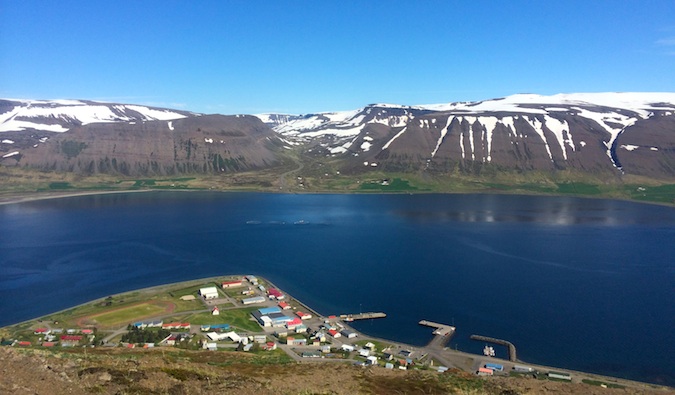
westfjords in iceland

He dropped me off at my guesthouse and we said good-bye — he was off to sea, I was off to hike the mountains.
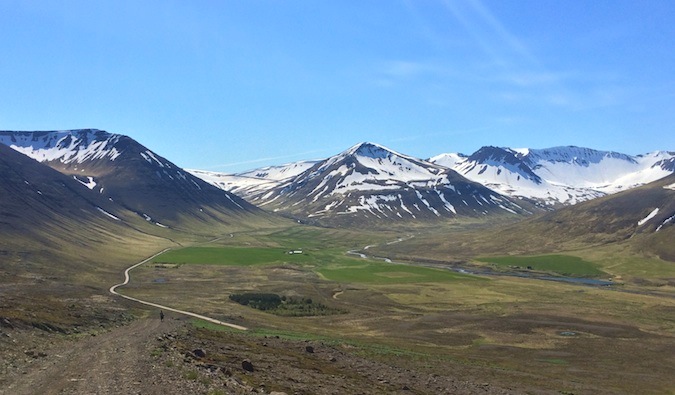
westfjords in iceland

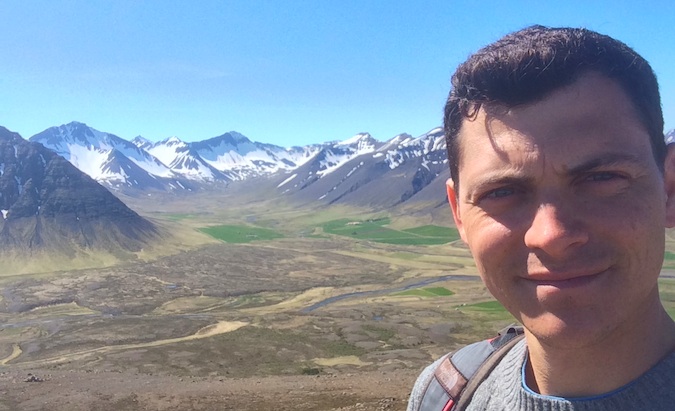
The next morning I awoke to see the fjord and mountains, clear of fog. As I hiked up Sandfell Mountain and enjoyed the beautiful day, I thought fondly of Stefan and his willingness to help a stranger my side of the road. Wherever his boat was, I hope he was filling it with fish and knew that somewhere out there was lone traveler eternally grateful for the experience.
westfjords in iceland

Get the In-Depth Budget Guide to Iceland!

Nomadic Matt's Guide to IcelandWant to plan the perfect trip to Iceland? Check out my comprehensive guide to Iceland written for budget travelers like yourself! It cuts out the fluff found in other guides and gets straight to the practical information you need to travel and save money in one of the most beautiful and exciting destinations in the world. You’ll find suggested itineraries, tips, budgets, ways to save money, on and off the beaten path things to see and do, and my favorite non-touristy restaurants, markets, and bars, and much more!! Click here to learn more and get started.

2019年7月25日星期四

Uber Is Partnering With NASA — How Soon Can We Really Expect to Fly to Work?

Uber is pushing to become the world’s next airline — without buying any planes. Instead, the company believes that a fleet of flying cars could solve the dilemma of daily commutes to work and between meetings in our growing, congested cities.

And with the announcement on Wednesday that Uber has secured a contract with NASA to develop software to make “flying taxis” possible, that push seems one step closer to reality.

The private car service company's argument is compelling. As the company reports in a whitepaper about its vision for “vertical take-off and landing” —  or VTOL — vehicles:

“The average San Francisco resident spent 230 hours commuting between work and home — that’s half a million hours of productivity lost every single day. In Los Angeles and Sydney, residents spend seven whole working weeks each year commuting, two of which are wasted unproductively stuck in gridlock. In many global megacities, the problem is more severe: the average commute in Mumbai exceeds a staggering 90 minutes.”

We can all relate to that. After growing up watching George Jetson take off each day in his automobile-briefcase-spaceship-thingamajig, who wouldn’t want to fly to work instead of sitting on a highway?

The idea of flying through McDonald's for a burger, as imagined by Luc Besson in “The Fifth Element” is somewhat appealing. But if the movie taught us anything, it’s that you never know when a superhuman will fall from the sky and wreck your ride — and that managing a fleet of flying taxis is somewhat complicated.

Flying Uber

So how realistic is Uber’s plan, announced earlier this year, to start offering flying taxi services in Dallas, Dubai and Los Angeles by 2020?

We asked an expert industry watcher, Tim Robinson, editor in chief of AEROSPACE, the flagship magazine of the Royal Aeronautical Society in London. As it happens, the future of flying cars is something of an obsession for him.

“[2020] is only two years away now, unless they have something hidden in Area 51. I don't know how exactly that would work. Airbus reckons it might be ready in 5-7 years, at least in terms of a full workable model. The key is going to be getting a regulator who will let you trial this. So Dubai is a good example,” Robinson said. “Interestingly, the Chinese Ehang — the one-person passenger drone — will be trialed in the U.K. next year ... These are small-scale trials, so I think 2020 would be a little bit optimistic.”

Ehang isn’t the only one-man drone to fly. The Lilium Jet, developed by intrepid entrepreneurs in Germany, has also had a successful maiden flight in Munich this year, and earned $90 million in funding to see the project through.

“This is an area where there is a lot excitement and there are a lot of startups getting involved,” Robinson said. But a lot of pieces still have to come together: “I think you need people who understand safety, and who understand that it's going to be part of a system as a whole ... If your small quadcopter goes wrong in mid air, and you lose your drone, that's fine, but with people onboard it's a different process.”

And after addressing airworthiness and safety, there's more, he says.

“Second, how do you integrate flying cars? How does it work in the airspace? How does it link? Have you got the infrastructure thought out? How will it integrate with [air traffic control]?” Robinson asked. “Those things separate the more sort of science-fiction ones from the people with a realistic chance of making this work.”

Take-Off Delays

In fairness to Uber, they’ve addressed some of these questions.

During the Web Summit conference in Lisbon on Wednesday, Jeff Holden, Uber’s chief product officer, announced a new partnership with NASA to develop a dedicated air-traffic management system which would support the company’s plans to launch flying taxis.

NASA said that it intends to extend programs already underway with the FAA to manage the airspace for drone applications. Uber would be part of the fourth phase of this program, which is scheduled to start in 2019.

In their proposal for flying taxis, Uber also addresses some of Robinson’s other questions by suggesting that it could use existing urban infrastructure, like helipads. Plus, Uber argued in its proposal, building VTOL infrastructure based on a “distributed network of ‘vertipoints’” would be cheaper than building more roads and bridges. Besides, VTOL aircraft would be electric and would reduce the CO2 impact of today’s cars and, Uber says they would be much quieter than cars for this reason.

Robinson is not so convinced about the noise, though, when considering estimates of future fleets of 30,000 cars flying around in a city.

“If you think of a small quadcopter drone, and the buzzing sound it makes, can you get the noise down?” he asks, and Uber says it can: “At flying altitude, noise from advanced electric vehicles will be barely audible. Even during take-off and landing, the noise will be comparable to existing background noise.”

Uber also believes the problem of air traffic management can be fixed, sort of. “Urban airspace is actually open for business today, and with ATC systems exactly as they are, a VTOL service could be launched and even scaled to possibly hundreds of vehicles,” Uber proposes. Part of their argument is that VTOL would fly at much lower altitudes than airplanes and might not even need air traffic control as we know it today. Automated systems might do a good job to separate VTOL from drones and helicopters. Still the ride-share company is aware that there may be some complications. “There are promising initiatives underway, but they will play out over many years and their pace may ultimately bottleneck growth,” Uber states. Robinson sees another hurdle for flying taxis which might be harder to overcome: our fear of flying. That’s been around for years, even though airplanes are the safest form of transport. Robinson believes the solution might be found on the ground. “If people get used to driving in autonomous cars, then small pilotless air vehicles is less of a leap,” he says. “Eventually, people would be so accepting of autonomy that it will be like getting on a lift with no lift operator today; or getting on an autonomous train or subway system. Nobody thinks twice about that. Or chairlifts or cable cars.” Bottom line, both Uber and Robinson agree that a future full of flying cars is a very exciting prospect.

Our Top 6 Flying Cars

With many VTOL aircraft proposals in development, these are the five flying cars we’re most excited about.

Travel Trends

When the same destinations appearing again and again in your social media feed—coworkers headed to Tulum for a break from the cold? Friends posting selfies from the Blue Lagoon in Iceland?—you might have discovered a travel trend. Travel + Leisure’s writers and editors pay close attention not only to the latest in popular destinations, but also to industry-wide trends like the growth of peer-to-peer rental services (such as Airbnb), the resumption of commercial flights between Cuba and the United States, or the shockingly high rates of unused paid time off for millennial workers. Learn about up-and-coming trends for consumers and for the industry.

Travel Innovation

The travel industry has always been in a state of flux, whether dealing with the advent of planes or cars or even trains. Both the industry as well as the individual experience of travel radically changed again with the widespread adoption of smart phones. Travelers today can book an apartment on Airbnb, grab an Uber from the airport, set up a date with a local on Tindr or Grindr, find a perfect restaurant on Yelp, and make a reservation on Open Table—all from the comfort of his or her personal phone. T+L looks ahead to the changes even newer innovations might bring, from self-driving cars to the spread of virtual reality devices in consumer markets.

The world changes, which ensures it's always an exciting place to explore. As shifting political and environmental realities continue to shape where we travel (and how), Travel + Leisure analyzes their effect on travel in the short and long term. Sometimes that change is destructive—a hurricane, an outbreak of violence—but just as often it’s productive—the creation of a new park, the signing of a peace treaty. Check back with Travel + Leisure to see the latest updates around the globe.