显示标签为“road”的博文。显示所有博文

2019年8月2日星期五

Keeping the Relationship Spark Alive on the Road

a couple watching the sunset as they overlook a city in Europea couple watching the sunset as they overlook a city in Europe
Posted: 07/22/2019 | July 22nd, 2019

This is a guest post by Ant, who used to blog at Positive World Travel, a travel blog that focused on couples travel tips. Their blog is no longer in existence.

When traveling the world as a couple, there can come a time when your relationship “spark” loses some its brightness. While exploring new cultures and racing around the world, it‘s easy for your relationship to fall to the wayside or end up in a rut.

I’m talking from experience.

Our relationship has become boring and mundane a few times, but we‘ve found many ways to keep igniting the flame over and over again. The important thing is to try and keep your relationship as fresh and as exciting as the countries you‘re visiting.

Here are a 6 ways Elise and I have found to keep our relationship interesting while we travel the world:

1. Organize a Date Night

As corny as it might sound, going out on an actual “date” can do wonders for your relationship. It can get monotonous sightseeing, eating cheap meals, or cooking your own food day in and day out, so making time for a special night can be something to look forward to.

Elise and I plan a date night every two weeks. We spend a little extra money, go to a nice restaurant, and dress up as best we can. We spend that night not talking about our website or what we did that day but rather talking with one another, putting our dream caps on, and playing the “what if” game.

Elise loves to chat about our eventual wedding, and even though it can drive me crazy at times (I never knew you could talk so much about floral arrangements!), date nights are a great way to share and chat about her — err, I mean our — dream wedding.

Date nights give you the opportunity to listen and reconnect with one another outside the traveling experience.

2. Be Spontaneous

Traveling as a couple can take its toll on each of you, and this tip is one of our key ingredients to success. Elise likes our travels to be somewhat planned, and I try and mix things up and be spontaneous, which keeps her thinking because she doesn‘t know what I have planned next.

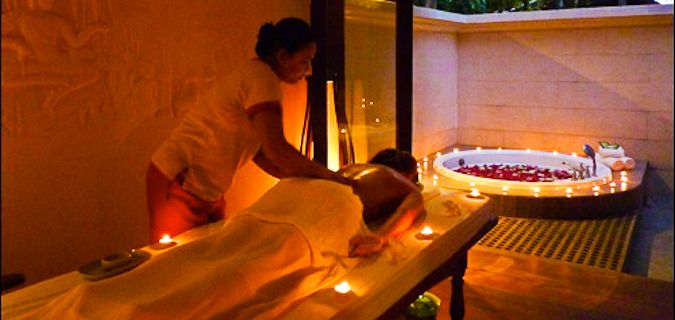
If you have extra time in the city you‘re in, head out for the day and just act on a whim. Do activities you hadn’t considered before. Try some romantic activities like booking a massage together. Or try something more fun and unconventional when traveling, such as seeing a movie or going bowling.

Traveling doesn‘t always have to be about sightseeing. You can spend time doing “normal” activities that you did back home, too.

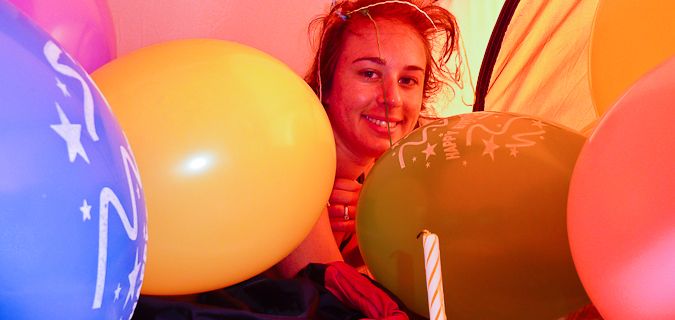
Ant from Positive World Travel celebrating a birthday while travelingAnt from Positive World Travel celebrating a birthday while traveling

3. Embrace Celebrations

Even while traveling, celebrating birthdays and anniversaries is important to any relationship. It doesn’t matter if you‘re in the middle of nowhere, because the fact that you‘ll go to a little extra effort and get creative will always make your partner happy.

Once when we were camping, it was Elise’s birthday and we were far from any nice restaurants. So, the morning of her birthday, I woke up early to blow up 23 balloons and then gently placed them throughout our tent. I woke her up to an out-of-tune singing birthday candle and a dry piece of cake I found at a corner store the day before. She was delighted that I had gone to the trouble of making her birthday a little special even though we were camping.

We spent the rest of the day at a deserted beach, and Elise says that it was one of her best birthdays ever.

4. Plan Surprises

Even though you‘re traveling on a limited budget, a surprise every now and again will always excite your better half. Elise knows that I‘m a sucker for dark chocolate, and I always get excited when she‘s been out to run some errands and jumps on the bed with both hands behind her back when she gets home. I love that she thinks of me while she‘s out. It brings joy to our relationship.

Try to surprise each other with little touches here and there. Even a small gesture can work wonders.

5. Face Your Fears Together

Doing activities that one or both of you have a fear of can bring you together and bond you. Sharing a fear and overcoming it will definitely bring the spark back and a sense of achievement for you both.

Elise has a small fear of heights, and she has regularly pushed herself to confront this fear over the past 18 months. She has jumped out of planes and off cliffs into fast-flowing rivers. Each time she faces this fear I get so proud of her and it deepens my love for her.

Supporting your partner and giving them the encouragement they need to face their fears or overcoming them together is an instant bonding moment shared between the two of you and only strengthens your relationship.

A female traveler getting a romantic massage overseasA female traveler getting a romantic massage overseas

6. Get Intimate

It has to be noted that sex is an important part of every relationship, and when you’re not having any, you‘re bound to be fighting more. Traveling in dirty environments and staying in shared accommodation can be a dampener to sexual relations. Finding time for a romp when there are train schedules to work out, long and sweaty bus rides to take, or a day battling annoying touts can be difficult.

Spending a little extra money from time to time and staying in a private room is the best way to find some alone time, as having sex in hostels can be quite tricky otherwise. Elise and I do this from time to time to make sure we can have intimate moments together. It’s worth the extra time and money. Trust me.

***
Even couples that have been together for years and years all need to take time out every now and again to make sure the spark is still there. The most important tip is to work out what works for you as a couple. Elise and I always make sure we not only have time for long-term travel and all that entails but also for making our relationship work on the road and keeping the spark alive.

Even couples that have been together for years and years all need to take time out every now and again to make sure the spark is still there. The most important tip is to work out what works for you as a couple. Elise and I always make sure we not only have time for long-term travel and all that entails but also for making our relationship work on the road and keeping the spark alive.

Ant is one half of the dynamic duo who used to blog at Positive World Travel. They wrote about their experiences and thoughts on what long-term travel is like as a couple, though they no longer blog.

Book Your Trip: Logistical Tips and Tricks

Book Your Flight
Find a cheap flight by using Skyscanner or Momondo. They are my two favorite search engines because they search websites and airlines around the globe so you always know no stone is left unturned.

Book Your Accommodation
You can book your hostel with Hostelworld as they have the largest inventory. If you want to stay somewhere other than a hostel, use Booking.com as they consistently return the cheapest rates for guesthouses and cheap hotels. I use them all the time.

Don’t Forget Travel Insurance
Travel insurance will protect you against illness, injury, theft, and cancellations. It’s comprehensive protection in case anything goes wrong. I never go on a trip without it as I’ve had to use it many times in the past. I’ve been using World Nomads for ten years. My favorite companies that offer the best service and value are:

  • World Nomads (for everyone below 70)
  • Insure My Trip (for those over 70)

Looking for the best companies to save money with?
Check out my resource page for the best companies to use when you travel! I list all the ones I use to save money when I travel – and that will save you time and money too!

How to Live and Travel Full-Time by RV (Updated 2019)

marc and julie from RV Lovemarc and julie from RV Love
Posted: 3/7/2019 | March 7th, 2019

Over the past few years, there has been an explosion of people giving up the daily grind to live and travel in vans, RVs, and other nontraditional abodes. While traveling in an RV has been something people have been doing for decades, new sharing economy websites, better resources online, more modern vans, and a growing community that can provide support have made it easier for anyone to travel full-time in an RV.

What used to be traditionally and predominantly an activity for older, retired, or family travelers is now something people of all ages are trying to do.

One just has to look up #vanlife on social media to see!

(An aside: I hate the #vanlife movement. The faux Instagram movement does nothing for me. Just a bunch of millennials searching out that perfect sponsored photo and talking about how woke they are (for the most part)).

But #vanlife aside, RV travel is a wonderful way to see the world.

“How do you travel in an RV?” is one of the questions I’m most asked.

So today, we’re going to the experts and talking full-time RV with nomads Marc and Julie from RV Love. This couple joined my blogging program a few years ago, hoping to find a way to spread the gospel of living and traveling in an RV to the wider world. (Spoiler: they did. And they just published a book with Simon & Schuster about it too!)

They’ve been driving around in their RV for nearly five years and, today, they share their wisdom about how to travel by RV:

Nomadic Matt: Tell us about yourselves! How did you get into this?
Marc and Julie: We’re Marc and Julie Bennett, full-time RVers since 2014, living, working, and traveling in our motorhome as we explore North America and the world! We met on the dating website eHarmony while both living in Colorado in 2010, married in 2011, and hit the road three years later!
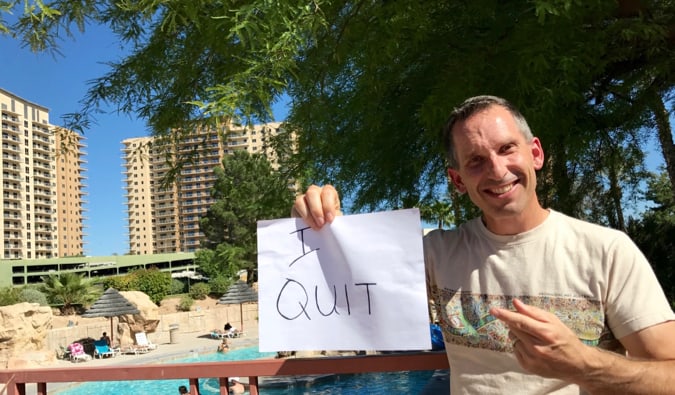
marc from RV Love quitting his jobmarc from RV Love quitting his job

Why did you pick traveling in an RV as your way to get around?
We knew we wanted to do a lot more extended travel while we were still working. We get such little vacation time here in the USA, and we didn’t want that to limit our lives. So we started exploring different ways to bring more travel and adventure into our everyday life without Marc having to give up his job as project manager of operations, which he was able to do from home.

We considered international travel, but there were two main reasons why wasn’t a fit: the challenge of time zones, and more specifically, we wanted to travel with our dog Coda. Plus, we love to drive, so RVing was really the ideal solution for us. We love that wherever we go, we’re always home, and we’re not living out of suitcases.

We’re both passionate about driving, so it makes sense that we would choose to live and travel by RV, although we usually prefer more sporty rides when it comes to entertainment, as we both have a love for sports cars and convertibles.

What’s life like living and traveling around in an RV?
We just entered our fifth year on the road full-time as RVers, and we recently changed from a 2012 36’ gas Class A motorhome to a 1999 40’ diesel motorhome! We bucked the trend and went bigger (and older and cheaper, but much higher quality), and we’re actually doing a complete remodel of our RV this summer.

Traditionally, we spend about 80% of our time in campgrounds and about 20% dry camping, but we recently installed a big lithium battery bank and solar system on our RV, so we plan on spending a lot more time camping off the grid out in nature in the coming years. We try to spend 2-3 weeks in each location, but that varies on where we are, the weather, and what projects we have on our plates. We moved pretty fast in our first 3+ years, having visited all 50 states while still working full-time.

This year, we have so many big and exciting projects on our plates, we’re really feeling the need to slow down, catch our breath, and get caught up on our content! We tend to wing our plans a lot more than we used to, as we’re more comfortable and confident RVers now.
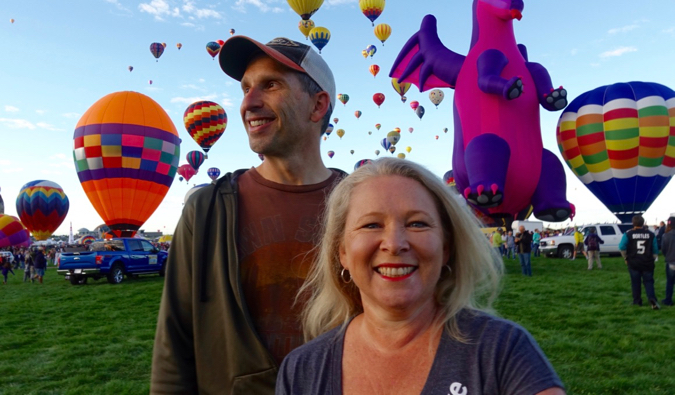
marc and julie from RV Love looking at balloonsmarc and julie from RV Love looking at balloons

An average day depends on whether you have to work or not. We love that we no longer have a commute and that the views outside our windows change every week or so. Nature is a big part of our everyday life, so it can be easier to get in more walking, hiking, biking, or kayaking. We definitely get to see more sunsets — that’s a big thing for a lot of RVers.

RV life is still life. You need to go grocery shopping, make meals, do laundry, pay bills, and do housework. Then there’s RV maintenance and repairs! There’s almost always something to do on an RV — tighten screws, replace parts, troubleshoot issues, check your tire pressure, fix whatever’s broken.

Upon arrival at a destination, it usually takes less than 30 minutes to set up. It may sound like a hassle, but if you’re staying a week or more, it becomes a small percentage of your time. And RV life can be as social as you like. We tend to mostly stay in campgrounds, so it’s not too difficult to meet new people. And we also go to RV rallies to meet up with our RVing friends, who we stay in touch with online. It can take a little time to build your RV community, but if you put yourself out there, it can happen pretty quickly!
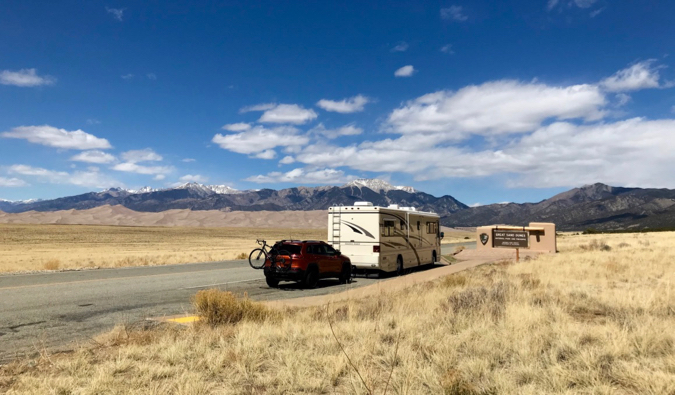
an RV for long-term travel parked on the side of the roadan RV for long-term travel parked on the side of the road

Do you need a lot of mechanical skills to do this?
When you’re traveling around in an RV, if you aren’t already handy, you’ll learn to be! It’s definitely an advantage to become somewhat mechanical and familiar with simple tools. The RVing community is very helpful and supportive when it comes to finding answers for issues you may have — whether online (in social media groups) or in person. At RV parks and campgrounds, you will usually find someone reasonably experienced and mechanically oriented nearby. If you are not skilled or it’s a complex job, you can usually find a local or mobile repair person to perform needed maintenance or repairs.

We recommend sticking with a less complex RV when starting out. The more simple the RV, the more reliable and easy to fix they are likely to be, and you can tackle many repairs yourself. As full-time RVers driving a Class A motorhome, we only need to take our RV into repair facilities 2-3 times per year on average.

Many RV repairs are fairly simple, and that’s when YouTube and Google are your friends! One of our favorite YouTube channels is the RV Geeks, who make DIY how-to videos to help you make simple repairs and upgrades. It’s often more convenient (and definitely cheaper) to do many RV repairs yourself. And you may even want to consider an extended service contract to cover your RV for repairs outside of the manufacturer’s warranty period and help limit repair costs.

Are there any personality traits you think are necessary for living in an RV?
Flexibility, adaptability, resourcefulness, and a sense of humor! Just like any other kind of travel, things don’t always go the way you want, RVs break (or break down), and travel plans go awry when you least expect it, so you need to be able to find a creative solution, often on the fly. It really helps to be handy or at least be willing to have a go at DIY fixes. RVers learn to become much more self-sufficient pretty quickly.

Anyone can RV if they really want to. It doesn’t matter about your age, life stage, relationship status, or financial situation. In our book, we share the inspiring story of 69-year-old Frieda who hit the road solo after her husband passed away and drove to Alaska to celebrate her 70th birthday. She’s been on the road for two years now and is still going strong.

Another great case study from the book is Nik and Allison (31 and 30). They share why they decided to RV and explore the country before they started a family. They follow the FIRE philosophy (Financial Independence, Retire Early) and save more than 50% of their income so Nik can be a stay-at-home dad. RVing for a year and a half while still working allowed them to do a lot of travel affordably while keeping them on track with their financial and life goals. 
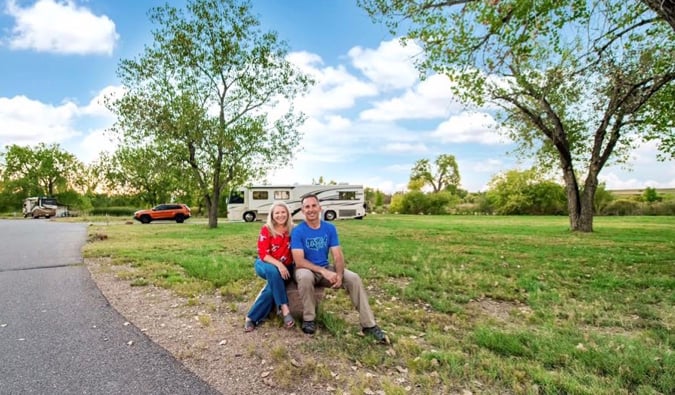
marc and julie from RV Lovemarc and julie from RV Love

There really is no “one way” to RV, just the right way for you. That’s why, when writing our book Living the RV Life: Your Ultimate Guide to Life on the Road, we wanted to create a roadmap for people that would help them hit the road and thrive, keeping them on track with their personal goals while they’re doing it. That’s been a big part of our own success. We’re almost five years in now and still living and loving the RV Life. Now we’re showing others how they can do it too.

A lot of people are embracing RV/van life these days. Why do you think that is?
We think it’s a perfect storm of several things colliding simultaneously:

  1. A lot of people are questioning the traditional American Dream as a path to success or happiness — the idea of postponing your life, travels, and experiences until retirement just doesn’t really make sense, and of course, the future is promised to no one. Why not travel while you have youth and health on your side?
  2. Technology is enabling us to live and work from pretty much anywhere, and more companies are allowing people to work remotely, and more people are starting their own businesses.
  3. Then there’s social media and FOMO! With the increased awareness that RV or van life is possible through watching people’s YouTube channels, Facebook pages, and Instagram feeds, other people are beginning to realize you can travel and see cool places, and live or work in forests or by lakes — and they want to do it too. America has long been famous for iconic road trips — and RVs and van life offer the ultimate freedom: exploring the country on wheels.
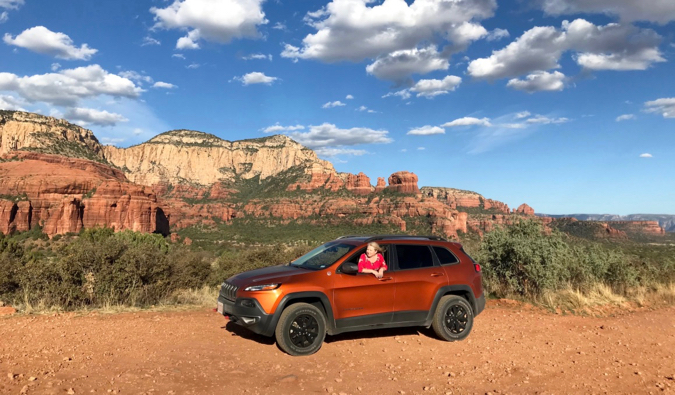
julie from RV Love surrounded by beautiful naturejulie from RV Love surrounded by beautiful nature

How much money will people need before they dive into RV life?
It’s a good idea to pay off as much unsecured debt as possible before hitting the road. Less debt lightens your load and allows you to really enjoy the freedoms of RV life.

It all depends on how you want to RV, and your budget. Generally, we recommend people try to save up a few months of living expenses to get started, and as a backup for unforeseen challenges and expenses. Life happens, and you just never know when you may be hit with an unexpected expense or expensive RV repair.

As a guide, as long as you plan and budget carefully, and make a good RV purchasing decision, it’s possible to RV full-time for about $2,000–$3,000 per month. Some do it for less, and others do it for way more. But across the board, we find most RVers end up spending about the same in their RV life as they did in their regular life.

Just like in traditional life, you just have to plan to live and travel within your means. Plus, your ability to earn an income while you travel is a huge factor. If you can work from the road while you RV — as was the case for us — it can be a pretty simple trade.

For example, we sold our townhome and traded our mortgage payment, HOA, utility bills, and two car payments for:

  • A used RV, which we financed
  • A less-expensive car that we paid cash for
  • Campground and fuel expenses

What we previously spent on home repairs and maintenance for our home is now redirected to our RV. Same goes for RV insurance and roadside assistance. We tend to spend a bit more on eating out and entertainment, as we’re always on the move and experiencing new places. But it’s easy to save money by making meals in your RV, and there’s no shortage of things you can do for free, like hiking, biking, and kayaking.

Many people (like us) are able to work remotely with just an internet connection. Some work seasonally, then take a few months off to travel and explore. Other careers, like nursing, hospitality, agriculture, and construction are highly transferable to new locations, especially for seasonal work. For some lines of work, it can actually be easier to find jobs by having the ability to follow the work around the country.

We have met people who live full-time in vans or RVs frugally, for less than $20,000 per year. And we have seen others who spend well over $60,000 per year. Like all other forms of travel (and life!), expenses are variable, depending on how you do it.

julie from RV Love working on her laptopjulie from RV Love working on her laptop

What tips do you have for people who aren’t sure what RV, van, or trailer they should get?
Buying an RV can be expensive, and buying the wrong RV can be even more expensive! Like anything with wheels, RVs depreciate (hard), and so doing your research in advance pays off. Before you even set foot on an RV dealer’s lot or go check out the RV you found on Craigslist, ask yourself:

  • Who is traveling with you? 
  • How much do you plan to travel? (weekends, part-time, full-time)
  • Where do you want to go? (campgrounds and RV parks or off-grid camping in national forests?)

Generally speaking, you’ll want to choose the smallest RV that you feel that you can comfortably live in. Smaller RVs offer more flexibility to access more places. Larger RVs are more comfortable for extended travel but will be more limiting in terms of where you can take them, especially if you want to stay in national parks and do off-grid camping.

Don’t overinvest in your first RV — it’s the one that will teach you what is most important to you and your travel style. Start out by buying used. You will avoid the steepest part of the depreciation curve. Plus, you’ll have a much better idea of what’s important to you when it comes time to buy your second RV. It’s possible to nail it with your first RV purchase, but not without a lot of research and clarity around your priorities.

What are some common pitfalls to avoid when starting out?
Full-time RVing is not a vacation, it’s a lifestyle. It’s exciting when you start. You want to go everywhere and see and do everything. Try to create a sustainable travel pace from the beginning. Stay longer in an area. It’s cheaper – in terms of fuel and campground fees – and you’ll really be able to immerse yourself, explore, and even feel like a local for a while.

Second, it’s easy for people to think they need a big RV to be comfortable, especially when coming from a bigger home. In the RV lifestyle, your environment and views are constantly changing, so your world feels a lot bigger, even if your living space isn’t. It’s easier to live in a smaller space than you might expect, especially with way less “stuff.” Remember our advice above when it comes to choosing the right RV, so you can avoid that expensive mistake.

And finally, it can be hard to resist buying gadgets and gear before you even buy your RV! Every RV has cupboards and storage of different sizes and shapes, and you won’t know what fits where until you have your RV. Save money by hitting the road with the essentials, then spend some time traveling before investing in too many upgrades or gear. You’ll want to make sure they are going to be a fit for your preferred travel style. You can always buy what you need as you go. Don’t take too much stuff! You need less than you think and can get what you need as you travel.
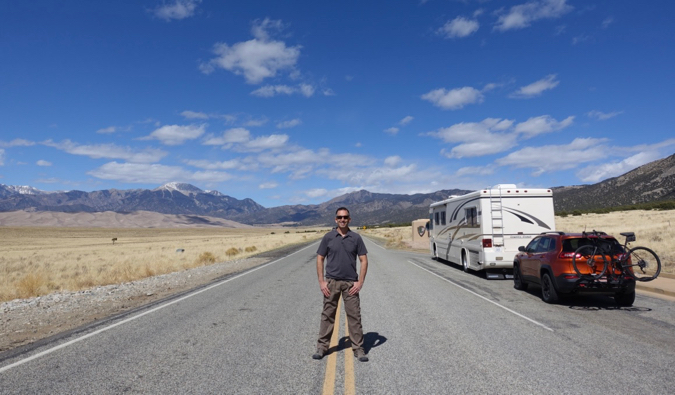
marc from RV Love standing in the road on a road tripmarc from RV Love standing in the road on a road trip

Do you have any recommended companies for vans/RVs? What about resources for finding where to camp/park?
It’s a good idea to consider renting an RV or van first, to see if you even like the lifestyle. You can rent RVs from rental companies and even from private individuals, which gives you more variety in the types of RVs you can choose from. This is really useful for helping you decide what kind of RV is right for you, before buying one. It may seem expensive, but making the wrong decision isn’t cheap either! Many large RV dealerships rent RVs, there are large rental chains like cruiseamerica.com or www.roadbearrv.com, but if you want to rent an RV from individuals for more variety, consider doing so via rvshare.com.

It is difficult to make specific recommendations about buying RVs, as there are hundreds of manufacturers, models, and types, and RVs are not like cars. The options, features, and price range of RVs vary widely. That said, we generally recommend buying a preowned RV, as they are usually more affordable, and, contrary to cars, you will generally experience fewer issues with a well-maintained preowned RV than with a brand-new unit. That’s because every RV — much like building a new house or condo — will have a “punch list” of items that need to be fixed for the first few months (or more) after you drive it off the dealer’s lot.

You can find RVs at RV dealers, on websites like RVTrader.com, as well as on Craigslist or Facebook Marketplace, and from friends and family. Local RV parks often have a community notice board of RVs for sale, too.

If you want to camp for free on public lands, there are websites like Campendium.com and Frugal Shunpiker’s Guides to find free camping areas. And there are thousands of RV parks and campgrounds around the country, which you can you find online, through apps, and in camping directories.

You can also look into camping memberships that offer discounts on your stays. For example, we spend a lot of time in a campground membership network that literally saves us thousands of dollars per year. Other websites and apps we recommend include CampgroundViews.com, Campendium, and AllStays. There are a ton out there, and you can find many more resources in our book and at our website, RV Love of course! 🙂

***

If you want more information, Marc and Julie Bennett are RVers who live, work, and travel from the road full-time, and since hitting the road in 2014, have visited all 50 USA states, plus Canada and Mexico. They are co-authors of Living the RV Life: Your Ultimate Guide to Life on the Road, and you can follow along on their journey via their website RV Love as well as their social media channels!

If you’d like to dive deep and get hands-on help on starting your own RV life, they also run online courses at RVSuccessSchool.com. As a Nomadic Matt reader, you can get 10% off their course with the code NOMADICMATT. Just input the code when you sign up!

Book Your Trip: Logistical Tips and Tricks

Book Your Flight
Find a cheap flight by using Skyscanner or Momondo. They are my two favorite search engines because they search websites and airlines around the globe, so you always know no stone is being left unturned.

Book Your Accommodation
You can book your hostel with Hostelworld, as it has the largest inventory. If you want to stay somewhere other than a hostel, use Booking.com, as it consistently returns the cheapest rates for guesthouses and cheap hotels. I use them both all the time.

Don’t Forget Travel Insurance
Travel insurance will protect you against illness, injury, theft, and cancellations. It’s comprehensive protection in case anything goes wrong. I never go on a trip without it, as I’ve had to use it many times in the past. I’ve been using World Nomads for ten years. My favorite companies that offer the best service and value are:

  • World Nomads (for everyone below 70)
  • Insure My Trip (for those over 70)

Looking for the best companies to save money with?
Check out my resource page for the best companies to use when you travel! I list all the ones I use when I travel — and they will save you time and money too!

Photo Credits – 5, 7

Can Introverts Successfully Travel Solo?

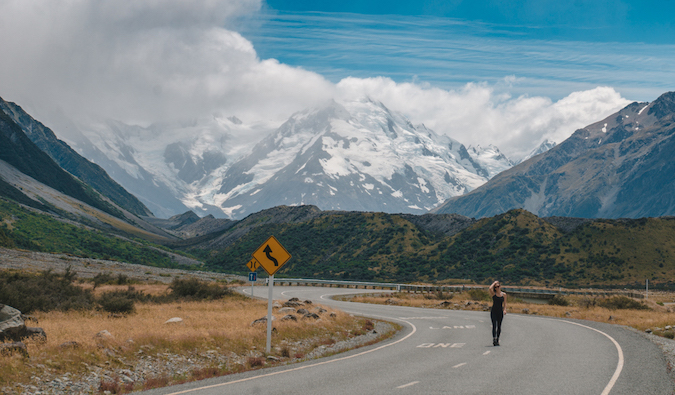
Kristin Addis standing on a empty winding road in the mountainsKristin Addis standing on a empty winding road in the mountains
Posted: 5/2/2019 | May 2nd, 2019

Kristin Addis from Be My Travel Muse writes our regular column on solo female travel. It’s an important topic I can’t adequately cover, so I brought in an expert to share her advice for other women travelers to help cover the topics important and specific to them! In this month’s article, she shows us how solo travelers can deal with traveling as an introvert!

Recently, I traveled to Oakland to attend a birthday brunch. I didn’t know anyone besides the birthday girl. As an introvert, situations where I don’t know anyone are hard for me.

Per usual, I was pretty uncomfortable at first, choosing to stick close to the one person I knew and to kill time by slowly pouring myself a coffee and eating a fruit plate at tortoise speed.

But, as time passed, I began conversing with one new person, then another, and then almost everyone who was there. I met truly interesting and friendly people, and by the end of it, I was so glad that I went and that I stayed.

When I’m at home, though, I tend to put off going out to do simple things that involve personal interactions, like grocery shopping, until the last minute. It can get pretty ridiculous, to be honest.

Yet on the road it’s so much easier to get out and explore and especially to meet new people. Why is that?

In a word: dopamine.

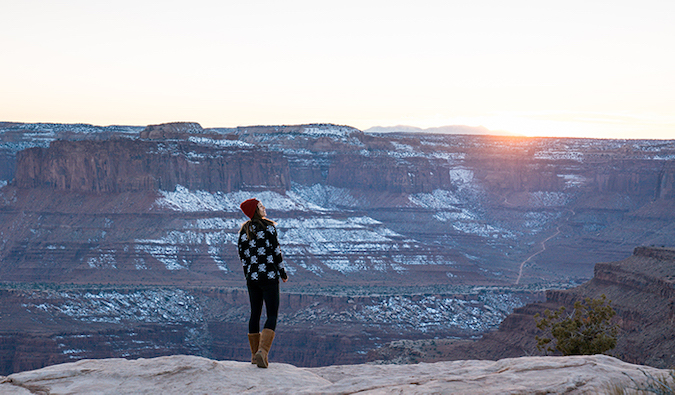
Kristin Addis standing at the edge of the Grand CanyonKristin Addis standing at the edge of the Grand Canyon

According to professors Daniel Z. Lieberman and Michael E. Long in The Molecule of More, dopamine, which plays a major role in reward-motivated behavior, is what pushes us to try new things. In addition, researchers Nico Bunzeck and Emrah Düzel found, through MRI scans, that the reward center of our brain is stimulated more by novelty than familiarity.

Therefore, we are hardwired to explore and crave newness. It’s the anticipation of the unknown — and how exciting it could be — that encourages us to go beyond our comfort zones.

So, while it can be difficult for introverts to approach people and venture outside to do routine things at home, where everything is familiar, when we’re on the road we have dopamine on our side.

This scientific explanation makes sense to me. When I’m traveling and experience a moment of true novelty, I feel like I’m riding a natural high, something more pleasurable than I could ever try to manufacture. Newness feels good, so traveling feels good, and being an extrovert in these moments comes naturally.

So just know that even if you tend to be shy and uninterested in going to random house parties or even the grocery store at home, you may find that you have renewed energy for meeting people (and feeding yourself) on the road. It helps tremendously that most other people are also feeling that dopamine rush from traveling, so they’re in a more approachable state, too.

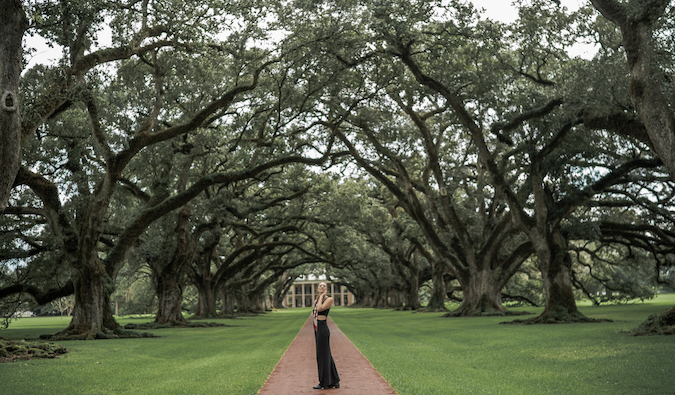
Kristin Addis on a walkway covered in tall treesKristin Addis on a walkway covered in tall trees

I used to joke that at home in Southern California I had no idea how to make new friends. Do I just walk up to them at a café and ask what they like to do during their free time?

The truth is, on the road, the answer is “yes.” It’s often that simple. Travelers are by and large more receptive and friendlier than most of us are probably used to back home. Since we’re all getting dopamine rewards for meeting new people and exploring new places, it becomes easier for both parties to be more open on the road.

I used to worry that I’d fear approaching new people, but I rarely even have to start a conversation. If all else fails, “Where are you from?” is a perfectly acceptable way to break the ice, an easy question that everyone has an answer to. I’ve had random bus, hostel, and café conversations that have turned into lifelong friendships, and I’ve had others that only served to entertain me for the afternoon; both are of value, and I never know which I might get.

I love having no itinerary and no fixed plans. This is one of the gifts of solo traveling. That said, booking activities ahead of time and paying some kind of deposit can be of help to introverts who might otherwise find reasons why they should stay inside. I’m sure my fellow introverts recognize the scenario of waking up the day of a tour you’ve booked, wishing you could cancel, but since you’ve already paid, you end up going and having the best time. Having some skin in the game makes us way more likely to honor our commitments.

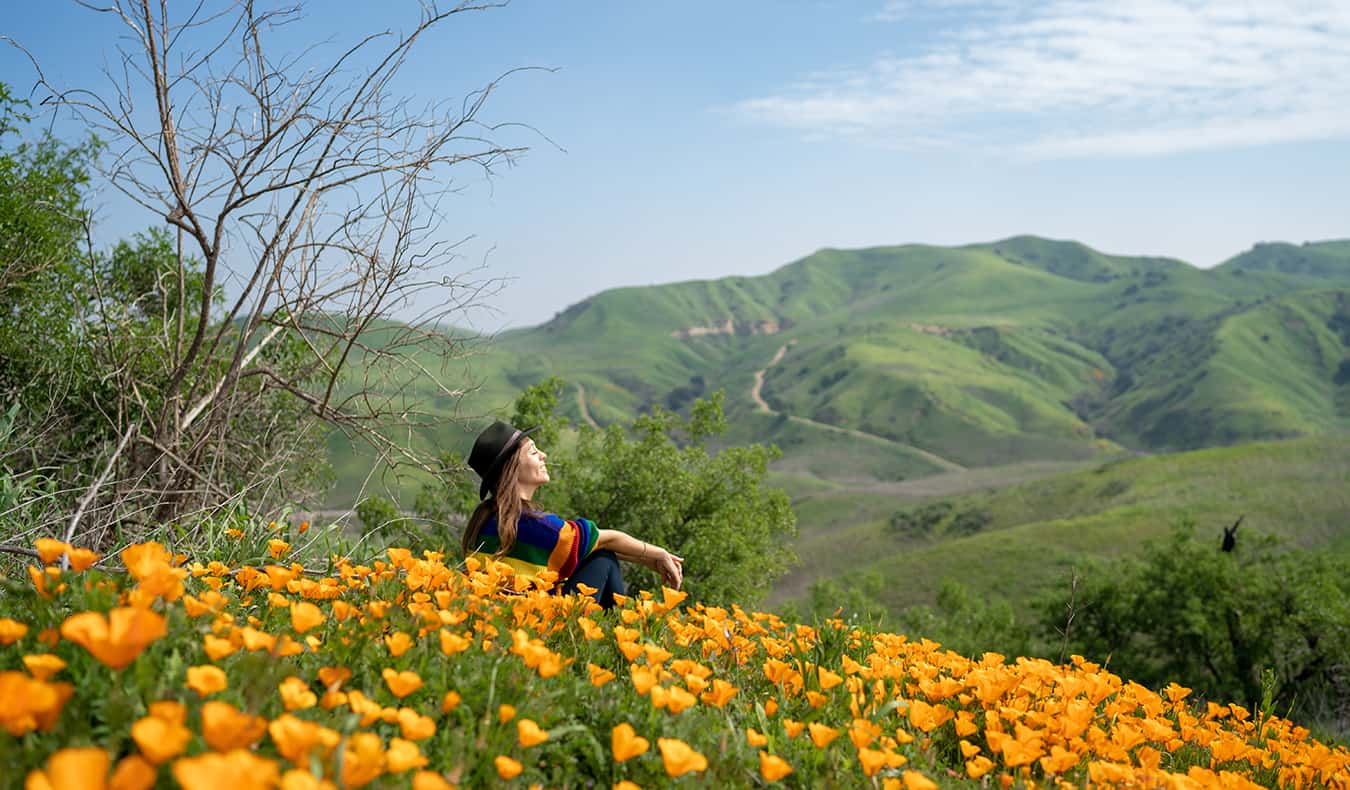
Kristin Addis sitting in a bed of sunflowers against a mountain backdropKristin Addis sitting in a bed of sunflowers against a mountain backdrop

Personally, it’s tempting to cancel even if it’s something fun that I honestly want to do. If I didn’t prebook things in life, I’d never exercise, dive, or explore. It would be too easy to keep putting them off.

For example, I booked an island excursion on Nusa Penida and a cooking class in Chiang Mai, and led a group hiking tour of Torres del Paine in Patagonia that the women participants prepaid for. Many of them tended to be more introverted, but in a group activity like that, other solo travelers tend to show up, which helps everyone to be more social and open.

I’ve also found that staying in an accommodation that is social by nature, like a yoga or meditation retreat, or heading to places that are known for an activity I love, like scuba diving in Indonesia, can make my introversion easier to handle. Knowing that the others there will also be into the activity that I’m into gives us common ground, something to talk about, and the activity itself allows us to bond over a week or two. Some of my favorite people are those whom I met on a dive boat or week of deep spiritual practice.

Though all of these are “hacks” for becoming a more extroverted traveler, we introverts tend to get our energy from time spent alone. At some point we need some “me” time — and this is why solo travel can be so wonderful. Part of the beauty of solo travel is the time that you get to spend with yourself. You won’t disappoint anyone by needing time alone, nor will you have to push anyone away or force yourself into an activity you’re not really feeling.

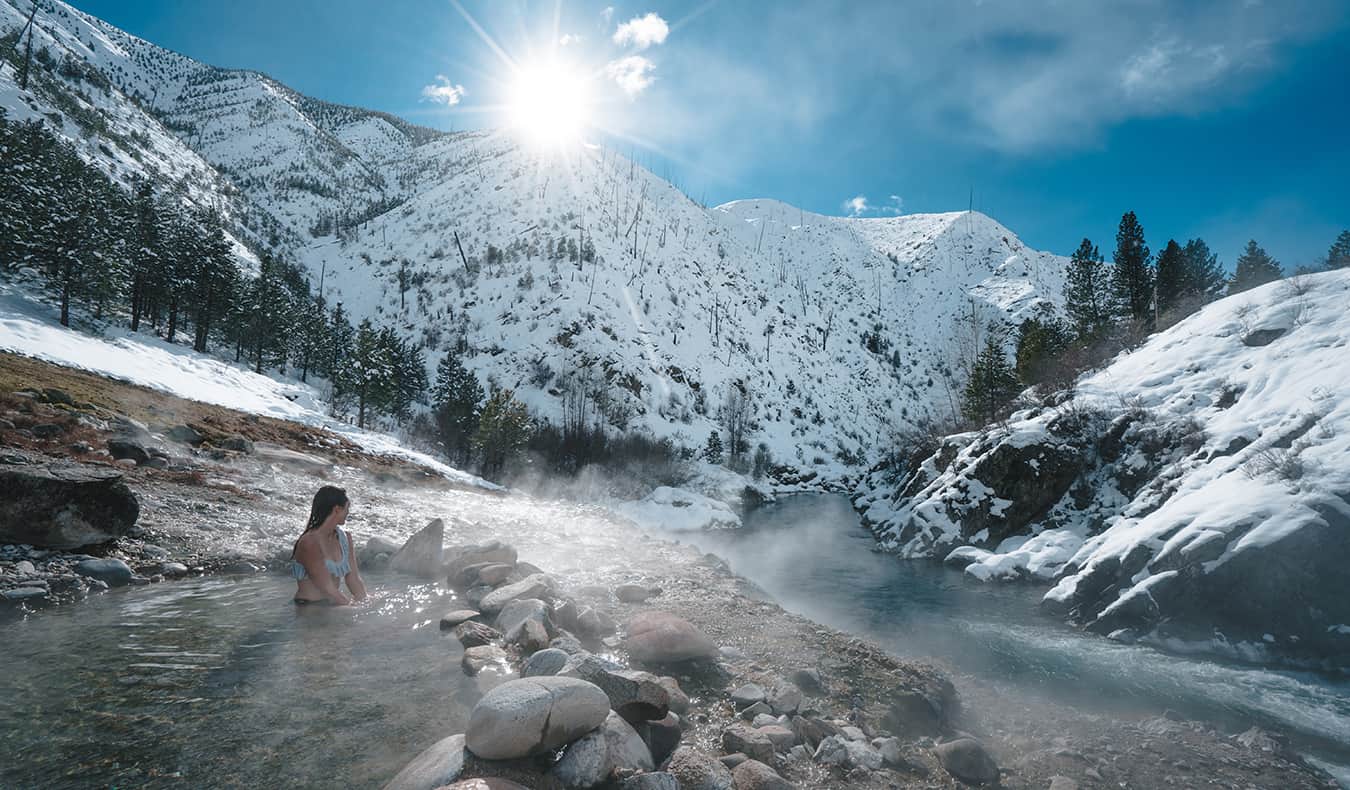
Kristin Addis sitting in hot springs in the snow-capped mountainsKristin Addis sitting in hot springs in the snow-capped mountains

I used to get down on myself if I went a few days without meeting new people. I’d fret over moments that I felt I’d “wasted” by reading in bed or chilling out for the day. Now I realize how important those days are too. I get to recharge by taking it easy and practicing self-care. And that’s a big reason why we travel too, isn’t it? We want to treat ourselves.

So please don’t feel bad if you’re traveling and you just don’t feel like going out that day, don’t want to be social, or feel like getting room service. It’s okay to do those things if it’s what you feel you need.

Listening to yourself is the most important part of solo traveling, anyway. This is something I’ve learned as a solo traveler in my 30s, and it’s made me enjoy traveling even more.

Knowing that you’ll have dopamine on your side, that you will meet people more easily on the road, and that you’ll be able to make real-time decisions about what’s best for you, you’ll be better off making the leap and traveling solo.

Conquering Mountains: The Guide to Solo Female Travel

conquering mountains: solo female travel by kristin addisconquering mountains: solo female travel by kristin addisFor a complete A-to-Z guide on solo female travel, check out Kristin’s new book, Conquering Mountains. Besides discussing many of the practical tips of preparing and planning your trip, the book addresses the fears, safety, and emotional concerns women have about traveling alone. It features over 20 interviews with other female travel writers and travelers. Click here to learn more about the book and start reading it today!

Kristin Addis is a solo female travel expert who inspires women to travel the world in an authentic and adventurous way. A former investment banker who sold all of her belongings and left California in 2012, Kristin has solo traveled the world for over four years, covering every continent (except for Antarctica, but it’s on her list). There’s almost nothing she won’t try and almost nowhere she won’t explore. You can find more of her musings at Be My Travel Muse or on Instagram and Facebook.

Book Your Trip: Logistical Tips and Tricks

Book Your Flight
Find a cheap flight by using Skyscanner or Momondo. They are my two favorite search engines because they search websites and airlines around the globe so you always know no stone is left unturned.

Book Your Accommodation
You can book your hostel with Hostelworld as they have the largest inventory. If you want to stay somewher eother than a hotel, use Booking.com as they consistently return the cheapest rates for guesthouses and cheap hotels. I use them all the time.

Don’t Forget Travel Insurance
Travel insurance will protect you against illness, injury, theft, and cancellations. It’s comprehensive protection in case anything goes wrong. I never go on a trip without it as I’ve had to use it many times in the past. I’ve been using World Nomads for ten years. My favorite companies that offer the best service and value are:

  • World Nomads (for everyone below 70)
  • Insure My Trip (for those over 70)

Looking for the best companies to save money with?
Check out my resource page for the best companies to use when you travel! I list all the ones I use to save money when I travel – and I think will help you too!

2019年8月1日星期四

Andy Cohen’s Tips for Taking a Road Trip With an Infant

 cleanString alt

Getty Images

Bravo host Andy Cohen recently went on his first car trip with his infant son, Benjamin. And even though it was only a short drive (from New York City to Westchester), things did not go smoothly.

“The second I put him in the car, he starts crying and crying and I was like, ‘Oh my God,’ ” Cohen told People. “I have this rearview mirror thing over his car seat, so I could just see him in terror.”

Luckily, Cohen discovered a trick to lull his four-month-old son to sleep: put on some good tunes and get in motion.

“Once we started rolling and I got the Grateful Dead playing, which always calms both of us down, he was great,” Cohen told People. “He was a champ. I actually think it’s the way to get him to fall asleep — put him in the car.”

Cohen has also been sharing a series of images on Instagram of traveling with his son. Benjamin seems to enjoy grabbing his father’s nose for entertainment during a flight.

Cohen learned the hard way to always come prepared for travel, because things can (and probably will) go wrong. Last year, his flight turned around due to a broken toilet on board and he shared the whole ordeal on Instagram.

But Cohen is no stranger to traveling with fickle companions. He spoke to Travel + Leisure about traveling with his dog Wacha. Cohen advised travelers to “figure out where the pet friendly places are” and “bring a toy and bring a treat and bring water, and all that stuff.”

2019年7月26日星期五

Memories (and the People who Helped Form Them)

a man gazing out over a city landscape at sunset
Spurred by the writing of my next book about my years on the road, I find myself wandering the halls of memory reminiscing about my last decade of travel.

I dig through old photos and journal entries. I search Facebook for people I met years ago. Stories and faces long forgotten zoom back into my mind as I wonder where they are and what they are doing.

Those whose lives briefly intersected with my own on the highway of life.

The five backpackers who inspired my original trip. The girl from that hostel in Prague who welcomed me into her friend group when I was too afraid to say hello. The Dutch guys I spent weeks traveling with in Australia. The motley crew I spent a month with in New Zealand. My friends from when I lived in Bangkok. The folks I picked up on my road trip across the states. My first Couchsurfing host. Or this group of crazy cats I spent a month in paradise with:

sharing a meal with new friends

As strangers in a distant land, we were each other’s support. We were the best of friends, partners in crime, and sometime lovers.

Yet, as we all wander further along life’s path and cast our head backwards, we notice each other’s light fading like a star being snuffed out, until one day, it’s gone and nothing but dust remains.

new friends

What happened to the folks I hitched with in Iceland?

Where are all these people now?

Where are the Spaniards from Valencia who I partied with in Florence?

What happened to Lennart, the guy I played poker with in Amsterdam?

Does Jen, a German girl and my first relationship on the road, still live in Australia?

Where is that American couple from Bocas del Toro whose information I forgot to write down?

Where are those people I met in Thailand that inspired me to quit my job?

Those folks I live with at that hostel in Taiwan with?

friends goofing off on a sand dune

I met these folks in Thailand and visited them in Bordeaux. I remember this perfect day – a journey to beach, sunset on this sand dune, and a wine and cheese dinner. But where are they now? I know not.

Where are the countless others I spent days, hours, and minutes with in hostels around the world? The ones who wandered unfamiliar streets, partied into the night, broke bread and laughed with me?

What are they doing? Do they still travel? Did they make it all the way around the world like they hoped? Are they happy? Married? Do they like their jobs? Are they healthy? Are they even alive?

And do they have similar thoughts?

Do they think about the people they met? Do they come across a photo on Facebook, sit back, and get lost in memory?

goofing off before rafting

These guys made me realize I worked too much when I traveled….and I don’t remember their names.

Is there someone out there right now telling that tale about a crazy night in Prague and including me in it?

Wandering your past is like wandering a minefield of emotion – joy, excitement, sadness, regret. There are so many people I miss and wonder about. I know it’s foolish to think that everyone will stay in your life forever. People come, people go. Growing apart is a fact of life. People, life, and situations change. This is true for any aspect of life.

matt with new friends

What happened to these cool dudes??

But that doesn’t make me wonder any less.

Our paths may not intersect again and the memory of them may fade (really, what was the name of that couple from Bocas?), but their effect on my life will remain with me forever. They taught me to let go, laugh, love, be more adventurous, push myself, and so much more. My life is better because they were in it.

One day, far from now, I’ll look back again and more lights will have faded. I’ll again wonder where they went. And, like a time traveler, I’ll zoom back to the moments we had, relive them in my mind, and imagine a happy future for my friend where all his or her dreams came as true as mine.

Maybe they too are staring out at the sky and thinking the same.

Maybe they’re telling their friend/loved one/kid, “There was this one time….”, remembering me, and saying “That was a cool guy. I hope life is treating him well.”

As we go our separate ways on this long twisting journey, maybe that’s as much as one can really hope for.

How Tomislav Extreme Budget Travels for Less Than $10 a Day

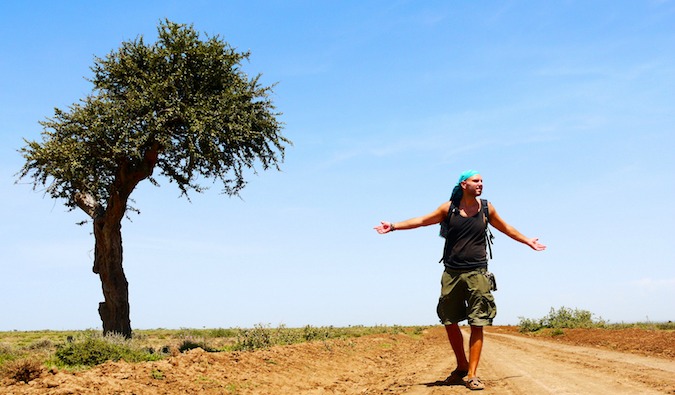
Tomislav, travel blogger stands next to a lone tree in Tanzania Africa
After my first independent trip overseas in 2005, I came home, quit my job, and prepared to travel the world. However, at home, I immediately felt alone. Few people supported me, most were confused by the idea, and even more tried to talk me out of it. Back then, quitting your job to travel the world made people think you were slightly crazy. Over a year ago, I created a community section of this site for us to mingle with, encourage, and advise each other so no one would have to feel that way. I wanted a place where people could turn to for support. Today we have over 3,300 members and over 10,000 posts!

Each month, we highlight one or two members on the forum. Today, I want to share with everyone who might not read the forums the story of one of our most active community members, Tomislav from Croatia. Tom has been traveling the world on an extreme budget ($10 USD a day) since 2008 through a variety of ingenious ways. While this level of austerity is not for everyone (including me), his spirit and philosophy is still amazing and I wanted to share it with you. Without further ado, here’s our interview:

Nomadic Matt: Tell everyone about yourself.
Tomislav: My name is Tomislav Perko, I’m 30, and I come from Croatia. I started living my life only recently, by moving away from the usual “be born – go to school – get married – do the job that you don’t like – take credit out for 30 years – have a few kids – retire – and die” lifestyle. Recently, I published a book called 1,000 Days of Spring, which quickly turned into a bestseller in Croatia, and currently I’m back home, working on my second book.

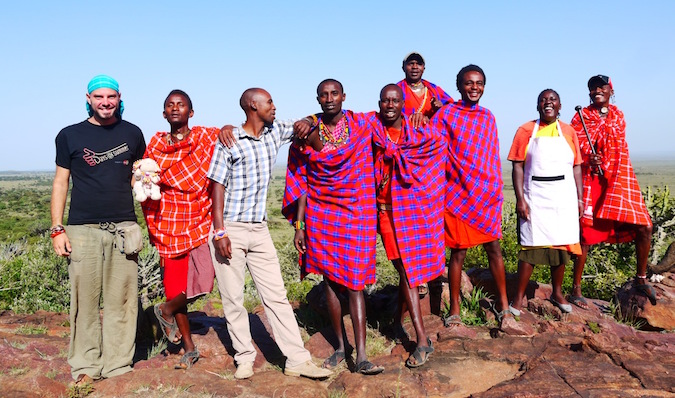
traveller with the Massai people in Kenya

You said you started traveling recently. What were you doing before? Why did you start traveling?
Before I started traveling, I was a stockbroker. Suit, tie, nice restaurants, a lot of money — that kind of lifestyle. But then the financial crisis came, and I lost everything. That’s when I discovered Couchsurfing — and by hearing first-hand stories from people that passed through my home and seeing a spark in their eyes, I thought to myself, maybe I should try it out myself.

And I did.

Did you always plan to travel on $10 USD a day?
The only thing that is a constant when talking about my travel plans is that I didn’t really plan anything. When I started traveling, I had almost no money, and the amount I spent on the road determined how long could I stay on the road. $10 USD was more than enough to cover some basic needs, and the best thing was that I really enjoyed traveling this way. I loved the challenge of figuring out where to sleep, how to get somewhere, what to eat.

In a way, being almost broke was the best thing that happened to me. While traveling on a low budget you appreciate the little things, such as hot meals, soft beds, and transportation, after a few hours of waiting in the sun. You are grateful for little things you are not thinking about when you can afford three meals a day, when your shelter has already been prearranged and you know a way to get to your destination. You are grateful for all the miracles that, inevitably, occur daily.

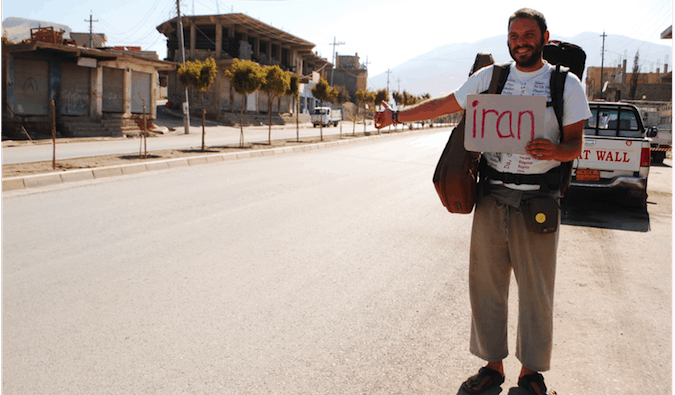
solo backpacker hitchhiking in Iraq to Iran

Where did you get the $10 USD figure? Did you research it? Why $10 USD and not $20 USD?
Well, I didn’t plan it to be $10 USD or any other amount, but when I traveled for a couple of months, looked back on my budget and did the calculation — it turned out that it was about that amount per day.

Of course, some days I spent $50 USD, or bought a plane ticket for $100+ USD, but then I spent few weeks or months volunteering and not having to spend anything. So at the end, it all levels out to $10 USD a day.

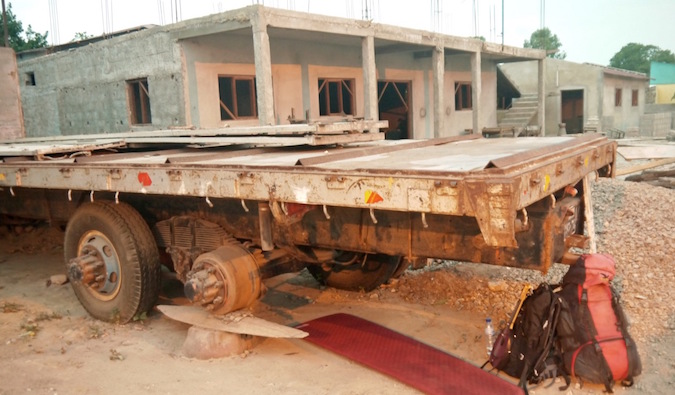
rough camping under a semi truck in Africa

How do you specifically stay on budget when you travel?
When it comes to transportation, I mainly hitchhiked everywhere I went. It was fast, safe, reliable, and free. But the best thing was that you get an amazing story of how you got between point A and B, you talk with locals, and learn from them. I also walked a lot, used some public transportation in cheap countries, relocated a few cars, etc.

As for accommodation, I Couchsurfed most of the time — I already had plenty of experience from hosting few hundred people in my own place before I started traveling, so that helped a lot. You spend your time with him/her, they take you out with their friends, on family gatherings, and to see some amazing local spots you would probably miss out on.

When I didn’t Couchsurf, I camped, slept in parks or beside the road, volunteered, tried house sitting and home exchanges — there are so many alternatives to ho(s)tels. They require much more planning and energy, but they save you money and give you so much in return.

I bought food in supermarkets and cooked by myself or with my hosts, never drank in bars but in parks, even tried dumpster diving couple of times. You have to know that food is everywhere, and a lot of it is being thrown away — some say that over 40% of food produced is being thrown away. You just have to figure out a way to get to that food before they throw it. If that means standing in front of a pizza place in Machu Picchu and waiting for some folks to leave the table and leave few slices untouched — then you do that.

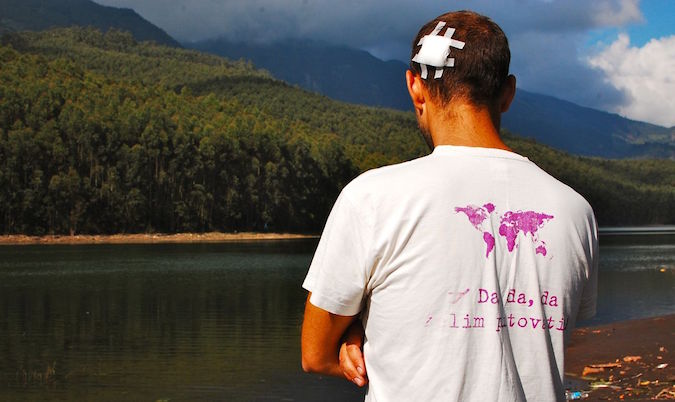
traveler with a head wound after a surfing accident stares onto the ocean overseas

Is this a good idea? I mean, $10 USD a day is pretty cheap, and it’s not something I would do. It means you can’t walk into the Louvre, dine on good food in Italy, take a boat tour, or sign up for a jungle hike.
First of all, this type of traveling isn’t for everyone. I tried it, and I liked it. The thing is, I never traveled for the sake of seeing things. I was more into experiencing. So, instead of seeing the Louvre, eating in amazing restaurants in Italy, taking a boat tour, or going on a jungle hike, I was interested in talking with people, learning from them, and trying to live as a local. For that, you don’t need a lot of money.

Don’t get me wrong — it is more challenging and more limiting, but challenges and limitations are the things that push you into being in the moment, and doing everything in your power to get to something. That’s what I loved the most!

beautiful african girl dressed colorfully

Have you worked or volunteered abroad?
I worked on a permaculture farm under the Himalayas, managed a guesthouse in Malawi, spent time in few orphanages, cleaned rooms and took care of 5 dogs and 14 cats in Ecuador. Volunteering is a great way to save money, take a break, and — what’s most important — learn about the place you are visiting and connect with people living there.

Mostly I found these volunteering opportunities on the spot, or I used WorkAway.

And when it comes to finding work, I sometimes (badly) played the guitar on the streets, or connected with people and asked them if they knew anyone that needs someone capable of working various jobs.

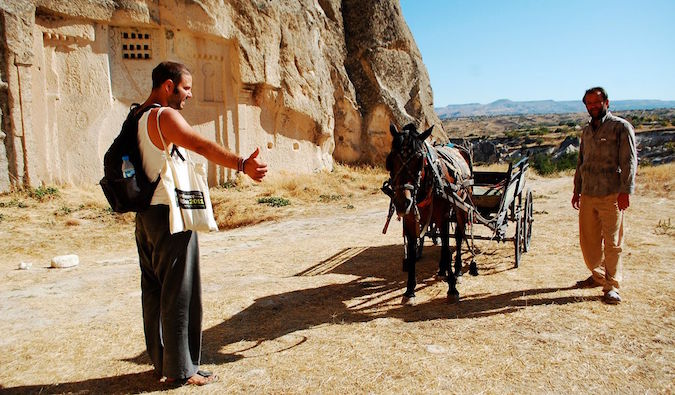
hitchhiking with a donkey in the desert overseas

You seem like an adventurous guy. Tell us some crazy situations that you’ve run into on the road.
I would say these are my top three:

The craziest story is not from the road, but from the sea. I hitchhiked on a 13-meter yacht from Australia to Africa, without any sailing experience. It was probably the most and least adventurous journey I was ever on — the most when I talk about it now, after it happened, and the least when I was sailing for those 45 days. Nothing happening, just four of us on that small boat, sea and sky around us. Nothing else.

Then there was spending three days on the border of Iran and Pakistan with Iranian military officers, ending up staying in some dental laboratory with guys smoking opium all day long, crossing the border and being put in the bus with an armed escort and driven for 43 hours until reaching the capital, Islamabad.

And there was also driving all day long from Swaziland to north of Mozambique, singing with my driver to keep him awake, ending up in some small town where everyone is out in the middle of the night drinking, and spending the night under some old truck in my sleeping bag because it was raining.

Give us your most unique money-saving tip.
The Internet is your friend. There are so many ways to save money, and they are just a few clicks away. Find volunteering opportunities; accommodation via Couchsurfing, house sitting, or home exchanges; transportation via ride-sharing, car relocating, or boat hitchhiking… and realize that every dollar less spent is worth a few more days on the road.

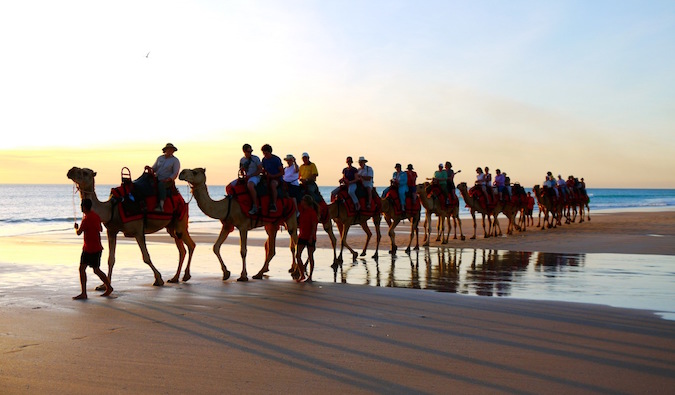
line of camels in Morocco

All this seems like a lot of work. How much time did you spend arranging accommodation, finding rides, work shares, etc.?
A lot.

I repeat: traveling isn’t necessarily a vacation. Traveling, especially in this way, is a lot of work. People think doing this is just cocktails on some beautiful sandy beach, but the truth is sometimes quite the opposite — you are lonely, hungry, or sick, and you have to deal with it.

Same with looking for transportation, accommodation, and food. It’s easy to check the bus schedule and go to the terminal, but it can be hard to get out of the city to find a good hitchhiking spot, wait there for hours, talk with many drivers, look for Couchsurfing hosts, choose them wisely, find their homes in strange cities, etc.

It is a lot of work, no doubt about that. But, that work pays off. It definitely does. Every single day.

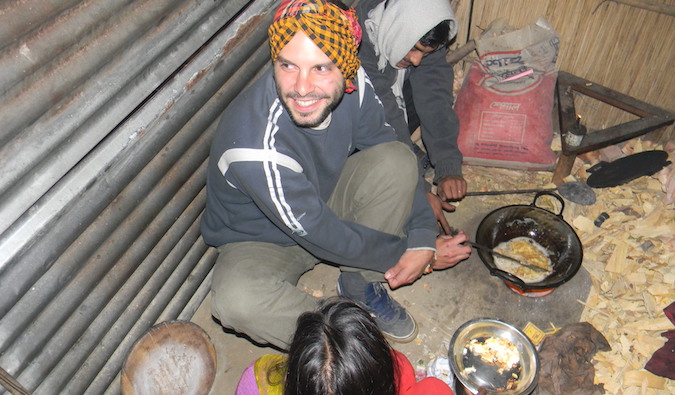
solo traveler cooking with host family overseas

Do your family and friends support your travels? Did they always?
They do now, after many years, but it wasn’t always like that. I had to deal with the usual issues of my parents being worried, thinking I’m not using my life properly, etc. But with years they got used to it. I emailed my mum every day, no matter where I was (except from the Indian Ocean), we talk on Skype often, and when they saw me making a living out of my travels, being in the media, giving lectures to hundreds of people, they realized that this is my way, and now they are big supporters for me traveling.

But I know its still hard for them; it must be when your child goes away, especially when he/she wants to hitchhike and sleep beside the road. But in the end, they have to, or they should, understand your urge to explore and your path to happiness.

What advice would you give to new travelers?
Traveling is not the best thing in the world. It won’t solve all your problems; you can be lonely, hungry, freezing in your sleeping bag. It’s not something you have to do.

But if you want to, if you feel that desire to head into the unknown, then you have to know that it’s possible. I won’t say it’s easy, because you have to adjust your lifestyle to the road, but it can and will be rewarding, no matter what.

If I did it, I think anyone can.

backpacker hitchhiking on top of a truck in Peru

Some quick questions: Window or aisle?

Aisle till I die!

Even though, I don’t really like airplanes. Or airports.

Big or small dorm?

I’ve only slept in a hostel dorm about 10 times in my life, and most of those times were when I was volunteering. But if I have to choose, I prefer small dorms.

Favorite country?

Not possible to asnwer, so I’ll give my favorite country on each continent.

  • Europe: Spain
  • Asia: India
  • Oceania: Australia
  • Africa: Malawi
  • South America: Peru

Least favorite country?

Cannot think of any that I can put “least” in front of.

tomislav travels to Peru and stares at Machu Piccu

One item you can’t travel without?
My little sheep. This sheep is my important travel companion. Why? First of all, I got it as a present from a very dear friend of mine, who knows me best. Second of all, I am also a sheep (or Aries): stubborn, impulsive, and enthusiastic. So in a way, she reminds me of who I am. Third, she wants to send out a message. Basically, she is a sheep, but she doesn’t listen to the shepherd, or follow the herd. She does what she likes — she travels with a smile on her face! She wants more people to experience that way of life, without borders, without fear.

Having all that in mind, it was logical that she joins me on my travels. Every now and then she gets lost and travels solo. One summer she wandered around Portugal, Spain, and France, and one time she left me in Kuala Lumpur, I had no idea where. But she always comes back to her favorite travel companion!

****Tomislav definitely has his own style of traveling. It’s something I don’t think I’d do (camping isn’t really my thing and I love museums too much to skip them), but he shows us that where there is a will, there is way and

Tomislav definitely has his own style of traveling. It’s something I don’t think I’d do (camping isn’t really my thing and I love museums too much to skip them), but he shows us that where there is a will, there is way and it is possible to travel for very, very little money . He’s lived in exotic places for a day for less money than most people spend on lunch! Take a page from Tom’s book and make it happen. Even if you don’t want to travel like him, he shows us that with a little creativity, any trip can be possible.

You can find Tomislav and all of his awesome adventures on Facebook, YouTube, TEDx, and his blog, tomislavperko.com.

Other Inspiring Stories

One of my favorite parts about this job is hearing people’s travel stories. They inspire me, but more importantly, they also inspire you. I travel a certain way, but there are many ways to fund your trips and travel the world. I hope these stories show you that there is more than one way to travel and that it is within your grasp to reach your travel goals. Here are more great contributors to the forums:

We all come from different places, but we all have one thing in common: we all want to travel more!