
显示标签为“fear”的博文。显示所有博文

2019年8月2日星期五

Keeping the Relationship Spark Alive on the Road

a couple watching the sunset as they overlook a city in Europea couple watching the sunset as they overlook a city in Europe
Posted: 07/22/2019 | July 22nd, 2019

This is a guest post by Ant, who used to blog at Positive World Travel, a travel blog that focused on couples travel tips. Their blog is no longer in existence.

When traveling the world as a couple, there can come a time when your relationship “spark” loses some its brightness. While exploring new cultures and racing around the world, it‘s easy for your relationship to fall to the wayside or end up in a rut.

I’m talking from experience.

Our relationship has become boring and mundane a few times, but we‘ve found many ways to keep igniting the flame over and over again. The important thing is to try and keep your relationship as fresh and as exciting as the countries you‘re visiting.

Here are a 6 ways Elise and I have found to keep our relationship interesting while we travel the world:

1. Organize a Date Night

As corny as it might sound, going out on an actual “date” can do wonders for your relationship. It can get monotonous sightseeing, eating cheap meals, or cooking your own food day in and day out, so making time for a special night can be something to look forward to.

Elise and I plan a date night every two weeks. We spend a little extra money, go to a nice restaurant, and dress up as best we can. We spend that night not talking about our website or what we did that day but rather talking with one another, putting our dream caps on, and playing the “what if” game.

Elise loves to chat about our eventual wedding, and even though it can drive me crazy at times (I never knew you could talk so much about floral arrangements!), date nights are a great way to share and chat about her — err, I mean our — dream wedding.

Date nights give you the opportunity to listen and reconnect with one another outside the traveling experience.

2. Be Spontaneous

Traveling as a couple can take its toll on each of you, and this tip is one of our key ingredients to success. Elise likes our travels to be somewhat planned, and I try and mix things up and be spontaneous, which keeps her thinking because she doesn‘t know what I have planned next.

If you have extra time in the city you‘re in, head out for the day and just act on a whim. Do activities you hadn’t considered before. Try some romantic activities like booking a massage together. Or try something more fun and unconventional when traveling, such as seeing a movie or going bowling.

Traveling doesn‘t always have to be about sightseeing. You can spend time doing “normal” activities that you did back home, too.

Ant from Positive World Travel celebrating a birthday while travelingAnt from Positive World Travel celebrating a birthday while traveling

3. Embrace Celebrations

Even while traveling, celebrating birthdays and anniversaries is important to any relationship. It doesn’t matter if you‘re in the middle of nowhere, because the fact that you‘ll go to a little extra effort and get creative will always make your partner happy.

Once when we were camping, it was Elise’s birthday and we were far from any nice restaurants. So, the morning of her birthday, I woke up early to blow up 23 balloons and then gently placed them throughout our tent. I woke her up to an out-of-tune singing birthday candle and a dry piece of cake I found at a corner store the day before. She was delighted that I had gone to the trouble of making her birthday a little special even though we were camping.

We spent the rest of the day at a deserted beach, and Elise says that it was one of her best birthdays ever.

4. Plan Surprises

Even though you‘re traveling on a limited budget, a surprise every now and again will always excite your better half. Elise knows that I‘m a sucker for dark chocolate, and I always get excited when she‘s been out to run some errands and jumps on the bed with both hands behind her back when she gets home. I love that she thinks of me while she‘s out. It brings joy to our relationship.

Try to surprise each other with little touches here and there. Even a small gesture can work wonders.

5. Face Your Fears Together

Doing activities that one or both of you have a fear of can bring you together and bond you. Sharing a fear and overcoming it will definitely bring the spark back and a sense of achievement for you both.

Elise has a small fear of heights, and she has regularly pushed herself to confront this fear over the past 18 months. She has jumped out of planes and off cliffs into fast-flowing rivers. Each time she faces this fear I get so proud of her and it deepens my love for her.

Supporting your partner and giving them the encouragement they need to face their fears or overcoming them together is an instant bonding moment shared between the two of you and only strengthens your relationship.
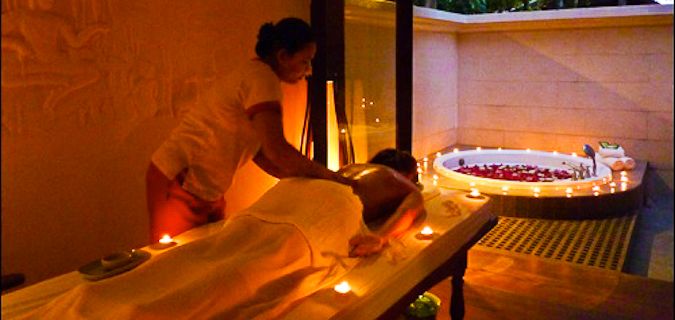
A female traveler getting a romantic massage overseasA female traveler getting a romantic massage overseas

6. Get Intimate

It has to be noted that sex is an important part of every relationship, and when you’re not having any, you‘re bound to be fighting more. Traveling in dirty environments and staying in shared accommodation can be a dampener to sexual relations. Finding time for a romp when there are train schedules to work out, long and sweaty bus rides to take, or a day battling annoying touts can be difficult.

Spending a little extra money from time to time and staying in a private room is the best way to find some alone time, as having sex in hostels can be quite tricky otherwise. Elise and I do this from time to time to make sure we can have intimate moments together. It’s worth the extra time and money. Trust me.

***
Even couples that have been together for years and years all need to take time out every now and again to make sure the spark is still there. The most important tip is to work out what works for you as a couple. Elise and I always make sure we not only have time for long-term travel and all that entails but also for making our relationship work on the road and keeping the spark alive.

Even couples that have been together for years and years all need to take time out every now and again to make sure the spark is still there. The most important tip is to work out what works for you as a couple. Elise and I always make sure we not only have time for long-term travel and all that entails but also for making our relationship work on the road and keeping the spark alive.

Ant is one half of the dynamic duo who used to blog at Positive World Travel. They wrote about their experiences and thoughts on what long-term travel is like as a couple, though they no longer blog.

Book Your Trip: Logistical Tips and Tricks

Book Your Flight
Find a cheap flight by using Skyscanner or Momondo. They are my two favorite search engines because they search websites and airlines around the globe so you always know no stone is left unturned.

Book Your Accommodation
You can book your hostel with Hostelworld as they have the largest inventory. If you want to stay somewhere other than a hostel, use Booking.com as they consistently return the cheapest rates for guesthouses and cheap hotels. I use them all the time.

Don’t Forget Travel Insurance
Travel insurance will protect you against illness, injury, theft, and cancellations. It’s comprehensive protection in case anything goes wrong. I never go on a trip without it as I’ve had to use it many times in the past. I’ve been using World Nomads for ten years. My favorite companies that offer the best service and value are:

  • World Nomads (for everyone below 70)
  • Insure My Trip (for those over 70)

Looking for the best companies to save money with?
Check out my resource page for the best companies to use when you travel! I list all the ones I use to save money when I travel – and that will save you time and money too!

2019年7月26日星期五

Success Stories: Two San Diegans Overcome Fear of Travel

katie n traveling Greetings from Africa! Somewhere right now, I’m trying to snap a photo of a lion without being eaten. In the meantime, this week I want to share stories of readers who used my tips and advice to realize their travel dreams. If you’ve been thinking about traveling for a while, let these reader stories inspire you and show you that the advice here can work for anyone!
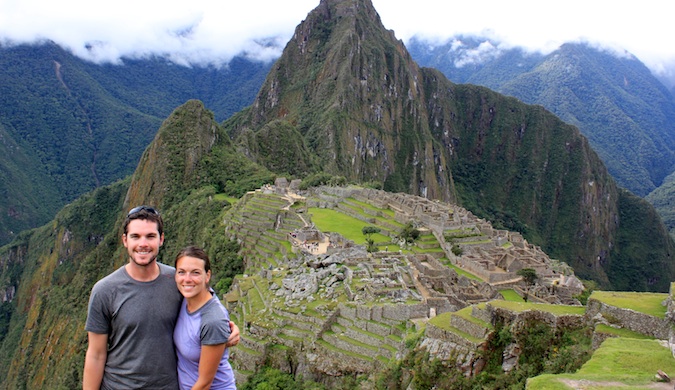
Continuing my new series on travel success stories, today we’re going to meet Katie and Steve Nauman, a 30-year-old couple from San Diego. Katie and Steve spent a year saving up for their 11-month trip before they quit their jobs and headed out into the world for the majority of 2012.

Nomadic Matt: Tell everyone about yourselves.
Katie and Steve: We are two 30-year-olds from San Diego, California. Katie had some overseas travel experience prior to our trip, and Steve essentially had none, but we really wanted to get out into the world before we have kids, so this past January we quit our corporate jobs, rented out our condo, and took off for a year around the world.

What kind of trip were you planning on doing?
We were planning an 11-month trip around the world. We left on February 1, 2012, and have been to South America, Europe, Australia, New Zealand, and Southeast Asia. We plan to return home just in time for Christmas.

Did you have any fears when you decided to do this trip?
Yes! We typically make conservative decisions, but we took a massive leap of faith when we pulled the trigger on this trip. We read articles on your site that gave us general reassurance, and it also helped to hear encouragement from friends and family who know us personally.

We have an entire blog post about how our feelings changed as we got closer to our travel date.

the naumans in macchu picchu traveling

How did this site help you overcome those fears and plan your trip?
Your insights and advice helped us during our planning phase as we dove into what RTW meant and how to do it. We spent at least six months researching everything from weather patterns and itineraries to budgets and how to pack our backpacks. There is so much that goes into planning a trip like this: insurance, visas, flights, immunizations, and on and on. It can be massively overwhelming when you’re already nervous about the whole undertaking. Your articles gave us solace that it’s possible.

There have been other ways you’ve helped, too. From your $50/day book, we used the coupons to save money on multi-destination flights with Airtreks. And we chose our scuba diving certification shop (Master Divers) in Koh Tao, Thailand, based on a discount in the same book. The dive shop told us we were the only people who have ever redeemed the coupon! We also purchased a Tiger Airways domestic flight in Australia based on one of the travel deal links in your newsletter.

How did you save for your trip?
Each month we put a portion of our paychecks into a travel fund, so that we had enough for our trip and also for a cushion when we get back. We rented out our condo, which helped us break even on our mortgage. And, money that used to go toward expenses like car insurance are now used for bus, train, and plane tickets.

When we announced our trip to our friends, we were really surprised that nearly everyone’s first reaction had something to do with money. But it’s not as expensive to travel as everyone thinks. We read a lot of blogs about traveling on a budget and did our research to find the right airline tickets, tour operators, hostels, and discount cards to make everything possible. It takes more work, but it does pay off.

steve n travelingWhat about life on the road has surprised you the most?
We have been surprised at how much we identify with the word “traveler.” There is a funny but clear designation between “traveling” and “vacationing.” Before this trip we had never distinguished between the two, but now we are absolutely certain that we are traveling. Vacationers get to stay in nice places and spend money on trendy dinners and bottles of wine. Travelers nit-pick every expense… and many times end up with the more genuine experience. No doubt, it is harder to travel than it is to vacation. But we also think the challenges make it more rewarding.

How do you stay on budget when you travel?
We travel as cheap as possible. We stay in hostels, usually dorms unless we’re in a country where private rooms are just as affordable. We do a lot of research on our activities to make sure that our dollar is going as far as possible. We take public transportation. Traveling closer to the street is better anyway because you get more interaction with locals and have a more genuine experience.

We also use the Cash Trails app to log every penny we spend. We tag our entries by country and by type (lodging, food, nightlife, activities, transportation, etc.) so that we can keep good track of our budget.

What one thing that you thought would be a challenge has turned out not to be?
Traveling through countries where we don’t speak the language hasn’t been as impossible as we initially worried about. Sure, it can be challenging at times when the language is very different (i.e., character based), but for the most part we haven’t found this to be too big of a stumbling block. People are generally patient when communicating. Hand motions and a smile go a long way.

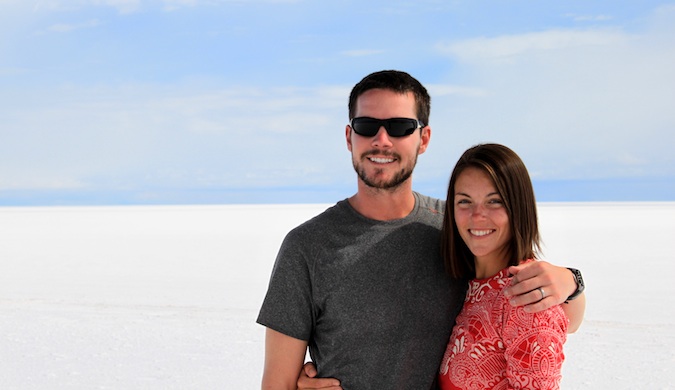
naumans at the salt flats

What advice would you have for other people who want to travel but might not think they can?
We were those people. We talked about a trip like this for years and wondered if we could ever do it. But if you only ever wonder, you’ll never do.

When we broke the news of our trip to our family, friends, and coworkers, the response was always the same: “I wish I had done that.” We didn’t want to look back in 20 years and say to ourselves those dreaded words: “We wish we had done that.”

The hardest part will be making the initial commitment. We know it’s the hardest part because hardly anyone does it. At first you will commit to it in your own mind. But then you will be forced to commit to it in a more tangible way — be it a deposit or plane ticket. Once you pull that trigger, there’s no turning back and you have no choice but to go all in. It’s the most exciting gift you’ll ever give yourself.

*********

What I loved about Katie and Steve’s story is that it echoes many concerns I hear from potential travelers. The Naumans didn’t have a lot of travel experience and weren’t really risk takers but took the leap anyway and were amazed at how easy everything turned out to be. A lot of people have this fear — I did! But you realize once you start traveling that the hardest part isn’t the travel, it is getting the courage to go. I hope this article helped give you some of that courage.

Become the Next Success Story

One of my favorite parts about this job is hearing people’s travel stories. They inspire me, but more importantly, they also inspire you. I travel a certain way, but there are many ways to fund your trips and travel the world. I hope these stories show you that there is more than one way to travel and that it is within your grasp to reach your travel goals. Here are more examples of people who gave up living a typical life to explore the world:

We all come from different places, but we all have one thing in common: we all want to travel more.

How to Overcome Your Travel Fears in 7 Easy Steps

How to overcome your fears
Updated: 5/29/18 | May 29th, 2018

Fear. It’s what often keeps us from living our lives and achieving our dreams.

And it is one of the most common reasons why people don’t travel.

Whenever I talk to people about long-term travel, so many tell me they wish they could do what I do. They tell me all their travel dreams and grand plans then when asked why they don’t pursue them, they come up with a plethora of excuses:

They fear not being able to afford the trip.
They fear they have too many responsibilities at home.
They fear they won’t be able to make friends on the road.
They fear not having the ability to handle it.
They fear something will happen to them.

With all that fear, it’s much easier to stay at home in our comfort zones than to break out and travel.

It’s a big thing to step out your door, away from your safety net, and into the known.

You may want to but the devil you know is always better than the devil you don’t.

Yes, travel is a privilege and there are real money issues that keep people at home.

But one of the most common emails I get is from people asking about “the mental issues” of travel. “The mindset stuff.” Do they quit their job and go for it? Are they in the right stage of life? Will everything be OK if they leave? Will they get a job when they return?

These emails are peppered with nervous excitement over travel’s endless possibilities, but there is also always one underlying tone to the emails: “Matt, I want to go, but I’m also afraid and I’m not sure what to do.”

While many people claim “real world responsibilities” are the reason for not traveling, I think fear of the unknown is really what holds people back the majority of people back. When you get rid of your fears and decide “Yes, I’m going to do this!”, you begin to find ways to scrape, save, find work, and do whatever it is that gets you on the road.

You become a person on a mission. You become driven. Nothing will get in your way.

But first, you need to get over any fear you might have. I was on a podcast recently discussing this subject and so it has come to the forefront of my mind again. Here is my advice on dealing with fear:

You aren’t the first person to travel abroad.
One of the things that comforted me when I began traveling was knowing that lots of other people traveled the world before me and ended up just fine. If some 18-year-old from England on a gap year came home in one piece, there was no reason I wouldn’t too. You aren’t the first person to leave home and explore the jungles of Asia. Columbus and Magellan had a reason to be afraid. You don’t.

There is a well-worn tourist trail out there. There are people to help you. There are people to travel with. You aren’t going to be alone.

And you aren’t venturing into the true unknown.

You made it this far.
If you already have one foot out the door, why turn back now? What will you regret later in life: that you let your fears keep you home, or that you went traveling? Sometimes you just have to go for it. Everything works out in the end. Don’t turn back halfway. You can do this!

You are just as capable as everyone else.
I’m smart, I’m capable, and I have common sense. If other people can travel the world, why can’t I? What makes me think I lack the skills? I realized that there was no reason I couldn’t do what these other people did. I was just as good as everyone else.

Don’t doubt yourself. You got by in your life just fine now. The same will be true when you travel. Moreover, now has never been an easier time to travel thanks to all the resources available online and all the sharing economy websites that help connect you with other travelers.

Facing your travel fears

Responsibilities can vanish in a flash.
Everyone uses “responsibility” as the main reason to avoid travel. But that is just your fear telling you that you have things at home that can’t be let go of. However, those responsibilities are simply chains that hold you down. When I quit my job, I didn’t have to work anymore. When I canceled my bills, they disappeared. When I sold my car, the payments were gone. When I sold my stuff, I didn’t have any. We think this is all very complicated, but with a few phone calls, everything that held me back was gone, taken care of. Suddenly, my responsibilities disappeared. Vaporized. It is easier to cut the cord than you think.

You will find a job when you get home.
Another reason people get held back is the belief that when they go overseas, they will become unemployable. They worry that employers will see a gap in their résumé and not want to hire them. But in this globalized world, having experience with foreign cultures and people is a real asset. So is showing that you are independent, courageous, and capable. After all, no one makes it around the world without learning these skills. Employers realize this and now look at travel as a positive thing that teaches intangible personal skills no business school ever could.

Related articles:

You will make friends.
People always ask me how I make friends on the road. They tell me that they’re not very social and that it’s hard for them to meet strangers. The truth is that when you travel, you are never alone. There are many solo travelers out there in the same boat as you. You’ll find people who will come up and talk to you, even if you are too scared to go up to them. I used to be nervous talking to strangers, but the fear subsides as you eventually realize that everyone wants to make new friends. And one of those friends is you.

Related Articles:

You can always come back.
If you make it three months into your trip and decide that long-term travel isn’t for you, it’s perfectly OK to go home. There’s no shame in cutting your trip short. Maybe traveling isn’t for you, but you would never have known if you didn’t try. There’s no such thing as failure in the world of travel. Travel teaches us many things including, that sometimes, we don’t like to travel. Getting up and going is more than most people do, and if it isn’t for you, at least you tried. That in itself is a major accomplishment.

***

Fear is an element that affects everything we do. Yes, fear is a healthy biological response designed to make sure we don’t do foolish things. But, in many ways, fear is the reason why we never succeed. It’s scary leaving everything you know and heading off into the unknown. However, once you look at why you are afraid of doing it, you’ll realize there’s no reason to be. You can travel. You are capable. It’s not as hard as you think.

Don’t let fear win.

Note: This article was originally published in 2011 but redone and updated with new tips and links in 2018.

Love, Fear, and a Chance of Drowning with Torre DeRoche

torre derocheDid you ever read Eat, Pray, Love? Did you like it? I didn’t — and when I saw the movie on a flight, I wanted to throw a shoe at the screen. I’m not really a “chick flick” movie guy (exceptions: Love Actually and The Notebook, two great movies). But then my friend Torre DeRoche published her love story, Love with a Chance of Drowning, about meeting the man of her dreams and sailing across the Pacific despite an intense fear of the ocean.

To my surprise, I really enjoyed the book. It was less of a love story and more of an adventure story about getting over your fears. I found the book to be descriptive, funny, and inspiring. (Also, she is a much better writer than I am.) So today, I virtually sit down with Torre to learn how a girl who was afraid of water sailed across an ocean with a man she met at bar.

Tell us your story. How did a girl afraid of water end up on a boat?
In my mid-twenties, my life in Melbourne had stagnated, so I quit my job and booked a one-way flight to San Francisco. Not long after I got there, I met a man in a bar who had a humble boat and a ready-to-go plan to set sail. Since I’ve always been terrified of the ocean, I had no interest in his adventure, but he was fun to be around so I kept seeing him.

Over many months, he charmed me with pictures of the remote islands of the South Pacific, and I found myself wondering what it would be like to reach such a paradise by the power of the wind.

Curiosity got the better of me, and I grew excited by the challenge of facing my fear. I was also in love. So I decided to jump aboard and island-hop across the Pacific to Australia on a leaky, 32-foot boat.

For that matter, how did an Australian girl who doesn’t like water fly over an ocean to end up in California?
I was scared of a lot of things: the flight over, starting from scratch, loneliness, finding a job and a place to live, making friends, and getting by on what little savings I had. But I forged ahead because I had always wanted to live in the US, and because I felt that if I didn’t face my fears and go, I’d be sentencing myself to a predictable, boring life.

You weren’t afraid of ending up on the “Lost” island?
When you’re floating mid-Pacific in a boat that’s smaller than a bedroom, you’re far too vulnerable to let yourself get worked up about fictional stories. It was the creepy, real-life threats that I feared, like freak waves, white squalls, or orcas attacking and sinking the boat (yes, this really happens!).

When did you get over your fear?
After we spent 26 days at sea sailing from America to the Marquesas, I felt pretty invincible. I was still nervous about deep water and long sea passages (see above for reasons why), but the throat-clenching, phobic fear that I’d felt at the start of the voyage was gone.

love with a chance of drowningWith your book Love with a Chance of Drowning, how did you go from self-publishing to being published by a traditional publishing house?
I queried agents for six months and, after having no luck with that, I decided to self-publish. A couple of weeks after launching, I received a Twitter message from a Hollywood producer who had chanced upon an excerpt of my book through a series of random clicks. He wanted to know if the film option was available.

A month after self-publishing, I received two offers: one from the UK publisher and one from the Hollywood producer. Armed with two offers, it took me about four days to sign with a New York agent. From there, the book went to auction, and we quickly sold to five publishers around the world. The film rights were also optioned.

What’s life like now as a big-time author?
I’m hand-fed caviar and peeled grapes around the clock by an entourage of Herculean men in leather thongs. No, that’s a lie. Life as a published author is exactly the same, only with a vague understanding that a bunch of strangers are reading my words right now.

I’m asked to sign books, which never stops being strange. At a book event, someone said to me, “Could you please write a little piece of wisdom in my book?” I’m not very skilled at wisdom-on-demand, so after a long, thoughtful pause, I wrote, “Thanks for coming tonight.” Whoa — watch out, Dalai Lama!

I always find it weird people want my signature too.
It really makes me wish I’d invented a cooler signature.

What do you want people to get out of your book?
On its most basic level, Love with a Chance of Drowning is a lighthearted, fast-paced travel memoir that takes the reader across the Pacific Ocean via a string of remote islands aboard a leaky boat. It’s a love story set on a sailboat, but it’s not just for armchair travelers, sailors, and romantics.

At its heart, it’s a book about going up against fear and taking big risks. If you have the courage to step outside your comfort zone with an open mind and an open heart, the world and its possibilities becomes infinitely larger. Big risks yield big rewards.

It may force you to question your own life decisions, it may give you the inspiration you need to embark on your own scary adventure, or it may simply take you on a hair-raising boat trip through the South Pacific with a terrified woman and her clumsy-but-lovable Argentinean boyfriend.

Is there a movie in your future?
Somewhere in Hollywood, Love with a Chance of Drowning is being adapted into a script right now. If all goes to plan, there will indeed be a film. Watch this space.

What were some of your top three moments sailing the pacific?

  1. Smelling land for the first time after 26 days at sea.
  2. Meeting a beautiful 60-year-old woman who had been sailing for 40 years, and learning that she also had a fear of deep water. She taught me that adventurers are not always fearless, which inspired the name of my blog Fearful Adventurer.
  3. Being welcomed with huge bear hugs by islanders in destinations accessible only by boat. We were taken in like family.

I’ve always wanted to sail around the Pacific. How do you do it? What if I don’t want to buy a boat? Any advice?
There are a few ways to see the Pacific without having to buy your own boat:

  • The Aranui — This is a freighter ship that delivers food and goods to various remote islands around French Polynesia. It also takes passengers on its route through the Marquesas, the Tuamotus, and the Society Islands. The ship doesn’t stay in port long, but you’ll get to see many remote islands that can only be reached by boat.
  • Crew on someone else’s boat — A lot of sailors take on crew to help with the sailing and chores. Many of them want people with prior experience, but if you’re a particularly charming backpacker with the right attitude, you can hitch a ride across the Pacific on anything from a structurally questionable wooden boat to a Fortune 500 CEO’s mega-yacht. You may end up with a lovable captain, or a complete freak — but that’s all part of the adventure, right?
  • Charter a boat out of Fiji, Tonga, or Tahiti — There are a number of companies that offer charter boats. You can hire a skipper and crew, or you can bareboat. From Tahiti, you can sail a couple of days northeast to reach the Tuamotus. There you’ll find some of the most beautiful — and treacherous! — atolls in the world.

What would you tell a person who wants to try something new but who is afraid?
I believe that if you get that nagging urge to try something new and you find yourself hesitating because of fear, the only reasonable path to take is to follow through with it. If you do, possibilities will open up and you’ll get an incredible sense of empowerment from breaking down your own perceived boundaries. If you don’t follow through, the opposite will happen. Your world becomes smaller. You’ll lose faith in yourself. A little piece of you dies, and regret grows in its place.

And really, isn’t that a hell of a lot more scary than whatever it is that’s holding you back?

What’s next for you?
I haven’t figured that out yet! I’m so focused on trying to get through this wild adventure of writing and publishing a book that I haven’t yet had a chance to plot out my next moves.

As far as writing goes, I would love to attempt fiction next.

For more of Torre, you can visit her website, Fearful Adventurer, and you can get her book on Amazon or in your local book store (I highly recommend it!). There’s also her witty tweets on Twitter.

2019年7月25日星期四

12 Steps to Getting Over Your Fear of Flying

Humans are not meant to be airborne — or at least that’s what people like me, who are terrified of flying, like to tell whoever is sitting next to us on our transatlantic. Like most others who share this particular fear, my early life was characterized by carefree travel. It wasn't until my early 20s that I started panicking every time I needed to catch a plane. I became certain that this would be the flight to buck all those safety statistics.

Still, Pinterest boards and Instagram photos taunted me. Everyone photographed in travel imagery frolics or lounges — there's no sign of the shaky mess I become just thinking about flying to the Caribbean or Santorini. When I fly, I have to dose up on anti-anxiety medication just to step on board, and then I sleep my way to the destination.

I’m not the only wannabe adventurer that gets uncomfortable on airplanes. Technology has evolved far faster than human biology, so while we want to be as futuristic as the machines we’ve built, I like to think our more basic instincts are still catching up. To me, everything about being in an airplane — sitting in cramped quarters, not being in control, being literal miles up in the air — makes me feel in danger, like prey.

I have faith that all of us can conquer this fear. To test the theory, I’ve compiled techniques for combating the phobia, in hopes of making everybody's dreams of far-flung adventuring come true. As is the case with any treatment, not every solution presented will be a cure-all; what may work for one could do nothing for another. And it’s important to treat any phobia conquest as a gradual process that (like, oh hey, an airplane flight) will have its ups and downs.