显示标签为“updated”的博文。显示所有博文

2019年9月3日星期二

17 Things to See and Do in Taiwan (Updated 2019)

The skyline of Taipei in Taiwan with nature in the foregroundThe skyline of Taipei in Taiwan with nature in the foreground
Posted: 9/3/2019 | September 3rd, 2019

I used to live in Taiwan for a few months as an English teacher. I loved the time there and have always felt the country was really under appreciated. So, in this is a guest post by Carrie Kellenberger from My Several Worlds and an expat living in Taiwan for ten years, she lists out all the amazing things you should see and do there.

Every country in Asia is beautiful, but Taiwan is special for many reasons. The people are warm and hospitable. In March 2019, Taiwan was listed as the happiest place in East Asia.

While it might be a small island, you would be amazed at the never-ending variety of sights and fun things to do here. With over a hundred mountain peaks above 3,000 meters, over a hundred hot springs scattered around the island, both golden and black-sand beaches, nine national parks, world-class museums, glittering skyscrapers, stunning temples, and a huge number of night markets that are second to none, Taiwan has something that everyone can enjoy.

To this day, nearly 14 years after I moved here, I still think Taiwan is one of Asia’s best-kept travel destination.

Here are some of the best ways to spend your time in Taiwan:

1. Eat, Eat Eat!
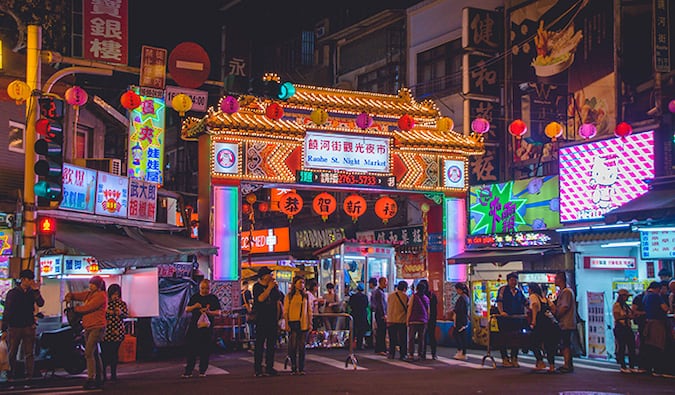
A busy market at night in TaiwanA busy market at night in Taiwan
The national pastime in Taiwan is eating. Taiwanese, both adults and children, are very work and study oriented, so their lifestyles demand healthy food that is available on the go. Moreover, there is always an abundance of fruits and vegetables, so visiting a local market can be a delight when you find out how cheap it is to eat fresh food.

As a result, Taiwan has become an epicurean’s playground. The food scene is an international smorgasbord of culinary delights, for every budget and almost every diet.

Night Markets
While there are five-star international restaurants of every variety throughout the country, the night markets are where the real gastronomes go. They promise to keep your belly full while your wallet remains relatively unscathed.

There are over 30 night markets in Taipei, New Taipei, and Keelung (and over 70 night markets across Taiwan). If you’re not sure which one to choose, visit this list of night markets in Taiwan and take your pick. My personal favorites are Shilin, Keelung, and Roahe Street in Taipei.

Here are a few things you should try:

  • Xiao long bao, also known as soup dumplings, a favorite staple food here. They are made out of a thin pastry folded into a type of bag that is then stuffed full with a meat-and-vegetable mixture and a tiny amount of soup, then garnished with raw ginger and soy sauce. Biting into one of these is a flavor explosion in your mouth. Plenty of street vendors at night markets offer fresh xiao long bao for around $2 USD for a basket of 10-12. There is really no reason not to try them. I’ve yet to meet a visitor to Taiwan who hasn’t loved their xiao long bao experience. I promise you will not be disappointed.
  • Oyster vermicelli
  • Oyster omelets
  • Beef noodle soup
  • Deep-fried chicken
  • Tian bu la (a type of fish cake fried with coriander with a dash of pepper and spice)
  • Sweet Taiwanese sausage or BBQ on a stick
  • Stinky tofu
  • “Coffin bread” (a tasty bread bowl shaped like a coffin)
  • Pig’s blood cake (It’s made from pig’s blood, sticky rice and soy broth and tastes much better than it sounds, I promise!)
  • Shaved ice
  • Zhen zhu nai cha (Taiwanese bubble tea)
  • Taiwan Beer (it’s the most popular local beer)

No matter what you decide on, you’re sure to have a great meal at a low cost while experiencing Taiwanese culture at its very best. You’ll be amazed at what you can buy for dinner for just $5 USD! You’ll definitely find some things that you hate, but you’ll also find things that you’ll love. It’s all part of the experience, right?

2. Visit a Taiwanese Teahouse

a tea house in Taiwan with a teapot ready to pour into cupsa tea house in Taiwan with a teapot ready to pour into cups

Tea culture in Taiwan is wonderful, and there are many options for tea lovers.

  • Maokong Gondola – This gondola will whisk you four kilometers to a mountain peak in a glass-bottomed cable car, from which you can view the tea plantations built into the side of the mountain as you zoom up. You can catch it at the Taipei Zoo MRT station; a ride costs 120 NT ($4 USD) each way. Once you’re at the top, there are several winding paths for a pleasant mountaintop stroll and a great selection of teahouses to choose from when you’re ready to enjoy a cup of fresh mountain tea.
  • Jiufen – If you’re heading out of Taipei, Jiufen is one of Taiwan’s most popular tourist destinations, owing to its appearance in the Studio Ghibli film Spirited Away. This seaside mountain village offers some terrific shopping opportunities, as well as all the different kinds of foods you see in the movie. It’s one of my favorite places, because it is also home to some beautiful teahouses in the most glorious setting. Imagine sitting at the top of a mountain, looking out over the ocean in the comfort of a traditional tea house. It is truly a magical experience, especially if you can get there for sunset. Go on a weekday to avoid the large weekend crowds.
  • Jwu Jiu Teahouse – If you make it as far south as Chiayi, be sure to find Jwu Jiu Teahouse, a hidden gem that is like taking a step back into the past. Jwu Jiu is a traditional wooden teahouse set above enormous stone ponds filled with hundreds of giant, brightly colored koi. Feed the fish while sipping on your tea, and enjoy some traditional dim sum in the loveliest setting you’ve ever seen. The grounds belong to a local family, and the teahouse uses a well that is over a century old, in which the water still runs deep and pure. The owner has kept most of the original structures and bricks, plus a hundred-year-old Osmanthus tree, which is associated with many traditions in China and Taiwan. If you’re a history buff, you’ll enjoy the teahouse’s long history, displayed with pride and obvious care.

3. Check out the Northern Coastline
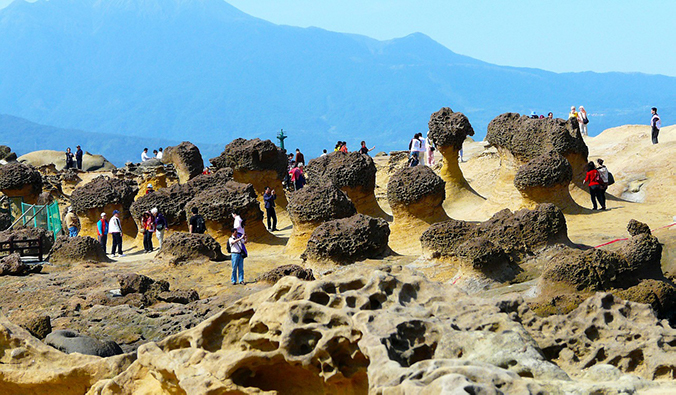
the lunar-like landscape of Yehliu Geopark, Taiwanthe lunar-like landscape of Yehliu Geopark, Taiwan
Head to the coast for some incredible lunar-like landscapes at Yehliu Geopark. There are some unique, otherworldly rock formations, including one that looks like Queen Elizabeth (though it took over 4,000 years to form) that are a popular tourist attraction. Try to get there early to beat the crowds.

4. Hit the Beaches

beautiful Taiwan coastline in the northbeautiful Taiwan coastline in the north
The beaches of Kenting on the southern tip of the island offer fun in the sun. White Sand Bay is the most popular and a great place to soak up the sun, swim, snorkel, or even go diving (just keep an eye out for jellyfish!). Other great beaches are South Bay and Little Bali Bay.

5. Soak in the Hot Springs
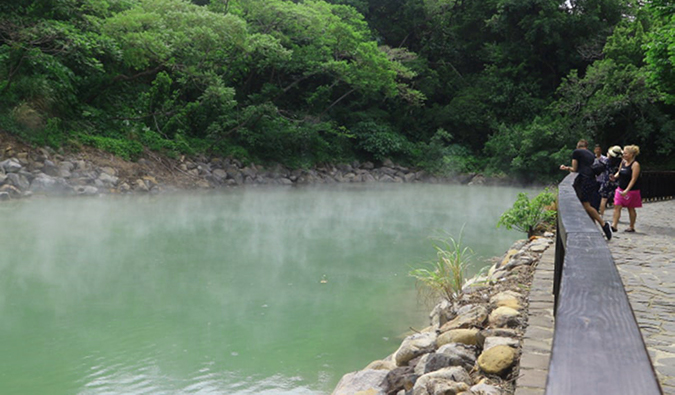
the Beitou Hot Springs just outside Taipei, Taiwanthe Beitou Hot Springs just outside Taipei, Taiwan
Taipei has its very own active volcano in its backyard, and because of the volcanic activity in the area, Beitou Hot Springs enjoys a steady stream of visitors and locals who love to bathe in its healthy waters. Prices start around 40 NT ($1.30 USD) per person for a soak in the hot springs, making it a very affordable choice for anyone looking for some R&R.

6. Go Island Hopping
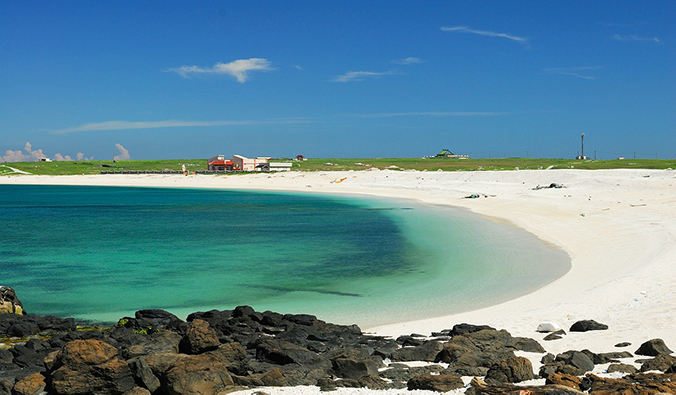
a beautiful sandy beach on Penghu Island, Taiwana beautiful sandy beach on Penghu Island, Taiwan
The beautiful islands of Penghu just off Taiwan’s western coastline will delight your sense of wanderlust and are especially well known for their golden beaches. This island archipelago has islands that are all distinct.

Boats will drop you off at one island for a few hours and then take you to the next one, so you can literally go from snorkeling to observing sea turtles to wandering through traditional aboriginal villages made out of coral in a single day.

7. See Old Taiwan
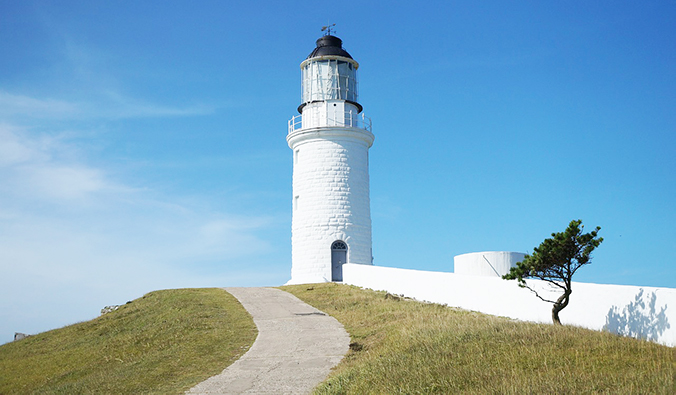
a lighthouse on Matsu Island, Taiwana lighthouse on Matsu Island, Taiwan
Two groups of islands that make up the Kinmen Archipelago off the west coast of Taiwan, just a couple miles from mainland China — and they are old Taiwan at its best. Here you’ll be able to see some traditional architecture, and there are also insightful museums that highlight the ongoing tensions between the People’s Republic and Taiwan.

8. Get Off the Beaten Track on Orchid Island and Green Island

getting off the beaten path on the rugged Orchid Island, Taiwangetting off the beaten path on the rugged Orchid Island, Taiwan
Located just off the southeastern coast, these lush islands are a treat to visit. Here you’ll find hiking, swimming, diving, and amazing hot springs. You can also get further off the beaten path and have an adventure by renting a scooter to traveling around the islands yourself!

9. Explore the Green Mountains
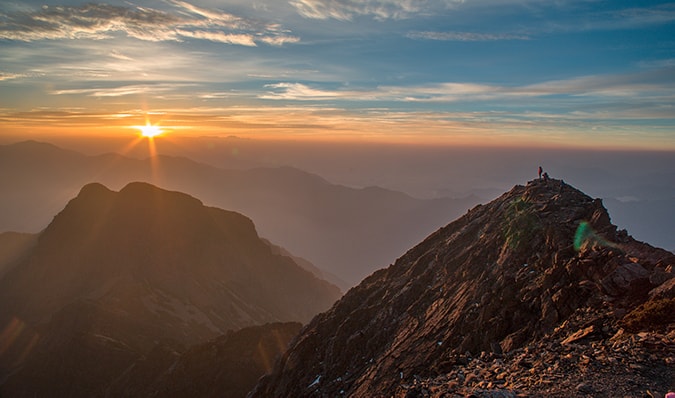
the view from Jade Mountain, Taiwanthe view from Jade Mountain, Taiwan
Grab a scooter and head up into the green mountains, which extend over five ranges the length of the island. If you want to stretch your legs, climb to the summit of beautiful Jade Mountain and watch the sunrise; this beautiful peak is almost 4,000 meters above sea level, making Taiwan the world’s fourth-highest island.

10. Visit Wuling Peak on Hehuan Mountain
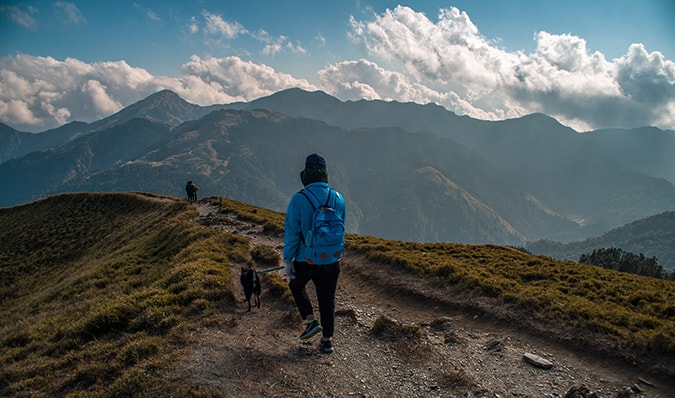
hiking on Hehuan Mountain, Taiwanhiking on Hehuan Mountain, Taiwan
If you’re still craving some climbing and hiking, head to Wuling Peak on Hehuan Mountain, around 3,275 meters above sea level, making it another good hike for anyone looking to spend more time outdoors. But what really makes this place special is that the peak is so high, you can look down into a sea of clouds below!

11. Go Hiking in Taroko National Park
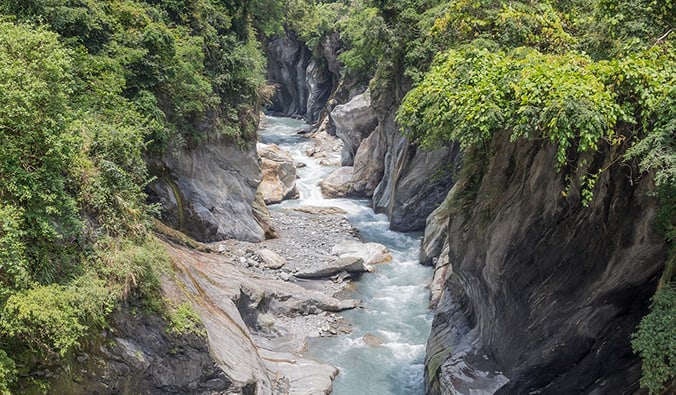
Taroko Gorge, TaiwanTaroko Gorge, Taiwan
Ready for another city break? This national park offers visitors a chance to hike through mountainous terrain and gorges, and you can even stop to dip your feet in swiftly flowing mountain rivers. Covering just under 100,000 hectares, it’s one of only nine national parks in Taiwan. Admission is free.

12. Head East
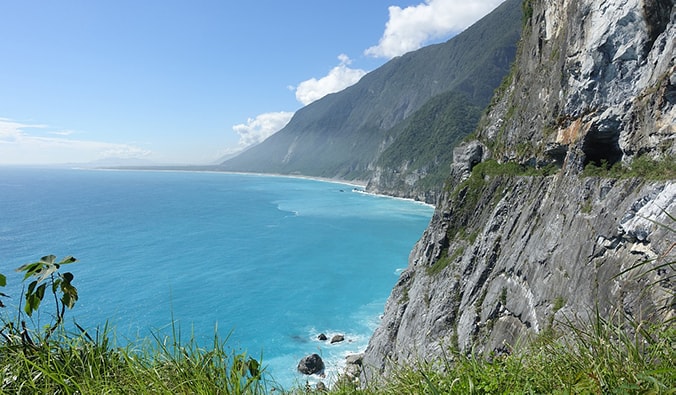
some of Taiwan's beautiful eastern coastline with tall cliffssome of Taiwan's beautiful eastern coastline with tall cliffs
To really enjoy Taiwan’s majestic beauty, don’t forget Taiwan’s eastern coastline. The east coast highway has some of the most dramatic coastal scenery in the world, from plunging sea cliffs and splashing surf to beaches, nature reserves, and rural towns a world away from the big city.

13. Witness Some Chaos
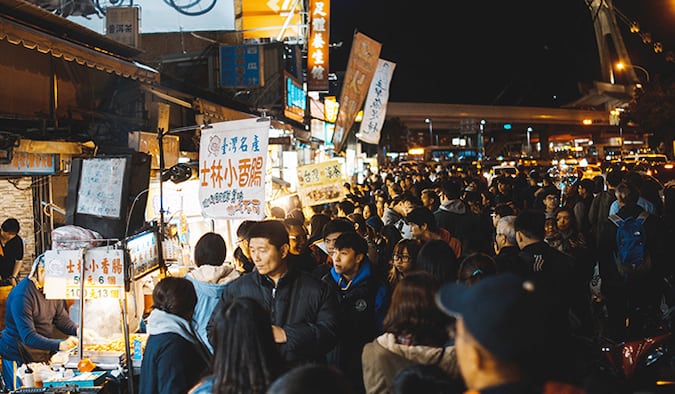
the busy food markets of Taiwanthe busy food markets of Taiwan
Check out the feeding frenzy of the markets in Taipei, or enjoy a stroll around cool Ximending, the gay district and Taipei’s answer to Tokyo’s Shibuya. Ximending boasts a massive outdoor plaza behind the Red House (a well-known cultural landmark) and a pedestrian shopping zone filled with the latest fashion trends, coffee shops, restaurants, and local artisans.

Give yourself bonus points for checking out all the super cool graffiti; you won’t find it on the main thoroughfares, but if you venture onto some of the smaller side streets, you’ll soon find yourself in world of brightly decorated alleys and lanes.

14. See Tianhou Temple

Tianhou Temple, Taiwan; photo by Wayne Hsieh (@whsieh78)Tianhou Temple, Taiwan; photo by Wayne Hsieh (@whsieh78)
While you’re in Ximending, it’s worth stopping by one of the oldest temples in the city, Tianhou (also known as the Ximending Mazu Temple, after the in-house deity Mazu, goddess of the sea). Around since 1746, it’s one of three major temples in Taiwan from the Qing period. It’s located on a main thoroughfare — but it’s very easy to miss the entrance.

Stepping through the entrance to this beautiful Taoist temple filled with mythological creatures, smoky incense, lucky goldfish, and people paying respect to the gods is truly a surreal experience. You’d never know this quiet oasis is in one of the busiest areas of Taipei!

15. Explore Fo Guang Shan Monastery

Fo Guang Shan Monastery, TaiwanFo Guang Shan Monastery, Taiwan
If you have your own ride in Kaohsiung, I strongly encourage you to stop by Fo Guang Shan Monastery and pay homage to the monks that live there. An ultra-Zen monastery open to the public, the complex is massive and stunning, leading to the Great Path of Buddhahood, a broad pathway flanked by eight identical pagodas.

You can explore each as you walk your way up to the Big Buddha, the highest seated bronze Buddha in the world. I’ve been to many temples and monasteries in my lifetime, but this one takes the cake.

16. Visit a Taiwanese Aboriginal Village
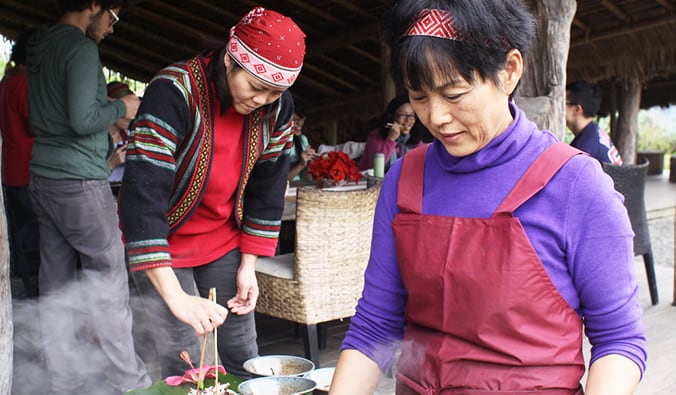
locals making food at a Taiwanese Aboriginal villagelocals making food at a Taiwanese Aboriginal village
There are many knowledgeable local guides that can introduce you to the aboriginal way of life in Taiwan. The Formosa Aboriginal Culture Village near Sun Moon Lake is the most popular destination to learn more, but it’s certainly not the only one — there are lots of villages to choose from.

17. Take Part in the Pingxi Lantern Festival
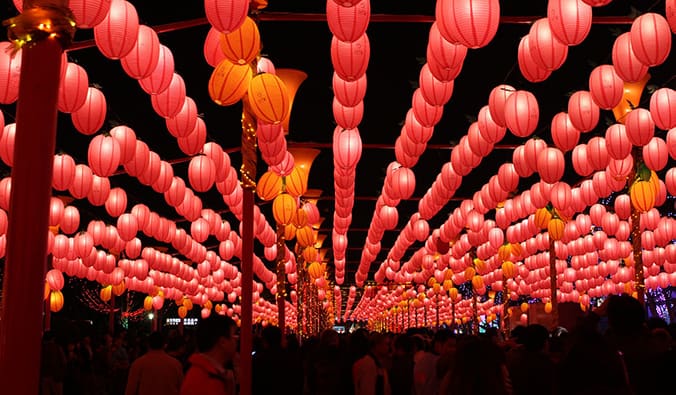
red overhanging lanterns at the Taiwan Pingxi Lantern Festivalred overhanging lanterns at the Taiwan Pingxi Lantern Festival
One of the coolest events in Taiwan, the Pingxi Lantern Festival involves releasing hundreds of paper lanterns into the sky. (Many newlyweds also include this meaningful tradition as a part of their wedding celebration.) If you don’t want to brave the crowds, you can easily purchase a lantern and light one on any of Taiwan’s beaches.

Taiwan is very environmentally friendly, so make sure you go with the eco-friendly paper lantern options that disintegrate, leaving no residue, and don’t cause fires. The company My Taiwan Tour also currently offers biodegradable paper lantern tours in Shifen.

***

There are many things about Taiwan that make it an incredible place to live; it’s easy to take some of those things for granted once you’ve been here for a while. I frequently hear that people think Taiwan is very Westernized, and while I agree that it is to some extent, there are still plenty of authentic Taiwanese experiences to be had!

Taiwan is and continues to be an unexpected travel destination that continues to delight visitors to this day. There is no place like it!

Canadian expat Carrie Kellenberger has been living in Asia since 2003. She moved to Taiwan in 2006 and became a permanent resident in 2012. She loves entertaining guests and travelers to Taiwan. You can read about her adventures and life there at her blog, My Several Worlds.

Book Your Trip to Taiwan: Logistical Tips and Tricks

Book Your Flight
Find a cheap flight by using Skyscanner or Momondo. They are my two favorite search engines because they search websites and airlines around the globe so you always know no stone is left unturned.

Book Your Accommodation
You can book your hostel with Hostelworld. If you want to stay elsewhere, use Booking.com as they consistently return the cheapest rates for guesthouses and cheap hotels. I use them all the time. My favorite places to stay in Taipei are:

  • Formosa 101 – This hostel is located right near the Taipei Tower and the Tonghua Night Market. They offer free breakfast and have a laid back lounge for relaxing.
  • Meander Taipei – The staff here is really helpful and the beds are comfy. They have free breakfast as well as other daily activities available.

Don’t Forget Travel Insurance
Travel insurance will protect you against illness, injury, theft, and cancellations. It’s comprehensive protection in case anything goes wrong. I never go on a trip without it as I’ve had to use it many times in the past. I’ve been using World Nomads for ten years. My favorite companies that offer the best service and value are:

  • World Nomads (for everyone below 70)
  • Insure My Trip (for those over 70)

Looking for the best companies to save money with?
Check out my resource page for the best companies to use when you travel! I list all the ones I use to save money when I travel – and I think will help you too!

Photo credits: 9 – David Hsu, 15 – Yi Chen, 16 – Huicheng1967

2019年9月2日星期一

27 Golden Rules For Becoming a Master Traveler (Updated 2019)

nomadic matt's golden rules of travelnomadic matt's golden rules of travel
Updated: 9/2/2019 | September 2nd, 2019

Every industry has its own “best practices” — proven rules and standards that guide the industry and the people in it. Travel is no different. There are many “rules to live by” that can help us navigate the unknown world with fewer mistakes.

I have my own golden travel rules.

Over the past ten years, I’ve learned a lot of tips and tricks that have helped me thrive when I travel. When I first set out in 2006, I made a lot of mistakes. (Ok, I still make some mistakes.)

And that’s not a bad thing. If you don’t make mistakes, you aren’t trying new things and pushing yourself out of your comfort zone.

Mistakes are going to happen.

But, over the years, I’ve developed a list of 27 golden rules for travel. These guidelines help me save money, make friends, stay safe, and fit into the local culture.

If you follow them, you’ll become a master traveler, able to travel the world with swashbuckling zeal and expert ninja-like knowledge… all without breaking the bank so you can keep cutting a path forward through the world for longer:

1. Be adventurous – You only live once. You’re going to get chances to do wild things you’ve never dreamed of doing when you travel. Don’t hold back. Count to three, say “screw it,” and take the leap. You didn’t come this far for nothing. Say yes when someone asks you to go rock climbing, salsa dancing, spelunking, or try the world’s hottest pepper despite not liking spicy food.

There’s no one around to judge you. No one cares what you do. No rumors will be spread. Push yourself to do something new and daring at least one.

2. Get a no-fee ATM card – Why give your money to the banks? Get an ATM card that doesn’t charge any fees and use that extra money for more traveling. Over the long term those $2-5 charges really add up. I use Charles Schwab as my bank, but you can also find many others that offer no-fee accounts — or use a one that is part of the Global ATM Alliance, and pay no fees within that network.

This article can show you how to avoid bank fees when you travel (and will give you a list of suggested cards too).

3. Get a rewards credit card – Why pay for travel when you can get it for free? Use a travel rewards credit card to earn points and miles that can be redeemed for free travel.

You’re already spending the money anyway so why not get rewarded for it?

Travel credit cards come with tons of perks and huge bonuses that can be redeemed for free flights right away. Plus, they get you the best exchange rate on your purchases.

Having one is an absolute must.

Want to know how I get hundreds of thousands of points per year and fly for free? Sign up for my free primer on the art of travel hacking and I’ll show you.

4. Always carry backups – Always carry a backup bank and credit card in case one is lost, stolen, or hacked. That way while you are fixing the issue, you still have access to your money. Instead of the problem crippling your trip, it merely is an annoyance. This has happened to me before and, I can ensure you, you’ll be thankful you followed this advice!

5. Only carry what you need – When you leave to go out for the day, only care the cash you need and one credit card. You don’t want to get robbed and lose everything. Leave the backups and extra locked back at your hostel!

6. Join a frequent flier program – Get rewarded for all of those flights you’ll be taking by joining a frequent flier program. That way you’ll earn miles, perks for flying, and free flights. Miles are like money — and you wouldn’t waste money, would you? No! So, sign up for a loyalty program, and collect points. Even if it takes you years to get a free flight, at least you are not being wasteful!

7. Travel alone at least once – Few things are as liberating as solo travel. As a solo traveler, you’re free to do whatever you want. When you travel solo, the world is your oyster. You’re free to do whatever you want, whenever you want. To me, it’s the purest sense of freedom there is.

But beyond that sense of freedom, solo travel actually teaches you a lot about yourself. Travel is an amazing personal development tool after all, and solo travel is one of the best ways to learn and grow and challenge yourself.

Without anyone around you, you have to solve the problems you face on the road. You have to figure out how to get from point A to B, deal with people who speak a different language, get comfortable eating alone, find things to do, and work out problems that arise. It’s you and your wits. That forces you to grow in ways you won’t in the comfort of your home or with a group.

While it won’t be for everyone, I still encourage everyone to try solo travel at least once. Even if you don’t love it, you’ll learn a ton about yourself in the process.

8. Learn basic phrases – Locals don’t expect you to be an expert in the local language, but learning a few basic phrases will go a long way to endearing you and making them go the extra mile for you. It will bring a smile to their face that you tried! “Hello,” “how are you?” and “thank you” go a long, long way no matter where you go.

9. Stay in hostels – Get to know other travelers and experience the communal spirit of traveling by staying in hostels a few times. They aren’t all the dirty party places you see in movies. Most hostels are very clean, offer breakfast, have comfy beds and Wi-Fi, organize events, and know the local area very well. They also aren’t just for young backpackers; you’ll find people of all ages (and even some families) staying there. Try them out. You may like it.

Here is a list of the best hostels in the world to get you started!

10. Use tourist boards – Local tourist offices are a wealth of knowledge. When you get to a new destination, visit the tourist office and ask the staff an insane number of questions about the place. They exist solely to help you get the most of your visit and it’s their job to know everything and everything about a place. Plus, they often have tons of discounts not found anywhere else.

Visiting one is often one of the first things I do in a new city.

11. Try new foods – Culture is often best experienced through food. Don’t be afraid to try new things. Get out of your comfort zone and experiment. You might actually like it (those fried caterpillars in Zambia were delicious!).

12. Be flexible with your plans – Travel is a series of happy accidents with way leading to way. Don’t skip going to that random city with the friends you just met because your itinerary says something different. You’ll regret it.

Go with the flow and be open to new things.

This will make your travels a lot more stress-free.

12. Pack light – Take it from a former over-packer: you never need half the stuff you take. Put everything you think you need in a pile and then remove half of it. The lighter you travel, the easier you travel.

Here’s our suggested packing lists:

14. Take extra money – Something always happens that you never planned for that will cost you extra money. I never thought I would fly last-minute to Fiji, need to replace my camera in Italy, or buy an extra iPhone cable in Australia. Always take extra money just in case. You may not need it, but you don’t want to be without a little extra when something bad happens.

When you start planning for your trip, set aside a $300-500 emergency slush fund in for accidents.

15. Get lost – Meander through a new city without a map. Get lost — because in the end, you aren’t really getting lost, you’re just discovering new experiences. So put down the map and wander. Eventually, you’ll find your way.

16. Call home – Your parents miss you. Don’t forget to call and say hello.

17. Get a phone — It will be easier to stay in touch with friends (and call home), meet up with other travelers, and contact hostels with a phone. SIM cards and prepaid phones are cheap, so there’s no excuse not to stay connected.

But don’t be glued to your phone. I see too many people hooked on their phone these days. But it is still a good idea to carry one for emergencies, especially when they are so accessible and affordable now.

18. Travel slow – This isn’t a race or a competition. I know you want to get a lot in with your limited time, but you see a lot more when you see a lot less. Travel slow and experience each place. Don’t race from train station to station; that will set you up for a stressful, unenjoyable time. With travel, less is more.

19. Live somewhere once – Stop at least once. Get to know a place. Learn the language. Make local friends. Explore. Become the local. Living in a foreign place gives you a different perspective on life and a real sense of what it’s like to be an outsider.

Plus, living a foreign place and surviving will help you gain a lot of confidence.

20. Avoid taxis – They just cost a lot. Don’t use them unless you don’t have any other option.

21. Bring a reusable water bottle – Not only are all those disposable plastic water bottles bad for the environment but the cost adds up over time. A water bottle here, a water bottle there, and you’ve spent $50 on water alone. Get a reusable bottle and drink the tap water in conjunction with a SteriPen or LifeStraw water purifier.

22. Buy travel insurance – You never know what could happen on the road — but something always does. I’ve had to deal with lost baggage, broken gear, delayed flights, and even some pretty serious injuries. Without travel insurance, I would have not only had to pay out of pocket for these expenses but I would have been left to navigate them alone.

Buy travel insurance so that if you’re injured or you break your camera, you’re covered. Plus, you’re friends and family will be able to relax knowing that, should something happen, you’re covered. It’s only a few dollars a day. It’s worth the peace of mind.

Here’s the link to our resource page with all our articles on the subject!

23. Bring basic first-aid – Cuts and scrapes happen, and you can get what you need most anywhere in the world, but it’s still good to carry bandages, antibacterial cream, and some hydrocortisone cream in your first aid kit just in case. Also, carry duct tape — you’ll never know when it’ll come in handy.

Here are some tips on how to pack a suggested first add kit.

24. Get off the beaten path – London, Paris, and the temples of Kyoto are all amazing for a reason, but get off the beaten path, go away from the crowds, and explore on your own. Find something new, stick out, meet the locals, and discover. The road less traveled is usually a good one.

25. Take photos of your friends – Years from now, you’ll want to look back at your younger self and see all the people who changed your life. Nostalgia can be a wonderful thing. Make sure you take photos of your friends. You’ll want them later.

26. Use the sharing economy – The rise of the sharing economy has made backpacking so much easier and cheaper. From ridesharing, house sharing, and meetup websites, there are so many ways you can get off the tourist trail and experience day-to-day life with locals! Here are some suggested websites:

  • Couchsurfing (free shared accommodation with locals)
  • Airbnb (paid accommodation with locals)
  • BlaBlaCar (rideshare app)
  • EatWith (share a meal with local cooks)
  • Vayable (for finding local tours and activities)

And finally, the most important tip of them all….

27. Ignore all my tips and do whatever you want – It’s your trip. Go where you want, when you want, and for how long you want. Don’t worry about this or that. Make mistakes. Learn. Make more mistakes. Have fun and become a better traveler. At the end of the day, you won’t look back and think “if only I had more miles” but instead “damn, that was a lot of fun.”

So get out there and have some fun!

You deserve it.

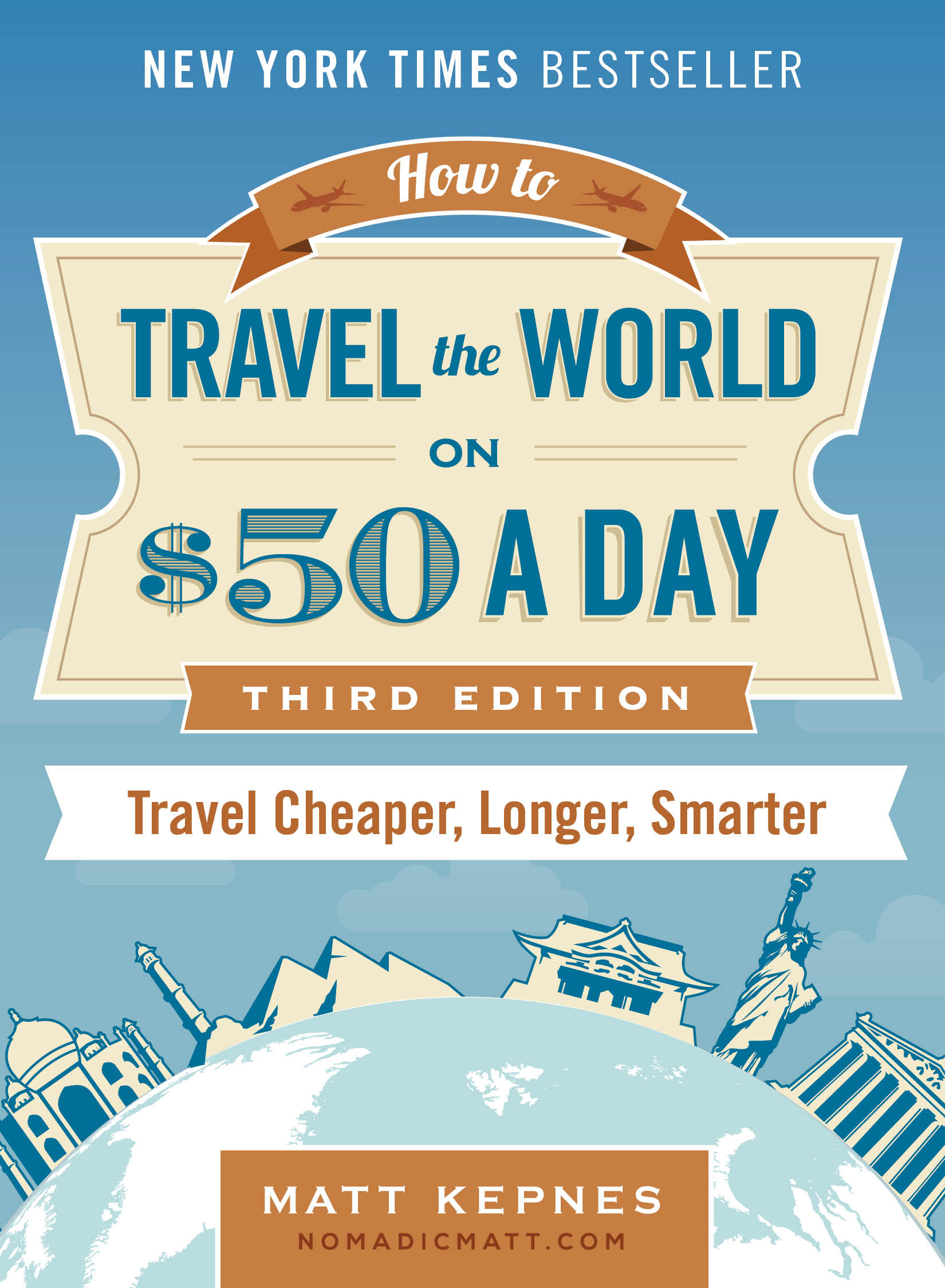
How to Travel the World on $50 a Day

how to travel the world on $50 a dayhow to travel the world on $50 a dayMy New York Times best-selling paperback guide to world travel will teach you how to master the art of travel save money, get off the beaten path, and have a more local, richer travel experiences. It will teach you everything you need to know about travel!
Click here to learn more about the book and how you can start reading it today!


Book Your Trip: Logistical Tips and Tricks

Book Your Flight
Find a cheap flight by using Skyscanner or Momondo. They are my two favorite search engines because they search websites and airlines around the globe so you always know no stone is left unturned.

Book Your Accommodation
You can book your hostel with Hostelworld as they have the largest inventory. If you want to stay somewhere other than a hostel, use Booking.com as they consistently return the cheapest rates for guesthouses and cheap hotels. I use them all the time.

Don’t Forget Travel Insurance
Travel insurance will protect you against illness, injury, theft, and cancellations. It’s comprehensive protection in case anything goes wrong. I never go on a trip without it as I’ve had to use it many times in the past. I’ve been using World Nomads for ten years. My favorite companies that offer the best service and value are:

  • World Nomads (for everyone below 70)
  • Insure My Trip (for those over 70)

Looking for the best companies to save money with?
Check out my resource page for the best companies to use when you travel! I list all the ones I use to save money when I travel – and that will save you time and money too!

2019年8月5日星期一

How to Visit the Amazon Rainforest in Bolivia (Updated 2019)

https://www.flickr.com/photos/kj-an/8331938680/https://www.flickr.com/photos/kj-an/8331938680/
Updated: 8/5/19 | August 5th, 2019

Bolivia provides a budget-friendly option for exploring the rainforest. It’s cheaper and less crowded than the Amazon tours from Brazil. In this guest post, Erin from Never Ending Voyage shows us how we can experience the rainforest by going through Bolivia at a cheaper price!

The Amazon Rainforest. It’s the world’s largest tropical rainforest, covering some 5.5 million square kilometers. Offering the opportunity to see rare flora and fauna, it’ should come as no surprise that it’s at the top of many travelers “to-do” lists.

When most travelers think of the Amazon, they tend to think of Brazil.

Yet the Amazon basin actually stretches across nine countries in South America, which means that you don’t have to take an expensive tour in Brazil to see the jungle. For the budget-savvy traveler, Bolivia provides an amazing (and affordable) alternative from which to visit the basin.

Not only is it cheaper and less crowded but it’s just as biologically diverse as Brazil!

In this post, we’ll show you everything you need to know to have an amazing Amazon experience in Bolivia!

Where Do You Start?

The starting point for trips into the Bolivian Amazon is the town of Rurrenabaque. It’s straightforward here to sign up for tours, and it’ll be cheaper than if you book in advance in La Paz. Moreover, it’s a small town, so it’s easy to wander around and find a guesthouse for around $5-10 USD a night while you check out a few tour agencies.

There are two ways to visit the Amazon from here:

1. The Pampas
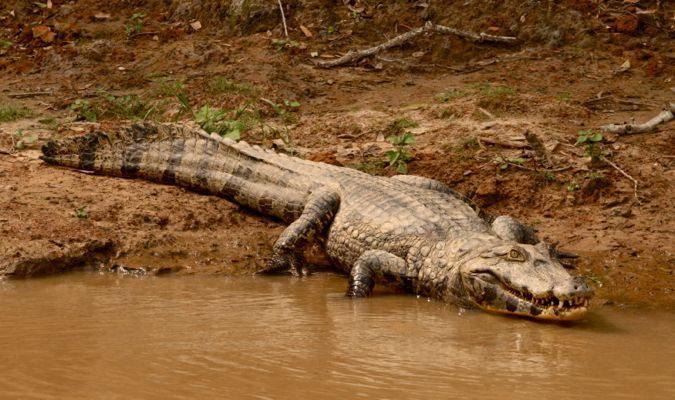
A large alligator near the water's edge in the Bolivian rainforestA large alligator near the water's edge in the Bolivian rainforest
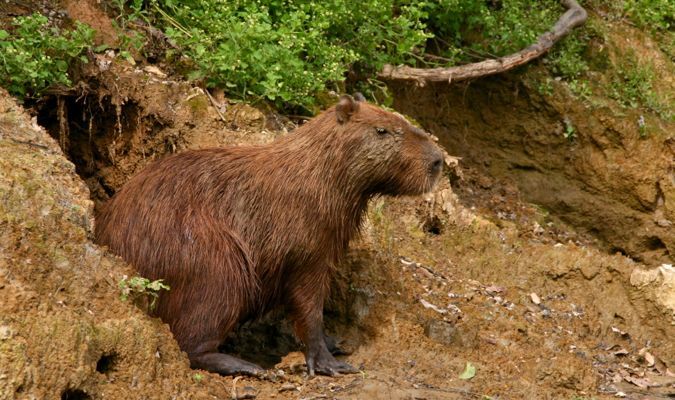
The pampas tours are the cheapest option and are where you’ll see the most wildlife, including alligators, squirrel monkeys, and the giant rodent capybara. It may not be the classic Amazon jungle experience you envisioned, though, as the pampas are a wetland savannah on the edge of the Amazon basin rather than deep in the jungle, but the lack of trees means it’s much easier to spot wildlife.

All the tour operators operate nearly identical two-night/three-day trips for around $75 USD plus the park entrance fee (which will be around $20 USD). Tours generally include all transportation, food, and a guide. You get what you pay for, so expect basic accommodation and meals (I recommend bringing snacks), and your guide may not be the most knowledgeable if you go with a cheap operator.

Since guides are so important to the overall experience, make sure you ask around for a company with good, knowledgeable guides.

After a very bumpy three-hour jeep ride to the jungle, you’ll transfer to a motorized canoe and travel a further three hours along the river to your lodge. The river trip was the highlight for us, as we got up close to an amazing amount of wildlife: hundreds of alligators, entire families of capybara (giant semiaquatic rodents), turtles sunbathing on logs, and trees full of tiny yellow squirrel monkeys. All while birds such as egrets, herons, roseate spoonbills, blue kingfishers, eagles, and hoatzin (pheasant-like birds with blue faces and spiky hair) flew and nested around us.

A brown capybara looking for predators in BoliviaA brown capybara looking for predators in Bolivia

The riverside camp is in a peaceful setting among the trees, with plenty of wildlife-spotting opportunities (I had monkeys peering into my room!). Accommodation is in shared wooden huts on stilts, and you’ll wake up to the raucous sounds of howler monkeys. A generator provides power until 10pm so you can enjoy cold beers while lounging in a hammock and watching the sunset over the river.

The pampas tours are a great way to view lots of wildlife for a very affordable price, but choose your tour operator carefully and make sure they don’t touch or feed any of the wildlife — especially the anacondas.

2. The Jungle
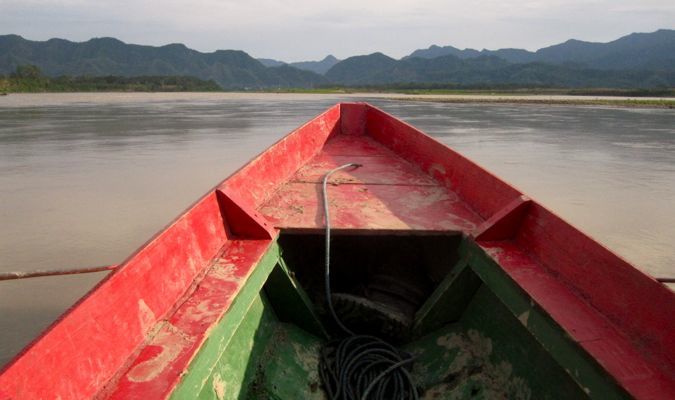
The tip of a red canoe as it floats along in the Bolivian amazon rainforestThe tip of a red canoe as it floats along in the Bolivian amazon rainforest

For a more classic Amazon experience, opt for a jungle tour. You can stay at an eco-lodge in the jungle and do activities from there, but this can be pricey. We (my other half and I) paid $207 USD each for a two-night/three-day tour with Madidi Travel to their Serere Lodge, but we did get a large, comfortable bungalow, great food, and a very professionally run trip. We also liked that profits from the trip go back into conservation work for the area.

Although triple the price of a pampas trip, this is still much less than you’d pay for a similar experience in Brazil.

Serere Lodge is reached by a three-hour canoe ride and a short trek through the jungle. You can choose from a range of activities, including canoe trips on the lake next to the camp (at night you can see the glowing red eyes of caiman), day and night treks in the jungle, piranha fishing, and making jewelry from nuts and seeds.

Jungle treks are tiring in the heat and humidity, and there were many more mosquitoes than in the pampas. It is also much more difficult to spot wildlife — you could spend hours and not see one monkey, while we’d canoed past dozens of them in the pampas. It was interesting to see colorful spiders and giant bugs, and learn about the medicinal uses of trees and plants, though.

In general, we just enjoyed the peace of being in the jungle, especially from the comfort of a hammock, even if we didn’t see a lot of wildlife.

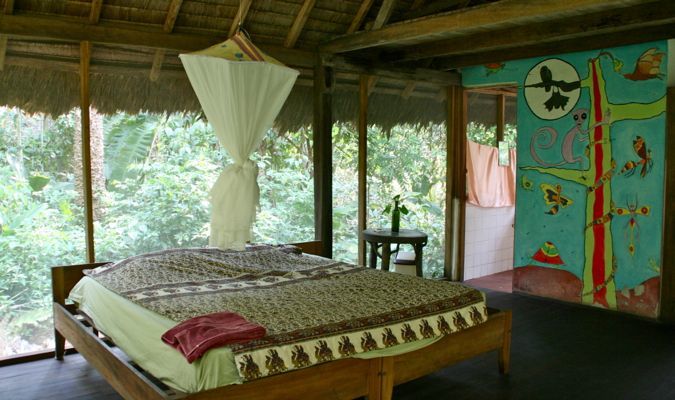
A fancy jungle lodge surrounded by lush jungle Bolivia rainforestA fancy jungle lodge surrounded by lush jungle Bolivia rainforest

There are cheaper jungle tours available with more basic accommodation for similar prices to the pampas trips. We also met someone who had hired a guide independently and trekked and camped out in the jungle. This will save you money and possibly be a more authentic experience, but conditions in the jungle are hard, so don’t undertake one of these treks lightly.

If you have the budget and time, I’d recommend both the pampas and jungle trips, but otherwise, you’ll need to prioritize spotting wildlife in the pampas or the classic jungle experience.

10 Travel Tips for the Bolivian Amazon

  1. You can get to Rurrenabaque from La Paz by a horrendous, bumpy 30-hour bus ride or take the scenic 35-minute flight across snowy mountains and into the jungle. We flew with Amaszonas for $75 each way, but TAM might be a little cheaper. Obviously, the $10 bus ride will save you money, but it might not be worth it for your sanity!
  2. The best time to visit the Bolivian Amazon is the dry season from May to October when there is more wildlife attracted to the rivers and fewer mosquitoes.
  3. There is no reliable ATM in Rurrenabaque, so bring plenty of cash.
  4. Many tour operators will offer anaconda hunts where you can pose for photos. Don’t go on these. Wild animals should be viewed from a distance only; they aren’t pets.
  5. The jungle trek is more physically demanding than the pampas tour so be sure to have good footwear and proper hiking clothing.
  6. Many guides will encourage you to get up close and personal with many of the animals that you see. For your own safety, don’t.
  7. To make sure you get a reliable tour operator, don’t pay less than around $90-100 USD for your tour. Anything below that price point will like be less than ideal.
  8. If you’re doing the jungle tour, you’ll want to wear waterproof hiking boots or shoes.
  9. Wear light trekking clothes as it can get warm, but also make sure to cover up so you aren’t attacked by mosquitoes. Bring bug spray with you as well.
  10. We did our pampas trip with Indigena Tours. I can’t say I recommend them, as it was quite badly organized, the food portions were too small, and our guide wasn’t very helpful. But at least they didn’t touch any of the animals, which is a common problem here. There are definitely worse tour companies in Rurrenabaque. Ultimately it’s a cheap trip and you get what you pay for (there aren’t any more expensive, better-run options), but it was worth it for us to get up close with so much wildlife.

***
Visiting the Amazon jungle is a highlight for many travelers in South America, and it’d be a shame to miss out because you can’t afford the high cost of trips in Brazil. For us, Bolivia made for a perfect affordable alternative.

Visiting the Amazon jungle is a highlight for many travelers in South America, and it’d be a shame to miss out because you can’t afford the high cost of trips in Brazil. For us, Bolivia made for a perfect affordable alternative.

If you’re heading to Bolivia anyway (and you should — it’s an amazing country!), be sure to consider taking an Amazon tour here. You won’t be disappointed!

Erin McNeaney and her partner Simon sold everything they owned and left the UK in March 2010 to travel the world forever. You can follow their adventures at Never Ending Voyage, or Twitter and Facebook.

Book Your Trip: Logistical Tips and Tricks

Book Your Flight
Find a cheap flight by using Skyscanner or Momondo. They are my two favorite search engines because they search websites and airlines around the globe so you always know no stone is left unturned.

Book Your Accommodation
You can book your hostel with Hostelworld as they have the largest inventory. If you want to stay somewhere other than a hostel, use Booking.com as they consistently return the cheapest rates for guesthouses and cheap hotels. I use them all the time.

Don’t Forget Travel Insurance
Travel insurance will protect you against illness, injury, theft, and cancellations. It’s comprehensive protection in case anything goes wrong. I never go on a trip without it as I’ve had to use it many times in the past. I’ve been using World Nomads for ten years. My favorite companies that offer the best service and value are:

  • World Nomads (for everyone below 70)
  • Insure My Trip (for those over 70)

Looking for the best companies to save money with?
Check out my resource page for the best companies to use when you travel! I list all the ones I use to save money when I travel – and that will save you time and money too!