显示标签为“know”的博文。显示所有博文

2019年9月2日星期一

27 Golden Rules For Becoming a Master Traveler (Updated 2019)

nomadic matt's golden rules of travelnomadic matt's golden rules of travel
Updated: 9/2/2019 | September 2nd, 2019

Every industry has its own “best practices” — proven rules and standards that guide the industry and the people in it. Travel is no different. There are many “rules to live by” that can help us navigate the unknown world with fewer mistakes.

I have my own golden travel rules.

Over the past ten years, I’ve learned a lot of tips and tricks that have helped me thrive when I travel. When I first set out in 2006, I made a lot of mistakes. (Ok, I still make some mistakes.)

And that’s not a bad thing. If you don’t make mistakes, you aren’t trying new things and pushing yourself out of your comfort zone.

Mistakes are going to happen.

But, over the years, I’ve developed a list of 27 golden rules for travel. These guidelines help me save money, make friends, stay safe, and fit into the local culture.

If you follow them, you’ll become a master traveler, able to travel the world with swashbuckling zeal and expert ninja-like knowledge… all without breaking the bank so you can keep cutting a path forward through the world for longer:

1. Be adventurous – You only live once. You’re going to get chances to do wild things you’ve never dreamed of doing when you travel. Don’t hold back. Count to three, say “screw it,” and take the leap. You didn’t come this far for nothing. Say yes when someone asks you to go rock climbing, salsa dancing, spelunking, or try the world’s hottest pepper despite not liking spicy food.

There’s no one around to judge you. No one cares what you do. No rumors will be spread. Push yourself to do something new and daring at least one.

2. Get a no-fee ATM card – Why give your money to the banks? Get an ATM card that doesn’t charge any fees and use that extra money for more traveling. Over the long term those $2-5 charges really add up. I use Charles Schwab as my bank, but you can also find many others that offer no-fee accounts — or use a one that is part of the Global ATM Alliance, and pay no fees within that network.

This article can show you how to avoid bank fees when you travel (and will give you a list of suggested cards too).

3. Get a rewards credit card – Why pay for travel when you can get it for free? Use a travel rewards credit card to earn points and miles that can be redeemed for free travel.

You’re already spending the money anyway so why not get rewarded for it?

Travel credit cards come with tons of perks and huge bonuses that can be redeemed for free flights right away. Plus, they get you the best exchange rate on your purchases.

Having one is an absolute must.

Want to know how I get hundreds of thousands of points per year and fly for free? Sign up for my free primer on the art of travel hacking and I’ll show you.

4. Always carry backups – Always carry a backup bank and credit card in case one is lost, stolen, or hacked. That way while you are fixing the issue, you still have access to your money. Instead of the problem crippling your trip, it merely is an annoyance. This has happened to me before and, I can ensure you, you’ll be thankful you followed this advice!

5. Only carry what you need – When you leave to go out for the day, only care the cash you need and one credit card. You don’t want to get robbed and lose everything. Leave the backups and extra locked back at your hostel!

6. Join a frequent flier program – Get rewarded for all of those flights you’ll be taking by joining a frequent flier program. That way you’ll earn miles, perks for flying, and free flights. Miles are like money — and you wouldn’t waste money, would you? No! So, sign up for a loyalty program, and collect points. Even if it takes you years to get a free flight, at least you are not being wasteful!

7. Travel alone at least once – Few things are as liberating as solo travel. As a solo traveler, you’re free to do whatever you want. When you travel solo, the world is your oyster. You’re free to do whatever you want, whenever you want. To me, it’s the purest sense of freedom there is.

But beyond that sense of freedom, solo travel actually teaches you a lot about yourself. Travel is an amazing personal development tool after all, and solo travel is one of the best ways to learn and grow and challenge yourself.

Without anyone around you, you have to solve the problems you face on the road. You have to figure out how to get from point A to B, deal with people who speak a different language, get comfortable eating alone, find things to do, and work out problems that arise. It’s you and your wits. That forces you to grow in ways you won’t in the comfort of your home or with a group.

While it won’t be for everyone, I still encourage everyone to try solo travel at least once. Even if you don’t love it, you’ll learn a ton about yourself in the process.

8. Learn basic phrases – Locals don’t expect you to be an expert in the local language, but learning a few basic phrases will go a long way to endearing you and making them go the extra mile for you. It will bring a smile to their face that you tried! “Hello,” “how are you?” and “thank you” go a long, long way no matter where you go.

9. Stay in hostels – Get to know other travelers and experience the communal spirit of traveling by staying in hostels a few times. They aren’t all the dirty party places you see in movies. Most hostels are very clean, offer breakfast, have comfy beds and Wi-Fi, organize events, and know the local area very well. They also aren’t just for young backpackers; you’ll find people of all ages (and even some families) staying there. Try them out. You may like it.

Here is a list of the best hostels in the world to get you started!

10. Use tourist boards – Local tourist offices are a wealth of knowledge. When you get to a new destination, visit the tourist office and ask the staff an insane number of questions about the place. They exist solely to help you get the most of your visit and it’s their job to know everything and everything about a place. Plus, they often have tons of discounts not found anywhere else.

Visiting one is often one of the first things I do in a new city.

11. Try new foods – Culture is often best experienced through food. Don’t be afraid to try new things. Get out of your comfort zone and experiment. You might actually like it (those fried caterpillars in Zambia were delicious!).

12. Be flexible with your plans – Travel is a series of happy accidents with way leading to way. Don’t skip going to that random city with the friends you just met because your itinerary says something different. You’ll regret it.

Go with the flow and be open to new things.

This will make your travels a lot more stress-free.

12. Pack light – Take it from a former over-packer: you never need half the stuff you take. Put everything you think you need in a pile and then remove half of it. The lighter you travel, the easier you travel.

Here’s our suggested packing lists:

14. Take extra money – Something always happens that you never planned for that will cost you extra money. I never thought I would fly last-minute to Fiji, need to replace my camera in Italy, or buy an extra iPhone cable in Australia. Always take extra money just in case. You may not need it, but you don’t want to be without a little extra when something bad happens.

When you start planning for your trip, set aside a $300-500 emergency slush fund in for accidents.

15. Get lost – Meander through a new city without a map. Get lost — because in the end, you aren’t really getting lost, you’re just discovering new experiences. So put down the map and wander. Eventually, you’ll find your way.

16. Call home – Your parents miss you. Don’t forget to call and say hello.

17. Get a phone — It will be easier to stay in touch with friends (and call home), meet up with other travelers, and contact hostels with a phone. SIM cards and prepaid phones are cheap, so there’s no excuse not to stay connected.

But don’t be glued to your phone. I see too many people hooked on their phone these days. But it is still a good idea to carry one for emergencies, especially when they are so accessible and affordable now.

18. Travel slow – This isn’t a race or a competition. I know you want to get a lot in with your limited time, but you see a lot more when you see a lot less. Travel slow and experience each place. Don’t race from train station to station; that will set you up for a stressful, unenjoyable time. With travel, less is more.

19. Live somewhere once – Stop at least once. Get to know a place. Learn the language. Make local friends. Explore. Become the local. Living in a foreign place gives you a different perspective on life and a real sense of what it’s like to be an outsider.

Plus, living a foreign place and surviving will help you gain a lot of confidence.

20. Avoid taxis – They just cost a lot. Don’t use them unless you don’t have any other option.

21. Bring a reusable water bottle – Not only are all those disposable plastic water bottles bad for the environment but the cost adds up over time. A water bottle here, a water bottle there, and you’ve spent $50 on water alone. Get a reusable bottle and drink the tap water in conjunction with a SteriPen or LifeStraw water purifier.

22. Buy travel insurance – You never know what could happen on the road — but something always does. I’ve had to deal with lost baggage, broken gear, delayed flights, and even some pretty serious injuries. Without travel insurance, I would have not only had to pay out of pocket for these expenses but I would have been left to navigate them alone.

Buy travel insurance so that if you’re injured or you break your camera, you’re covered. Plus, you’re friends and family will be able to relax knowing that, should something happen, you’re covered. It’s only a few dollars a day. It’s worth the peace of mind.

Here’s the link to our resource page with all our articles on the subject!

23. Bring basic first-aid – Cuts and scrapes happen, and you can get what you need most anywhere in the world, but it’s still good to carry bandages, antibacterial cream, and some hydrocortisone cream in your first aid kit just in case. Also, carry duct tape — you’ll never know when it’ll come in handy.

Here are some tips on how to pack a suggested first add kit.

24. Get off the beaten path – London, Paris, and the temples of Kyoto are all amazing for a reason, but get off the beaten path, go away from the crowds, and explore on your own. Find something new, stick out, meet the locals, and discover. The road less traveled is usually a good one.

25. Take photos of your friends – Years from now, you’ll want to look back at your younger self and see all the people who changed your life. Nostalgia can be a wonderful thing. Make sure you take photos of your friends. You’ll want them later.

26. Use the sharing economy – The rise of the sharing economy has made backpacking so much easier and cheaper. From ridesharing, house sharing, and meetup websites, there are so many ways you can get off the tourist trail and experience day-to-day life with locals! Here are some suggested websites:

  • Couchsurfing (free shared accommodation with locals)
  • Airbnb (paid accommodation with locals)
  • BlaBlaCar (rideshare app)
  • EatWith (share a meal with local cooks)
  • Vayable (for finding local tours and activities)

And finally, the most important tip of them all….

27. Ignore all my tips and do whatever you want – It’s your trip. Go where you want, when you want, and for how long you want. Don’t worry about this or that. Make mistakes. Learn. Make more mistakes. Have fun and become a better traveler. At the end of the day, you won’t look back and think “if only I had more miles” but instead “damn, that was a lot of fun.”

So get out there and have some fun!

You deserve it.

How to Travel the World on $50 a Day
how to travel the world on $50 a dayhow to travel the world on $50 a dayMy New York Times best-selling paperback guide to world travel will teach you how to master the art of travel save money, get off the beaten path, and have a more local, richer travel experiences. It will teach you everything you need to know about travel!

Click here to learn more about the book and how you can start reading it today!


Book Your Trip: Logistical Tips and Tricks

Book Your Flight
Find a cheap flight by using Skyscanner or Momondo. They are my two favorite search engines because they search websites and airlines around the globe so you always know no stone is left unturned.

Book Your Accommodation
You can book your hostel with Hostelworld as they have the largest inventory. If you want to stay somewhere other than a hostel, use Booking.com as they consistently return the cheapest rates for guesthouses and cheap hotels. I use them all the time.

Don’t Forget Travel Insurance
Travel insurance will protect you against illness, injury, theft, and cancellations. It’s comprehensive protection in case anything goes wrong. I never go on a trip without it as I’ve had to use it many times in the past. I’ve been using World Nomads for ten years. My favorite companies that offer the best service and value are:

  • World Nomads (for everyone below 70)
  • Insure My Trip (for those over 70)

Looking for the best companies to save money with?
Check out my resource page for the best companies to use when you travel! I list all the ones I use to save money when I travel – and that will save you time and money too!

2019年8月2日星期五

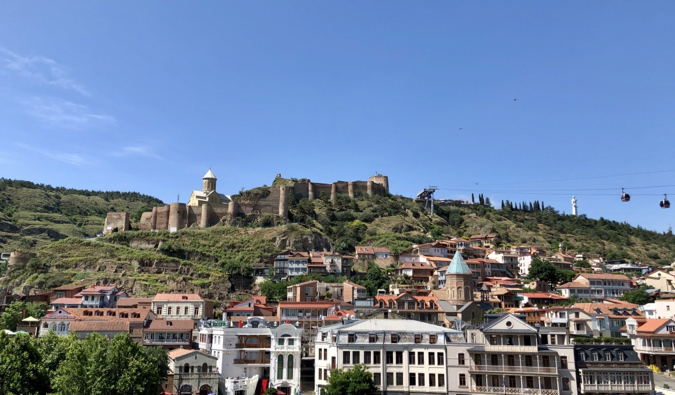
Finding Love and Home in Tbilisi, Georgia

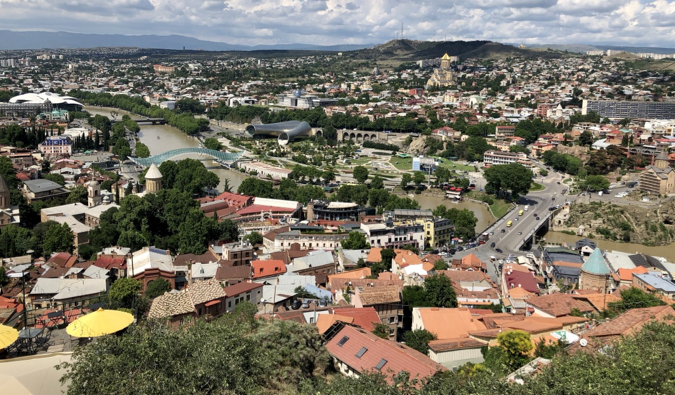
A view overlooking Tbilisi

A view overlooking Tbilisi
Post: 9/12/18 | September 12th, 2018

Post: 9/12/18 | September 12th, 2018

“When did you first hear of Georgia?” Mako asked after a long drag from her cigarette. She was a Georgian tour guide helping my friend Dave, who was also in the country. We were drinking wine outside Fabrika, an old Soviet fabric factory now converted into a multi-use center with bars, restaurants, co-working spaces, shops, artist studios, and a hostel.

“Hmm…” I replied. “That’s a good question. On one level, I’ve known about Georgia for a long time, because, well, I know my geography. But as a place that was more than just a name on a map, I would have to say it’s only been in the last few years — when I started thinking of more unique and off-the-beaten-path places to visit — that I really thought ‘Hmm, Georgia? That could be interesting!’”

When I left London for a trip to Azerbaijan in June, I added nearby Georgia to the itinerary too. Friends spoke highly of the country, and I wanted to see its mountain towns, beaches, and historic cities, and to taste the food and wine I had heard so much about.

My original plan was to spend about a little over a week there, hitting some of the highlights and whetting my appetite for another trip (to me, a week in a country is just never enough time).

But, after a change in plans that required me to head home earlier than expected, I only had time to see the capital of Tbilisi.

From the moment I got off the bus from Azerbaijan, I was in love. Yes, that’s a cliché. To fall for a place right away. But sometimes a destination just hits you to your core right way. The energy — the essence — of where you are just flows through your body and you feel like you’re coming home to a place you didn’t even realize was home.

It’s as if a part of you had always been there, and you were simply returning to make yourself whole again.

A view overlooking Tbilisi

A view overlooking Tbilisi

Over the next few days, that feeling only increased as I actually began exploring the city.

Before arriving, I had pictured a grimy old city with crumbling, ugly Soviet-era buildings and graffiti. In my mind, it was still frozen in the immediate fall of the Soviet empire.

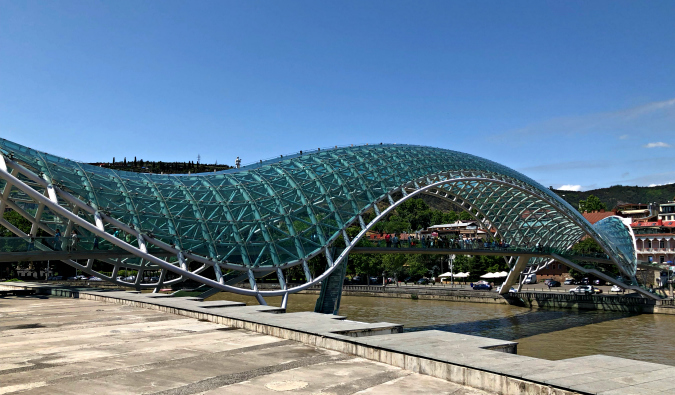
Instead, I found a beautifully preserved Old Town with cobblestone streets and stunning buildings with ornate balconies; lots of spacious parks, wide streets, eclectic artist spaces, and funky cafés; and modern and sometimes futuristic architecture. It was a lot more like Europe than I had anticipated.

A pedestrian bridge in Tbilisi

A pedestrian bridge in Tbilisi

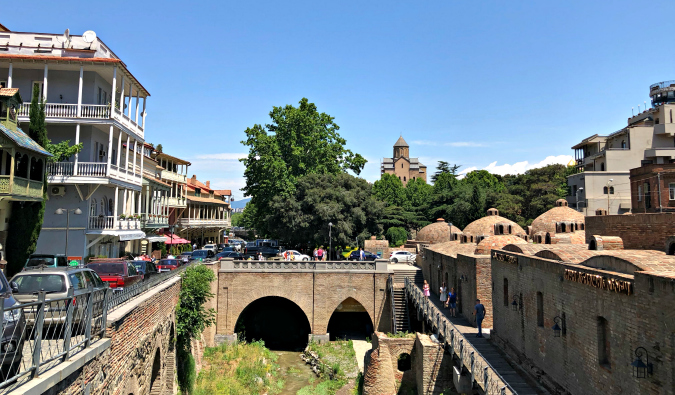
I spent my first day wandering the old town. I gazed at the Metekhi Church with its giant equestrian statue of King Vakhtang Gorgasali overlooking the Mtkvari River. This is where the king built his palace when he made Tbilisi his capital in the fifth century. (Legend has it that he founded Tbilisi while hunting and discovered the sulfur baths, but a city existed here long before he came along! He just revived it.) The simple, domed-shaped brick building is popular with locals, as legend says the fifth-century martyr St. Shushanik was buried here.

From there I walked across the bridge, toward the famous sulfur baths, a collection of brick-domed buildings containing subterranean bathhouses. These baths helped make Tbilisi famous, as the waters are claimed to help soothe symptoms in chronically ill patients, like arthritic pain or poor blood circulation. There used to be 63 of these baths in Tbilisi, but there are only a handful left now. They are still wildly popular, though I don’t see the charm in smelling like rotten eggs. (But I’m a weirdo, so what do I know?)

Buildings in Tbilisi

Buildings in Tbilisi

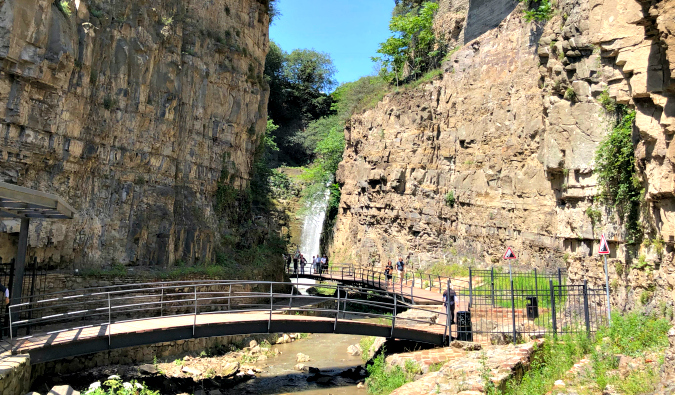
These bathhouses straddle a small river that feeds them and then meanders through a canyon that you can follow to the amazing Dzveli Tbilisi sulfur waterfall. There, the sound of the city melts away, and you feel more like you’re in a national park than a national capital.

I wandered some more and located the entrance to Tbilisi’s gigantic National Botanical Garden, where I found a zip line, tons more waterfalls and rivers to swim in (which, given the high temps during my visit, were well utilized by locals), hiking paths, and flowers and shrubbery. Amidst this peace, I often had to remind myself that I was in a chaotic major city and not some little quiet mountain town.

Hiking in Tbilisi

Hiking in Tbilisi

From there it was up to the Narikala Fortress, which dominates the skyline. Dating back to the fourth century, it was once a Persian citadel. Most of the walls were built in the eighth century, but in 1827 an explosion of Russian ammunition stored there wrecked the whole thing. The cliffs the ruins are on offer the best views of the entire city. You can see for miles, which is probably why the site was chosen for the citadel. A cable car connects it with Rike Park on the other side of the Mtkvari River.

The next day, I explored the city’s history museums (which, to my surprise, had a good amount of English translations). I highly recommend the Georgian National Museum, which has a detailed exhibit on the country’s history; the Nikoloz Baratashvili Memorial House-Museum, which houses materials related to the life and work of the romantic poet, period furniture, folk musical instruments, paintings, and lots of history about 19th-century Georgia; and the David Baazov Museum, which talks about Jewish history in Georgia (Israel and Georgia have a close relationship).

However, after having hiked a lot in Azerbaijan, walking in the stifling summer heat of Tbilisi wasn’t that exciting to me. So, after a day and half of sightseeing, I found myself indoors drinking tea, writing, consuming a (un)healthy amount of wine, gorging on food at Fabrika, talking to other travelers, getting to the know the staff at a local coffee shop, and hanging out with Dave.

I can’t say I really know Tbilisi. Sure, I can get around the subway now. I have an idea of what things cost. I know a little about the city and country. I met some cool people. I have a vague sense of place

But I don’t know it the way I know New York or Paris or Bangkok or a thousand other place I’ve lived or spent years traveling to.

But I feel like I know it.

Tbilisi is a city bursting with activity. A city of art and history. Of enjoyment. Of an energy that seemed to say, “Come enjoy the good life over wine. Don’t fret over things — just be.”

Tbilisi’s energy is my energy.

We are a match made in heaven.

And, though it’s terrible to end a travel article with the cliché “I can’t wait to go back,” I honestly can’t wait to go back.

I felt at home in that city.

And everyone loves the feeling of returning home.

Book Your Trip to Tbilisi: Logistical Tips and Tricks

Book Your Flight
Find a cheap flight to Tbilisi by using Skyscanner or Momondo. They are my two favorite search engines. Start with Momondo.

Book Your Accommodation
I highly recommend the hostel and co-working space Fabrika. To book another hostel in Tbilisi, use Hostelworld. If you want to stay elsewhere, use Booking.com as they consistently return the cheapest rates. (Here’s the proof.)

Don’t Forget Travel Insurance
Travel insurance will protect you against illness, injury, theft, and cancellations. I never ever go on a trip without it. I’ve been using World Nomads for ten years. You should too.

Need Some Gear?
Check out our resource page for the best companies to use!

Want More Information on Georgia?
Be sure to visit our robust Georgia travel guide for even more planning tips!

How to Research Your Travel Destinations in 2019 like a Pro!

Kristin Addis in Thailand

Kristin Addis in Thailand
Posted: 1/2/2019 | January 2nd, 2019

1/2/2019 | January 2nd, 2019

Kristin Addis from Be My Travel Muse writes our regular column on solo female travel. It’s an important topic I can’t adequately cover, so I brought in an expert to share her advice for other women travelers to help cover the topics important and specific to them! In this month’s article, she shows you how she researches and plans her trips!

What’s the best way to go about researching your next trip when all of the decisions will fall to you as a solo traveler? Where should you go, what should you do, how will you navigate in your new surroundings? Where do you even begin to get answers to these questions?

Over the past six years, I’ve been mostly nomadic, traveling solo for the bulk of that time. Since I’ve been chief decision-maker for all of those trips, there are tricks I’ve learned along the way to help me save time in the long run, avoid spending too much and getting scammed, and make sure I know my way around before I even touch down.

The following is a step-by-step system to help you research your travel destinations. Most of these tips only take a few minutes but could save you big-time in terms of money, headaches, and confusion.

Ready to plan the solo trip of a lifetime? Let’s jump in!

1. Initial online research

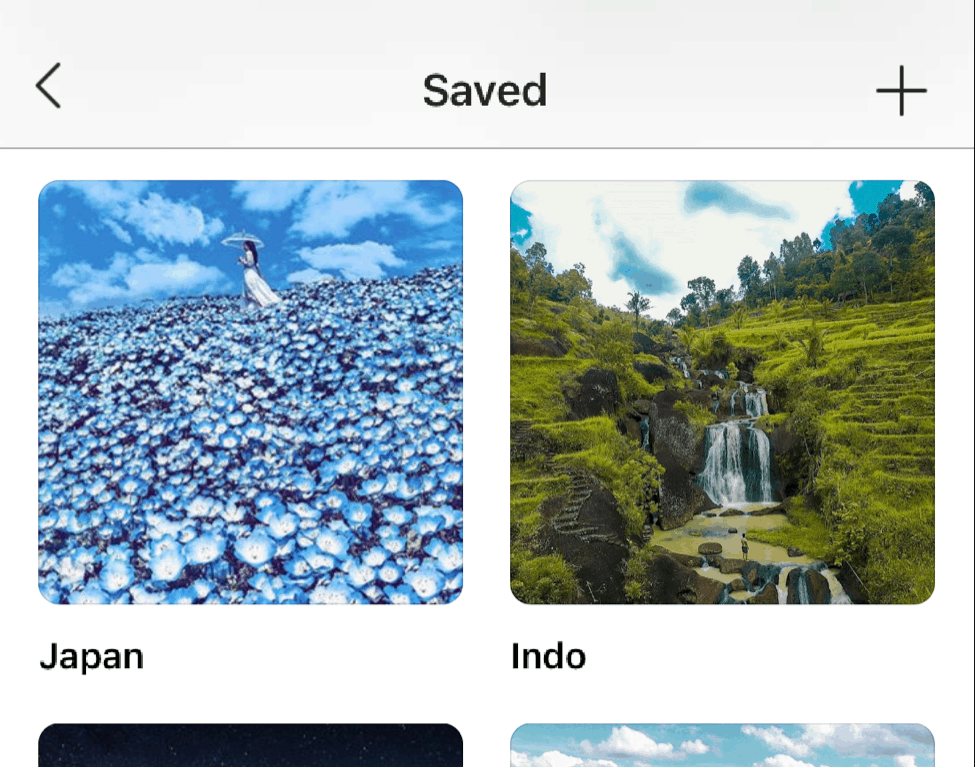
I get a lot of my ideas from Instagram. I mostly follow travel accounts, and when I see a place that looks particularly beautiful, I use Instagram’s bookmark feature and put it in an album. I have one for Japan, one for New Zealand, and so on. When decide to travel to one of those destinations, I look back through my albums and consider if my budget, the time of year, and the activities I want to do there are all in alignment. (I suggest taking a look at Pinterest boards for those destinations as well.)

Using Instagram to research travel destinations

Using Instagram to research travel destinations

Chances are you already have a few destinations in mind and you just want to make sure that they will work for you. Evaluate the cost of traveling, think about the season it will be there, and make a decision based on those factors.

If you’re really not sure where to start, I have a list of some of the best countries for solo female travelers.

(I also take to heart word-of-mouth suggestions. It’s what led me to Mozambique and Patagonia. If someone I know has really loved a place, then I add it to the top of my list.)

2. Is the destination good for solo travelers?

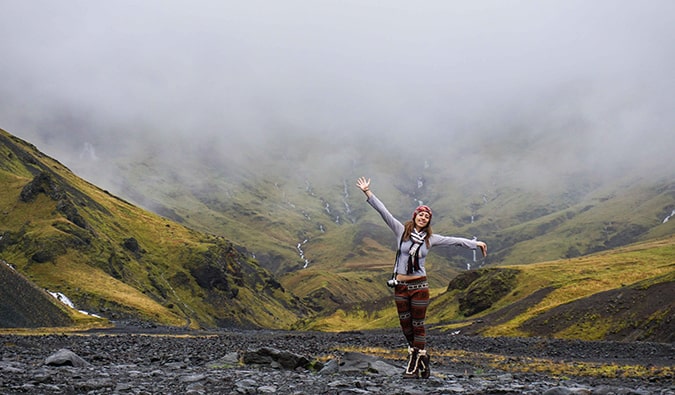
Kristin Addis in Iceland

Kristin Addis in Iceland
After six years of solo traveling, I’ve learned that the following criteria are almost guaranteed to produce a
  • A well-known activity/draw: Is there a reason why people come to this place? Is it famous for surfing, rock climbing, scuba diving, or something else? When this is the case, you are much more likely to find other solo travelers participating in that experience.
  • A festival: If there’s some kind of cultural event or festival at the time you’re visiting, you can bet that a lot of other travelers will be coming through as well, so you are unlikely to be lonely.
  • Popularity: While I love off-the-beaten-path travel, I also know that the farther away from tourist centers I head, the more likely it is that I will spend more time alone. If I know I want to have a more social trip, I will head to places that are popular, like Thailand or Iceland. If you’re not sure where to start, this list has the most visited places in 2018.

After six years of solo traveling, I’ve learned that the following criteria are almost guaranteed to produce a more social experience for solo travelers

Next, I try to mitigate the possibility of being the only solo traveler there by researching whether I’m about to head to a honeymoon destination or hotel. That said, I had fantastic experiences in Maui and Bali, which are usually thought of as couples’ destinations. I believe that as long as you pick a social activity that attracts other solo travelers, like surfing or scuba diving, you won’t feel like the odd one out.

So if you want to go somewhere beachy, don’t rule it out automatically just because you’re afraid you’ll be the only single person there. Unless you’re going to a truly tiny place, chances are there are parts of whatever country or island you’re looking at that will be less “romantic” and more social.

The only place I can think of off the top of my head that might truly be primarily couples-only is the Maldives, and even then you can still head to other islands, or to surf resorts, or do a live-aboard dive experience, so that your trip will be less lounging on the beach and more about meeting people.

3. What is the visa situation?

Visas are the next thing I want to know about before I get too far into planning. Do I need a visa to visit this country? Is that something I need to apply for ahead of time? What does it cost?

Wouldn’t it be annoying to plan a trip to India or China only to realize you can’t get the visa in time? Wouldn’t it be better to get a longer visa ahead of time, like for Thailand or Indonesia, instead of having to do visa runs, which are required in many countries to extend a typical 30-day tourist visa, if you plan a longer trip?

I do visa research on Google and the US Department of State website and/or the foreign embassy website, and encourage you to do the same for your destination to see what the visa requirements are for you.

4. What is there to do there?

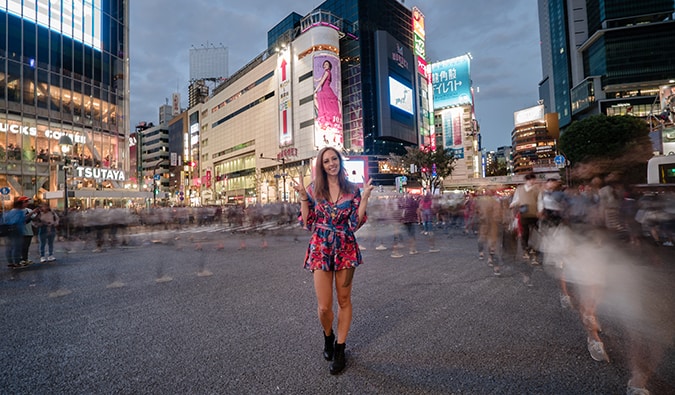
Kristin Addis in Japan

Kristin Addis in Japan
Now it’s time to figure out what I want to do there. In some cases, I already know, because I picked the place based on its good diving or great hiking. But in some cases, I really have no idea, other than it fits my budget, it’s the right time of year, or I just want to go somewhere warm.

Now it’s time to figure out what I want to do there. In some cases, I already know, because I picked the place based on its good diving or great hiking. But in some cases, I really have no idea, other than it fits my budget, it’s the right time of year, or I just want to go somewhere warm.

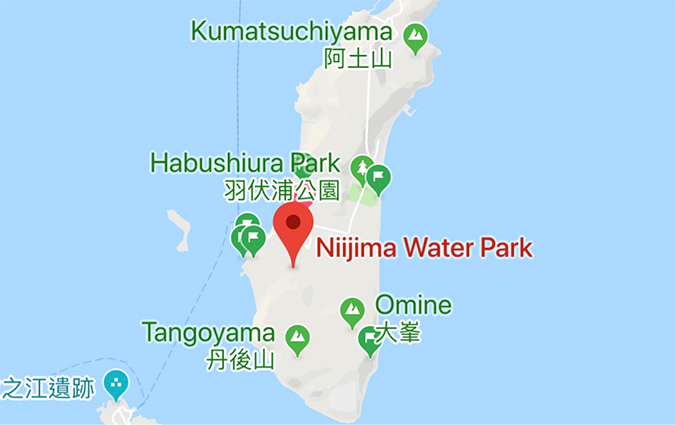
For example, I recently wanted to know what the best things to do in Tokyo were. So I just typed that exact question into Google, found some appealing options, and saved places in Google Maps with “want to go” flags for later.

Using Google Maps to plan trips

Using Google Maps to plan trips

(In some cases, there’s not a lot of information online. That’s when you know you’ve found a true adventure, someplace there will not be that many other tourists. I love this kind of trip too, but you may have to make peace with the fact that you will be doing a lot of recon on the ground. This is the point at which I encourage you to ask yourself what your tolerance is for uncertainty and whether or not that’s what you desire out of your trip.)

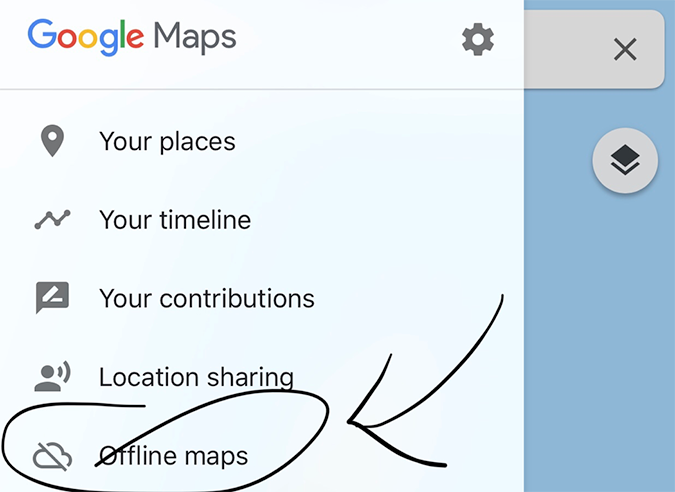
5. Downloading offline maps

Now that I have put markers into Google Maps for the places I want to go, I make sure that I can access these without an Internet connection, just in case. I usually save Google maps offline; if I’m going to be hiking, I really like maps.me offline maps as well. It’s great to have both downloaded while you are still at home and have a strong internet connection, so that you know they’ll be accessible when you arrive.

downloading offline maps

downloading offline maps

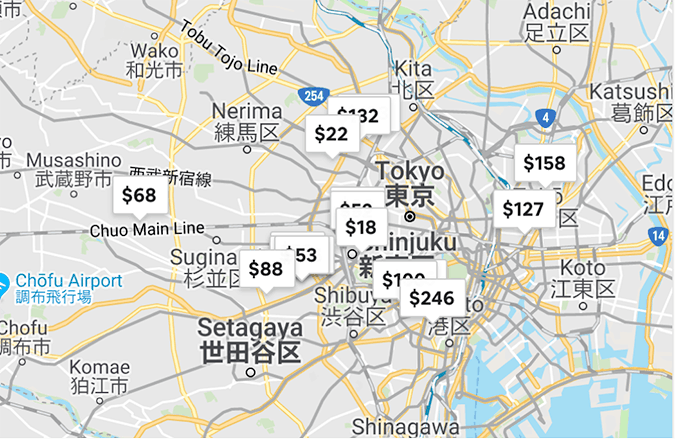
6. Booking the hotel

When it comes to accommodation, I almost always use either booking.com or Airbnb. I type in my destination and then I go directly to the map function. Which place has the best reviews at the best price and is going to be closest to the things I’m interested in seeing or doing? Or if I know I will be there only for a short while and will fly or take the train thereafter, which lodging is going to be the most convenient to catch that flight or train?

researching your hotel

researching your hotel

Generally, hostels will be more social than hotels, followed by Airbnb, unless you stay with a host who wants to show you around, which I wouldn’t count on. That said, you can look to couchsurfing if you want to be able to hang with your host – just read the reviews thoroughly first and be in full communication to make sure it’s a comfortable situation.

It also depends what part of the world you’re in. Bed-and-breakfasts might be quite social in South America, but a lot less so in Europe. I almost always read reviews to help me make my final decision.

I also don’t pressure myself to book a place for my entire stay. I want to be able to change my mind. Unless it’s high season (you can Google this too, but generally high season is when the weather is best) or there’s a holiday that I know is going to make it hard for me to move, I will just book a few days and then decide to move on or stay.

7. Research the best way to get to the hotel

Next I weigh my transportation options. Does the country I’m going to have Uber? Is it better to take the train? Is there an airport hotel shuttle, or bus from the airport to my hotel? In many cases, the hotel will provide this information in their correspondence with you or on their website. If it’s not listed, feel free to contact them and ask.

I also find TripAdvisor, Lonely Planet Thorntree, and Nomadic Matt’s forums are helpful because people are always asking this exact same question.

8. Research scams and dangers

Unfortunately, airports are the epicenter of tourist scams in many countries. The Denpasar airport in Bali, Indonesia, is one of the worst. In order to get out without getting scammed, you would need to know that the SIM card they are selling is marked up about 10 times what it would be once you leave the airport. You would also need to know that they do the same thing with taxi prices. (As a general rule, get the names of reputable companies before you go, never get in an unmarked taxi, and always know what the price of your ride should be before you get in. Google will help you with all of this.) And you would need to be aware that you can book an Uber for much cheaper if you meet the car at the departures level and ignore everyone who tries to tell you Uber “isn’t allowed” there.

When I fly into Bali, I just walk right through the mayhem with my head held high, because I have already done my research.

To get this info, I Google the airport name along with the word “scam” to see what other travelers have experienced, and then I know to be prepared when I get there. This removes so much stress when arriving in a new country.

9. SIM cards

I also research what a SIM card should cost, whether the airport is a good place to get it or not, and which company is the best. Again, Google and online forums are usually pretty helpful with this information.

I always travel with an unlocked phone so that I can get local SIMs. They are the cheapest method for staying connected, sometimes just a few dollars per gigabyte, and it simplifies getting to the hotel by allowing me to book an Uber immediately. Most of the time, it makes sense to buy a SIM card at the airport if you can, although sometimes, like in the aforementioned case of Bali, it’s much better to wait until you get to town. If you research this beforehand, you’ll already know.

It’s worth mentioning that you cannot count on there being reliable airport Wi-Fi. So try not to leave your taxi or SIM card research until you’ve already landed, because then it could be too late.

10. Final step: See if you already know anyone there

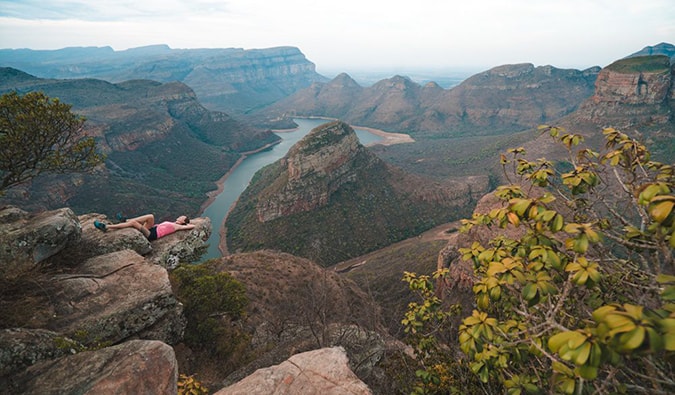
Kristin Addis in South Africa

Kristin Addis in South Africa
Finally, I sometimes post on my personal Facebook page

Finally, I sometimes post on my personal Facebook page to see if I have any connections at my destination . In the case of South Africa a few years ago, I met up with a friend of a friend, which was the impetus for one of the most friendly and social traveling experiences I’ve had. You never know who you might know and where.

You can also look into Couchsurfing, even if it’s just for a social event rather than actually staying with the person. There are also plenty of Facebook groups these days for connecting with others. Some are regional, like Backpacking Africa, or you can join one specifically for solo female travelers, like the BMTM Solo Female Traveler Connect.

Though I didn’t always know to do all of this research prior to my trips, after a few blunders, I’m glad to have finally learned what’s important to know ahead of time. Though it might seem like a lot of research, these tips can help you avoid overspending and to have a more relaxed and easy trip.

What are some of your favorite ways to research before you travel solo?

Conquering Mountains: The Guide to Solo Female Travel

conquering mountains: solo female travel by kristin addisconquering mountains: solo female travel by kristin addisFor a complete A-to-Z guide on solo female travel, check out Kristin’s new book, Conquering Mountains. Besides discussing many of the practical tips of preparing and planning your trip, the book addresses the fears, safety, and emotional concerns women have about traveling alone. It features over 20 interviews with other female travel writers and travelers. Click here to learn more about the book and start reading it today!

Kristin Addis is a solo female travel expert who inspires women to travel the world in an authentic and adventurous way. A former investment banker who sold all of her belongings and left California in 2012, Kristin has solo traveled the world for over four years, covering every continent (except for Antarctica, but it’s on her list). There’s almost nothing she won’t try and almost nowhere she won’t explore. You can find more of her musings at Be My Travel Muse or on Instagram and Facebook.

Book Your Trip: Logistical Tips and Tricks

Book Your Flight
Find a cheap flight by using Skyscanner or Momondo. They are my two favorite search engines because they search websites and airlines around the globe so you always know no stone is left unturned.

Book Your Accommodation
You can book your hostel with Hostelworld as they have the largest inventory. If you want to stay somewher eother than a hotel, use Booking.com as they consistently return the cheapest rates for guesthouses and cheap hotels. I use them all the time.

Don’t Forget Travel Insurance
Travel insurance will protect you against illness, injury, theft, and cancellations. It’s comprehensive protection in case anything goes wrong. I never go on a trip without it as I’ve had to use it many times in the past. I’ve been using World Nomads for ten years. My favorite companies that offer the best service and value are:

  • World Nomads (for everyone below 70)
  • Insure My Trip (for those over 70)

Looking for the best companies to save money with?
Check out my resource page for the best companies to use when you travel! I list all the ones I use to save money when I travel – and I think will help you too!

So, I Got Stabbed While I Was in Colombia

A black and white photo of a quiet street in Bogota, ColombiaA black and white photo of a quiet street in Bogota, Colombia

Posted: 4/2/2019 | April 2nd, 2019

Editor’s Note: I wavered on writing about this for a long time since I didn’t want to put people off on Colombia or perpetuate the myth that danger lurks around every corner. As you can tell from my posts here, here, here, and here, I really love the country. I mean it’s awesome. (And there will be plenty more blog posts about how great it is.) But I blog about all my experiences – good or bad – and this story is a good lesson on travel safety, the importance of always following local advice, and what happens when you stop doing so.

“Are you OK?”

“Here. Have a seat.”

“Do you need some water?”

A growing crowd had gathered around me, all offering help in one form or another.

“No, no, no, I think I’ll be OK,” I said waving them off. “I’m just a little stunned.”

My arm and back throbbed while I tried to regain my composure. “I’m going to be really sore in the morning,” I thought.

“Come, come, come. We insist,” said one girl. She led me back onto the sidewalk where a security guard gave me his chair. I sat down.

“What’s your name? Here’s some water. Is there anyone we can call?”

“I’ll be fine. I’ll be fine,” I kept replying.

My arm throbbed. “Getting punched sucks,” I said to myself.

Regaining my composure, I slowly took off the jacket I was wearing. I was too sore for any quick movements anyways. I needed to see how bad the bruises were.

As I did so, gasps arose from the crowd.

My left arm and shoulder were dripping with blood. My shirt was soaked through.

“Shit,” I said as I realized what had happened. “I think I just got stabbed.”

***

There’s a perception that Colombia is unsafe, that despite the heyday of the drug wars being over, danger lurks around most corners and you have to be really careful here.

It’s not a completely unwarranted perception. Petty crime is very common. The 52-year civil war killed 220,000 people — although thankfully this number has drastically dropped since the 2016 peace agreement.

While you are unlikely to be blown up, randomly shot, kidnapped, or ransomed by guerrillas, you are very likely to get pickpocketed or mugged. There were over 200,000 armed robberies in Colombia last year. While violent crimes have been on the decline, petty crime and robbery has been on the upswing.

Before I went to Colombia, I’d heard countless stories of petty theft. While there, I heard even more. A friend of mine had been robbed three times, the last time at gunpoint while on his way to meet me for dinner. Locals and expats alike told me the same thing: the rumors of petty theft are true, but if you keep your wits about you, follow the rules, and don’t flash your valuables, you’ll be OK.

There’s even a local expression about it: “No dar papaya” (Don’t give papaya). Essentially, it means that you shouldn’t have something “sweet” out in the open (a phone, computer, watch, etc.) that would make you a target. Keep your valuables hidden, don’t wander around places you shouldn’t at night, don’t flash money around, avoid coming out of nightlife spots alone at night, etc. Simply put: Don’t put yourself in a position where people can take advantage of you.

I heeded such advice. I didn’t wear headphones in public. I didn’t take my phone out unless I was in a group or a restaurant, or completely sure no one else was around. I took just enough money for the day with me when I left my hostel. I warned friends about wearing flashy jewelry or watches when they visited.

But, the longer you are somewhere, the more you get complacent.

When you see locals on their phones in crowded areas, tourists toting thousand-dollar cameras, and kids wearing Airpods and Apple Watches, you begin to think, “OK, during the day, it’s not so bad.”

The more nothing happens to you, the more indifferent you get.

Suddenly, you step out of a cafe with your phone out without even thinking about it.

In your hands is papaya.

And someone wants to take it.

***

It was near sunset. I was on a busy street in La Candelaria, the main tourist area of Bogotá. The cafe I had been at was closing, so it was time to find somewhere new. I decided to head to a hostel to finish some work and take advantage of happy hour.

I’d been in Bogotá for a few days now, enjoying a city most people write off. There was a charm to it. Even in the tourist hotspot of La Candelaria, it didn’t feel as gringofied as Medellín. It felt the most authentic of all the big Colombian cities I had visited. I was loving it.

I exited the cafe with my phone out, finishing a text message. It had slipped my mind to put it away. It was still light outside, there were crowds around, and lots of security. After nearly six weeks in Colombia, I had grown complacent in situations like this.

“What’s really going to happen? I’ll be fine.”

Three steps out of the door, I felt someone brush up against me. At first, I thought it was someone running past me until I quickly realized that a guy was trying to take my phone out of my hand.

Fight or flight set in — and I fought.

“Get the fuck off me!” I shouted as I wrestled with him, keeping an iron grip on my phone. I tried pushing him away.

“Help, help, help!” I yelled into the air.

I remember distinctly the confused look on his face as if he had expected an easy mark. That the phone would slip out of my hand and he’d be gone before anyone could catch him.

Without a word, he started punching my left arm, and I continued to resist.

“Get off me! Help, help!”

We tussled in the street.

I kicked, I screamed, I blocked his punches.

The commotion caused people to run toward us.

Unable to dislodge the phone from my hand, the mugger turned and ran.

***

After people helped me sit down and the adrenaline wore off, I got lightheaded. My ears rang. I had trouble focusing for a few moments.

Blood was dripping through my soaked shirt.

“Fuck,” I said looking at my arm and shoulder.

I tried to compose myself.

Having grown up surrounded by doctors and nurses, I ran through a quick “how bad is this” checklist in my mind.

I made a fist. I could feel my fingers. I could move my arm. “OK, I probably don’t have nerve or muscle damage.”

I could breathe and was not coughing up blood. “Ok, I probably don’t have a punctured lung.”

I could still walk and feel my toes.

My light-headedness dissipated.

“OK, there’s probably not too much major damage,” I thought.

Words I didn’t understand were spoken in Spanish. A doctor arrived and helped clean and put pressure on my wounds. A young woman in the crowd who spoke English took my phone and voice-texted my only friend in Bogotá to let her know the situation.

As an ambulance would take too long, the police, who numbered about a dozen by now, loaded me onto the back of a truck and took me to a hospital, stopping traffic on the way like I was an honored dignitary.

Using Google Translate to communicate, the police checked me in at the hospital. They took down as much information as they could, showed me a picture of the attacker (yes, that’s him!), and called my friend to update her about where I was.

As I waited to be seen by the doctors, the owner of my hostel showed up. After having taken my address, the cops had phoned up the hostel to let them know what happened and she had rushed down.

The hospital staff saw me quickly. (I suspect being a stabbed gringo got me quicker attention.)

We went into one of the exam rooms. My shirt came off, they cleaned my arm and back, and assessed the damage.

I had five wounds: two on my left arm, two on my shoulder, and one on my back, small cuts that broke the skin, with two looking like they got into the muscle. If the knife had been longer, I would have been in serious trouble: one cut was right on my collar and another especially close to my spine.

When you think of the term “stabbing,” you think of a long blade, a single deep cut into the abdomen or back. You picture someone with a protruding knife being rolled into the hospital on a stretcher.

That was not the case for me. I had been, more colloquially correct, knifed.

Badly knifed.

But just knifed.

There was no blade protruding from my gut or back. There would be no surgery. No deep lacerations.

The wounds wouldn’t require any more than antibiotics, stitches, and time to heal. A lot of time. (How much time? This happened at the end of January and it took two months for the bruising to go down.)

I was stitched up, taken for an X-ray to make sure I didn’t have a punctured lung, and required to sit around for another six hours as they did a follow-up. My friend and hostel owner stayed a bit.

During that time, I booked a flight home. While my wounds weren’t severe and I could have stayed in Bogotá, I didn’t want to risk it. The hospital refused to give me antibiotics and, being a little suspicious of their stitching job, I wanted to get checked out back home while everything was still fresh. When I was leaving the hospital, I even had to ask them to cover my wounds. They were going to leave them exposed.

It’s better to be safe than sorry.

***

Looking back, would I have done anything differently?

It’s easy to say, “Why didn’t you just give him your phone?”

But it’s not as if he led with a weapon. Had he done so, I obviously would have surrendered the phone. This kid (and it turned out he was just a kid of about 17) just tried to grab it from my hand, and anyone’s natural instinct would be to pull back.

If someone stole your purse, took your computer while you were using it, or tried to grab your watch, your initial, primal reaction wouldn’t be, “Oh well!” It would be, “Hey, give me back my stuff!”

And if that stuff were still attached to your hand, you’d pull back, yell for help, and hope the mugger would go away. Especially when it’s still daytime and there are crowds around. You can’t always assume a mugger has a weapon.

Based on the information I had at the time, I don’t think I would have done anything differently. Nature just set in.

Things could have been a lot worse: The knife could have been longer. He could have had a gun. I could have turned the wrong way, and that small blade could have hit a major artery or my neck. The knife was so small that I didn’t even feel it during the attack. A longer blade might have caused me to recoil more and drop my phone. I don’t know. If he had been a better mugger, he would have kept running forward and I wouldn’t have been able to catch up as the forward motion made the phone leave my hand.

The permutations are endless.

This was also just a matter of being unlucky. A wrong time and wrong place situation. This could have happened to me anywhere. You can be in the wrong place and the wrong time in a million places and in a million situations.

Life is risk. You’re not in control of what happens to you the second you walk out the door. You think you are. You think you have a handle on the situation — but then you walk out of a café and get knifed. You get in a car that crashes or a helicopter that goes down, eat food that hospitalizes you, or, despite your best health efforts, drop dead from a heart attack.

Anything can happen to you at any time.

We make plans as if we are in control.

But we’re not in control of anything.

All we can do is control our reaction and responses.

I really like Bogotá. I really like Colombia. The food was delicious and the scenery breathtaking. Throughout my visit there, people were inquisitive, friendly, and happy.

And when this happened, I marveled at all the people who helped me, who stayed with me until the police came, the many police officers who assisted me in numerous ways, the doctors who attended to me, the hostel owner who became my translator, and my friend who drove an hour to be with me.

Everyone apologized. Everyone knew this was what Colombia is known for. They wanted to let me know this was not Colombia. I think they felt worse about the attack than I did.

But this experience reminded me of why you can’t get complacent. I gave papaya. I shouldn’t have had my phone out. When I left the cafe, I should have put it away. It didn’t matter the time of day. That’s the rule in Colombia. Keep your valuables hidden. Especially in Bogota, which does have a higher rate of petty crime than elsewhere in the country. I didn’t follow the advice.

And I got unlucky because of it. I’d been having my phone out too often and, with each non-incident, I grew more and more relaxed. I kept dropping my guard down more.

What happened was unlucky but it didn’t need to happen if I had followed the rules.

This is why people always warned me to be careful.

Because you never know. You’re fine until you aren’t.

That said, you’re still unlikely to have a problem. All those incidences I talked about? All involved people breaking the ironclad “No Dar Papaya” rule and either having something valuable our or walking alone late at night in areas they shouldn’t have. Don’t break the rule! This could have happened to me anywhere in the world where I didn’t follow the safety rules you’re supposed to that help you minimize risk.

But, also know, if you do get into trouble, Colombians will help you out. From my hostel owner to the cops to the people who sat with me when it happened to the random guy in the hospital who gave me chocolate, it turns out, you can always depend on the kindness of strangers. They made a harrowing experience a lot easier to deal with.

I’m not going to let this freak incident change my view of such an amazing country. I’d go back to Colombia the same way I’d get in a car after a car accident. In fact, I was terribly upset to leave. I was having an amazing time. I still love Bogota. I still have plans to go back to Colombia. I have more positive things to write about this.

Learn from my mistake. Not only for when you visit Colombia but when you travel in general.

You can’t get complacent. You can’t stop following the rules.

And still go to Colombia!

I’ll see you there.

***

A couple of other points:

While the doctors were nice and the stitching turned out to be great, I wouldn’t go to a public hospital in Colombia again. That was not a fun experience. It wasn’t super clean, they had patients in the hallways, they didn’t give me antibiotics or pain medicine or cover my wounds, and they wanted to send me home without a shirt (thanks to my hostel owner for bringing me an extra!). There were just some basic things I was shocked they overlooked.

This is a strong case for travel insurance! I’ve always said travel insurance is for unknowns because the past is not prologue. In my twelve years of travel, I was never mugged — until I was. Then, needing medical care and a last-minute flight home, I was glad I had insurance. I needed it bad. It could have been a lot worse than a $70 hospital bill and a flight back home, too: if I had required surgery or had to be admitted to the hospital, that bill would have been a lot more. Don’t leave home without travel insurance. You never, ever know when you might need it, and you’ll be glad you had it!

Here are some articles on travel insurance:

They did catch the kid who tried to mug me. There’s security everywhere in Bogotá. He made it one block before they caught him. My hostel owner tells me he is still in jail. He was only 17 too. I feel bad for him. There’s a lot of poverty in Bogotá. There’s a very stark income divide there. Assuming he’s not some middle-class punk, I can understand the conditions that led him to rob me. I hope his future gets brighter.

Book Your Trip to Colombia: Logistical Tips and Tricks

Book Your Flight
Find a cheap flight by using Skyscanner or Momondo. They are my two favorite search engines because they search websites and airlines around the globe so you always know no stone is left unturned.

Book Your Accommodation
You can book your hostel with Hostelworld. If you want to stay somewhere other than a hostel, use Booking.com as they consistently return the cheapest rates for guesthouses and cheap hotels. I use them all the time.

Don’t Forget Travel Insurance
Travel insurance will protect you against illness, injury, theft, and cancellations. It’s comprehensive protection in case anything goes wrong. I never go on a trip without it as I’ve had to use it many times in the past. I’ve been using World Nomads for ten years. My favorite companies that offer the best service and value are:

  • World Nomads (for everyone below 70)
  • Insure My Trip (for those over 70)

Looking for the best companies to save money with?
Check out my resource page for the best companies to use when you travel! I list all the ones I use to save money when I travel – and I think will help you too!

Looking for more information on visiting Colombia?
Check out my in-depth destination guide to Colombia with more tips on what to see, do, costs, ways to save, and much, much more!

Photo credit: Pedro Szekely

Is Brazil Safe to Visit? Here's Everything You Need to Know in 2019

The stunning view overlooking the city of Rio in BrazilThe stunning view overlooking the city of Rio in Brazil
Posted: 7/13/2019 | July 13th, 2019

Offering pristine nature and access to the Amazon rainforest, historic cities and colonial architecture, and lots of affordable food and activities, Brazil will have some something for every traveler.

A popular destination for revelers looking to party hard at Carnival as well as a hot spot for adventure junkies and beachgoers, Brazil is a country known for its amazing weather and pristine landscapes.

But is it safe?

Brazil has a reputation for being a rough and tumble destination, one where travelers need to be extra cautious and on their guard at all times.

Due to rising inequality, unfortunately, this is the case. Petty theft and street crime are a common occurrence in Brazil. The crime rate in Brazil has been on the rise for many years now (it was up almost 50% between 2015 and 2016) so travelers here will need to be on vigilant

But that doesn’t mean you should avoid the country. You just need to be a smart traveler. Millions of people visit the country every year and don’t have a problem. As long as you follow the suggested safety tips, you’ll minimize the likelihood anything bad will happen to you!

Here is everything you need to know to stay safe and make the most out of your next trip to Brazil.


13 Safety Tips for Brazil

To help you stay safe in Brazil, here are 13 tips that will keep both you and your possessions out of harm’s way:

1. Walk with purpose – When out exploring, always walk with purpose. Look like you’re heading somewhere in specific, even if you’re not. Pickpockets and muggers look for travelers who are unsure of themselves. Don’t look like a target.

2. Don’t carry cash – Carry only the minimum cash needed for the day. Keep the rest locked up back in your accommodation.

3. Separate your cards – If you have more than one credit or debit card, keep them separate. Bring one with you for the day (if you think you’ll need it) and leave the other one locked up in your room. That way, should something happen, you always have at least one card.

4. Don’t bring valuables to the beach – When you go to the beach, don’t take anything unnecessary. Towel, bathing suit, and a small amount of cash. That’s it! Anything else you bring is likely to disappear!

5. Dress to fit in – When out and about, dress down and try to fit in. Leave any valuables or jewelry at home. Don’t walk around flashing your camera or phone. If you need to use them, be discreet.

6. Carry a spare wallet – Bring a spare wallet with a small amount of cash in it. That way, if you get robbed or pickpocketed they won’t get your real wallet (where you’ll keep the rest of your cash and cards).

7. Avoid outdoor ATMs – If you need to withdraw cash, only use ATMs inside buildings. Always be aware of your surroundings before you take out your wallet.

8. Double check your accommodation – No matter where you are staying, be sure to check the doors and windows before leaving for the day and before settling in at night. Don’t leave anything valuable lying around your room; lock everything up.

9. Don’t accept free food/drinks – Never accept drinks or food from strangers. Drugging victims before they are robbed is common, so decline free food or drinks from strangers.

10. Watch out for distractions – Thieves will often try to distract you before they rob you. Be mindful of this common scam to help you stay vigilant.

Don’t walk around at night alone – If you have to, avoid city beaches, parks, and empty streets.

11. Take precautions when driving – If traveling by car, always keep your doors locked. By on guard at stop signs or red lights, especially at night. Many Brazilians won’t even stop for them to avoid the risk of a carjacking. Buy travel insurance before you go just in case you run into trouble. It’s always better to be safe than sorry!

Is Street Food in Brazil Safe?

Yep! You’ll find all sorts of amazing street food stands in cities like Rio as well as near the beaches and you’d be missing out if you didn’t try them! Just make sure to stick to places where there are a lot of locals gathered. That’s how you know the food is not only safe but delicious too!

I’d suggest avoiding anything with shrimp of seafood as it spoils quickly. But definitely try the mate as it can be quite refreshing (it’s served as an ice tea and is really good).

For the most part, you’ll encounter places that sell various kinds of meat. As long as it is fully cooked and hasn’t been in the sun all day, dive in and give it a try!

Don’t hesitate to ask your hotel or hostel staff for street food or restaurant suggestions too. They’ll no doubt have some delicious — and safe — options for you to try.
 

Is the Tap Water in Brazil Safe?

The water in Brazil is generally safe to drink, though most Brazilians still use filters or drink bottled water. The tap water generally has something of an odd taste, due to the purification process, so while it’s fine for brushing your teeth, it can taste odd if you’re just drinking it when you’re thirsty.

If staying in a hostel or Airbnb you’ll likely have access to a filter but it’s always a good idea to bring your own as well. Lifestraw and Steripen are two great products to help keep your water safe and potable.
 

Are Taxis in Brazil Safe?

Taxis in Brazil are safe and plentiful. They use meters as well, though it’s always a good idea to ask your hotel or hostel staff for an approximate fare before you head out. There are always a few bad apples who will try to rip you off, so just be sure to pay attention to the meter and make sure it isn’t rising abnormally quick.

Also, it’s always best to call your taxi in advance. Never flag a taxi on the street (this is especially true at night).
 

Is Brazil Safe for Solo Travelers?

Brazil is safe for solo travelers, though I would only suggest solo travelers visit here if they have some experience traveling solo already. By following the tips above, solo travelers will be able to have an amazing time in Brazil while staying safe.

If you are concerned as a solo traveler, try to meet-up with other travelers at hostels. Traveling together, you can keep each other company and deter any potential petty theft or robberies.
 

Is Brazil Safe for Solo Female Travelers?

Brazil faces real issues of poverty and crime so solo female travelers will need to be on guard. This is not a destination for new travelers and I would only suggest solo female travelers visit here if they are experienced solo travelers. Even then, you’ll want to make sure you take every precaution that you can.

Check with your hostel or hotel staff to find out if you should avoid any specific areas. Also, learn as much as the local language as you can so you don’t stand out.

***
So, is Brazil Safe?

So, is Brazil Safe?

Brazil is an amazing, vibrant country. But it’s not without its risks. Travelers here will need to be on guard and keep their wits about them. Petty theft and muggings are common, but if you follow the tips above you should be able to have an incredible visit while still staying safe.

Trust your gut, use common sense, and make sure you have comprehensive travel insurance. Do that, and you’ll be able to stay safe in Brazil have a memorable visit to this energetic country.

Heading to Brazil? Use the widget below to get a free travel insurance quote from World Nomads! That’s the company I’ve been using since I started traveling back in 2003!

Book Your Trip to Brazil: Logistical Tips and Tricks

Book Your Flight
Find a cheap flight by using Skyscanner or Momondo. They are my two favorite search engines because they search websites and airlines around the globe so you always know no stone is left unturned.

Book Your Accommodation
You can book your hostel with Hostelworld. If you want to stay somewhere other than a hostel, use Booking.com as they consistently return the cheapest rates for guesthouses and cheap hotels. I use them all the time. My favorite hostels in Brazil are:

  • Discovery Hostel (Rio) – This award-winning hostel has everything the budget backpacker needs: a full-equipped kitchen, patio, lounge, and tons of social activities. It’s a great place to meet other travelers!
  • Geckos Hostel (Florianopolis) – This ec-friendly hostel is powered by solar panels and has a rustic charm to it. They have a pool and lots of room to lounge and relax. It’s a great hostel for chilling out and soaking up the sun.

Don’t Forget Travel Insurance
Travel insurance will protect you against illness, injury, theft, and cancellations. It’s comprehensive protection in case anything goes wrong. I never go on a trip without it as I’ve had to use it many times in the past. I’ve been using World Nomads for ten years. My favorite companies that offer the best service and value are:

  • World Nomads (for everyone below 70)
  • Insure My Trip (for those over 70)

Looking for the best companies to save money with?
Check out my resource page for the best companies to use when you travel! I list all the ones I use to save money when I travel – and I think will help you too!

Looking for more information on visiting Brazil?
Check out my in-depth destination guide to Brazil with more tips on what to see, do, costs, ways to save, and much, much more!

2019年8月1日星期四

Hurricanes Erick and Flossie Are Swirling in the Pacific — Here's What Travelers Need to Know

 cleanString alt

Image from Hurricane Lane as it approached Hawaii in 2018.

Mario Tama/Getty Images

UPDATE: Erick and Hurricane Flossie are expected to weaken before brushing Hawaii. However, The Weather Channel added, both storms will likely still cause rains, high winds, and potential flooding.

As The Weather Channel explained, Hurricane Erick intensified to a category 4 hurricane on Tuesday. The storm’s center is expected to pass well south of Hawaii Thursday night into Friday and will likely weaken back to a tropical storm due to wind sheer coming off Hawaii. Due to this wind, Flossie is also expected to weaken and will likely be either a tropical storm or tropical depression by the time it nears the islands. Continue reading for more information.

--

Tropical Storm Erick strengthened into a hurricane on Tuesday, the National Weather Service reported, just as it makes its approach toward the Hawaiian islands.

Thankfully, the storm is not expected to make direct landfall in Hawaii, however, experts warned it will cause rough seas and stronger winds across the Big Island.

"Impacts such as higher surf, strong winds or heavy rainfall are possible even with this tropical system passing south of the Big Island," the National Weather Service in Honolulu told USA Today. "These additional local island-by-island impacts are highly dependent upon the size, intensity, and track of Erick as it moves through the Hawaii region. A wet weather pattern for sure."

 cleanString alt

NOAA

 cleanString alt

NOAA

The National Weather Service noted in a release that seas will likely peak on Thursday at upwards of 13 feet before receding on Friday. Showers are expected to last throughout the weekend.

According to Accuweather, Erick is the third hurricane to develop in the Pacific in the 2019 season, but it likely won’t be the last. In fact, it isn’t even alone in the Pacific right now as tropical storm Flossie is already spinning her way toward Hawaii too. That storm, the Hurricane Center said, is expected to strengthen into a hurricane by Tuesday evening and become a “major hurricane” by Wednesday night.

The Pacific Ocean isn’t the only place harboring dangerous storms either. The National Hurricane Center is also currently tracking two tropical waves in the Caribbean, both of which appear to be headed toward Florida.

While both storms appear as though they will not strengthen into hurricanes, or even tropical depressions, they will still likely bring the threat of flash flooding and high winds to the islands. According to the Sun-Sentinel, the storms only have a 10 percent chance of developing into tropical cyclones. But, they are expected to cross directly over Puerto Rico, the Virgin Islands, Hispaniola, and parts of the southeastern Bahamas.

"Under this weather pattern,” the National Weather Service said, “widespread showers and thunderstorms will maintain a high risk for flooding over portions of the islands through the short-term period. As soils become saturated, the potential of mudslides in steep terrain will remain high through at least Wednesday."

Long story short, if you’re planning to take an island vacation to Hawaii or the Caribbean in the coming days and weeks it may be a good idea to check in with your flight operator and accommodations to ensure there is a plan in place in case of emergency. Here’s everything you should know about traveling during hurricane season so you can be prepared for just about anything.

2019年7月26日星期五

My 61 Best Travel Tips: Learn How to Become a Master Traveler in 2019

61 Travel Tips to Make You the World's Savviest Traveler
Updated: 12/18/18 | December 18th, 2018

Most people aren’t born savvy travelers. It’s something that only comes with on-the-road experience.

In the beginning, you make a lot of travel mistakes.

Travel savviness is a process born of missed buses, foolish behavior, cultural unawareness, and countless tiny errors. Then, one day, you begin to seamlessly move through airports and integrate yourself into new cultures like a fish to water.

I want to help speed up the process and help you avoid my mistakes (and I often make a lot of them), so I put together this giant list of my best travel tips that cover everything under the sun to help you reach your full travel ninja potential.

I’ve learned these tips over the last twelve years.

These tips for traveling will have you saving money, sleeping better, getting off the beaten path more, meeting locals, and just being a better traveler.

Without further ado, here are the best 61 tips in the world:

1. Always pack a towel

It’s the key to successful galactic hitchhiking and plain common sense. You never know when you will need it, whether it’s at the beach, on a picnic, or just to dry off. While many hostels offer towels, you never know and carrying a small towel won’t add that much weight to your bag.

2. Buy a small backpack/suitcase

By purchasing a small backpack (I like something around 35/40 liters), you will be forced you to pack light and avoid carrying too much stuff. Humans have a natural tendency to want to fill space so if you pack light but have lots of extra room in your bag, you’ll end up going “well, I guess I can take more” and then regret it.

—> Click here for more tips on finding the best travel backpack

3. Pack light

It’s OK to wear the same t-shirt a few days in a row. Take half the clothes you think you will need…you won’t need as much as you think. Write down a list of essentials, cut it in half, and then only pack that! Plus, since you bought a small backpack like I said, you won’t have much room for extra stuff anyways!

—> Click here for tips on packing

4. But take extra socks

You’ll lose a bunch to laundry gremlins, wear and tear, and hiking so packing extra will come in handy. I only take a few more than I need. Nothing beats a fresh pair of socks!

5. Take an extra bank card and credit card with you

Disasters happen. It’s always good to have a backup in case you get robbed or lose a card. You don’t want to be stuck somewhere new without access to your funds. I once had a card duplicated and a freeze put on it. I couldn’t use it for the rest of my trip. I was very happy I had an extra and not like my friend, who didn’t and was forced to borrow money from me all the time!

Here are some helpful articles on banking and travel hacking:

6. Make sure to use no-fee bank cards

Don’t give banks your hard-earned money. Keep that for yourself and spend it on your travels. Get a credit card and debit card that doesn’t charge a foreign transaction fee or an ATM fee. Over the course of a long trip, the few dollars they take every time will really add up!

—> Here’s an article that will tell you how to do that

7. Travel by yourself at least once

You’ll learn a lot about yourself and how to become independent. It’s a cliché, but it’s true. Traveling solo taught me how to fend for myself, talk to people, and handle unfamiliar situations with ease. It’s made me comfortable with myself, helped me learn about what I’m capable of, and allowed me to be super selfish and do whatever I want! It can take some getting used to if you’ve never done it before but do it at least once. Make yourself uncomfortable and surprise yourself. You’ll learn valuable life skills when you push yourself!

Here are some helpful articles on solo travel:

8. Don’t be afraid to use a map.

Looking like a tourist isn’t as bad as getting really lost and ending up in the wrong neighborhood. Don’t be afraid to use a map or ask for directions and look like a tourist. After all, you are one! I always use a map when I travel. It helps you get to where you need to go!

9. But don’t be afraid to get purposefully lost.

Wandering aimlessly through a new city is a good way to get to know it, get off the beaten path, and away from the tourists. You might be surprised by the hidden gems you find. I like to wander around and try to find my way without using Google Maps!

10. Always visit the local tourism office.

They know about everything going on in town. They can point you to free activities, special events happening during your stay, and everything in between. They even offer discounts on attractions and transportation. It is their job to help you experience the destination better. It’s amazing how many travelers skip this when they are visiting somewhere but, as a savvy traveler, you know to use this resource! This is probably one of the most underused travel tips in the world. Use the tourism board! Save money!

11. Don’t buy a money belt — they’re stupid.

Thieves know they exist and being seen with one basically shouts, “Look at me, I’m a tourist with money! Rip me off!” The more you can blend in and act like a local, the easier it will be to get deals and avoid touts. If you’re worried about pickpockets, keep a better eye on your stuff!

12. When you go out, take only what you need.

Limit the amount of cash and bank cards you carry with you, so if something does happen, you can easily recover. Never take more than one credit card or ATM card with you. My rule for cash is to limit what I carry to $50 USD.

13. Always carry a lock.

They come in handy, especially when you stay in dorms and need to lock your stuff up. Carry a small combination lock with you when you travel. Don’t use one with keys because, if you lose the keys, you’re screwed!

14. Make extra copies of your passport and important documents.

Don’t forget to e-mail a copy to yourself too. You never know when you might need to have some sort of documentation with you and might not want to carry your original. Additionally, if your passport gets stolen having a copy will come in handy for your police report.

15. Ask hostel staff for information — even when you aren’t staying there.

Hostel staff deal with budget travelers all day, every day. They know exactly where to go for cheap meals and attractions. They also tend to be locals so they know the city very well. Ask them for all sorts of information. Even if you aren’t staying in one, just pop in and ask for help. They’ll usually give it.

16. Learn basic phrases in the native language of your destination

The locals will appreciate it and it will make your interactions easier. You don’t need to master the language but learning a few things like “Hello,” “Goodbye,” “Thank you!”, “Where’s the bathroom?” will go a long way to endearing yourself with the locals. They’ll like that you tried.

—-> Here are some tips on how to learn a language.

17. Read a history book!

You can’t understand a place’s present if you don’t know anything about its past. Read up on the destinations you are visiting. It will give you a deeper understanding of this place you’ve wanted to see for so long!

Here are some of my favorite travel reads from last year. For more book recommendations, read these articles:

For more awesome suggestions you can check out my monthly book club!

18. Don’t be ashamed to walk into a Starbucks or McDonald’s.

Sometimes familiarity is comforting and both places have free wifi and public restrooms you can use. (Just don’t eat the food at McDonald’s! That shit is gross and unhealthy for you! You can get it back home!)

19. Don’t fly direct

When booking flights, sometimes it is cheaper to fly into airports close to your final destination, and then take a train or bus to where you need to go. Be sure to shop around for your flight and know that direct isn’t always the cheapest route. My favorite flight search engines are:

  • Momondo – This is my all time favorite search engine. They always seem to find airlines that offer the best deals and their calendar view lets you see which days are cheapest to fly. I like them because they search the small booking sites no one else does.
  • Google Flights – One of the best flight search engines out there, Google Flights lets you enter your departure airport and see flights all over the world in a map so you can see where the cheapest destination in.
  • Skyscanner – This great website searches a lot of different airlines, including many of the budget carriers that larger sites miss.

—> Here are some more tips on finding cheap flights!

20. Always get behind business travelers when in security lines.

They move fast since they are usually in a rush and travel light. They know the drill. Line up behind them as much as possible. You’ll speed through the line!

21. Never get behind families.

They take forever. It’s not their fault. They just have a lot of stuff because of the kids. Try to avoid getting in lines with lots of kids. It’s going to take awhile.

22. When you check in to the hotel, don’t be afraid to ask for an upgrade.

They have a lot of flexibility when it comes to assigning upgrades at check-in. It never hurts to ask. Often times they can accommodate you if the hotel isn’t full. Just be super nice!

23. Libraries, Starbucks, and most cafés have free Wi-Fi.

If you’re staying someplace that charges you to connect, check out one of these places. You can connect for free.

24. Lunchtime is the best time to visit historical sites.

Be a contrarian. You’ll have fewer crowds getting in your way as big tour buses, groups, and most travelers head to lunch. It’s always best to visit an attraction super early, late, or when people eat. You’ll have even the most popular places to yourself!

25. Never eat in a touristy area or near a tourist attraction

As a general rule, I walk five blocks in either direction before I find a place to eat. The closer you are to tourist attractions the more you are going to pay and the worse the food (and service). Use websites like Yelp, Google Maps, Foursquare, or Open Rice to find some delicious and popular restaurants around you.

Additionally, never eat anywhere the menu is in like 6 languages! That means the restaurant is just for tourists!

26. Locals don’t eat out every night and neither should you.

Go grocery shopping. You can learn a lot about locals’ diets by seeing the type of food they buy. Plus, it will save you a lot of money. You won’t regret it. Cook your food, save money, surprise yourself!

27. Eat at expensive restaurants during lunch.

Most expensive restaurants offer lunch specials featuring the same food they would serve for dinner but half the price! That’s the best time to eat out when you travel.

28. Pack a flashlight.

It will let you see at night, you avoid stepping on stuff, and help you tell ghost stories. Who’s afraid of the dark?

29. Carry a basic first-aid kit.

Accidents happen so be prepared. I take band-aids, antibacterial cream, and ointments for minor cuts and scrapes. You never know when you’re going to need it and you can’t always get it when you travel.

—-> Here are some tips for packing a professional first aid kit!

30. Book flights 2-3 months in advance to get the best price.

Don’t drive yourself too crazy trying to get the absolute cheapest fare. Spending five hours to try to save $10 will cause you a lot of stress. Here are some article on how to save money on flights:

31. Stay in hostels

They are cheap, organize events, you’ll meet a lot of people, and they are just tons of fun! Plus, hostel bars sell cheap beer. Here are some posts on how to pick a hostel (and some of my favorite ones):

32. Use Meetup, the sharing economy, and hospitality websites to meet locals

These websites will help you get an insider’s perspective on your destination by connecting you with locals in the places you visit. The sharing economy has changed the way people travel allowing you to meet locals, get off the tourist travel, and save mega money! It’s a triple win – and resources that I use all the time when I travel. Here’s an article on how to use the sharing economy (and what websites to use) when you travel.

Here are some of my favorite sharing economy and hospitality websites:

  • Couchsurfing – This website allows you to stay on people’s couches or spare rooms for free. It’s a great way to save money while meeting locals who can tell you much more about a city than you will find out in a hostel/hotel.
  • Airbnb – Another good accommodation alternative, this site connects with homeowners who rent out their homes/apartments to you.
  • EatWith – There is a fee (everyone sets their own price) but this is a great way to do something different, pick a local’s brain, and make a new friend.
  • BlaBlaCar – BlaBlaCar is a ridesharing website that lets you share rides with vetted local drivers by pitching in for gas. You simply request a seat, they approve, and off you go!
  • Gumtree – This Craiglist like site is an amazing resource for travelers. You can find travel partners, rideshares, jobs, second hand gear, homestays, and much more.
  • Lyft – Get locals to pick you and drop you off where you need to go! It’s about 30% cheaper than a taxi.
  • Getaround – Need a car for a few hours? Rent someone else’s. Getaround allows you to rent people’s unused cars by the hour.

33. Be open to strangers

Not everyone bites. Say hi to people on the road. Turn strangers into friends. Remember they are just like you! They want to live a happy, full life and have hopes and dreams too! You never know. You just might make some lifelong friends.

34. But keep your guard up.

Some people do bite, so keep a healthy level of suspicion. You don’t want to fall for any travel scams or get yourself into uncomfortable situations. Be open but cautious.

—> Here is a list of travel scams to avoid.

35. Try new food.

Don’t ask what it is. Just put it in your mouth and see if you like it. If you put your guard up, you might miss out on some unusual and delicious local cuisine. Here are some articles on how to eat delicious — and cheap — food around the world:

36. Avoid taxis.

They are always a budget buster. Never, ever take a taxi unless you absolutely have too!

37. Take an empty metal water bottle through airport security and fill it up at your gate.

Drink from the tap when you can — you’ll save money and help the environment. If you’re going somewhere where you can’t drink the water, be sure to get a water bottle with a filter. I love LifeStraw and Grayl as my two preferred ones.

38. Take free walking tours.

Besides being free, these tours will give you a good orientation and background of the city you are visiting. I love, love, love taking walking tours when I travel. You pass the time, you get to pepper the guide with questions, and you get to learn so much about where you are! Take a walking tour when you travel! Here are some lists of my favorite free walking tour companies in the world:

39. Get city attraction cards.

If you are going to visit a lot of museums and other attractions in a short period of time, a city pass is going to save you money on admission (plus most provide free public transportation too!).

40. Take pictures of your luggage and clothes.

If your bag gets lost, this will help identify it more easily and speed up the process of having your travel insurance reimburse you.

41. Carry emergency cash.

Because emergencies happen. Like that time in Romania when I couldn’t find an ATM and needed money for the bus to the hostel! I usually try to keep around a $200 USD in emergency cash in case something happens!

42. Get good shoes.

You walk a lot when you travel. Don’t beat up your feet. Love them as much as they love you, and they’ll take you to amazing places.

43. Get vaccinated.

Because falling prey to an illness in a foreign country is not fun — and many countries require you to get vaccinated in order to visit them so, regardless of your opinion on the subject, you just might have to.

—> Here is an article on how to stay healthy on the road

44. Learn to haggle.

Haggling is a fun, playful way of not getting charged the foreigner price. It’s the art of negotiating and one that will help you throughout all of life, not just at the market.

45. Use points and miles for free travel.

You can go a lot further in the world when you don’t have to pay for it. Learn the art of travel hacking and collect points and miles through your everyday spending so you can get free flights, accommodation, train tickets, and other forms of travel! It’s what all expert travelers due to lower their travel costs and something you should do too! Here’s how I earn 1 million frequent flier miles every year!

46. Take a jacket.

Nights get chilly.

47. Eat street food!

If you skip the street food, you miss out on culture. Don’t be scared. If you’re nervous, look for places where kids are eating. If it’s safe for them, it’s safe for you.

48. Get travel insurance

Travel insurance is the most important thing you get that you never want to use. If something goes wrong, you don’t want to be out thousands of dollars in bills. It will be there if you get robbed, flights get cancelled, you get sick or injured, or have to be sent home. It’s comprehensive and, for just a few dollars a day, one of the best investments you can get for a trip. You may think you’re superman/woman but so did my friend who broke her arm, didn’t have insurance, and had to pay thousands out of pocket. Insurance was there when I had to replace my camera and when I popped an eardrum scuba diving! Get it! Here are some tips on how to find the best travel insurance.

My favorite companies are:

  • World Nomads – I buy all my travel insurance from World Nomads. They have great customer service, competitive prices, and in-depth coverage. I’ve been using them since I started traveling in 2003.
  • Insure My Trip – The best insurance for those over 70 years old.

49. Be patient.

Things will work out in the end. No need to rush. You’ll get to where you are going in due time. Travel is about the journey, not the destination.

50. Be respectful.

Locals are willing to help you out, but there’s probably a language barrier, so keep your cool when something doesn’t go your way. If you don’t, you’ll end up just looking like an asshole tourist.

51. Don’t overplan your trip.

Let your days unfold naturally. Schedule two or three things and let the day fill in the rest on its own. It’s less stressful, and letting the day just take you is one of the best ways to travel. Here’s my advice on how not to overplan your travels!

52. Relax.

See Be patient.

53. Be frugal — but not cheap.

Don’t be pennywise but pound-foolish. Look for deals and don’t waste money, but don’t miss out on great experiences or walk 10 miles to save a couple of dollars. Time is money. Spend them both wisely.

54. Take earplugs.

Snorers are everywhere and you need your sleep.

55. Always have an extra USB charger.

Batteries die. Your good mood shouldn’t.

56. Take photos of and with people.

Lots of photos. Years from now, you’ll want to look back on those nights you can’t remember and the people who made them memorable.

57. Book your tickets online

If you’re planning to do any activities or excursions on your trip, book them online. Companies usually offer a discounted price when compared to buying in person. Not only that but you’ll be able to pay with a credit card, giving you some extra protection as well as more travel points!

58. Sign up for flight deals

When it comes to travel, your flight(s) will likely be your biggest expense. Save money by signing up for flight deal websites like Scott’s Cheap Flights, The Flight Deal, and Secret Flying. You’ll get epic flight deals straight to your inbox, saving you time and money. Also be sure to sign up for airline newsletters, since that is where they will announce their sales first!

59. Pre-book your tickets to attractions

Many major attractions allow you to reserve your spot and skip the line. Always look online to see if this is an option. This will you to avoid wasting time in multi-hour lines and go right in. I’ve seen people wait hours for the Paris Catacombs, Louvre, London Churchill War Rooms, churches, temples, historic fortresses, and more. Pre-book the day before, skip the line, get to see more during your day!

60. Avoid TripAdvisor

TripAdvisor is fine when you need opening hours or an address, but when it comes to reviews I ignore it completely. People always leave a negative review when something bad happens but rarely leave a positive review when something good happens so the reviews tend to be skewed. On top of that, it’s very easy to create fake reviews and make a place seem better than it is. Many hotels and restaurants hire firms to artificially inflate their reviews on the platform. Additionally, TripAdvisor has been known to take down reviews that are overly negative as well reviews on sexual assualt. Use TripAdvisor with caution. Or better yet, don’t use it at all.

61. Finally, wear sunscreen.

For as the Baz Luhrmann song “Everybody’s Free (To Wear Sunscreen)” goes:

If I could offer you only one tip for the future, sunscreen would be it.
The long-term benefits of sunscreen have been proved by scientists
Whereas the rest of my advice has no basis more reliable
Than my own meandering experience.

***There you have it! My top travel tips! Follow them and you’ll be the best traveler you can be in no time flat! Leave a comment below and add anything you think I missed!

How to Travel the World on $50 a Day

There you have it! My top travel tips! Follow them and you’ll be the best traveler you can be in no time flat! Leave a comment below and add anything you think I missed!

how to travel the world on $50 a dayMy New York Times best-selling paperback guide to world travel will teach you how to master the art of travel save money, get off the beaten path, and have a more local, richer travel experiences. Click here to learn more about the book, how it can help you, and you can start reading it today!

Book Your Trip: Logistical Tips and Tricks

Book Your Flight
Find a cheap flight by using Skyscanner or Momondo. They are my two favorite search engines because they search websites and airlines around the globe so you always know no stone is left unturned.

Book Your Accommodation
If you want to stay elsewhere, use Booking.com as they consistently return the cheapest rates for guesthouses and cheap hotels. I use them all the time. You can book your hostel – if you want that instead – with Hostelworld as they have the most comprehensive inventory.

Don’t Forget Travel Insurance
Travel insurance will protect you against illness, injury, theft, and cancellations. It’s comprehensive protection in case anything goes wrong. I never go on a trip without it as I’ve had to use it many times in the past. I’ve been using World Nomads for ten years. My favorite companies that offer the best service and value are:

  • World Nomads (for everyone below 70)
  • Insure My Trip (for those over 70)

Looking for the best companies to save money with?
Check out my resource page for the best companies to use when you travel! I list all the ones I use to save money when I travel – and I think will help you too!