显示标签为“money”的博文。显示所有博文

2019年9月2日星期一

How to Visit Malta on a Budget

beautiful harbor in maltabeautiful harbor in malta
For centuries, the Maltese archipelago passed between North African Moors and European Crusaders in an epic struggle for control of this important hub. This constant back-and-forth created a unique culture that blended architectural, culinary, and cultural styles (in fact, the Maltese language is a mix of Arabic and Italian) found nowhere but maybe Southern Spain.

Now, the country draws people less with the whole conquering-empires thing and more with its warm summer temperatures, pristine beaches, clear Mediterranean water, ample hiking, friendly locals, and cheap prices.

Though I didn’t spend as much time as I wanted in Malta, I spent enough (literally and figuratively) to get a sense of how to travel the country on a budget. Luckily, the country is already very budget friendly (it’s one of the cheapest Eurozone countries out there) so you don’t need a lot to begin with. Even though I was on a holiday and not being as budget friendly as I wanted, I still never spent a lot of money. My most expensive day cost me 70 EUR ($74), and that’s because I rented a car! Even when I was watching my wallet, at no point did I ever feel as if I was missing out.

Though Malta will never break your budget, I always am one to look for a deal, as I’m a firm believer that every destination has a way to be cheaper.

So here is your in-depth guide to visiting Malta on a budget:

Getting There

While most European carriers operate seasonal flights, there aren’t many airlines that fly to Malta year-round. Ryanair, Air Malta, easyJet, and Lufthansa are the biggest carriers that service the island year-round. One-way flights from the mainland cost 50-100 EUR ($53-106 USD), especially if you book in advance. You can also take the ferry to/from Sicily; it’s 2.5 hours and costs 61-127 EUR ($65-135 USD) each way (depending on the season).

Typical Costs

cars on a colorful street in malta, photo by Tobias Scheck (flickr: @uncloned)cars on a colorful street in malta, photo by Tobias Scheck (flickr: @uncloned)
Malta is cheap. While I went in the middle of winter — without the seasonal increase in prices for accommodation, car rentals, and flights — many friends told me that most prices for food, activities, and public transportation stay the same throughout the year. Here is a list of typical costs in the country:

  • Ferry to Valletta from Sliema: Single: 1.50 EUR ($1.60 USD), Return: 2.80 EUR ($2.95 USD)
  • Ferry from Malta to Gozo: Pedestrian: 4.65 EUR ($5 USD), Car and Driver: 15 EUR ($16 USD)
  • Pastizzi (cheap snack): 1-2 EUR ($1-2.10 USD)
  • Breakfast sandwich: 3-4 EUR ($3.15-4.25 USD)
  • Full breakfast: 8-9 EUR ($8.50-9.50 USD)
  • Lunch at a café: 8-10 EUR ($8.50-10.50 USD)
  • McDonald’s value meal: 5-6 EUR ($5.25-6.50 USD)
  • Sandwich: 6 EUR ($6.50 USD)
  • Nice dinner at a sit-down restaurant with wine: 25 EUR ($27 USD)
  • Main meals: 10-14 EUR ($11-15 USD)
  • Pizza: 6-9 EUR ($6.50-9.50 USD)
  • Bottle of water: 1 EUR ($1 USD)
  • Bottle of wine: 8-10 EUR ($8.50-10.50 USD)
  • Beer: 3 EUR ($3.15 USD)
  • Museum entrance: 6 EUR ($6.50 USD)
  • Car rental: 38-48 EUR ($40-50 USD)
  • Taxi prices: 10-20 EUR ($10.50-21 USD)
  • Public bus ticket: 2 EUR ($2.10 USD)

On average, you’ll be able to visit Malta for 30-45 EUR ($32-48 USD) per day, though in the summer I would say you need to budget closer to 50 EUR ($53 USD). At that price, you’re looking at staying in a hostel dorm or splitting an Airbnb with a friend, taking public transportation, mostly sticking to the free activities, cooking your breakfast, and eating at the cheap(er) cafés.

How to Save Money in Malta

Accommodation
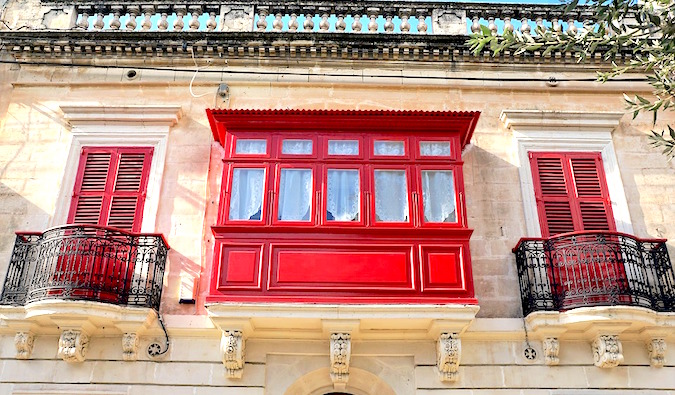
beautiful building facade and bright red shutters in maltabeautiful building facade and bright red shutters in malta
There are a couple of hostels on the islands, with dorm prices beginning at 9 EUR ($9.50 USD) per night (though prices double in the peak summer time). Airbnb is ridiculously cheap — I found a whole house for 35 EUR ($37 USD) a night. Most budget hotels cost 40 EUR ($42.50 USD) so I would stick to Airbnb or hostels for accommodation. However, like hostels, the prices for places more than double to around 80 EUR ($84 USD) per night in the summer; budget hotels cost around 40-60 EUR ($42-63 USD) in the summer.

To save money on accommodation, travel off-season and stay in dorms or split Airbnb units with friends. You can use the website eurocheapo.com to find good B&Bs, as they have a robust listing.

Food and Drink
good mediterranean food in Malta, photo by: (flickr: @)good mediterranean food in Malta, photo by: (flickr: @)
Food prices are relatively inexpensive, though you’ll find higher prices in tourist areas such as Valletta, St. Julian’s, Sliema’s boardwalk, and Marsaxlokk.

To save money on food, stick to the pastizzi (savory filled pastries) for about 1-2 EUR ($1-2.10 USD), eat at the plethora of vegan and vegetarian restaurants throughout the country (see the list below), avoid snacking, and cook as many meals as possible (breakfast will see the biggest wins).

Transportation
ferry from valletta to sliema in malta, photo by Charlie Dave (flickr: @charliedave)ferry from valletta to sliema in malta, photo by Charlie Dave (flickr: @charliedave)
There are three ways to get around the island: buses, taxis, and car rentals. Buses cost 1.50-2 EUR ($1.60-2.10 USD) for a two-hour ticket or 21 EUR ($22 USD) for a weekly pass, while car rentals cost 39 EUR ($41 USD) per day (in the summer they start closer to 50 EUR or $53 USD per day). There are a number of local rental companies, but I used Hertz since it was close to my Airbnb. Many of the local car companies don’t take credit cards and want deposits in cash. Going with bigger companies adds another layer of security.

Taxis cost 10-20 EUR ($11-21 USD); while not ideal, they can be ordered ahead of time via Whatsapp and are a good last-minute option if you get stuck because the bus doesn’t turn up.

One thing to note about the buses is that they are infrequent so they fill up fast. We got on one bus, only to have him pull over, kick everyone off, and put us all in another bus, that then waited for 20 minutes to move. It’s a crazy system and, during the summer months when the crowds peak, expect long waits. Don’t be in a rush if you’re using the bus!

Activities
azure window at a beach in malta, photo by Berit Watkin (flickr: @ben124)azure window at a beach in malta, photo by Berit Watkin (flickr: @ben124)
When the weather is nice, there are a bunch of free activities to do, such as enjoying the beach, hiking, swimming, and just walking around. Additionally, all the churches are free. You’ll find a lot of companies that will take you around the island in a boat for 25 EUR ($27 USD). Most museums and attractions cost 5 EUR ($5.25 USD) but you can get a Malta tourism card (there’s one for Mdina and a separate one for Valletta) that will save you about 10-20 EUR ($10.50-21 USD) depending on how many attractions you squeeze in.

On a side note, I found the main tourism center in Valletta unhelpful. The staff couldn’t answer a lot of my questions. The smaller, unofficial locations that littered Sliema’s boardwalk had more information on car rentals, things to do, and prices.

Recommended Bars and Restaurants

Restaurants: Rising Sun (Mdina), Loli (vegetarian), The Grassy Hopper (vegan/vegetarian), the Marsaxlokk fish market, Suruchi, Ta Doni, Cuba, Rocksalt, Ta’ Rikardu (Gozo), Electro Lobster Project.

Bars: Hole in the Wall (Sliema), Native (and any bar on that street as it’s the main hub for nightlife), Dubliner, Legligin, The Thirsty Barber

****It’s easy to visit Malta on a budget. I was shocked at how cheap this place. Even with summertime increases in accommodation and tour prices, Malta remains an affordable country. I’ve been to all the

It’s easy to visit Malta on a budget. I was shocked at how cheap this place. Even with summertime increases in accommodation and tour prices, Malta remains an affordable country. I’ve been to all the Eurozone countries now and I have to say Malta is one of the best — if not the best — value. When you combine it with warm weather, amazing landscape, historic cities, and incredible beaches, Malta because one of the best destinations to visit in Europe if you’re looking to save money.

Looks like all those British retirees were on to something after all!

Get Your In-Depth Budget Guide to Europe!
Nomadic Matt's Guide to EuropeNomadic Matt's Guide to EuropeMy detailed, 200+ page guidebook is made for budget travelers like you! It cuts out the fluff found in other guidebooks and gets straight to the practical information you need to travel and save money while backpacking around Europe. You’ll find suggested itineraries, budgets, ways to save money, on and off the beaten path things to see and do, non-touristy restaurants, markets, and bars, and much more! Click here to learn more and get started!
 

Book Your Trip to Malta: Logistical Tips and Tricks

Book Your Flight
Find a cheap flight by using Skyscanner or Momondo. They are my two favorite search engines because they search websites and airlines around the globe so you always know no stone is left unturned.

Book Your Accommodation
You can book your hostel with Hostelworld. If you want to stay somewhere other than a hostel, use Booking.com as they consistently return the cheapest rates for guesthouses and cheap hotels. I use them all the time.

Don’t Forget Travel Insurance
Travel insurance will protect you against illness, injury, theft, and cancellations. It’s comprehensive protection in case anything goes wrong. I never go on a trip without it as I’ve had to use it many times in the past. I’ve been using World Nomads for ten years. My favorite companies that offer the best service and value are:

  • World Nomads (for everyone below 70)
  • Insure My Trip (for those over 70)

Looking for the best companies to save money with?
Check out my resource page for the best companies to use when you travel! I list all the ones I use to save money when I travel – and I think will help you too!

Want More Information on Malta?
Be sure to visit our robust destination guide on Malta for even more planning tips!

Photo Credits: 2, 4, 5, 6

The Cost of Traveling Western Europe: Budgets, Prices, & Ways to Save

the cost of traveling western europethe cost of traveling western europe
Updated: 05/27/18 | May 27th, 2018

Europe. It’s an expensive place and prices vary greatly depending on how far north, east, south or west your travel. Europe covers a huge area of the world with multiple visa zones and multiple currencies. For 20 euros, you can get a private room in Greece. For that same price in Paris, you may get a 16 person dorm room. You can eat for a few euros in Spain or Hungary, but a sit-down meal in Italy will cost around 15 euros, and triple that in Norway!

I’ve been going to Europe for close to ten years now.

A trip to Europe isn’t cheap, but there are plenty of ways to cut down costs. Since Europe is so big, today I want to talk about traveling around Western Europe and the Eurozone countries.

One of the most asked questions I get is “how much does it cost to travel to Europe?”

Well, today, let’s talk about planning a trip to Europe!

How much do things cost?

Here are some general costs for things in Europe, because as I said, prices can vary a lot depending on where you are:

  • Accommodation: In most Western European countries, expect to pay 25–35 euros per night for a dorm room. (Though in Greece and Spain, it’s only 10–20 euros per night.) In Scandinavia, expect to pay around 30–35 Euros per night. In England, prices are usually around 20–30 pounds per night.
  • Food: Food costs vary as wildly as accommodation costs. Cheap fast food meals cost 9–15 euros, while restaurants meals cost around 15–25 euros. Nicer establishments will cost 30 euros or more. You can cook your food for a week for around 65 euros>.
  • Transportation: The easiest way to get around Europe is by train. Trains connect every major part of Europe, and they’re often very cheap. High-speed trains, though, can cost over 100 euros. Try to get the regional or slow trains for cheaper prices! The rise of cheap airlines like Ryanair, EasyJet, and Transavia has made flying around Europe in a hurry really cheap. For flights, expect to pay around 50 euros if you book in advance. Transportation around most cities is only 1–2 euros.
  • Activities: Most museums and tours start at around 14 euros. It’s cheaper, of course, in eastern Europe. Full-day tours cost 35–100 euros. Prices vary drastically per country, so it’s hard to give a good general cost of this budget item.

How to Save Money in Western Europe

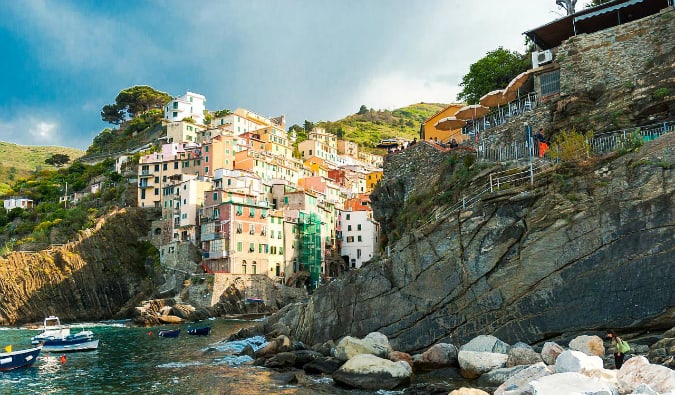
Beautiful view of the Western European homes in Cinque Terre, Italy=Beautiful view of the Western European homes in Cinque Terre, Italy=

  • Picnic – Europe has a lot of tiny shops where you can be premade sandwiches or ingredients to make your own. Buy some food, eat outside, and watch the city go by. It’s a cheaper and more enjoyable way to eat.
  • Eat Local and Cheap – Not into picnicking? That’s OK, there are other ways to save money on food. Eat at local sandwich shops, pizza parlors, Maoz, Wok to Walks, outdoor street vendors, and the like. Avoiding restaurants and eating at a lot of the local “grab ‘n go” places will give you a taste of the local cuisine at a much cheaper price.
  • Couchsurf – Hostels can add up really quick in Europe. If you don’t have any friends you can stay with, consider using the service Couchsurfing, which lets you connect with locals who will let you stay with them for free.
  • Fly Cheap – If you know where you’re going and a train won’t do, try to book flights early. You can often get one-euro fares from many of the discount airlines like Transavia, Easyjet, Air Berlin, and Ryanair. MORE: There are many cheap ways to get across Europe.
  • Drink Less – Those five-euro beers really add up. Hit happy hour or pick and choose when you party. Hostel bars are a good place to get cheap drinks, or you can buy your alcohol at the supermarket. Partying your way across the continent will destroy your bank balance in no time.
  • Take the Free Tours – One of the great things about Europe is that you can find free walking tours in all the major cities. They can be a great way to see the city attractions, learn some history, and get your bearings without spending any money. Almost every city in Europe has a free walking tour available. Your hostel or the tourism board will have details!
  • Camp in a garden – A very good camping service specific is Campspace (formerly Camp in My Garden), which allows you to pitch a tent in someone’s backyard for free or a nominal fee (around 4-10 EUR). This is a new service that started in 2010 but more and more people are signing up for it each day. All of the garden owners have profiles that tell you what services and facilities they offer.
  • Get a Rail Pass – Eurail Passes have saved me hundreds of dollars when I used them. If you are traveling far distances and through many countries, they are a great deal. Here’s more information how to pick a Eurail pass.
  • Get a city tourist card – Local tourism offices issue a tourist card for all their attractions, tours, and restaurants. This card gives you free entry and substantial discounts on all the attractions and tours in a city, free local public transportation (a huge plus), and discounts at a few restaurants and shopping malls. They save a ton of money. If you plan on doing a lot of sightseeing, get one of these cards.
  • Rideshare – Hugely popular and widespread in Europe, I did this to get around Switzerland, France, and UK. BlaBlaCar, the biggest website, connects drivers and riders and lets you get around much cheaper than a bus or train. Moreover, this way is amazing for getting off the highways, seeing more the countryside, and meeting locals. It’s money-saving and much more exciting than taking the train or bus!

What’s a good daily budget in Europe?

the cost of traveling western europethe cost of traveling western europe
Recently, I went through Amsterdam, Greece, Italy, and Hungary. In 59 days of traveling, I spent 4,317 euros, which averages out to 73.17 euros per day. That includes a few flights, many a nice meal, too many drinks on Ios, a few nights of private rooms (it was my birthday, after all!), and some unexpected purchases (a jacket, a new iPhone charger, and new headphones).

So how much does it cost to travel Europe?

On a backpacker budget, if you were avoiding flights, occasionally Couchsurfing, staying in cheap dorms, and cooking most of your meals, you could average between 40-50 Eur per day. It would be a tight budget but you could definitely do it. One of the biggest costs in Europe is accommodation so reducing that cost will help a lot!

However, if you wanted some flexibility in your schedule, planned to eat out only stay in hostels, and visit a lot of places, plan for around 70 euros a day.

If you’re going to stay in only private rooms or Airbnb as well as eat at sit down restaurants every meal, I’d say budget closer to 100 euros to be safe.

***

A trip to Western Europe can cost a lot of money. It’s never going to be a cheap area of the world to travel but with some smart money management and follow the tips in this post, Western Europe can become at least an affordable place to visit. Control your costs and you can be able to see anything!

Get Your In-Depth Budget Guide to Europe!

Nomadic Matt's Guide to EuropeNomadic Matt's Guide to EuropeMy detailed, 200+ page guidebook is made for budget travelers like you! It cuts out the fluff found in other guidebooks and gets straight to the practical information you need to travel and save money while backpacking around Europe. You’ll find suggested itineraries, budgets, ways to save money, on and off the beaten path things to see and do, non-touristy restaurants, markets, and bars, and much more! Click here to learn more and get started!
 

Also look at my other Europe guides:

View all my guides —>

2019年8月2日星期五

Ko Phi Phi: Thailand’s Most Dangerous Island

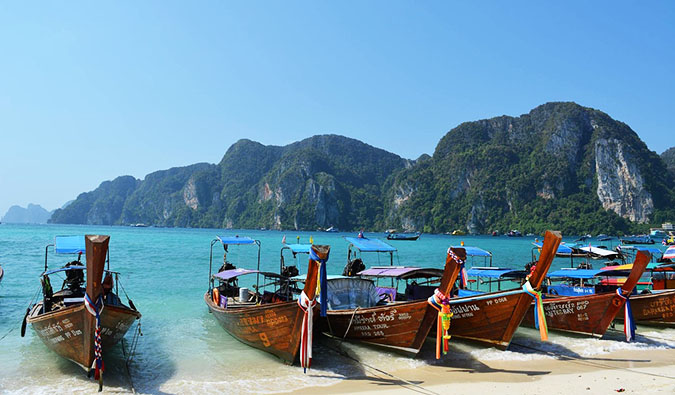
The classic long-tail boats of Thailand all lined up on a beautiful beach in Ko Phi Phi

The classic long-tail boats of Thailand all lined up on a beautiful beach in Ko Phi Phi
Posted: 9/22/2010

9/22/2010

This is a guest post by Sean Ogle, who blogs about location independence at locationrebel.com

When you think of dangerous islands, you might think of earthquake-prone and poverty-stricken Haiti. Or maybe it’s Australia, with its deadly spiders and snakes. Or perhaps it’s someplace even more remote, like the jungle wilderness of Borneo.

Yet there is an island out there that is far more dangerous and far less obvious. That island is Ko Phi Phi off the coast of Thailand.

Ko Phi Phi is one of Thailand’s most famous islands. It’s one of the biggest tourist destinations in the country and is where the movie The Beach was filmed.

Every year, thousands of people flock to this island to relax in the sun, swim in the ocean, and dive the surrounding reefs. But despite its international reputation as being a world-class travel destination, for many young travelers it can often be the most dangerous place they visit on their trip through Southeast Asia. What makes Ko Phi Phi so dangerous?

Two words: buckets and fire.

For those of you unfamiliar with the Thai bucket, it’s a combination of Red Bull, Thai whiskey, and either Coke or Sprite. It gets its name from the small sand pails in which they are served and is a staple on the Thai tourist trail.

My personal bucket-and-fire story started seemingly harmlessly enough, with a burning rope landing on my foot.

Originally, I thought nothing of it. I cleaned it up and took care of it. Yet three weeks later when I had an infection half an inch deep and was forced to make my first visit to a Thai hospital, I realized it was more than nothing.

Others get it much worse, getting mangled on flaming jump ropes or falling on top of fiery limbo sticks. I saw one British guy forcefully removed from the activities because he was too drunk to feel the constant burns he was inflicting upon himself with the rope.

Dozens of the dangerous booze buckets of Ko Phi Phi

Dozens of the dangerous booze buckets of Ko Phi Phi

The combination of buckets and the fire antics that take place at beach bars such as Ibiza and Apache put inebriated travelers in a position to have the best nights they’ll never remember, yet leave them with scars that will never let them forget the nights they spent on Ko Phi Phi.

On any particular night, you can head down to any of these beach bars around 10pm and find an exciting display of poi fire dancers, fire jump-ropers, and even a fire limbo.

You watch in awe as you sip on your first drink, wondering how anyone could possibly have the nerve to participate in such an acrobatic display of fire mastery. The Thais doing these moves seem to be masters at it, catching balls of fire thrown at them from across the beach. They have real talent.

A fire dancer in Thailand spinning fire on the beach at night on Ko Phi Phi

A fire dancer in Thailand spinning fire on the beach at night on Ko Phi Phi

However, over time, something begins to change. The locals begin to invite tourists to participate in a little jump-roping, promising to go slow, and always ensuring you that you won’t get hurt.

Yet as the night wears on, the audience gets more excited, more drunk, and more daring. They want to go faster and sometimes two at a time. As they get drunker, their reflexes slow down — and that’s when people get hurt.

As the alcohol continues to flow, the fire seems to disappear, as you show off your flexibility and ability to dive head first into the flames. The next day, it seems like everywhere you look on Ko Phi Phi, travelers have bandaged arms or heads. They’re on crutches or perhaps have a couple casts on various appendages.

After your first night on the island, you’ll understand where those came from.

The time I spent on Phi Phi was among the best I’ve had in Thailand. I loved the beaches and the people I met. Yet it’s important to be aware of what goes on there and not to be influenced by your friends or your nightly “liquid courage.”

[Matt’s note: I did not like Ko Phi Phi.]

Sean Ogle is a location-independent entrepreneur who teaches people how to overcome fear in order to live the lives they really want.

Get the In-Depth Budget Guide to Thailand!

Thailand guide bookThailand guide bookMy detailed, 170+-page guidebook is made for budget travelers like you! It cuts out the fluff found in other guidebooks and gets straight to the practical information you need to travel and save money while in Thailand, a country I used to call home (so I know it really well!). You’ll find suggested itineraries, budgets, ways to save money, on and off-the-beaten-path things to see and do, nontouristy restaurants, markets, and bars, and much more! Click here to learn more and get started!
Book Your Trip to Thailand: Logistical Tips and Tricks

Book Your Flight
Find a cheap flight by using Skyscanner or Momondo. They are my two favorite search engines because they search websites and airlines around the globe so you always know no stone is left unturned.

Book Your Accommodation
You can book your hostel with Hostelworld. If you want to stay elsewhere, use Booking.com as they consistently return the cheapest rates for guesthouses and cheap hotels. I use them all the time. My favorite places to stay are:

  • Rock Backpacker – This walk-in only hostel has huge dorms, but it’s cheap, clean, and has its own restaurant and bar.
  • Hanover Hostel – This is a classic backpacker party hostel. It’s cheap and the amenities are basic, but the staff is helpful and it’s easy to meet other travelers.

Don’t Forget Travel Insurance
Travel insurance will protect you against illness, injury, theft, and cancellations. It’s comprehensive protection in case anything goes wrong. I never go on a trip without it as I’ve had to use it many times in the past. I’ve been using World Nomads for ten years. My favorite companies that offer the best service and value are:

  • World Nomads (for everyone below 70)
  • Insure My Trip (for those over 70)

Looking for the best companies to save money with?
Check out my resource page for the best companies to use when you travel! I list all the ones I use to save money when I travel – and I think will help you too!

Looking for more information on visiting Thailand?
Check out my in-depth destination guide to Thailand with more tips on what to see, do, costs, ways to save, and much, much more!

Photo credit: 2, 3

Is Morocco Safe? 9 Ways to Stay Safe During Your Visit in 2019

wandering the fez medina in morocco

wandering the fez medina in morocco
Updated: 12/15/2018 | December 15th, 2018

12/15/2018 | December 15th, 2018

Wandering around the Fez medina, I could feel the stares. “Where are you going? Want to go to the tanneries? I’ll take you. No money. Don’t worry!” the medina’s faux guides said as they chased me down the street.

“No, I’m fine,” I’d reply, trying to dodge them at every turn. Turning down side streets, stopping to look at a map, or admiring a view caused them and any nearby vendor to pounce and badger me, inviting me into stores, restaurants, and attractions.

There were moments when I would turn down streets only to have my spidey sense tell me to turn back. A few guys tried to corner me before I managed to slip into a store. Heck, even a little kid tried to pick my pocket. While other cities were not as intense as Fez, my visit to Morocco required a thick skin and a watchful eye.

Before my trip to Morocco, I queried a number of friends about their experiences. I’d heard horror stories of touts, harassment, pickpockets, and scams. While that is common everywhere, Morocco travel seemed to take it to another level. “Keep an eye out,” everyone warned.

After two weeks visiting Morocco (which is amazing — see this post, where I fawn all over it!) with Intrepid Travel on their Best of Morocco tour, I could see why people say Morocco demands extra diligence when it comes to staying safe in Morocco. Touts, scammers, and harassers abound and, while it wasn’t bad when I was with my group, when I was alone, it was intense. As I settled into the famous and secluded Café Clock in Fez to relax, I messaged fellow writers online to ask if I was overreacting or if they felt the same way.

“No, it’s not just you,” was the universal reply.

How to Stay Safe in Morocco

In truth, Morocco is a safe place to visit. There’s only really small crime there (scams and pickpockets) and you’re unlikely to be assaulted or seriously hurt as a tourist in the country. Morocco is super safe for tourists now. As a solo female traveler, you need to watch out a little more carefully but, overall, you are still unlikely to encounter serious problems.

Morocco travel requires extra vigilance because it’s easy to have something happen to you. You’re unlikely to ever be in any real physical danger in Morocco, but the petty crime and harassment require you to stay on guard — more so than other countries. However, if you follow a few rules, you can leave Morocco unscathed and without incidence.

Here are my 9 tips on how to stay safe when you visit Morocco:

  1. Don’t walk alone at night — While walking in well-lit and busy areas can be fine, be careful walking at night. You never know what lurks around the corner in the medinas. Petty crime is rampant here, especially against tourists.
  2. Don’t walk alone if you’re a woman — A woman alone will attract a lot of unwarranted attention from men, an increased chance of being followed, and the likelihood of groping. Even when I was with the girls on my trip, they got a lot of attention. I could only imagine how much worse it was when they were alone. And, as a female, especially do not walk alone at night!
  3. Dress conservatively — Morocco is a conservative Muslim country, and it’s not appropriate to wear skimpy clothing. Keep your arms, shoulders, and legs covered (especially if you are a woman) to avoid any unwanted attention and conform to local norms.
  4. Avoid flashy jewelry — A good universal rule, this takes on more urgency in a country where theft is common and people will see the jewelry as a sign of wealth and therefore try harder to scam you in stores or rob you on the streets.
  5. Don’t carry valuables — Since muggings and pickpockets are common, take the minimum you need when you leave your hotel or hostel. Don’t take your passport with you – leave it in the hotel! A few people on my tour carried it around with them and when my guide found out, he looked like he was about to have a heart attack!
  6. Avoid back alleys — The tiny alleys of the medina are beautiful to explore but sometimes they make you easy prey for scammers and thieves. Don’t venture too far away from the crowds.
  7. Watch for scams — If someone asks you into their shop for tea, they are going to use that as a pretext to get you to buy something and, thanks to the ingrained psychological idea of reciprocity, you’ll probably give in. Don’t let anyone ask you to write a letter or read a postcard that their “cousin” sent to them in English/French/whatever your native language is. It’s a ruse to get you into their store and wear you down. Same with letting someone put henna on your hand. Once these vendors have you, they will be relentless about you trying on clothes, buying something, or giving them money. Say “no thank-you” and walk away.
  8. Say no to tour guides — The people saying “no money” definitely want your money. They will try to get you into their shops or take you places and ask for money for the service. Be firm and tell them no. It doesn’t matter their age or how helpful they are, if they start walking with you, they will ask for money!
  9. Always negotiate taxi prices up front — Always negotiate the price for taxis before you get in, as prices are going to be substantially inflated when you arrive at your destination.

While this is good advice for any country, Morocco is more intense than your average destination due to the sheer number of people who will give you unwanted attention. It takes a lot of energy to always be on your guard in a place where the simple act of asking for directions often leads people asking for money.

Is Morocco safe? Yes, for the most part. But visiting Morocco requires you to be a little tougher and keep an eagle out for problems. It requires you to be a little bit more skeptical.

I was insulated because I was on a tour, but when I was alone or with just a few people, people came out of the woodwork, catcalled my friends, grabbed at the girls, and blocked entrances to restaurants in order to accost us. Even after a decade of travel, I found myself wishing I had a companion to share the mental burden and wanting to scream, “Leave me alone so I can just enjoy your country!”

Many people have asked me if they should go visit Morocco alone.

My honest answer? If you’re a first-time traveler, it might be hard.

This was my first time in North Africa and it was an adjustment for me (and I’ve a very experienced traveler). I was glad to be on a tour and have a guide. If you don’t have a lot of travel experience or are a woman traveling alone, it might just be too much. I might suggest going on a tour first instead of exploring the country solo. Moreover, it is hard to get into the remote desert and mountains on the public transportation systems. I wouldn’t drive here either as everyone races around mountain curves.

That said thousands of people come here alone and they are fine. If you’re OK in uncomfortable situations and a frenetic environment, you’ll be able to visit Morocco just fine!

Morocco was a battery on my senses — the food, the colors, the spices, the smells, and the scenery were unforgettable. (Also the doors — they have such ornate and colorful doorways in Morocco. I have dozens of pictures of doors).

I would 100% recommend to anyone that they visit the country, but make sure you keep an extra eye out (especially in Fez) and have a thick skin for all the people asking you to buy things!

Morocco won’t be easy but it’s worth the visit – and it’s a lot safer than you think!

Editor’s Note: I went to Morocco with Intrepid Travel on their Best of Morocco tour. It was part of my ongoing partnership with Intrepid Travel. They covered the cost of the tour, flight, and meals.

Want to Learn How I Travel the World for Free?

Primer on Travel HackingPrimer on Travel HackingStop paying full price! Download our free guide to travel hacking and learn:
  • How To Pick a Credit Card
  • How To Earn Miles for Free Flights & Hotels
  • Is Travel Hacking Really a Scam?

GET THE FREE GUIDE

Book Your Trip to Morocco: Logistical Tips and Tricks

Book Your Flight
Find a cheap flight by using Skyscanner or Momondo. They are my two favorite search engines because they search websites and airlines around the globe so you always know no stone is left unturned.

Book Your Accommodation
You can book your hostel with Hostelworld. If you want to stay elsewhere, use Booking.com as they consistently return the cheapest rates for guesthouses and cheap hotels. I use them all the time.

Don’t Forget Travel Insurance
Travel insurance will protect you against illness, injury, theft, and cancellations. It’s comprehensive protection in case anything goes wrong. I never go on a trip without it as I’ve had to use it many times in the past. I’ve been using World Nomads for ten years. My favorite companies that offer the best service and value are:

  • World Nomads (for everyone below 70)
  • Insure My Trip (for those over 70)

Looking for the best companies to save money with?
Check out my resource page for the best companies to use when you travel! I list all the ones I use to save money when I travel – and I think will help you too!

Want More Information on Morocco?
Be sure to visit our robust destination guide on Morocco for even more tips on how to plan your visit!

Backpacking Europe: A 6 Step Guide To Planning Your Trip in 2019

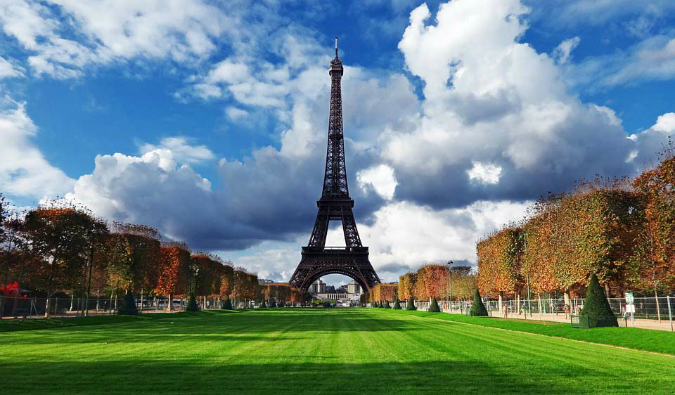
The Eiffel Tower in Paris

The Eiffel Tower in Paris
Updated: 7/10/19 | July 10th, 2019

7/10/19 | July 10th, 2019

Backpacking Europe is still one of my favorite things to do as a traveler. There isn’t a year I don’t criss-cross the continent.

I’ve been doing it for over close to thirteen years and it never gets old.

During the summer, hostels brim with life, the Mediterranean sparkles, streets brim with people slowly drinking wine, and the late night setting suns leads to long wonderous days. During the winter, winter brings Christmas markets, skiing, fewer crowds, and lower prices! (Note: May and October are really the best months to backpack Europe in my opinion.)

Over the decade I’ve been writing this blog, I’ve written a lot of posts on Europe. I visit Europe multiple times a year, have been all over the continent, and I have even run tours there.

And recently, I even lived there!

With so much content on the blog, I wanted to create an awesome resource page that will help you plan your backpacking trip to Europe with ease. In this post, you’ll find all my best resources on planning a backpacking or budget trip to Europe, including destination guides, transportation information, and backpacking Europe tips.

Without further ado, here’s everything you could ever want to know about backpacking Europe:

Step 1: Plan Your Backpacking Europe Trip

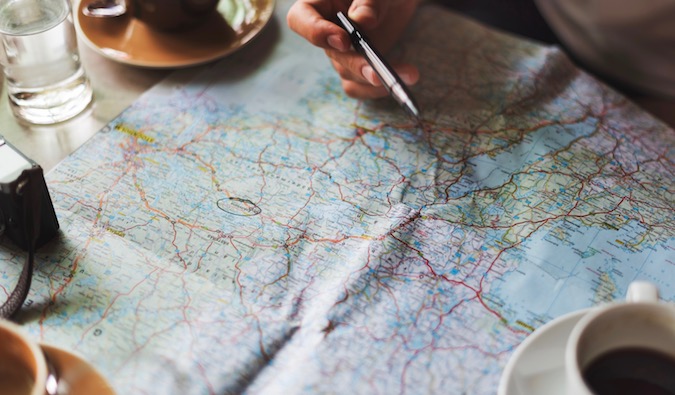
A person planning a Backpacking Trip to Europe with a map

A person planning a Backpacking Trip to Europe with a map

Step 2: Get Your Gear for Backpacking Europe

A bunch of hiking gear in an empty field

A bunch of hiking gear in an empty field

Step 3: How to Get Amazing Accommodation in Europe

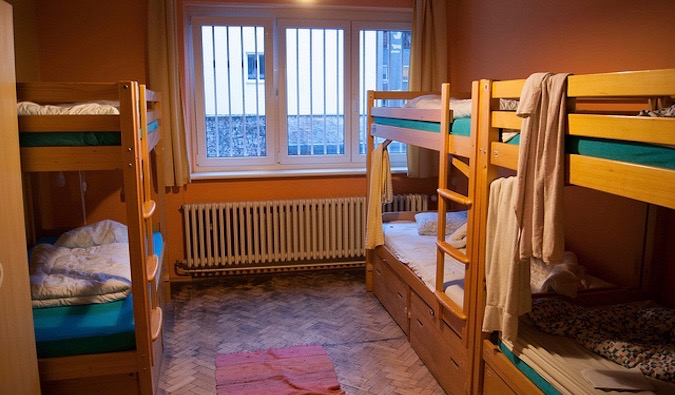
A set of bunk beds in a hostel dorm room

A set of bunk beds in a hostel dorm room
  • How to Find Cheap Accommodation – If you are looking to stay somewhere besides a hotel or a hostel, this article lists all the types of places where you can rest your head in Europe — from couches to farms and even monasteries!
  • How to Find a Good Hostel – This article features my best tips on how to find an affordable, clean, and fun hostel where you can meet a lot of amazing people.
  • The Best Hostels in Europe – This is a list of European hostels that I would definitely use again if I have the chance. Hope this helps with your next European backpacking adventure!
  • How to Find a Couchsurfing Host – Couchsurfing is a great way to save money (it’s free!), and it offers a peek into local life and a way to meet locals. It’s one of my favorite resources when I travel. Plus, Europe has a ton of hosts! If you want to stand out from the crowd and stay with amazing hosts, follow these seven steps, my tried-and-true Couchsurfing advice.
  • How to Become a House Sitter – This is a how-to guide to house-sitting, a wonderful opportunity that allows you to stay in a location rent free in exchange for watching someone’s house.

Step 4: Get Around Europe on the Cheap

A man in a grey shirt hitchhiking

A man in a grey shirt hitchhiking
  • 7 Cheap Ways to Travel Across Europe – Even with the falling euro, traveling around Europe can still be fairly expensive. Here are seven ways to backpack Europe without breaking the bank.
  • Are Eurail Passes Worth It? – Everyone traveling to Europe wonders if they will save money by buying a rail pass or if it’s cheaper to buy tickets as they go. This detailed post will give you the pros and cons of buying a rail pass!
  • Would You Contiki? – Is a Contiki tour cheaper than backpacking Europe solo? Are the tours worth doing? Find out more about the costs of solo vs group travel and whether a Contiki tour is right for you.
  • Sailing Around Croatia with Busabout – Busabout is a hugely popular tour company for those backpacking Europe. They are especially famous for their Croatia sailing trips. Here’s a review of my experience I took with them.

Step 5: Save Money While Backpacking Europe

a bunch of colorful Euro bills

a bunch of colorful Euro bills

Step 6: Find Out What to See and Do in Europe

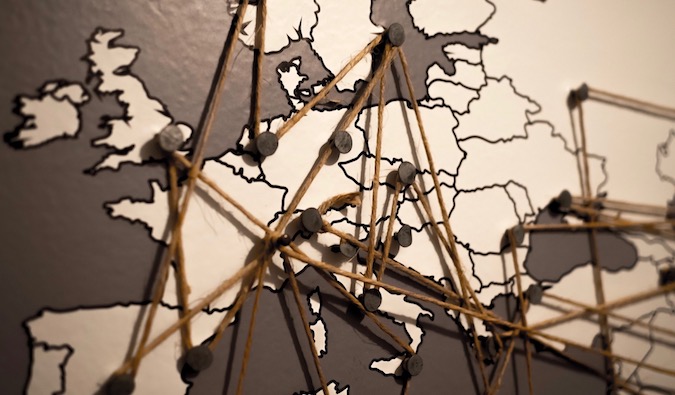
a travel map for planning a trip to Europe

a travel map for planning a trip to Europe
What do you do while backpacking Europe? LOTS! Here are all my comprehensive budget travel guides for destinations around Europe with tips and advice on things to do and see, ways to save money, and typical costs for each of them. You’ll find country specific tips as well as a host of cities listed as well.

What do you do while backpacking Europe? LOTS! Here are all my comprehensive budget travel guides for destinations around Europe with tips and advice on things to do and see, ways to save money, and typical costs for each of them. You’ll find country specific tips as well as a host of cities listed as well.

I have over 100 guides to places in Europe! Everything you ever need to know about where you are going can be found in these articles!

In addition to the free city and country guides above, here are some insightful travel itineraries to help you make the most out of your trip to some of Europe’s most popular cities:

***
This massive resource list will help you plan your trip to Europe in an easy-to-follow, step-by-step pattern so you won’t get lost, overspend, or stress out about your upcoming dream trip.

Want All My Money-Saving Tips? Get My Guide to Europe

Nomadic Matt’s Backpacking Europe
My detailed, 200+ page guidebook is made for budget travelers like you! It cuts out the fluff found in other guidebooks and gets straight to the practical information you need to travel and save money while backpacking around Europe. You’ll find suggested itineraries, budgets, ways to save money, on and off the beaten path things to see and do, non-touristy restaurants, markets, and bars, and much more!!

Get the Europe Guide

Also, be sure to check out my other Europe guides for more in-depth tips and tricks for backpacking Europe:

  • Amsterdam
  • Iceland
  • Paris
  • Stockholm

View all my guides —>

Book Your Trip to Europe: Logistical Tips and Tricks

Book Your Flight
Find a cheap flight by using Skyscanner or Momondo. They are my two favorite search engines, because they search websites and airlines around the globe, so you always know no stone is being left unturned.

Book Your Accommodation
You can book your hostel with Hostelworld. If you want to stay somewhere other than a hostel, use Booking.com, as it consistently returns the cheapest rates for guesthouses and cheap hotels. I use it all the time.

Don’t Forget Travel Insurance
Travel insurance will protect you against illness, injury, theft, and cancellations. It’s comprehensive protection in case anything goes wrong. I never go on a trip without it, as I’ve had to use it many times in the past. I’ve been using World Nomads for ten years. My favorite companies that offer the best service and value are:

  • World Nomads (for everyone below 70)
  • Insure My Trip (for those over 70)

Looking for the best companies to save money with?
Check out my resource page for the best companies to use when you travel! I list all the ones I use — and I think they will help you too!

Looking for more information on visiting Europe?
Check out my in-depth destination guide to Europe with more tips on what to see and do, costs, ways to save, and much, much more!

This massive resource list will help you plan your trip to Europe in an easy-to-follow, step-by-step pattern so you won’t get lost, overspend, or stress out about your upcoming dream trip. Europe is one of my favorite regions of the world (which is why I spend so much time there). There’s so much variety in food, culture, language, as well as so much history. I love the continent and hope you use these tips to plan your ultimate backpacking adventure in Europe!

Photo credit: 1, 3