显示标签为“prices”的博文。显示所有博文

2019年9月2日星期一

How to Visit Malta on a Budget

beautiful harbor in maltabeautiful harbor in malta
For centuries, the Maltese archipelago passed between North African Moors and European Crusaders in an epic struggle for control of this important hub. This constant back-and-forth created a unique culture that blended architectural, culinary, and cultural styles (in fact, the Maltese language is a mix of Arabic and Italian) found nowhere but maybe Southern Spain.

Now, the country draws people less with the whole conquering-empires thing and more with its warm summer temperatures, pristine beaches, clear Mediterranean water, ample hiking, friendly locals, and cheap prices.

Though I didn’t spend as much time as I wanted in Malta, I spent enough (literally and figuratively) to get a sense of how to travel the country on a budget. Luckily, the country is already very budget friendly (it’s one of the cheapest Eurozone countries out there) so you don’t need a lot to begin with. Even though I was on a holiday and not being as budget friendly as I wanted, I still never spent a lot of money. My most expensive day cost me 70 EUR ($74), and that’s because I rented a car! Even when I was watching my wallet, at no point did I ever feel as if I was missing out.

Though Malta will never break your budget, I always am one to look for a deal, as I’m a firm believer that every destination has a way to be cheaper.

So here is your in-depth guide to visiting Malta on a budget:

Getting There

While most European carriers operate seasonal flights, there aren’t many airlines that fly to Malta year-round. Ryanair, Air Malta, easyJet, and Lufthansa are the biggest carriers that service the island year-round. One-way flights from the mainland cost 50-100 EUR ($53-106 USD), especially if you book in advance. You can also take the ferry to/from Sicily; it’s 2.5 hours and costs 61-127 EUR ($65-135 USD) each way (depending on the season).

Typical Costs

cars on a colorful street in malta, photo by Tobias Scheck (flickr: @uncloned)cars on a colorful street in malta, photo by Tobias Scheck (flickr: @uncloned)
Malta is cheap. While I went in the middle of winter — without the seasonal increase in prices for accommodation, car rentals, and flights — many friends told me that most prices for food, activities, and public transportation stay the same throughout the year. Here is a list of typical costs in the country:

  • Ferry to Valletta from Sliema: Single: 1.50 EUR ($1.60 USD), Return: 2.80 EUR ($2.95 USD)
  • Ferry from Malta to Gozo: Pedestrian: 4.65 EUR ($5 USD), Car and Driver: 15 EUR ($16 USD)
  • Pastizzi (cheap snack): 1-2 EUR ($1-2.10 USD)
  • Breakfast sandwich: 3-4 EUR ($3.15-4.25 USD)
  • Full breakfast: 8-9 EUR ($8.50-9.50 USD)
  • Lunch at a café: 8-10 EUR ($8.50-10.50 USD)
  • McDonald’s value meal: 5-6 EUR ($5.25-6.50 USD)
  • Sandwich: 6 EUR ($6.50 USD)
  • Nice dinner at a sit-down restaurant with wine: 25 EUR ($27 USD)
  • Main meals: 10-14 EUR ($11-15 USD)
  • Pizza: 6-9 EUR ($6.50-9.50 USD)
  • Bottle of water: 1 EUR ($1 USD)
  • Bottle of wine: 8-10 EUR ($8.50-10.50 USD)
  • Beer: 3 EUR ($3.15 USD)
  • Museum entrance: 6 EUR ($6.50 USD)
  • Car rental: 38-48 EUR ($40-50 USD)
  • Taxi prices: 10-20 EUR ($10.50-21 USD)
  • Public bus ticket: 2 EUR ($2.10 USD)

On average, you’ll be able to visit Malta for 30-45 EUR ($32-48 USD) per day, though in the summer I would say you need to budget closer to 50 EUR ($53 USD). At that price, you’re looking at staying in a hostel dorm or splitting an Airbnb with a friend, taking public transportation, mostly sticking to the free activities, cooking your breakfast, and eating at the cheap(er) cafés.

How to Save Money in Malta

Accommodation
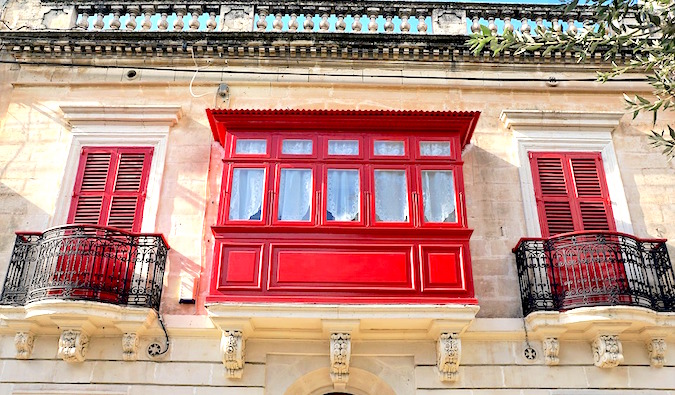
beautiful building facade and bright red shutters in maltabeautiful building facade and bright red shutters in malta
There are a couple of hostels on the islands, with dorm prices beginning at 9 EUR ($9.50 USD) per night (though prices double in the peak summer time). Airbnb is ridiculously cheap — I found a whole house for 35 EUR ($37 USD) a night. Most budget hotels cost 40 EUR ($42.50 USD) so I would stick to Airbnb or hostels for accommodation. However, like hostels, the prices for places more than double to around 80 EUR ($84 USD) per night in the summer; budget hotels cost around 40-60 EUR ($42-63 USD) in the summer.

To save money on accommodation, travel off-season and stay in dorms or split Airbnb units with friends. You can use the website eurocheapo.com to find good B&Bs, as they have a robust listing.

Food and Drink
good mediterranean food in Malta, photo by: (flickr: @)good mediterranean food in Malta, photo by: (flickr: @)
Food prices are relatively inexpensive, though you’ll find higher prices in tourist areas such as Valletta, St. Julian’s, Sliema’s boardwalk, and Marsaxlokk.

To save money on food, stick to the pastizzi (savory filled pastries) for about 1-2 EUR ($1-2.10 USD), eat at the plethora of vegan and vegetarian restaurants throughout the country (see the list below), avoid snacking, and cook as many meals as possible (breakfast will see the biggest wins).

Transportation
ferry from valletta to sliema in malta, photo by Charlie Dave (flickr: @charliedave)ferry from valletta to sliema in malta, photo by Charlie Dave (flickr: @charliedave)
There are three ways to get around the island: buses, taxis, and car rentals. Buses cost 1.50-2 EUR ($1.60-2.10 USD) for a two-hour ticket or 21 EUR ($22 USD) for a weekly pass, while car rentals cost 39 EUR ($41 USD) per day (in the summer they start closer to 50 EUR or $53 USD per day). There are a number of local rental companies, but I used Hertz since it was close to my Airbnb. Many of the local car companies don’t take credit cards and want deposits in cash. Going with bigger companies adds another layer of security.

Taxis cost 10-20 EUR ($11-21 USD); while not ideal, they can be ordered ahead of time via Whatsapp and are a good last-minute option if you get stuck because the bus doesn’t turn up.

One thing to note about the buses is that they are infrequent so they fill up fast. We got on one bus, only to have him pull over, kick everyone off, and put us all in another bus, that then waited for 20 minutes to move. It’s a crazy system and, during the summer months when the crowds peak, expect long waits. Don’t be in a rush if you’re using the bus!

Activities
azure window at a beach in malta, photo by Berit Watkin (flickr: @ben124)azure window at a beach in malta, photo by Berit Watkin (flickr: @ben124)
When the weather is nice, there are a bunch of free activities to do, such as enjoying the beach, hiking, swimming, and just walking around. Additionally, all the churches are free. You’ll find a lot of companies that will take you around the island in a boat for 25 EUR ($27 USD). Most museums and attractions cost 5 EUR ($5.25 USD) but you can get a Malta tourism card (there’s one for Mdina and a separate one for Valletta) that will save you about 10-20 EUR ($10.50-21 USD) depending on how many attractions you squeeze in.

On a side note, I found the main tourism center in Valletta unhelpful. The staff couldn’t answer a lot of my questions. The smaller, unofficial locations that littered Sliema’s boardwalk had more information on car rentals, things to do, and prices.

Recommended Bars and Restaurants

Restaurants: Rising Sun (Mdina), Loli (vegetarian), The Grassy Hopper (vegan/vegetarian), the Marsaxlokk fish market, Suruchi, Ta Doni, Cuba, Rocksalt, Ta’ Rikardu (Gozo), Electro Lobster Project.

Bars: Hole in the Wall (Sliema), Native (and any bar on that street as it’s the main hub for nightlife), Dubliner, Legligin, The Thirsty Barber

****It’s easy to visit Malta on a budget. I was shocked at how cheap this place. Even with summertime increases in accommodation and tour prices, Malta remains an affordable country. I’ve been to all the

It’s easy to visit Malta on a budget. I was shocked at how cheap this place. Even with summertime increases in accommodation and tour prices, Malta remains an affordable country. I’ve been to all the Eurozone countries now and I have to say Malta is one of the best — if not the best — value. When you combine it with warm weather, amazing landscape, historic cities, and incredible beaches, Malta because one of the best destinations to visit in Europe if you’re looking to save money.

Looks like all those British retirees were on to something after all!

Get Your In-Depth Budget Guide to Europe!
Nomadic Matt's Guide to EuropeNomadic Matt's Guide to EuropeMy detailed, 200+ page guidebook is made for budget travelers like you! It cuts out the fluff found in other guidebooks and gets straight to the practical information you need to travel and save money while backpacking around Europe. You’ll find suggested itineraries, budgets, ways to save money, on and off the beaten path things to see and do, non-touristy restaurants, markets, and bars, and much more! Click here to learn more and get started!
 

Book Your Trip to Malta: Logistical Tips and Tricks

Book Your Flight
Find a cheap flight by using Skyscanner or Momondo. They are my two favorite search engines because they search websites and airlines around the globe so you always know no stone is left unturned.

Book Your Accommodation
You can book your hostel with Hostelworld. If you want to stay somewhere other than a hostel, use Booking.com as they consistently return the cheapest rates for guesthouses and cheap hotels. I use them all the time.

Don’t Forget Travel Insurance
Travel insurance will protect you against illness, injury, theft, and cancellations. It’s comprehensive protection in case anything goes wrong. I never go on a trip without it as I’ve had to use it many times in the past. I’ve been using World Nomads for ten years. My favorite companies that offer the best service and value are:

  • World Nomads (for everyone below 70)
  • Insure My Trip (for those over 70)

Looking for the best companies to save money with?
Check out my resource page for the best companies to use when you travel! I list all the ones I use to save money when I travel – and I think will help you too!

Want More Information on Malta?
Be sure to visit our robust destination guide on Malta for even more planning tips!

Photo Credits: 2, 4, 5, 6

The Cost of Traveling Western Europe: Budgets, Prices, & Ways to Save

the cost of traveling western europethe cost of traveling western europe
Updated: 05/27/18 | May 27th, 2018

Europe. It’s an expensive place and prices vary greatly depending on how far north, east, south or west your travel. Europe covers a huge area of the world with multiple visa zones and multiple currencies. For 20 euros, you can get a private room in Greece. For that same price in Paris, you may get a 16 person dorm room. You can eat for a few euros in Spain or Hungary, but a sit-down meal in Italy will cost around 15 euros, and triple that in Norway!

I’ve been going to Europe for close to ten years now.

A trip to Europe isn’t cheap, but there are plenty of ways to cut down costs. Since Europe is so big, today I want to talk about traveling around Western Europe and the Eurozone countries.

One of the most asked questions I get is “how much does it cost to travel to Europe?”

Well, today, let’s talk about planning a trip to Europe!

How much do things cost?

Here are some general costs for things in Europe, because as I said, prices can vary a lot depending on where you are:

  • Accommodation: In most Western European countries, expect to pay 25–35 euros per night for a dorm room. (Though in Greece and Spain, it’s only 10–20 euros per night.) In Scandinavia, expect to pay around 30–35 Euros per night. In England, prices are usually around 20–30 pounds per night.
  • Food: Food costs vary as wildly as accommodation costs. Cheap fast food meals cost 9–15 euros, while restaurants meals cost around 15–25 euros. Nicer establishments will cost 30 euros or more. You can cook your food for a week for around 65 euros>.
  • Transportation: The easiest way to get around Europe is by train. Trains connect every major part of Europe, and they’re often very cheap. High-speed trains, though, can cost over 100 euros. Try to get the regional or slow trains for cheaper prices! The rise of cheap airlines like Ryanair, EasyJet, and Transavia has made flying around Europe in a hurry really cheap. For flights, expect to pay around 50 euros if you book in advance. Transportation around most cities is only 1–2 euros.
  • Activities: Most museums and tours start at around 14 euros. It’s cheaper, of course, in eastern Europe. Full-day tours cost 35–100 euros. Prices vary drastically per country, so it’s hard to give a good general cost of this budget item.

How to Save Money in Western Europe

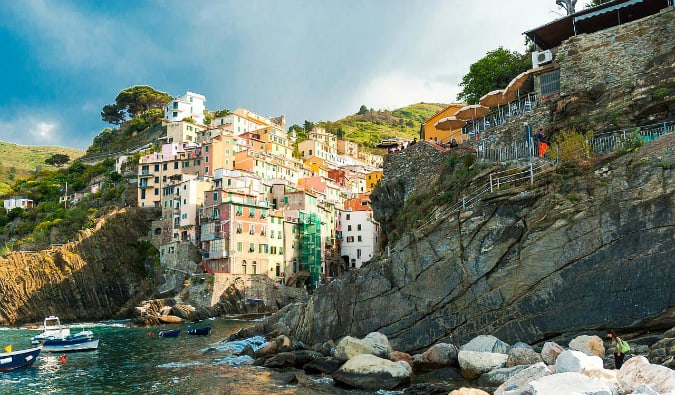
Beautiful view of the Western European homes in Cinque Terre, Italy=Beautiful view of the Western European homes in Cinque Terre, Italy=

  • Picnic – Europe has a lot of tiny shops where you can be premade sandwiches or ingredients to make your own. Buy some food, eat outside, and watch the city go by. It’s a cheaper and more enjoyable way to eat.
  • Eat Local and Cheap – Not into picnicking? That’s OK, there are other ways to save money on food. Eat at local sandwich shops, pizza parlors, Maoz, Wok to Walks, outdoor street vendors, and the like. Avoiding restaurants and eating at a lot of the local “grab ‘n go” places will give you a taste of the local cuisine at a much cheaper price.
  • Couchsurf – Hostels can add up really quick in Europe. If you don’t have any friends you can stay with, consider using the service Couchsurfing, which lets you connect with locals who will let you stay with them for free.
  • Fly Cheap – If you know where you’re going and a train won’t do, try to book flights early. You can often get one-euro fares from many of the discount airlines like Transavia, Easyjet, Air Berlin, and Ryanair. MORE: There are many cheap ways to get across Europe.
  • Drink Less – Those five-euro beers really add up. Hit happy hour or pick and choose when you party. Hostel bars are a good place to get cheap drinks, or you can buy your alcohol at the supermarket. Partying your way across the continent will destroy your bank balance in no time.
  • Take the Free Tours – One of the great things about Europe is that you can find free walking tours in all the major cities. They can be a great way to see the city attractions, learn some history, and get your bearings without spending any money. Almost every city in Europe has a free walking tour available. Your hostel or the tourism board will have details!
  • Camp in a garden – A very good camping service specific is Campspace (formerly Camp in My Garden), which allows you to pitch a tent in someone’s backyard for free or a nominal fee (around 4-10 EUR). This is a new service that started in 2010 but more and more people are signing up for it each day. All of the garden owners have profiles that tell you what services and facilities they offer.
  • Get a Rail Pass – Eurail Passes have saved me hundreds of dollars when I used them. If you are traveling far distances and through many countries, they are a great deal. Here’s more information how to pick a Eurail pass.
  • Get a city tourist card – Local tourism offices issue a tourist card for all their attractions, tours, and restaurants. This card gives you free entry and substantial discounts on all the attractions and tours in a city, free local public transportation (a huge plus), and discounts at a few restaurants and shopping malls. They save a ton of money. If you plan on doing a lot of sightseeing, get one of these cards.
  • Rideshare – Hugely popular and widespread in Europe, I did this to get around Switzerland, France, and UK. BlaBlaCar, the biggest website, connects drivers and riders and lets you get around much cheaper than a bus or train. Moreover, this way is amazing for getting off the highways, seeing more the countryside, and meeting locals. It’s money-saving and much more exciting than taking the train or bus!

What’s a good daily budget in Europe?

the cost of traveling western europethe cost of traveling western europe
Recently, I went through Amsterdam, Greece, Italy, and Hungary. In 59 days of traveling, I spent 4,317 euros, which averages out to 73.17 euros per day. That includes a few flights, many a nice meal, too many drinks on Ios, a few nights of private rooms (it was my birthday, after all!), and some unexpected purchases (a jacket, a new iPhone charger, and new headphones).

So how much does it cost to travel Europe?

On a backpacker budget, if you were avoiding flights, occasionally Couchsurfing, staying in cheap dorms, and cooking most of your meals, you could average between 40-50 Eur per day. It would be a tight budget but you could definitely do it. One of the biggest costs in Europe is accommodation so reducing that cost will help a lot!

However, if you wanted some flexibility in your schedule, planned to eat out only stay in hostels, and visit a lot of places, plan for around 70 euros a day.

If you’re going to stay in only private rooms or Airbnb as well as eat at sit down restaurants every meal, I’d say budget closer to 100 euros to be safe.

***

A trip to Western Europe can cost a lot of money. It’s never going to be a cheap area of the world to travel but with some smart money management and follow the tips in this post, Western Europe can become at least an affordable place to visit. Control your costs and you can be able to see anything!

Get Your In-Depth Budget Guide to Europe!

Nomadic Matt's Guide to EuropeNomadic Matt's Guide to EuropeMy detailed, 200+ page guidebook is made for budget travelers like you! It cuts out the fluff found in other guidebooks and gets straight to the practical information you need to travel and save money while backpacking around Europe. You’ll find suggested itineraries, budgets, ways to save money, on and off the beaten path things to see and do, non-touristy restaurants, markets, and bars, and much more! Click here to learn more and get started!
 

Also look at my other Europe guides:

View all my guides —>

2019年7月26日星期五

Sailing the Whitsundays in Australia 2018: Prices, Companies, & More

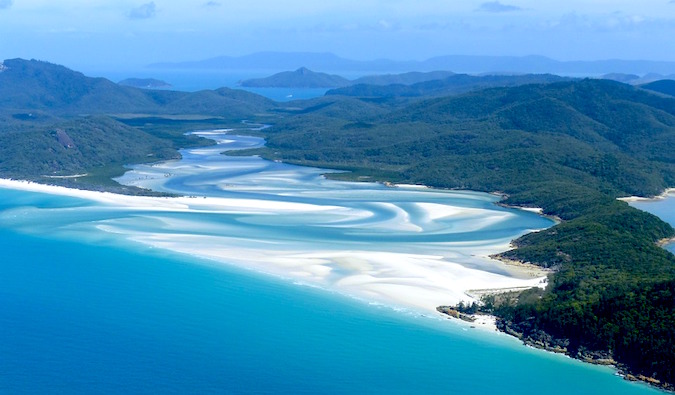
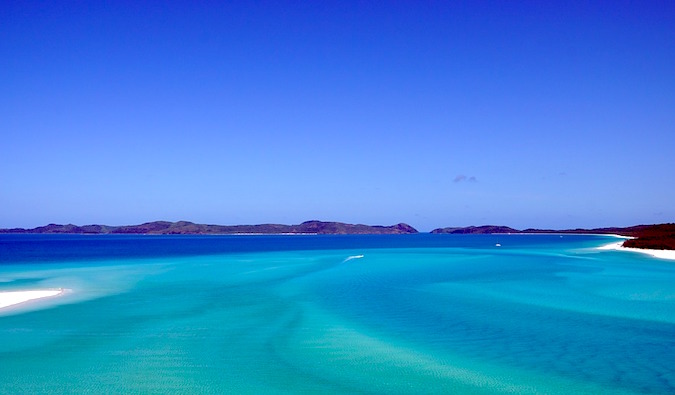
beautiful view of the whitsunday islands
Updated: 11/1/2018 | November 1st, 2018

Located off of Airlie Beach on Australia’s east coast, the Whitsunday Islands are a popular destination for travelers. It’s one of those “must-see activities” in Australia.

The most popular way to see the islands is to take a sailing cruise. The tours typically last three days and two nights. However, since you leave midday the first day and return the morning of the third, it’s more like two days and two nights. Every backpacker who travels up the east coast seems to take a sailing cruise through the Whitsunday islands.

And, since I was a backpacker too, I couldn’t skip the sailing cruise! Where would my backpacker cred go if I skipped it!?

I went with a company called OzSail.

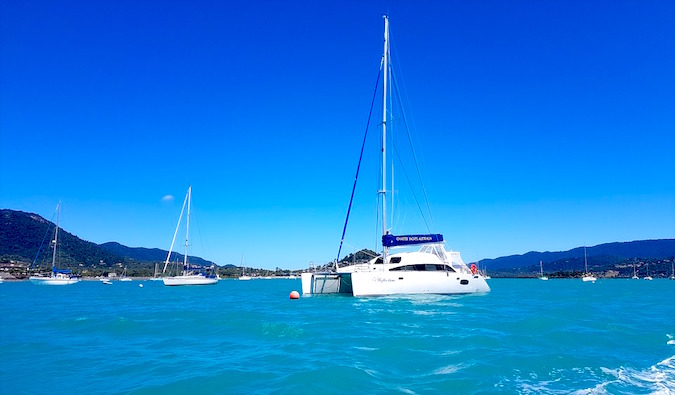
Heading out on a cloudy Sunday, we boarded our boat, Freight Train. Freight Train’s an old boat. Built in the 1980s as a German racing boat, the boat is quite small. It fits 18 people in the berth plus three crew. If it was up to me, I would have picked a bigger boat. There’s nothing really wrong with the boat—if you want a typical “sailboat,” Freight Train is a fine good option. I just hate being on small boats. But you go where your friends are, and my friends were there. I took the boat because my friend Phil was on it. (Turned out, my friend Caitlin and two Swedish girls I met in Noosa few weeks before were also on it. Small world, huh?)

Because the boats leave midday on the first day, you only have enough time for one snorkel trip before you set anchor at night. Because of the weather and rain, the snorkeling wasn’t great. The water was murky, and there wasn’t a lot of fish. But nothing could be done about that and we moved on, anchored up for the night, ate, and drank until…well, about 10 o’clock. A funny thing about being out on the water—your perception of time changes. After the sun goes down and you spend hours out on the deck, you begin to think it’s really late. “It must be like 1am!” someone would say. Nope, it’s 10pm and time for bed.

sailing around the whitsunday islands

The second day sailing around was a lot better. We headed to the famous Whitehaven beach for a swim. Whitehaven is what you see on all the magazines and postcards of the Whitsundays. It’s a long, pure-white beach. It was beautiful until the rain came, spoiling the moment, and we headed back toward the boat. We sailed around for a bit to find a bay to stop and snorkel in. Because of the time of year, there were only a few places to go, and, according to our captain, the bay we stopped in might see only boats 10 days a year, making the fish and reef system a lot better. I opted to dive instead of snorkeling. The coral was beautiful, we saw a lot of fish, and I found a turtle. That was really the highlight. We followed the turtle around for a while and then, realizing we needed to surface, waved it goodbye and came to surface.

The Whitsunday Islands are beautiful, but I had the misfortune of visiting the islands during Queensland’s wet season. Except for a few hours of sun, the whole three days were filled with clouds and thunderstorms. Every time I was getting ready to get a tan, the rain came pouring down.

I can only imagine how the islands would have looked if it’d been beautiful and sunny every day. When the weather was nice, you could see the appeal of the place. Sailing on the water, stopping for a swim, exploring a few islands. Sailing around the Whitsundays is the perfect way to spend a few days.

Sailing the Whitsundays: Suggested Companies and Logistics

a view of the whitsundays
Sailing the Whitsundays is pretty straightforward. You can book directly with any of the big companies. However, the best way to save money is to book with a tourist office or a hostel. You’ll end up saving a lot more money as they get better rates and deals. Everything on the boat is provided for you except snacks and alcohol. Make sure you stock up on them before you leave. Additionally, try to find a boat that leaves early on the first day or late on the third day so you get more time out on the islands.

Some suggested sailing companies are:

Expect to pay between 490-550 AUD per person for a 2-night sailing trip. Prices will vary depending on the size of the boat and how basic or luxurious the facilities are. Rates are often a little cheaper if you book as a couple or part of a group, so be sure to ask if they have any discounts available.

Airlie Beach, the main jumping off point, is around a 7-hour drive from Cairns and a 12-hour drive from Brisbane. If you plan to fly, you can take a short flight from either Cairns or Brisbane to Hamilton Island or Whitsunday Coast. Brisbane has the most flight options, with round-trip tickets costing as little as 225 AUD.

However, there are more ways to visit the islands than just sailing. You can also stay on the islands, though accommodation is pretty expensive. Expect to pay at least 200 AUD per night (though 300 AUD is more likely). You can find hotels and resorts on some of the islands, including Daydream Island, Long Island, and Hamilton Island (which also has an airport). If you don’t want the party scene of the sailboats and are looking for a more relaxed, private stay then this might be the option for you.

If you want to visit the islands on a budget, camping is also an option. Camping permits will cost as little as 8 AUD per night, so if you have a tent and want to save yourself some money then this is a viable option. You’ll need to take a water taxi service to get to your island/campsite. Expect to pay at least 70 AUD for round-trip service to the islands. Some of the hostels on Airlie Beach will also let you camp on their grounds for a discount as well.

Book Your Trip to Australia: Logistical Tips and Tricks

Book Your Flight
Find a cheap flight by using Skyscanner or Momondo. They are my two favorite search engines because they search websites and airlines around the globe so you always know no stone is left unturned.

Book Your Accommodation
You can book your hostel with Hostelworld. If you want to stay elsewhere, use Booking.com as they consistently return the cheapest rates for guesthouses and cheap hotels. I use them all the time. Some suggested places to stay are:

  • Whitsunday on the Beach – This motel on Airlie Beach has really friendly and helpful staff and is in a great location for anyone heading off to sail the islands.
  • Base Backpackers Airlie Beach – This is a quieter hostel with great airconditioning as well as a pool and volleyball area.
  • Airlie Beach Magnums – A well-organzied hostel in a great location with comfy beds and a super helpful staff.

Don’t Forget Travel Insurance
Travel insurance will protect you against illness, injury, theft, and cancellations. It’s comprehensive protection in case anything goes wrong. I never go on a trip without it as I’ve had to use it many times in the past. I’ve been using World Nomads for ten years. My favorite companies that offer the best service and value are:

  • World Nomads (for everyone below 70)
  • Insure My Trip (for those over 70)

Looking for the best companies to save money with?
Check out my resource page for the best companies to use when you travel! I list all the ones I use to save money when I travel – and I think will help you too!

The Cost of Traveling Laos

Waterfalls and sunlight in Laos
Although I first visited Laos when I taught in Bangkok, I never spent much time there beyond a few visa runs to Vientiane. This year, on my recent trip through the region, I sought to change that and decided to finally explore the country, jaunting up and down its length.

Overall, I spent about three weeks in Laos. While I left with a laundry list of things I still want to see and do (Plain of Jars, I promise to see you next time!), my time there gave me an excellent insight into how much you need to travel around Laos.

I always had this image of Laos being super cheap, probably stemming from the fact that it’s less developed than its neighbors, so I just assumed it would be more affordable — a Cambodia/Vietnam-style cheapo-utopia!

I was wrong though: Laos was more expensive than I thought. Street food and bus rides are often double the price than in neighboring Thailand. The only thing that seemed cheap was the beer!

At first I thought I was doing something wrong. Was I missing something? Was I just being oblivious to super cheap Laos? Had I lost my travel ninja mojo? I try to uncover as many inexpensive ways to experience a place as possible, but Laos was leaving me stumped.

But after speaking with some local writers, I realized that I hadn’t missed anything. Laos is simply expensive when compared to its neighbors — for good reason.

Laos, a very poor and undeveloped country, is landlocked and so has to import everything, raising prices for all goods, services, and transportation (so remember that when you try to bargain that tuk-tuk driver down 20 cents!). Few things are locally produced. When combined with little domestic food production, high petrol prices, and a stalled commodities sector due to suspended projects with China, you have the recipe for a country with higher-than-average prices for the region.

While Laos will never be found on a list of expensive countries, it’s not the bargain you might expect given the region of the world it is in.

How much does Laos cost?
gorgeous river and town in laos
I think $20-35 USD a day is a reasonable budget. This will allow you to get your own private room, eat local food, drink, and do what you want. Here are some typical prices in Laos (in Laotian Kip. 8,100 Kip = $1 USD):

Dorm room: 30,000-40,000
Private rooms with ensuite bathroom: 80,000-120,000
Boat from dock to Don Det (4,000 Islands): 15,000
Bungalows on Don Det: 50,000
Overnight buses: 150,000-200,000
Tuk-tuk: 30-50,000
Bus from Luang Prabang to Vang Vieng: 90,000-130,000
Shared tuk tuk to Kuang Si waterfalls (Luang Prabang): 30,000
Entrance fee to attractions: 15,000-25,000
Restaurant prices for Lao food: 20,000
Restaurant prices for Western food: 40,000
Street food: 15,000-20,000 per dish
Bike rentals: 15,000
Public toilets: 2,000-5,000
Sticky rice: 10,000
Big beer Lao: 10,000
Dark beer Lao: 15,000
Water: 3,000-8,000

Tubing in Vang Vieng: 55,000 (plus 60,000 deposit)

If you stay in dorms, eat local food from markets, drink just a little, and take the local bus between destinations, you can get by on $20 US per day. If you want your own room with A/C and hot water, look to spend closer to $30-35 per day. After that, the sky is really the limit – but it’s a low limit!

My friend Kunal visited me and — being on no budget — just spent as if money was going out of style. We worked out that even with his million meals (the guy eats like a hobbit), private rooms in hostels, transportation, activities (like tubing), and constant buying rounds of beer, he still managed to only spend $40-45 a day. If you spent like Kunal but got nice, more boutique accommodation, I would budget about $60 per day.

If you are coming here as a backpacker or moderate budget traveler, you’ll be hard pressed to really spend a lot.

How to Save Money in Laos
sunset and mountain in laos
Though expensive relative to its neighbors, Laos is still a cheap country to visit. You have to try to spend money here.

Besides the normal “stick to the local food/transportation” common sense travel wisdom, one of the most effective ways to save money, though, is to book all your activities and transportation on your own. Don’t go through your hostel or a tour company. Most attractions are near cities and don’t require you to go with an organized group. You can either rent a motorbike or hire any number of tuk-tuk drivers.

For example, when we went to Kuang Si waterfall in Luang Prabang, most hostels wanted 60-80,000 kip for the trip. You can simply join one of the taxis from the center of town for 30,000 kip, get more time at the waterfalls, and be on your own schedule.

On the opposite side of that, my friends and I got a bus to Vientiane from the company our hostel used – one of those cater-to-tourists outfits. It was $5 more than the public bus but it was more convenient. However, we left an hour later and there were numerous stops. We would have saved time and money if we organized transportation right from the bus station.

Lastly, there is a lot of cheap accommodation to be found on the website Agoda. You’ll even find cheap guesthouses under $10 and hostel dormitory rooms listed on the website. While you can definitely wander around and find accommodation on your own, Agoda has a lot of options if you want to pre-book.

I wish I could tell you some amazing ninja ways to save money in Laos, but honestly, just stick to the local food and transportation, don’t overdo it on drinks, avoid tour operators, and use some common sense. You can’t overspend here.

Laos may not be as inexpensive as its neighbors but it is still a value country, and the prices and tips here can help you budget on your next trip there.

2019年7月25日星期四

Google Assistant Will Now Let You Hail a Car Just by Asking

 cleanString alt

NurPhoto/Getty Images

Even if you aren’t a top-level executive, you can still have a personal assistant. It may be in your pocket and it may not be human, but it’s getting a bit smarter every day.

Google Assistant — which is available for iPhone, Android, and the Google Home — can now call you a car.

If you say “Hey Google, get me a taxi to Los Angeles International Airport,” the assistant will show a list of ride services — including Uber, Lyft, Ola and several others — along with estimated prices and wait times. (You can also override this step by saying “Hey Google, book an Uber to the airport.”) Select the ride service and the app will open to confirm the ride.

The feature will be especially useful when you’re running late, with no free time to spare to compare rides. Being able to see all wait times and prices in one place without having to switch back and forth between apps could be the difference between you making it on time to the meeting or walking in sheepishly late.

Google Assistant is becoming a nifty hands-free way to plan your vacation. The assistant can teach you a foreign language, find you flight options, and help you pack with information about the weather. Earlier this year, Google introduced a feature that allows Assistant to book restaurant reservations and salon appointments.

The Best Times to Visit Japan for Cherry Blossoms and Bargain Prices

 cleanString alt

Frank Lukasseck/Getty Images

A snowy getaway in Hokkaido, a beach vacation in Okinawa, or a photography trip to capture cherry blossoms in Tokyo — the best time to visit Japan depends entirely on what you want to do when you arrive.

As a country with a seemingly endless amount of activities and festivals on offer year-round, there really isn’t a bad time to visit. But if its shrine-hopping in Kyoto that brings you, or the pink hues of the cherry blossoms, you’ll want plan to make sure you don’t end up visiting during rainy season, or after all the blush pink cherry petals have already dropped.

Use this guide to nail the perfect time for your dream trip to Japan.

The Best Times to Visit Japan

Japan, while not especially large, is surprisingly vast. Frigid winters in Hokkaido make the subtropical islands of Okinawa seems worlds away. If you aren’t traveling to hit the ski slopes, the months from March to May and from September to November are generally considered the best times to visit the country.

That's when travelers can find vivid autumnal leaves or, on the other hand, the iconic cherry blossoms that seem straight out of a postcard. Plus, during these seasons, rainfall is at a low, skies are clear, and temperatures are rather mild.

Summer in Japan is typically warm and humid throughout most of the country, but is also an ideal time for nature expeditions like hiking. It's also considered the season of festivals (think: outdoor beer gardens). Meanwhile, winter in Japan is a time for snow sports and onsen hopping. The northernmost prefecture of Hokkaido is undeniably the best place to hit the slopes, but areas outside of Tokyo such as Niigata are only a Shinkansen ride away, and boast a number of great ski resorts.

The Best Times to Visit Japan for Cherry Blossoms

For travelers determined to visit Japan during cherry blossom season, the dates of bloom depend on the weather conditions each year. From late March, trees in the warmer south begin to bloom, but in northern cities like Sapporo, don’t expect to see any pink until at least May. If you are staying between the Kansai and Kanto regions, the best time to see blossoms is either the last week of March or the first week of April.

The Worst Times to Visit Japan

Since weather significantly depends on which region you visit, bad weather in one area of Japan may mean clear skies in another. Rainy season typically runs from early June to mid-July throughout most of the country, except in Okinawa where showers begin in early May. Meanwhile, in Hokkaido, summertime brings mild temperatures and blue skies.

Because travelers all over the world admire Japan’s cherry blossoms, it shouldn't be surprising that sakura season marks the busiest time for tourism. Domestic travelers take advantage of Golden Week (a national holiday in Japan), from the end of April to about mid-May. This means trains, hotels, and popular sightseeing spots can be overcrowded or entirely booked full.

And if crowds really aren’t your thing, you should note that Japan will host the Rugby World Cup in 2019 and the summer Olympics in 2020, so crowds will be at a high.

The Cheapest Times to Visit Japan

Another side effect of the upcoming Rugby World Cup and the Summer Olympics is that prices are about to skyrocket. Japan is already a pricier destination, and not popular with extremely frugal travelers — and the influx of crowds means you’ll be fighting with the masses for bargains on flights, hotels, and activities. Plan your trip for 2018 and aim for a winter visit to save the most money.

The country sees the least number of visitors from mid-January through March, meaning more deals are on offer for both airfare as well as hotel rooms and activities.

Study Reveals Many Travel Booking Sites Are Misleading Consumers

 cleanString alt

Iain Masterton/Getty Images/Canopy

Originally published on April 11th, 2017.

In a report published last week, the European Commisionrevealed that 235 of the 352 travel booking websites they examined advertised prices or deals that were not necessarily true.

The main problem that the commission found was that websites were often unclear regarding the price of booking: Of the most common price problems, one-third of the websites showed a different initial price than actual final price. Another third were “unclear” when presenting the final price, including taxes.

While the study was focused on travel booking websites for EU customers, the findings are valuable for any consumer: Whatever site you're booking on, pay attention to the details.

About 20 percent of the websites enticed customers with “special prices,” which were then unavailable when they clicked through to the final booking page.

Over one-quarter of websites took advantage of a “scarcity factor.” This happens when websites implore customers to hurry and book a deal because there are only two seats left. However, they neglect to tell customers that this scarcity only applies to the number of tickets that the booking site itself has.

Related: How to Save Money for a Dream Trip

“The Internet provides consumers with plenty of information to prepare, compare and book their holidays,” EU Commissioner Věra Jourová said in a statement. “However, if the reviews on comparison websites are biased or prices are not transparent, these websites are misleading consumers.”

The 235 websites that the commission found “misleading” will “have to correct the irregularities.” Consumer Protection Cooperation authorities will follow up with the companies to ensure that they comply.

Mobile Apps

Trip planning has never been easier thanks to easy-to-use digital travel tools you can use at home or on the go. From booking last-minute hotels to reading fellow traveler reviews and ratings to comparing airfare prices, there seems to be an application for everything. And thanks to the speed of the digital age, innovative new apps for cell phones and tablets are updating and premiering all the time. Travel + Leisure editors track and test every new release to find the best travel apps out there, so you can travel smarter, safer, and cheaper. 

The convenience of mobile apps

The thing about traveling is that it prevents you from sitting down at a desktop computer—and laptop use can be limited if you’re already en route and without Wi-Fi. Smartphone apps keep you connected wherever you are. Sequestered on a bus without a place to sleep that night? There’s an app that lets you book hotel rooms last-minute. Wake up to an unexpected summer storm just hours before departure? Another lets you quickly check the status of your flight and notifies you of delays and gate changes. Upcoming layover longer than you expected? Find out what airport lounges offer free (or pay-as-you-go) entry and Wi-Fi. Eyeing that perfect spring break getaway but unable—or unwilling— to obsessively check in on rates? There’s an app that compares airfares and instantly alerts you when prices drop.

Once you’re where you need to be, there are apps that keep working for you. Need help navigating a new city? The app from UNESCO World Heritage provides a ready-made bucket list of major sights, while Eventseeker keeps you on the pulse of what’s happening in a city on any given day. Want to improve your photo-taking and photo editing skills? Photo apps like Vsco and PicFrame instantly transform your quick snapshots into works of art, and can be used whether you’re on the plane, in the car, or backpacking cross-country.

The best cell phone apps help streamline and solve your travel needs. Check back here for all the latest developments and releases.