显示标签为“cost”的博文。显示所有博文

2019年9月2日星期一

How to Visit Malta on a Budget

beautiful harbor in maltabeautiful harbor in malta
For centuries, the Maltese archipelago passed between North African Moors and European Crusaders in an epic struggle for control of this important hub. This constant back-and-forth created a unique culture that blended architectural, culinary, and cultural styles (in fact, the Maltese language is a mix of Arabic and Italian) found nowhere but maybe Southern Spain.

Now, the country draws people less with the whole conquering-empires thing and more with its warm summer temperatures, pristine beaches, clear Mediterranean water, ample hiking, friendly locals, and cheap prices.

Though I didn’t spend as much time as I wanted in Malta, I spent enough (literally and figuratively) to get a sense of how to travel the country on a budget. Luckily, the country is already very budget friendly (it’s one of the cheapest Eurozone countries out there) so you don’t need a lot to begin with. Even though I was on a holiday and not being as budget friendly as I wanted, I still never spent a lot of money. My most expensive day cost me 70 EUR ($74), and that’s because I rented a car! Even when I was watching my wallet, at no point did I ever feel as if I was missing out.

Though Malta will never break your budget, I always am one to look for a deal, as I’m a firm believer that every destination has a way to be cheaper.

So here is your in-depth guide to visiting Malta on a budget:

Getting There

While most European carriers operate seasonal flights, there aren’t many airlines that fly to Malta year-round. Ryanair, Air Malta, easyJet, and Lufthansa are the biggest carriers that service the island year-round. One-way flights from the mainland cost 50-100 EUR ($53-106 USD), especially if you book in advance. You can also take the ferry to/from Sicily; it’s 2.5 hours and costs 61-127 EUR ($65-135 USD) each way (depending on the season).

Typical Costs

cars on a colorful street in malta, photo by Tobias Scheck (flickr: @uncloned)cars on a colorful street in malta, photo by Tobias Scheck (flickr: @uncloned)
Malta is cheap. While I went in the middle of winter — without the seasonal increase in prices for accommodation, car rentals, and flights — many friends told me that most prices for food, activities, and public transportation stay the same throughout the year. Here is a list of typical costs in the country:

  • Ferry to Valletta from Sliema: Single: 1.50 EUR ($1.60 USD), Return: 2.80 EUR ($2.95 USD)
  • Ferry from Malta to Gozo: Pedestrian: 4.65 EUR ($5 USD), Car and Driver: 15 EUR ($16 USD)
  • Pastizzi (cheap snack): 1-2 EUR ($1-2.10 USD)
  • Breakfast sandwich: 3-4 EUR ($3.15-4.25 USD)
  • Full breakfast: 8-9 EUR ($8.50-9.50 USD)
  • Lunch at a café: 8-10 EUR ($8.50-10.50 USD)
  • McDonald’s value meal: 5-6 EUR ($5.25-6.50 USD)
  • Sandwich: 6 EUR ($6.50 USD)
  • Nice dinner at a sit-down restaurant with wine: 25 EUR ($27 USD)
  • Main meals: 10-14 EUR ($11-15 USD)
  • Pizza: 6-9 EUR ($6.50-9.50 USD)
  • Bottle of water: 1 EUR ($1 USD)
  • Bottle of wine: 8-10 EUR ($8.50-10.50 USD)
  • Beer: 3 EUR ($3.15 USD)
  • Museum entrance: 6 EUR ($6.50 USD)
  • Car rental: 38-48 EUR ($40-50 USD)
  • Taxi prices: 10-20 EUR ($10.50-21 USD)
  • Public bus ticket: 2 EUR ($2.10 USD)

On average, you’ll be able to visit Malta for 30-45 EUR ($32-48 USD) per day, though in the summer I would say you need to budget closer to 50 EUR ($53 USD). At that price, you’re looking at staying in a hostel dorm or splitting an Airbnb with a friend, taking public transportation, mostly sticking to the free activities, cooking your breakfast, and eating at the cheap(er) cafés.

How to Save Money in Malta

Accommodation
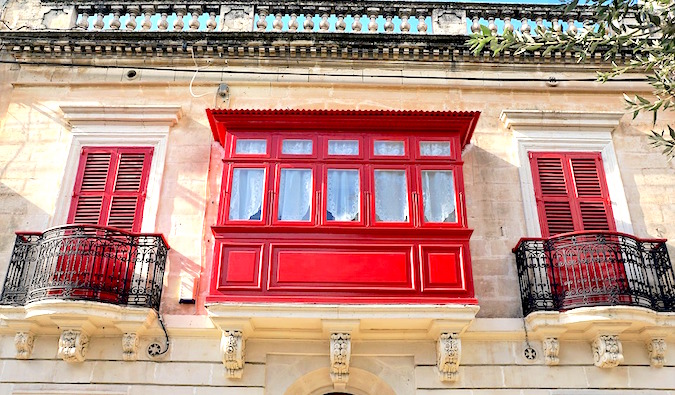
beautiful building facade and bright red shutters in maltabeautiful building facade and bright red shutters in malta
There are a couple of hostels on the islands, with dorm prices beginning at 9 EUR ($9.50 USD) per night (though prices double in the peak summer time). Airbnb is ridiculously cheap — I found a whole house for 35 EUR ($37 USD) a night. Most budget hotels cost 40 EUR ($42.50 USD) so I would stick to Airbnb or hostels for accommodation. However, like hostels, the prices for places more than double to around 80 EUR ($84 USD) per night in the summer; budget hotels cost around 40-60 EUR ($42-63 USD) in the summer.

To save money on accommodation, travel off-season and stay in dorms or split Airbnb units with friends. You can use the website eurocheapo.com to find good B&Bs, as they have a robust listing.

Food and Drink
good mediterranean food in Malta, photo by: (flickr: @)good mediterranean food in Malta, photo by: (flickr: @)
Food prices are relatively inexpensive, though you’ll find higher prices in tourist areas such as Valletta, St. Julian’s, Sliema’s boardwalk, and Marsaxlokk.

To save money on food, stick to the pastizzi (savory filled pastries) for about 1-2 EUR ($1-2.10 USD), eat at the plethora of vegan and vegetarian restaurants throughout the country (see the list below), avoid snacking, and cook as many meals as possible (breakfast will see the biggest wins).

Transportation
ferry from valletta to sliema in malta, photo by Charlie Dave (flickr: @charliedave)ferry from valletta to sliema in malta, photo by Charlie Dave (flickr: @charliedave)
There are three ways to get around the island: buses, taxis, and car rentals. Buses cost 1.50-2 EUR ($1.60-2.10 USD) for a two-hour ticket or 21 EUR ($22 USD) for a weekly pass, while car rentals cost 39 EUR ($41 USD) per day (in the summer they start closer to 50 EUR or $53 USD per day). There are a number of local rental companies, but I used Hertz since it was close to my Airbnb. Many of the local car companies don’t take credit cards and want deposits in cash. Going with bigger companies adds another layer of security.

Taxis cost 10-20 EUR ($11-21 USD); while not ideal, they can be ordered ahead of time via Whatsapp and are a good last-minute option if you get stuck because the bus doesn’t turn up.

One thing to note about the buses is that they are infrequent so they fill up fast. We got on one bus, only to have him pull over, kick everyone off, and put us all in another bus, that then waited for 20 minutes to move. It’s a crazy system and, during the summer months when the crowds peak, expect long waits. Don’t be in a rush if you’re using the bus!

Activities
azure window at a beach in malta, photo by Berit Watkin (flickr: @ben124)azure window at a beach in malta, photo by Berit Watkin (flickr: @ben124)
When the weather is nice, there are a bunch of free activities to do, such as enjoying the beach, hiking, swimming, and just walking around. Additionally, all the churches are free. You’ll find a lot of companies that will take you around the island in a boat for 25 EUR ($27 USD). Most museums and attractions cost 5 EUR ($5.25 USD) but you can get a Malta tourism card (there’s one for Mdina and a separate one for Valletta) that will save you about 10-20 EUR ($10.50-21 USD) depending on how many attractions you squeeze in.

On a side note, I found the main tourism center in Valletta unhelpful. The staff couldn’t answer a lot of my questions. The smaller, unofficial locations that littered Sliema’s boardwalk had more information on car rentals, things to do, and prices.

Recommended Bars and Restaurants

Restaurants: Rising Sun (Mdina), Loli (vegetarian), The Grassy Hopper (vegan/vegetarian), the Marsaxlokk fish market, Suruchi, Ta Doni, Cuba, Rocksalt, Ta’ Rikardu (Gozo), Electro Lobster Project.

Bars: Hole in the Wall (Sliema), Native (and any bar on that street as it’s the main hub for nightlife), Dubliner, Legligin, The Thirsty Barber

****It’s easy to visit Malta on a budget. I was shocked at how cheap this place. Even with summertime increases in accommodation and tour prices, Malta remains an affordable country. I’ve been to all the

It’s easy to visit Malta on a budget. I was shocked at how cheap this place. Even with summertime increases in accommodation and tour prices, Malta remains an affordable country. I’ve been to all the Eurozone countries now and I have to say Malta is one of the best — if not the best — value. When you combine it with warm weather, amazing landscape, historic cities, and incredible beaches, Malta because one of the best destinations to visit in Europe if you’re looking to save money.

Looks like all those British retirees were on to something after all!

Get Your In-Depth Budget Guide to Europe!
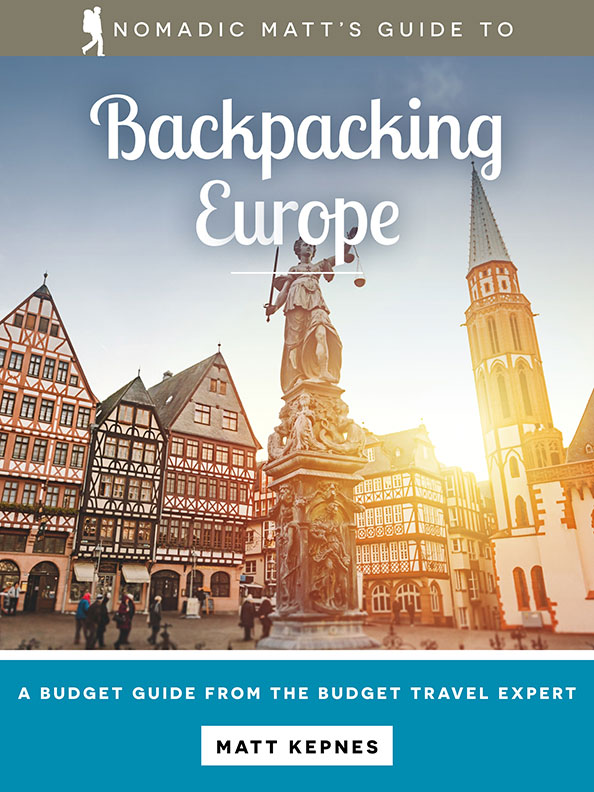
Nomadic Matt's Guide to EuropeNomadic Matt's Guide to EuropeMy detailed, 200+ page guidebook is made for budget travelers like you! It cuts out the fluff found in other guidebooks and gets straight to the practical information you need to travel and save money while backpacking around Europe. You’ll find suggested itineraries, budgets, ways to save money, on and off the beaten path things to see and do, non-touristy restaurants, markets, and bars, and much more! Click here to learn more and get started!
 

Book Your Trip to Malta: Logistical Tips and Tricks

Book Your Flight
Find a cheap flight by using Skyscanner or Momondo. They are my two favorite search engines because they search websites and airlines around the globe so you always know no stone is left unturned.

Book Your Accommodation
You can book your hostel with Hostelworld. If you want to stay somewhere other than a hostel, use Booking.com as they consistently return the cheapest rates for guesthouses and cheap hotels. I use them all the time.

Don’t Forget Travel Insurance
Travel insurance will protect you against illness, injury, theft, and cancellations. It’s comprehensive protection in case anything goes wrong. I never go on a trip without it as I’ve had to use it many times in the past. I’ve been using World Nomads for ten years. My favorite companies that offer the best service and value are:

  • World Nomads (for everyone below 70)
  • Insure My Trip (for those over 70)

Looking for the best companies to save money with?
Check out my resource page for the best companies to use when you travel! I list all the ones I use to save money when I travel – and I think will help you too!

Want More Information on Malta?
Be sure to visit our robust destination guide on Malta for even more planning tips!

Photo Credits: 2, 4, 5, 6

2019年8月2日星期五

Announcing My "Ten Years a Nomad" Summer Book Tour

driving down a road with tall trees hanging overheaddriving down a road with tall trees hanging overhead
Posted: 6/19/2019 | June 19th, 2019

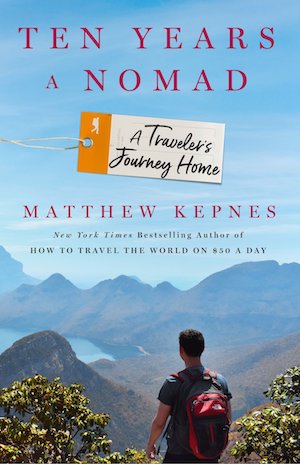
Last month, I announced the release of my next book, Ten Years a Nomad: A Traveler’s Journey Home.

It’s about how I became a traveler, my life as a backpacker, all the lessons I learned, and what those lessons mean for travelers. It features stories I’ve never told and goes deeper into my philosophy on travel than I ever have on this blog.

This book follows the “emotional” journey of a trip around the world: getting the bug, the planning, setting off, the highs, the lows, the friends, what happens when you come back — and the lessons and advice that come with all that.

And the early reviews have been pretty good!

Ten years a nomad book coverTen years a nomad book cover“In his heartfelt explanation and exploration, Matt runs through just why he’s been out there, backpacking the world for 10 years. By the end we’ve definitely realized, like Matt, how important travel is and how getting out there, on the road, can make you, me and the world a better place. It’s a great pity certain people at the very top of the world’s power pyramid never had just a little taste of the nomadic experience.” – Tony Wheeler, founder of Lonely Planet

“Throughout his ruminations on how travel affected him, Kepnes interweaves his tales of friends, girlfriends, and great loves discovered among exotic backdrops and how starting a blog (nomadicmatt.com) about his adventures altered the way he traveled. His story is one of heartbreak, self-discovery, and the constant travel itch he had to scratch in order to become the man he was supposed to be. An entertaining, quick read by a man who did what many of us only dream about.” – Kirkus Book Reviews

10 Years a Nomad book review10 Years a Nomad book review

The book comes out July 16th and I’ll be doing a book tour across the United States and Canada over the course of the summer!

If you want to join the book tour, here are our dates:

Ten Years a Nomad Book Tour

P.S. – There will be an afterparty in NYC after the initial book launch. It will be at Solas. Click here for details!

Hope to see you on the tour! It’s my first one in over four years and I’m very excited about it. It’s going to be a whirlwind!

And, as a reminder, I’m doing a pre-sale bonus so if you order the book in advance you can get free copies of my other books, one-on-one travel planning advice, free attendance at TravelCon, blogging courses, free hostel stays and flights, and more!

The packages are listed below. All you need to do to claim your bonuses is email me a copy of your receipt at matt@nomadicmatt.com.

The Basic Package (cost: $18, value: $48)
Purchase one copy of the book and get:

  • How to Build a Travel Blog ebook (value: $9.99)
  • The Ultimate Guide to Travel Hacking ebook (value: $9.99)
  • 27 Ways to Be a Master Traveler PDF (value: $5)
  • 50 Inspiring Travel Books and Movies PDF (value: $5)

***BEST VALUE*** The Tenner (cost: $182, value: $794)
Buy 10 copies of my book and get ALL THE ABOVE plus:

  • My 12 city and country guides (value: $150)
  • A signed copy of my book How to Travel the World on $50 a Day (value: $15)
  • A 15-minute planning call with me (ask me anything)! (value: $200)
  • The Business of Blogging course (value: $199)

The Bullseye (cost: $900, value: $2,493)
Buy 50 copies of my book and get ALL THE ABOVE plus:

  • One ticket to TravelCon in Boston (value: $399)
  • A 30-minute planning call with me (ask me anything)! (value: $400)

SUPER BONUS! The Centennial (cost: $1,800, value: $7,193)
Buy 100 copies of my book and get ALL THE ABOVE plus:

  • Lunch on me! I’ll come to your city and we’ll have lunch on me! (limited to those in the United States and Canada) (value: $2,000)
  • Round-trip airfare to TravelCon in Boston (from within the US and Canada) (value: $500)
  • One additional ticket to TravelCon in Boston (value: $399)

Conversely, if you’re not a blogger and don’t care about TravelCon, you’ll get four nights at any hostel in the United States and one round-trip domestic airfare.

SUPER BONUS! The Big Kahuna (cost: $4,500, value: $19,293)
Buy 250 copies of my book and get ALL THE ABOVE plus:

  • I’ll come to speak at your event for free! (value: $5,000)
  • You’ll be flown to NYC (from within the US and Canada) the book launch party, put up in a hotel for two nights, and get dinner with me! (value: $3,000)

Note: All digital bonuses will be sent when you send the receipt. Travel arrangements will be worked out between you and me and are valid for six months after purchase (i.e., you have to make a booking by then).

Order the book today, get your bonuses, and share your love of travel!


Want to Help Me Spread the Word About This Book?

I’m always looking for more opportunities to talk travel. Here’s how you can help me spread the word about the new book:

Want to interview me?
If you have a blog, podcast, vlog, or Instagram channel and want to interview me about the book and travel, let me know at matt@nomadicmatt.com using the subject line “Book Interview.” I’d love to talk with you!

Are you in the media and want to cover the book?
If you work for a major media outlet and want to interview me about the book or would like to review the book, let me know at matt@nomadicmatt.com using the subject line “Media Request.”

Know anyone that I should reach out to for promotion?
If you have suggestions on people who would love a copy of this book and would be a good fit for promoting the book, let me know in the comments, or feel to email me at matt@nomadicmatt.com with the subject line “Book Promotion Help.”

Book Your Trip: Logistical Tips and Tricks

Book Your Flight
Find a cheap flight by using Skyscanner or Momondo. They are my two favorite search engines because they search websites and airlines around the globe so you always know no stone is left unturned.

Book Your Accommodation
You can book your hostel with Hostelworld as they have the largest inventory. If you want to stay somewhere other than a hostel, use Booking.com as they consistently return the cheapest rates for guesthouses and cheap hotels. I use them all the time.

Don’t Forget Travel Insurance
Travel insurance will protect you against illness, injury, theft, and cancellations. It’s comprehensive protection in case anything goes wrong. I never go on a trip without it as I’ve had to use it many times in the past. I’ve been using World Nomads for ten years. My favorite companies that offer the best service and value are:

  • World Nomads (for everyone below 70)
  • Insure My Trip (for those over 70)

Looking for the best companies to save money with?
Check out my resource page for the best companies to use when you travel! I list all the ones I use to save money when I travel – and that will save you time and money too!

How Much Does it Cost to Travel Colombia? (Updated 2019)

a green mountainous landscape in the Colombia countrysidea green mountainous landscape in the Colombia countryside
Posted: 6/6/19 | June 6th, 2019

A trip to Colombia wasn’t going to break the bank. I knew that much.

But would it be a bargain?

Only a visit there would tell me for sure.

And so, earlier this year, I spent over five weeks there, varying my time between dorm rooms and cooking my own food on the one hand and staying in boutique hotels and eating luxury meals on the other.

I can tell you that while people are right — Colombia isn’t going to break your bank — if you’re not careful, your costs can escalate quickly, especially if you indulge in the up-and-coming gastronomy scene.

So how much does it cost to visit Colombia?

And how can you save money there?

Let’s break it down and go over my trip as an example.

How much did I spend?

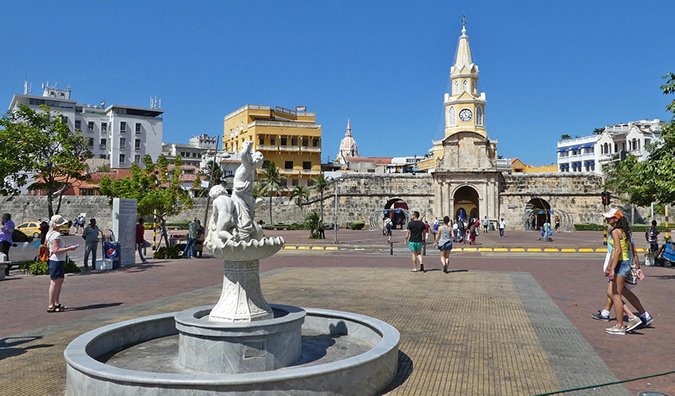
people walking around a plaza with a fountain in Cartagena, Colombiapeople walking around a plaza with a fountain in Cartagena, Colombia
Over the course of 37 days, I spent $2,908.50 USD, or $78.60 per day. Here’s how that breaks down:

  • Accommodation – 3,690,531 COP ($1122.10 USD)
  • Food – 3,231,903 COP ($982.66 USD)
  • Drinks (Starbucks, water, tea, etc.) – 183,488 COP ($55.78 USD)
  • Alcoholic drinks – 691,170 COP ($210.15 USD)
  • Taxis – 386,000 COP ($117.36 USD)
  • Public transportation – 37,000 COP ($11.25 USD)
  • Intercity buses – 238,200 COP ($72.42 USD)
  • Uber – 518,447 COP ($157.63 USD)
  • Walking/day tours- 541,500 COP ($164.64 USD)
  • Miscellany (Band-Aids, soap, etc.) – 47,650 COP ($14.48 USD)

Total: 9,565,889 COP ($2908.50)

I spent so much money for two reasons: I stayed in a lot of hotels, and I ate out at a lot of fancy restaurants. They destroyed my budget. If it wasn’t for those things, I figure I would have spent about $1,000 less (thanks, Cartagena, for those lovely but pricey boutique hotels!) or around $53 per day, which isn’t too bad, and closer to my ideal $50 a day budget.

I don’t have any regrets, though. I had a lot of friends visit me and it was hard to convince them to stay in hostels and eat cheap meals. They wanted to splurge in the few days they had.

How much do you need to travel in Colombia?

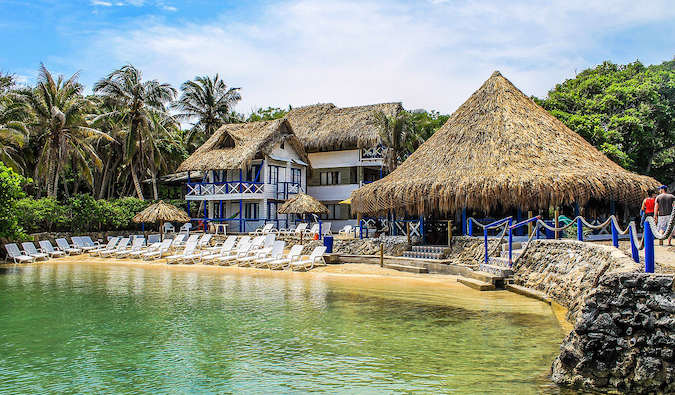
a beach resort in Colombiaa beach resort in Colombia

Accommodation – Most hostel dorm rooms in Colombia cost between 30,000-45,000 COP ($9-14 USD) per night, though in smaller cities and towns you can find them as low 23,048 COP ($7 USD) per night. You can sometimes find them that low in the big cities but the facilities tend to be pretty meh. Private hostel rooms start around 50,000 COP ($15.50 USD), though during the high season and in major metropolitan areas, you’ll likely spend double that.

Budget hotels in Colombia start around 60,000 COP ($18 USD) per night. On the coast and in the high season, you’ll find most places will be closer to around 120,000 ($36 USD) per night. If you’re looking to stay at some of the really nice boutique hotels the country has to offer, you should expect to pay around 658,533 COP ($200 USD) or more a night.

Airbnb is available in the larger cities, with shared accommodation prices starting around 35,000 COP ($11 USD) per night. For an entire home or apartment, prices start at 90,000 COP ($28 USD) but average closer to 250,000 COP ($78 USD) per night.

Food – Most of the local food is around 10,000-15,000 COP ($3-5 USD) per meal. You can find a lot for around 5,000-10,000 ($1.50-3 USD) in the countryside. You can also find a lot of cheap food like empanadas for like 200-500 COP ($0.06-0.15 USD) (they make the best snack food). An arepa on the street will be about 3,000 COP ($0.90 USD). Ceviche, which is popular throughout the country, is around 15,000 COP ($4.55 USD).

Most “Western” food will cost about 20,000-30,000 COP ($6-9 USD) each, or 15,000 COP ($4.55 USD) if you get fast food like McDonald’s or Subway. You can find some really expensive food in the country so prices just go up from that. Beer at the bar can be found for as little as 2,500 COP ($0.75 USD) but, on average, you’re likely to pay double that a backpacker bar. Cocktails, which are becoming really popular here, cost around 20,000 COP ($6 USD).

Grocery shopping is very cheap, costing about 110,000 COP ($34 USD) per week if you plan on buying your own groceries.

Transportation – Local transportation is cheap. The metro in Medellin is only around 2,500 COP ($0.76 USD) for a one-way fare. Local buses are the most common type of transportation in towns and cities. The fare is usually between 1,000-2,5000 COP ($0.30-0.80 USD).

Uber (a ridesharing service) is way cheaper than taxis and you can pretty much get anywhere for around 16,463 COP ($5 USD). You can save $15 off your first Uber ride with this code: jlx6v.

Intercity buses are the best way to get around Colombia. A bus from Bogota to Medellin will cost around 65,000 COP ($20 USD) while a bus to Quito, Ecuador from Bogota will cost around 175,000 COP ($54 USD). Medellin to Manizales is 42,000 COP ($12.75 USD) and Salento to Cali is about 27,000 COP ($8.20 USD). On average, you’ll probably spend 20,000-40,000 ($6-12 USD) for a bus, more if you’re going over 9 hours.

Companies like Bolivariano, Expreso Palmira, and Trejos are all good companies and they make it easy to research schedules and fares on their websites.

Tours – Most tours cost around 30,000 COP ($9 USD) and most museums are 10,000 COP ($3 USD) or less.

I don’t think you need to spend a lot of money in Colombia. On a backpacker’s budget, you’ll probably spend about 160,000 COP ($48 USD) per day. This is assuming you’re staying in a hostel, eating local food, cooking some of your own meals, and using local transportation to get around. You’ll roughly spend around 60,000 COP ($18 USD) per day on hostels, 30,000-40,000 ($9-12 USD) on food, and 60,000 COP ($18 USD) on everything else. If you plan to drink a lot, do more tours, or eat a lot more Western food, I’d probably budget between 181,097-197,560 COP ($55-60 USD) per day.

On a mid-range budget of about 306,000 COP ($92 USD) per day, you can afford a private room at a hostel, Airbnb, or hotel; eat anywhere you want within reason (splurging once in a while); fly a couple of times, and take whatever tours you want. You’re going to spend around 99,000-132,000 COP ($30-40 USD) per night on lodging, 99,000 ($30 USD) on food, and 99,000 ($30 USD) on everything else.

If you’re going to stick to more luxury hotels, meals, drink more, or not use any points, I’d budget maybe 329,266 COP ($100 USD) or so a day.

After that, the sky is really the limit.

I found my trip a good in between. In the next section, I’ll talk more about how to save money in Colombia but, overall, I didn’t really want for anything on my trip. I ate cheap when I wanted, balanced my partying, cooked some food, used hotel points when I could, took public transportation as much as I could, and, just overall, tried to balance the two budget types above.

How to save money in Colombia

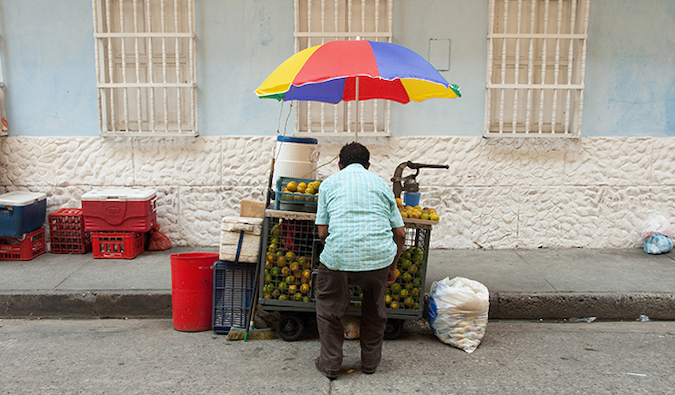
a street food vendor in Colombia selling fruita street food vendor in Colombia selling fruit
You don’t need to do a lot to save money in Colombia. It’s relatively cheap to visit, and there are a lot of good deals throughout the country.

Accommodation is inexpensive unless you are staying at major hotels chains. Hostels are cheap (especially when you leave the big cities) and there are a lot of great value local hotels throughout the country. There are a ton of markets with cheap food. Local attractions are cheap. Buses are cheap. Really, if you travel as your average Colombian lives, you’ll be hard pressed to spend a lot.

Here are my 12 tips on how to save money in Colombia:

Eat like locals – It’s easy to eat on a budget here if you stick to local Colombian food. You can also find a lot of cheap food like empanadas for like 200-500 COP ($0.06-0.15 USD) (they make the best snack food). An arepa on the street will be about 3,000 COP ($0.90 USD). Ceviche, which is popular throughout the country, is around 15,000 COP ($4.55 USD). In the countryside, you can find meals closer to 10,000 COP ($3 USD)! In short: eat local, eat cheap. Sure, Colombian food isn’t the healthiest (it’s heavy on meat and fried food) but it is filling and inexpensive.

Skip the cocktails – Colombia has a lot of awesome cocktail bars now — especially in Medellín — but these drinks are expensive, usually costing around 20,000 COP ($6 USD) (sometimes up to 30,000 COP, or $9 USD). I mean, that’s crazy, especially when beer will cost you around 4,000 COP ($1.25 USD). If you’re on a budget, you should definitely skip the cocktails and stick to beer.

Cook your food – While local food is really cheap, you can also save some money by grocery shopping, although I didn’t find it to be a great value. It cost me 50,568 COP ($15 USD) for three days of food (plus, the hostels had terrible cooking facilities). If you do shop, I recommend getting breakfast food or snacks and eating meals out. You get more bang for your buck that way.

Avoid the hostels on the Caribbean coast – The hostels on the Caribbean coast were pretty lackluster. They were expensive and didn’t have great facilities, especially the bigger “resort” ones in beachside towns like Palomino. Instead, you can find comparatively cheap budget hotels on Booking.com for less than a private room and only slightly more than a dorm bed.

Avoid Gringolands – Everything where the gringos are is double the normal price. Avoid staying in areas with lots of tourists and expats, like Poblado in Medellín, Cartagena’s Old Town, or Park 93 in Bogotá, since you’ll end up paying more for everything.

Couchsurf – Nothing’s cheaper than free. Couchsurfing connects you with locals who will not only give you a free place to stay but also serve as a local tour guide and introduce you to the cool stuff only locals know about in town! You’ll find the most hosts in college towns and big cities.

Fly Viva Air – If you’re planning to fly around Colombia, the best deals are on Viva Air. It has the cheapest fares in the country (though it flies to the fewest places). It’s best to book a few weeks in advance. (LAN and Avianca, the two major carriers, also have deals sometimes.)

Use miles and points – You can use your miles on both LAN (part of Oneworld) and Avianca (part of Star Alliance). There are also a lot of hotel chains for which you can use points. If you have miles and/or points, you can burn through a lot of them in Colombia — and the redemption rates are really good too!

Avoid the airline surcharge – Non-Colombians are charged higher ticket prices than locals. If you look at the non-local version of the website, you won’t see the super saver cheap fares. To get around this, load up the local Spanish versions of an airlines’ websites. Then use your browser extension to translate the pages and book away! You’ll see the cheaper, Colombian prices, and no one will challenge you at check-in about your ticket fare.

Take Uber – Uber is by far the cheapest way to get around Bogotá, Cali, and Medellín. It’s about 1/3 as much as taxis. (Note: Uber is actually illegal, so don’t sit in the back seat or you might get stopped.) I also like to tip the Uber drivers here, since the fares are so cheap and they are taking a risk. But all the drivers I met did this out of necessity — they couldn’t pay their bills if it wasn’t for Uber.

Haggle with taxi drivers – There are no meters in Colombia. While prices from the airports are regulated and non-negotiable, everything else is just a matter of your bargaining skills. If you’re going to take taxis, haggle before you get in the car.

Take free walking tours – Most major and medium-sized cities in Colombia have free walking tours. They are a good way to see the city on a budget and learn by asking your guide questions. Here are some of my favorites:

  • Free Walking Tour Cartagena
  • Free Walking Tour Bogota
  • Real City Tours Medellin

***

Colombia is a pretty affordable country if you watch your spending on food and accommodation. On most days, when I wasn’t eating fancy dinners, I found myself spending less than 134,850 COP ($40 USD), especially if I was staying in dorms. Prices are also a lot cheaper in the southern and eastern parts of the country — I was paying 25,000 COP ($7.50 USD) a night for my own room in Popayan and about a quarter for empanadas!

In short, Colombia is easy to visit on a budget. Since you already know how much I love the place, you won’t be surprised that I recommend you book a trip (and try some of the delicious cuisine)!

Book Your Trip to Colombia: Logistical Tips and Tricks

Book Your Flight
Find a cheap flight by using Skyscanner or Momondo. They are my two favorite search engines because they search websites and airlines around the globe so you always know no stone is left unturned.

Book Your Accommodation
You can book your hostel with Hostelworld. If you want to stay somewhere other than a hostel, use Booking.com as they consistently return the cheapest rates for guesthouses and cheap hotels. I use them all the time.

Don’t Forget Travel Insurance
Travel insurance will protect you against illness, injury, theft, and cancellations. It’s comprehensive protection in case anything goes wrong. I never go on a trip without it as I’ve had to use it many times in the past. I’ve been using World Nomads for ten years. My favorite companies that offer the best service and value are:

  • World Nomads (for everyone below 70)
  • Insure My Trip (for those over 70)

Looking for the best companies to save money with?
Check out my resource page for the best companies to use when you travel! I list all the ones I use to save money when I travel – and I think will help you too!

Looking for more information on visiting Colombia?
Check out my in-depth destination guide to Colombia with more tips on what to see, do, costs, ways to save, and much, much more!

2019年7月26日星期五

Is Travel Hacking Really a Scam?

Nomadic Matt in first class
Last month, I wrote an article on how to travel anywhere for $1,000. I wanted to show people how, by changing how you save and using a few budget techniques, you could make any trip happen for $1,000 (or less) from start to finish. While that is a lot of money to most people, it’s not an insurmountable amount of money to save with a few clever ninja techniques (it works out to only $2.74 per day).

In the article, I picked expensive destinations as examples because I didn’t want to be accused of copping out by picking cheap places. If I had, I imagined the Internet would rise up and say “Oh, sure, Matt! Anyone can travel to Thailand on a budget. That’s easy. What about (insert expensive destination)? This article is fake news!”

In picking expensive destinations, I used points and miles to help mitigate the costs of getting to each destination. Using points and miles for cheap and free flights and accommodation was a must. After all, it’s one thing to pay $700 for a flight if the destination only costs a few dollars a day. It’s another thing to pay that much when you’re going to Australia! You won’t get far with only $300 to spend in Australia!

But a different — and unexpected — backlash erupted. On the blog and social media, people kept commenting that points/miles are money, have a cost, aren’t easy to get, only work in the States, and that, basically, the whole article was BS. For example:

“Matt, like some people have mentioned before me in the comment section: not everyone has miles or bonus points. You know I’m a travel writer…and yet I have never joined a frequent flyer program. I don’t have miles or points to redeem, and likewise, there are also people who might not have saved up enough points to fly entirely free.

“Between cheaper destinations and relying on bonus points, you chose the latter for your article’s premise, and it feels a bit like saying: I could be telling you to go camping, but hey, that would be too easy, so let’s talk cruising — now, redeem 100,000 Airmiles for this two-week cruise and you’ve got $1,000 to play with on board!

“It doesn’t seem entirely fair.”

First, let me say you are all correct. From the outset, I should have factored in taxes and fees into the cost of the trips, and have since changed the expense chart to reflect that. It was silly of me to not include that from the outset. I apologize for the oversight.

But, second, I don’t think using points or miles is in anyway cheating or unfair. (I’d also like to say that while they were a big part of the article, many of the other tips helped lower costs just as much!)

To me, points and miles are free money. They have no cost to me. I don’t give up anything to get them. I think of them as the perk for being smart about my spending. Sure, I have to spend the points/miles in addition to money, and I know some of you view points and miles as having some value with an opportunity cost to them, etc.

But I don’t think of them that way.

They are just a thing I get when I spend money that I would have spent anyway.

Let me explain in more detail. A lot of people think points and miles are hard to get, that you have to do crazy stuff to get them, or you have to spend lots of money to get there:

“To collect miles requires spending money. To say one can travel anywhere for $1,000 and then condition that on free airfare is disingenuous. The advice is aimed at people who might find $1,000 a lot of money. Let’s assume you need 80,000 miles for an award and can find a sign-up offer for 40,000. That means you probably have to spend $40,000 to collect the other 40,000 miles. Then the advice to use hotel points for free rooms. Assume you want a seven-day vacation and rooms are just 15,000 a night. That’s another 105,000 hotel points, and another $105,000 spend. Even if your hotel card gets two-for-one points, that’s still $52,500 in spend. So for me to go on a vacation for $1,000 I need to charge $92,500. I’m surprised you missed telling us to just go for one day and avoid six more days of hotel, meal, and local transportation expenses.”

I hear you and I see the logic but I disagree. You can earn a lot of points and miles per year with much less spending than described because there are pretty easy ways to earn multiple points/miles per dollar spent.

I’m a terrible travel hacker compared to my friends. I don’t do some of the crazy things they do to earn points and miles because I don’t have a lot of time, so I like to make it easy on myself. I don’t buy extra things, overspend, resell furniture or gift cards, or give up my Saturdays to go buy stuff in bulk and then sell it online for a profit.

I simply go about my life and spend wisely. I have chart for which cards I use for which expenses, so I always get the most miles per dollar spent. Here it is:

How I Optimize My Spending with My Travel Credit Cards
credit card chart for travel hacking
(Note: I also have all the co-branded airline cards but I rarely ever use those.)

Through all this, I earn a million or more miles per year. If it was really only 1 point/mile per dollar spent, then I would have to spend one million a year but that’s not the case. When I need to buy something, I do it online for bonus points through airline shopping portals (I recently got 6x American Airlines miles for my Macy’s shopping on top of my credit card points). Need something on Amazon? I buy a gift card from Office Depot for 5x points and then go through JetBlue for 3x more points. Buying a new computer? I’m off to get a new card to hit the minimum spending for the bonus. Got a few minutes? I answer some surveys for points.

I’m always earning multiple points per dollar spent. It’s rarely one to one. (Note: You can click here to see a more detailed breakdown of where I earn my million points/miles.)

I don’t view collecting points/miles as a cost because I don’t spend extra money to earn them. To me, something has a cost when I give up money to get it.

Sure, there are taxes and fees are included in the ticket that vary wildly among airlines (I’m looking at you, BA and Virgin), but it’s still cheaper than the price of a full ticket. And hotels don’t charge these fees, so the cost of them using points is literally zero. Also, some credit cards allow you to wipe charges off of them, making those expenses literally zero too.

If you want to travel more, points and miles have to be something you do (providing you live in a place where they are an option). Even if it takes you are year to accumulate them, they help you unlock your dreams by drastically reducing the cost of everything.

When I ask most people why they don’t travel hack, they just shrug their shoulders and go, “I don’t know. Seems hard, I guess.” I think people believe because travel hacking seems complicated, therefore it must be so. Actually, it is not.

In addition, travel hacking seems to run counter to everything we have learned about finance. We’re taught to think of money and credit in one way:

“Credit cards a bad. The companies are bad. Never pay a fee. Your score is sacred and doing things like this hurt it, and you’ll never get a loan.”

But that is just bullshit. It’s a myth perpetuated by….well, I don’t know who exactly, but people keep believing it.

You earn points and miles for everyday purchases you would have bought anyways and the perks outweigh the credit card fees. For example, with my $450 per year Chase card, I get:

  • $300 in airline credit
  • 3x points on travel and restaurants (so I can earn points faster)
  • Global Entry ($100 every five years)
  • Purchase protection so I can get refunded if things I buy are lost, damaged, or stolen
  • A priority pass for lounge access (about $100 a year)
  • Trip insurance

My $49-a-year IHG card gives me a free night at a category 1-5 property (around $200 a night) and my American Airlines card comes with free checked bags, saving me hundreds of dollars a year!

Additionally, my credit score has only gone up because of this as now I have more credit and less debt as well as a good payment history. (And, as my friend Gary says, “What good is a credit score if you don’t use it?”)

If you pay your bills off each month and are reasonable with your money, not collecting points and miles is saying no to free money. It’s saying, “I don’t want to be rewarded for my good spending habits.”

Free is the best word in travel.

When you don’t travel hack, the only person you are hurting is yourself. You aren’t hurting the banks or the airlines. They are in on the game.

In my view, travel hacking is something to be embraced. It reduces the cost of travel. You can do this in a lot of countries around the world! Even if takes you a year to earn a free flight, why not take the flight? One free flight is better than no free flights.

Anything that saves money and reduces the cost of travel is something every traveler should do.

Saying no to travel hacking is saying yes to spending more money on travel — and why would you ever want to do that?


P.S. – If you want to learn more and figure out how to collect points and miles, click here to download the book I wrote on travel hacking. It will tell you how program work, what cards to get, give you step-by-step instructions, tips, tricks, and secret ways to collect miles.

The Cost of Traveling Laos

Waterfalls and sunlight in Laos
Although I first visited Laos when I taught in Bangkok, I never spent much time there beyond a few visa runs to Vientiane. This year, on my recent trip through the region, I sought to change that and decided to finally explore the country, jaunting up and down its length.

Overall, I spent about three weeks in Laos. While I left with a laundry list of things I still want to see and do (Plain of Jars, I promise to see you next time!), my time there gave me an excellent insight into how much you need to travel around Laos.

I always had this image of Laos being super cheap, probably stemming from the fact that it’s less developed than its neighbors, so I just assumed it would be more affordable — a Cambodia/Vietnam-style cheapo-utopia!

I was wrong though: Laos was more expensive than I thought. Street food and bus rides are often double the price than in neighboring Thailand. The only thing that seemed cheap was the beer!

At first I thought I was doing something wrong. Was I missing something? Was I just being oblivious to super cheap Laos? Had I lost my travel ninja mojo? I try to uncover as many inexpensive ways to experience a place as possible, but Laos was leaving me stumped.

But after speaking with some local writers, I realized that I hadn’t missed anything. Laos is simply expensive when compared to its neighbors — for good reason.

Laos, a very poor and undeveloped country, is landlocked and so has to import everything, raising prices for all goods, services, and transportation (so remember that when you try to bargain that tuk-tuk driver down 20 cents!). Few things are locally produced. When combined with little domestic food production, high petrol prices, and a stalled commodities sector due to suspended projects with China, you have the recipe for a country with higher-than-average prices for the region.

While Laos will never be found on a list of expensive countries, it’s not the bargain you might expect given the region of the world it is in.

How much does Laos cost?
gorgeous river and town in laos
I think $20-35 USD a day is a reasonable budget. This will allow you to get your own private room, eat local food, drink, and do what you want. Here are some typical prices in Laos (in Laotian Kip. 8,100 Kip = $1 USD):

Dorm room: 30,000-40,000
Private rooms with ensuite bathroom: 80,000-120,000
Boat from dock to Don Det (4,000 Islands): 15,000
Bungalows on Don Det: 50,000
Overnight buses: 150,000-200,000
Tuk-tuk: 30-50,000
Bus from Luang Prabang to Vang Vieng: 90,000-130,000
Shared tuk tuk to Kuang Si waterfalls (Luang Prabang): 30,000
Entrance fee to attractions: 15,000-25,000
Restaurant prices for Lao food: 20,000
Restaurant prices for Western food: 40,000
Street food: 15,000-20,000 per dish
Bike rentals: 15,000
Public toilets: 2,000-5,000
Sticky rice: 10,000
Big beer Lao: 10,000
Dark beer Lao: 15,000
Water: 3,000-8,000

Tubing in Vang Vieng: 55,000 (plus 60,000 deposit)

If you stay in dorms, eat local food from markets, drink just a little, and take the local bus between destinations, you can get by on $20 US per day. If you want your own room with A/C and hot water, look to spend closer to $30-35 per day. After that, the sky is really the limit – but it’s a low limit!

My friend Kunal visited me and — being on no budget — just spent as if money was going out of style. We worked out that even with his million meals (the guy eats like a hobbit), private rooms in hostels, transportation, activities (like tubing), and constant buying rounds of beer, he still managed to only spend $40-45 a day. If you spent like Kunal but got nice, more boutique accommodation, I would budget about $60 per day.

If you are coming here as a backpacker or moderate budget traveler, you’ll be hard pressed to really spend a lot.

How to Save Money in Laos
sunset and mountain in laos
Though expensive relative to its neighbors, Laos is still a cheap country to visit. You have to try to spend money here.

Besides the normal “stick to the local food/transportation” common sense travel wisdom, one of the most effective ways to save money, though, is to book all your activities and transportation on your own. Don’t go through your hostel or a tour company. Most attractions are near cities and don’t require you to go with an organized group. You can either rent a motorbike or hire any number of tuk-tuk drivers.

For example, when we went to Kuang Si waterfall in Luang Prabang, most hostels wanted 60-80,000 kip for the trip. You can simply join one of the taxis from the center of town for 30,000 kip, get more time at the waterfalls, and be on your own schedule.

On the opposite side of that, my friends and I got a bus to Vientiane from the company our hostel used – one of those cater-to-tourists outfits. It was $5 more than the public bus but it was more convenient. However, we left an hour later and there were numerous stops. We would have saved time and money if we organized transportation right from the bus station.

Lastly, there is a lot of cheap accommodation to be found on the website Agoda. You’ll even find cheap guesthouses under $10 and hostel dormitory rooms listed on the website. While you can definitely wander around and find accommodation on your own, Agoda has a lot of options if you want to pre-book.

I wish I could tell you some amazing ninja ways to save money in Laos, but honestly, just stick to the local food and transportation, don’t overdo it on drinks, avoid tour operators, and use some common sense. You can’t overspend here.

Laos may not be as inexpensive as its neighbors but it is still a value country, and the prices and tips here can help you budget on your next trip there.

2019年7月25日星期四

Why Hidden City Ticketing Really Is Too Good to Be True (Video)

Airfare can often seem mystifying, especially when it can cost more to take a short, regional flight than to travel from one coast to the other, or more to fly into one airport than another.

For example, a nonstop flight from Los Angeles, California, to Charlotte, North Carolina, could cost $553, while routes with a layover cost closer to $200. A flight from Los Angeles to Orlando, however, with a stopover in Charlotte on the same day, could only cost $121.

 cleanString alt

Kohei Hara

Kohei Hara/Getty Images

Hidden city ticketing — or point beyond ticketing — is when a traveler books the flight to Orlando but doesn't continue past Charlotte, getting a much cheaper, non-stop ticket. It’s controversial to say the least.

Hidden-city ticketing can be harmful to other travelers…

Skiplagged, a website known for promoting cheap fares that use hidden city ticketing, has popularized the tactic. And while it’s strongly opposed by airlines, the question of ethics has made it hotly contested by travelers, too.

As Airfarewatchdog founder George Hobica told USA Today, hidden city ticketing deprives other travelers of seats they actually need, and can force them to pay higher prices. Over time, airlines may need to further increase prices.

Because airlines often wait for passengers who are late for connecting flights, travelers who use hidden-city ticketing can even cause flight delays and muddle the travel plans of others.

…and it can ruin your trip.

Even if you don’t have much sympathy for your fellow travelers, hidden city ticketing can have direct consequences for those who try to cheat the system.

You absolutely cannot check a bag if you’re booking a ticket with plans to abandon the itinerary at a stopover. But even carry-on bags can be at risk. If a flight attendant gate-checks your bag, you’ll have to do without your belongings.

And unexpected changes to the flight plan can ruin your travel plans. Re-routing can be caused by a number of circumstances, like inclement weather. And your airline will not be sympathetic if you try to rebook a hidden-city ticket.

There can be consequences.

Even on the Skiplagged website, travelers are warned about some of the penalties travelers can face for booking these fares.

In addition to last-minute itinerary changes and luggage, travelers are urged not to use frequent flyer accounts, and to always bring a passport for international flights (even those that terminate domestically).

“You might upset the airline,” Skiplagged adds.

Hidden-city ticketing isn’t illegal. Both United Airlines and Orbitz filed a federal lawsuit against Skiplagged founder Aktarer Zaman — and lost due to what CNN Money called a “technicality.”

“United claimed Zaman broke the ‘contract of carriage,’ but that’s a contract between passengers and airlines — not third parties like Skiplagged,” CNN Money wrote.

When travelers violate that contract (all the fine print you gloss over when you purchase a ticket) the airline really doesn’t owe you anything. In addition to revoking elite status and invalidating frequent flyer miles, an airline has every right to refuse you service, bump you from future flights — whatever revenge they see fit.

Travelers who book tickets with the intention of skipping the final leg should also be aware that this only works with one-way fares. If you fail to show for a flight, the airline will cancel any succeeding flights.

Instead of looking for sketchy loopholes, travelers seeking a bargain should look for flight deals and airfare sales, take advantage of error fares, and learn to capitalize on off-season and shoulder-season bargains.