显示标签为“summer”的博文。显示所有博文

2019年8月2日星期五

Connecting on the Island of Ios in Greece: A Travel Story

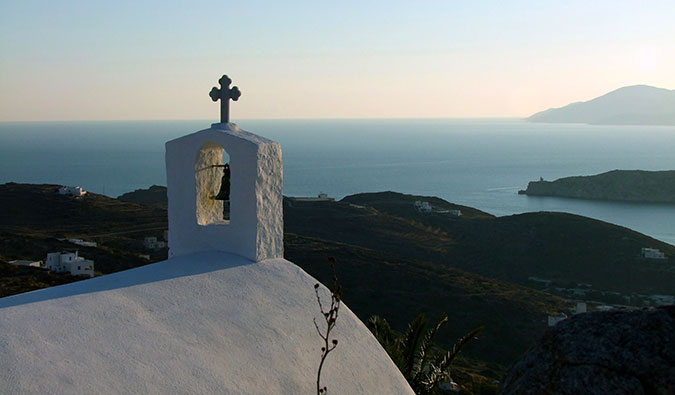
A stunning view of the island of Ios in Greece looking out of the gorgeous blue water

A stunning view of the island of Ios in Greece looking out of the gorgeous blue water
Updated: 03/15/2019 | Original Posted: 5/25/2010 (Updated with new info on visiting Ios)

03/15/2019 | Original Posted: 5/25/2010 (Updated with new info on visiting Ios)

A few weeks from now, I turn one year closer to 30. It’s a reality that isn’t sitting well with me.

Thirty. It seems so old.

At the beginning of the year, I decided I’d spend the summer in Europe, with most of my time spent on the island of Ios in Greece.

During the summer months, the island becomes a haven for young backpackers seeking to soak up the sun, water, and the suds. I knew there wouldn’t be another chance to do this pre-30. It was time to do it now before I became that “dirty old backpacker.”

But like all the best-laid plans, this one fell through. I have to return to the US in June to speak at a conference, cutting my summer trip in half. Now there will be no spending the summer in Greece enjoying my “pre-30” crisis. My trip to the Greek islands will only last only a month before I move on to Italy, Hungary, and, finally, Sweden.

So, heavy heart in hand, I arrived in Ios more than two weeks ago to stay for four nights.

I stayed for seven.

Then, leaving for Santorini, I ended up returning two days later. I missed Ios too much. I stayed for another week before I left for Paros and Mykonos.

Now I’m back on Ios.

Again.

Pushing off the rest of my travels for some more precious time on this little rock.

I often talk about what travel is and what it means. What does it mean to travel? To backpack? Is one form better than the other?

Travel doesn’t fit into a box.

It’s a lot of things.

It’s more than seeing a place or a style of travel.

But one thing that permeates all discussions about the nature of travel is that, at the end of the day, travel is about making connections.

Not only with places, but with people, too.
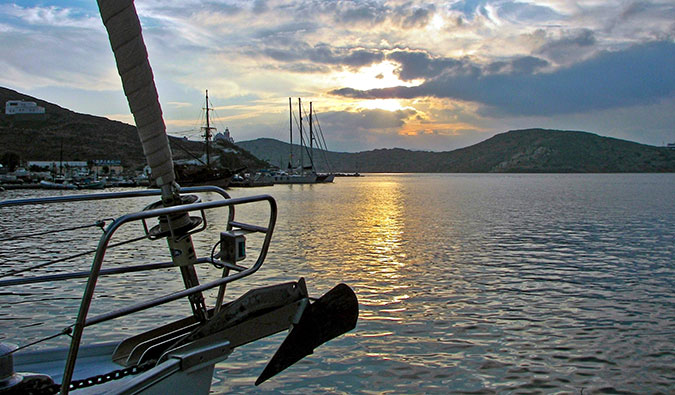
Sailing in the picturesque waters off Ios, Greece

Sailing in the picturesque waters off Ios, Greece

Ios is a rocky plot of land with a main town growing like a vine up a pointy, church-topped hill with quintessential blue and white houses, small cobblestones lanes, and tiny storefronts. The island’s wide, yellow sand beaches are lapped by beckoning azure blue water. Small clusters of houses and terraced cliffs for wine and crops branch out from the main town. The island as a whole is a haven for young backpackers seeking to soak up the sun and to party.

There are more beautiful islands in Greece. (And, really, I prefer my islands to have more palm trees, jungle, and tropical fish.)

Ios’ main draw is still the partying, beaches, and crowds. I came for that because I wanted to party a summer away in Greece, but I stayed because of the connections I made with the people here on the island.

And I’m pulled back there because of those connections.

Arriving in May that year, before the crowds, I found most of the other backpackers there were looking for work. Ios’ economy in the summer runs on backpackers working the bars and restaurants in exchange for free food, drink, and enough money for a room.

I made friends with the owners of empty bars and restaurants. George at the Greek restaurant the Nest taught me some Greek. Alex from Blue Note Bar introduced me to a variety of Greek alcohol. Many nights, Demetri and Nicos from Slammers discussed the sad state of Greek politics with me over ouzo.
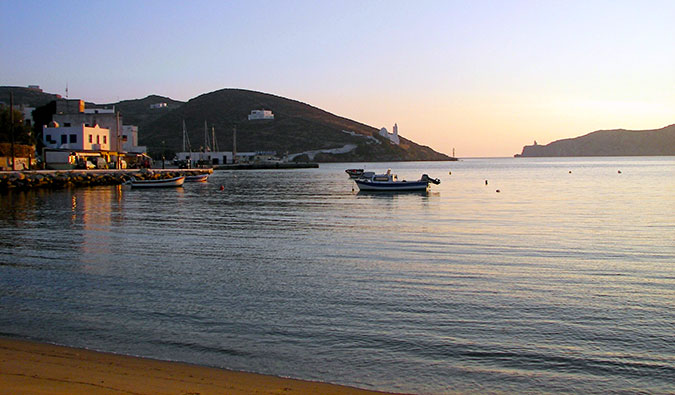
A brilliant sunset over the calm waters on Ios, Greece

A brilliant sunset over the calm waters on Ios, Greece

You meet a lot of people when you travel. Faces and names begin to blur after a while. You become friends on Facebook, but you rarely ever see each other again. I’ve met thousands of people on the road, but only a handful of people whose weddings I’ll attend and babies I’ll meet. It becomes a rare occurrence when you meet people you connect with on a deeper level.

It happened to me when I lived on the Thai island of Ko Lipe in 2006, where, four years later, all of us were having Christmas together. It happened on Haat Rin in 2007, where, two years later, I attended the wedding of my Australian friends.

It happened last year in Valencia, when three Americans, two Australians, and one Malaysian shared a dorm room for a week and clicked so well that people asked us how, when, and where we had became such good friends, given our different nationalities. “We just met three days ago,” we’d say to their astonishment.

And so again on Ios, a group of strangers came together and acted as though they’d known each other for years. Some will work the whole season on Ios. Others leave in a few weeks. Some stay half the summer. Some left before me.

But all of us impacted each other in some way, and each day I see a common update on Facebook from those who have already left: “I miss Ios.”

Most travelers stayed only a couple nights on Ios. They would party hard, sit on the beach, and, after a few days, stumble back onto the ferry, having checked Ios off their list.

My friends and I were here for the long term – them because they needed their travel plans depending on working and me because, having found a group of people I liked, saw no reason to leave. Staying put allowed us to create roots on a windy island where people blew in and out like leaves.

This was, at least temporarily, my family.

Days and nights together, we chatted little about our life back home and the memories there, and we laughed about our shared experiences. We gossiped over hookups, bickered over where to eat that night, traded book suggestions, and sparred over the politics of the Greek economic crisis.

Time is different on the road. Days feel like weeks and months like years. Two weeks on Ios felt like an eternity. When I left, people couldn’t believe I was only there for two weeks. To them, and to me, it felt much longer.

I don’t regret only spending two days on Santorini and Mykonos, though, because it gave me more time with friends on Ios. Now, I’m back and sad again I must say good-bye while they stay here.

Travel is about the people we meet more than the places we see.

And somewhere out there, other travelers are connecting and forming bonds that will last far into their futures, too. Somewhere in the world, they too are nicknaming themselves “a family” and just watching the world go by together…
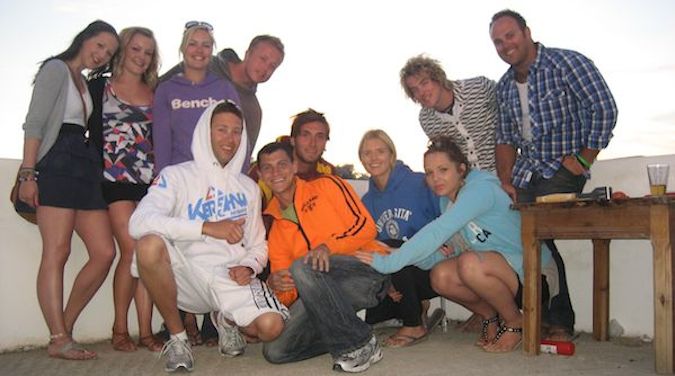
Nomadic Matt with his traveling friends on Ios, Greece

Nomadic Matt with his traveling friends on Ios, Greece

4 Tips for Visiting Ios

Accommodation
When it comes to accommodation, expect to pay at least 30 EUR per night for a private room (and even more in the high-season). This will usually include a private bathroom, AC, a TV, and a mini-fridge. On Airbnb, shared rooms usually start around 15 EUR per night while entire homes/apartments can be rented for around 40-50 EUR per night.

Food
You can find gyros (meat, cheese, sauce, onions, and tomatoes served on pita bread) and other street food for only under 5 EUR. For a budget restaurant, expect meals to cost between 10-15 EUR, including a drink. For a mid-range restaurant meal, expect to pay almost double that. If you’re on a budget and want to cook your own meals, expect to pay 40-50 EUR per week for groceries (pasta, vegetables, chicken, and other basic foods).

Transportation
To get around the island, you can take the local bus. Just keep in mind that the local bus system only runs in the summer. Tickets cost 2 EUR and runs along the island’s main road. The local bus only runs until early evening after which you’ll need to take a taxi. More common for transportation are ATVs. You can rent ATVs for about 15-40 EUR per day to get to the beaches and parts of the island further afield.

To get to Ios you’ll need to take a ferry (there is no airport here). Ios can be reached best from Naxos, Santorini, Crete, and Piraeus (which is near Athens). Expect to pay at least 30 EUR for a one-way ticket from Piraeus to Ios for a basic economy seat. The journey will take between 4-8 hours depending on which ferry you take (the high-speed ferry will cost more but is much faster).

A one-way economy ticket from Santorini to Ios will cost around 13 EUR and takes around 1 hour.

Book Your Trip to Greece: Logistical Tips and Tricks

Book Your Flight
Find a cheap flight by using Skyscanner or Momondo. They are my two favorite search engines because they search websites and airlines around the globe so you always know no stone is left unturned.

Book Your Accommodation
You can book your hostel with Hostelworld. If you want to stay somewhere other than a hostel, use Booking.com as they consistently return the cheapest rates for guesthouses and cheap hotels. I use them all the time. My favorite places to stay are:

  • Francesco’s – This family-run hostel has a pool, terrace, and gives you a free dirnk on arrival. What’s not to love?
  • Far Out Beach Club – If you’re looking for a place to party on a budget, this is it. The hostel has a pool, bar, space for camping, and a non-stop party that goes until sunrise.

Don’t Forget Travel Insurance
Travel insurance will protect you against illness, injury, theft, and cancellations. It’s comprehensive protection in case anything goes wrong. I never go on a trip without it as I’ve had to use it many times in the past. I’ve been using World Nomads for ten years. My favorite companies that offer the best service and value are:

  • World Nomads (for everyone below 70)
  • Insure My Trip (for those over 70)

Looking for the best companies to save money with?
Check out my resource page for the best companies to use when you travel! I list all the ones I use to save money when I travel – and I think will help you too!

Want More Information on Greece?
Be sure to visit our robust destination guide on Ios for even more planning tips!

Announcing My "Ten Years a Nomad" Summer Book Tour

driving down a road with tall trees hanging overheaddriving down a road with tall trees hanging overhead
Posted: 6/19/2019 | June 19th, 2019

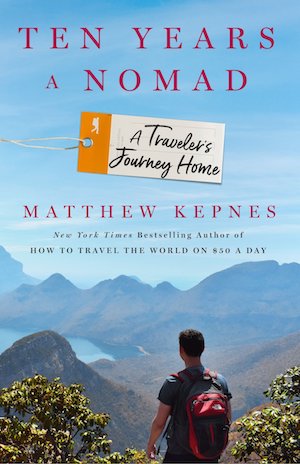
Last month, I announced the release of my next book, Ten Years a Nomad: A Traveler’s Journey Home.

It’s about how I became a traveler, my life as a backpacker, all the lessons I learned, and what those lessons mean for travelers. It features stories I’ve never told and goes deeper into my philosophy on travel than I ever have on this blog.

This book follows the “emotional” journey of a trip around the world: getting the bug, the planning, setting off, the highs, the lows, the friends, what happens when you come back — and the lessons and advice that come with all that.

And the early reviews have been pretty good!

Ten years a nomad book coverTen years a nomad book cover“In his heartfelt explanation and exploration, Matt runs through just why he’s been out there, backpacking the world for 10 years. By the end we’ve definitely realized, like Matt, how important travel is and how getting out there, on the road, can make you, me and the world a better place. It’s a great pity certain people at the very top of the world’s power pyramid never had just a little taste of the nomadic experience.” – Tony Wheeler, founder of Lonely Planet
“Throughout his ruminations on how travel affected him, Kepnes interweaves his tales of friends, girlfriends, and great loves discovered among exotic backdrops and how starting a blog (nomadicmatt.com) about his adventures altered the way he traveled. His story is one of heartbreak, self-discovery, and the constant travel itch he had to scratch in order to become the man he was supposed to be. An entertaining, quick read by a man who did what many of us only dream about.” – Kirkus Book Reviews

10 Years a Nomad book review10 Years a Nomad book review

The book comes out July 16th and I’ll be doing a book tour across the United States and Canada over the course of the summer!

If you want to join the book tour, here are our dates:

Ten Years a Nomad Book Tour

P.S. – There will be an afterparty in NYC after the initial book launch. It will be at Solas. Click here for details!

Hope to see you on the tour! It’s my first one in over four years and I’m very excited about it. It’s going to be a whirlwind!

And, as a reminder, I’m doing a pre-sale bonus so if you order the book in advance you can get free copies of my other books, one-on-one travel planning advice, free attendance at TravelCon, blogging courses, free hostel stays and flights, and more!

The packages are listed below. All you need to do to claim your bonuses is email me a copy of your receipt at matt@nomadicmatt.com.

The Basic Package (cost: $18, value: $48)
Purchase one copy of the book and get:

  • How to Build a Travel Blog ebook (value: $9.99)
  • The Ultimate Guide to Travel Hacking ebook (value: $9.99)
  • 27 Ways to Be a Master Traveler PDF (value: $5)
  • 50 Inspiring Travel Books and Movies PDF (value: $5)

***BEST VALUE*** The Tenner (cost: $182, value: $794)
Buy 10 copies of my book and get ALL THE ABOVE plus:

  • My 12 city and country guides (value: $150)
  • A signed copy of my book How to Travel the World on $50 a Day (value: $15)
  • A 15-minute planning call with me (ask me anything)! (value: $200)
  • The Business of Blogging course (value: $199)

The Bullseye (cost: $900, value: $2,493)
Buy 50 copies of my book and get ALL THE ABOVE plus:

  • One ticket to TravelCon in Boston (value: $399)
  • A 30-minute planning call with me (ask me anything)! (value: $400)

SUPER BONUS! The Centennial (cost: $1,800, value: $7,193)
Buy 100 copies of my book and get ALL THE ABOVE plus:

  • Lunch on me! I’ll come to your city and we’ll have lunch on me! (limited to those in the United States and Canada) (value: $2,000)
  • Round-trip airfare to TravelCon in Boston (from within the US and Canada) (value: $500)
  • One additional ticket to TravelCon in Boston (value: $399)

Conversely, if you’re not a blogger and don’t care about TravelCon, you’ll get four nights at any hostel in the United States and one round-trip domestic airfare.

SUPER BONUS! The Big Kahuna (cost: $4,500, value: $19,293)
Buy 250 copies of my book and get ALL THE ABOVE plus:

  • I’ll come to speak at your event for free! (value: $5,000)
  • You’ll be flown to NYC (from within the US and Canada) the book launch party, put up in a hotel for two nights, and get dinner with me! (value: $3,000)

Note: All digital bonuses will be sent when you send the receipt. Travel arrangements will be worked out between you and me and are valid for six months after purchase (i.e., you have to make a booking by then).

Order the book today, get your bonuses, and share your love of travel!


Want to Help Me Spread the Word About This Book?

I’m always looking for more opportunities to talk travel. Here’s how you can help me spread the word about the new book:

Want to interview me?
If you have a blog, podcast, vlog, or Instagram channel and want to interview me about the book and travel, let me know at matt@nomadicmatt.com using the subject line “Book Interview.” I’d love to talk with you!

Are you in the media and want to cover the book?
If you work for a major media outlet and want to interview me about the book or would like to review the book, let me know at matt@nomadicmatt.com using the subject line “Media Request.”

Know anyone that I should reach out to for promotion?
If you have suggestions on people who would love a copy of this book and would be a good fit for promoting the book, let me know in the comments, or feel to email me at matt@nomadicmatt.com with the subject line “Book Promotion Help.”

Book Your Trip: Logistical Tips and Tricks

Book Your Flight
Find a cheap flight by using Skyscanner or Momondo. They are my two favorite search engines because they search websites and airlines around the globe so you always know no stone is left unturned.

Book Your Accommodation
You can book your hostel with Hostelworld as they have the largest inventory. If you want to stay somewhere other than a hostel, use Booking.com as they consistently return the cheapest rates for guesthouses and cheap hotels. I use them all the time.

Don’t Forget Travel Insurance
Travel insurance will protect you against illness, injury, theft, and cancellations. It’s comprehensive protection in case anything goes wrong. I never go on a trip without it as I’ve had to use it many times in the past. I’ve been using World Nomads for ten years. My favorite companies that offer the best service and value are:

  • World Nomads (for everyone below 70)
  • Insure My Trip (for those over 70)

Looking for the best companies to save money with?
Check out my resource page for the best companies to use when you travel! I list all the ones I use to save money when I travel – and that will save you time and money too!

2019年8月1日星期四

Kate Middleton and Prince William Will Make Just One More Appearance This Summer (Video)

Kate Middleton, the Duchess of Cambridge, and her husband Prince William have been all over the place in the last few months. The pair has made official appearance after official appearance, including their most recent outing at Wimbledon. But now, it seems all that is over as the couple is reportedly on summer break.

According to a new report in Hello, the royal pair, along with much of the royal family, is officially on summer vacation for the months of July and August. That means we likely will not see the duo (or their adorable kids) at any official events until some time in September.

 cleanString alt

Getty Images

However, Hello explained, at least Kate and William will be making one exception on Aug. 9 to host The King's Cup sailing regatta in Cowes in support of several charities.

As for what the pair will do during their time off the palace is staying mum, however, it is safe to assume they too will be making a trip to Scotland to visit the Queen and Prince Philip at Balmoral. There, they will likely run into Prince Harry, Meghan Markle, and baby Archie too.

As Travel + Leisure previously reported, Meghan and Harry will head to Balmoral this summer too to spend a bit of time with Queen Elizabeth. There, the Queen is also reportedly planning to throw Meghan a small birthday tea party on Aug. 4.

“The Queen and Prince Philip adore the couple and, of course, their new great-grandson Archie, and they have invited them to Balmoral for a few days. It is a testament to Meghan that she has been given this invite. It’s a huge honor,” a source shared with The Sun about the reported birthday bash. “Meghan may be a Duchess who can have anything she wants but the Queen is giving her a thoughtful present,” the source added. “It’s no secret Balmoral is Her Majesty’s favorite home and that’s why this invite is so special and heartfelt.”

Hopefully, William and Kate are invited to the party too.

You Can Wear This Portable Air Conditioner Underneath Your Shirt Collar

 cleanString alt

Courtesy of Sony

As oppressive temperatures sweep the world this summer, you don’t need to abandon air conditioning once you leave the office. Sony is developing a personal “air conditioner” you can keep in a special pocket to keep you cool during the hot summer months.

The “Reon Pocket” is a wearable air conditioner controlled via a smartphone app. It slips into a pocket beneath the collar on the back of a custom dress shirt and works with the same type of technology that makes refrigerators keep their cool. Wearers can control the temperature on their phones or allow the device to self-adjust to external temperatures.

The device is apparently capable of cooling your body by up to 23 degrees Fahrenheit or heating you up 14 degrees. Sony says the device is “smaller and lighter” than a mobile phone (weighing just under three ounces), making it one of the most portable cooling devices out there.

The Reon Pocket works for 90 minutes after about two hours of charging. Enough to get you from air-conditioned place to air-conditioned place. And it’s also all-seasonal; the device can also work in the winter to heat the wearer.

The device is currently seeking crowdfunding and will likely only be available in Japan for the foreseeable future. It is expected to cost about $130. It seems as good a reason as any to book a shopping trip to Japan to pick up the clothing of the future.

2019年7月26日星期五

Malta: The Country of Half-Neglected Buildings

one of the most charming streets in malta
As I sat freezing at a café in Malta, I wondered if I had made the right decision to visit. I had come to Europe for a friend’s wedding and, not wanting to fly back right away, thought I’d make the most of it and travel somewhere new. Why not start off the new year in a new country, right?

But, see, I hate the cold.

If you want to make me sad, send me somewhere cold. I needed somewhere (relatively) warm and—since I only had a week—small. Looking over a map of Europe, Malta seemed like the best choice. It was far south, had easy flight connections to the mainland, seemed tiny, and came highly recommended by friends.

For Europe in January, it seemed liked my best bet.

But as I sat shivering in a sweater, hat, scarf, and winter coat, I realized I should have researched the weather a bit more before I came. Sure, I happened to visit during an unseasonable cold snap (“It’s never like this!” people would say), but that didn’t make me feel any better.

I don’t like exploring places in the cold, which is why you hardly ever see “winter travel” tips on this site. Spring, summer, fall — those are my seasons! I don’t like carrying big bulk clothes, I don’t like sightseeing while freezing.  (Nor did the weather appeal to my friend who had come from Stockholm for warmer weather.)

beautiful (yet cold) beach in malta
Yet neither of us had been to Malta before. Both workaholics, we really wanted to put our phones away, turn the computers off, and just enjoy the destination. It had been a long time since either of us had done that.

So we had to make the most of the (terrible) weather. Otherwise, we’d end up inside, back on our computers, and that wasn’t an option!

In the wintertime, you can visit all of Malta in about a week since this place is really a summer beach destinations, and the weather in the winter is definitely not beach weather. (In the summer, you’ll need two weeks to account for beach days.)

My friend and I had grand plans to see everything possible. We’d be up by 7am and out the door by 8 but, after the second day of hitting snooze, we gave up those plans. While I missed a few museums I wanted to see, didn’t wander Gozo’s citadel as much as I wanted (the day we went it was 4°C with piercing wind and rain), and missed the underground ruins at Hal Saflieni Hypogeum, the Tarxien Temples, the underground WWII tunnel tour in Valetta, the Popeye Village, and the famous fish market.

a spectacular city view in malta
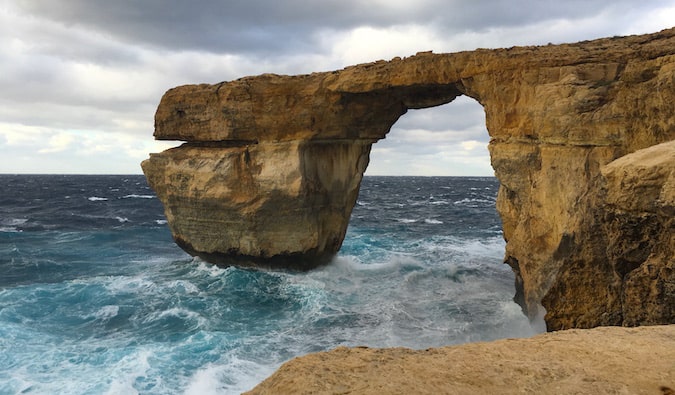
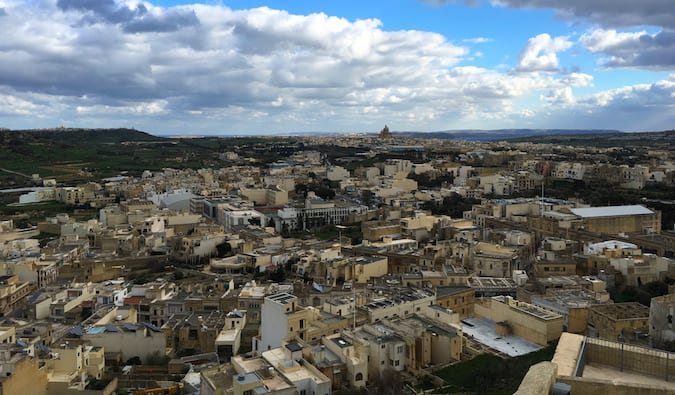
However, while we moved slowly and my to-do list never quite got completed, I regret nothing. Malta cast a spell on me. I found the locals funny, charismatic, and jovial. They always had a good story to share. And the landscape – wow! As you drive out of the towns just that seemed to form one giant megacity, there were vineyards waiting for spring, rocky, rolling hills, ancient villages, sheer cliffs, churches rising high into the sky, and sharp cliffs with sweeping views of the deep blue Mediterranean.

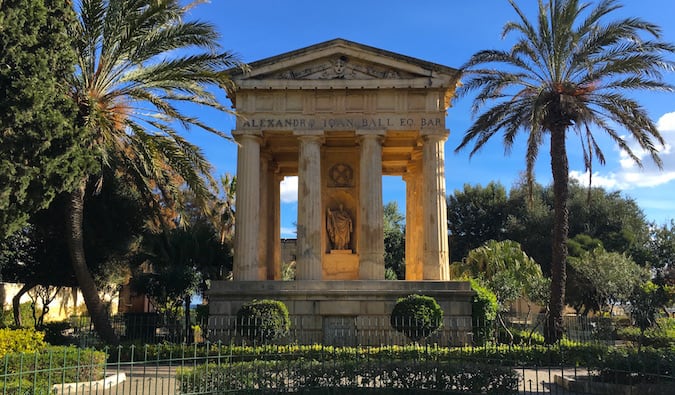
In terms of sightseeing, the catacombs of Mdina were the most interesting, with their maze of hallways and chambers (though not enough skeletons), and the nearby ancient Roman house, with its intact frescos, was a highlight for me. In Valletta, the capital, I sat watching the harbor from the serene Upper Barrak Gardens (where there are fewer people than the lower gardens) and attended mass at the famous St. Stephen’s Church. And I imagined sitting in the main square enjoying the summer sun while having a glass of wine.

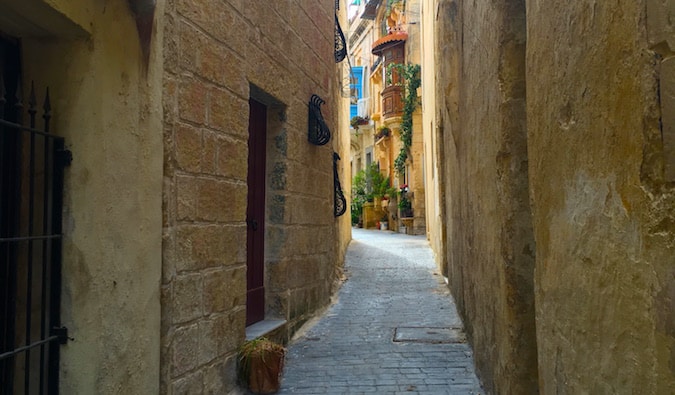
However, what I found most striking about the country were the towns that seem to teeter on decay. Throughout the country, they are filled with centuries-old buildings showing a mix of Arabic and Italian influences and picturesque balconies that jutted out so one could spy up and down the street. The cobblestone streets, clearly built before even Europe’s small cars were around, beckon you to explore their turns. In Malta, they name their houses, and I found myself wandering the streets looking at the random collection of names (my Airbnb’s was “The Devon”).

a quaint alley in malta
But as I stood wide-eyed, with one ear listening for a car sneaking up behind me, I couldn’t help but notice that it often felt as if Malta was only half-loved. For all the renovated houses and mansions brought back to their historic glory, there were more decrepit and boarded-up ones, sometimes taking up whole blocks. For every beautiful garden and restored square, there seemed to be an equally run-down one. It was as if half the island quickly left and the other half, busy with preservation, was just waiting for them to come back to fix the rest up.

For all that is written about the island’s natural beauty, wonderful beaches, and majestic capital, what I’ll remember most of Malta was this stark contrast. It was like a mystery yearning to be solved. Why don’t people just fix it up? Why does the government let these safety hazards stay up? Who owned these buildings? Some looked like they had been abandoned for decades. Why rebuild a beautiful house only to have the own next door look like it was a crack den? It all seemed so confusing and haphazard. No one could give me a good answer.

My orderly, OCD mind couldn’t wrap its head around it. (I’d be a terrible Southern European!)

historic monument in malta
My visit to Malta was like watching the preview of a good movie. When it’s over, you can’t wait for the whole movie.

But I don’t know if I’ll ever get back for the feature presentation. There’s so much to see in the world that I have this gut feeling it will be a long time before I get back to Malta. But, even if I never get back, I enjoyed the preview as well as the fact that I finally turned off my computer and just enjoyed where I was without distractions.

It’d been a long time since I last did that.

9 Summer Reads to Satiate Your Wanderlust

A Year in Provence book cover imageAt the start of the New Year, I vowed to read one book a week, and I’m proud to say I’m accomplishing that goal. I even started a book club to keep me focused (I mean, you can’t recommend books if you don’t read them, right?).

Thanks to my grandmother, I’ve always been addicted to reading (Sadly, not everyone is: 28% of people haven’t read a book in the last year!!). I feel like I might be the only person who read the unabridged version of Les Miserables when he was thirteen! After years of sporadic reading, digesting so many books this year has nourished my long book-starved soul.

And, with the summer travel season in full swing, I wanted to share my recent favorite reads. A good book makes long flights go by quicker.
 

A Year in Provence, by Peter Mayle

A Year in Provence book cover image I’d heard of this book before but never bothered to pick it up until multiple readers recommended it to me. I’m glad I finally read it — it was incredible. An autobiographical novel following the author Peter Mayle’s year living in Provence, it details the struggles and joys of adapting to a new culture. I loved the interesting characters he meets and his description of the slow pace of life in France (which was a clear departure from his previous life in England). As a Francophile, this book makes me want to move to France even more. Wonderfully and wistfully written, I can understand why it continues to be such a classic.
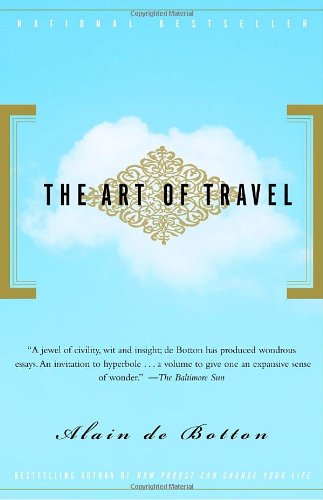
 

The Art of Travel, by Alain De Botton

The Art of Travel book cover imageAnother reader recommendation, this book looks at the why of travel. What compels us to see the world? From the anticipation of a trip, the act of getting there, being there, and the return, Alain De Botton discusses it all. Though dry in parts, this is one of the best written and most thoughtful travel books I’ve read in a really long time. The author’s use of language and imagery is incredibly sophisticated, and his discussions of beauty, travel, and the mundane are equally thought-provoking. I highly, highly recommend reading this book.
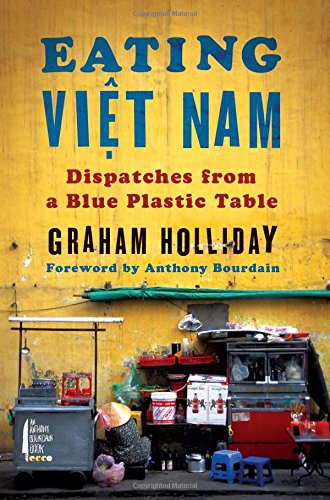
 

Eating Viet Nam: Dispatches from a Blue Plastic Table, by Graham Holliday

Eating Viet Nam book cover imageWhile I don’t love Vietnam (I didn’t have a good experience there), I do love Vietnamese food… a lot! This is an awesome book about the history and culture behind the country’s street cuisine. Author Graham Holliday has lived in Vietnam a long time, and he sure knows his food. In this engrossing and hunger-inducing book, you’ll wander with him through the backstreets of Vietnam, learning about the street food you see all over the country and, in doing so, begin to understand the country and its people through their first love.
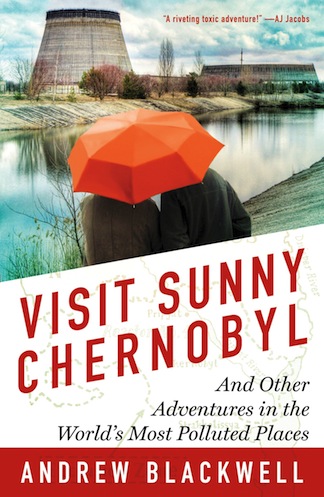
Visit Sunny Chernobyl, by Andrew Blackwell

Visit Sunny Chernobyl book cover imageWhat’s it like to visit the most polluted places on the planet? Inspired by a trip to Kanpur, India (considered one of the most polluted towns in the country), Andrew Blackwell set off to visit oil towns, coal mines, the Pacific garbage patch, and, of course, Chernobyl. In many ways, I found this to be the anti-travel book. It didn’t inspire me to go anywhere, but it did pique my intellectual curiosity about the places that remain hidden from everyday view. Blackwell’s conversational writing style, self-deprecating jokes, and sarcasm make this book an easy and fun read.

 

Travels with Charley in Search of America, by John Steinbeck

Travels with Charley in Search of America book cover imageJohn Steinbeck’s famous travel book… that he most likely made up! Now commonly believed that Steinbeck fictionalized most of the adventures in his book, the writing is so enjoyable that it’s still a worthwhile read. Set in 1960, it tells of Steinbeck’s travels across the US with his dog Charley as they meet colorful, folksy characters along the way. This book is about that cool road trip we all want to take and the people we wish to meet. It’s such a fun read that you easily overlook the fact that many of the stories are embellished.
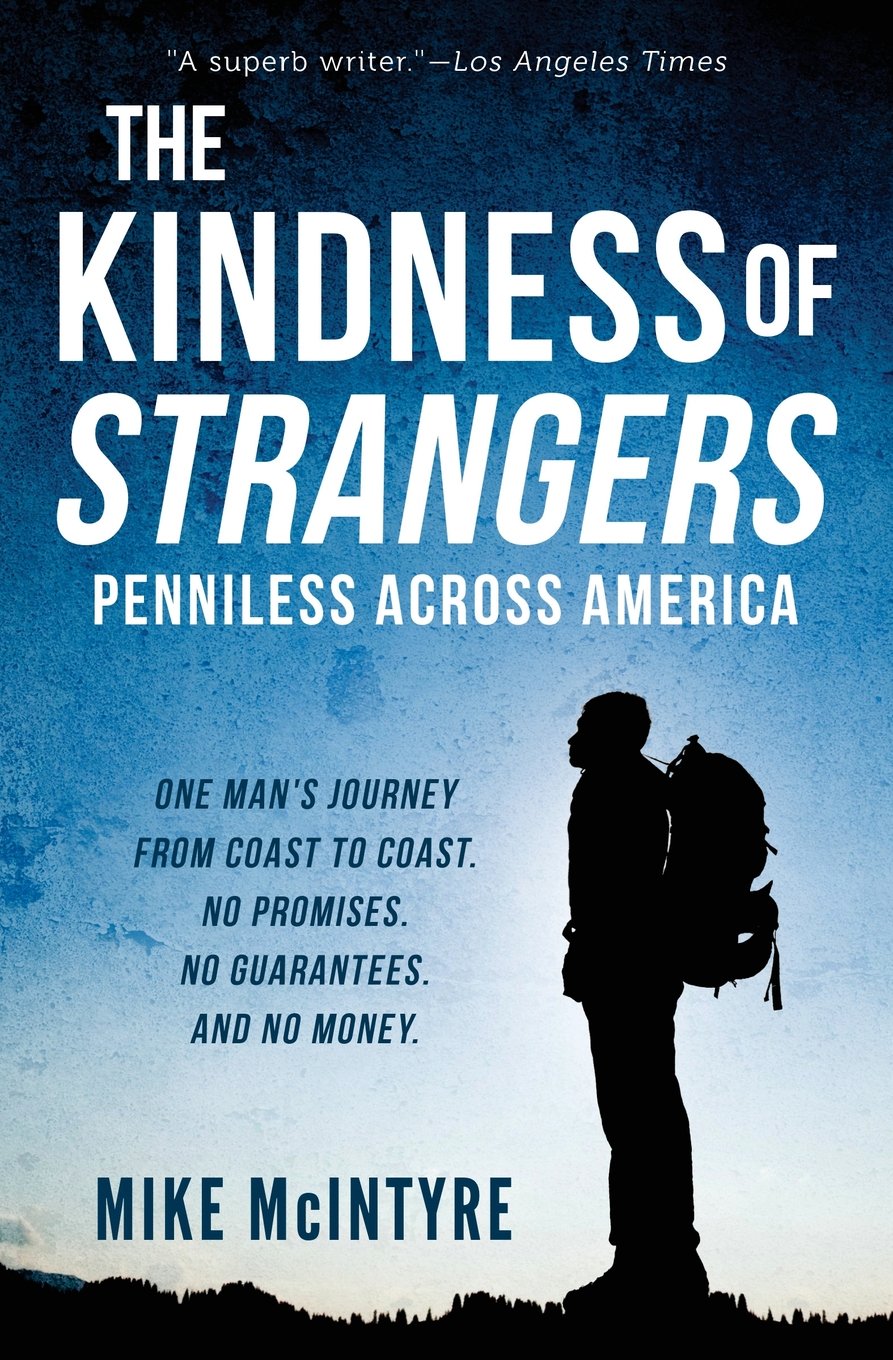
 

The Kindness of Strangers, by Mike McIntyre

The Kindness of Strangers: Penniless Across America book cover imageMike McIntyre set off to travel across America with nothing except the clothes on his back. His goal? To get from San Francisco to Cape Fear with no money, relying solely on the kindness of strangers. Along the way he encountered all kinds of people who shattered the cynical journalist inside him. Having hitchhiked in many countries and been in situations where I needed help from strangers, I found this book (re-released last year on its 20th anniversary) a nice reminder that people the world over are generally good, kind souls.

And, in case you want some non-travel books, these were good too:

  • Titan: The Life of John D. Rockefeller, Sr. — This biography of John D. Rockefeller by Ron Chernow is long and dense, but it gives you a wonderful insight into the richest man to ever live and how Standard Oil and his subsequent philanthropy changed the world.
  • The 7 Habits of Highly Effective People — A classic book by Stephen Covey on how to organize your time and priorities to lead a better, more thoughtful life. I can’t recommend this book enough.
  • Empire of Cotton: A Global History — Sven Beckert’s interesting and detailed look at the history of cotton and how it shaped the world.

So there you have it! Nine books to keep you well-read and inspired this summer! I’ll do a post like this every so often, as I think books are wonderful source of wanderlust (and personal growth).

If you are looking for other books to read, join the free community book club. Once a month, you’ll receive a list of five books that other community members and I have read and enjoyed. So, if you want reading suggestions, just sign up below. Once a month you’ll get a list of suggested books based on what I read and loved that month.

Success! Now check your email to confirm your subscription.

P.S. – If you have any book suggestions, leave them in the comments. I always need more to read.

P.P.S. – Skip John Waters’s Carsick. It’s a very dull read.

2019年7月25日星期四

The Best Months to Visit Iceland (Video)

When Iceland's economy buckled under the pressure of a crumbling currency back in 2008, the island instantly became accessible to travelers with a more broad spectrum of budgets.

Now, 10 years later, the nation has experienced an eruption of tourism, as travelers become increasingly exposed to the ethereal — and highly Instagrammable — landscapes of ancient glaciers and rugged fjords.

Prices have duly exploded as well, and the mirage of the inexpensive Scandinavian vacation is no more.

Finding that perfect price-value ratio is nothing short of a feat when traveling to Iceland. And travelers should also be aware that what you do and see on your Iceland trip will be almost entirely determined by what time of year you visit. So don't buy those flights before first consulting this comprehensive guide. 

The Best Months to Visit Iceland

The Best Weather in Iceland

The summer months — July and August — are Iceland’s warmest, and have long been the most popular time to visit. And June, with its 24 hours of daylight, sees just about as many tourists as the peak of summer.

But even during this season, bad weather (rain and intense winds) is not uncommon. The island’s fickle climate often means you can experience all four seasons in a single day.

Iceland can stay relatively warm through the first week of October, so planning a September visit can be ideal (most of the crowds have thinned as children return to school). May, too, provides ample daylight for sightseeing and warmer temps. But if you’re keen on exploring some of the more remote hills and fjords, it may not be the best time to visit, as some roads remain closed while they thaw from winter’s snowy cover. For serious hikers, the best time to visit Iceland is the summer, when all the mountain roads are open and all of the most famous trails are accessible.

The Best Time to See Whales in Iceland

According to Icelandic marine biologist Dr. Edda Elísabet Magnúsdóttir, the peak months to whale watch in Iceland are June and July. In the north of Iceland, you’ll have a wider window to enjoy visits from humpbacks, minkes, and dolphins, which ply the Atlantic from May to August; a few humpbacks even stick around until the end of the year. Blue whales pass through in June, too.

The summer months in Reykjavík see promising numbers of minke whales and dolphins, while orcas congregate in West Iceland along the Snaefellsnes peninsula during the first half of the year.

The Best Times to Visit the Hot Springs

Iceland’s hot water baths are one of the most essential components of the local culture, both for social as well as wellness benefits. Reykjavík’s public pools are open all year round (and are especially invigorating in the dead of winter), but the island also has hundreds of hidden “hot pots” that tap directly into the geothermal activity under its lava-ridden surface.

Expert Icelandic mountaineer and co-founder of Midgard Adventure, Sigurdur Bjarni Sveinsson, offers the following advice for hot water hunters: “Check them out during the month of September or, even better, the first half of October when they’re all still accessible by mountain road, but the crowds of tourists have significantly died down.”

To travelers who want to visit the most famous geothermal spa, the best time to visit the Blue Lagoon is during the off and shoulder season, when crowds are thinner (hundreds of thousands of people flock here every year). 

The Best Time to Visit Iceland for Northern Lights

You’ll need three essential factors to see the Aurora Borealis: darkness, clear conditions, and a surge in solar activity. Viewings are often elusive, like seeing curtains of neon wind, especially when forecasts predicting roaring flares are marred by transient clouds. To avoid disappointment, travelers should never plan their trip to Iceland solely for the Northern Lights, because the island’s weather is too capricious (statistically, there are more clear nights in Yellowknife, Canada, for example.) The best way to optimize your chances of seeing the Northern Lights in Iceland is by visiting from mid-October through March, when you have extended hours of nighttime, and getting out into the countryside to reduce the ambient light pollution.

The Worst Times to Visit Iceland

The Most Crowded Times to Visit Iceland

Sadly (but logically), the warmest months of the year are easily the worst time to visit if you’re hoping to avoid the onslaught of tourists. The month of July and the first week of August see the highest number of travelers, with big-ticket attractions like the Blue Lagoon, the Golden Circle, the South Coast, and Jökulsárlón being particularly overrun. If you are planning to visit during that time, consider exploring more remote corners of the island like the Westfjords or East Iceland, which have their own cache of fjords, vistas, and waterfalls that are just as impressive as the natural attractions surrounding the capital — if not more.

The Cheapest Times to Visit Iceland

When tourism was an emerging industry in Iceland, there was a sharp divide between the summer months and the rest of the year. But now that the nation has secured its spot as an It destination, winter accommodation discounts are mostly limited to the darkest and coldest months of the year: November through February.

Flights can soar upwards of $1,000 during the peak travel months, so it’s best to keep an eye on flight deals and flash sales from Icelandair. During the off and shoulder seasons, tickets can be purchased for $200 round-trip from the United States.

Once you arrive in Iceland, however, there are very few discounts to be had.

The Best Times to Visit Australia for Perfect Weather and Cheap Flights (Video)

Whether you’re seeking sun or avoiding sharks, follow this guide to plan a dream trip to the land down under.

Australia is one of the world’s biggest countries, so when to go depends entirely on where you’re going. From the world-famous Great Barrier Reef, to the vineyards scattered across the country, to Sydney’s sprawling beaches, Australia has something to offer every type of traveler.

 cleanString alt

Getty Images

Related: 9 of the Best Places to Stay in South Australia

Here's the best time of year to see all of Australia's greatest sights and attractions.

The Best Months to Visit Australia

Seasons in Australia are opposite to those in the Northern Hemisphere, with summer from December through February, and winter from June through August. The exact type of weather you'll experience depends largely on the region.

Darwin, in the Northern Territory, sees temperatures in the high 70s during the winter and can have no rainfall at all, but summers are extremely hot, with serious downpours.

In southern Australia, including Adelaide and Melbourne, summer temperatures often hover in the low 70s, and winters are cool. Pack a few sweaters as well as pieces for warmer weather, no matter the time of year. Kangaroo Island, just southeast of Adelaide, shares a similar climate. Visit in January or February for warm beach weather — and to catch baby ‘roos hopping around.

The Best Times to Visit the East Coast

Australia’s East Coast is usually considered the stretch from Cairns, in the north, to Melbourne, in the south, and is the most convenient area to get to from the United States. It’s also incredibly vast — travelers could easily spend more than 40 hours driving top to bottom, with no traffic and no stops, so the weather and scenery vary.

The Best Times to Visit the Great Barrier Reef

Up north, the Great Barrier Reef tends to be warm year-round, and in the summer temperatures can rise to nearly 90 degrees, with plenty of tropical rain. Here, wet season comes in the summer and spring, which slows the stream of tourists. While this may not be the ideal time to visit Australia's famous reefs for weather, it's preferable for travelers interested in avoiding crowds.

The Best Times to Visit the Gold Coast

About an hour’s drive from Brisbane is the Gold Coast, and it's known for having beautiful weather most of the year. (A particularly popular Gold Coast beach destination is Surfers Paradise.) More than 500 miles south of the Gold Coast is Sydney, a cultural center famous for beautiful beaches including Coogee, Manly, and Bondi. Temperatures in the winter are slightly chilly, with some rain. If a beach holiday is on your agenda, summer is perfect, as temperatures are warm. But if you prefer a more active vacation, spring and autumn are ideal.

The Best Times to Visit South Australia

Don’t confuse South Australia with southern Australia: the former is one of Australia’s six states. Adelaide, the capital, definitely earns less attention than bigger cities like Sydney and Melbourne, but it’s a perfect jumping off point for the multitude of vineyards nearby. Most of this state is actually considered “outback” — i.e. remote. Highlights include the underground opal mining town, Coober Pedy, and a road trip along the stretch of highway through Nullarbor National Park.

If you’re headed into the outback, consider that temperatures can rise in the summer, becoming uncomfortable and potentially unsafe. In Nullarbor, the winter can be the best time — July and August are peak whale season. As for Adelaide and the surrounding area, you’re safe year-round when it comes to weather. Winter temperatures don’t drop tend to drop below about 45 degrees, and in the autumn and spring, they can be as warm as the low 70s. In summer, they don’t usually rise past the low 80s, although heat waves aren’t unheard of.

The Best Times to Visit Australia’s Beaches

From Sydney’s Bondi Beach, with its iconic pool set just above the sea, to the bright, white sand and turquoise waters of the Whitsundays Islands, Australian beaches are hard to beat. The best way to decide which to visit? Follow the weather.

It’s important to note that just because there’s a beach doesn’t mean you can go swimming. Some places have saltwater crocodiles, box jellyfish, or other creepy ocean critters. Pay attention to signage and ask locals if you have any doubts.

Still, don’t let a fear of sharks factor into your plans. Rodd Stapley, Shark Expert for Taronga Zoo, told Travel + Leisure the safest season to avoid sharks can vary each year due to changes in the environment. To minimize risks, Stapley recommends swimming in ocean pools or netted beaches, and between lifeguard flags.

A bigger risk to swimmers and even waders at Australian beaches are riptides, which are common here. Learn the signs, including dark water and fewer waves breaking. Only swim between the flags on lifeguarded beaches, and if you do get caught in a rip, swim parallel to the shoreline to get out of it.

The Best Months to Visit Australia's Wine Country

From Hunter Valley, in New South Wales, to Swan Valley, slightly north of Perth, there are more than 60 wine regions scattered across the country. It’s easy to find good wine no matter the time of year, but if you’re trying to make Pinots and Sauvignons the main event, many regions hold wine festivals. Late autumn is a popular time for harvest festivals, so plan to visit in April, May, or early June.

Related: The Best Wine Tours in South Australia

If you’re hoping to pack as many vineyards as possible into your stay, head to South Australia. Almost one third of the country’s wine regions are here, and there are more than 200 cellar doors where you can try them. Within two hours drive of Adelaide, try vineyards in Barossa, McLaren Vale, Clare Valley or Adelaide Hills. Because South Australia’s weather is fairly mild, there isn’t a bad time to visit.

If you’re looking for sunny strolls through the vineyard and don’t mind high temperatures, go in summer. For people who prefer pleasant warmth to hot heat, spring and autumn have beautiful weather, and if the idea of getting cozy near an open fire with a glass of shiraz appeals, don’t be put off visiting in winter. One caveat: June is the wettest month (though Adelaide is the least rainy and least humid of the Australian capitals).

The Worst Times to Visit Australia

Generally, it’s best to avoid the south’s chilly winters and the far north’s hot, wet summers.

But crowds are also a consideration. Students get a break from mid-December until late January (or even early February), which means packed beaches and more expensive domestic airfare. Australia is a popular backpacker destination, so tourist favorites tend to be busy anyway, but book your trip in late spring or early autumn to strike a balance between great weather and manageable crowds.

The Cheapest Times to Visit Australia

It has to be said: there’s no truly cheap time to visit the Antipodes. December and January tend to be most expensive, likely due to holiday travel and the prime summer weather. According to data collected by Skyscanner over the past two years, the cheapest months to travel to Sydney and Melbourne from New York City are September and October, respectively, and the cheapest month to travel to Melbourne and Sydney from LAX is November.

If you have flexibility on timing, plan well in advance to find the best deals. If you have less flexibility on schedule but more on destination, try searching a few cities internally and looking at local budget airlines, like Jetstar, to get around once you’re in Australia.

How to Keep Summer Going Into September

While many people in the United States say goodbye to summer after Labor Day, don't panic. If you feel like the season has passed you by in a blur of subway delays and almost-going-to-the-beach days that turned into actually-just-watching-Netflix days, it's not too late.

Technically, summer ends September 21, so there's plenty of time left for exploring local beaches, hiking in a National Park, or just reading that novel you've been meaning to get around to.

September is the perfect time to live out the rest of your summer fantasies, as many of the school vacation crowds have disappeared, and both hotels as well as airlines are more likely to be offering deals.

It's also a great opportunity to start planning travel for shoulder season (the few months between peak seasons in any given destination when prices go down and travelers can score big). So why not head to Cape Cod for the fall solstice, or book a trip to Vermont before all of the foliage-lovers take over most of New England?

Because summer definitely isn't over just yet.

How to Travel Better: A T+L Master Class

It's not January, but that doesn't mean you can't make a resolution — to be a smarter traveler.

And there's no better time to commit to improving your travel skills than right after summer vacation: Think back on the trips you took — or didn't take — this summer. Did you get a great deal on flights? Pay too much for a hotel? Did you avoid the crowds? What could have been better, if you did it all again?

Related: 'Operation Vacation' Exclusive Travel Deals and Discounts

Because every traveler has room to improve their travel skills, Travel + Leisure has put together a resource that can be your definitive source for traveling smarter.

This is T+L's travel master class, where you'll find insider tips and expert guidance. So if you want to know how to get the cheapest airfare, how to save on a last-minute hotel, and how to find the perfect travel shoe, you're in the right place.

Bookmark this page. You're going to need it.

What to Pack for a Stylish 4th of July Getaway

The 4th of July is the pinnacle of summer, and there’s no better way to celebrate it than with a weekend getaway. From watching fireworks after a day at the beach to picnicking in the park and running through sprinklers, there is no wrong way to spend the holiday. But one thing’s for sure—you’re going to want to pack a stellar warm weather wardrobe (along with a few other summer essentials).

We take our cues from Carolyn Bessette-Kennedy, whose style was always classic but somehow managed to seem totally modern at the same time. The clean lines and minimal silhouettes she loved are ideal for summer dressing, and she showed how a simple T-shirt or button-down and jeans can look effortlessly chic.

So what are our preferred essentials for the holiday weekend that channel our style icon? We went for pieces that are easy to pack, lightweight and cool for mid-day, when the sun is at its peak (as well as extras, like a hat and sun screen—at least 30 SPF—to maintain a Carolyn-like porcelain glow without getting burned).  

We also chose things you can layer, to keep warm while you wait for the fireworks to start once the sun goes down. And of course you can’t forget to bring along gear to get you through the rest of the weekend, like a picnic basket, speakers, and a towel.

No matter where you’re going to celebrate Independence Day, putting together your long weekend looks can be simple (and give you the classic American look that Carolyn Bessette-Kennedy pulled off so well), by using our summer packing guide. Read on to view our top picks. Happy 4th of July!