显示标签为“island”的博文。显示所有博文

2019年9月3日星期二

17 Things to See and Do in Taiwan (Updated 2019)

The skyline of Taipei in Taiwan with nature in the foregroundThe skyline of Taipei in Taiwan with nature in the foreground
Posted: 9/3/2019 | September 3rd, 2019

I used to live in Taiwan for a few months as an English teacher. I loved the time there and have always felt the country was really under appreciated. So, in this is a guest post by Carrie Kellenberger from My Several Worlds and an expat living in Taiwan for ten years, she lists out all the amazing things you should see and do there.

Every country in Asia is beautiful, but Taiwan is special for many reasons. The people are warm and hospitable. In March 2019, Taiwan was listed as the happiest place in East Asia.

While it might be a small island, you would be amazed at the never-ending variety of sights and fun things to do here. With over a hundred mountain peaks above 3,000 meters, over a hundred hot springs scattered around the island, both golden and black-sand beaches, nine national parks, world-class museums, glittering skyscrapers, stunning temples, and a huge number of night markets that are second to none, Taiwan has something that everyone can enjoy.

To this day, nearly 14 years after I moved here, I still think Taiwan is one of Asia’s best-kept travel destination.

Here are some of the best ways to spend your time in Taiwan:

1. Eat, Eat Eat!
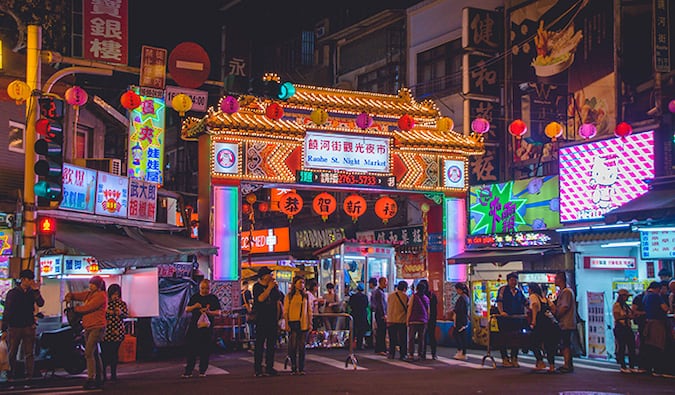
A busy market at night in TaiwanA busy market at night in Taiwan
The national pastime in Taiwan is eating. Taiwanese, both adults and children, are very work and study oriented, so their lifestyles demand healthy food that is available on the go. Moreover, there is always an abundance of fruits and vegetables, so visiting a local market can be a delight when you find out how cheap it is to eat fresh food.

As a result, Taiwan has become an epicurean’s playground. The food scene is an international smorgasbord of culinary delights, for every budget and almost every diet.

Night Markets
While there are five-star international restaurants of every variety throughout the country, the night markets are where the real gastronomes go. They promise to keep your belly full while your wallet remains relatively unscathed.

There are over 30 night markets in Taipei, New Taipei, and Keelung (and over 70 night markets across Taiwan). If you’re not sure which one to choose, visit this list of night markets in Taiwan and take your pick. My personal favorites are Shilin, Keelung, and Roahe Street in Taipei.

Here are a few things you should try:

  • Xiao long bao, also known as soup dumplings, a favorite staple food here. They are made out of a thin pastry folded into a type of bag that is then stuffed full with a meat-and-vegetable mixture and a tiny amount of soup, then garnished with raw ginger and soy sauce. Biting into one of these is a flavor explosion in your mouth. Plenty of street vendors at night markets offer fresh xiao long bao for around $2 USD for a basket of 10-12. There is really no reason not to try them. I’ve yet to meet a visitor to Taiwan who hasn’t loved their xiao long bao experience. I promise you will not be disappointed.
  • Oyster vermicelli
  • Oyster omelets
  • Beef noodle soup
  • Deep-fried chicken
  • Tian bu la (a type of fish cake fried with coriander with a dash of pepper and spice)
  • Sweet Taiwanese sausage or BBQ on a stick
  • Stinky tofu
  • “Coffin bread” (a tasty bread bowl shaped like a coffin)
  • Pig’s blood cake (It’s made from pig’s blood, sticky rice and soy broth and tastes much better than it sounds, I promise!)
  • Shaved ice
  • Zhen zhu nai cha (Taiwanese bubble tea)
  • Taiwan Beer (it’s the most popular local beer)

No matter what you decide on, you’re sure to have a great meal at a low cost while experiencing Taiwanese culture at its very best. You’ll be amazed at what you can buy for dinner for just $5 USD! You’ll definitely find some things that you hate, but you’ll also find things that you’ll love. It’s all part of the experience, right?

2. Visit a Taiwanese Teahouse
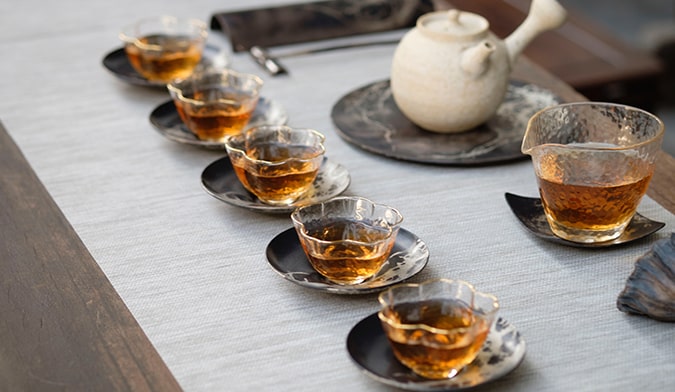
a tea house in Taiwan with a teapot ready to pour into cupsa tea house in Taiwan with a teapot ready to pour into cups

Tea culture in Taiwan is wonderful, and there are many options for tea lovers.

  • Maokong Gondola – This gondola will whisk you four kilometers to a mountain peak in a glass-bottomed cable car, from which you can view the tea plantations built into the side of the mountain as you zoom up. You can catch it at the Taipei Zoo MRT station; a ride costs 120 NT ($4 USD) each way. Once you’re at the top, there are several winding paths for a pleasant mountaintop stroll and a great selection of teahouses to choose from when you’re ready to enjoy a cup of fresh mountain tea.
  • Jiufen – If you’re heading out of Taipei, Jiufen is one of Taiwan’s most popular tourist destinations, owing to its appearance in the Studio Ghibli film Spirited Away. This seaside mountain village offers some terrific shopping opportunities, as well as all the different kinds of foods you see in the movie. It’s one of my favorite places, because it is also home to some beautiful teahouses in the most glorious setting. Imagine sitting at the top of a mountain, looking out over the ocean in the comfort of a traditional tea house. It is truly a magical experience, especially if you can get there for sunset. Go on a weekday to avoid the large weekend crowds.
  • Jwu Jiu Teahouse – If you make it as far south as Chiayi, be sure to find Jwu Jiu Teahouse, a hidden gem that is like taking a step back into the past. Jwu Jiu is a traditional wooden teahouse set above enormous stone ponds filled with hundreds of giant, brightly colored koi. Feed the fish while sipping on your tea, and enjoy some traditional dim sum in the loveliest setting you’ve ever seen. The grounds belong to a local family, and the teahouse uses a well that is over a century old, in which the water still runs deep and pure. The owner has kept most of the original structures and bricks, plus a hundred-year-old Osmanthus tree, which is associated with many traditions in China and Taiwan. If you’re a history buff, you’ll enjoy the teahouse’s long history, displayed with pride and obvious care.

3. Check out the Northern Coastline
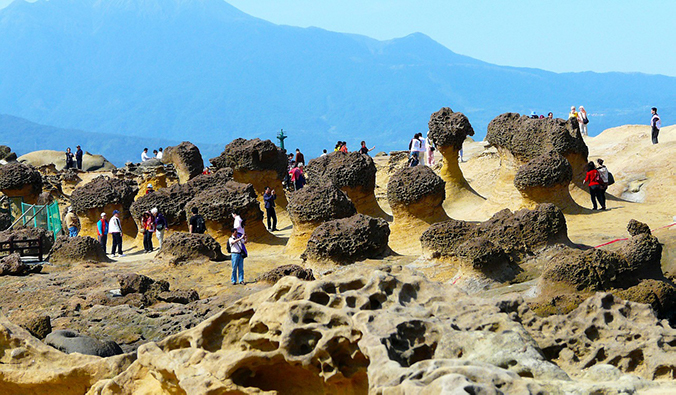
the lunar-like landscape of Yehliu Geopark, Taiwanthe lunar-like landscape of Yehliu Geopark, Taiwan
Head to the coast for some incredible lunar-like landscapes at Yehliu Geopark. There are some unique, otherworldly rock formations, including one that looks like Queen Elizabeth (though it took over 4,000 years to form) that are a popular tourist attraction. Try to get there early to beat the crowds.

4. Hit the Beaches

beautiful Taiwan coastline in the northbeautiful Taiwan coastline in the north
The beaches of Kenting on the southern tip of the island offer fun in the sun. White Sand Bay is the most popular and a great place to soak up the sun, swim, snorkel, or even go diving (just keep an eye out for jellyfish!). Other great beaches are South Bay and Little Bali Bay.

5. Soak in the Hot Springs
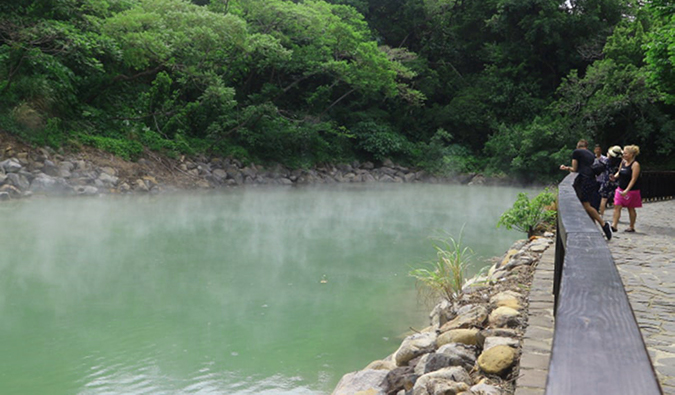
the Beitou Hot Springs just outside Taipei, Taiwanthe Beitou Hot Springs just outside Taipei, Taiwan
Taipei has its very own active volcano in its backyard, and because of the volcanic activity in the area, Beitou Hot Springs enjoys a steady stream of visitors and locals who love to bathe in its healthy waters. Prices start around 40 NT ($1.30 USD) per person for a soak in the hot springs, making it a very affordable choice for anyone looking for some R&R.

6. Go Island Hopping
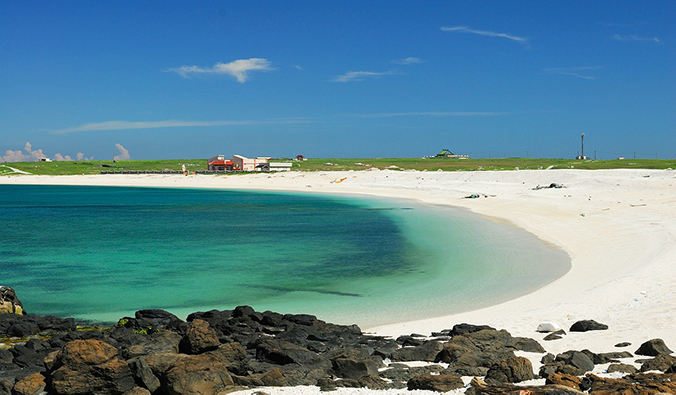
a beautiful sandy beach on Penghu Island, Taiwana beautiful sandy beach on Penghu Island, Taiwan
The beautiful islands of Penghu just off Taiwan’s western coastline will delight your sense of wanderlust and are especially well known for their golden beaches. This island archipelago has islands that are all distinct.

Boats will drop you off at one island for a few hours and then take you to the next one, so you can literally go from snorkeling to observing sea turtles to wandering through traditional aboriginal villages made out of coral in a single day.

7. See Old Taiwan
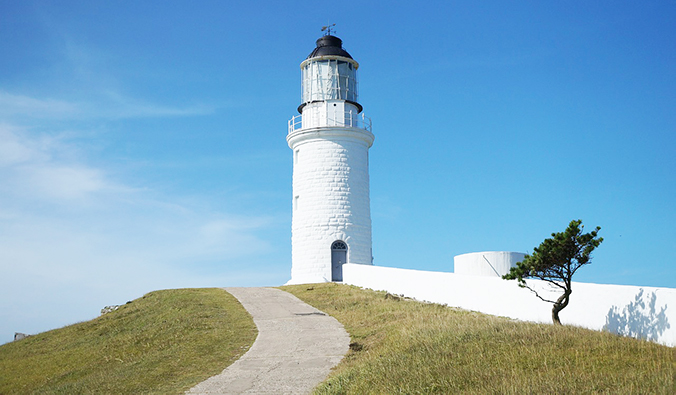
a lighthouse on Matsu Island, Taiwana lighthouse on Matsu Island, Taiwan
Two groups of islands that make up the Kinmen Archipelago off the west coast of Taiwan, just a couple miles from mainland China — and they are old Taiwan at its best. Here you’ll be able to see some traditional architecture, and there are also insightful museums that highlight the ongoing tensions between the People’s Republic and Taiwan.

8. Get Off the Beaten Track on Orchid Island and Green Island

getting off the beaten path on the rugged Orchid Island, Taiwangetting off the beaten path on the rugged Orchid Island, Taiwan
Located just off the southeastern coast, these lush islands are a treat to visit. Here you’ll find hiking, swimming, diving, and amazing hot springs. You can also get further off the beaten path and have an adventure by renting a scooter to traveling around the islands yourself!

9. Explore the Green Mountains
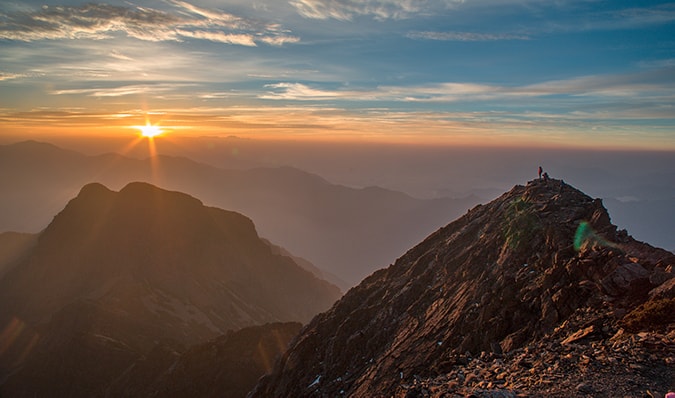
the view from Jade Mountain, Taiwanthe view from Jade Mountain, Taiwan
Grab a scooter and head up into the green mountains, which extend over five ranges the length of the island. If you want to stretch your legs, climb to the summit of beautiful Jade Mountain and watch the sunrise; this beautiful peak is almost 4,000 meters above sea level, making Taiwan the world’s fourth-highest island.

10. Visit Wuling Peak on Hehuan Mountain
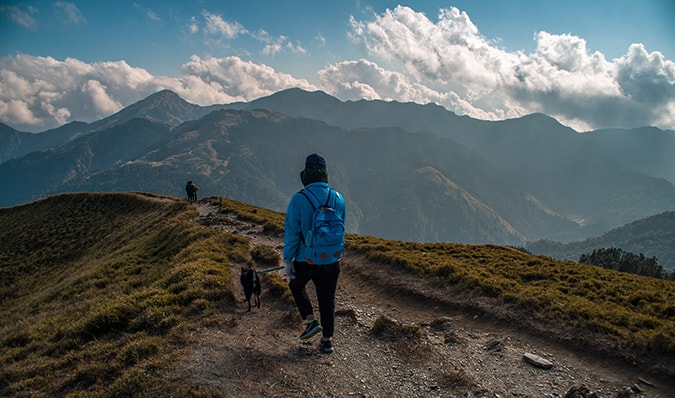
hiking on Hehuan Mountain, Taiwanhiking on Hehuan Mountain, Taiwan
If you’re still craving some climbing and hiking, head to Wuling Peak on Hehuan Mountain, around 3,275 meters above sea level, making it another good hike for anyone looking to spend more time outdoors. But what really makes this place special is that the peak is so high, you can look down into a sea of clouds below!

11. Go Hiking in Taroko National Park
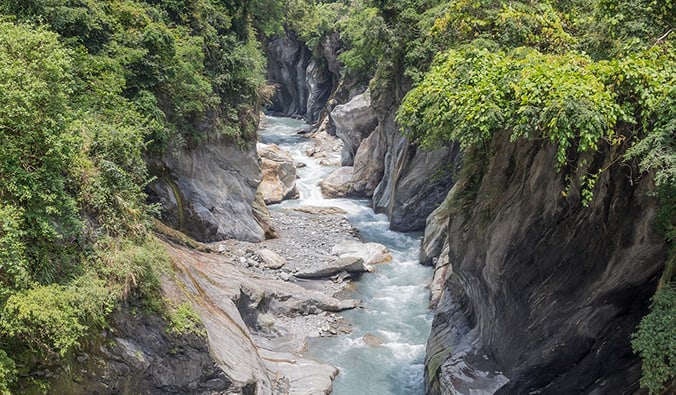
Taroko Gorge, TaiwanTaroko Gorge, Taiwan
Ready for another city break? This national park offers visitors a chance to hike through mountainous terrain and gorges, and you can even stop to dip your feet in swiftly flowing mountain rivers. Covering just under 100,000 hectares, it’s one of only nine national parks in Taiwan. Admission is free.

12. Head East
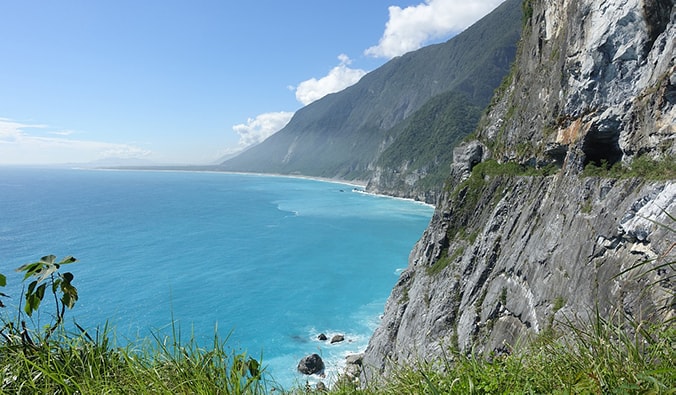
some of Taiwan's beautiful eastern coastline with tall cliffssome of Taiwan's beautiful eastern coastline with tall cliffs
To really enjoy Taiwan’s majestic beauty, don’t forget Taiwan’s eastern coastline. The east coast highway has some of the most dramatic coastal scenery in the world, from plunging sea cliffs and splashing surf to beaches, nature reserves, and rural towns a world away from the big city.

13. Witness Some Chaos
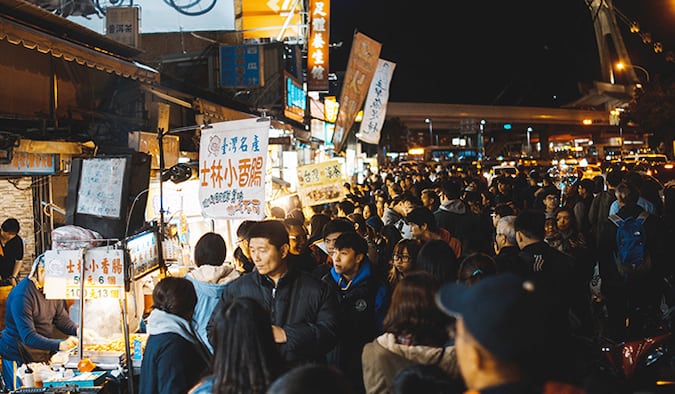
the busy food markets of Taiwanthe busy food markets of Taiwan
Check out the feeding frenzy of the markets in Taipei, or enjoy a stroll around cool Ximending, the gay district and Taipei’s answer to Tokyo’s Shibuya. Ximending boasts a massive outdoor plaza behind the Red House (a well-known cultural landmark) and a pedestrian shopping zone filled with the latest fashion trends, coffee shops, restaurants, and local artisans.

Give yourself bonus points for checking out all the super cool graffiti; you won’t find it on the main thoroughfares, but if you venture onto some of the smaller side streets, you’ll soon find yourself in world of brightly decorated alleys and lanes.

14. See Tianhou Temple

Tianhou Temple, Taiwan; photo by Wayne Hsieh (@whsieh78)Tianhou Temple, Taiwan; photo by Wayne Hsieh (@whsieh78)
While you’re in Ximending, it’s worth stopping by one of the oldest temples in the city, Tianhou (also known as the Ximending Mazu Temple, after the in-house deity Mazu, goddess of the sea). Around since 1746, it’s one of three major temples in Taiwan from the Qing period. It’s located on a main thoroughfare — but it’s very easy to miss the entrance.

Stepping through the entrance to this beautiful Taoist temple filled with mythological creatures, smoky incense, lucky goldfish, and people paying respect to the gods is truly a surreal experience. You’d never know this quiet oasis is in one of the busiest areas of Taipei!

15. Explore Fo Guang Shan Monastery

Fo Guang Shan Monastery, TaiwanFo Guang Shan Monastery, Taiwan
If you have your own ride in Kaohsiung, I strongly encourage you to stop by Fo Guang Shan Monastery and pay homage to the monks that live there. An ultra-Zen monastery open to the public, the complex is massive and stunning, leading to the Great Path of Buddhahood, a broad pathway flanked by eight identical pagodas.

You can explore each as you walk your way up to the Big Buddha, the highest seated bronze Buddha in the world. I’ve been to many temples and monasteries in my lifetime, but this one takes the cake.

16. Visit a Taiwanese Aboriginal Village
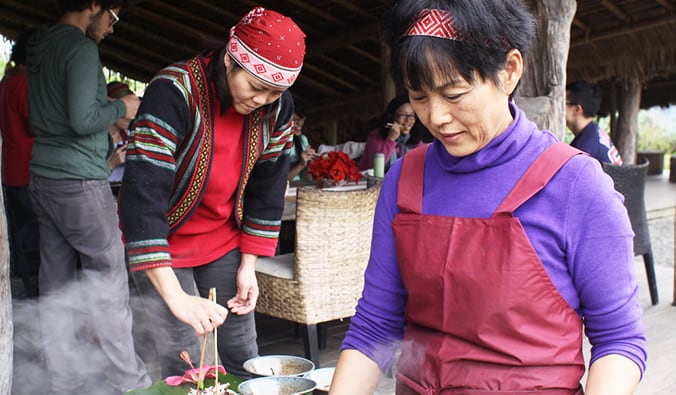
locals making food at a Taiwanese Aboriginal villagelocals making food at a Taiwanese Aboriginal village
There are many knowledgeable local guides that can introduce you to the aboriginal way of life in Taiwan. The Formosa Aboriginal Culture Village near Sun Moon Lake is the most popular destination to learn more, but it’s certainly not the only one — there are lots of villages to choose from.

17. Take Part in the Pingxi Lantern Festival
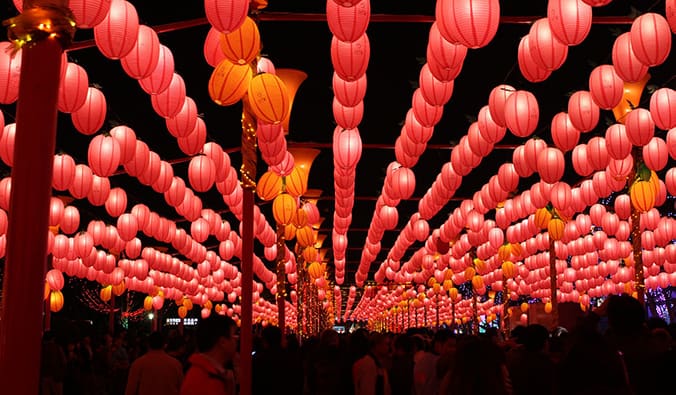
red overhanging lanterns at the Taiwan Pingxi Lantern Festivalred overhanging lanterns at the Taiwan Pingxi Lantern Festival
One of the coolest events in Taiwan, the Pingxi Lantern Festival involves releasing hundreds of paper lanterns into the sky. (Many newlyweds also include this meaningful tradition as a part of their wedding celebration.) If you don’t want to brave the crowds, you can easily purchase a lantern and light one on any of Taiwan’s beaches.

Taiwan is very environmentally friendly, so make sure you go with the eco-friendly paper lantern options that disintegrate, leaving no residue, and don’t cause fires. The company My Taiwan Tour also currently offers biodegradable paper lantern tours in Shifen.

***

There are many things about Taiwan that make it an incredible place to live; it’s easy to take some of those things for granted once you’ve been here for a while. I frequently hear that people think Taiwan is very Westernized, and while I agree that it is to some extent, there are still plenty of authentic Taiwanese experiences to be had!

Taiwan is and continues to be an unexpected travel destination that continues to delight visitors to this day. There is no place like it!

Canadian expat Carrie Kellenberger has been living in Asia since 2003. She moved to Taiwan in 2006 and became a permanent resident in 2012. She loves entertaining guests and travelers to Taiwan. You can read about her adventures and life there at her blog, My Several Worlds.

Book Your Trip to Taiwan: Logistical Tips and Tricks

Book Your Flight
Find a cheap flight by using Skyscanner or Momondo. They are my two favorite search engines because they search websites and airlines around the globe so you always know no stone is left unturned.

Book Your Accommodation
You can book your hostel with Hostelworld. If you want to stay elsewhere, use Booking.com as they consistently return the cheapest rates for guesthouses and cheap hotels. I use them all the time. My favorite places to stay in Taipei are:

  • Formosa 101 – This hostel is located right near the Taipei Tower and the Tonghua Night Market. They offer free breakfast and have a laid back lounge for relaxing.
  • Meander Taipei – The staff here is really helpful and the beds are comfy. They have free breakfast as well as other daily activities available.

Don’t Forget Travel Insurance
Travel insurance will protect you against illness, injury, theft, and cancellations. It’s comprehensive protection in case anything goes wrong. I never go on a trip without it as I’ve had to use it many times in the past. I’ve been using World Nomads for ten years. My favorite companies that offer the best service and value are:

  • World Nomads (for everyone below 70)
  • Insure My Trip (for those over 70)

Looking for the best companies to save money with?
Check out my resource page for the best companies to use when you travel! I list all the ones I use to save money when I travel – and I think will help you too!

Photo credits: 9 – David Hsu, 15 – Yi Chen, 16 – Huicheng1967

2019年8月2日星期五

Connecting on the Island of Ios in Greece: A Travel Story

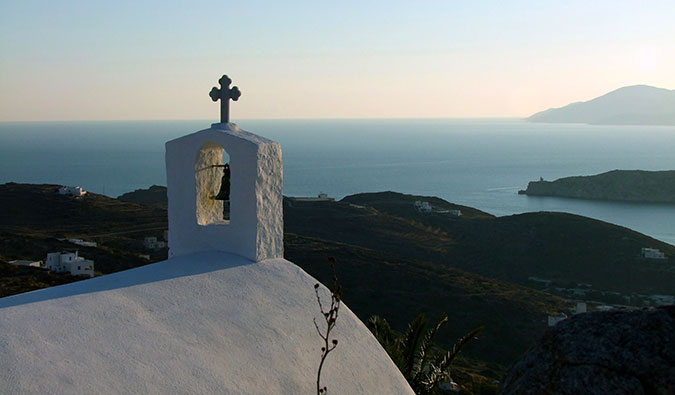
A stunning view of the island of Ios in Greece looking out of the gorgeous blue water

A stunning view of the island of Ios in Greece looking out of the gorgeous blue water
Updated: 03/15/2019 | Original Posted: 5/25/2010 (Updated with new info on visiting Ios)

03/15/2019 | Original Posted: 5/25/2010 (Updated with new info on visiting Ios)

A few weeks from now, I turn one year closer to 30. It’s a reality that isn’t sitting well with me.

Thirty. It seems so old.

At the beginning of the year, I decided I’d spend the summer in Europe, with most of my time spent on the island of Ios in Greece.

During the summer months, the island becomes a haven for young backpackers seeking to soak up the sun, water, and the suds. I knew there wouldn’t be another chance to do this pre-30. It was time to do it now before I became that “dirty old backpacker.”

But like all the best-laid plans, this one fell through. I have to return to the US in June to speak at a conference, cutting my summer trip in half. Now there will be no spending the summer in Greece enjoying my “pre-30” crisis. My trip to the Greek islands will only last only a month before I move on to Italy, Hungary, and, finally, Sweden.

So, heavy heart in hand, I arrived in Ios more than two weeks ago to stay for four nights.

I stayed for seven.

Then, leaving for Santorini, I ended up returning two days later. I missed Ios too much. I stayed for another week before I left for Paros and Mykonos.

Now I’m back on Ios.

Again.

Pushing off the rest of my travels for some more precious time on this little rock.

I often talk about what travel is and what it means. What does it mean to travel? To backpack? Is one form better than the other?

Travel doesn’t fit into a box.

It’s a lot of things.

It’s more than seeing a place or a style of travel.

But one thing that permeates all discussions about the nature of travel is that, at the end of the day, travel is about making connections.

Not only with places, but with people, too.

Sailing in the picturesque waters off Ios, Greece

Sailing in the picturesque waters off Ios, Greece

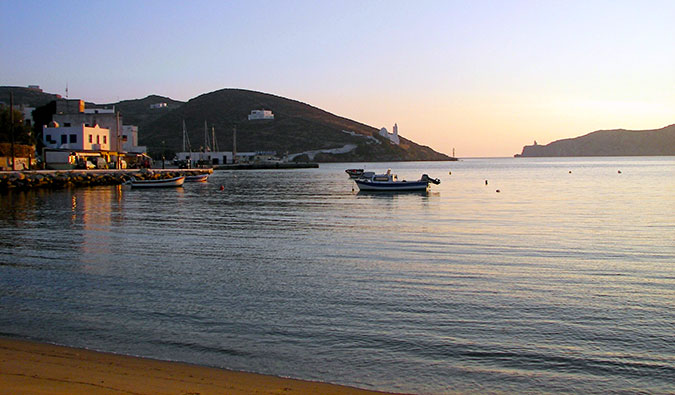
Ios is a rocky plot of land with a main town growing like a vine up a pointy, church-topped hill with quintessential blue and white houses, small cobblestones lanes, and tiny storefronts. The island’s wide, yellow sand beaches are lapped by beckoning azure blue water. Small clusters of houses and terraced cliffs for wine and crops branch out from the main town. The island as a whole is a haven for young backpackers seeking to soak up the sun and to party.

There are more beautiful islands in Greece. (And, really, I prefer my islands to have more palm trees, jungle, and tropical fish.)

Ios’ main draw is still the partying, beaches, and crowds. I came for that because I wanted to party a summer away in Greece, but I stayed because of the connections I made with the people here on the island.

And I’m pulled back there because of those connections.

Arriving in May that year, before the crowds, I found most of the other backpackers there were looking for work. Ios’ economy in the summer runs on backpackers working the bars and restaurants in exchange for free food, drink, and enough money for a room.

I made friends with the owners of empty bars and restaurants. George at the Greek restaurant the Nest taught me some Greek. Alex from Blue Note Bar introduced me to a variety of Greek alcohol. Many nights, Demetri and Nicos from Slammers discussed the sad state of Greek politics with me over ouzo.

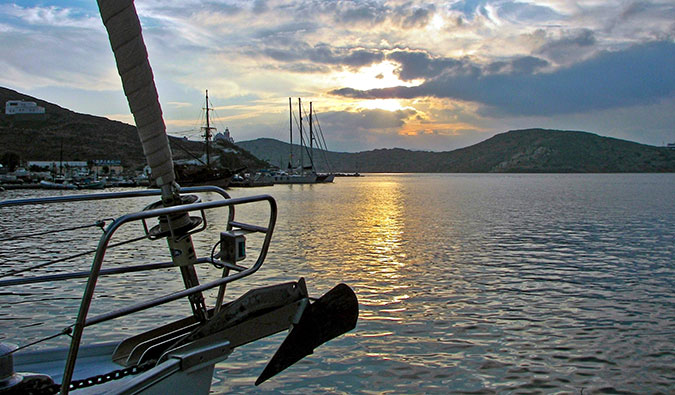
A brilliant sunset over the calm waters on Ios, Greece

A brilliant sunset over the calm waters on Ios, Greece

You meet a lot of people when you travel. Faces and names begin to blur after a while. You become friends on Facebook, but you rarely ever see each other again. I’ve met thousands of people on the road, but only a handful of people whose weddings I’ll attend and babies I’ll meet. It becomes a rare occurrence when you meet people you connect with on a deeper level.

It happened to me when I lived on the Thai island of Ko Lipe in 2006, where, four years later, all of us were having Christmas together. It happened on Haat Rin in 2007, where, two years later, I attended the wedding of my Australian friends.

It happened last year in Valencia, when three Americans, two Australians, and one Malaysian shared a dorm room for a week and clicked so well that people asked us how, when, and where we had became such good friends, given our different nationalities. “We just met three days ago,” we’d say to their astonishment.

And so again on Ios, a group of strangers came together and acted as though they’d known each other for years. Some will work the whole season on Ios. Others leave in a few weeks. Some stay half the summer. Some left before me.

But all of us impacted each other in some way, and each day I see a common update on Facebook from those who have already left: “I miss Ios.”

Most travelers stayed only a couple nights on Ios. They would party hard, sit on the beach, and, after a few days, stumble back onto the ferry, having checked Ios off their list.

My friends and I were here for the long term – them because they needed their travel plans depending on working and me because, having found a group of people I liked, saw no reason to leave. Staying put allowed us to create roots on a windy island where people blew in and out like leaves.

This was, at least temporarily, my family.

Days and nights together, we chatted little about our life back home and the memories there, and we laughed about our shared experiences. We gossiped over hookups, bickered over where to eat that night, traded book suggestions, and sparred over the politics of the Greek economic crisis.

Time is different on the road. Days feel like weeks and months like years. Two weeks on Ios felt like an eternity. When I left, people couldn’t believe I was only there for two weeks. To them, and to me, it felt much longer.

I don’t regret only spending two days on Santorini and Mykonos, though, because it gave me more time with friends on Ios. Now, I’m back and sad again I must say good-bye while they stay here.

Travel is about the people we meet more than the places we see.

And somewhere out there, other travelers are connecting and forming bonds that will last far into their futures, too. Somewhere in the world, they too are nicknaming themselves “a family” and just watching the world go by together…

Nomadic Matt with his traveling friends on Ios, Greece

Nomadic Matt with his traveling friends on Ios, Greece

4 Tips for Visiting Ios

Accommodation
When it comes to accommodation, expect to pay at least 30 EUR per night for a private room (and even more in the high-season). This will usually include a private bathroom, AC, a TV, and a mini-fridge. On Airbnb, shared rooms usually start around 15 EUR per night while entire homes/apartments can be rented for around 40-50 EUR per night.

Food
You can find gyros (meat, cheese, sauce, onions, and tomatoes served on pita bread) and other street food for only under 5 EUR. For a budget restaurant, expect meals to cost between 10-15 EUR, including a drink. For a mid-range restaurant meal, expect to pay almost double that. If you’re on a budget and want to cook your own meals, expect to pay 40-50 EUR per week for groceries (pasta, vegetables, chicken, and other basic foods).

Transportation
To get around the island, you can take the local bus. Just keep in mind that the local bus system only runs in the summer. Tickets cost 2 EUR and runs along the island’s main road. The local bus only runs until early evening after which you’ll need to take a taxi. More common for transportation are ATVs. You can rent ATVs for about 15-40 EUR per day to get to the beaches and parts of the island further afield.

To get to Ios you’ll need to take a ferry (there is no airport here). Ios can be reached best from Naxos, Santorini, Crete, and Piraeus (which is near Athens). Expect to pay at least 30 EUR for a one-way ticket from Piraeus to Ios for a basic economy seat. The journey will take between 4-8 hours depending on which ferry you take (the high-speed ferry will cost more but is much faster).

A one-way economy ticket from Santorini to Ios will cost around 13 EUR and takes around 1 hour.

Book Your Trip to Greece: Logistical Tips and Tricks

Book Your Flight
Find a cheap flight by using Skyscanner or Momondo. They are my two favorite search engines because they search websites and airlines around the globe so you always know no stone is left unturned.

Book Your Accommodation
You can book your hostel with Hostelworld. If you want to stay somewhere other than a hostel, use Booking.com as they consistently return the cheapest rates for guesthouses and cheap hotels. I use them all the time. My favorite places to stay are:

  • Francesco’s – This family-run hostel has a pool, terrace, and gives you a free dirnk on arrival. What’s not to love?
  • Far Out Beach Club – If you’re looking for a place to party on a budget, this is it. The hostel has a pool, bar, space for camping, and a non-stop party that goes until sunrise.

Don’t Forget Travel Insurance
Travel insurance will protect you against illness, injury, theft, and cancellations. It’s comprehensive protection in case anything goes wrong. I never go on a trip without it as I’ve had to use it many times in the past. I’ve been using World Nomads for ten years. My favorite companies that offer the best service and value are:

  • World Nomads (for everyone below 70)
  • Insure My Trip (for those over 70)

Looking for the best companies to save money with?
Check out my resource page for the best companies to use when you travel! I list all the ones I use to save money when I travel – and I think will help you too!

Want More Information on Greece?
Be sure to visit our robust destination guide on Ios for even more planning tips!

Ko Phi Phi: Thailand’s Most Dangerous Island

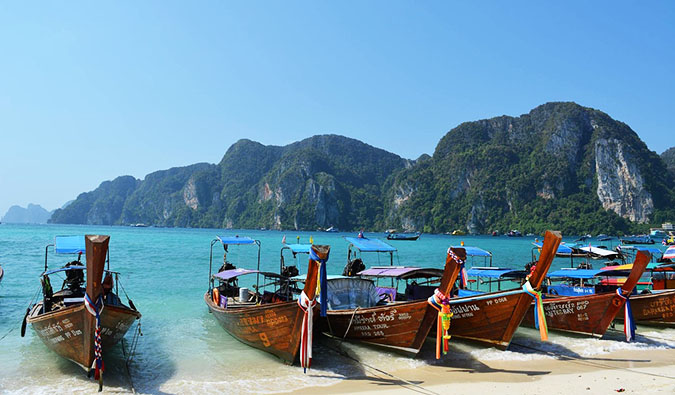
The classic long-tail boats of Thailand all lined up on a beautiful beach in Ko Phi Phi

The classic long-tail boats of Thailand all lined up on a beautiful beach in Ko Phi Phi
Posted: 9/22/2010

9/22/2010

This is a guest post by Sean Ogle, who blogs about location independence at locationrebel.com

When you think of dangerous islands, you might think of earthquake-prone and poverty-stricken Haiti. Or maybe it’s Australia, with its deadly spiders and snakes. Or perhaps it’s someplace even more remote, like the jungle wilderness of Borneo.

Yet there is an island out there that is far more dangerous and far less obvious. That island is Ko Phi Phi off the coast of Thailand.

Ko Phi Phi is one of Thailand’s most famous islands. It’s one of the biggest tourist destinations in the country and is where the movie The Beach was filmed.

Every year, thousands of people flock to this island to relax in the sun, swim in the ocean, and dive the surrounding reefs. But despite its international reputation as being a world-class travel destination, for many young travelers it can often be the most dangerous place they visit on their trip through Southeast Asia. What makes Ko Phi Phi so dangerous?

Two words: buckets and fire.

For those of you unfamiliar with the Thai bucket, it’s a combination of Red Bull, Thai whiskey, and either Coke or Sprite. It gets its name from the small sand pails in which they are served and is a staple on the Thai tourist trail.

My personal bucket-and-fire story started seemingly harmlessly enough, with a burning rope landing on my foot.

Originally, I thought nothing of it. I cleaned it up and took care of it. Yet three weeks later when I had an infection half an inch deep and was forced to make my first visit to a Thai hospital, I realized it was more than nothing.

Others get it much worse, getting mangled on flaming jump ropes or falling on top of fiery limbo sticks. I saw one British guy forcefully removed from the activities because he was too drunk to feel the constant burns he was inflicting upon himself with the rope.

Dozens of the dangerous booze buckets of Ko Phi Phi

Dozens of the dangerous booze buckets of Ko Phi Phi

The combination of buckets and the fire antics that take place at beach bars such as Ibiza and Apache put inebriated travelers in a position to have the best nights they’ll never remember, yet leave them with scars that will never let them forget the nights they spent on Ko Phi Phi.

On any particular night, you can head down to any of these beach bars around 10pm and find an exciting display of poi fire dancers, fire jump-ropers, and even a fire limbo.

You watch in awe as you sip on your first drink, wondering how anyone could possibly have the nerve to participate in such an acrobatic display of fire mastery. The Thais doing these moves seem to be masters at it, catching balls of fire thrown at them from across the beach. They have real talent.

A fire dancer in Thailand spinning fire on the beach at night on Ko Phi Phi

A fire dancer in Thailand spinning fire on the beach at night on Ko Phi Phi

However, over time, something begins to change. The locals begin to invite tourists to participate in a little jump-roping, promising to go slow, and always ensuring you that you won’t get hurt.

Yet as the night wears on, the audience gets more excited, more drunk, and more daring. They want to go faster and sometimes two at a time. As they get drunker, their reflexes slow down — and that’s when people get hurt.

As the alcohol continues to flow, the fire seems to disappear, as you show off your flexibility and ability to dive head first into the flames. The next day, it seems like everywhere you look on Ko Phi Phi, travelers have bandaged arms or heads. They’re on crutches or perhaps have a couple casts on various appendages.

After your first night on the island, you’ll understand where those came from.

The time I spent on Phi Phi was among the best I’ve had in Thailand. I loved the beaches and the people I met. Yet it’s important to be aware of what goes on there and not to be influenced by your friends or your nightly “liquid courage.”

[Matt’s note: I did not like Ko Phi Phi.]

Sean Ogle is a location-independent entrepreneur who teaches people how to overcome fear in order to live the lives they really want.

Get the In-Depth Budget Guide to Thailand!

Thailand guide bookThailand guide bookMy detailed, 170+-page guidebook is made for budget travelers like you! It cuts out the fluff found in other guidebooks and gets straight to the practical information you need to travel and save money while in Thailand, a country I used to call home (so I know it really well!). You’ll find suggested itineraries, budgets, ways to save money, on and off-the-beaten-path things to see and do, nontouristy restaurants, markets, and bars, and much more! Click here to learn more and get started!

Book Your Trip to Thailand: Logistical Tips and Tricks

Book Your Flight
Find a cheap flight by using Skyscanner or Momondo. They are my two favorite search engines because they search websites and airlines around the globe so you always know no stone is left unturned.

Book Your Accommodation
You can book your hostel with Hostelworld. If you want to stay elsewhere, use Booking.com as they consistently return the cheapest rates for guesthouses and cheap hotels. I use them all the time. My favorite places to stay are:

  • Rock Backpacker – This walk-in only hostel has huge dorms, but it’s cheap, clean, and has its own restaurant and bar.
  • Hanover Hostel – This is a classic backpacker party hostel. It’s cheap and the amenities are basic, but the staff is helpful and it’s easy to meet other travelers.

Don’t Forget Travel Insurance
Travel insurance will protect you against illness, injury, theft, and cancellations. It’s comprehensive protection in case anything goes wrong. I never go on a trip without it as I’ve had to use it many times in the past. I’ve been using World Nomads for ten years. My favorite companies that offer the best service and value are:

  • World Nomads (for everyone below 70)
  • Insure My Trip (for those over 70)

Looking for the best companies to save money with?
Check out my resource page for the best companies to use when you travel! I list all the ones I use to save money when I travel – and I think will help you too!

Looking for more information on visiting Thailand?
Check out my in-depth destination guide to Thailand with more tips on what to see, do, costs, ways to save, and much, much more!

Photo credit: 2, 3