显示标签为“travelers”的博文。显示所有博文

2019年8月2日星期五

Can Introverts Successfully Travel Solo?

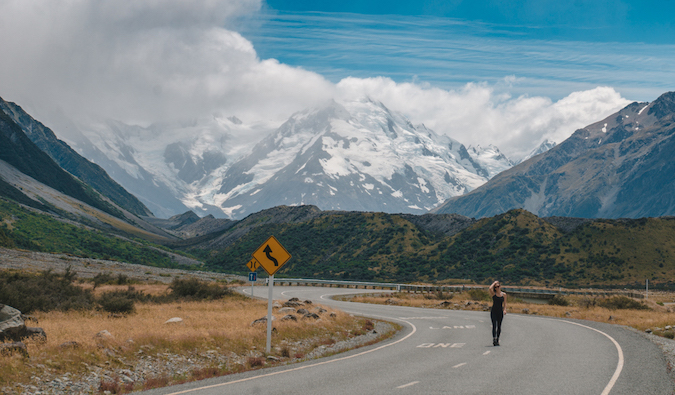
Kristin Addis standing on a empty winding road in the mountainsKristin Addis standing on a empty winding road in the mountains
Posted: 5/2/2019 | May 2nd, 2019

Kristin Addis from Be My Travel Muse writes our regular column on solo female travel. It’s an important topic I can’t adequately cover, so I brought in an expert to share her advice for other women travelers to help cover the topics important and specific to them! In this month’s article, she shows us how solo travelers can deal with traveling as an introvert!

Recently, I traveled to Oakland to attend a birthday brunch. I didn’t know anyone besides the birthday girl. As an introvert, situations where I don’t know anyone are hard for me.

Per usual, I was pretty uncomfortable at first, choosing to stick close to the one person I knew and to kill time by slowly pouring myself a coffee and eating a fruit plate at tortoise speed.

But, as time passed, I began conversing with one new person, then another, and then almost everyone who was there. I met truly interesting and friendly people, and by the end of it, I was so glad that I went and that I stayed.

When I’m at home, though, I tend to put off going out to do simple things that involve personal interactions, like grocery shopping, until the last minute. It can get pretty ridiculous, to be honest.

Yet on the road it’s so much easier to get out and explore and especially to meet new people. Why is that?

In a word: dopamine.
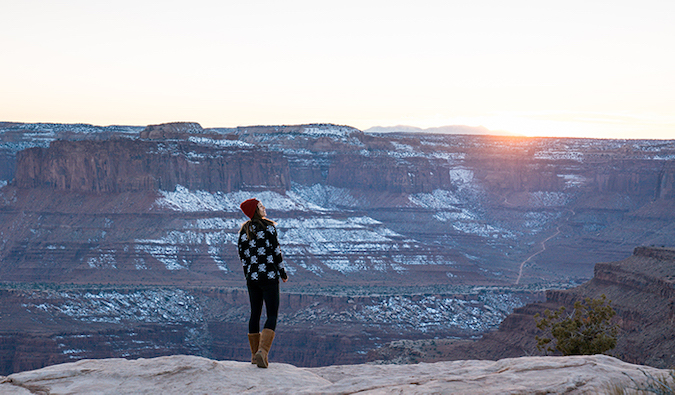
Kristin Addis standing at the edge of the Grand CanyonKristin Addis standing at the edge of the Grand Canyon

According to professors Daniel Z. Lieberman and Michael E. Long in The Molecule of More, dopamine, which plays a major role in reward-motivated behavior, is what pushes us to try new things. In addition, researchers Nico Bunzeck and Emrah Düzel found, through MRI scans, that the reward center of our brain is stimulated more by novelty than familiarity.

Therefore, we are hardwired to explore and crave newness. It’s the anticipation of the unknown — and how exciting it could be — that encourages us to go beyond our comfort zones.

So, while it can be difficult for introverts to approach people and venture outside to do routine things at home, where everything is familiar, when we’re on the road we have dopamine on our side.

This scientific explanation makes sense to me. When I’m traveling and experience a moment of true novelty, I feel like I’m riding a natural high, something more pleasurable than I could ever try to manufacture. Newness feels good, so traveling feels good, and being an extrovert in these moments comes naturally.

So just know that even if you tend to be shy and uninterested in going to random house parties or even the grocery store at home, you may find that you have renewed energy for meeting people (and feeding yourself) on the road. It helps tremendously that most other people are also feeling that dopamine rush from traveling, so they’re in a more approachable state, too.
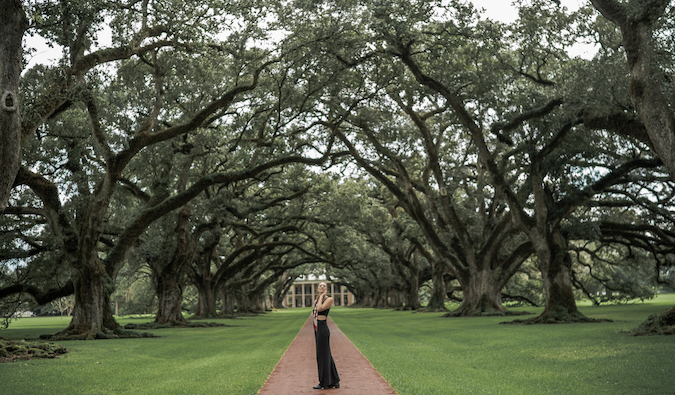
Kristin Addis on a walkway covered in tall treesKristin Addis on a walkway covered in tall trees

I used to joke that at home in Southern California I had no idea how to make new friends. Do I just walk up to them at a café and ask what they like to do during their free time?

The truth is, on the road, the answer is “yes.” It’s often that simple. Travelers are by and large more receptive and friendlier than most of us are probably used to back home. Since we’re all getting dopamine rewards for meeting new people and exploring new places, it becomes easier for both parties to be more open on the road.

I used to worry that I’d fear approaching new people, but I rarely even have to start a conversation. If all else fails, “Where are you from?” is a perfectly acceptable way to break the ice, an easy question that everyone has an answer to. I’ve had random bus, hostel, and café conversations that have turned into lifelong friendships, and I’ve had others that only served to entertain me for the afternoon; both are of value, and I never know which I might get.

I love having no itinerary and no fixed plans. This is one of the gifts of solo traveling. That said, booking activities ahead of time and paying some kind of deposit can be of help to introverts who might otherwise find reasons why they should stay inside. I’m sure my fellow introverts recognize the scenario of waking up the day of a tour you’ve booked, wishing you could cancel, but since you’ve already paid, you end up going and having the best time. Having some skin in the game makes us way more likely to honor our commitments.
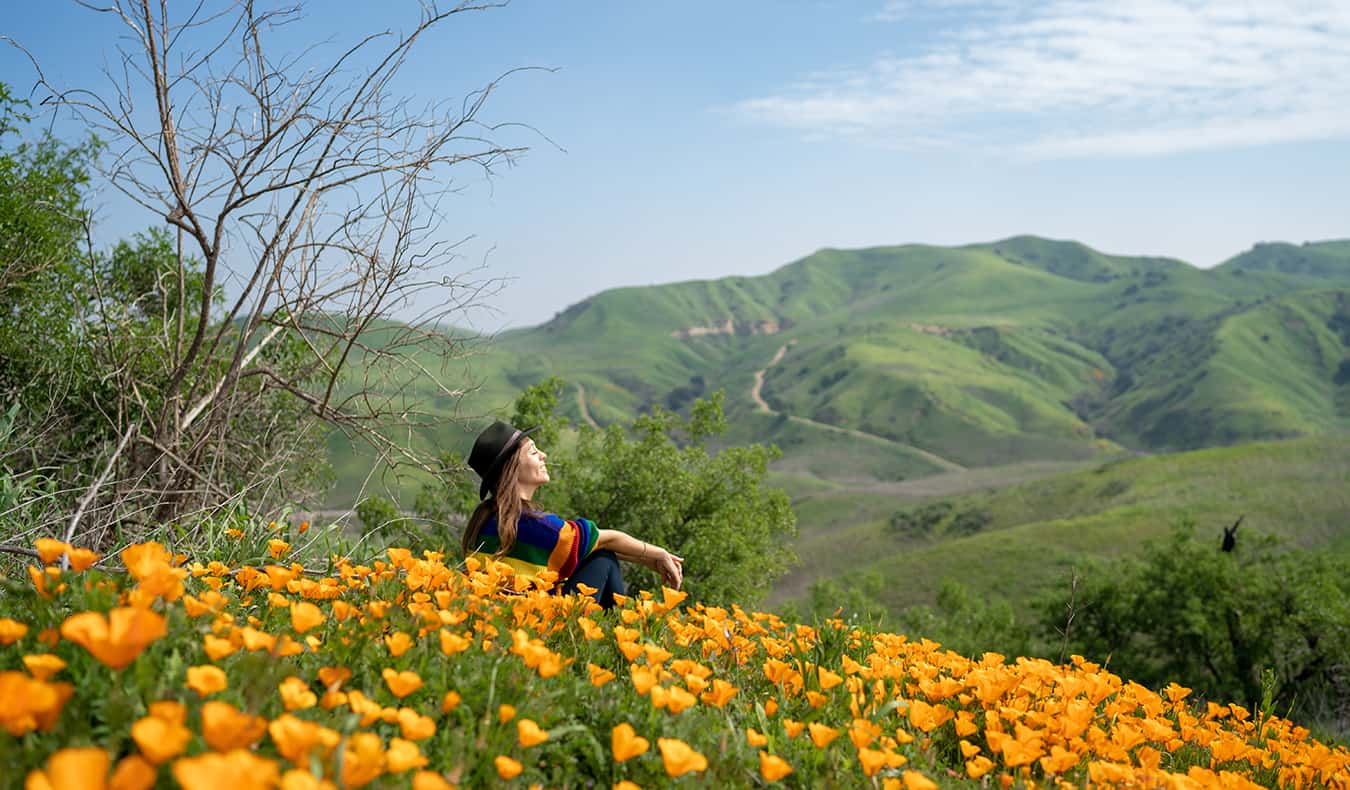
Kristin Addis sitting in a bed of sunflowers against a mountain backdropKristin Addis sitting in a bed of sunflowers against a mountain backdrop

Personally, it’s tempting to cancel even if it’s something fun that I honestly want to do. If I didn’t prebook things in life, I’d never exercise, dive, or explore. It would be too easy to keep putting them off.

For example, I booked an island excursion on Nusa Penida and a cooking class in Chiang Mai, and led a group hiking tour of Torres del Paine in Patagonia that the women participants prepaid for. Many of them tended to be more introverted, but in a group activity like that, other solo travelers tend to show up, which helps everyone to be more social and open.

I’ve also found that staying in an accommodation that is social by nature, like a yoga or meditation retreat, or heading to places that are known for an activity I love, like scuba diving in Indonesia, can make my introversion easier to handle. Knowing that the others there will also be into the activity that I’m into gives us common ground, something to talk about, and the activity itself allows us to bond over a week or two. Some of my favorite people are those whom I met on a dive boat or week of deep spiritual practice.

Though all of these are “hacks” for becoming a more extroverted traveler, we introverts tend to get our energy from time spent alone. At some point we need some “me” time — and this is why solo travel can be so wonderful. Part of the beauty of solo travel is the time that you get to spend with yourself. You won’t disappoint anyone by needing time alone, nor will you have to push anyone away or force yourself into an activity you’re not really feeling.
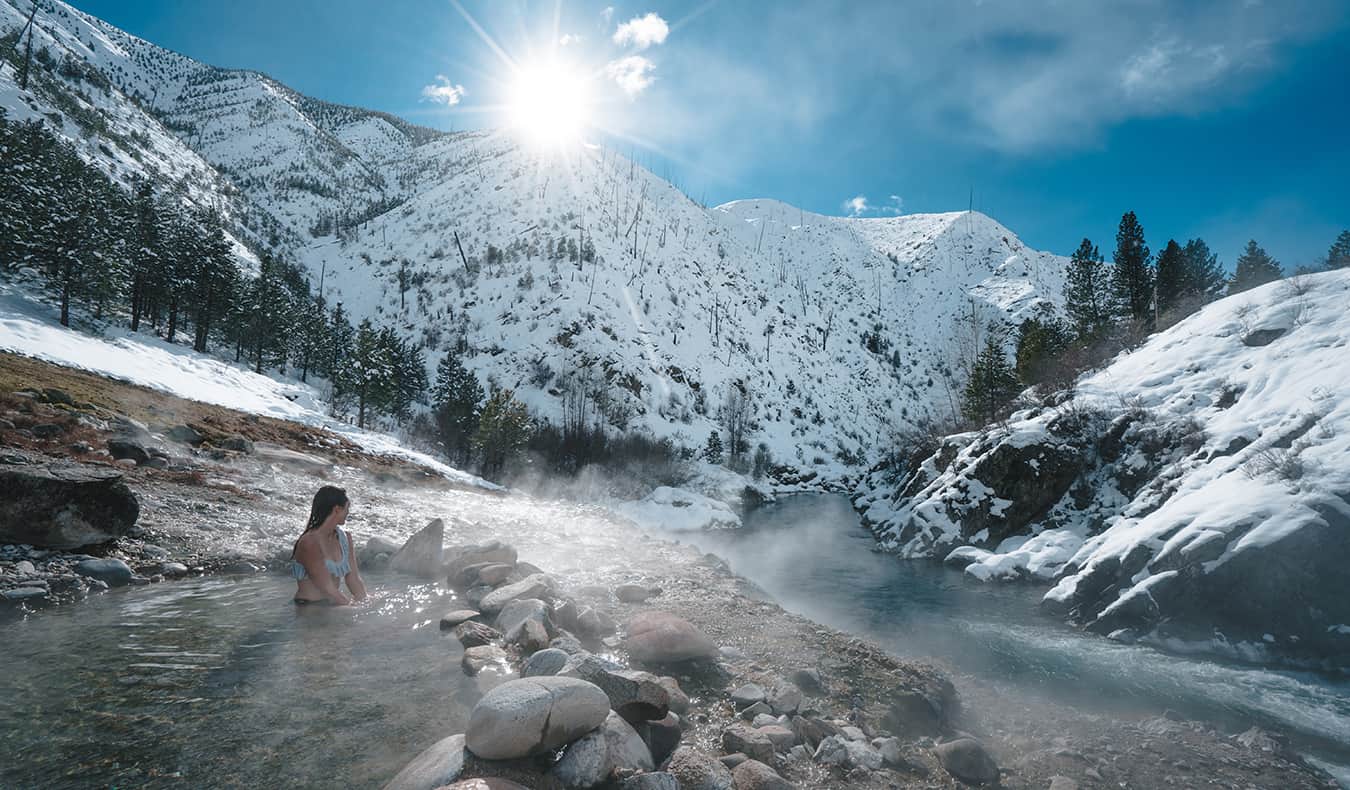
Kristin Addis sitting in hot springs in the snow-capped mountainsKristin Addis sitting in hot springs in the snow-capped mountains

I used to get down on myself if I went a few days without meeting new people. I’d fret over moments that I felt I’d “wasted” by reading in bed or chilling out for the day. Now I realize how important those days are too. I get to recharge by taking it easy and practicing self-care. And that’s a big reason why we travel too, isn’t it? We want to treat ourselves.

So please don’t feel bad if you’re traveling and you just don’t feel like going out that day, don’t want to be social, or feel like getting room service. It’s okay to do those things if it’s what you feel you need.

Listening to yourself is the most important part of solo traveling, anyway. This is something I’ve learned as a solo traveler in my 30s, and it’s made me enjoy traveling even more.

Knowing that you’ll have dopamine on your side, that you will meet people more easily on the road, and that you’ll be able to make real-time decisions about what’s best for you, you’ll be better off making the leap and traveling solo.

Conquering Mountains: The Guide to Solo Female Travel
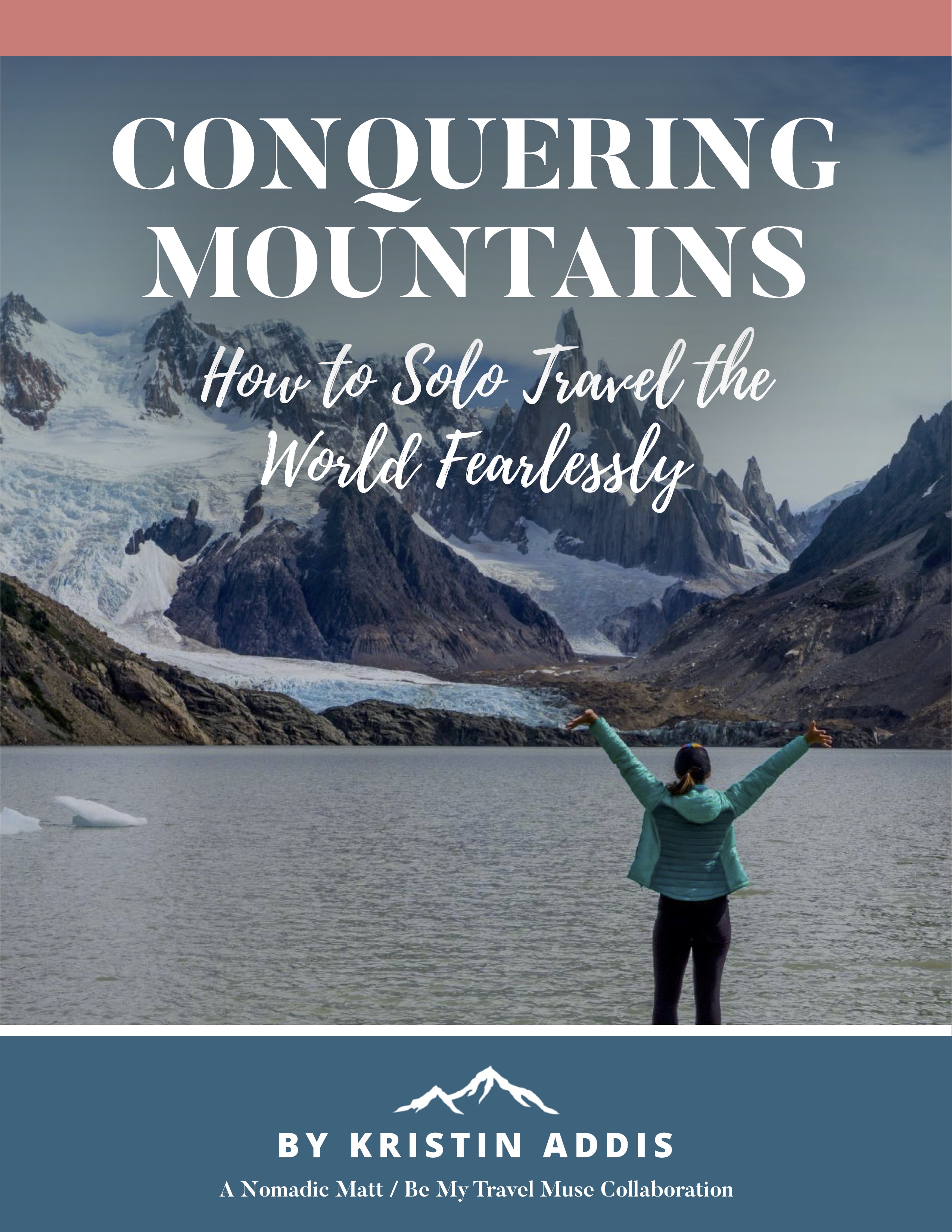
conquering mountains: solo female travel by kristin addisconquering mountains: solo female travel by kristin addisFor a complete A-to-Z guide on solo female travel, check out Kristin’s new book, Conquering Mountains. Besides discussing many of the practical tips of preparing and planning your trip, the book addresses the fears, safety, and emotional concerns women have about traveling alone. It features over 20 interviews with other female travel writers and travelers. Click here to learn more about the book and start reading it today!

Kristin Addis is a solo female travel expert who inspires women to travel the world in an authentic and adventurous way. A former investment banker who sold all of her belongings and left California in 2012, Kristin has solo traveled the world for over four years, covering every continent (except for Antarctica, but it’s on her list). There’s almost nothing she won’t try and almost nowhere she won’t explore. You can find more of her musings at Be My Travel Muse or on Instagram and Facebook.

Book Your Trip: Logistical Tips and Tricks

Book Your Flight
Find a cheap flight by using Skyscanner or Momondo. They are my two favorite search engines because they search websites and airlines around the globe so you always know no stone is left unturned.

Book Your Accommodation
You can book your hostel with Hostelworld as they have the largest inventory. If you want to stay somewher eother than a hotel, use Booking.com as they consistently return the cheapest rates for guesthouses and cheap hotels. I use them all the time.

Don’t Forget Travel Insurance
Travel insurance will protect you against illness, injury, theft, and cancellations. It’s comprehensive protection in case anything goes wrong. I never go on a trip without it as I’ve had to use it many times in the past. I’ve been using World Nomads for ten years. My favorite companies that offer the best service and value are:

  • World Nomads (for everyone below 70)
  • Insure My Trip (for those over 70)

Looking for the best companies to save money with?
Check out my resource page for the best companies to use when you travel! I list all the ones I use to save money when I travel – and I think will help you too!

Is Brazil Safe to Visit? Here's Everything You Need to Know in 2019

The stunning view overlooking the city of Rio in BrazilThe stunning view overlooking the city of Rio in Brazil
Posted: 7/13/2019 | July 13th, 2019

Offering pristine nature and access to the Amazon rainforest, historic cities and colonial architecture, and lots of affordable food and activities, Brazil will have some something for every traveler.

A popular destination for revelers looking to party hard at Carnival as well as a hot spot for adventure junkies and beachgoers, Brazil is a country known for its amazing weather and pristine landscapes.

But is it safe?

Brazil has a reputation for being a rough and tumble destination, one where travelers need to be extra cautious and on their guard at all times.

Due to rising inequality, unfortunately, this is the case. Petty theft and street crime are a common occurrence in Brazil. The crime rate in Brazil has been on the rise for many years now (it was up almost 50% between 2015 and 2016) so travelers here will need to be on vigilant

But that doesn’t mean you should avoid the country. You just need to be a smart traveler. Millions of people visit the country every year and don’t have a problem. As long as you follow the suggested safety tips, you’ll minimize the likelihood anything bad will happen to you!

Here is everything you need to know to stay safe and make the most out of your next trip to Brazil.


13 Safety Tips for Brazil

To help you stay safe in Brazil, here are 13 tips that will keep both you and your possessions out of harm’s way:

1. Walk with purpose – When out exploring, always walk with purpose. Look like you’re heading somewhere in specific, even if you’re not. Pickpockets and muggers look for travelers who are unsure of themselves. Don’t look like a target.

2. Don’t carry cash – Carry only the minimum cash needed for the day. Keep the rest locked up back in your accommodation.

3. Separate your cards – If you have more than one credit or debit card, keep them separate. Bring one with you for the day (if you think you’ll need it) and leave the other one locked up in your room. That way, should something happen, you always have at least one card.

4. Don’t bring valuables to the beach – When you go to the beach, don’t take anything unnecessary. Towel, bathing suit, and a small amount of cash. That’s it! Anything else you bring is likely to disappear!

5. Dress to fit in – When out and about, dress down and try to fit in. Leave any valuables or jewelry at home. Don’t walk around flashing your camera or phone. If you need to use them, be discreet.

6. Carry a spare wallet – Bring a spare wallet with a small amount of cash in it. That way, if you get robbed or pickpocketed they won’t get your real wallet (where you’ll keep the rest of your cash and cards).

7. Avoid outdoor ATMs – If you need to withdraw cash, only use ATMs inside buildings. Always be aware of your surroundings before you take out your wallet.

8. Double check your accommodation – No matter where you are staying, be sure to check the doors and windows before leaving for the day and before settling in at night. Don’t leave anything valuable lying around your room; lock everything up.

9. Don’t accept free food/drinks – Never accept drinks or food from strangers. Drugging victims before they are robbed is common, so decline free food or drinks from strangers.

10. Watch out for distractions – Thieves will often try to distract you before they rob you. Be mindful of this common scam to help you stay vigilant.

Don’t walk around at night alone – If you have to, avoid city beaches, parks, and empty streets.

11. Take precautions when driving – If traveling by car, always keep your doors locked. By on guard at stop signs or red lights, especially at night. Many Brazilians won’t even stop for them to avoid the risk of a carjacking. Buy travel insurance before you go just in case you run into trouble. It’s always better to be safe than sorry!

Is Street Food in Brazil Safe?

Yep! You’ll find all sorts of amazing street food stands in cities like Rio as well as near the beaches and you’d be missing out if you didn’t try them! Just make sure to stick to places where there are a lot of locals gathered. That’s how you know the food is not only safe but delicious too!

I’d suggest avoiding anything with shrimp of seafood as it spoils quickly. But definitely try the mate as it can be quite refreshing (it’s served as an ice tea and is really good).

For the most part, you’ll encounter places that sell various kinds of meat. As long as it is fully cooked and hasn’t been in the sun all day, dive in and give it a try!

Don’t hesitate to ask your hotel or hostel staff for street food or restaurant suggestions too. They’ll no doubt have some delicious — and safe — options for you to try.
 

Is the Tap Water in Brazil Safe?

The water in Brazil is generally safe to drink, though most Brazilians still use filters or drink bottled water. The tap water generally has something of an odd taste, due to the purification process, so while it’s fine for brushing your teeth, it can taste odd if you’re just drinking it when you’re thirsty.

If staying in a hostel or Airbnb you’ll likely have access to a filter but it’s always a good idea to bring your own as well. Lifestraw and Steripen are two great products to help keep your water safe and potable.
 

Are Taxis in Brazil Safe?

Taxis in Brazil are safe and plentiful. They use meters as well, though it’s always a good idea to ask your hotel or hostel staff for an approximate fare before you head out. There are always a few bad apples who will try to rip you off, so just be sure to pay attention to the meter and make sure it isn’t rising abnormally quick.

Also, it’s always best to call your taxi in advance. Never flag a taxi on the street (this is especially true at night).
 

Is Brazil Safe for Solo Travelers?

Brazil is safe for solo travelers, though I would only suggest solo travelers visit here if they have some experience traveling solo already. By following the tips above, solo travelers will be able to have an amazing time in Brazil while staying safe.

If you are concerned as a solo traveler, try to meet-up with other travelers at hostels. Traveling together, you can keep each other company and deter any potential petty theft or robberies.
 

Is Brazil Safe for Solo Female Travelers?

Brazil faces real issues of poverty and crime so solo female travelers will need to be on guard. This is not a destination for new travelers and I would only suggest solo female travelers visit here if they are experienced solo travelers. Even then, you’ll want to make sure you take every precaution that you can.

Check with your hostel or hotel staff to find out if you should avoid any specific areas. Also, learn as much as the local language as you can so you don’t stand out.

***
So, is Brazil Safe?

So, is Brazil Safe?

Brazil is an amazing, vibrant country. But it’s not without its risks. Travelers here will need to be on guard and keep their wits about them. Petty theft and muggings are common, but if you follow the tips above you should be able to have an incredible visit while still staying safe.

Trust your gut, use common sense, and make sure you have comprehensive travel insurance. Do that, and you’ll be able to stay safe in Brazil have a memorable visit to this energetic country.

Heading to Brazil? Use the widget below to get a free travel insurance quote from World Nomads! That’s the company I’ve been using since I started traveling back in 2003!

Book Your Trip to Brazil: Logistical Tips and Tricks

Book Your Flight
Find a cheap flight by using Skyscanner or Momondo. They are my two favorite search engines because they search websites and airlines around the globe so you always know no stone is left unturned.

Book Your Accommodation
You can book your hostel with Hostelworld. If you want to stay somewhere other than a hostel, use Booking.com as they consistently return the cheapest rates for guesthouses and cheap hotels. I use them all the time. My favorite hostels in Brazil are:

  • Discovery Hostel (Rio) – This award-winning hostel has everything the budget backpacker needs: a full-equipped kitchen, patio, lounge, and tons of social activities. It’s a great place to meet other travelers!
  • Geckos Hostel (Florianopolis) – This ec-friendly hostel is powered by solar panels and has a rustic charm to it. They have a pool and lots of room to lounge and relax. It’s a great hostel for chilling out and soaking up the sun.

Don’t Forget Travel Insurance
Travel insurance will protect you against illness, injury, theft, and cancellations. It’s comprehensive protection in case anything goes wrong. I never go on a trip without it as I’ve had to use it many times in the past. I’ve been using World Nomads for ten years. My favorite companies that offer the best service and value are:

  • World Nomads (for everyone below 70)
  • Insure My Trip (for those over 70)

Looking for the best companies to save money with?
Check out my resource page for the best companies to use when you travel! I list all the ones I use to save money when I travel – and I think will help you too!
Looking for more information on visiting Brazil?
Check out my in-depth destination guide to Brazil with more tips on what to see, do, costs, ways to save, and much, much more!

The 7 Best Travel Insurance Companies in 2019 (Ranked & Reviewed)

A lone commercial airliner flying over AustraliaA lone commercial airliner flying over Australia
Posted: 6/17/2019 | June 17th, 2019

Planning a trip can be a lot of fun. Researching amazing bucket list activities, daydreaming about picture-perfect beaches and epic hikes, booking the cheap flights that will take you to the world’s most amazing destinations — it’s the fun part of planning. It gives you ownership of your trip and lets you imagine all the amazing adventures you’ll get into.

What is significantly less fun (yet equally important) is searching for the right travel insurance plan for your trip.

Reading through the fine print, searching out reviews you can trust, picking the best plan — it can all be a little tedious.

And if you’re a new traveler, it can also be a little overwhelming.

There are hundreds of companies out there – all offering the “same” plans. They all have different prices too. Which one is the best? Which review is right?

To help you stay safe during your next trip, I wanted to share my thoughts on the best travel insurance companies on the market. I’ve been backpacking since 2004 and researching companies for a living since 2007. I’ve spent a lot of time reading the fine print (have you ever read NY’s insurance compliance laws? Well, don’t.)

To save you time, I’ve compiled a list of the best travel insurance companies. Whether you’re heading south to escape from work or traveling abroad on a round-the-world trip, this list will help you find a company that works for your trip – and your budget.


OUR TOP PICK: World Nomads

I’ve been using World Nomads for the past decade and have never been disappointed. Their plans are comprehensive and great for travelers visiting more than one country in a single trip. It’s easy to read their policies and see what’s covered (and what isn’t), and their customer service is top notch. And if you want to learn more before you purchase or have questions after you sign up, their customer support is there to help.

This company is perfect for adventurous travelers who plan to do things like hiking, kayaking or canoeing, and even some extreme sports like rock climbing bungee jumping. With 100 different activities are covered, World Nomads is the best choice for the active traveler.

Here’s a quick overview:

  • Emergency medical and dental coverage
  • Coverage for trip cancelations, delays, and interruptions
  • Baggage protection
  • Emergency evacuation (for medical emergencies and non-medical emergencies such as natural disasters)
  • Medical transportation
  • 24/7 customer assistance

They are the perfect company if you’re a backpacker or long term traveler. The company was founded by backpackers so they keep people who travel long term in mind in their plans and customer service. This is my go-to insurance company and one I’ve been using for years. If it sounds like the company for you, you can use the widget below to get a quote:

 
(Want to learn more? Check out my comprehensive World Nomads review!)

Medjet

Medjet is the premier membership program for medical transportation. Their extensive plans focus on crisis response and emergency transportation and they have amazing staff on hand to help you through it all.

While many insurance companies will just evacuate you to the nearest hospital in an emergency, MedJet goes above and beyond to ensure that you’re repatriated and not stuck in a foreign medical facility away from your friends and family.

They have both short-term and annual plans, too, so no matter what your travel plans are you’ll be able to find the affordable coverage that you need.

Here’s a quick overview of MedJet:

  • Extensive medical transport coverage
  • Limited time spent in foreign medical facilities
  • Both short-term and annual plans
  • Available for residents of the US, Canada, and Mexico

Medjet is the perfect company for anyone looking to avoid time spent in foreign medical facilities should an emergency or crisis occur.

Insure My Trip

Insure My Trip isn’t actually an insurance company that issues its own plans. Rather, they recommend plans and help you compare prices so you can buy the plan that’s best for you.

With Insure My Trip, you can compare plans from almost 30 different insurance providers. They are the go-to company for senior travelers as well, since many travel insurance companies won’t cover travelers over 65. Insure My Trip provides comparisons from insurance companies that cover older travelers, making them the best option for retirees and other senior adventurers.

Here’s a quick overview of Insure My Trip:

  • Guaranteed low prices
  • Coverage for senior travelers over 65
  • “Anytime advocates” ask the insurer to give your claim a second look if you think it was unfairly denied.
  • Comparisons from 28 different companies to ensure you get the best plan

Insure My Trip is the best choice for older travelers looking for comprehensive coverage over the age of 65.

STA

STA is an online travel agency that is known for its flights and travel packages. But they also sell affordable travel insurance too. STA provides budget-friendly plans for students and teachers, offering coverage for as little as $99 USD for 1 year.

It’s the best choice for anyone studying abroad or teaching overseas. You’ll also get an ISIC card, which includes tons of additional perks and discounts!

Here’s a quick overview of STA Travel Insurance:

  • Budget-friendly plans
  • ISIC card benefits in over 125,000 locations
  • Basic coverage options
  • Great for students/shoestring backpackers.

STA is the best choice for student travelers and teachers working overseas who only need basic travel insurance coverage.

IMGlobal

IMGlobal provides insurance plans that are more akin to your standard US health insurance. They have comprehensive coverage for long-term travelers, plans for non-US citizens, and affordable plans for visitors to the US as well. They have basic plans for students and budget-conscious travelers as well as more robust plans for families and expats.

Their plans cover single trips; however, they also have multi-trip plans for travelers heading out on more than one trip per year.

Here’s a quick overview of IMGlobal:

  • Best for expats and long-term travelers
  • The closest option to normal US health insurance
  • Available for non-US residents
  • 16 different plans to choose from

IMGlobal is the best insurance company for expats and long-term travelers who want coverage beyond medical emergencies.

Clements

Clements focuses on insurance coverage for expats as well as coverage for high-end gear (such as laptops, smartphones, and cameras). Many travel insurance companies only provide minimal coverage for your expensive electronics, which means you’ll have to pay a lot of money out of pocket to replace them should they get lost, damaged, or stolen while you’re abroad. They also offer plans with low or no deductibles so you can rest assured that, should the worst happen, you can replace your valuables without breaking the bank.

Here’s a quick overview of Clements:

  • High-end electronics coverage
  • Low (or no) deductibles
  • Premium plans with unlimited coverage
  • Available both inside and outside of the US

Clements is the best insurance option for anyone traveling with expensive electronics who need comprehensive coverage.

Honorable Mention: Credit Card Coverage

While not the most comprehensive, many travel credit cards will include some degree of travel insurance. Coverage is often limited and might only apply to trips or items purchased with the card. And there may be limited dates of coverage too.

However, something is better than nothing! But while it can be tempting to go for a free insurance plan from your credit card company, their plans are usually not that comprehensive and have minimal coverage and/or limited compensation. These free plans are best used as supplemental coverage in addition to a plan from one of the companies above.

But it’s always great to have options (especially free ones). Be sure to learn more about the best travel credit cards before your next trip (you’ll have to read the fine print).

***

Nobody plans on getting hurt when they travel. And in a perfect world, we wouldn’t. But we all know that this isn’t a perfect world.

My bags were stolen when I was traveling in South Africa.

I popped my eardrum while diving in Thailand.

And I was even stabbed while backpacking in Colombia.

Obviously, I didn’t plan for any of these things to happen.

But they did.

And I was lucky I had travel insurance to help me cover the costs. So before you head out on your next trip, make sure that you’re covered. Invest in your own safety and peace of mind. I promise you, it’s worth the money.

Book Your Trip: Logistical Tips and Tricks

Book Your Flight
Find a cheap flight by using Skyscanner or Momondo. They are my two favorite search engines because they search websites and airlines around the globe so you always know no stone is left unturned.

Book Your Accommodation
You can book your hostel with Hostelworld as they have the largest inventory. If you want to stay somewhere other than a hostel, use Booking.com as they consistently return the cheapest rates for guesthouses and cheap hotels. I use them all the time.

Don’t Forget Travel Insurance
Travel insurance will protect you against illness, injury, theft, and cancellations. It’s comprehensive protection in case anything goes wrong. I never go on a trip without it as I’ve had to use it many times in the past. I’ve been using World Nomads for ten years. My favorite companies that offer the best service and value are:

  • World Nomads (for everyone below 70)
  • Insure My Trip (for those over 70)

Looking for the best companies to save money with?
Check out my resource page for the best companies to use when you travel! I list all the ones I use to save money when I travel – and that will save you time and money too!

Is Southeast Asia Safe for Travelers? (Updated 2019)

A bright shot at night of tuk-tuks in Southeast AsiaA bright shot at night of tuk-tuks in Southeast Asia
Posted: 6/22/2019 | June 22nd, 2019

Southeast Asia is one of the most popular regions in the world for backpackers and budget travelers. It’s home to a well-worn travel trail that dates back to the 1960s and ’70s, stretching across Thailand, Myanmar, Cambodia, Laos, Vietnam, Malaysia, the Philippines, Indonesia, and Singapore.

I’ve been visiting the area regularly since 2004 (I even spent a few years living in Thailand). It really does have something for everyone: bustling cities, delicious food, spectacular diving, lots of outdoor activities, historic sites — the list goes on.

Best of all? It’s budget friendly!

But is Southeast Asia safe?

That’s a question I get asked often, especially by solo travelers (or their worried families).

Generally speaking, Southeast Asia is incredibly safe. In fact, it’s one of the safest regions in the world.

You aren’t going to really face any physical danger, and it’s rare to even get robbed or mugged. People are nice, respectful, and friendly.

That said, here’s everything you need to know to stay safe in Southeast Asia!


11 Ways to Stay Safe in Southeast Asia

Staying safe in Southeast Asia doesn’t take a lot of work. Southeast Asia is an incredibly safe place to backpack and travel – even if you’re traveling solo, and even as a solo female traveler. Violent attacks are rare. There are some common scams around, like the motorbike scam where vendors try to charge you for damage to their bike, but for the most part, this is a safe place to travel. People are nice and helpful and you’re unlikely to get into trouble. The people who do tend to be involved with drinking or drugs or sex tourism. Stay away from that stuff and you’ll be fine. That said, here are 11 ways to ensure nothing is going to happen on your trip:

1. Watch for purse-snatchers – Purse-snatching is rare, but it does happen. To avoid the most common types of theft, don’t wear your purse or bag over just one shoulder — instead, wear it across the front of your body. Also, many purse-snatchers will be on a scooter, so take particular caution when walking alongside traffic.

2. Be extra careful in traffic – Most injuries in Southeast Asia are caused by vehicles. Be especially careful walking in hectic cities like Hanoi or if you are driving (especially scooters).

3. Don’t do drugs – Drugs like marijuana are easily accessible in Southeast Asia (especially in party locations, like the Full Moon Party). But they are illegal! Fines are heavy — and if you get caught, expect to spend time in jail or pay a hefty bribe. Save yourself the hassle and don’t do any drugs while you’re in the region.

4. Wear a helmet – If you’re renting or riding a scooter or motorbike, be sure to wear a helmet. Also wear proper clothing and footwear. I’ve seen a lot of road rash during my time in Southeast Asia!

5. Look out for bedbugs – Unfortunately, bedbugs are a reality in Southeast Asia. Though rare, you will likely encounter them at some point if you’re traveling around the region for any length of time. Always check your accommodation in advance. If it looks dirty, simply move on. Also, never put your backpack on your bed. That way, if the bed is contaminated, at least your backpack won’t also be contaminated.

6. Bring a lock – While theft in dorm rooms is rare, you don’t want to take any chances. Hostels almost always have lockers available. Bring a lock so you can store your possessions safely while you’re out and about.

7. Hide your valuables – When you’re out exploring, keep your wallet and valuables hidden in your backpack (or leave them loved up in your accommodation). Carry some cash in your pockets, but keep your cards and other valuables out of reach. Most theft is opportunistic, so if you’re vigilant, you’ll have nothing to worry about!

8. Don’t party solo – Make sure if you’re out partying that you do it with friends or people you can trust. Don’t get so drunk that you can’t get home safely. (If you’re taking part in the Full Moon Party in Thailand, you can find specific safety tips in this blog post.)

9. Keep your passport – Never give away your passport as a deposit when booking things like accommodation or rentals. Always make sure you get it back, or else you might not see it again. (And be sure to keep a digital scan of your passport in your email inbox just in case.)

10. Stay away from animals – Stray dogs (as well as monkeys) often carry diseases, such as rabies (which can be fatal). To avoid getting bitten, don’t pet stray dogs or wild monkeys.

11. Buy travel insurance – While Southeast Asia is generally safe, unexpected incidents can still occur. Cover yourself by buying travel insurance. It has the potential to save you thousands of dollars while also giving you peace of mind. I never leave home without it!
 

5 Common Scams in Southeast Asia

While Southeast Asia is generally quite safe, there are still a few common travel scams. Here are four of the most common scams — and how you can avoid getting fooled by them!

1. The Taxi/Tuk-tuk Overcharge
This is one of the most common travel scams out there — you’ll encounter it all across Southeast Asia. Either the driver will tell you the taxi meter is broken and try to charge you a high rate, or you’ll see the cost on the meter skyrocket faster than Superman!

For tuk-tuks, you’ll need to negotiate in advance, because drivers will quote a price much higher than what the ride should cost. To avoid being ripped off, you’ll first need to know how much your ride should cost. The best way to figure this out is to ask your hostel or hotel staff for a quote so you have a frame of reference (or google it, if you’re just arriving).

If the driver tries to negotiate the rate with you, offer them the correct rate. If they refuse, just leave and find someone who will put the meter on. (Then, if the meter seems to be going up too quickly, have them pull over and get out.)

Many tourism boards let you report bad cab drivers, so be sure to always make a mental note of their ID number when you get in the cab.

2. Motorbike Scam
Southeast Asia is a great place to rent a scooter or motorcycle and get off the beaten path. But there is a common scam you’ll want to be aware of.

Here’s how it goes: You’ll rent a bike and then when you bring it back, the owner will demand additional payment or expensive repairs because there is some “damage” you didn’t know about. Sometimes the owner will send someone to mess with the bike or steal it so you have to pay.

To avoid this, take photos of the bike first to document any previous damage. Go around it with the owner so they know what you are taking pictures of.

Once you rent it, use your own lock and keep the bike out of sight and off main streets when you park it.

Also, always make sure you buy travel insurance so you can make a claim if there is an issue.

3. Your Attraction is Closed for Lunch
I admit, I have fallen for this one before. A friendly local will approach you and inform you that the attraction you want to visit (often a temple) is closed for any number of reasons (religious ceremony, holiday, etc.).

They’ll then try to guide you to a different attraction (or often a shop), where you’re heavily pressured to purchase something or pay a high admission price.

To avoid this scam, be sure to ask your accommodation staff before you leave to confirm that the attraction is open. Then find the main entrance or ticket counter and see for yourself. Opening and closing times are almost always available online too, so you can often look them up just to be safe.

Generally speaking, most attractions in Southeast Asia don’t close for lunch. They either close for the day or not at all.

4. The Drug Deal Gone Bad
This scam is common anywhere there is a party in Southeast Asia. You’ll be in a popular tourist area (usually a party place) and someone will offer you drugs.

If you say yes, before you know it, a real cop is will be on the scene! They’ll insist that they are going to arrest you unless you can pay a hefty fine right there (i.e., a bribe).

Caught red-handed, you’ll probably pay the bribe rather than go to jail. Simply put: Don’t buy drugs in other countries!

5. The Taxi Scam
Only use taxis that use a meter. If the meter is rigged or they refuse to use it, just get out and find a new taxi (more on this below!).
 

Is the Food Safe in Southeast Asia?

If the food weren’t safe here, I’d likely never come back. Street food is almost always safe (it’s important to the cultures of the locals). In fact, it’s usually more safe than restaurants, because the operation is so simple and the turnover so fast.

When looking for somewhere to eat, find a place with a crowd, as well as one with children — if parents think it’s safe for the kids, then it’s safe for you! Anywhere with a lot of people (specifically locals) is a good indicator that the food is both good and safe.

Be sure to wash your hands before eating (hand sanitizer is good for that), as you’ll likely have been out and about all day and may have picked up all sorts of germs.


Can You Drink the Tap Water in Southeast Asia?

The tap water in Southeast Asia will vary from country to country, but as a general rule I would not recommend you drink the water unless you have a water purifier like the Lifestraw or Steripen.


Are Taxis Safe in Southeast Asia?

Taxis in Southeast Asia are safe — but they also have a reputation for overcharging (see above) or taking longer routes to dive up the fare.

Always make sure your driver is using the meter (and that the meter is not moving overly quickly). If you encounter a problem, simply get out and find a new taxi.

A better option is Grab or Uber (depending on where you are). You’ll be able to see your driver, track your ride, and make complaints if you have a problem. It’s the best way to get around, when available.


Is Southeast Asia Safe for Solo Travelers?

Southeast Asia is one of the best places in the world for solo travelers. There are tons visiting the region each and every year, many of them traveling solo for the first time (it’s great for both new and veteran travelers alike).

With a little common sense, a solo traveler won’t have to worry much about safety here. There is a well-worn backpacker trail, so you’ll never be far from other travelers. That means it’s easy to meet people in case you decide you’d rather travel in a group for some (or all) of your trip.


Is Southeast Asia Safe for Solo Female Travelers?

Female travelers have additional safety concerns they need to be aware of. That being said, Southeast Asia is still one of the best (and most safe) regions for solo female travel.

By following the tips above, as well as the same precautions you’d take at home (such as not wandering alone at night intoxicated, keeping an eye on your drink while at the bar, etc.), a solo female traveler will be able to have an amazing visit to Southeast Asia without worrying too much about her safety.

And as mentioned above, with so many solo travelers — including many women — in the region, it’s easy to find others to spend time with in case you’re feeling insecure or unsafe.


Should You Visit Southeast Asia?

So, is Southeast Asia safe?

Absolutely!

It’s super unlikely that anything will happen. And even less so if you follow the advice listed above.

Be sure to get travel insurance just in case something goes wrong. The past is not prologue and you always want to play it safe. Travel insurance was there when I lost my bag, broke my camera, and popped an eardrum while diving in Thailand. I never expected those things to happen and was glad I had insurance! You can use the widget below to look up the travel insurance policy that is right for you (or just click here to go to their website directly):


Book Your Trip to Southeast Asia: Logistical Tips and Tricks

Book Your Flight
Find a cheap flight by using Skyscanner or Momondo. They are my two favorite search engines because they search websites and airlines around the globe, so you always know no stone is being left unturned.

Book Your Accommodation
You can book your hostel with Hostelworld as they have the largest inventory. If you want to stay somewher eother than a hotel, use Booking.com, as they consistently return the cheapest rates for guesthouses and cheap hotels. I use them all the time. Some suggested places to stay in the region are:

  • Golden Mountain Hostel (Bangkok) – This is a new hostel with dorm beds built into the wall for added privacy. Each room sleeps eight people and the décor is super beautiful and well thought out. The mattresses are soft too!
  • Sla Boutique Hostel (Phnom Penh) – This is a nicer hostel that’s well designed and great for meeting like-minded travelers. The staff are super helpful and it’s located near lots of bars, attractions, and restaurants (but the hostel itself is pretty quiet).
  • Coral Hostel (Singapore) – With all day breakfast, fast Wi-Fi, and AC, this is a great choice for the budget-savvy traveler. Everything is new and clean, and they also have female-only dorms.
  • Kememai Hostel (Ubud) – This hostel is small and cheap, but the staff are friendly and it has everything you need for a comfy budget stay.

Don’t Forget Travel Insurance
Travel insurance will protect you against illness, injury, theft, and cancellations. It’s comprehensive protection in case anything goes wrong. I never go on a trip without it, as I’ve had to use it many times in the past. I’ve been using World Nomads for ten years. My favorite companies that offer the best service and value are:

  • World Nomads (for everyone below 70)
  • Insure My Trip (for those over 70)

Looking for the best companies to save money with?
Check out my resource page for the best companies to use when you travel! I list all the ones I use — and I think they will help you too!

Looking for more information on visiting Southeast Asia?
Check out my in-depth destination guide to Southeast Asia with more tips on what to see and do, costs, ways to save, and much, much more!

2019年8月1日星期四

Hurricanes Erick and Flossie Are Swirling in the Pacific — Here's What Travelers Need to Know

 cleanString alt

Image from Hurricane Lane as it approached Hawaii in 2018.

Mario Tama/Getty Images

UPDATE: Erick and Hurricane Flossie are expected to weaken before brushing Hawaii. However, The Weather Channel added, both storms will likely still cause rains, high winds, and potential flooding.

As The Weather Channel explained, Hurricane Erick intensified to a category 4 hurricane on Tuesday. The storm’s center is expected to pass well south of Hawaii Thursday night into Friday and will likely weaken back to a tropical storm due to wind sheer coming off Hawaii. Due to this wind, Flossie is also expected to weaken and will likely be either a tropical storm or tropical depression by the time it nears the islands. Continue reading for more information.

--

Tropical Storm Erick strengthened into a hurricane on Tuesday, the National Weather Service reported, just as it makes its approach toward the Hawaiian islands.

Thankfully, the storm is not expected to make direct landfall in Hawaii, however, experts warned it will cause rough seas and stronger winds across the Big Island.

"Impacts such as higher surf, strong winds or heavy rainfall are possible even with this tropical system passing south of the Big Island," the National Weather Service in Honolulu told USA Today. "These additional local island-by-island impacts are highly dependent upon the size, intensity, and track of Erick as it moves through the Hawaii region. A wet weather pattern for sure."

 cleanString alt

NOAA

 cleanString alt

NOAA

The National Weather Service noted in a release that seas will likely peak on Thursday at upwards of 13 feet before receding on Friday. Showers are expected to last throughout the weekend.

According to Accuweather, Erick is the third hurricane to develop in the Pacific in the 2019 season, but it likely won’t be the last. In fact, it isn’t even alone in the Pacific right now as tropical storm Flossie is already spinning her way toward Hawaii too. That storm, the Hurricane Center said, is expected to strengthen into a hurricane by Tuesday evening and become a “major hurricane” by Wednesday night.

The Pacific Ocean isn’t the only place harboring dangerous storms either. The National Hurricane Center is also currently tracking two tropical waves in the Caribbean, both of which appear to be headed toward Florida.

While both storms appear as though they will not strengthen into hurricanes, or even tropical depressions, they will still likely bring the threat of flash flooding and high winds to the islands. According to the Sun-Sentinel, the storms only have a 10 percent chance of developing into tropical cyclones. But, they are expected to cross directly over Puerto Rico, the Virgin Islands, Hispaniola, and parts of the southeastern Bahamas.

"Under this weather pattern,” the National Weather Service said, “widespread showers and thunderstorms will maintain a high risk for flooding over portions of the islands through the short-term period. As soils become saturated, the potential of mudslides in steep terrain will remain high through at least Wednesday."

Long story short, if you’re planning to take an island vacation to Hawaii or the Caribbean in the coming days and weeks it may be a good idea to check in with your flight operator and accommodations to ensure there is a plan in place in case of emergency. Here’s everything you should know about traveling during hurricane season so you can be prepared for just about anything.

2019年7月26日星期五

The Ultimate Packing List for Female Travelers for 2018

backpacker in front of an incredible lake view
Updated: 10/15/18 | October 15th, 2018

Kristin Addis from Be My Travel Muse writes a guest column featuring tips and advice on solo female travel. It’s an important topic I can’t adequately cover, so I brought in an expert to share her advice for other solo female travelers! Here she is with another awesome article on what to pack when you travel!

I know that it can be daunting trying to figure out what to pack for a week, a month, or a year abroad without much — or any — prior experience in the place you aim to visit. I found myself in the same situation four years ago, but with the benefit of hindsight and experience on every continent on earth (save for Antarctica — one day!), I may have finally figured this female packing list thing out. I’ve learned that thankfully, with a few staple items, you can travel to just about anywhere without spending a fortune on gear.

The following are my tried-and-true methods and products that, even after almost six years on the road, I still love and use, and is what I think the ultimate packing list for your trip. Feel free to mix and match and take just what you want. I broke things down by climate so you can get a sense of what to take for the climate you are visiting. Enjoy!

Female Packing List Tip #1: What Clothes to Bring

backpacker dressed appropriately and fun for the climate
In places where clothing is cheap, such as Southeast Asia and India, don’t stress too much about having a complete wardrobe ready to go before you take off. Just about every girl I met in those regions wore clothing she’d bought on the road. It will suit the climate and at $3-$6 USD per garment, won’t break the bank.

In Europe, Oceania, or anywhere remote, where you might either not be able to find cheap clothing or buy it on the road, bring everything you think you’ll need. These suggest packing lists will help:

Hot climates

  • 5–7 thin and simple tank tops or sleeveless tops that can easily mix and match with different bottoms
  • 2–3 pairs of shorts of varying lengths. Avoid denim in humid countries, as it takes a long time to line dry.
  • 2 long skirts or dresses for conservative environments that require modesty — and they breathe better than pants
  • 2–3 pairs of light cotton pants and/or leggings
  • 9 pairs of whatever underwear you find the most comfortable
  • 2 pairs of thin socks
  • 1 pair of hiking or running shoes
  • 1 pair of flip-flops (jandals, thongs) or sandals
  • A hat to cover your face

Temperate climates

  • 3–4 tank tops for layering
  • 2–3 long-sleeved shirts for layering
  • 2–3 t-shirts
  • 2–3 tunic shirts or dresses
  • 1 pair of jeans or thick pants
  • 2–3 pairs of shorts of varying lengths
  • 1–2 pairs of leggings
  • 9 pairs of comfortable underwear
  • 4 pairs of socks: some for sport shoes and some for boots
  • 1 pair of boots or closed-toed shoes (wear in transit to save space)
  • 1 pair of hiking or running shoes
  • 1 pair of flip-flops (jandals, thongs) or sandals
  • 1 jacket, preferably something waterproof, for all occasions

Cold climates

Female Packing List Tip #2: Toiletries to Bring

toiletries to pack while traveling
I’m often asked about buying toiletries on the road, and I’m happy to report that it’s both easy and straightforward finding shampoo, conditioner, deodorant, and soap. Ladies abroad use these things, too.

Pantene and Dove products seem to be universal, and with the exception of a few really off-the-grid places, such as tiny islands and extremely poor areas where people mostly subsistence-farm, you’ll be able to find basic toiletries easily on the road.

My basic toiletry packing list includes:

For items such as prescriptions, the ease of traveling with them will heavily depend on what you need and how much you can get up front, and there is no one-size-fits-all approach. The best way to handle it is to talk to your doctor and insurance regarding how much you can get before you leave and how to best take it across borders.

Remember that in much of the world, doctors aren’t too expensive to visit and it’s possible to get prescriptions written and filled on the road. Some developing countries will not even require a prescription for some items, from prescription shampoos and skin creams to anti-anxiety medications.

Female Packing List Tip #3: Practical Items

backpacker in the mountains
Though most items such as bedding and pillows are provided in hostels, you’ll need a few items apart from those to make your travels easier and cheaper.

For example, in some parts of the world, such as Southeast Asia, it’s much easier to get your washing done for you at your hostel than to wash it yourself. When camping or traveling in other parts of the world, however, it’s expensive and difficult to find someone to do your washing, so it’s better to bring a washing line and do it in the sink yourself.

The following are my must-haves for making traveling easier:

  • Travel line for drying clothing (not necessary in Southeast Asia, where laundry is cheap, but necessary in Africa and South America, where it’s not always available. In Europe, Oceania, and North America, it’s expensive to wash your clothes at a laundromat so consider your budget.)
  • Diva Cup – a menstrual cup that can be reused throughout your trip. I was shocked to find that in China, for example, there were no tampons! Thank goodness I had the Diva Cup, a washable insert that makes everyone’s least favorite monthly visitor less horrendous.
  • Packing cubes – the single most important thing I use for organizing my clothing and compressing what I bring
  • Microfiber towel – plenty of hostels and camping sites will not have towels, regardless of where in the world they are. Bring your own quick-drying one to save money and hassle.
  • Sleeping bag liner – in case you encounter a hostel that is less than clean
  • Sarong for easy covering up for temples or at the beach (you can also buy this on the road)
  • Headlamp for camping, digging in your bag after dark in dorms without waking everyone up, and as a personal flashlight at night

Female Packing List Tip #4: Products to Keep You (and Your Stuff) Safe

kristin addis, female solo travel expert, with her well-packed suitcase
If you’re traveling with anything of value — which most travelers are — the next most important things to pack are locks and items that can keep your electronics and your person safe.

In my nearly six years of traveling, I’ve never had anything major stolen. I credit this to watching my belongings like a hawk, always carrying the important stuff on my person, and using thief-safe travel products. These are the items I swear by that I always pack with me:

  • Pacsafe messenger bag as a day bag, especially for towns like Phnom Penh or Ho Chi Minh City, where drive-by motorbike thieves and bag-slashers are a constant threat; or in much of Europe or South America, where people try to unzip your purse when you’re distracted. There is a wire running through the strap, the colors are not flashy, and it is equipped with hidden pockets that block RFID readers from scanning passport and credit card information. Plus, the zippers lock.
  • If carrying large cameras and a computer, I bring a locking electronics backpack with locking zippers, which I wear in the front.
  • The Pacsafe backpack and bag protector is a wire mesh bag that protects valuables if you’re in a place without lockers or a safe. Whether in dorms, private rooms, bamboo bungalows, the trunk of a rental car, or wooden huts, it is a huge contributor to peace of mind and takes up very little space. Slip on the bag’s rain jacket, wrap the bag in the Pacsafe bag protector, then use an additional lock to secure it to a bunk bed bedpost or any other object in the room that is fixed to the floor or wall and would be difficult to remove.
  • A personal safety alarm is a good item to bring along instead of mace or pepper spray, which is illegal in many countries and sometimes not allowed even in checked baggage. It’s small and easy to walk around with, and it makes a very loud noise if you press it in an emergency
  • A lock so that you can secure lockers, doors, and your belongings when needed.

>>> Note: Before your trip, learn all of Kristin’s solo female travel advice here.

Usless Things You Don’t Need to Pack

  • Mosquito nets: In almost every country where I needed a mosquito net, there was already one hanging over the bed. It almost never made sense for me to bring my own. I also have found very little need for jeans unless in Europe or North America. Hot and humid countries are not a good place for such thick clothing.
  • Money belts: Thieves know to look for them, and I find a much better alternative is the dummy wallet – a wallet with a few canceled cards and some petty cash inside. The rest, I stash in my shoe, bra, or a back, buttoning pocket. If a thief mugs me, I can hand over the dummy purse or wallet without a fight and we both walk away happy.
  • Your own bedding: If you’re afraid of encountering dirty bedding during your travels or just want to be sure that you always have something clean to sleep in, bring along a thin, small sleeping bag liner.
  • A suitcase with wheels: In most parts of the world, a suitcase with wheels is just an annoyance. The wheels get stuck in the dirt in Southeast Asia, where there aren’t often sidewalks. In Europe when traveling via train you’ll have to constantly drag it up and down stairs and over cobblestone. Go for a backpack. Matt has a helpful guide to picking the right one here.
  • Jewelry: Think twice about being flashy. It’s akin to wearing a “rob me” sign in a lot of the world. I usually leave any expensive or designer jewelry and sunglasses I have at home and bring along something cheap that I don’t mind losing. Plus, it’s fun to buy local jewelry on the road and bring it home. It makes the best souvenir!

***

After almost six years, these are the staples I pack with me. Even with all that, it’s still possible to pack light, travel with just one big bag, and keep your stuff safe and yourself comfortable. It’s all about having the right essentials and leaving the stuff at home that doesn’t serve a purpose during your trip. I suggest you write down what you think you need and then cut it in half. You never need as much as you think and writing down your list and thinking about it will help you remove what you don’t need and keep your bag light on your travels. Use this packing list as your starting guide!

Kristin Addis is a solo female travel expert who inspires women to travel the world in an authentic and adventurous way. A former investment banker who sold all of her belongings and left California in 2012, Kristin has solo traveled the world for over four years, covering every continent (except for Antarctica, but it’s on her list). There’s almost nothing she won’t try and almost nowhere she won’t explore. You can find more of her musings at Be My Travel Muse or on Instagram and Facebook.

Get the Complete Solo Female Travel Guide!

conquering mountains: solo female travel by kristin addisFor a complete A-to-Z guide on solo female travel, check out Kristin’s new book, Conquering Mountains. Besides discussing many of the practical tips of preparing and planning your trip, this book addresses the fears, safety, and emotional concerns women have about traveling the world and will help you becaome the traveler you want to be. It features over twenty interviews with other female travel writers and travelers to help you plan better and see more for less.
>>> Click here to download the book <<<


Book Your Trip: Logistical Tips and Tricks

Book Your Flight
Find a cheap flight by using Skyscanner or Momondo. They are my two favorite search engines because they search websites and airlines around the globe so you always know no stone is left unturned.

Book Your Accommodation
You can book your hostel with Hostelworld as they have the most comprehensive inventory. If you want to stay elsewhere, use Booking.com as they consistently return the cheapest rates for guesthouses and cheap hotels. I use them all the time.

Don’t Forget Travel Insurance
Travel insurance will protect you against illness, injury, theft, and cancellations. It’s comprehensive protection in case anything goes wrong. I never go on a trip without it as I’ve had to use it many times in the past. I’ve been using World Nomads for ten years. My favorite companies that offer the best service and value are:

  • World Nomads (for everyone below 70)
  • Insure My Trip (for those over 70)

Looking for the best companies to save money with?
Check out my resource page for the best companies to use when you travel! I list all the ones I use to save money when I travel – and I think will help you too!
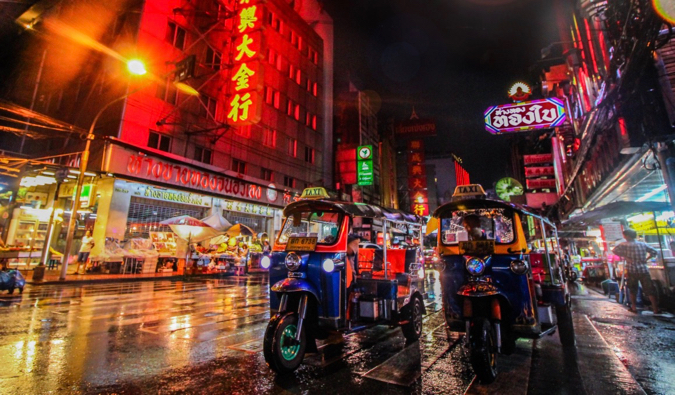
Photo Credit: 3

How Gay Travel is Different (And Why it Matters)

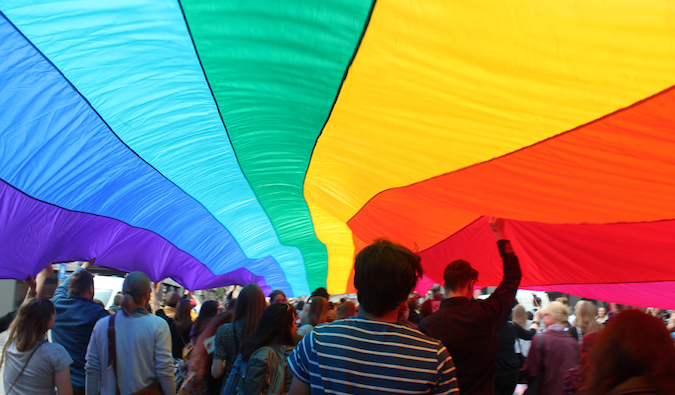
Rainbow flag at EuroPride March in Riga, Latvia in 2015 taken by Adam

In an effort to expand the site, I’ve been adding more guest contributors and, today, I’m announcing a LGBT column for the website. In this column, we will hear from voices in the LGBT community about their experiences on the road, safety tips, events, and, overall, advice for other LGBT travelers get the most out of their time on the road! So, without further ado, I’d like to introduce everyone to Adam from travelsofadam.com. He’s going to be the lead for this column (though we’ll shortly have writings from other voices in the community too!).

“Gay” travel can be an awkward topic for many, mostly because to be lesbian, gay, bisexual, or transgender (LGBT) is really to be a part of an incredibly diverse group of people. There are gay families who travel, solo gay travelers (like myself), solo lesbian travelers, ones who travel for festivals or nightlife or honeymoons, those that take cruises or splurge on luxury trips, and ones who rough it camping and backpacking in faraway places.

And just like every other type of traveler, we travel for our own personal reasons. Every aspect of what makes us unique also contributes to how, where, and why we travel. I travel because I love to travel, and I just happen to be gay.

That’s not to say I don’t also travel gay. Sometimes my sexuality also influences the how, why, and where I choose to visit a place. For example, I chose Berlin because I’d heard it was a gay hot spot, and I purposefully timed my trip to visit during the city’s annual gay pride celebrations, the Christopher Street Day parade — a time when I knew there’d be plenty of gay parties to attend and guys to meet. I was looking for a gay holiday (a gaycation, if you will), and I found it. Glitter and all.

But what does LGBT travel really mean?

It’s about safety, it’s about comfort, it’s about politics. But it’s also about welcoming events, friendly accommodation, and having fun with similar travelers.

The issues that LGBT travelers face are different than other travelers. To travel as a solo gay guy (hi!) is different than traveling as a lesbian couple or as a transgender person. There are different festivals and events, different meet-ups — and different reasons to worry.

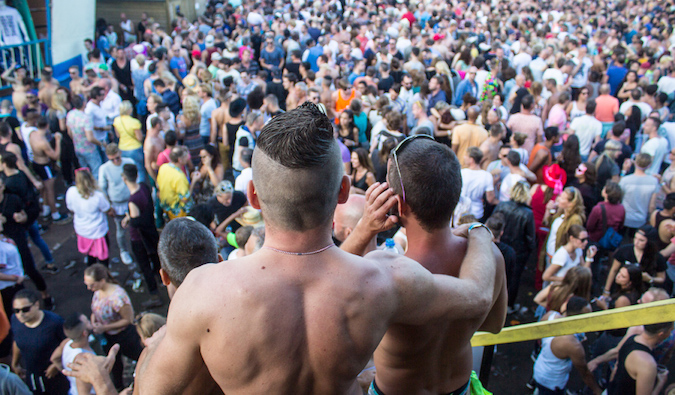
Men at a Dutch queer music festival called milkshake festival in Amsterdam, the Netherlands

There are still plenty of places around the world where being gay isn’t safe, nor is it comfortable — for locals or for tourists. But that doesn’t mean traveling as an LGBT individual is always dangerous. It’s frequently just a matter of having to know where and when one can disclose one’s sexuality through words or actions, and also the dangers or consequences (if any) for doing so. This is something straight people or opposite-sex couples almost never have to think about.

But in some places I’ve traveled, being gay isn’t even often considered an option. I’ve had awkward taxi rides in Jordan and Egypt, in Thailand and India: “Where’s your girlfriend? Why don’t you have a girl?”

I might respond with a visible sigh, trying to change the subject, or else a simple “I don’t have a girlfriend” and then avert my eyes and make myself look busy. In Jordan, at a café near Petra, one guy’s question was, “You gay?” Short and to the point. I replied with a grin and a “yeah”, and we left it at that, still sharing a bowl of hummus — just a bit quieter now.

Travel safety is different for every individual on every part of the LGBT spectrum. One friend (non-binary, genderfluid, queer identified) described to me an experience on a cruise to the Bahamas, where the ship hosted a “queer hour,” which was, in actuality, mostly heterosexual bachelor and bachelorette parties. And even when this friend tried to be “out” in their supposed safe space, they didn’t feel safe.

Dressed up drag performers in Kreuzberg, Berlin LGBT pride event

That’s not to say it’s all awkward, though. There was the time in Cambodia when I followed a group of backpackers from my hostel to what was supposed to be a cool local bar, the Lao-Lao Beer Garden. Little did I know it was also a hot spot for some of the gay locals, who after realizing I was gay offered me a number of tips for other LGBT things to see in the city.

Traveling somewhere as an LGBT traveler requires you to think about a lot of things:

  • What’s the LGBT rights situation of the destination?
  • Should I hide my sexuality? What is the safety situation like for openly LGBT travelers?
  • What organizations are there for my safety? What is the attitude of the police?
  • What LGBT resources are there (websites, newspapers, etc.)?
  • Where is the LGBT scene?
  • If I’m traveling with a partner, do we need to worry about booking one bed or two, or being more than friends in public?

The crowd-sourced website Equaldex.com curates LGBT rights and news around the world, and 76crimes.com reports on the 76+ countries where homosexuality is still illegal. Even the U.S. State Department publishes a useful page with LGBT travel information.

One of the joys of travel is meeting people and sharing experiences. But for LGBT travelers, it’s not always advisable to out oneself among strangers. Personally, as a gay traveler, I want to know and understand the world I’m in — so I seek out local LGBT organizations, places, events, and meet-ups (Couchsurfing, Meet-Up.com, and local LGBT have good lists of things going on) to learn more about the situation wherever I am.

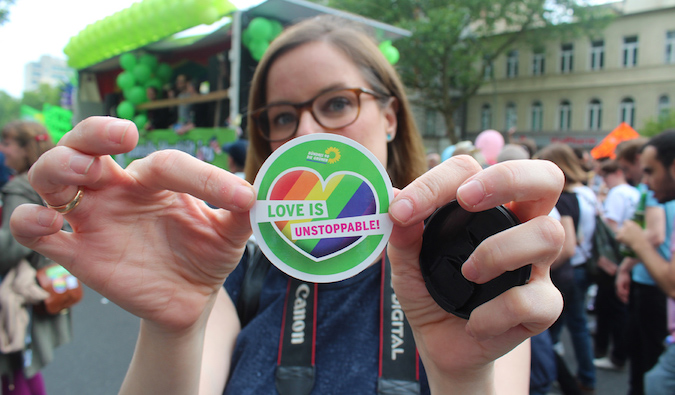
Girl holding LGBT love is unstoppable sticked at event in Berlin, Europe

There are lesbian, gay, bisexual, and transgender people all over the world. So when I feel safe to do so, I’m happy to talk about my sexuality, about who I am, with both foreigners and other travelers who might not immediately know another gay man.

All that said, traveling as an LGBT individual today is much easier than it used to be. In many places around the world, being gay isn’t much of a big deal anymore. And I suppose that’s the point about being gay and being a traveler today.

Many gay travelers I’ve spoken to have said the same. We don’t want to be labeled or put in boxes when traveling, and we’re certainly not always stereotypes. But the reality of the world is sometimes it’s just much more comfortable to travel to places already identified as LGBT friendly, to book with gay-friendly hotels, and to seek out other LGBTs abroad.

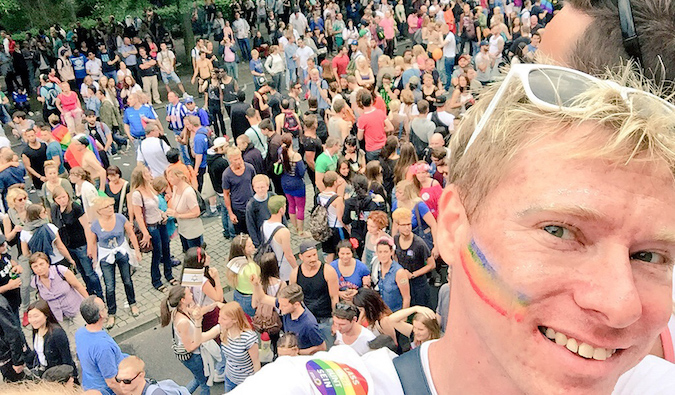
Adam Groffman, a gay traveler at a gay pride event in Berlin, Germany

Over the next few months, I’ll be sharing my gay travel tips and stories here on Nomadic Matt. I’m really excited to share my big gay world of travel with you — it’s a subject often overlooked in the travel world. Pick up any guidebook and you’ll be lucky to find more than one or two gay bars mentioned for a single place, when in reality, there are many, many more (often underground, sometimes seedy, and usually a bit hard to track down).

Stay tuned for future posts about how to meet other LGBT travelers on the road (besides the obvious apps) and my tips for the best gay travel apps, destinations, festivals, and events. Comment below with other topics you’d like to see, or with any questions you might have about traveling as a gay, lesbian, bisexual, or transgender person.

Adam Groffman is a former graphic designer who left a publishing job in Boston to travel around the world, before settling in Berlin, Germany. He’s a gay travel expert, writer, and blogger and publishes a series of LGBT-friendly Hipster City Guides from around the world on his gay travel blog, Travels of Adam. When he’s not out exploring the coolest bars and clubs, he’s usually enjoying the local arts and culture scene. Find more of his travel tips (and embarrassing stories) on Twitter @travelsofadam.

P.S. Read about Auston and David, a gay couple traveling around the world, here. Like Adam, they offer lots of tips for LGBT travelers who want to get out and explore the world safely and happily!

Why Pretentious Travelers Suck (And What I Do About Them)

a pretentious traveler
Nothing irks me more than people disparaging people’s travel choices. I don’t get why people do it. The whole “traveler vs. tourist” argument, talking about what makes someone a “real traveler,” and making fun of people’s routes — people waste so much energy trying to lift themselves up above others. Isn’t travel supposed to make you open-minded?

I do this for me. This is all my journey. I’m not in a race for the most countries visited, street stalls eaten at, or festivals attended. I do what makes me happy, even if it’s some “touristy” destination.

There isn’t a single “authentic” version of travel. Getting off the beaten path, finding some hidden island, or living with some guy in a yurt in Mongolia don’t make someone a better traveler than anyone else. It just means your itinerary and experience were different.

I’ve been riled up about this for quite some time and decided to make a video about this subject. Here’s how I really feel and what I think you should do when you meet a pretentious, judgmental traveler (also notice the new introduction! Spiffy, huh?):


(Want more travel videos? Subscribe to my YouTube channel here and get free videos!)

So go where you want. Do what you want. See what you want. Eat where you want. Maybe I’ll disagree, maybe I’ll try to get you to do something else, but, as Sheryl Crow said, if it makes you happy, it can’t be that bad — and at the end of the day, I’m just happy you left the house. That’s all I care about.

The next time someone starts harping on your travel choices or giving you grief, turn the conversation around on them. Tell them part of being a traveler is being open-minded and if they can’t respect your choice, the conversation is over. Call them out on their crap.

And then walk away.

It’s your trip. Don’t let people ruin it.

How You Can Help the Next Generation of Responsible Travelers

Students from Victor
Travel gives us perspective, challenges our expectations, and opens the door to new possibilities. It forces us to see the world and ourselves in a more profound way. I believe that it makes us better people. It gives us experience and understanding that you don’t get when you simply stay in your little corner of the world. It’s like that scene in Good Will Hunting when Robin Williams say to Will:

So if I asked you about art, you’d probably give me the skinny on every art book ever written. Michelangelo, you know a lot about him. Life’s work, political aspirations, him and the pope, sexual orientations, the whole works, right? But I’ll bet you can’t tell me what it smells like in the Sistine Chapel. You’ve never actually stood there and looked up at that beautiful ceiling.

Reading about something is one thing. Experiencing it is in real life is completely different. I know travel is no panacea. It’s not going to end hunger or bring about world peace. But it does give us perspective and experience. It gives us understanding and makes us more open. It teaches us possibility.

At a time when the world seems to be splitting apart, travel can at least give us a sense of understanding and community.

And that is why I created FLYTE, our community charity designed to give the gift of travel and education to young kids who grow up in places where that seems like a pipedream. Its mission is to expand their minds, show them that the world is full of possibility, and get them to dream big.

Today, I am announcing our next partner school!!!!

Travel has profoundly impacted the lives of the young students we’ve served.

Take Kaleb. He traveled with FLYTE to Mexico in 2016, and now he’s a sophomore at DePauw University studying political science and African studies. This past January, he took a trip study abroad to South Africa and is planning another one to Europe. As he says,

Traveling internationally better informed me not only as a young adult but as a global citizen. The experiences I have had traveling internationally during high school made me more competitive when applying for college and expanded my social consciousness. I can say that I now am more willing to interact with people of diverse backgrounds.

This why FLYTE exists and why I’m so proud of what we have accomplished together. Over 1,200 individuals have helped us grow FLYTE by spreading the word, volunteering, and donating to our fundraisers. We’ve sent close to 40 kids overseas and raised nearly $100,000 to make that happen.

So, I’m pleased to announce that after a long, rigorous application process, our next partner school is The Victor School from Victor, Montana!

Students from Victor

Victor is a tight-knit community about 45 miles south of Missoula. The entire K-12 school system only has 300 students. Lindsey Egelston, the teacher who will be leading this trip, explains that in Victor, “poverty is high and higher education levels are low, and many of our students’ families struggle to make ends meet.”

In June, FLYTE will send Lindsey and her students to Guatemala for ten days, where they’ll navigate the cobblestone streets of Antigua, explore the villages along Lake Atitlán, ignite their taste buds at the Chichicastenango market as well as volunteer with local organizations.

Living so far outside a metropolitan area makes it hard for these students to interact with a diverse range of people. This trip is a chance for these students to see the world, experience new cultures, see the power of education, and see the possibility that exists beyond their small town. It’s a chance to spark an interest in the world and education.

Today, I’m asking for your help. As someone who understands the transformative power of travel, you know how much these experiences can change a student’s life.

I can’t send these kids on this trip without you. We’re trying to raise $30,000 USD for this trip. I’ll be matching donations up to $10,000 and any extra money we raise can be put towards future trips.

Please consider joining our FLYTE Crew monthly giving program and help provide the sustainable support we need to serve a greater number of students. If 100 people give $25 a month, we could fund this trip and additional trip this year!

Not ready to give monthly? A one-time donation still allows us to send the Victor School abroad. Select the one-time option to donate today.

I know this is a budget travel website and most of us don’t have a lot of money but for the cost of a few drinks, you can pay it forward and help great a new generation of responsible travelers!

  • $10
  • $25
  • $50
  • $100
$
    • One time
    • Monthly

NOTE: We are a 501(c)3 charity so your donations are tax exempt. (US residents only)

We at FLYTE want to create a more peaceful, tolerant world, where everyone, regardless of race, ethnicity, gender, or socioeconomic status, is empowered to live to their full potential. This starts with our youth and we want to serve more of them.

At a time when people are building up barriers, dictators and nationalism are on the rise, social media brings out the worst in us, it’s more important than ever we do what we can to counteract our worst impulses.

If you’re the type of person that believes love trumps hate, help us help these kids.

If you’re the kind of person that is looking for a way to spread the power of travel, help us help these kids.

Let’s pay all our travel kindness forward and send these kids from the small town on Victor to Guatemala.

Thank you!

— Matt

P.S. – We’ve gotten a lot of questions about how much trips cost and our program expenses. That information is now available on our website.

P.P.S. – Want to help us and expand FLYTE’s impact? If you know of teachers who would be interested in applying for funding, let us know. If you know people who would want to get involved, share this post. If you want to help us by volunteering or creating a personal campaign, email us! We’re a small organization still so we need all the help we can get!

We’re 75% off completing this mission! Help us get to 100%!

Students from Victor
Dear fabulous reader,

I was in the shower (where I do some of my best thinking), pondering all the political fighting and social media outrage that seems to happen every week. Well, ok every day!!

Each day, people yell into the echo chamber.

I don’t know about you, but I have slight “outrage fatigue.” I can’t get up in arms anymore about a single speech or tweet, or what someone is wearing. I’m tired of it, and real problems don’t get solved that way.

They get solved by getting out there and doing something.

I recently read a great book called The Death of Expertise, which talks about how study after study has shown that people online tend to wall themselves off from opinions they don’t agree with because it’s easier than ever to just find information that confirms what you already believe.

But as travelers, we meet people from around the world. We experience cultures and values different than our own. I think is why travelers tend to be more open-minded than most. We have a broader perspective. We’ve been outsiders ourselves. We travel because we want to see the differences in the world, not hide from them.

Which is why, thinking about this topic, I am glad we have FLYTE, our community charity that raises money to send high school students on international trips to help expand their minds and put their education into practice. FLYTE aims to show kids that the world is much bigger — and full of more possibility — than they could ever imagine!

So far we’ve raised $26,000 to send these kids on a volunteering trip to Guatemala:

Students from Victor

These are the students from the Victor School in Victor, Montana, a small town of only 800 in rural Montana that is 96% white. Living so far outside a metropolitan area makes it hard for them to interact with a diverse range of people. Ten days in Guatemala isn’t a lot of time for us, but for these kids, it represents the start of a bigger, more important journey.

But we need another $7,000 more to make this trip happen!

And I’m asking for your help to help us get us to the finish line! On bended knee!

This trip is their chance to get out (even if only for a moment) and see the world, experience new cultures, and see the possibilities that exist beyond their small town. It’s a chance to spark an interest in the world and in education.

It is a chance to turn these kids — who, thanks to FLYTE, now have passports — into travelers and global citizens.

It is a chance for them put their schooling into practice.

It is a chance for them to see a world completely different than their own and develop empathy. To broaden their horizons and not just listen to what cable news or a curated social feed tells them.

It’s never been more important to broaden people’s perspective.

And it starts with these kids.

Because they will soon be the adults of the future.

For as little as $1, you can help us get there. If everyone who reads this website gave a dollar, we could make this – and many more like it – happen right away!

We can be the change we want to see in the world. Travel has done so much for us. So many people have been strangers in unknown lands.

If you’ve been wondering how you can pay it forward and get involved in building a better world, this is your chance.

I know this is a budget travel website and most of us don’t have a lot of money but for the cost of a few drinks, you can pay it forward and help great a new generation of responsible travelers!

  • $10
  • $25
  • $50
  • $100
$
    • One time
    • Monthly

NOTE: We are a 501(c)3 charity so your donations are tax exempt. (US residents only)

These kids, their teachers, and their parents will be forever changed by your generosity.

If you’re the type of person that believes love trumps hate, help us help these kids.

If you’re the kind of person that is looking for a way to spread the power of travel, help us help these kids.

Let’s pay all our travel kindness forward and send these kids from the small town of Victor to Guatemala!

Thank you so much for any support!

Sincerely,

Nomadic Matt

P.S. – Please help us share this organization and cause by forwarding this blog post to your friends and family or sharing it on social media! Let’s change some lives!

The Challenges of Being a Gay Solo Backpacker

Solo male traveler in the nature overseas looking lonely

In an effort to expand the site, I’ve been adding more guest contributors and, today, I’m announcing a LGBT column for the website. In this column, we will hear from voices in the LGBT community about their experiences on the road, safety tips, events, and, overall, advice for other LGBT travelers get the most out of their time on the road! So, without further ado, I’d like to introduce everyone to Adam from travelsofadam.com. He’s going to be the lead for this column (though we’ll shortly have writings from other voices in the community too!).

Backpacking is one of those once-in-a-lifetime experiences that opens you up to the world and allows you to experience new things no matter who or where you are. It can be challenging for every type of traveler, but for LGBT travelers, there are a handful of added, unique challenges. I share not this as a way to scare off gay travelers from backpacking — because it’s truly a rewarding experience — but as a helpful guide for how to best enjoy (gay) backpacking in a safe and fun way.

1. Knowing where to go

Gay LGBT pride flag hanging in Spain architecture
First off, there’s the fact of where to travel.

Sure, if you only travel to the most conspicuous gay-friendly destinations, you might find them easier and more attractive in terms of LGBT culture, nightlife, parties, and festivals (and sex). There are hot-spot gay cities and safe choices on every continent — from Mexico City to Madrid, Berlin to Bangkok, Sydney to São Paolo — but there’s even more fun outside the gay bubble.

Just about anywhere can be a “gay travel destination.” (Of course, not everywhere can be a gay-friendly destination.) There is a world of other cities with millions more LGBT individuals. Backpacking opens up that world and is a great way to introduce yourself to new people and new cultures.

Yet, you’ll still find yourself facing some added challenges.

2. Dealing with loneliness

LGBT men with backpacks holding hands lovingly in a crowded city overseas
As a minority group, gay people always struggle to feel included. Dealing with loneliness is just an extra challenge when you’re in a foreign environment.

Traveling in Thailand, I found myself staying in Bangkok’s backpacker ghetto (shout-out to Khao San Road!) where, despite the hordes of backpackers, I never did find another gay backpacker to explore the city with. Sure, I found other backpackers interested in the ladyboy bars and strange strip clubs, but I was after a more local experience.

So instead, I found myself venturing out to Bangkok’s gay nightlife in Silom alone. Under ordinary experiences I would never go to a club alone. And yet, here I was — that urge to find something familiar had brought me out of my security shell.

Since the Orlando nightclub shooting last month, there’s been renewed interest in the gay bar as a safe space, a place for fostering and creating LGBTQ communities. And in so many gay bars around the world, if you walk in as a foreigner, you’ll often find yourself immediately comforted by being around others like you.

3. Meeting other LGBT backpackers

LGBT drag show in a club overseas where to meet other gay travelers
While some accommodations exclusively target gay travelers — such as some gay-men-only hostels and gay hotels in Europe — most hostels are still very much a part of the heterosexual world. So to meet other LGBTQ backpackers, I use websites like Meetup, Facebook, and Couchsurfing, which all feature LGBTQ-specific groups for each destination. Usually I’ll find an LGBTQ local who’s more than happy to show off their home or get together, whether it’s for a coffee in Berlin, a night out dancing in Dallas, or an impromptu walking tour in Manchester.

But, perhaps the biggest not-so-secret gay travel tip is that the ubiquitous gay dating apps provide so much more than the carnal experiences stereotypical of gay men. In the past year, many of the top gay apps have launched more social networking features to make them more PG and to make it easier to meet for “more social” encounters. The Hornet app now includes a Facebook-like newsfeed and a “discover” map as a way to connect by searching hashtags, cities, and topics, while Scruff has a feature called “Venture” that includes the ability to connect with other tourists, search events, and find local ambassadors. (And, controversially, even some heterosexual people seem to be using gay dating apps simply to make “gay best friends.”)

4. Staying safe in unfriendly places

Black and white lonely solo backpacker walking through city street sadly
No matter where you are in the world — from Dubai to Dublin — there are always going to be other LGBTQ individuals around. Unfortunately, that doesn’t mean every place is safe or friendly. And while some gay travelers may choose to boycott particular destinations, not all of us do. If you happen to travel to one of these places, be sure to know the local legislation and the current state of gay rights.

In the past several years, many Western governments have started to include LGBTQ safety information as part of their general travel advice, which makes this pre-trip research that much easier. No matter where you’re from, it can be useful to check both the UK’s Foreign & Commonwealth Office LGBT travel advisories, the US State Department’s LGBTI travel information, and Equaldex’s crowd-sourced LGBT rights database before traveling.

Asking friends who’ve previously traveled to your destination for LGBT safety tips before visiting is also helpful, while both Internet forums and news outlets can provide useful information on the current state of LGBT issues. Many guidebooks include information about existing local LGBTQ organizations or clinics.

Trusting your instincts when backpacking is an important skill. I remember my first visit to Amman, Jordan, where I wanted to explore the city’s gay culture, but I was too afraid to meet anyone from the gay apps — even if it was just for a coffee. We’ve all been there — starting conversations with a local guy on an app and then flaking out before meeting in person. A habit of our generation, really, but that’s OK. You do you.

Bonus: Check out Ellen Page and Ian Daniel’s Gaycation travel TV series (from Viceland), with episodes on Jamaica, a country notorious for its homophobia; Brazil; and Japan (as well as the US).

5. Coming out again and again

The silhouettes of two men in love kissing while traveling together
Anyone who’s been backpacking for an extended trip probably recognizes the familiar five-minute friendships. You connect with someone quickly and intensely — sharing your life story, your secrets from home, and travel tips from wherever you’ve just come from. These fast friendships are fun and one of the most amazing experiences, but as a gay traveler, there’s an added challenge: most people assume that others around them are heterosexual — it’s just a habit of the world. (Admittedly, it’s a habit that’s breaking down in recent years.) And while coming out to family and friends back home is a truly rewarding experience as an LGBT individual, doing so again and again on the road quickly loses its appeal. Sometimes you end up sharing more than you care to, alternately answering and dodging questions from inquisitive strangers.

Traveling in Jerusalem, I met a group of backpackers at my hostel and ended up carousing through Jerusalem’s surprisingly hip nightlife. We were hanging out at Bar Sira, sitting at an outdoor table, when the topic of relationships finally came up. After listening to the guys talking about their conquests of Israeli women, I had to come out: Well, I’m gay. And let me tell you — the guys are as hot as the women. My new collection of European friends seemed surprised, and the conversation changed quickly. Out of an awkward, overcompensating kindness, the questions turned back to me: Are you a top or a bottom? What does anal sex feel like? Do you basically just get sex whenever you want? Their curiosity was sweet, but also slightly annoying. I found myself suddenly an encyclopedia of gay sex, acting the role of teacher. Sure, it feels good to impart some sexual knowledge to a stranger, but night after night with new travelers each time? No thanks! It’s too personal, too sexual. Don’t get me wrong: I like to talk about myself, but my sexuality isn’t the only thing about me.

6. Safe sex and traveling

Gay man walking alone in front of a mural in Europe taken by Adam
Anyone who has ever stayed in a hostel or hung around many backpackers knows that the hook-up culture is alive and well among backpackers. In fact, a recent study revealed that many travelers ignore safe-sex practices when on the road and tend to engage in risky behaviors. For LGBTQ individuals, if you’re newly out and exploring your sexuality while also out there exploring the world, chances are high that you’ll find yourself in some compromising situations.

Sex while traveling can be a lot of fun, especially when it’s a passionate, fun-filled holiday romance, but unless you want some unwanted souvenirs, it’s best to stay safe. Of course, in the throes of passion and inhibited by drugs or alcohol, unexpected things can and do happen. Thankfully many gay bars and clubs around the world keep condoms and lube readily available, and local LGBTQ centers often provide rapid HIV tests, free counseling, and STI testing. However, if you find yourself at a hospital having to explain your sexuality and sexual habits in a foreign country, you might encounter difficulty as an LGBT person depending upon where you are and who you’re dealing with.

****

Backpacking hasn’t always been a heterosexual-only experience. LGBT people have been traveling since…well, probably forever. With modern technology, improved equal rights, and new communication tools, gay travel is becoming easier and easier.

But while backpacking can be rewarding and a lot of fun, ask any traveler regardless of sexuality and you’ll find that the experience is definitely challenging. I’ve had to fend off a queer Couchsurfing host in India who was edging for a Christmas Eve bisexual orgy, fight to make it back to my hostel in London after passing out in a club bathroom, and deal with a broken motorbike on a mountaintop in Cambodia, but the stories and experiences I’ve racked up have turned me into a better traveler and a better person.

Adam Groffman is a former graphic designer who left a publishing job in Boston to travel around the world, before settling in Berlin, Germany. He’s a gay travel expert, writer, and blogger and publishes a series of LGBT-friendly Hipster City Guides from around the world on his gay travel blog, Travels of Adam. When he’s not out exploring the coolest bars and clubs, he’s usually enjoying the local arts and culture scene. Find more of his travel tips (and embarrassing stories) on Twitter @travelsofadam.

P.S. – If you are a lesbian traveler or a transgender traveler and would like to share your experience on the blog, please send me an email at matt@nomadicmatt.com