显示标签为“backpacker”的博文。显示所有博文

2019年7月26日星期五

The Challenges of Being a Gay Solo Backpacker

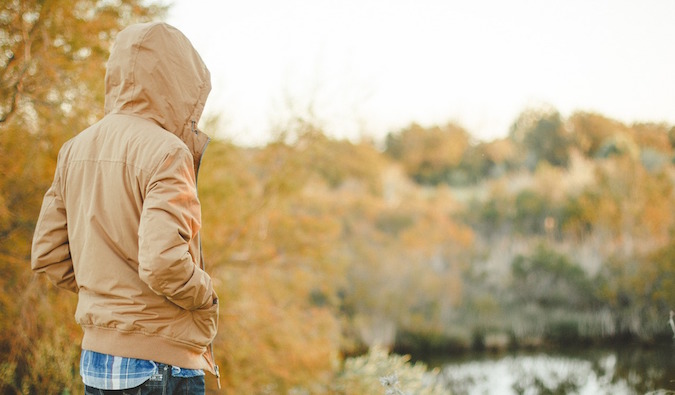
Solo male traveler in the nature overseas looking lonely

In an effort to expand the site, I’ve been adding more guest contributors and, today, I’m announcing a LGBT column for the website. In this column, we will hear from voices in the LGBT community about their experiences on the road, safety tips, events, and, overall, advice for other LGBT travelers get the most out of their time on the road! So, without further ado, I’d like to introduce everyone to Adam from travelsofadam.com. He’s going to be the lead for this column (though we’ll shortly have writings from other voices in the community too!).

Backpacking is one of those once-in-a-lifetime experiences that opens you up to the world and allows you to experience new things no matter who or where you are. It can be challenging for every type of traveler, but for LGBT travelers, there are a handful of added, unique challenges. I share not this as a way to scare off gay travelers from backpacking — because it’s truly a rewarding experience — but as a helpful guide for how to best enjoy (gay) backpacking in a safe and fun way.

1. Knowing where to go
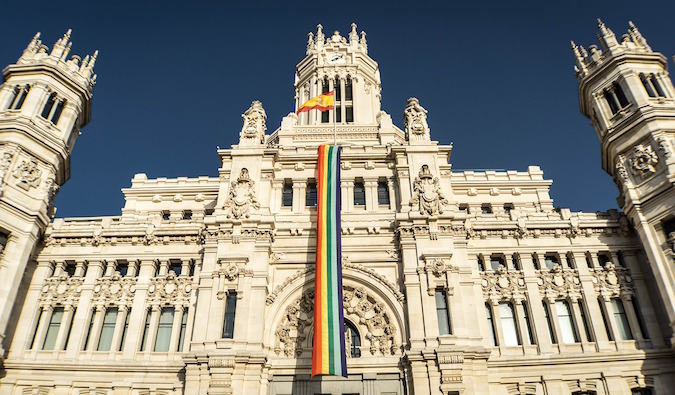
Gay LGBT pride flag hanging in Spain architecture
First off, there’s the fact of where to travel.

Sure, if you only travel to the most conspicuous gay-friendly destinations, you might find them easier and more attractive in terms of LGBT culture, nightlife, parties, and festivals (and sex). There are hot-spot gay cities and safe choices on every continent — from Mexico City to Madrid, Berlin to Bangkok, Sydney to São Paolo — but there’s even more fun outside the gay bubble.

Just about anywhere can be a “gay travel destination.” (Of course, not everywhere can be a gay-friendly destination.) There is a world of other cities with millions more LGBT individuals. Backpacking opens up that world and is a great way to introduce yourself to new people and new cultures.

Yet, you’ll still find yourself facing some added challenges.

2. Dealing with loneliness
LGBT men with backpacks holding hands lovingly in a crowded city overseas
As a minority group, gay people always struggle to feel included. Dealing with loneliness is just an extra challenge when you’re in a foreign environment.

Traveling in Thailand, I found myself staying in Bangkok’s backpacker ghetto (shout-out to Khao San Road!) where, despite the hordes of backpackers, I never did find another gay backpacker to explore the city with. Sure, I found other backpackers interested in the ladyboy bars and strange strip clubs, but I was after a more local experience.

So instead, I found myself venturing out to Bangkok’s gay nightlife in Silom alone. Under ordinary experiences I would never go to a club alone. And yet, here I was — that urge to find something familiar had brought me out of my security shell.

Since the Orlando nightclub shooting last month, there’s been renewed interest in the gay bar as a safe space, a place for fostering and creating LGBTQ communities. And in so many gay bars around the world, if you walk in as a foreigner, you’ll often find yourself immediately comforted by being around others like you.

3. Meeting other LGBT backpackers

LGBT drag show in a club overseas where to meet other gay travelers
While some accommodations exclusively target gay travelers — such as some gay-men-only hostels and gay hotels in Europe — most hostels are still very much a part of the heterosexual world. So to meet other LGBTQ backpackers, I use websites like Meetup, Facebook, and Couchsurfing, which all feature LGBTQ-specific groups for each destination. Usually I’ll find an LGBTQ local who’s more than happy to show off their home or get together, whether it’s for a coffee in Berlin, a night out dancing in Dallas, or an impromptu walking tour in Manchester.

But, perhaps the biggest not-so-secret gay travel tip is that the ubiquitous gay dating apps provide so much more than the carnal experiences stereotypical of gay men. In the past year, many of the top gay apps have launched more social networking features to make them more PG and to make it easier to meet for “more social” encounters. The Hornet app now includes a Facebook-like newsfeed and a “discover” map as a way to connect by searching hashtags, cities, and topics, while Scruff has a feature called “Venture” that includes the ability to connect with other tourists, search events, and find local ambassadors. (And, controversially, even some heterosexual people seem to be using gay dating apps simply to make “gay best friends.”)

4. Staying safe in unfriendly places
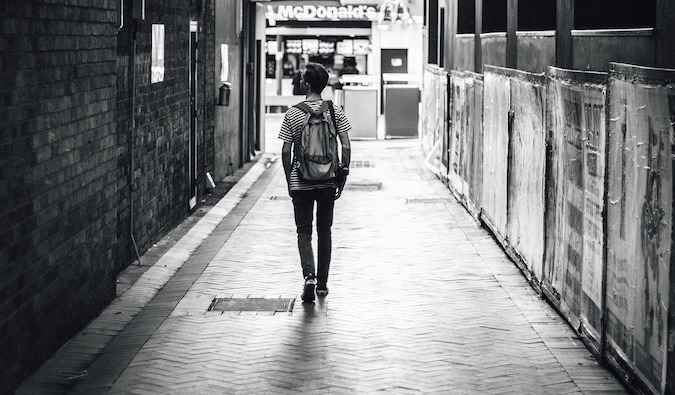
Black and white lonely solo backpacker walking through city street sadly
No matter where you are in the world — from Dubai to Dublin — there are always going to be other LGBTQ individuals around. Unfortunately, that doesn’t mean every place is safe or friendly. And while some gay travelers may choose to boycott particular destinations, not all of us do. If you happen to travel to one of these places, be sure to know the local legislation and the current state of gay rights.

In the past several years, many Western governments have started to include LGBTQ safety information as part of their general travel advice, which makes this pre-trip research that much easier. No matter where you’re from, it can be useful to check both the UK’s Foreign & Commonwealth Office LGBT travel advisories, the US State Department’s LGBTI travel information, and Equaldex’s crowd-sourced LGBT rights database before traveling.

Asking friends who’ve previously traveled to your destination for LGBT safety tips before visiting is also helpful, while both Internet forums and news outlets can provide useful information on the current state of LGBT issues. Many guidebooks include information about existing local LGBTQ organizations or clinics.

Trusting your instincts when backpacking is an important skill. I remember my first visit to Amman, Jordan, where I wanted to explore the city’s gay culture, but I was too afraid to meet anyone from the gay apps — even if it was just for a coffee. We’ve all been there — starting conversations with a local guy on an app and then flaking out before meeting in person. A habit of our generation, really, but that’s OK. You do you.

Bonus: Check out Ellen Page and Ian Daniel’s Gaycation travel TV series (from Viceland), with episodes on Jamaica, a country notorious for its homophobia; Brazil; and Japan (as well as the US).

5. Coming out again and again

The silhouettes of two men in love kissing while traveling together
Anyone who’s been backpacking for an extended trip probably recognizes the familiar five-minute friendships. You connect with someone quickly and intensely — sharing your life story, your secrets from home, and travel tips from wherever you’ve just come from. These fast friendships are fun and one of the most amazing experiences, but as a gay traveler, there’s an added challenge: most people assume that others around them are heterosexual — it’s just a habit of the world. (Admittedly, it’s a habit that’s breaking down in recent years.) And while coming out to family and friends back home is a truly rewarding experience as an LGBT individual, doing so again and again on the road quickly loses its appeal. Sometimes you end up sharing more than you care to, alternately answering and dodging questions from inquisitive strangers.

Traveling in Jerusalem, I met a group of backpackers at my hostel and ended up carousing through Jerusalem’s surprisingly hip nightlife. We were hanging out at Bar Sira, sitting at an outdoor table, when the topic of relationships finally came up. After listening to the guys talking about their conquests of Israeli women, I had to come out: Well, I’m gay. And let me tell you — the guys are as hot as the women. My new collection of European friends seemed surprised, and the conversation changed quickly. Out of an awkward, overcompensating kindness, the questions turned back to me: Are you a top or a bottom? What does anal sex feel like? Do you basically just get sex whenever you want? Their curiosity was sweet, but also slightly annoying. I found myself suddenly an encyclopedia of gay sex, acting the role of teacher. Sure, it feels good to impart some sexual knowledge to a stranger, but night after night with new travelers each time? No thanks! It’s too personal, too sexual. Don’t get me wrong: I like to talk about myself, but my sexuality isn’t the only thing about me.

6. Safe sex and traveling
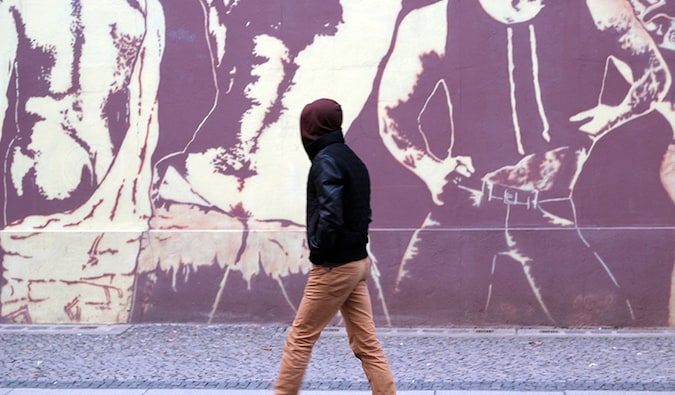
Gay man walking alone in front of a mural in Europe taken by Adam
Anyone who has ever stayed in a hostel or hung around many backpackers knows that the hook-up culture is alive and well among backpackers. In fact, a recent study revealed that many travelers ignore safe-sex practices when on the road and tend to engage in risky behaviors. For LGBTQ individuals, if you’re newly out and exploring your sexuality while also out there exploring the world, chances are high that you’ll find yourself in some compromising situations.

Sex while traveling can be a lot of fun, especially when it’s a passionate, fun-filled holiday romance, but unless you want some unwanted souvenirs, it’s best to stay safe. Of course, in the throes of passion and inhibited by drugs or alcohol, unexpected things can and do happen. Thankfully many gay bars and clubs around the world keep condoms and lube readily available, and local LGBTQ centers often provide rapid HIV tests, free counseling, and STI testing. However, if you find yourself at a hospital having to explain your sexuality and sexual habits in a foreign country, you might encounter difficulty as an LGBT person depending upon where you are and who you’re dealing with.

****

Backpacking hasn’t always been a heterosexual-only experience. LGBT people have been traveling since…well, probably forever. With modern technology, improved equal rights, and new communication tools, gay travel is becoming easier and easier.

But while backpacking can be rewarding and a lot of fun, ask any traveler regardless of sexuality and you’ll find that the experience is definitely challenging. I’ve had to fend off a queer Couchsurfing host in India who was edging for a Christmas Eve bisexual orgy, fight to make it back to my hostel in London after passing out in a club bathroom, and deal with a broken motorbike on a mountaintop in Cambodia, but the stories and experiences I’ve racked up have turned me into a better traveler and a better person.

Adam Groffman is a former graphic designer who left a publishing job in Boston to travel around the world, before settling in Berlin, Germany. He’s a gay travel expert, writer, and blogger and publishes a series of LGBT-friendly Hipster City Guides from around the world on his gay travel blog, Travels of Adam. When he’s not out exploring the coolest bars and clubs, he’s usually enjoying the local arts and culture scene. Find more of his travel tips (and embarrassing stories) on Twitter @travelsofadam.

P.S. – If you are a lesbian traveler or a transgender traveler and would like to share your experience on the blog, please send me an email at matt@nomadicmatt.com

47 Signs You Might Be a Backpacker

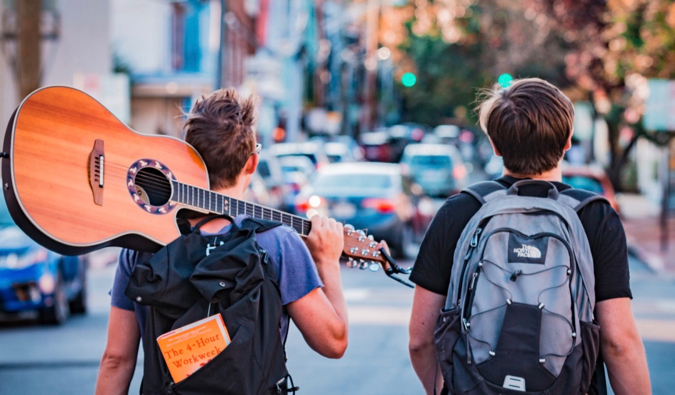
two backpackers with a guitar
Updated: 8/20/2018 | August 20th, 2018

Backpacking. It’s more than just slinging a pack over your shoulder and setting off into the wild blue yonder. It’s a way of seeing the world and interacting with it. It embraces chaos, challenges, and serendipity. It’s wanting to get under the skin of a destination, to get out of your comfort zone, to try new foods, meet new people, and skip the fancy resorts.

Backpacking isn’t a vacation. It’s an adventure.

It’s a way of life.

When people ask me what kind of traveler I am, I always say I’m a backpacker. It’s just who I am as a person. Even as I get older, it’s a style of travel I continue to identify with.

But how do you know if you’re a backpacker at heart? Here are 47 tell-tale signs that you too might be backpacker:

You don’t know what to write down when asked for your permanent address.

You don’t know what to write down for occupation on the customs forms.

Pasta has been your main meal for months in the hostel kitchen. Sometimes you mix it up by putting chicken in it.

You also live on rice, trail mix, and other cheap foods.

You wear the same shirt for a week (or longer).

You wear the same jeans for two weeks.

You do your laundry in hostel sinks.

Everything you own fits into one pack.

You think nothing of sharing a room with the stranger you just met five minutes ago.

Hot water is often seen as a luxury.

So is a comfy bed.

So is a bathroom IN your room.

So is air conditioning.

You will sleep anywhere as long as it is cheap and bed bug free.

You have a warped sense of cost. Three dollars for a room? Great deal! Three dollars for a meal? Outrageous! Five dollars for an Uber? I’ll walk the extra thirty minutes.

When you go back home, you find it weird that you can’t haggle over prices.

You can’t sleep without earplugs anymore, even if no one is snoring.

You haven’t slept in a room by yourself since you left home.

You can never remember what day of the week it is.

Or the month.

You’re excellent at using hand signs and pantomiming for things you want.

You ask people where they’re from before you ask them what their name is, and you remember them according to where they came from.

No matter where you go, the beer is never cheap enough.

You have permanent flip-flop tan lines on your feet.

You find it odd to be surrounded by people who have the same accent as you.

You can say “cheers” in more languages than you’d like to admit.

You are pleasantly surprised when you find toilet paper in the bathroom.

You believe that a good shower constitutes running water.

You have learned to say “beer” in 10 languages.

You fill your pockets with as many bread rolls and jam packets from the free breakfast as you can so you can eat lunch today.

You haven’t showered without flip-flops in months.

Your budget revolves around how much alcohol you can buy in one night.

You plan your travel around getting free accommodation on a train, plane, or bus.

You’ll spend a night in an airport to save money.

You know the nationality of everyone in the hostel just by looking at their backpacks.

You’re permanently tired.

You see a television as a luxury and a waste of time.

But you instantly want to become best friends with someone that has Netflix subscription with them!

You still think the three shirts you have been wearing for the past 6 months are fashionable.

You have fisherman’s pants.

You know what the words “visa run” entail and how painful one can be.

You consider a dorm with “only” 8 beds a luxury.

You get disappointed when you enter a new country and don’t get a stamp.

You repeatedly swear “this is your last time flying Ryanair” until the show up as the cheapest flight on your next search result.

You swear you’ll never take an overnight bus again and do it anyways.

As you get older, you swear you give up dorms and then book one for tomorrow night. It’s so cheap!

No matter where you are in the world, you know it’s exactly where you’re supposed to be.

Book Your Trip: Logistical Tips and Tricks

Book Your Flight
Find a cheap flight by using Skyscanner or Momondo. They are my two favorite search engines. Start with Momondo.

Book Your Accommodation
You can book your hostel with Hostelworld. If you want to stay elsewhere, use Booking.com as they consistently return the cheapest rates. (Here’s the proof.)

Don’t Forget Travel Insurance
Travel insurance will protect you against illness, injury, theft, and cancellations. I never ever go on a trip without it. I’ve been using World Nomads for ten years. You should too.

Need Some Gear?
Check out our resource page for the best companies to use!

Want More Information?
Be sure to visit our robust travel guides for even more planning tips!

Pai: Thailand’s Mountain Backpacker Paradise (or Hell?)

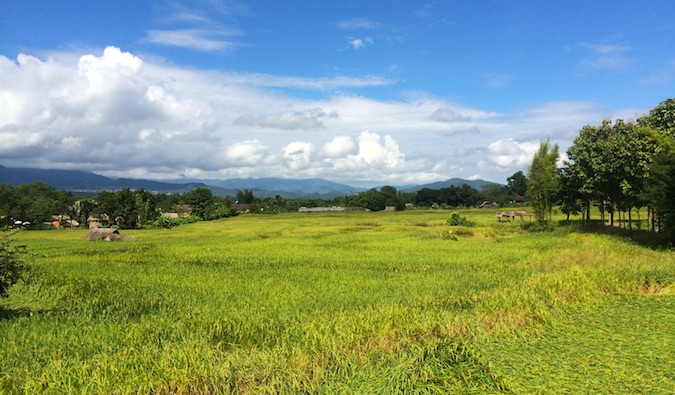
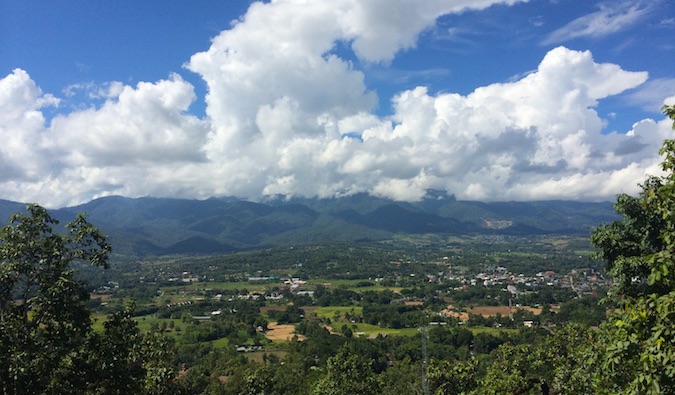
pai, thailand and its beautiful countryside
I didn’t like Pai. Wait. Check that — I liked Pai, I just didn’t love Pai. For years, travelers have told me how much they loved Pai. “It’s aaaaa-mazing! It’s so much fun. There’s healthy food, incredible drinks, and beautiful mountains. You’ll never want to leave,” they would explain, as if talking about the Garden of Eden.

When I started traveling this region in 2006, I rarely heard the name Pai mentioned. It was far off the beaten path, and back then I was all about staying on the beaten path. Over the years, Pai grew in fame as a destination where people smoked weed, drank, hiked, and did yoga. Having never been to Pai, I decided on this trip that it was time to finally check out what all the fuss was about.

Driving through northern Thailand into the mountains, my bus twisted and turned. The road to Pai has over 700 turns, but I barely noticed them as I stared out the window at the densely covered hills rolling like waves into the horizon. It was green as far as I could see, and I was again struck by the beauty of the Thai countryside. We drove on for hours as our bus driver auditioned for an unseen F1 judge. But the heart-stopping speed was worth it to once again see such beautiful tropical forests.

As I explored town later that day, I understood why backpackers love Pai, why they write so effusively about it and accentuate the world love when they mention it. Nestled in the mountains and surrounded by waterfalls and wondrous hiking trails, Pai is a tiny town where life moves at a pace that would frustrate even the most laid-back Spaniard. It’s also a Western paradise: there’s organic food, wheatgrass shots, specialty teas, and Western food in shops lining the streets of the town. Additionally, drinks and accommodations are cheap, and the party goes late.

pai, thailand

It is a backpacker’s mountain paradise.

But it was often just those things that turned me off to Pai. The town is simply too touristy and culturally washed over for me. I’m not one to hate the tourist trail — I’m writing this in a Western café in Luang Prabang, Laos while having a lemonade. But when people seek out imported food, drink beers from Belgium, and when the street food consists of burgers, bruschetta, and lasagna, I think things have gone too far.

Thailand itself seems to have gotten lost in Pai as waves upon waves of Westerners and Chinese tourists reshape most of town. One had to wander to find Thai restaurants that catered to the local population. (They were delicious and cheaper than the food found at the “market” on Walking Street.)

Of course, Pai is not all bad — there’s plenty to see and do. From town, you can hike to waterfalls, wander through farms and rice terraces where the only sounds are the birds and farm animals, and bike to caves and more waterfalls.

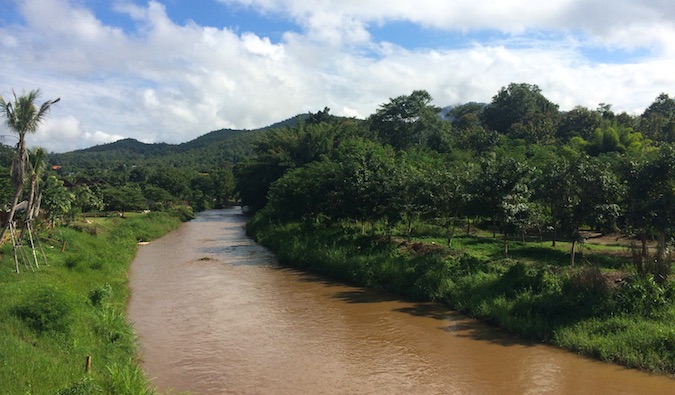
pai, thailand

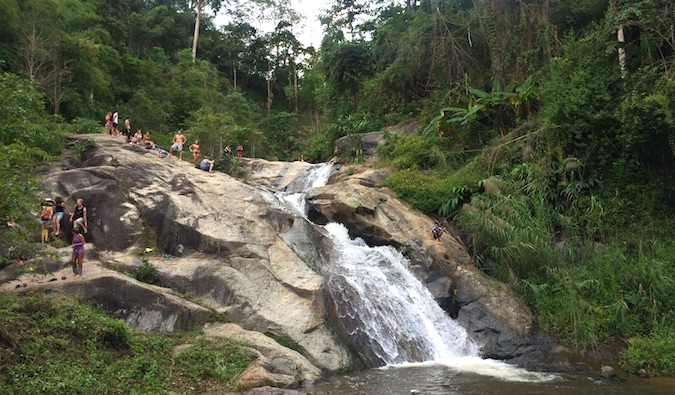
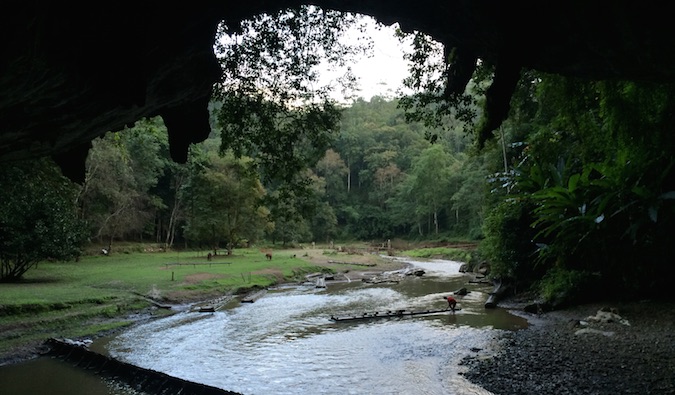
I especially loved the day trip to the Tham Lod caves. In mid-afternoon, you’re driven by one of the many tour operators (don’t worry which, they all go the same way) to Mo Paeng waterfall, where you can go for a swim, and then to Sai Ngam (secret) hot springs, a viewpoint, and finally the caves, where you arrive right before sunset. After a hike along a short path, a Thai guide leads you through three large chambers before you board a raft to float down the river that splices this cave in half. There the cavern opens up as you witness thousands of birds flocking around the entrance. It was mystifying, breathtaking, and the highlight of my time in Pai.

What I loved about Pai was the setting, not the vibe. In a town that charges you to plug your computer in, I found watching bare-chested backpackers get drunk obnoxious. As to fully showcase what Pai had become, my trip was bookended by overhearing two girls discussing whether they are “damp” or not according to Chinese medicine and two older guys discussing how Monsanto and governments are conspiring to depopulate the world.

pai, thailand

I can see why so many travelers come here and love it: cheap accommodation, excess partying, the beautiful setting, the good Western food. If I were a first-time traveler and much younger, this travel atmosphere would be great. You get to interact with a lot of other travelers, maybe meet a few locals, and have a wild time.

But it’s not for me anymore.

The Pai of the backpacker is not the Pai that interests me. I love what made Pai famous in the first place: the mountains and the long forest paths to secluded waterfalls, caves, stunning vistas, and a quiet place to read a good book.

pai, thailand

This is where Pai shines. This is what makes Pai the place to be. And why you should go to Pai, stay on the outskirts town in a lovely little bungalow, rent a bike, traverse the hills, bathe in cool waterfalls, or explore some caves.

Pais is much more than a haven for Westerner hippies, backpackers, and yoga teachers.

NEXT STEP: Click here to plan your trip to Thailand with my detailed guide.

Vang Vieng: A Hedonistic Backpacker Town Reborn

the beautiful countryside of Vang Vieng LaosAs I tubed down the slow river back into town, all around me were signs of a previous era: zip lines and rope swings sitting unused, bars long ago boarded up, and fading signs advertising cheap drinks. Vang Vieng’s riverbank was a reminder of the town’s recent past, like a modern Gomorrah.

Now there was barely a peep coming from the surrounding area. No blaring music. No backpackers jumping into a too-shallow river. Just a few kayakers, tubers, and friends enjoying the day’s final warmth from the sun.

I came to Vang Vieng to see what had become of the place now that the infamous tubing had been shut down.

I found a destination reborn.

In the late 1990s, backpackers discovered this little town in the middle of Laos. Located by a beautiful, refreshing river and surrounded by caves, lagoons, and mountains, it was the perfect mountainside chill-out spot. It was cheap, drugs abounded, and anything went here.

sunset on vang vieng's gorgeous landscape

Over the years, the secret got out, and Vang Vieng became a symbol of everything that was wrong with backpacking: a town heaving with bars and clubs catering to tourists who came to get as shitfaced as possible and do drugs (all of which are illegal in Laos), flouted local customs, and treated this place as their own playground. The surrounding landscape and its activities were ignored in favor of the river, which became lined with bars selling drugs, cheap drinks, and fun times.

Every year more and more people came, and every year backpackers acted foolishly and recklessly, resulting in an average of 24 deaths annually from drinking, drugs, or jumping into the shallow river. Along the river was a slide called “The Death Slide” — it was a very literal name.

Finally, enough was enough, and in late 2012, local officials shut tubing down completely. There would be no more river parties.

With the tubing gone, the backpackers went too. For months, Vang Vieng was a ghost town. The economy suffered, and locals worried about the future. About a year later, officials allowed tubing once again — but with more stringent rules. Now, only three bars can be open at once, and there are no more river swings, drugs, death slides, or dangerous activities. And, with a midnight curfew now, the party doesn’t rage all night.

backpacker playing around in vang vieng's river drunkenly

From speaking to numerous locals, I learned that the number of backpackers has been cut in half and replaced by a growing Korean and Chinese tour group population, which doesn’t tube and spends more money. Now the backpacker bars on the riverfront sit empty while the center of town grows with boutique hotels and high-end restaurants catering to the new waves of tourists.

“This is good. There are few people, but they spend more money,” one restaurant owner said.

“It’s a lot better now that people aren’t dying. The old days were fun, but this is safer,” a long-time Western bartender told me.

No longer is Vang Vieng the hedonistic jungle town it was once was. It is now a calm center for outdoor adventure, jungle hikes, and lazy days cooling off in the river. Though at first I worried the town would still be a crazy backpacker place and I would hate it, I now found myself wishing I had more time and only begrudgingly leaving.

backpacker buses and transportation in vang vieng, laos

Vang Vieng has reclaimed its place as one of the must-see places in Laos.

The new Vang Vieng still retains some of the old ways: the famous Sakura bar still pumps out music until midnight, gives away free drinks until 9 (seriously), and serves up whip-its (not cool); Gary’s famous Irish bar is still around; and backpackers still come to drink and socialize.

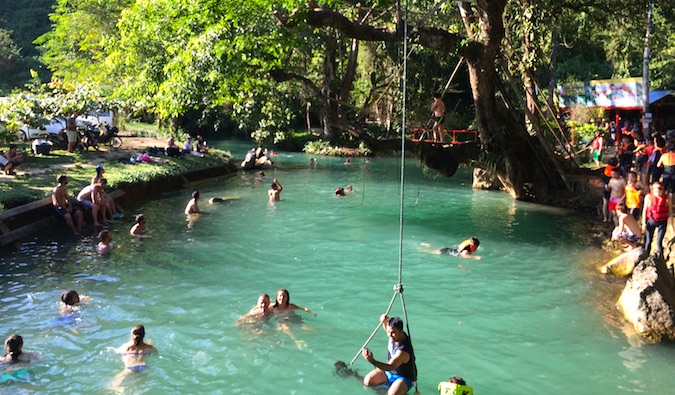
travels hanging out by the water being lazy in vang vieng

And tubing does exist. But it’s a much more relaxed affair now.

With so few people around, some days 50-60 people will casually float down the river; other days only 20 (it varies greatly with the season). But it’s never the hundreds upon hundreds that used to tube and visit the bars each and every day. Moreover, a lot of people now skip the bars and parties, and just rent a tube for the sake of renting a tube.

Locals, conscious of their city’s previous reputation, are happy with this new version of tubing.

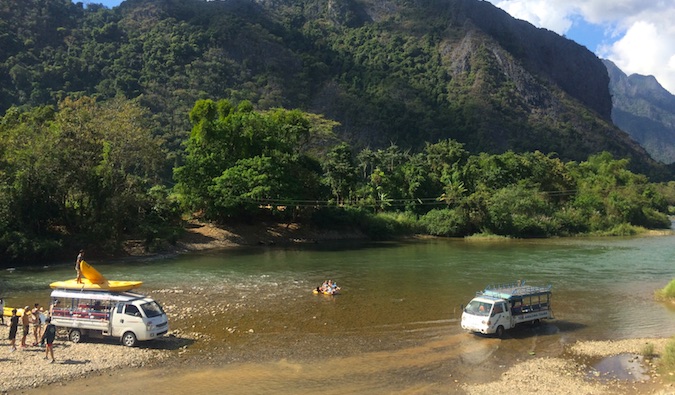
Tubing’s decline has allowed people to finally take part in other activities. Now the focus can be on exploring the dozens of local caves and relaxing in swimming holes. A lot of tour operators now offer kayaking tours, zip-lining adventures, and full-day hikes around the mountains. The town center bursts with Korean restaurants, boutique hotels, and even a surprisingly good Mexican restaurant called Amigos.

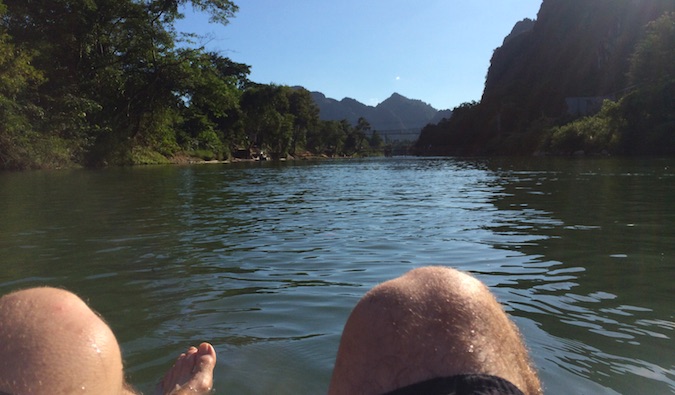
man's legs point of view from a river raft in vang vieng

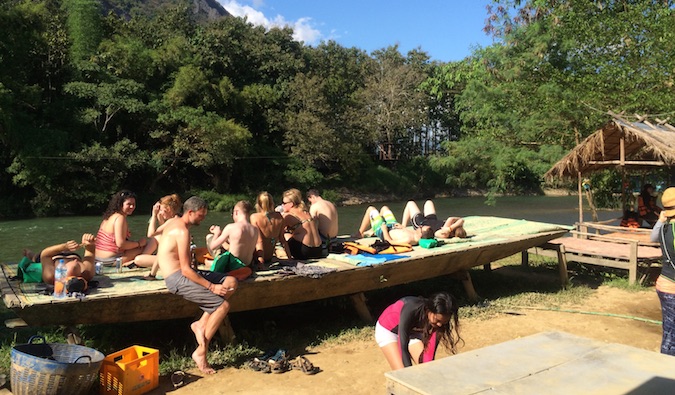
That’s not to say you won’t see lots of backpackers — they can’t be missed. But they don’t come in the numbers they used to and tend to focus more on those other outdoor activities. Others still come expecting the Sodom of old but quickly find out that’s no longer around.

As I threw my bags on the midday bus to Vientiane, I looked back and found I was sad to leave. The new Vang Vieng is the city it always should have been. It’s working hard to shed its old reputation and attract a better-quality traveler. I was going to miss the fiery pink and orange sunsets, the tree-covered limestone karsts jutting into the sky, the mind-blowing aquamarine blue swimming holes, and the tranquil countryside that seems to speak from every pore “Slow down and enjoy yourself.”