显示标签为“solo”的博文。显示所有博文

2019年8月2日星期五

Why I Love Solo Female Travel More in My Thirties

Kristin Addis in the outdoors in Alaska

Kristin Addis in the outdoors in Alaska
Posted: 11/1/2018 | November 1st, 2018

11/1/2018 | November 1st, 2018

Kristin Addis from Be My Travel Muse writes our regular column on solo female travel. It’s an important topic I can’t adequately cover, so I brought in an expert to share her advice for other women travelers to help cover the topics important and specific to them!

The first time I went overseas alone, I was 21 years old and terrified. Everything was an unknown. Would I meet people? Would I be safe? Did I have what it took?

I had landed in Taiwan as a language student and finding a place to live, opening a bank account, and setting up a cell phone all seemed like insurmountable obstacles. I spent my first three days on the road hiding in a hotel room, afraid to emerge, and fumbled at a language I barely knew.

But, eventually, I met my new roommate via a forum online, made friends with her friends, and grew to love everything that traveling solo entailed.

That positive experience was the start to a journey that had me quitting my job to travel around the world at twenty-six.

Traveling solo in my twenties was fun and social. Staying in dorms made meeting people easy. All I had to do is walk into the dorm room, say hello, and, usually, I had a few built-in friends right off the bat. As anyone who frequents dorms knows, they tend to be party places. Almost every hostel has a bar and a common way of experiencing the freedom of being abroad is to do so with a drink in hand. My main objective back then was to go for as long as I could on the money I’d saved up and to have as much fun as possible.

As I crossed into my 30s I suddenly found that – without ever really realizing it – my travel style changed. I stopped wanting to stay in hostels, I stopped having as much interest in bars, I started to really like sleep and having my own room.

When I geared up to go backpacking again this year, I began to worry, am I going to be a weird girl who is in between, not staying in dorms as much anymore but still wanting to be social? Is traveling solo going to get tougher? Will it get harder to meet people?

I found that a lot has changed about how I travel now, but traveling in my thirties is proving to be much more fulfilling than in it was my twenties.

Why?

I can afford better accommodation.
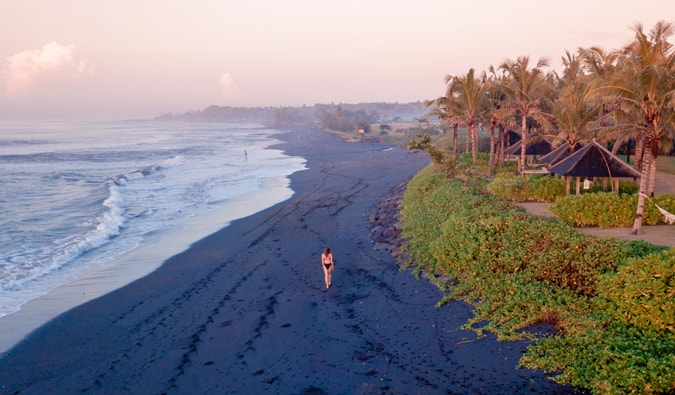
Kristin on the beach of a resort

Kristin on the beach of a resort
For most

For most gap yearers and twentysomething travelers, it’s all about going for as long as possible on a tight budget. One of the easiest ways to do that is to stay in cheap dorms. They’re great for meeting others, and for two solid years in my 20s, I adored them. But for all of the benefits, there’s one big problem with dorms: They’re not so great if you actually like sleep.

Getting older has meant making a bit more money to spend on accommodation. I’ve been in my career for longer, have figured out budgeting a bit better, and have shifted my spending priorities. I now prefer staying in an Airbnb or a hotel over sharing a room with five other people and waiting in line for my turn to use the bathroom. So my dorm days are behind me. Gone are the days of suffering through someone snoring or gyrating in the bunk above me.

Though this means I have to work harder to meet people than just walking into a dorm room and asking someone where they’re from, this has pushed me to meet people in other ways. This leads me to the next big change:

I establish deeper connections with the people I meet.

Kristin hanging out with hostel guests

Kristin hanging out with hostel guests
Traveling in my twenties came with a pretty standard way of socializing: dorms and bars. I’d meet people where I was staying and wouldn’t worry about using other avenues. These connections were fun, but they also felt like the movie Groundhog Day. Someone was always leaving; someone was always arriving. Someone was always asking where I was from and where I’d been. I still made deep connections, but now I tend to spend more time with fewer people because I simply don’t meet as many, so I can give more individualized attention to those I do meet.

Traveling in my twenties came with a pretty standard way of socializing: dorms and bars. I’d meet people where I was staying and wouldn’t worry about using other avenues. These connections were fun, but they also felt like the movie Groundhog Day. Someone was always leaving; someone was always arriving. Someone was always asking where I was from and where I’d been. I still made deep connections, but now I tend to spend more time with fewer people because I simply don’t meet as many, so I can give more individualized attention to those I do meet.

These days I use tours and activities as a way to meet people, like a snorkeling day tour in Siargao, Philippines, or a cooking course in Chiang Mai, or a yoga class, a meditation retreat, a hiking trail, a diving trip, or a day at the beach. I find that when I’m in a position to meet people with similar interests, it gives us a chance to bond over a shared activity we’re both passionate about. By already having a shared passion, we have a common ground other than partying and can often have more meaningful connections this way.

I hang out with more locals.
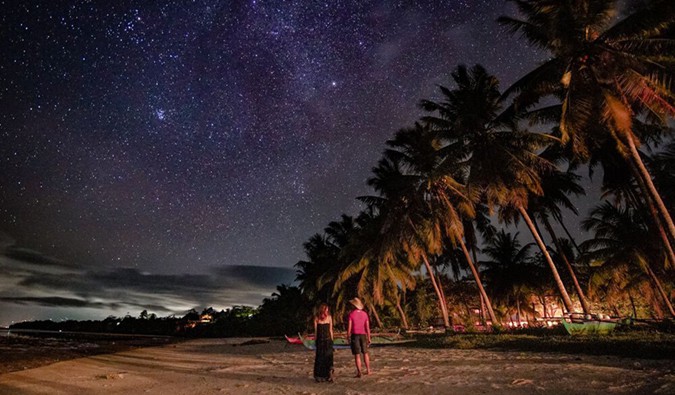
Kristin with a local on a beach

Kristin with a local on a beach
When I was living the dorm life and hanging out in backpacker zones, that’s exactly who I was surrounded by — other backpackers. That was what I wanted back then – it was fun and easy – so I didn’t push myself outside of it.

When I was living the dorm life and hanging out in backpacker zones, that’s exactly who I was surrounded by — other backpackers. That was what I wanted back then – it was fun and easy – so I didn’t push myself outside of it.

But when I returned to some of the same places in my thirties, I realized that I was more likely to hang out with actual local residents or expats, since I was going to places like yoga studios or small cafés, or local cultural events I’d seen on flyers, and striking up conversations. To find local events, I often look on Facebook for regional groups of activities I enjoy, like Ecstatic Dance, or meditation, or even a workout class (I’m into pole but there are other activities like Soul Cycle, or aerial yoga, or rock climbing, depending on your pleasure).

Things like this often give me a better insight into the places I’m visiting because I am doing what the locals are doing and not just what travelers are doing. It’s not that this couldn’t happen before. It just didn’t as much before because I was so comfortable in my little bubble.

I care more about having nicer meals.
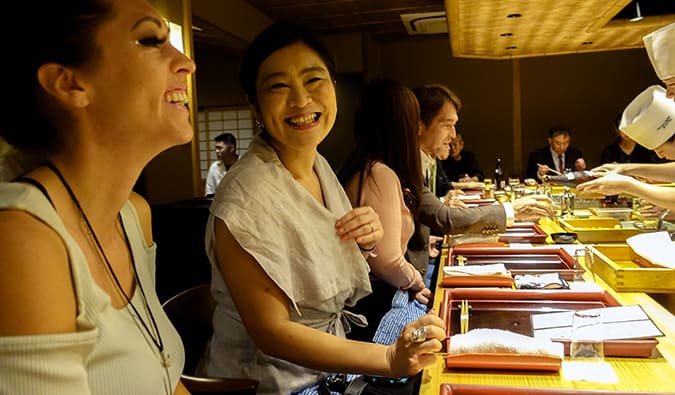
Kristin at a kaiseki meal in Japan

Kristin at a kaiseki meal in Japan
I knew street food was delicious in my twenties — and it’s still true in my thirties. I still love having a cheap bowl of soup — but I also love turning around and spending triple that on a latte, or going for a 5-star meal that you can only get from that chef in this place.

I knew street food was delicious in my twenties — and it’s still true in my thirties. I still love having a cheap bowl of soup — but I also love turning around and spending triple that on a latte, or going for a 5-star meal that you can only get from that chef in this place.

There were many times I had to give a one-of-a-kind dining experience a pass in my twenties due to budget constraints. I think I still could have made it work sparingly back then, but my priorities were different. I preferred a night out partying to eating more expensive food, and I now realize my mistake. Food is one of the best gateways to understanding a culture, and while street food can provide that gateway, it’s only one of many.

For example, I recently ate at a kaiseki restaurant in Japan, which is a multi-course meal that typically costs a bare minimum of $150. Weeks later, I’m still thinking about how creative the meal was, and how unique of an experience it was to sit across from the chefs as they made the food and presented it to me. That was an experience I’ll probably never forget, and though I love cheap noodles, I don’t often think about them the same way weeks later.

Sometimes being an (older) adult is awesome for joys like this.

I’m more comfortable with me.
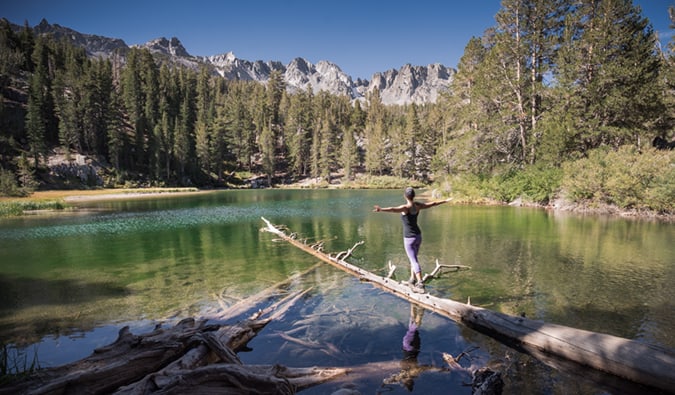
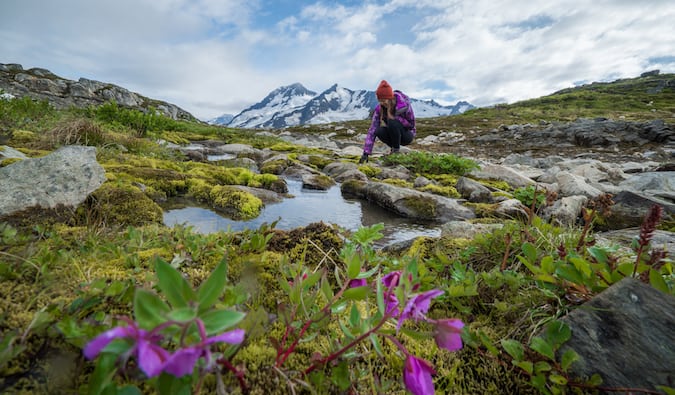
Kristin in a mountain landscape

Kristin in a mountain landscape
I spent my 20s feeling serious FOMO if I wasn’t out enjoying the social aspect of traveling. I also spent way too much time worrying about what other people thought and I didn’t have a very strong sense of self. Traveling, especially solo, forced me to spend more time with myself than I ever had before,

I spent my 20s feeling serious FOMO if I wasn’t out enjoying the social aspect of traveling. I also spent way too much time worrying about what other people thought and I didn’t have a very strong sense of self. Traveling, especially solo, forced me to spend more time with myself than I ever had before, made me realize how resourceful and capable I am, and set me up for a more confident next decade.

Now I relish the time that I spend alone. I’m seeing a whole new world that was missing from my twenties, like the sunrise every day in Thailand, the first surf in Kuta, Indonesia, or the cenote in Mexico (a limestone sinkhole or cave with crystal clear water at the bottom) that doesn’t have anyone else around because they’re all sleeping off tequila hangovers, because they couldn’t handle the FOMO.

I thought that my twenties were the decade when I was supposed to be super energetic and that I would be old and decrepit in my thirties, but it turns out that since I am making healthier choices and setting different intentions with my travels, I actually accomplish so much more!

***

Though the changes have been slow and unconscious — there was never a pivotal “aha!” moment — I’m a different traveler now. Although I don’t have any more stories about late nights out or neon paint on the beach, there’s more purpose to my travels now instead.

And I’m ok with that.

I feel that the perks of being older and wiser keep compounding, and at an even quicker rate than they did in my twenties, when I was less sure of myself and where I wanted to go, both figuratively and while on the road. The confidence that came with more life experience has translated to even better trips abroad.

None of this is to say that traveling in one’s twenties is somehow inferior or less genuine, or that this is everyone’s travel progression. We’re all on our own personal journeys.

But for me, like a fine kombucha, traveling seems to just get better and better with age.

Conquering Mountains: The Guide to Solo Female Travel
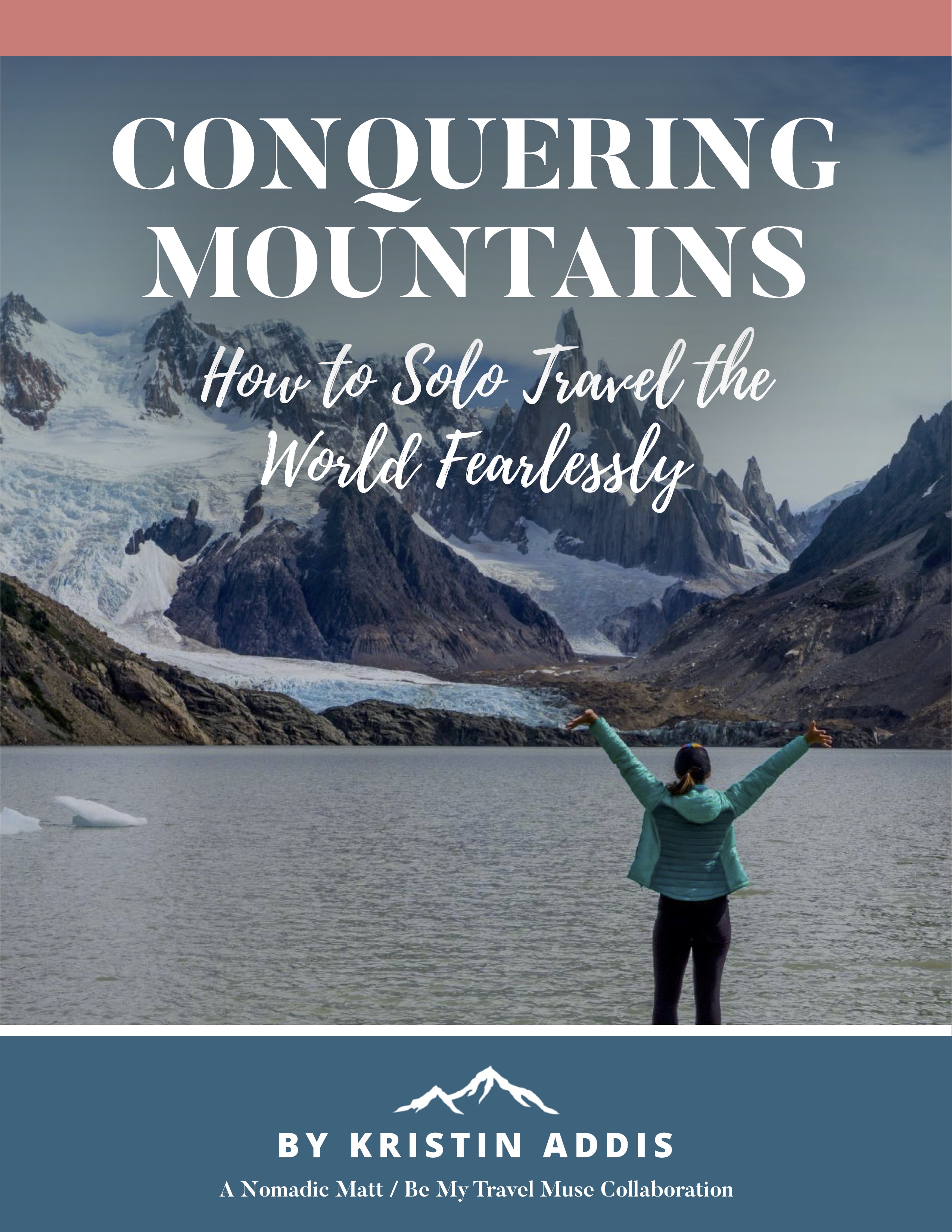
conquering mountains: solo female travel by kristin addisconquering mountains: solo female travel by kristin addisFor a complete A-to-Z guide on solo female travel, check out Kristin’s new book, Conquering Mountains. Besides discussing many of the practical tips of preparing and planning your trip, the book addresses the fears, safety, and emotional concerns women have about traveling alone. It features over 20 interviews with other female travel writers and travelers. Click here to learn more about the book and start reading it today!

Kristin Addis is a solo female travel expert who inspires women to travel the world in an authentic and adventurous way. A former investment banker who sold all of her belongings and left California in 2012, Kristin has solo traveled the world for over four years, covering every continent (except for Antarctica, but it’s on her list). There’s almost nothing she won’t try and almost nowhere she won’t explore. You can find more of her musings at Be My Travel Muse or on Instagram and Facebook.

Book Your Trip: Logistical Tips and Tricks

Book Your Flight
Find a cheap flight by using Skyscanner or Momondo. They are my two favorite search engines because they search websites and airlines around the globe so you always know no stone is left unturned.

Book Your Accommodation
To find the best budget accommodation, use Booking.com as they consistently return the cheapest rates for guesthouses and cheap hotels. I use them all the time. You can book your hostel – if you want that instead – with Hostelworld as they have the most comprehensive inventory.

Don’t Forget Travel Insurance
Travel insurance will protect you against illness, injury, theft, and cancellations. It’s comprehensive protection in case anything goes wrong. I never go on a trip without it as I’ve had to use it many times in the past. I’ve been using World Nomads for ten years. My favorite companies that offer the best service and value are:

  • World Nomads (for everyone below 70)
  • Insure My Trip (for those over 70)

Looking for the best companies to save money with?
Check out my resource page for the best companies to use when you travel! I list all the ones I use to save money when I travel – and I think will help you too!

Can Introverts Successfully Travel Solo?

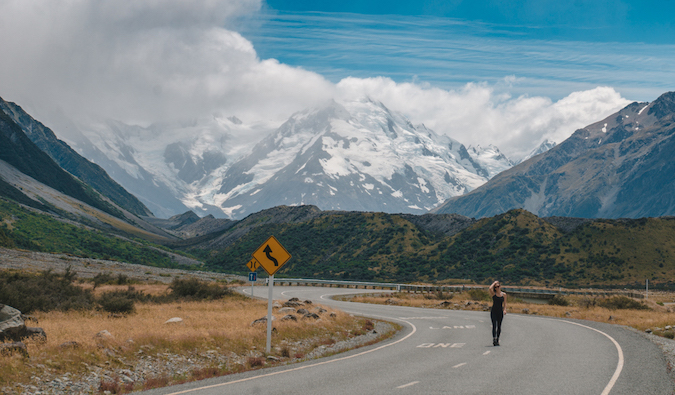
Kristin Addis standing on a empty winding road in the mountainsKristin Addis standing on a empty winding road in the mountains
Posted: 5/2/2019 | May 2nd, 2019

Kristin Addis from Be My Travel Muse writes our regular column on solo female travel. It’s an important topic I can’t adequately cover, so I brought in an expert to share her advice for other women travelers to help cover the topics important and specific to them! In this month’s article, she shows us how solo travelers can deal with traveling as an introvert!

Recently, I traveled to Oakland to attend a birthday brunch. I didn’t know anyone besides the birthday girl. As an introvert, situations where I don’t know anyone are hard for me.

Per usual, I was pretty uncomfortable at first, choosing to stick close to the one person I knew and to kill time by slowly pouring myself a coffee and eating a fruit plate at tortoise speed.

But, as time passed, I began conversing with one new person, then another, and then almost everyone who was there. I met truly interesting and friendly people, and by the end of it, I was so glad that I went and that I stayed.

When I’m at home, though, I tend to put off going out to do simple things that involve personal interactions, like grocery shopping, until the last minute. It can get pretty ridiculous, to be honest.

Yet on the road it’s so much easier to get out and explore and especially to meet new people. Why is that?

In a word: dopamine.

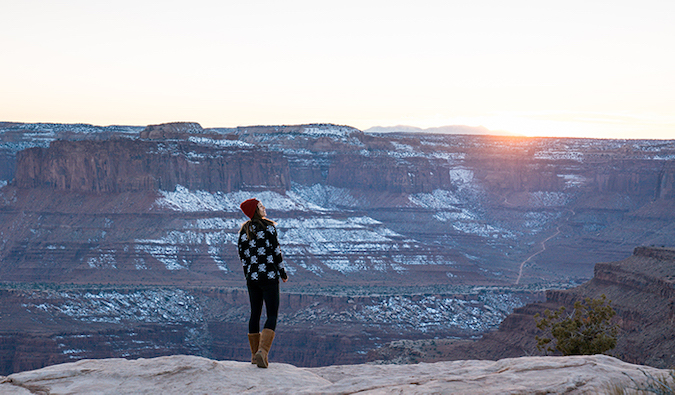
Kristin Addis standing at the edge of the Grand CanyonKristin Addis standing at the edge of the Grand Canyon

According to professors Daniel Z. Lieberman and Michael E. Long in The Molecule of More, dopamine, which plays a major role in reward-motivated behavior, is what pushes us to try new things. In addition, researchers Nico Bunzeck and Emrah Düzel found, through MRI scans, that the reward center of our brain is stimulated more by novelty than familiarity.

Therefore, we are hardwired to explore and crave newness. It’s the anticipation of the unknown — and how exciting it could be — that encourages us to go beyond our comfort zones.

So, while it can be difficult for introverts to approach people and venture outside to do routine things at home, where everything is familiar, when we’re on the road we have dopamine on our side.

This scientific explanation makes sense to me. When I’m traveling and experience a moment of true novelty, I feel like I’m riding a natural high, something more pleasurable than I could ever try to manufacture. Newness feels good, so traveling feels good, and being an extrovert in these moments comes naturally.

So just know that even if you tend to be shy and uninterested in going to random house parties or even the grocery store at home, you may find that you have renewed energy for meeting people (and feeding yourself) on the road. It helps tremendously that most other people are also feeling that dopamine rush from traveling, so they’re in a more approachable state, too.

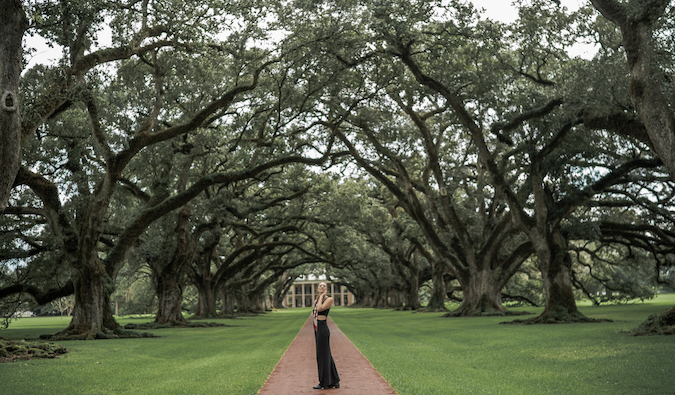
Kristin Addis on a walkway covered in tall treesKristin Addis on a walkway covered in tall trees

I used to joke that at home in Southern California I had no idea how to make new friends. Do I just walk up to them at a café and ask what they like to do during their free time?

The truth is, on the road, the answer is “yes.” It’s often that simple. Travelers are by and large more receptive and friendlier than most of us are probably used to back home. Since we’re all getting dopamine rewards for meeting new people and exploring new places, it becomes easier for both parties to be more open on the road.

I used to worry that I’d fear approaching new people, but I rarely even have to start a conversation. If all else fails, “Where are you from?” is a perfectly acceptable way to break the ice, an easy question that everyone has an answer to. I’ve had random bus, hostel, and café conversations that have turned into lifelong friendships, and I’ve had others that only served to entertain me for the afternoon; both are of value, and I never know which I might get.

I love having no itinerary and no fixed plans. This is one of the gifts of solo traveling. That said, booking activities ahead of time and paying some kind of deposit can be of help to introverts who might otherwise find reasons why they should stay inside. I’m sure my fellow introverts recognize the scenario of waking up the day of a tour you’ve booked, wishing you could cancel, but since you’ve already paid, you end up going and having the best time. Having some skin in the game makes us way more likely to honor our commitments.

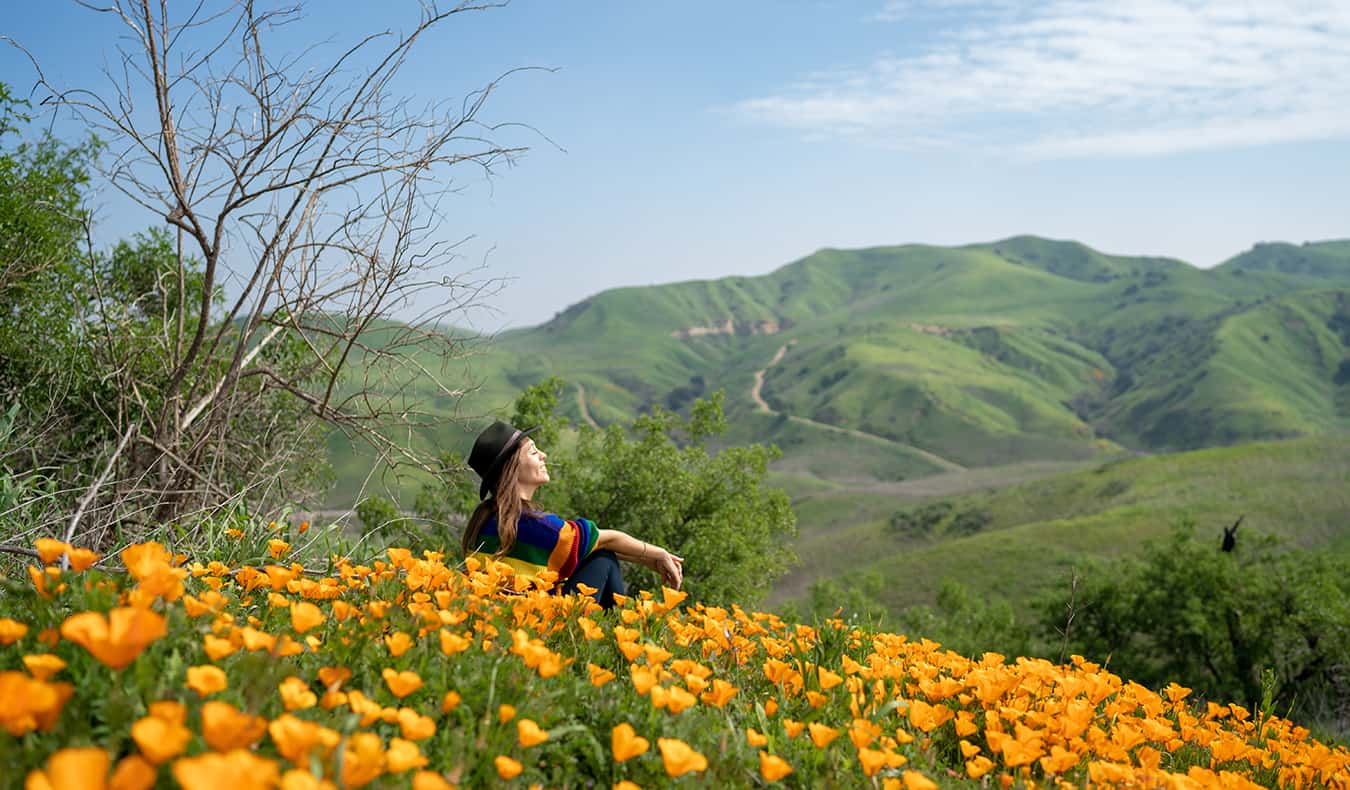
Kristin Addis sitting in a bed of sunflowers against a mountain backdropKristin Addis sitting in a bed of sunflowers against a mountain backdrop

Personally, it’s tempting to cancel even if it’s something fun that I honestly want to do. If I didn’t prebook things in life, I’d never exercise, dive, or explore. It would be too easy to keep putting them off.

For example, I booked an island excursion on Nusa Penida and a cooking class in Chiang Mai, and led a group hiking tour of Torres del Paine in Patagonia that the women participants prepaid for. Many of them tended to be more introverted, but in a group activity like that, other solo travelers tend to show up, which helps everyone to be more social and open.

I’ve also found that staying in an accommodation that is social by nature, like a yoga or meditation retreat, or heading to places that are known for an activity I love, like scuba diving in Indonesia, can make my introversion easier to handle. Knowing that the others there will also be into the activity that I’m into gives us common ground, something to talk about, and the activity itself allows us to bond over a week or two. Some of my favorite people are those whom I met on a dive boat or week of deep spiritual practice.

Though all of these are “hacks” for becoming a more extroverted traveler, we introverts tend to get our energy from time spent alone. At some point we need some “me” time — and this is why solo travel can be so wonderful. Part of the beauty of solo travel is the time that you get to spend with yourself. You won’t disappoint anyone by needing time alone, nor will you have to push anyone away or force yourself into an activity you’re not really feeling.

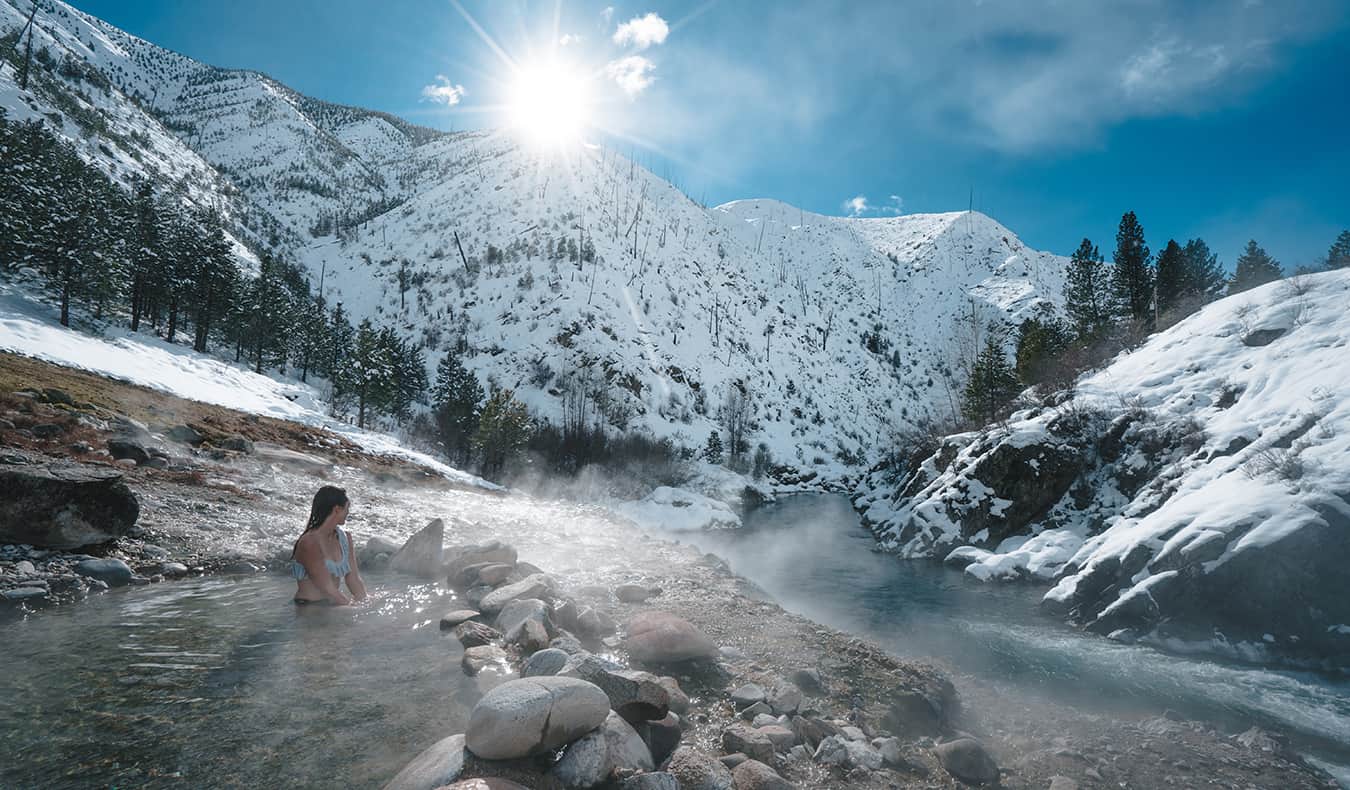
Kristin Addis sitting in hot springs in the snow-capped mountainsKristin Addis sitting in hot springs in the snow-capped mountains

I used to get down on myself if I went a few days without meeting new people. I’d fret over moments that I felt I’d “wasted” by reading in bed or chilling out for the day. Now I realize how important those days are too. I get to recharge by taking it easy and practicing self-care. And that’s a big reason why we travel too, isn’t it? We want to treat ourselves.

So please don’t feel bad if you’re traveling and you just don’t feel like going out that day, don’t want to be social, or feel like getting room service. It’s okay to do those things if it’s what you feel you need.

Listening to yourself is the most important part of solo traveling, anyway. This is something I’ve learned as a solo traveler in my 30s, and it’s made me enjoy traveling even more.

Knowing that you’ll have dopamine on your side, that you will meet people more easily on the road, and that you’ll be able to make real-time decisions about what’s best for you, you’ll be better off making the leap and traveling solo.

Conquering Mountains: The Guide to Solo Female Travel

conquering mountains: solo female travel by kristin addisconquering mountains: solo female travel by kristin addisFor a complete A-to-Z guide on solo female travel, check out Kristin’s new book, Conquering Mountains. Besides discussing many of the practical tips of preparing and planning your trip, the book addresses the fears, safety, and emotional concerns women have about traveling alone. It features over 20 interviews with other female travel writers and travelers. Click here to learn more about the book and start reading it today!

Kristin Addis is a solo female travel expert who inspires women to travel the world in an authentic and adventurous way. A former investment banker who sold all of her belongings and left California in 2012, Kristin has solo traveled the world for over four years, covering every continent (except for Antarctica, but it’s on her list). There’s almost nothing she won’t try and almost nowhere she won’t explore. You can find more of her musings at Be My Travel Muse or on Instagram and Facebook.

Book Your Trip: Logistical Tips and Tricks

Book Your Flight
Find a cheap flight by using Skyscanner or Momondo. They are my two favorite search engines because they search websites and airlines around the globe so you always know no stone is left unturned.

Book Your Accommodation
You can book your hostel with Hostelworld as they have the largest inventory. If you want to stay somewher eother than a hotel, use Booking.com as they consistently return the cheapest rates for guesthouses and cheap hotels. I use them all the time.

Don’t Forget Travel Insurance
Travel insurance will protect you against illness, injury, theft, and cancellations. It’s comprehensive protection in case anything goes wrong. I never go on a trip without it as I’ve had to use it many times in the past. I’ve been using World Nomads for ten years. My favorite companies that offer the best service and value are:

  • World Nomads (for everyone below 70)
  • Insure My Trip (for those over 70)

Looking for the best companies to save money with?
Check out my resource page for the best companies to use when you travel! I list all the ones I use to save money when I travel – and I think will help you too!
Is Brazil Safe to Visit? Here's Everything You Need to Know in 2019

The stunning view overlooking the city of Rio in BrazilThe stunning view overlooking the city of Rio in Brazil
Posted: 7/13/2019 | July 13th, 2019

Offering pristine nature and access to the Amazon rainforest, historic cities and colonial architecture, and lots of affordable food and activities, Brazil will have some something for every traveler.

A popular destination for revelers looking to party hard at Carnival as well as a hot spot for adventure junkies and beachgoers, Brazil is a country known for its amazing weather and pristine landscapes.

But is it safe?

Brazil has a reputation for being a rough and tumble destination, one where travelers need to be extra cautious and on their guard at all times.

Due to rising inequality, unfortunately, this is the case. Petty theft and street crime are a common occurrence in Brazil. The crime rate in Brazil has been on the rise for many years now (it was up almost 50% between 2015 and 2016) so travelers here will need to be on vigilant

But that doesn’t mean you should avoid the country. You just need to be a smart traveler. Millions of people visit the country every year and don’t have a problem. As long as you follow the suggested safety tips, you’ll minimize the likelihood anything bad will happen to you!

Here is everything you need to know to stay safe and make the most out of your next trip to Brazil.


13 Safety Tips for Brazil

To help you stay safe in Brazil, here are 13 tips that will keep both you and your possessions out of harm’s way:

1. Walk with purpose – When out exploring, always walk with purpose. Look like you’re heading somewhere in specific, even if you’re not. Pickpockets and muggers look for travelers who are unsure of themselves. Don’t look like a target.

2. Don’t carry cash – Carry only the minimum cash needed for the day. Keep the rest locked up back in your accommodation.

3. Separate your cards – If you have more than one credit or debit card, keep them separate. Bring one with you for the day (if you think you’ll need it) and leave the other one locked up in your room. That way, should something happen, you always have at least one card.

4. Don’t bring valuables to the beach – When you go to the beach, don’t take anything unnecessary. Towel, bathing suit, and a small amount of cash. That’s it! Anything else you bring is likely to disappear!

5. Dress to fit in – When out and about, dress down and try to fit in. Leave any valuables or jewelry at home. Don’t walk around flashing your camera or phone. If you need to use them, be discreet.

6. Carry a spare wallet – Bring a spare wallet with a small amount of cash in it. That way, if you get robbed or pickpocketed they won’t get your real wallet (where you’ll keep the rest of your cash and cards).

7. Avoid outdoor ATMs – If you need to withdraw cash, only use ATMs inside buildings. Always be aware of your surroundings before you take out your wallet.

8. Double check your accommodation – No matter where you are staying, be sure to check the doors and windows before leaving for the day and before settling in at night. Don’t leave anything valuable lying around your room; lock everything up.

9. Don’t accept free food/drinks – Never accept drinks or food from strangers. Drugging victims before they are robbed is common, so decline free food or drinks from strangers.

10. Watch out for distractions – Thieves will often try to distract you before they rob you. Be mindful of this common scam to help you stay vigilant.

Don’t walk around at night alone – If you have to, avoid city beaches, parks, and empty streets.

11. Take precautions when driving – If traveling by car, always keep your doors locked. By on guard at stop signs or red lights, especially at night. Many Brazilians won’t even stop for them to avoid the risk of a carjacking. Buy travel insurance before you go just in case you run into trouble. It’s always better to be safe than sorry!

Is Street Food in Brazil Safe?

Yep! You’ll find all sorts of amazing street food stands in cities like Rio as well as near the beaches and you’d be missing out if you didn’t try them! Just make sure to stick to places where there are a lot of locals gathered. That’s how you know the food is not only safe but delicious too!

I’d suggest avoiding anything with shrimp of seafood as it spoils quickly. But definitely try the mate as it can be quite refreshing (it’s served as an ice tea and is really good).

For the most part, you’ll encounter places that sell various kinds of meat. As long as it is fully cooked and hasn’t been in the sun all day, dive in and give it a try!

Don’t hesitate to ask your hotel or hostel staff for street food or restaurant suggestions too. They’ll no doubt have some delicious — and safe — options for you to try.
 

Is the Tap Water in Brazil Safe?

The water in Brazil is generally safe to drink, though most Brazilians still use filters or drink bottled water. The tap water generally has something of an odd taste, due to the purification process, so while it’s fine for brushing your teeth, it can taste odd if you’re just drinking it when you’re thirsty.

If staying in a hostel or Airbnb you’ll likely have access to a filter but it’s always a good idea to bring your own as well. Lifestraw and Steripen are two great products to help keep your water safe and potable.
 

Are Taxis in Brazil Safe?

Taxis in Brazil are safe and plentiful. They use meters as well, though it’s always a good idea to ask your hotel or hostel staff for an approximate fare before you head out. There are always a few bad apples who will try to rip you off, so just be sure to pay attention to the meter and make sure it isn’t rising abnormally quick.

Also, it’s always best to call your taxi in advance. Never flag a taxi on the street (this is especially true at night).
 

Is Brazil Safe for Solo Travelers?

Brazil is safe for solo travelers, though I would only suggest solo travelers visit here if they have some experience traveling solo already. By following the tips above, solo travelers will be able to have an amazing time in Brazil while staying safe.

If you are concerned as a solo traveler, try to meet-up with other travelers at hostels. Traveling together, you can keep each other company and deter any potential petty theft or robberies.
 

Is Brazil Safe for Solo Female Travelers?

Brazil faces real issues of poverty and crime so solo female travelers will need to be on guard. This is not a destination for new travelers and I would only suggest solo female travelers visit here if they are experienced solo travelers. Even then, you’ll want to make sure you take every precaution that you can.

Check with your hostel or hotel staff to find out if you should avoid any specific areas. Also, learn as much as the local language as you can so you don’t stand out.

***
So, is Brazil Safe?

So, is Brazil Safe?

Brazil is an amazing, vibrant country. But it’s not without its risks. Travelers here will need to be on guard and keep their wits about them. Petty theft and muggings are common, but if you follow the tips above you should be able to have an incredible visit while still staying safe.

Trust your gut, use common sense, and make sure you have comprehensive travel insurance. Do that, and you’ll be able to stay safe in Brazil have a memorable visit to this energetic country.

Heading to Brazil? Use the widget below to get a free travel insurance quote from World Nomads! That’s the company I’ve been using since I started traveling back in 2003!

Book Your Trip to Brazil: Logistical Tips and Tricks

Book Your Flight
Find a cheap flight by using Skyscanner or Momondo. They are my two favorite search engines because they search websites and airlines around the globe so you always know no stone is left unturned.

Book Your Accommodation
You can book your hostel with Hostelworld. If you want to stay somewhere other than a hostel, use Booking.com as they consistently return the cheapest rates for guesthouses and cheap hotels. I use them all the time. My favorite hostels in Brazil are:

  • Discovery Hostel (Rio) – This award-winning hostel has everything the budget backpacker needs: a full-equipped kitchen, patio, lounge, and tons of social activities. It’s a great place to meet other travelers!
  • Geckos Hostel (Florianopolis) – This ec-friendly hostel is powered by solar panels and has a rustic charm to it. They have a pool and lots of room to lounge and relax. It’s a great hostel for chilling out and soaking up the sun.

Don’t Forget Travel Insurance
Travel insurance will protect you against illness, injury, theft, and cancellations. It’s comprehensive protection in case anything goes wrong. I never go on a trip without it as I’ve had to use it many times in the past. I’ve been using World Nomads for ten years. My favorite companies that offer the best service and value are:

  • World Nomads (for everyone below 70)
  • Insure My Trip (for those over 70)

Looking for the best companies to save money with?
Check out my resource page for the best companies to use when you travel! I list all the ones I use to save money when I travel – and I think will help you too!
Looking for more information on visiting Brazil?
Check out my in-depth destination guide to Brazil with more tips on what to see, do, costs, ways to save, and much, much more!

Is Southeast Asia Safe for Travelers? (Updated 2019)

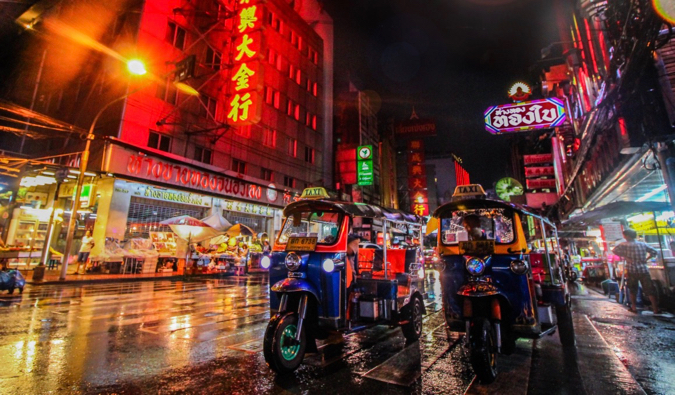
A bright shot at night of tuk-tuks in Southeast AsiaA bright shot at night of tuk-tuks in Southeast Asia
Posted: 6/22/2019 | June 22nd, 2019

Southeast Asia is one of the most popular regions in the world for backpackers and budget travelers. It’s home to a well-worn travel trail that dates back to the 1960s and ’70s, stretching across Thailand, Myanmar, Cambodia, Laos, Vietnam, Malaysia, the Philippines, Indonesia, and Singapore.

I’ve been visiting the area regularly since 2004 (I even spent a few years living in Thailand). It really does have something for everyone: bustling cities, delicious food, spectacular diving, lots of outdoor activities, historic sites — the list goes on.

Best of all? It’s budget friendly!

But is Southeast Asia safe?

That’s a question I get asked often, especially by solo travelers (or their worried families).

Generally speaking, Southeast Asia is incredibly safe. In fact, it’s one of the safest regions in the world.

You aren’t going to really face any physical danger, and it’s rare to even get robbed or mugged. People are nice, respectful, and friendly.

That said, here’s everything you need to know to stay safe in Southeast Asia!


11 Ways to Stay Safe in Southeast Asia

Staying safe in Southeast Asia doesn’t take a lot of work. Southeast Asia is an incredibly safe place to backpack and travel – even if you’re traveling solo, and even as a solo female traveler. Violent attacks are rare. There are some common scams around, like the motorbike scam where vendors try to charge you for damage to their bike, but for the most part, this is a safe place to travel. People are nice and helpful and you’re unlikely to get into trouble. The people who do tend to be involved with drinking or drugs or sex tourism. Stay away from that stuff and you’ll be fine. That said, here are 11 ways to ensure nothing is going to happen on your trip:

1. Watch for purse-snatchers – Purse-snatching is rare, but it does happen. To avoid the most common types of theft, don’t wear your purse or bag over just one shoulder — instead, wear it across the front of your body. Also, many purse-snatchers will be on a scooter, so take particular caution when walking alongside traffic.

2. Be extra careful in traffic – Most injuries in Southeast Asia are caused by vehicles. Be especially careful walking in hectic cities like Hanoi or if you are driving (especially scooters).

3. Don’t do drugs – Drugs like marijuana are easily accessible in Southeast Asia (especially in party locations, like the Full Moon Party). But they are illegal! Fines are heavy — and if you get caught, expect to spend time in jail or pay a hefty bribe. Save yourself the hassle and don’t do any drugs while you’re in the region.

4. Wear a helmet – If you’re renting or riding a scooter or motorbike, be sure to wear a helmet. Also wear proper clothing and footwear. I’ve seen a lot of road rash during my time in Southeast Asia!

5. Look out for bedbugs – Unfortunately, bedbugs are a reality in Southeast Asia. Though rare, you will likely encounter them at some point if you’re traveling around the region for any length of time. Always check your accommodation in advance. If it looks dirty, simply move on. Also, never put your backpack on your bed. That way, if the bed is contaminated, at least your backpack won’t also be contaminated.

6. Bring a lock – While theft in dorm rooms is rare, you don’t want to take any chances. Hostels almost always have lockers available. Bring a lock so you can store your possessions safely while you’re out and about.

7. Hide your valuables – When you’re out exploring, keep your wallet and valuables hidden in your backpack (or leave them loved up in your accommodation). Carry some cash in your pockets, but keep your cards and other valuables out of reach. Most theft is opportunistic, so if you’re vigilant, you’ll have nothing to worry about!

8. Don’t party solo – Make sure if you’re out partying that you do it with friends or people you can trust. Don’t get so drunk that you can’t get home safely. (If you’re taking part in the Full Moon Party in Thailand, you can find specific safety tips in this blog post.)

9. Keep your passport – Never give away your passport as a deposit when booking things like accommodation or rentals. Always make sure you get it back, or else you might not see it again. (And be sure to keep a digital scan of your passport in your email inbox just in case.)

10. Stay away from animals – Stray dogs (as well as monkeys) often carry diseases, such as rabies (which can be fatal). To avoid getting bitten, don’t pet stray dogs or wild monkeys.

11. Buy travel insurance – While Southeast Asia is generally safe, unexpected incidents can still occur. Cover yourself by buying travel insurance. It has the potential to save you thousands of dollars while also giving you peace of mind. I never leave home without it!
 

5 Common Scams in Southeast Asia

While Southeast Asia is generally quite safe, there are still a few common travel scams. Here are four of the most common scams — and how you can avoid getting fooled by them!

1. The Taxi/Tuk-tuk Overcharge
This is one of the most common travel scams out there — you’ll encounter it all across Southeast Asia. Either the driver will tell you the taxi meter is broken and try to charge you a high rate, or you’ll see the cost on the meter skyrocket faster than Superman!

For tuk-tuks, you’ll need to negotiate in advance, because drivers will quote a price much higher than what the ride should cost. To avoid being ripped off, you’ll first need to know how much your ride should cost. The best way to figure this out is to ask your hostel or hotel staff for a quote so you have a frame of reference (or google it, if you’re just arriving).

If the driver tries to negotiate the rate with you, offer them the correct rate. If they refuse, just leave and find someone who will put the meter on. (Then, if the meter seems to be going up too quickly, have them pull over and get out.)

Many tourism boards let you report bad cab drivers, so be sure to always make a mental note of their ID number when you get in the cab.

2. Motorbike Scam
Southeast Asia is a great place to rent a scooter or motorcycle and get off the beaten path. But there is a common scam you’ll want to be aware of.

Here’s how it goes: You’ll rent a bike and then when you bring it back, the owner will demand additional payment or expensive repairs because there is some “damage” you didn’t know about. Sometimes the owner will send someone to mess with the bike or steal it so you have to pay.

To avoid this, take photos of the bike first to document any previous damage. Go around it with the owner so they know what you are taking pictures of.

Once you rent it, use your own lock and keep the bike out of sight and off main streets when you park it.

Also, always make sure you buy travel insurance so you can make a claim if there is an issue.

3. Your Attraction is Closed for Lunch
I admit, I have fallen for this one before. A friendly local will approach you and inform you that the attraction you want to visit (often a temple) is closed for any number of reasons (religious ceremony, holiday, etc.).

They’ll then try to guide you to a different attraction (or often a shop), where you’re heavily pressured to purchase something or pay a high admission price.

To avoid this scam, be sure to ask your accommodation staff before you leave to confirm that the attraction is open. Then find the main entrance or ticket counter and see for yourself. Opening and closing times are almost always available online too, so you can often look them up just to be safe.

Generally speaking, most attractions in Southeast Asia don’t close for lunch. They either close for the day or not at all.

4. The Drug Deal Gone Bad
This scam is common anywhere there is a party in Southeast Asia. You’ll be in a popular tourist area (usually a party place) and someone will offer you drugs.

If you say yes, before you know it, a real cop is will be on the scene! They’ll insist that they are going to arrest you unless you can pay a hefty fine right there (i.e., a bribe).

Caught red-handed, you’ll probably pay the bribe rather than go to jail. Simply put: Don’t buy drugs in other countries!

5. The Taxi Scam
Only use taxis that use a meter. If the meter is rigged or they refuse to use it, just get out and find a new taxi (more on this below!).
 

Is the Food Safe in Southeast Asia?

If the food weren’t safe here, I’d likely never come back. Street food is almost always safe (it’s important to the cultures of the locals). In fact, it’s usually more safe than restaurants, because the operation is so simple and the turnover so fast.

When looking for somewhere to eat, find a place with a crowd, as well as one with children — if parents think it’s safe for the kids, then it’s safe for you! Anywhere with a lot of people (specifically locals) is a good indicator that the food is both good and safe.

Be sure to wash your hands before eating (hand sanitizer is good for that), as you’ll likely have been out and about all day and may have picked up all sorts of germs.


Can You Drink the Tap Water in Southeast Asia?

The tap water in Southeast Asia will vary from country to country, but as a general rule I would not recommend you drink the water unless you have a water purifier like the Lifestraw or Steripen.


Are Taxis Safe in Southeast Asia?

Taxis in Southeast Asia are safe — but they also have a reputation for overcharging (see above) or taking longer routes to dive up the fare.

Always make sure your driver is using the meter (and that the meter is not moving overly quickly). If you encounter a problem, simply get out and find a new taxi.

A better option is Grab or Uber (depending on where you are). You’ll be able to see your driver, track your ride, and make complaints if you have a problem. It’s the best way to get around, when available.


Is Southeast Asia Safe for Solo Travelers?

Southeast Asia is one of the best places in the world for solo travelers. There are tons visiting the region each and every year, many of them traveling solo for the first time (it’s great for both new and veteran travelers alike).

With a little common sense, a solo traveler won’t have to worry much about safety here. There is a well-worn backpacker trail, so you’ll never be far from other travelers. That means it’s easy to meet people in case you decide you’d rather travel in a group for some (or all) of your trip.


Is Southeast Asia Safe for Solo Female Travelers?

Female travelers have additional safety concerns they need to be aware of. That being said, Southeast Asia is still one of the best (and most safe) regions for solo female travel.

By following the tips above, as well as the same precautions you’d take at home (such as not wandering alone at night intoxicated, keeping an eye on your drink while at the bar, etc.), a solo female traveler will be able to have an amazing visit to Southeast Asia without worrying too much about her safety.

And as mentioned above, with so many solo travelers — including many women — in the region, it’s easy to find others to spend time with in case you’re feeling insecure or unsafe.


Should You Visit Southeast Asia?

So, is Southeast Asia safe?

Absolutely!

It’s super unlikely that anything will happen. And even less so if you follow the advice listed above.

Be sure to get travel insurance just in case something goes wrong. The past is not prologue and you always want to play it safe. Travel insurance was there when I lost my bag, broke my camera, and popped an eardrum while diving in Thailand. I never expected those things to happen and was glad I had insurance! You can use the widget below to look up the travel insurance policy that is right for you (or just click here to go to their website directly):


Book Your Trip to Southeast Asia: Logistical Tips and Tricks

Book Your Flight
Find a cheap flight by using Skyscanner or Momondo. They are my two favorite search engines because they search websites and airlines around the globe, so you always know no stone is being left unturned.

Book Your Accommodation
You can book your hostel with Hostelworld as they have the largest inventory. If you want to stay somewher eother than a hotel, use Booking.com, as they consistently return the cheapest rates for guesthouses and cheap hotels. I use them all the time. Some suggested places to stay in the region are:

  • Golden Mountain Hostel (Bangkok) – This is a new hostel with dorm beds built into the wall for added privacy. Each room sleeps eight people and the décor is super beautiful and well thought out. The mattresses are soft too!
  • Sla Boutique Hostel (Phnom Penh) – This is a nicer hostel that’s well designed and great for meeting like-minded travelers. The staff are super helpful and it’s located near lots of bars, attractions, and restaurants (but the hostel itself is pretty quiet).
  • Coral Hostel (Singapore) – With all day breakfast, fast Wi-Fi, and AC, this is a great choice for the budget-savvy traveler. Everything is new and clean, and they also have female-only dorms.
  • Kememai Hostel (Ubud) – This hostel is small and cheap, but the staff are friendly and it has everything you need for a comfy budget stay.

Don’t Forget Travel Insurance
Travel insurance will protect you against illness, injury, theft, and cancellations. It’s comprehensive protection in case anything goes wrong. I never go on a trip without it, as I’ve had to use it many times in the past. I’ve been using World Nomads for ten years. My favorite companies that offer the best service and value are:

  • World Nomads (for everyone below 70)
  • Insure My Trip (for those over 70)

Looking for the best companies to save money with?
Check out my resource page for the best companies to use when you travel! I list all the ones I use — and I think they will help you too!

Looking for more information on visiting Southeast Asia?
Check out my in-depth destination guide to Southeast Asia with more tips on what to see and do, costs, ways to save, and much, much more!

2019年7月26日星期五

What I Learned Hitchhiking Around China

Kristin Addis hitchhiking around ChinaPosted: 12/10/2014 | December 10th, 2014
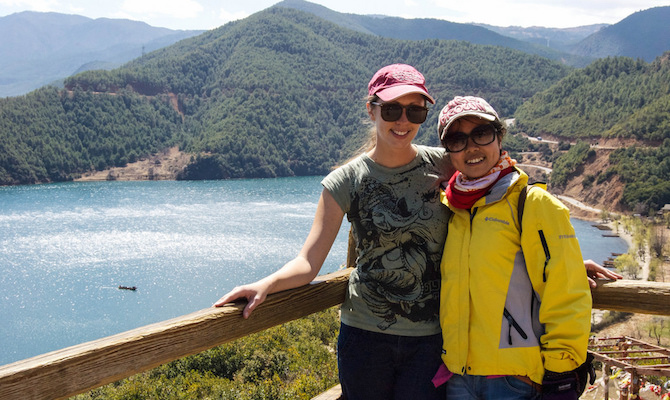
On the second Wednesday of the month, Kristin Addis from Be My Travel Muse writes a guest column featuring tips and advice on solo female travel. It’s an important topic I can’t cover so I brought in an expert to share her advice. 

It was February in China and, considering the town of Lijiang’s elevation in Yunnan province, still very much a cold winter wonderland. Standing outside waiting wasn’t how I wanted to spend the morning. But Ya Ting had such enthusiasm for the idea of hitchhiking that opting for the bus just seemed boring at this point. She had been hitchhiking around China for months and considered it such a casual and obvious option that it took the fear right out of me.

China had been on my bucket list ever since studying Mandarin in Taiwan seven years prior. I knew from conversations with friends that traveling around China would not be as carefree and easy as in Southeast Asia. What I didn’t plan on was spending about a month without coming across another foreigner, hitchhiking over 1,000 miles, and learning more about Chinese culture and hospitality than I think possible from traveling by bus or train.

Kristin and ya ting hitchhiking around China

Ya Ting had taken me under her wing after hearing me speaking Mandarin in a hostel dorm in Lijiang. She was fascinated by my fluency and wanted to travel together, which was how we ended up on the side of the road looking for a ride to the Tiger Leaping Gorge. Within 20 minutes, we had our first ride. I guess it wouldn’t take hours after all. He couldn’t take us all the way and ended up dropping us at a freeway crossroads. I figured that would be the end of our luck, but almost immediately we got another ride.

Hitchhiking turned out to be more of a study of anthropology than a scary, irresponsible joy ride. It was astonishingly easy and drivers turned out to be incredibly nice and normal. As a new hitchhiker, I expected creeps and serial murderers I’d have to fight off with mace. In reality, they came from all normal walks of life: members of minority village tribes, university students, and businessmen returning home from a work trip.

Not once did I feel threatened or unsafe.

Our most noteworthy encounter was when a twenty-something kid picked us up. He couldn’t take us the whole way so his uncle bought us lunch and a bus ticket for the rest of the journey. It’s as though he felt obligated to help us find a way to complete our trip. It brought tears of joy and gratitude to my eyes. This was the first time I understood the importance of generosity and the high esteem that guests command in China. It was a selfless act that would repeat itself in the weeks to come.

The green countryside of a river basin in China

Ya Ting’s theory had been that we were so getting so lucky because we were a local and a foreigner together, and that had sparked intrigue. She didn’t think we would get so lucky once we split up. After a few weeks traveling together, we said good-bye and I would test her theory.

I stood behind the tollbooth on a heavily trafficked highway on-ramp in Sichuan province, casually lowering my thumb each time a police car drove by. I was well aware of the challenge before me. Ya Ting was no longer around to do the talking, nor did I have someone to lean upon if something went wrong. Now I was just a strange foreigner on her own who suddenly had to manage with a borderline-conversational Mandarin ability.

At first, a few cars slowed down for a closer look, only to speed off. Then others simply weren’t going in my direction. Minutes stretched on, and I was feeling defeated. After about 30 minutes (or an eternity depending on who is counting), a kind duo picked me up and took me the entire eight hours to Chengdu. They hosted lunch on the way, and, as I had come to learn was typical of Chinese culture, refused to allow me to pay for any of it. I was amazed at the kindness that was still extended to me now that I was just a foreigner on her own and no longer had Ya Ting’s dynamic personality to help me along. This reinforced my belief that people weren’t being friendly because of Ya Ting but that Chinese culture dictates a hospitality we don’t often see in the West.

Sunset at a temple in china

A week later, two business partners returning from a trip from Tibet picked me up. They drove about twice as fast as the buses and, in between white-knuckling it in the back seat and eating the occasional slice of yak jerky (delicious dehydrated beef-like meat with Tibetan spices), we discussed the topography of California as compared to Sichuan province.

They stopped on the way for a lunch of the famous ya an fish, which the driver, Mr. Li, had selected from the fish tank, along with some six other massive dishes to be split among us three people. He explained that the fish had a double-edged sword inside its head. Given my perplexed expression he elected to show me, calling over the waitress and asking her to break the fish’s head open.

I was all but convinced I was going to have to eat fish brain until the waitress triumphantly pulled out a sword-shaped bone from the fish’s head. She then cleaned it and fashioned it into a bracelet. It simultaneously became the most sharp and lethal yet genuinely interesting piece of jewelry anyone had ever given me. It felt like my heart grew two sizes it that moment.

kristin addis hitchhiking around China

China smashed many of my perceptions. Before this, I never understood why anyone hitchhiked. Getting into vehicles with strangers seemed dangerous and stupid. In reality, it taught me about kindness, improved my language ability immensely, and provided an insider’s view as a foreigner in China. From eating meals with locals, to sitting in their cars, to hearing the music they liked most, or whether they preferred bagged chicken feet to dried fruit, I witnessed Chinese life in a way that almost nobody else gets to see. Without hitchhiking, I may never have understood the generous and communal nature of Chinese people.

Kristin Addis is a solo female travel expert who inspires women to travel the world in an authentic and adventurous way. A former investment banker who sold all of her belongings and left California in 2012, Kristin has solo traveled the world for over four years, covering every continent (except for Antarctica, but it’s on her list). There’s almost nothing she won’t try and almost nowhere she won’t explore. You can find more of her musings at Be My Travel Muse or on Instagram and Facebook.

Conquering Mountains: The Guide to Solo Female Travel

conquering mountains: solo female travel by kristin addisFor a complete A-to-Z guide on solo female travel, check out Kristin’s new book, Conquering Mountains. Besides discussing many of the practical tips of preparing and planning your trip, the book addresses the fears, safety, and emotional concerns women have about traveling alone. It features over 20 interviews with other female travel writers and travelers. Click here to learn more about the book, how it can help you, and you can start reading it today!

Book Your Trip to China: Logistical Tips and Tricks

Book Your Flight
Find a cheap flight to China by using Skyscanner or Momondo. They are my two favorite search engines. Start with Momondo.

Book Your Accommodation
You can book your hostel in China with Hostelworld. If you want to stay elsewhere, use Booking.com as they consistently return the cheapest rates. (Here’s the proof.)

Don’t Forget Travel Insurance
Travel insurance will protect you against illness, injury, theft, and cancellations. I never ever go on a trip without it. I’ve been using World Nomads for ten years. You should too.

Need Some Gear?
Check out our resource page for the best companies to use!

Want More Information on China?
Be sure to visit our robust destination guide on China for even more planning tips!

The Challenges of Being a Gay Solo Backpacker

Solo male traveler in the nature overseas looking lonely

In an effort to expand the site, I’ve been adding more guest contributors and, today, I’m announcing a LGBT column for the website. In this column, we will hear from voices in the LGBT community about their experiences on the road, safety tips, events, and, overall, advice for other LGBT travelers get the most out of their time on the road! So, without further ado, I’d like to introduce everyone to Adam from travelsofadam.com. He’s going to be the lead for this column (though we’ll shortly have writings from other voices in the community too!).

Backpacking is one of those once-in-a-lifetime experiences that opens you up to the world and allows you to experience new things no matter who or where you are. It can be challenging for every type of traveler, but for LGBT travelers, there are a handful of added, unique challenges. I share not this as a way to scare off gay travelers from backpacking — because it’s truly a rewarding experience — but as a helpful guide for how to best enjoy (gay) backpacking in a safe and fun way.

1. Knowing where to go

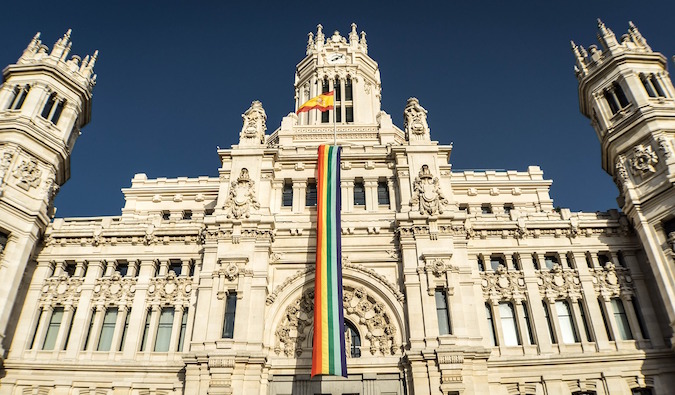
Gay LGBT pride flag hanging in Spain architecture
First off, there’s the fact of where to travel.

Sure, if you only travel to the most conspicuous gay-friendly destinations, you might find them easier and more attractive in terms of LGBT culture, nightlife, parties, and festivals (and sex). There are hot-spot gay cities and safe choices on every continent — from Mexico City to Madrid, Berlin to Bangkok, Sydney to São Paolo — but there’s even more fun outside the gay bubble.

Just about anywhere can be a “gay travel destination.” (Of course, not everywhere can be a gay-friendly destination.) There is a world of other cities with millions more LGBT individuals. Backpacking opens up that world and is a great way to introduce yourself to new people and new cultures.

Yet, you’ll still find yourself facing some added challenges.

2. Dealing with loneliness

LGBT men with backpacks holding hands lovingly in a crowded city overseas
As a minority group, gay people always struggle to feel included. Dealing with loneliness is just an extra challenge when you’re in a foreign environment.

Traveling in Thailand, I found myself staying in Bangkok’s backpacker ghetto (shout-out to Khao San Road!) where, despite the hordes of backpackers, I never did find another gay backpacker to explore the city with. Sure, I found other backpackers interested in the ladyboy bars and strange strip clubs, but I was after a more local experience.

So instead, I found myself venturing out to Bangkok’s gay nightlife in Silom alone. Under ordinary experiences I would never go to a club alone. And yet, here I was — that urge to find something familiar had brought me out of my security shell.

Since the Orlando nightclub shooting last month, there’s been renewed interest in the gay bar as a safe space, a place for fostering and creating LGBTQ communities. And in so many gay bars around the world, if you walk in as a foreigner, you’ll often find yourself immediately comforted by being around others like you.

3. Meeting other LGBT backpackers

LGBT drag show in a club overseas where to meet other gay travelers
While some accommodations exclusively target gay travelers — such as some gay-men-only hostels and gay hotels in Europe — most hostels are still very much a part of the heterosexual world. So to meet other LGBTQ backpackers, I use websites like Meetup, Facebook, and Couchsurfing, which all feature LGBTQ-specific groups for each destination. Usually I’ll find an LGBTQ local who’s more than happy to show off their home or get together, whether it’s for a coffee in Berlin, a night out dancing in Dallas, or an impromptu walking tour in Manchester.

But, perhaps the biggest not-so-secret gay travel tip is that the ubiquitous gay dating apps provide so much more than the carnal experiences stereotypical of gay men. In the past year, many of the top gay apps have launched more social networking features to make them more PG and to make it easier to meet for “more social” encounters. The Hornet app now includes a Facebook-like newsfeed and a “discover” map as a way to connect by searching hashtags, cities, and topics, while Scruff has a feature called “Venture” that includes the ability to connect with other tourists, search events, and find local ambassadors. (And, controversially, even some heterosexual people seem to be using gay dating apps simply to make “gay best friends.”)

4. Staying safe in unfriendly places

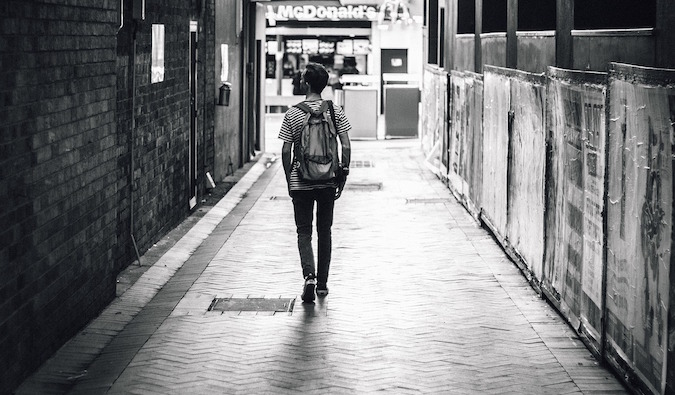
Black and white lonely solo backpacker walking through city street sadly
No matter where you are in the world — from Dubai to Dublin — there are always going to be other LGBTQ individuals around. Unfortunately, that doesn’t mean every place is safe or friendly. And while some gay travelers may choose to boycott particular destinations, not all of us do. If you happen to travel to one of these places, be sure to know the local legislation and the current state of gay rights.

In the past several years, many Western governments have started to include LGBTQ safety information as part of their general travel advice, which makes this pre-trip research that much easier. No matter where you’re from, it can be useful to check both the UK’s Foreign & Commonwealth Office LGBT travel advisories, the US State Department’s LGBTI travel information, and Equaldex’s crowd-sourced LGBT rights database before traveling.

Asking friends who’ve previously traveled to your destination for LGBT safety tips before visiting is also helpful, while both Internet forums and news outlets can provide useful information on the current state of LGBT issues. Many guidebooks include information about existing local LGBTQ organizations or clinics.

Trusting your instincts when backpacking is an important skill. I remember my first visit to Amman, Jordan, where I wanted to explore the city’s gay culture, but I was too afraid to meet anyone from the gay apps — even if it was just for a coffee. We’ve all been there — starting conversations with a local guy on an app and then flaking out before meeting in person. A habit of our generation, really, but that’s OK. You do you.

Bonus: Check out Ellen Page and Ian Daniel’s Gaycation travel TV series (from Viceland), with episodes on Jamaica, a country notorious for its homophobia; Brazil; and Japan (as well as the US).

5. Coming out again and again

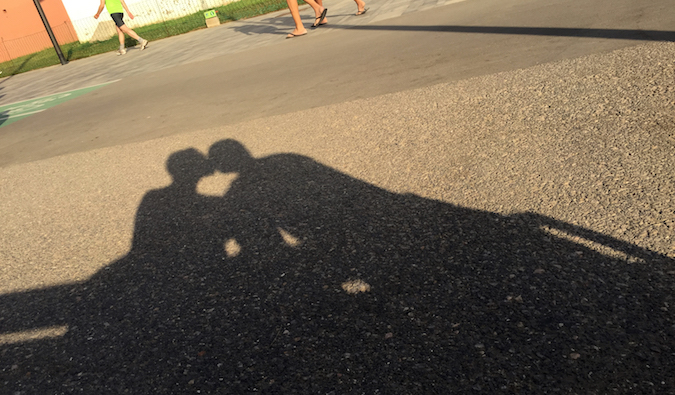
The silhouettes of two men in love kissing while traveling together
Anyone who’s been backpacking for an extended trip probably recognizes the familiar five-minute friendships. You connect with someone quickly and intensely — sharing your life story, your secrets from home, and travel tips from wherever you’ve just come from. These fast friendships are fun and one of the most amazing experiences, but as a gay traveler, there’s an added challenge: most people assume that others around them are heterosexual — it’s just a habit of the world. (Admittedly, it’s a habit that’s breaking down in recent years.) And while coming out to family and friends back home is a truly rewarding experience as an LGBT individual, doing so again and again on the road quickly loses its appeal. Sometimes you end up sharing more than you care to, alternately answering and dodging questions from inquisitive strangers.

Traveling in Jerusalem, I met a group of backpackers at my hostel and ended up carousing through Jerusalem’s surprisingly hip nightlife. We were hanging out at Bar Sira, sitting at an outdoor table, when the topic of relationships finally came up. After listening to the guys talking about their conquests of Israeli women, I had to come out: Well, I’m gay. And let me tell you — the guys are as hot as the women. My new collection of European friends seemed surprised, and the conversation changed quickly. Out of an awkward, overcompensating kindness, the questions turned back to me: Are you a top or a bottom? What does anal sex feel like? Do you basically just get sex whenever you want? Their curiosity was sweet, but also slightly annoying. I found myself suddenly an encyclopedia of gay sex, acting the role of teacher. Sure, it feels good to impart some sexual knowledge to a stranger, but night after night with new travelers each time? No thanks! It’s too personal, too sexual. Don’t get me wrong: I like to talk about myself, but my sexuality isn’t the only thing about me.

6. Safe sex and traveling

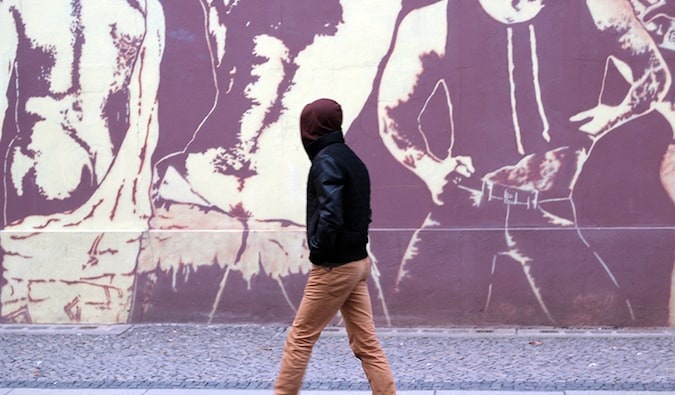
Gay man walking alone in front of a mural in Europe taken by Adam
Anyone who has ever stayed in a hostel or hung around many backpackers knows that the hook-up culture is alive and well among backpackers. In fact, a recent study revealed that many travelers ignore safe-sex practices when on the road and tend to engage in risky behaviors. For LGBTQ individuals, if you’re newly out and exploring your sexuality while also out there exploring the world, chances are high that you’ll find yourself in some compromising situations.

Sex while traveling can be a lot of fun, especially when it’s a passionate, fun-filled holiday romance, but unless you want some unwanted souvenirs, it’s best to stay safe. Of course, in the throes of passion and inhibited by drugs or alcohol, unexpected things can and do happen. Thankfully many gay bars and clubs around the world keep condoms and lube readily available, and local LGBTQ centers often provide rapid HIV tests, free counseling, and STI testing. However, if you find yourself at a hospital having to explain your sexuality and sexual habits in a foreign country, you might encounter difficulty as an LGBT person depending upon where you are and who you’re dealing with.

****

Backpacking hasn’t always been a heterosexual-only experience. LGBT people have been traveling since…well, probably forever. With modern technology, improved equal rights, and new communication tools, gay travel is becoming easier and easier.

But while backpacking can be rewarding and a lot of fun, ask any traveler regardless of sexuality and you’ll find that the experience is definitely challenging. I’ve had to fend off a queer Couchsurfing host in India who was edging for a Christmas Eve bisexual orgy, fight to make it back to my hostel in London after passing out in a club bathroom, and deal with a broken motorbike on a mountaintop in Cambodia, but the stories and experiences I’ve racked up have turned me into a better traveler and a better person.

Adam Groffman is a former graphic designer who left a publishing job in Boston to travel around the world, before settling in Berlin, Germany. He’s a gay travel expert, writer, and blogger and publishes a series of LGBT-friendly Hipster City Guides from around the world on his gay travel blog, Travels of Adam. When he’s not out exploring the coolest bars and clubs, he’s usually enjoying the local arts and culture scene. Find more of his travel tips (and embarrassing stories) on Twitter @travelsofadam.

P.S. – If you are a lesbian traveler or a transgender traveler and would like to share your experience on the blog, please send me an email at matt@nomadicmatt.com

9 Ways to Stay Safe When You Travel as a Female

Kristin Addis doing yoga on a mountaintop by herself
Updated: 8/21/2018 | August 21st, 2018

Kristin Addis from Be My Travel Muse is our go to solo female travel expert and writes a guest column featuring tips and advice. It’s an important topic I can’t adequately cover, so I brought in an expert to share her advice. This month her column is on safety tips since it’s been a common question among women travelers.

One of the chief concerns for most would-be solo travelers is safety. Can I stay safe on my own? How can I convince my friends and family that I’ll be okay? The good news is: yes, you will be safe on the road. It’s easier than you think because you already have the skills you need — the same methods you use to stay safe at home are relevant abroad as well.

Most people are scared before taking off on their first solo adventure (or in my case, 30th solo adventure). It’s easy to be nervous before heading somewhere new. There are a lot of unknown factors (will you make friends? will you be safe?) that you’ll turn over and over in your brain.

But it’s all in your head. Your brain is creating worst-case scenarios that aren’t likely to happen. I’ve found that following a few simple rules is enough to keep me (and you) safe on the road.

Safety Tip #1: Trust your gut instincts

Kristin Addis playing in the snow overseas
There’s much to be said about the power of intuition. If something or someone gives you an uneasy vibe, there’s no shame in walking away or saying no. If your gut is telling you that something doesn’t feel right, listen to it. This sense naturally becomes more heightened over time as a solo traveler.

Some people thought I was crazy and even stupid to hitchhike through China, but after years on the road, I trusted my intuition enough to sound the alarm bells if something didn’t feel right. There were times, such as late at night in Rome when I’ve been offered a ride and immediately said no because I knew something was off. It’s surprising how much listening to that little voice in the back of your mind can steer you in the right direction.

Safety Tip #2: Don’t be afraid to say no

Kristin Addis sitting on a mountain top looking down at the view
Don’t be afraid that you will disappoint people by only saying yes when it feels right. Your solo journey is about you and nobody else.

Sometimes in bars and hostels, the group mentality to keep drinking and the pressure to partake in yet another round of shots is present on a daily basis.

Getting too intoxicated can lead to serious problems. Keep it to a few drinks at most if you’re alone without anyone to look out for you. I can’t tell you how long my list is of friends who have been robbed in alleyways in Spain or mugged in an otherwise safe Berlin because they became too intoxicated. It can happen easily, especially when in party areas or with party people. For this and other personal reasons, I have quit drinking alcohol completely, at home and on the road, and that not only has kept me safer but also led me to meeting people on my travels who are interested in things other than partying, and that’s led to more enriching experiences overall.

Safety Tip #3: Keep a dummy wallet and whistle

In order to keep your most important valuables safe, some travelers suggest using a dummy wallet, which is a fake wallet that contains some canceled credit cards and a little bit of cash. It’s enough to make a would-be thief think he’s getting something worthwhile while keeping your real valuables well hidden (like under the insole of your shoe).

Another important tool is something that makes noise. A whistle has come in handy more than once for me, especially when I remembered the tale of another solo female traveler who once used it to ward off rabid monkeys in Indonesia. I did the very same several months later when, in a split second, I remembered to use my whistle as an angry monkey was lunging toward me. It goes to show that you never know how useful something so small can be.

Safety Tip #4: Get advice from locals

Three local women can offer advice to solo female travelers
Make full use of the platforms available online to understand what to look out for in the area you are traveling to, especially if it’s your very first time traveling solo in the area. There are many online communities such as TripAdvisor, Lonely Planet, and Facebook groups where updates are shared by locals, expats, and experts. I find asking safety questions on these platforms is sometimes more reliable than some travel information websites as they are much more current, though it wouldn’t hurt to research common scams and dangers in your destination on them. For Americans, that would be the Bureau of Consular Affairs.

Ask employees at your hotel or guesthouse which scams to look out for. Find out not only what you should see during your visit but also which areas to avoid. Nobody knows this better than the people who live there year-round. Finally, a reputable walking tour at the beginning of your trip in a new city is not only a great way to have a proper introduction to the area, but also an opportunity to ask questions get more safety tips from your local guide.

Safety Tip #5: Dress appropriately

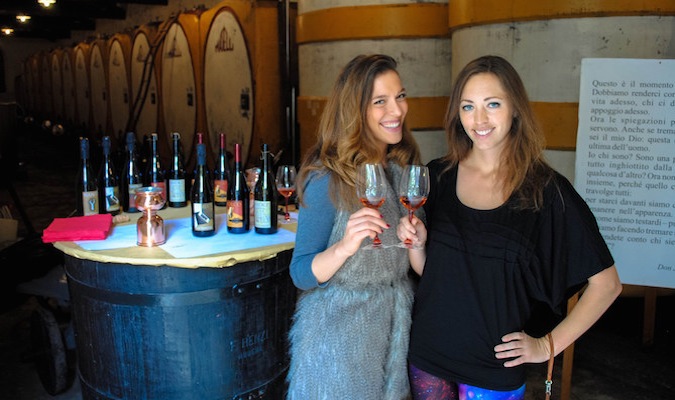
Solo female travelers dressed nicely at a winery abroad
Dress like a local in order to blend in. By standing out, you risk more than just annoying catcalls. It’s a sad reality, but in some countries, women can’t dress as they please and need to cover up.

In traditionally Muslim countries, for example, wearing shorts and tank tops is not advisable and can be perceived as offensive. It’s best to at least cover the shoulders and the knees. Do some research on what’s appropriate to wear before packing.

That seems obvious, but it’s still all too common to see topless girls on the beaches in Thailand, or super short shorts and crop tops in Malaysia and Indonesia. In order to be respected, it’s important to respect the locals’ customs and modesty levels.

Safety Tip #6: Don’t walk alone at night

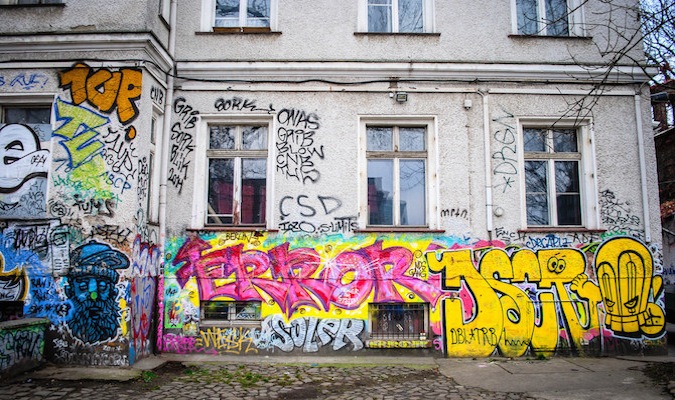
Beautiful graffiti on the walls of a dangerous street for solo travelers
In some countries, it’s perfectly safe to walk alone at night. In others, it could be dangerous. Going out at night in groups or asking to be accompanied by someone else at your guesthouse or hotel is always smart.

Unfortunately I learned this the hard way after someone grabbed me in the dark as I walked along a dirt path in Nepal. The local police and my guesthouse owner were both bewildered, saying that kind of thing never happens there. Well, it turns out that it does, and I made sure never to be alone at night thereafter in Nepal, and now I make sure to not walk alone late at night.

Safety Tip #7: Make copies of your important documents

Although we always hope nothing will happen, it’s important to be prepared for a worst case scenario. Make copies of your important documents, including your passport, identity card, and insurance cards, and keep them in all of the bags you carry. Keep electronic copies as well, should the worst occur and you lose the paper copy along with the physical document. Take photos of all of your important documents and store them on your phone and laptop, in addition to uploading them to a secure cloud server.

I also recommend taking photos of electronics you are traveling with and uploading them to a cloud server. This will help prove you owned the item in case you need to make a travel insurance claim.

Safety Tip #8: Know the local emergency numbers

Look up the local emergency number online before you depart or ask the staff at the front desk wherever you’re staying. There are also apps, like TripWhistle, that provide emergency numbers from all over the world. Of course, the best-case scenario is that you never have to use it, but it’s always smart to be prepared in case you do need it.

Safety Tip #9: Let friends know where you are

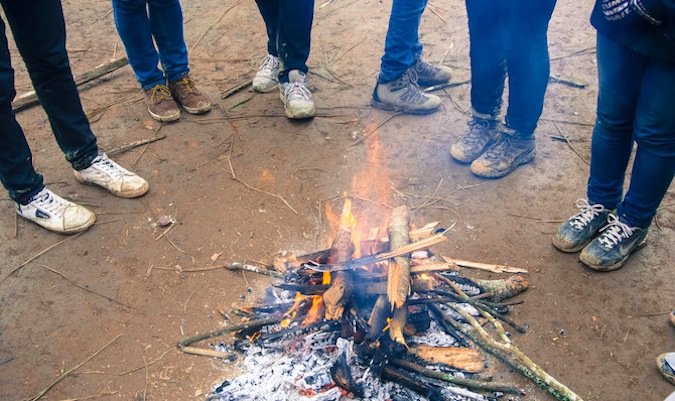
A bunch of solo travelers stand around a campfire
Make sure someone (a friend, family member, or fellow traveler) knows your itinerary and where you should be at any given time. Try not to go off the grid completely or for long periods of time, especially if you have worried parents back home. If you do change your plans — because it’s bound to happen sometime — don’t forget to let someone know. Internet cafes are generally easy to find, and many countries have inexpensive SIM cards ($20 or less) that will help you keep in touch if you have an unlocked phone. Besides, if you’re on the move, having Internet access for booking travel arrangements and finding directions is often a godsend.

***
In closing, traveling solo is marvelous. It allows you to make all of your own travel decisions, promotes personal growth and independence, and can even be a bit safer since you can take in more of your surroundings than if a friend were around distracting you. Solo traveling helps to sharpen intuition and, despite typical worries, is often no more dangerous than your hometown.

In closing, traveling solo is marvelous. It allows you to make all of your own travel decisions, promotes personal growth and independence, and can even be a bit safer since you can take in more of your surroundings than if a friend were around distracting you. Solo traveling helps to sharpen intuition and, despite typical worries, is often no more dangerous than your hometown.

The same common sense you use at home is relevant abroad. It’s not rocket science, and as long as you’re smart about it and follow these simple tips, you’re in for a positive adventure.

Kristin Addis is a solo female travel expert who inspires women to travel the world in an authentic and adventurous way. A former investment banker who sold all of her belongings and left California in 2012, Kristin has solo traveled the world for over four years, covering every continent (except for Antarctica, but it’s on her list). There’s almost nothing she won’t try and almost nowhere she won’t explore. You can find more of her musings at Be My Travel Muse or on Instagram and Facebook.

Conquering Mountains: The Guide to Solo Female Travel

conquering mountains: solo female travel by kristin addisFor a complete A-to-Z guide on solo female travel, check out Kristin’s new book, Conquering Mountains. Besides discussing many of the practical tips of preparing and planning your trip, the book addresses the fears, safety, and emotional concerns women have about traveling alone. It features over 20 interviews with other female travel writers and travelers. Click here to learn more about the book, how it can help you, and you can start reading it today!

Book Your Trip: Logistical Tips and Tricks

Book Your Flight
Find a cheap flight by using Skyscanner or Momondo. They are my two favorite search engines. Start with Momondo.

Book Your Accommodation
You can book your hostel with Hostelworld. If you want to stay elsewhere, use Booking.com as they consistently return the cheapest rates. (Here’s the proof.)

Don’t Forget Travel Insurance
Travel insurance will protect you against illness, injury, theft, and cancellations. I never ever go on a trip without it. I’ve been using World Nomads for ten years. You should too.

Need Some Gear?
Check out our resource page for the best companies to use!