显示标签为“sure”的博文。显示所有博文

2019年8月2日星期五

Is Brazil Safe to Visit? Here's Everything You Need to Know in 2019

The stunning view overlooking the city of Rio in BrazilThe stunning view overlooking the city of Rio in Brazil
Posted: 7/13/2019 | July 13th, 2019

Offering pristine nature and access to the Amazon rainforest, historic cities and colonial architecture, and lots of affordable food and activities, Brazil will have some something for every traveler.

A popular destination for revelers looking to party hard at Carnival as well as a hot spot for adventure junkies and beachgoers, Brazil is a country known for its amazing weather and pristine landscapes.

But is it safe?

Brazil has a reputation for being a rough and tumble destination, one where travelers need to be extra cautious and on their guard at all times.

Due to rising inequality, unfortunately, this is the case. Petty theft and street crime are a common occurrence in Brazil. The crime rate in Brazil has been on the rise for many years now (it was up almost 50% between 2015 and 2016) so travelers here will need to be on vigilant

But that doesn’t mean you should avoid the country. You just need to be a smart traveler. Millions of people visit the country every year and don’t have a problem. As long as you follow the suggested safety tips, you’ll minimize the likelihood anything bad will happen to you!

Here is everything you need to know to stay safe and make the most out of your next trip to Brazil.


13 Safety Tips for Brazil

To help you stay safe in Brazil, here are 13 tips that will keep both you and your possessions out of harm’s way:

1. Walk with purpose – When out exploring, always walk with purpose. Look like you’re heading somewhere in specific, even if you’re not. Pickpockets and muggers look for travelers who are unsure of themselves. Don’t look like a target.

2. Don’t carry cash – Carry only the minimum cash needed for the day. Keep the rest locked up back in your accommodation.

3. Separate your cards – If you have more than one credit or debit card, keep them separate. Bring one with you for the day (if you think you’ll need it) and leave the other one locked up in your room. That way, should something happen, you always have at least one card.

4. Don’t bring valuables to the beach – When you go to the beach, don’t take anything unnecessary. Towel, bathing suit, and a small amount of cash. That’s it! Anything else you bring is likely to disappear!

5. Dress to fit in – When out and about, dress down and try to fit in. Leave any valuables or jewelry at home. Don’t walk around flashing your camera or phone. If you need to use them, be discreet.

6. Carry a spare wallet – Bring a spare wallet with a small amount of cash in it. That way, if you get robbed or pickpocketed they won’t get your real wallet (where you’ll keep the rest of your cash and cards).

7. Avoid outdoor ATMs – If you need to withdraw cash, only use ATMs inside buildings. Always be aware of your surroundings before you take out your wallet.

8. Double check your accommodation – No matter where you are staying, be sure to check the doors and windows before leaving for the day and before settling in at night. Don’t leave anything valuable lying around your room; lock everything up.

9. Don’t accept free food/drinks – Never accept drinks or food from strangers. Drugging victims before they are robbed is common, so decline free food or drinks from strangers.

10. Watch out for distractions – Thieves will often try to distract you before they rob you. Be mindful of this common scam to help you stay vigilant.

Don’t walk around at night alone – If you have to, avoid city beaches, parks, and empty streets.

11. Take precautions when driving – If traveling by car, always keep your doors locked. By on guard at stop signs or red lights, especially at night. Many Brazilians won’t even stop for them to avoid the risk of a carjacking. Buy travel insurance before you go just in case you run into trouble. It’s always better to be safe than sorry!

Is Street Food in Brazil Safe?

Yep! You’ll find all sorts of amazing street food stands in cities like Rio as well as near the beaches and you’d be missing out if you didn’t try them! Just make sure to stick to places where there are a lot of locals gathered. That’s how you know the food is not only safe but delicious too!

I’d suggest avoiding anything with shrimp of seafood as it spoils quickly. But definitely try the mate as it can be quite refreshing (it’s served as an ice tea and is really good).

For the most part, you’ll encounter places that sell various kinds of meat. As long as it is fully cooked and hasn’t been in the sun all day, dive in and give it a try!

Don’t hesitate to ask your hotel or hostel staff for street food or restaurant suggestions too. They’ll no doubt have some delicious — and safe — options for you to try.
 

Is the Tap Water in Brazil Safe?

The water in Brazil is generally safe to drink, though most Brazilians still use filters or drink bottled water. The tap water generally has something of an odd taste, due to the purification process, so while it’s fine for brushing your teeth, it can taste odd if you’re just drinking it when you’re thirsty.

If staying in a hostel or Airbnb you’ll likely have access to a filter but it’s always a good idea to bring your own as well. Lifestraw and Steripen are two great products to help keep your water safe and potable.
 

Are Taxis in Brazil Safe?

Taxis in Brazil are safe and plentiful. They use meters as well, though it’s always a good idea to ask your hotel or hostel staff for an approximate fare before you head out. There are always a few bad apples who will try to rip you off, so just be sure to pay attention to the meter and make sure it isn’t rising abnormally quick.

Also, it’s always best to call your taxi in advance. Never flag a taxi on the street (this is especially true at night).
 

Is Brazil Safe for Solo Travelers?

Brazil is safe for solo travelers, though I would only suggest solo travelers visit here if they have some experience traveling solo already. By following the tips above, solo travelers will be able to have an amazing time in Brazil while staying safe.

If you are concerned as a solo traveler, try to meet-up with other travelers at hostels. Traveling together, you can keep each other company and deter any potential petty theft or robberies.
 

Is Brazil Safe for Solo Female Travelers?

Brazil faces real issues of poverty and crime so solo female travelers will need to be on guard. This is not a destination for new travelers and I would only suggest solo female travelers visit here if they are experienced solo travelers. Even then, you’ll want to make sure you take every precaution that you can.

Check with your hostel or hotel staff to find out if you should avoid any specific areas. Also, learn as much as the local language as you can so you don’t stand out.

***
So, is Brazil Safe?

So, is Brazil Safe?

Brazil is an amazing, vibrant country. But it’s not without its risks. Travelers here will need to be on guard and keep their wits about them. Petty theft and muggings are common, but if you follow the tips above you should be able to have an incredible visit while still staying safe.

Trust your gut, use common sense, and make sure you have comprehensive travel insurance. Do that, and you’ll be able to stay safe in Brazil have a memorable visit to this energetic country.

Heading to Brazil? Use the widget below to get a free travel insurance quote from World Nomads! That’s the company I’ve been using since I started traveling back in 2003!

Book Your Trip to Brazil: Logistical Tips and Tricks

Book Your Flight
Find a cheap flight by using Skyscanner or Momondo. They are my two favorite search engines because they search websites and airlines around the globe so you always know no stone is left unturned.

Book Your Accommodation
You can book your hostel with Hostelworld. If you want to stay somewhere other than a hostel, use Booking.com as they consistently return the cheapest rates for guesthouses and cheap hotels. I use them all the time. My favorite hostels in Brazil are:

  • Discovery Hostel (Rio) – This award-winning hostel has everything the budget backpacker needs: a full-equipped kitchen, patio, lounge, and tons of social activities. It’s a great place to meet other travelers!
  • Geckos Hostel (Florianopolis) – This ec-friendly hostel is powered by solar panels and has a rustic charm to it. They have a pool and lots of room to lounge and relax. It’s a great hostel for chilling out and soaking up the sun.

Don’t Forget Travel Insurance
Travel insurance will protect you against illness, injury, theft, and cancellations. It’s comprehensive protection in case anything goes wrong. I never go on a trip without it as I’ve had to use it many times in the past. I’ve been using World Nomads for ten years. My favorite companies that offer the best service and value are:

  • World Nomads (for everyone below 70)
  • Insure My Trip (for those over 70)

Looking for the best companies to save money with?
Check out my resource page for the best companies to use when you travel! I list all the ones I use to save money when I travel – and I think will help you too!

Looking for more information on visiting Brazil?
Check out my in-depth destination guide to Brazil with more tips on what to see, do, costs, ways to save, and much, much more!

Is Southeast Asia Safe for Travelers? (Updated 2019)

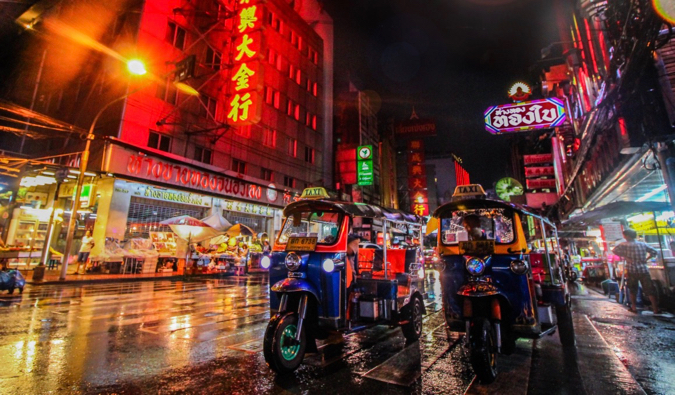
A bright shot at night of tuk-tuks in Southeast AsiaA bright shot at night of tuk-tuks in Southeast Asia
Posted: 6/22/2019 | June 22nd, 2019

Southeast Asia is one of the most popular regions in the world for backpackers and budget travelers. It’s home to a well-worn travel trail that dates back to the 1960s and ’70s, stretching across Thailand, Myanmar, Cambodia, Laos, Vietnam, Malaysia, the Philippines, Indonesia, and Singapore.

I’ve been visiting the area regularly since 2004 (I even spent a few years living in Thailand). It really does have something for everyone: bustling cities, delicious food, spectacular diving, lots of outdoor activities, historic sites — the list goes on.

Best of all? It’s budget friendly!

But is Southeast Asia safe?

That’s a question I get asked often, especially by solo travelers (or their worried families).

Generally speaking, Southeast Asia is incredibly safe. In fact, it’s one of the safest regions in the world.

You aren’t going to really face any physical danger, and it’s rare to even get robbed or mugged. People are nice, respectful, and friendly.

That said, here’s everything you need to know to stay safe in Southeast Asia!


11 Ways to Stay Safe in Southeast Asia

Staying safe in Southeast Asia doesn’t take a lot of work. Southeast Asia is an incredibly safe place to backpack and travel – even if you’re traveling solo, and even as a solo female traveler. Violent attacks are rare. There are some common scams around, like the motorbike scam where vendors try to charge you for damage to their bike, but for the most part, this is a safe place to travel. People are nice and helpful and you’re unlikely to get into trouble. The people who do tend to be involved with drinking or drugs or sex tourism. Stay away from that stuff and you’ll be fine. That said, here are 11 ways to ensure nothing is going to happen on your trip:

1. Watch for purse-snatchers – Purse-snatching is rare, but it does happen. To avoid the most common types of theft, don’t wear your purse or bag over just one shoulder — instead, wear it across the front of your body. Also, many purse-snatchers will be on a scooter, so take particular caution when walking alongside traffic.

2. Be extra careful in traffic – Most injuries in Southeast Asia are caused by vehicles. Be especially careful walking in hectic cities like Hanoi or if you are driving (especially scooters).

3. Don’t do drugs – Drugs like marijuana are easily accessible in Southeast Asia (especially in party locations, like the Full Moon Party). But they are illegal! Fines are heavy — and if you get caught, expect to spend time in jail or pay a hefty bribe. Save yourself the hassle and don’t do any drugs while you’re in the region.

4. Wear a helmet – If you’re renting or riding a scooter or motorbike, be sure to wear a helmet. Also wear proper clothing and footwear. I’ve seen a lot of road rash during my time in Southeast Asia!

5. Look out for bedbugs – Unfortunately, bedbugs are a reality in Southeast Asia. Though rare, you will likely encounter them at some point if you’re traveling around the region for any length of time. Always check your accommodation in advance. If it looks dirty, simply move on. Also, never put your backpack on your bed. That way, if the bed is contaminated, at least your backpack won’t also be contaminated.

6. Bring a lock – While theft in dorm rooms is rare, you don’t want to take any chances. Hostels almost always have lockers available. Bring a lock so you can store your possessions safely while you’re out and about.

7. Hide your valuables – When you’re out exploring, keep your wallet and valuables hidden in your backpack (or leave them loved up in your accommodation). Carry some cash in your pockets, but keep your cards and other valuables out of reach. Most theft is opportunistic, so if you’re vigilant, you’ll have nothing to worry about!

8. Don’t party solo – Make sure if you’re out partying that you do it with friends or people you can trust. Don’t get so drunk that you can’t get home safely. (If you’re taking part in the Full Moon Party in Thailand, you can find specific safety tips in this blog post.)

9. Keep your passport – Never give away your passport as a deposit when booking things like accommodation or rentals. Always make sure you get it back, or else you might not see it again. (And be sure to keep a digital scan of your passport in your email inbox just in case.)

10. Stay away from animals – Stray dogs (as well as monkeys) often carry diseases, such as rabies (which can be fatal). To avoid getting bitten, don’t pet stray dogs or wild monkeys.

11. Buy travel insurance – While Southeast Asia is generally safe, unexpected incidents can still occur. Cover yourself by buying travel insurance. It has the potential to save you thousands of dollars while also giving you peace of mind. I never leave home without it!
 

5 Common Scams in Southeast Asia

While Southeast Asia is generally quite safe, there are still a few common travel scams. Here are four of the most common scams — and how you can avoid getting fooled by them!

1. The Taxi/Tuk-tuk Overcharge
This is one of the most common travel scams out there — you’ll encounter it all across Southeast Asia. Either the driver will tell you the taxi meter is broken and try to charge you a high rate, or you’ll see the cost on the meter skyrocket faster than Superman!

For tuk-tuks, you’ll need to negotiate in advance, because drivers will quote a price much higher than what the ride should cost. To avoid being ripped off, you’ll first need to know how much your ride should cost. The best way to figure this out is to ask your hostel or hotel staff for a quote so you have a frame of reference (or google it, if you’re just arriving).

If the driver tries to negotiate the rate with you, offer them the correct rate. If they refuse, just leave and find someone who will put the meter on. (Then, if the meter seems to be going up too quickly, have them pull over and get out.)

Many tourism boards let you report bad cab drivers, so be sure to always make a mental note of their ID number when you get in the cab.

2. Motorbike Scam
Southeast Asia is a great place to rent a scooter or motorcycle and get off the beaten path. But there is a common scam you’ll want to be aware of.

Here’s how it goes: You’ll rent a bike and then when you bring it back, the owner will demand additional payment or expensive repairs because there is some “damage” you didn’t know about. Sometimes the owner will send someone to mess with the bike or steal it so you have to pay.

To avoid this, take photos of the bike first to document any previous damage. Go around it with the owner so they know what you are taking pictures of.

Once you rent it, use your own lock and keep the bike out of sight and off main streets when you park it.

Also, always make sure you buy travel insurance so you can make a claim if there is an issue.

3. Your Attraction is Closed for Lunch
I admit, I have fallen for this one before. A friendly local will approach you and inform you that the attraction you want to visit (often a temple) is closed for any number of reasons (religious ceremony, holiday, etc.).

They’ll then try to guide you to a different attraction (or often a shop), where you’re heavily pressured to purchase something or pay a high admission price.

To avoid this scam, be sure to ask your accommodation staff before you leave to confirm that the attraction is open. Then find the main entrance or ticket counter and see for yourself. Opening and closing times are almost always available online too, so you can often look them up just to be safe.

Generally speaking, most attractions in Southeast Asia don’t close for lunch. They either close for the day or not at all.

4. The Drug Deal Gone Bad
This scam is common anywhere there is a party in Southeast Asia. You’ll be in a popular tourist area (usually a party place) and someone will offer you drugs.

If you say yes, before you know it, a real cop is will be on the scene! They’ll insist that they are going to arrest you unless you can pay a hefty fine right there (i.e., a bribe).

Caught red-handed, you’ll probably pay the bribe rather than go to jail. Simply put: Don’t buy drugs in other countries!

5. The Taxi Scam
Only use taxis that use a meter. If the meter is rigged or they refuse to use it, just get out and find a new taxi (more on this below!).
 

Is the Food Safe in Southeast Asia?

If the food weren’t safe here, I’d likely never come back. Street food is almost always safe (it’s important to the cultures of the locals). In fact, it’s usually more safe than restaurants, because the operation is so simple and the turnover so fast.

When looking for somewhere to eat, find a place with a crowd, as well as one with children — if parents think it’s safe for the kids, then it’s safe for you! Anywhere with a lot of people (specifically locals) is a good indicator that the food is both good and safe.

Be sure to wash your hands before eating (hand sanitizer is good for that), as you’ll likely have been out and about all day and may have picked up all sorts of germs.


Can You Drink the Tap Water in Southeast Asia?

The tap water in Southeast Asia will vary from country to country, but as a general rule I would not recommend you drink the water unless you have a water purifier like the Lifestraw or Steripen.


Are Taxis Safe in Southeast Asia?

Taxis in Southeast Asia are safe — but they also have a reputation for overcharging (see above) or taking longer routes to dive up the fare.

Always make sure your driver is using the meter (and that the meter is not moving overly quickly). If you encounter a problem, simply get out and find a new taxi.

A better option is Grab or Uber (depending on where you are). You’ll be able to see your driver, track your ride, and make complaints if you have a problem. It’s the best way to get around, when available.


Is Southeast Asia Safe for Solo Travelers?

Southeast Asia is one of the best places in the world for solo travelers. There are tons visiting the region each and every year, many of them traveling solo for the first time (it’s great for both new and veteran travelers alike).

With a little common sense, a solo traveler won’t have to worry much about safety here. There is a well-worn backpacker trail, so you’ll never be far from other travelers. That means it’s easy to meet people in case you decide you’d rather travel in a group for some (or all) of your trip.


Is Southeast Asia Safe for Solo Female Travelers?

Female travelers have additional safety concerns they need to be aware of. That being said, Southeast Asia is still one of the best (and most safe) regions for solo female travel.

By following the tips above, as well as the same precautions you’d take at home (such as not wandering alone at night intoxicated, keeping an eye on your drink while at the bar, etc.), a solo female traveler will be able to have an amazing visit to Southeast Asia without worrying too much about her safety.

And as mentioned above, with so many solo travelers — including many women — in the region, it’s easy to find others to spend time with in case you’re feeling insecure or unsafe.


Should You Visit Southeast Asia?

So, is Southeast Asia safe?

Absolutely!

It’s super unlikely that anything will happen. And even less so if you follow the advice listed above.

Be sure to get travel insurance just in case something goes wrong. The past is not prologue and you always want to play it safe. Travel insurance was there when I lost my bag, broke my camera, and popped an eardrum while diving in Thailand. I never expected those things to happen and was glad I had insurance! You can use the widget below to look up the travel insurance policy that is right for you (or just click here to go to their website directly):


Book Your Trip to Southeast Asia: Logistical Tips and Tricks

Book Your Flight
Find a cheap flight by using Skyscanner or Momondo. They are my two favorite search engines because they search websites and airlines around the globe, so you always know no stone is being left unturned.

Book Your Accommodation
You can book your hostel with Hostelworld as they have the largest inventory. If you want to stay somewher eother than a hotel, use Booking.com, as they consistently return the cheapest rates for guesthouses and cheap hotels. I use them all the time. Some suggested places to stay in the region are:

  • Golden Mountain Hostel (Bangkok) – This is a new hostel with dorm beds built into the wall for added privacy. Each room sleeps eight people and the décor is super beautiful and well thought out. The mattresses are soft too!
  • Sla Boutique Hostel (Phnom Penh) – This is a nicer hostel that’s well designed and great for meeting like-minded travelers. The staff are super helpful and it’s located near lots of bars, attractions, and restaurants (but the hostel itself is pretty quiet).
  • Coral Hostel (Singapore) – With all day breakfast, fast Wi-Fi, and AC, this is a great choice for the budget-savvy traveler. Everything is new and clean, and they also have female-only dorms.
  • Kememai Hostel (Ubud) – This hostel is small and cheap, but the staff are friendly and it has everything you need for a comfy budget stay.

Don’t Forget Travel Insurance
Travel insurance will protect you against illness, injury, theft, and cancellations. It’s comprehensive protection in case anything goes wrong. I never go on a trip without it, as I’ve had to use it many times in the past. I’ve been using World Nomads for ten years. My favorite companies that offer the best service and value are:

  • World Nomads (for everyone below 70)
  • Insure My Trip (for those over 70)

Looking for the best companies to save money with?
Check out my resource page for the best companies to use when you travel! I list all the ones I use — and I think they will help you too!

Looking for more information on visiting Southeast Asia?
Check out my in-depth destination guide to Southeast Asia with more tips on what to see and do, costs, ways to save, and much, much more!
2019年7月26日星期五

Reflections on Traveling Through Morocco

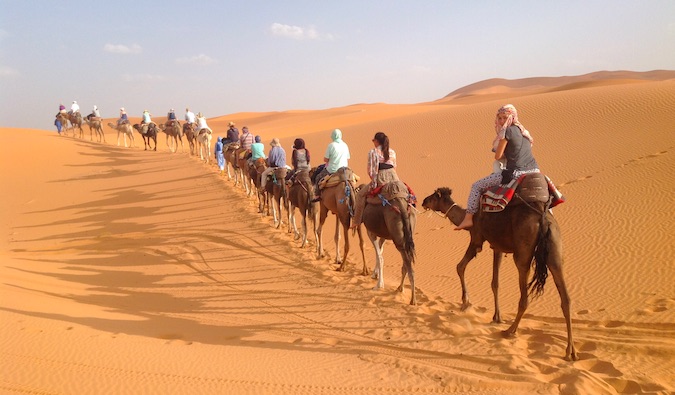
taking a camel ride through the sahara desert in morocco
Have you ever loved a destination but couldn’t figure out why, or a way to express your feelings? That’s my dilemma with Morocco.

In August, I went with Intrepid Travel and crossed off a country that has long been on my bucket list. I rode a camel, drank all the mint tea I could find, got lost in medinas, and ate more couscous than I thought was humanly possible.

I loved the tour. Our guide Rashid was friendly, took us out to smoke shisha, introduced us to the locals, and was generally very helpful. I made friends with my tour mates and got along with my roommate. And Morocco itself – wow! I loved walking down the street and being barraged by the smell of 1000 diffrent spices, getting lost in the maze-like medinas with their endless nooks and crannies, the chaos of millions of people shuffling about with vendors vying for your attention, and the crimson red of the Sahara with its endless rolling dunes — they were all I wanted them to be! Sure, there were many overwhelming moments when I felt like a fish out of water and things didn’t go my way but I relish those moments!

Travel is about feeling uncomfortable. It’s one of the reasons I enjoyed Ukraine so much, where I was completely out of my element. The country challenged me and I loved it. I fawn over it every chance I get!

Morocco was everything I wanted it to be. It lived up to all my expectations, but for some reason, my experience has been hard to verbalize. Why can’t I express how I feel about Morocco? It’s been bothering me for months.

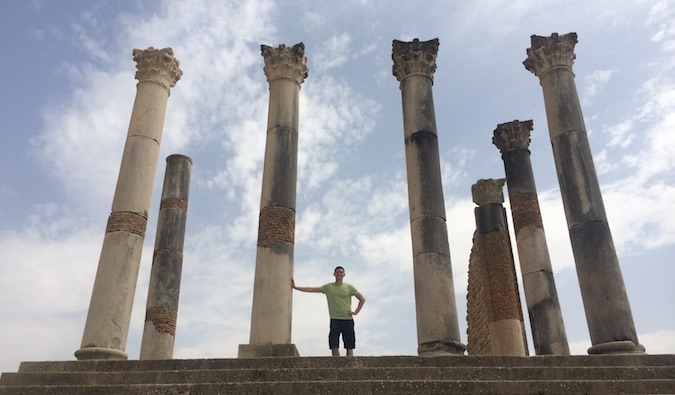
enjoying the Roman ruins of Volubilis in Morocco

I’ve racked my brain thinking about it, pondered it on trains, and stared at a blinking cursor while trying to write about it.

Then, suddenly a few weeks ago, the reason hit me.

One constant in my travels — and I’m sure many of you might feel the same — is that of a touchstone, one defining point where the trip all comes together and acts as a prism for everything the journey represented. On my trip to Japan, it was befriending a local who wanted to learn English. In Costa Rica, it was getting lost in a jungle. In Ukraine, it was drinking vodka with locals who knew less English than I knew Russian (and I only know “cheers” and “hello”). On my first visit to Thailand, it was meeting those five people who changed my life. In Ios, it was being taken to a local community festival by my hostel owner.

My trips revolve around one memory that crystalizes the trip and puts everything into focus. Each of the moments ties together all my other memories of a place: the food, the smells, the sights, the people. It’s the first thing that comes to mind when I think of the place and acts as the door to all other memories.

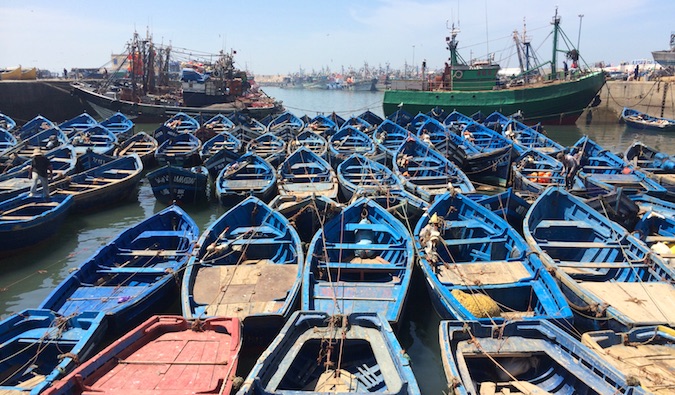
the blue fishing boats of essouaria in Morocco

Despite the wonderful times I had and the amazing itinerary Intrepid put together, I’ve realized the reason I’m so ambivalent about Morocco is because I lack that touchstone. There’s no “whoa” moment I can point to where I felt ultra-connected to the country, where everything came together.

But writing this article has made me realize that I have thousands of little moments — staring at the a million stars in the backness of the desert, wandering the empty ruins of Volubilis, discovering new foods with some amazing Australians on my tour, befriending the fish sellers and gorging on fresh seafood in Essaouira, getting lost in medinas, haggling over a chess set and laughing with the seller, and drinking about 1,000 pots of mint tea (OK, slight exaggeration, it was more likely 999).

So maybe you don’t need that one special moment. Maybe I’ve relied on that touchstone as a crutch for too long.

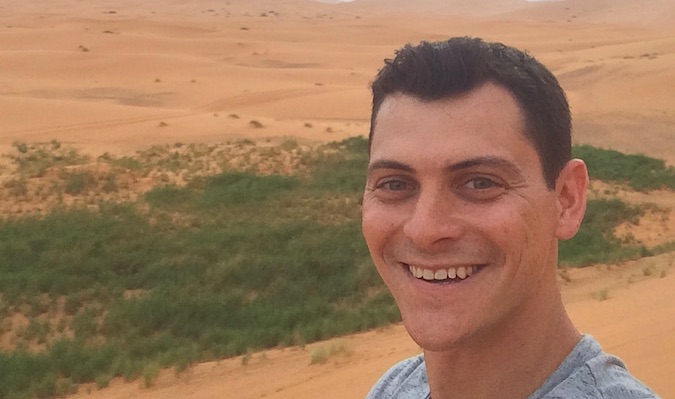
nomadic matt in morocco

Paul Theroux once said travel is only glamorous in retrospect. I’m not sure I agree with that but what I am sure about is that, in retrospect, I’m only now truly appreciating the time I spent in Morocco and how unique it was.

Sometimes your senses get so battered it takes time for the dust to settle, the thoughts to process, and the wonderful moments to shine through.

*****Editor’s Note: I went to Morocco with Intrepid Travel on their Best of Morocco tour. It was part of my ongoing partnership with

: I went to Morocco with Intrepid Travel on their Best of Morocco tour. It was part of my ongoing partnership with Intrepid Travel . They covered the cost of the tour, flight, and meals.