显示标签为“weather”的博文。显示所有博文

2019年8月2日星期五

A Dangerous Heat Wave Bearing Down on Europe Once Again

 cleanString alt

Baby elephant Ben Long cools off on July 24, 2019 in his pool at the zoo in Leipzig, eastern Germany, where temperatures reached 35 degrees Celsius.

JENS KALAENE/Getty Images

The second heat wave of the summer is bearing down on Europe and is threatening to break records once again.

On Tuesday, the French city of Bordeaux registered a temperature exceeding 106.1 Fahrenheit (41.2 Celsius), making it officially the hottest day on record, smashing the old record set in 2003.

The French weather service Mateo also predicts that the French capital of Paris could reach 107.6 Fahrenheit (42 C) this week, marking its highest temperature ever there as well.

France likely won’t be the last country to see record-setting temperatures this week as experts also believe the extreme heat is heading to Belgium, Germany and the Netherlands, according to the BBC.

"As we saw in June [heat waves] are becoming more frequent, they're starting earlier and they're becoming more intense," Claire Nullis, a World Meteorological Organization spokesperson told the BBC. "It's not a problem that's going to go away."

London, Business Insider reported, is expected to reach 98.6 degrees Fahrenheit (37 C) on Thursday, while temperatures throughout England could top the all-time record of 101.3 Fahrenheit (38.5 C).

"If these predictions are met, this heat wave would go down in the history books,” Andreas Friedrich, a spokesperson for the German Meteorological Service DWD, told RP Online. "As a meteorologist, I have never seen anything like this before."

The extreme heat is already being blamed for the deaths of at least two people. According to Global News, a 93-year-old man in Spain collapsed and died due to the heat. A 17-year-old also died of heat-related causes after jumping into a swimming pool in an attempt to cool off.

Travelers should ensure they stay out of the heat during the peak hours of the day and carry plenty of water with them as they explore. Though really, the heat waves may be becoming too frequent to avoid. This latest heat wave marks the second such weather event in as many months. In June, Travel + Leisure reported, temperatures across France, Germany, Belgium, the Czech Republic, Switzerland, and Italy topped 100 degree Fahrenheit, with humidity levels making it feel much, much warmer.

“I’m worried about people who are downplaying this, who are continuing to exercise as usual or stay out in the sun,” France’s health minister, Agnès Buzyn, said in a statement at the time. “This affects all of us.”

2019年8月1日星期四

Heat Wave Expected to Hit Most of the U.S. — Major Cities Brace for Power Outages

 cleanString alt

Spencer Platt/Getty Images

Summer is here. And longer days and weekends spent poolside means warmer weather — or as is the case this week, dangerously high temperatures. Over the next several days, a heat wave is expected to hit the central and eastern United States, and several of the country’s major cities will be impacted.

New York City, Chicago, Detroit, and Washington, D.C. are all expected to see their hottest days of summer so far. And as temperatures rise, people turn to their air conditioners for relief, which can lead to power outages. Allan Drury, the spokesperson for the energy company Con Edison, told USA Today on Tuesday that in New York, they’re prepared for “scattered outages” in Manhattan, Brooklyn, Queens, and the Bronx.

All told, USA Today reports that over 50 million Americans will see some level of heat alert where they live, with temperatures expected to approach 100 degrees over the next several days.

Meteorologists also warn that the temperatures will feel much worse thanks to the heat index. The heat index is what the temperature feels like when air temperature and humidity are combined — and according to BAM Weather Meteorologist Ryan Maue, it will feel like its 108 degrees in Washington D.C. and 109 degrees in Chicago and Detroit. Maue tweeted on Tuesday that “Friday will be suffocating across much of the Eastern U.S. with heat index 100°-110°F from the Plains to Great Lakes and Middle-Atlantic to NYC.”

In response to the upcoming heat wave, the National Weather Service has issued excessive heat watches and heat advisories for two-thirds of the country, reminding people that “It is never safe to leave a toddler, disabled person or pet locked in a car, even in the winter. If you have a toddler in your household, lock your cars, even in your own driveway. Kids plays in cars and can get locked in. Already 9 toddlers have died in hot cars in 2019! Cars can heat up quickly when left in the sun.”

Hurricanes Erick and Flossie Are Swirling in the Pacific — Here's What Travelers Need to Know

 cleanString alt

Image from Hurricane Lane as it approached Hawaii in 2018.

Mario Tama/Getty Images

UPDATE: Erick and Hurricane Flossie are expected to weaken before brushing Hawaii. However, The Weather Channel added, both storms will likely still cause rains, high winds, and potential flooding.

As The Weather Channel explained, Hurricane Erick intensified to a category 4 hurricane on Tuesday. The storm’s center is expected to pass well south of Hawaii Thursday night into Friday and will likely weaken back to a tropical storm due to wind sheer coming off Hawaii. Due to this wind, Flossie is also expected to weaken and will likely be either a tropical storm or tropical depression by the time it nears the islands. Continue reading for more information.

--

Tropical Storm Erick strengthened into a hurricane on Tuesday, the National Weather Service reported, just as it makes its approach toward the Hawaiian islands.

Thankfully, the storm is not expected to make direct landfall in Hawaii, however, experts warned it will cause rough seas and stronger winds across the Big Island.

"Impacts such as higher surf, strong winds or heavy rainfall are possible even with this tropical system passing south of the Big Island," the National Weather Service in Honolulu told USA Today. "These additional local island-by-island impacts are highly dependent upon the size, intensity, and track of Erick as it moves through the Hawaii region. A wet weather pattern for sure."

 cleanString alt

NOAA

 cleanString alt

NOAA

The National Weather Service noted in a release that seas will likely peak on Thursday at upwards of 13 feet before receding on Friday. Showers are expected to last throughout the weekend.

According to Accuweather, Erick is the third hurricane to develop in the Pacific in the 2019 season, but it likely won’t be the last. In fact, it isn’t even alone in the Pacific right now as tropical storm Flossie is already spinning her way toward Hawaii too. That storm, the Hurricane Center said, is expected to strengthen into a hurricane by Tuesday evening and become a “major hurricane” by Wednesday night.

The Pacific Ocean isn’t the only place harboring dangerous storms either. The National Hurricane Center is also currently tracking two tropical waves in the Caribbean, both of which appear to be headed toward Florida.

While both storms appear as though they will not strengthen into hurricanes, or even tropical depressions, they will still likely bring the threat of flash flooding and high winds to the islands. According to the Sun-Sentinel, the storms only have a 10 percent chance of developing into tropical cyclones. But, they are expected to cross directly over Puerto Rico, the Virgin Islands, Hispaniola, and parts of the southeastern Bahamas.

"Under this weather pattern,” the National Weather Service said, “widespread showers and thunderstorms will maintain a high risk for flooding over portions of the islands through the short-term period. As soils become saturated, the potential of mudslides in steep terrain will remain high through at least Wednesday."

Long story short, if you’re planning to take an island vacation to Hawaii or the Caribbean in the coming days and weeks it may be a good idea to check in with your flight operator and accommodations to ensure there is a plan in place in case of emergency. Here’s everything you should know about traveling during hurricane season so you can be prepared for just about anything.

2019年7月26日星期五

Malta: The Country of Half-Neglected Buildings

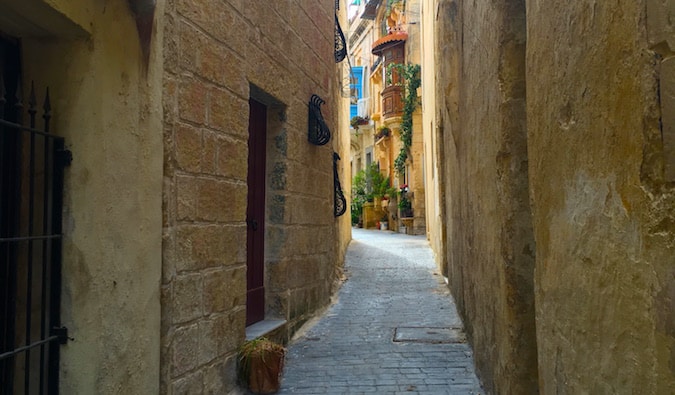
one of the most charming streets in malta
As I sat freezing at a café in Malta, I wondered if I had made the right decision to visit. I had come to Europe for a friend’s wedding and, not wanting to fly back right away, thought I’d make the most of it and travel somewhere new. Why not start off the new year in a new country, right?

But, see, I hate the cold.

If you want to make me sad, send me somewhere cold. I needed somewhere (relatively) warm and—since I only had a week—small. Looking over a map of Europe, Malta seemed like the best choice. It was far south, had easy flight connections to the mainland, seemed tiny, and came highly recommended by friends.

For Europe in January, it seemed liked my best bet.

But as I sat shivering in a sweater, hat, scarf, and winter coat, I realized I should have researched the weather a bit more before I came. Sure, I happened to visit during an unseasonable cold snap (“It’s never like this!” people would say), but that didn’t make me feel any better.

I don’t like exploring places in the cold, which is why you hardly ever see “winter travel” tips on this site. Spring, summer, fall — those are my seasons! I don’t like carrying big bulk clothes, I don’t like sightseeing while freezing.  (Nor did the weather appeal to my friend who had come from Stockholm for warmer weather.)

beautiful (yet cold) beach in malta
Yet neither of us had been to Malta before. Both workaholics, we really wanted to put our phones away, turn the computers off, and just enjoy the destination. It had been a long time since either of us had done that.

So we had to make the most of the (terrible) weather. Otherwise, we’d end up inside, back on our computers, and that wasn’t an option!

In the wintertime, you can visit all of Malta in about a week since this place is really a summer beach destinations, and the weather in the winter is definitely not beach weather. (In the summer, you’ll need two weeks to account for beach days.)

My friend and I had grand plans to see everything possible. We’d be up by 7am and out the door by 8 but, after the second day of hitting snooze, we gave up those plans. While I missed a few museums I wanted to see, didn’t wander Gozo’s citadel as much as I wanted (the day we went it was 4°C with piercing wind and rain), and missed the underground ruins at Hal Saflieni Hypogeum, the Tarxien Temples, the underground WWII tunnel tour in Valetta, the Popeye Village, and the famous fish market.

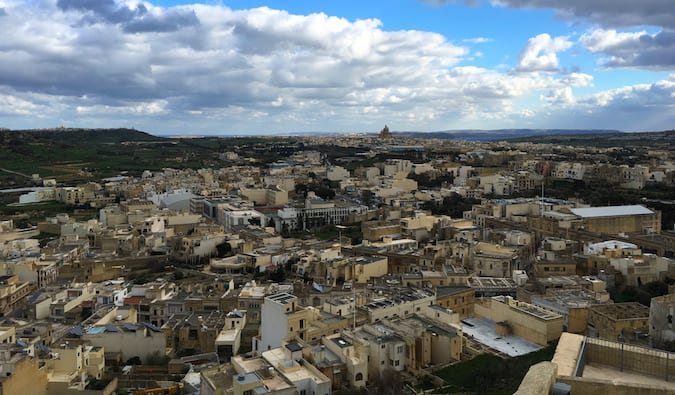
a spectacular city view in malta
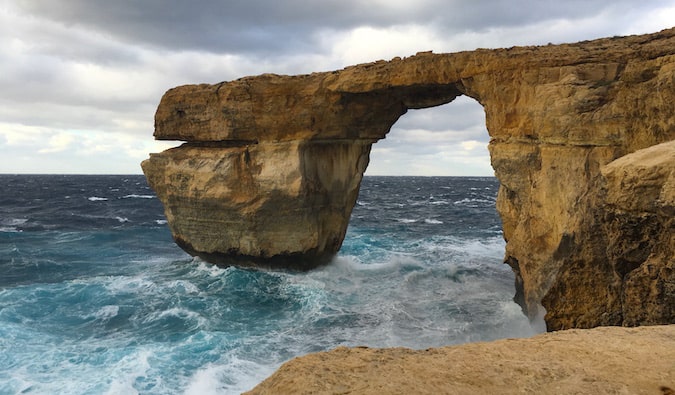
However, while we moved slowly and my to-do list never quite got completed, I regret nothing. Malta cast a spell on me. I found the locals funny, charismatic, and jovial. They always had a good story to share. And the landscape – wow! As you drive out of the towns just that seemed to form one giant megacity, there were vineyards waiting for spring, rocky, rolling hills, ancient villages, sheer cliffs, churches rising high into the sky, and sharp cliffs with sweeping views of the deep blue Mediterranean.

In terms of sightseeing, the catacombs of Mdina were the most interesting, with their maze of hallways and chambers (though not enough skeletons), and the nearby ancient Roman house, with its intact frescos, was a highlight for me. In Valletta, the capital, I sat watching the harbor from the serene Upper Barrak Gardens (where there are fewer people than the lower gardens) and attended mass at the famous St. Stephen’s Church. And I imagined sitting in the main square enjoying the summer sun while having a glass of wine.

However, what I found most striking about the country were the towns that seem to teeter on decay. Throughout the country, they are filled with centuries-old buildings showing a mix of Arabic and Italian influences and picturesque balconies that jutted out so one could spy up and down the street. The cobblestone streets, clearly built before even Europe’s small cars were around, beckon you to explore their turns. In Malta, they name their houses, and I found myself wandering the streets looking at the random collection of names (my Airbnb’s was “The Devon”).

a quaint alley in malta
But as I stood wide-eyed, with one ear listening for a car sneaking up behind me, I couldn’t help but notice that it often felt as if Malta was only half-loved. For all the renovated houses and mansions brought back to their historic glory, there were more decrepit and boarded-up ones, sometimes taking up whole blocks. For every beautiful garden and restored square, there seemed to be an equally run-down one. It was as if half the island quickly left and the other half, busy with preservation, was just waiting for them to come back to fix the rest up.

For all that is written about the island’s natural beauty, wonderful beaches, and majestic capital, what I’ll remember most of Malta was this stark contrast. It was like a mystery yearning to be solved. Why don’t people just fix it up? Why does the government let these safety hazards stay up? Who owned these buildings? Some looked like they had been abandoned for decades. Why rebuild a beautiful house only to have the own next door look like it was a crack den? It all seemed so confusing and haphazard. No one could give me a good answer.

My orderly, OCD mind couldn’t wrap its head around it. (I’d be a terrible Southern European!)

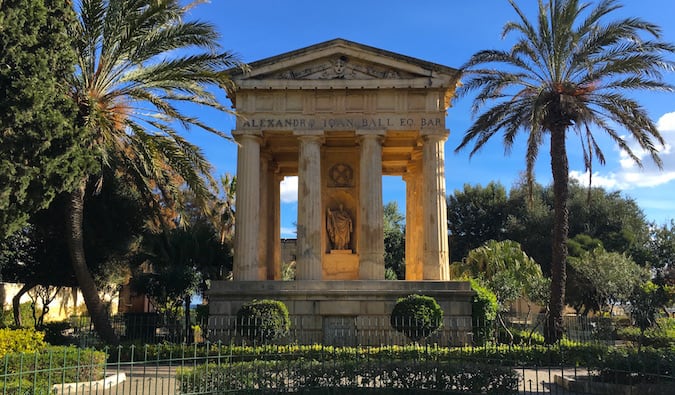
historic monument in malta
My visit to Malta was like watching the preview of a good movie. When it’s over, you can’t wait for the whole movie.

But I don’t know if I’ll ever get back for the feature presentation. There’s so much to see in the world that I have this gut feeling it will be a long time before I get back to Malta. But, even if I never get back, I enjoyed the preview as well as the fact that I finally turned off my computer and just enjoyed where I was without distractions.

It’d been a long time since I last did that.

2019年7月25日星期四

The Best Months to Visit Iceland (Video)

When Iceland's economy buckled under the pressure of a crumbling currency back in 2008, the island instantly became accessible to travelers with a more broad spectrum of budgets.

Now, 10 years later, the nation has experienced an eruption of tourism, as travelers become increasingly exposed to the ethereal — and highly Instagrammable — landscapes of ancient glaciers and rugged fjords.

Prices have duly exploded as well, and the mirage of the inexpensive Scandinavian vacation is no more.

Finding that perfect price-value ratio is nothing short of a feat when traveling to Iceland. And travelers should also be aware that what you do and see on your Iceland trip will be almost entirely determined by what time of year you visit. So don't buy those flights before first consulting this comprehensive guide. 

The Best Months to Visit Iceland

The Best Weather in Iceland

The summer months — July and August — are Iceland’s warmest, and have long been the most popular time to visit. And June, with its 24 hours of daylight, sees just about as many tourists as the peak of summer.

But even during this season, bad weather (rain and intense winds) is not uncommon. The island’s fickle climate often means you can experience all four seasons in a single day.

Iceland can stay relatively warm through the first week of October, so planning a September visit can be ideal (most of the crowds have thinned as children return to school). May, too, provides ample daylight for sightseeing and warmer temps. But if you’re keen on exploring some of the more remote hills and fjords, it may not be the best time to visit, as some roads remain closed while they thaw from winter’s snowy cover. For serious hikers, the best time to visit Iceland is the summer, when all the mountain roads are open and all of the most famous trails are accessible.

The Best Time to See Whales in Iceland

According to Icelandic marine biologist Dr. Edda Elísabet Magnúsdóttir, the peak months to whale watch in Iceland are June and July. In the north of Iceland, you’ll have a wider window to enjoy visits from humpbacks, minkes, and dolphins, which ply the Atlantic from May to August; a few humpbacks even stick around until the end of the year. Blue whales pass through in June, too.

The summer months in Reykjavík see promising numbers of minke whales and dolphins, while orcas congregate in West Iceland along the Snaefellsnes peninsula during the first half of the year.

The Best Times to Visit the Hot Springs

Iceland’s hot water baths are one of the most essential components of the local culture, both for social as well as wellness benefits. Reykjavík’s public pools are open all year round (and are especially invigorating in the dead of winter), but the island also has hundreds of hidden “hot pots” that tap directly into the geothermal activity under its lava-ridden surface.

Expert Icelandic mountaineer and co-founder of Midgard Adventure, Sigurdur Bjarni Sveinsson, offers the following advice for hot water hunters: “Check them out during the month of September or, even better, the first half of October when they’re all still accessible by mountain road, but the crowds of tourists have significantly died down.”

To travelers who want to visit the most famous geothermal spa, the best time to visit the Blue Lagoon is during the off and shoulder season, when crowds are thinner (hundreds of thousands of people flock here every year). 

The Best Time to Visit Iceland for Northern Lights

You’ll need three essential factors to see the Aurora Borealis: darkness, clear conditions, and a surge in solar activity. Viewings are often elusive, like seeing curtains of neon wind, especially when forecasts predicting roaring flares are marred by transient clouds. To avoid disappointment, travelers should never plan their trip to Iceland solely for the Northern Lights, because the island’s weather is too capricious (statistically, there are more clear nights in Yellowknife, Canada, for example.) The best way to optimize your chances of seeing the Northern Lights in Iceland is by visiting from mid-October through March, when you have extended hours of nighttime, and getting out into the countryside to reduce the ambient light pollution.

The Worst Times to Visit Iceland

The Most Crowded Times to Visit Iceland

Sadly (but logically), the warmest months of the year are easily the worst time to visit if you’re hoping to avoid the onslaught of tourists. The month of July and the first week of August see the highest number of travelers, with big-ticket attractions like the Blue Lagoon, the Golden Circle, the South Coast, and Jökulsárlón being particularly overrun. If you are planning to visit during that time, consider exploring more remote corners of the island like the Westfjords or East Iceland, which have their own cache of fjords, vistas, and waterfalls that are just as impressive as the natural attractions surrounding the capital — if not more.

The Cheapest Times to Visit Iceland

When tourism was an emerging industry in Iceland, there was a sharp divide between the summer months and the rest of the year. But now that the nation has secured its spot as an It destination, winter accommodation discounts are mostly limited to the darkest and coldest months of the year: November through February.

Flights can soar upwards of $1,000 during the peak travel months, so it’s best to keep an eye on flight deals and flash sales from Icelandair. During the off and shoulder seasons, tickets can be purchased for $200 round-trip from the United States.

Once you arrive in Iceland, however, there are very few discounts to be had.

The Best Times to Visit Australia for Perfect Weather and Cheap Flights (Video)

Whether you’re seeking sun or avoiding sharks, follow this guide to plan a dream trip to the land down under.

Australia is one of the world’s biggest countries, so when to go depends entirely on where you’re going. From the world-famous Great Barrier Reef, to the vineyards scattered across the country, to Sydney’s sprawling beaches, Australia has something to offer every type of traveler.

 cleanString alt

Getty Images

Related: 9 of the Best Places to Stay in South Australia

Here's the best time of year to see all of Australia's greatest sights and attractions.

The Best Months to Visit Australia

Seasons in Australia are opposite to those in the Northern Hemisphere, with summer from December through February, and winter from June through August. The exact type of weather you'll experience depends largely on the region.

Darwin, in the Northern Territory, sees temperatures in the high 70s during the winter and can have no rainfall at all, but summers are extremely hot, with serious downpours.

In southern Australia, including Adelaide and Melbourne, summer temperatures often hover in the low 70s, and winters are cool. Pack a few sweaters as well as pieces for warmer weather, no matter the time of year. Kangaroo Island, just southeast of Adelaide, shares a similar climate. Visit in January or February for warm beach weather — and to catch baby ‘roos hopping around.

The Best Times to Visit the East Coast

Australia’s East Coast is usually considered the stretch from Cairns, in the north, to Melbourne, in the south, and is the most convenient area to get to from the United States. It’s also incredibly vast — travelers could easily spend more than 40 hours driving top to bottom, with no traffic and no stops, so the weather and scenery vary.

The Best Times to Visit the Great Barrier Reef

Up north, the Great Barrier Reef tends to be warm year-round, and in the summer temperatures can rise to nearly 90 degrees, with plenty of tropical rain. Here, wet season comes in the summer and spring, which slows the stream of tourists. While this may not be the ideal time to visit Australia's famous reefs for weather, it's preferable for travelers interested in avoiding crowds.

The Best Times to Visit the Gold Coast

About an hour’s drive from Brisbane is the Gold Coast, and it's known for having beautiful weather most of the year. (A particularly popular Gold Coast beach destination is Surfers Paradise.) More than 500 miles south of the Gold Coast is Sydney, a cultural center famous for beautiful beaches including Coogee, Manly, and Bondi. Temperatures in the winter are slightly chilly, with some rain. If a beach holiday is on your agenda, summer is perfect, as temperatures are warm. But if you prefer a more active vacation, spring and autumn are ideal.

The Best Times to Visit South Australia

Don’t confuse South Australia with southern Australia: the former is one of Australia’s six states. Adelaide, the capital, definitely earns less attention than bigger cities like Sydney and Melbourne, but it’s a perfect jumping off point for the multitude of vineyards nearby. Most of this state is actually considered “outback” — i.e. remote. Highlights include the underground opal mining town, Coober Pedy, and a road trip along the stretch of highway through Nullarbor National Park.

If you’re headed into the outback, consider that temperatures can rise in the summer, becoming uncomfortable and potentially unsafe. In Nullarbor, the winter can be the best time — July and August are peak whale season. As for Adelaide and the surrounding area, you’re safe year-round when it comes to weather. Winter temperatures don’t drop tend to drop below about 45 degrees, and in the autumn and spring, they can be as warm as the low 70s. In summer, they don’t usually rise past the low 80s, although heat waves aren’t unheard of.

The Best Times to Visit Australia’s Beaches

From Sydney’s Bondi Beach, with its iconic pool set just above the sea, to the bright, white sand and turquoise waters of the Whitsundays Islands, Australian beaches are hard to beat. The best way to decide which to visit? Follow the weather.

It’s important to note that just because there’s a beach doesn’t mean you can go swimming. Some places have saltwater crocodiles, box jellyfish, or other creepy ocean critters. Pay attention to signage and ask locals if you have any doubts.

Still, don’t let a fear of sharks factor into your plans. Rodd Stapley, Shark Expert for Taronga Zoo, told Travel + Leisure the safest season to avoid sharks can vary each year due to changes in the environment. To minimize risks, Stapley recommends swimming in ocean pools or netted beaches, and between lifeguard flags.

A bigger risk to swimmers and even waders at Australian beaches are riptides, which are common here. Learn the signs, including dark water and fewer waves breaking. Only swim between the flags on lifeguarded beaches, and if you do get caught in a rip, swim parallel to the shoreline to get out of it.

The Best Months to Visit Australia's Wine Country

From Hunter Valley, in New South Wales, to Swan Valley, slightly north of Perth, there are more than 60 wine regions scattered across the country. It’s easy to find good wine no matter the time of year, but if you’re trying to make Pinots and Sauvignons the main event, many regions hold wine festivals. Late autumn is a popular time for harvest festivals, so plan to visit in April, May, or early June.

Related: The Best Wine Tours in South Australia

If you’re hoping to pack as many vineyards as possible into your stay, head to South Australia. Almost one third of the country’s wine regions are here, and there are more than 200 cellar doors where you can try them. Within two hours drive of Adelaide, try vineyards in Barossa, McLaren Vale, Clare Valley or Adelaide Hills. Because South Australia’s weather is fairly mild, there isn’t a bad time to visit.

If you’re looking for sunny strolls through the vineyard and don’t mind high temperatures, go in summer. For people who prefer pleasant warmth to hot heat, spring and autumn have beautiful weather, and if the idea of getting cozy near an open fire with a glass of shiraz appeals, don’t be put off visiting in winter. One caveat: June is the wettest month (though Adelaide is the least rainy and least humid of the Australian capitals).

The Worst Times to Visit Australia

Generally, it’s best to avoid the south’s chilly winters and the far north’s hot, wet summers.

But crowds are also a consideration. Students get a break from mid-December until late January (or even early February), which means packed beaches and more expensive domestic airfare. Australia is a popular backpacker destination, so tourist favorites tend to be busy anyway, but book your trip in late spring or early autumn to strike a balance between great weather and manageable crowds.

The Cheapest Times to Visit Australia

It has to be said: there’s no truly cheap time to visit the Antipodes. December and January tend to be most expensive, likely due to holiday travel and the prime summer weather. According to data collected by Skyscanner over the past two years, the cheapest months to travel to Sydney and Melbourne from New York City are September and October, respectively, and the cheapest month to travel to Melbourne and Sydney from LAX is November.

If you have flexibility on timing, plan well in advance to find the best deals. If you have less flexibility on schedule but more on destination, try searching a few cities internally and looking at local budget airlines, like Jetstar, to get around once you’re in Australia.