显示标签为“guide”的博文。显示所有博文

2019年8月2日星期五

A Visitor's Guide to Edinburgh: What to See, Do, & Where to Stay in 2019

View of Edinburgh Castle

View of Edinburgh Castle
Updated: 1/5/2019 | January 5th, 2019

Updated: 1/5/2019 | January 5th, 2019

The cobbled streets, tight quarters, the castle, the Gothic architecture of many of its buildings —Edinburgh’s beauty is inescapable.

Originally, I visited Edinburgh for my birthday back in 2009 and, enjoying the city’s beauty and history, have been coming back ever since, even spending a new year’s here a few years back! I absolutely love this city and its people.

Edinburgh has been the capital of Scotland since the 15th century (though people have lived here since 8,500 BC). The city was destroyed by the English in 1544, but eventually recovered and became the center of the Scottish Reformation in the 16th century. In the 19th century, Edinburgh lost it’s status as the #1 city in Scotland to the manufacturing city of Glasgow. However, Edinburgh was famous for its literary figures and became an educational and literary capital growing rapidly during the later 19th century.

In the 20th century, Edinburgh remained a city of banking, and education, growing rapidly in the later part of the century and early 21st century thanks to tourism and just a growing interest in Scotland.

Edinburgh is a small city with friendly people and history everywhere. I love walking down the small, cobblestone streets, and getting lost in the little squares and back alleys of the city. Here, locals will say hi to you and chat you up over a pint in the local pub.  It’s a magical town that inspires you at every turn.

If you’re going to visit Edinburgh, here are some of the best things to see and do in Edinburgh on your trip:

The Royal Mile
The Royal Mile

The Royal Mile
This historic street stretches from the Castle to the palace and is the most popular street in the city. It’s the main thoroughfare in the Old City and is a great place to people watch, sightsee, listen to buskers, and grab a bite to eat.

This historic street stretches from the Castle to the palace and is the most popular street in the city. It’s the main thoroughfare in the Old City and is a great place to people watch, sightsee, listen to buskers, and grab a bite to eat.

St. Giles Cathedral
St. Giles Cathedral

St. Giles Cathedral
This not-technically a cathedral (cathedrals need a bishop and this one has none) is very old and beautiful. Also known as the High Kirk of Scotland, St. Giles Cathedral was founded in the 12th century (though little remains from that period) and is the primary place of worship for the Church of Scotland. The cathedral is located between the Castle and the Palace, it’s a good place to see stunning Gothic architecture and good stained glassed windows.

This not-technically a cathedral (cathedrals need a bishop and this one has none) is very old and beautiful. Also known as the High Kirk of Scotland, St. Giles Cathedral was founded in the 12th century (though little remains from that period) and is the primary place of worship for the Church of Scotland. The cathedral is located between the Castle and the Palace, it’s a good place to see stunning Gothic architecture and good stained glassed windows.

High Street, +44 131-225-4363, stgilescathedral.org.uk. Open Monday-Friday from 9am-7pm (5pm during the off season), Saturday from 9am-5pm (closed during the off season), and 1pm-5pm on Sunday. Guided rooftop tours are 6 GBP per person, and a photo permit for the church (interior) is 2 GBP.

Take a ghost tour
The MacKenzie Poltergeist

The MacKenzie Poltergeist
Edinburgh is actually considered one of the

Edinburgh is actually considered one of the most haunted cities in the world . In the 17th century, Lord Advocate Sir George Mackenzie was appointed to round up religious dissidents. Some 18,000 people were rounded up and killed on his watch. the story goes that his tomb was disturbed by a homeless man, releasing his vengeful spirit. Since then of 500 people have claimed to have seen (or been attacked!) by the ghost of Mackenzie. This has led to the popularity of haunted walking tours around the city. There are plenty of different tours to choose from, including walking tours, underground tours, and bus tours (available during both the day and night). Some of the best companies to check out at Get Your Guide Mercat , and New Europe

Edinburgh Castle
Edinburgh Castle

Edinburgh Castle
The roots of Edinburgh castle were likely established around the 2nd century, though it wasn’t until the 7th where we start to see the formations of a castle take shape. Today’s castle was built in the 12th century, though many parts have been reconstructed over the years. While it’s not the best castle in the world, it has an interesting history, a daily cannon fire, great views, and historic artifacts in it. It’s definitely worth a tour if you’re into history or architecture!

The roots of Edinburgh castle were likely established around the 2nd century, though it wasn’t until the 7th where we start to see the formations of a castle take shape. Today’s castle was built in the 12th century, though many parts have been reconstructed over the years. While it’s not the best castle in the world, it has an interesting history, a daily cannon fire, great views, and historic artifacts in it. It’s definitely worth a tour if you’re into history or architecture!

Castlehill, +44 131-225-9846, edinburghcastle.scot. Open daily from 9:30-6pm (5pm in the winter). Admission is 18.50 GBP for adults (17 GBP if you book in advance) with discounts available for children.

The Scott Monument
The Scott Memorial

The Scott Memorial
This Gothic tower stands an impressive 61 meters high and is actually the second tallest monument to a writer in the world (the first is in Cuba). Sir Walter Scott was a novelist, playwright, and historian known for such books as Ivanhoe and Rob Roy. For a good view of the city, climb up the stairs!

This Gothic tower stands an impressive 61 meters high and is actually the second tallest monument to a writer in the world (the first is in Cuba). Sir Walter Scott was a novelist, playwright, and historian known for such books as Ivanhoe and Rob Roy. For a good view of the city, climb up the stairs!

E. Princes St Gardens, +44 131-529-4068, edinburghmuseums.org.uk/venue/scott-monument. Open daily from 10am-9pm (4pm in the winter). Admission is 8 GBP for adults with discounts available.<

The Elephant House
The Elephant House

The Elephant House
The cafe became super popular for one reason: Harry Potter. J.K Rowling spent many an hour here writing her epic Harry Potter saga. Once that fact became known, Harry Potter fans from all around the globe have flocked here to see the place with their own two eyes. More often than not, there are people outside taking photos and even a line to get in!

The cafe became super popular for one reason: Harry Potter. J.K Rowling spent many an hour here writing her epic Harry Potter saga. Once that fact became known, Harry Potter fans from all around the globe have flocked here to see the place with their own two eyes. More often than not, there are people outside taking photos and even a line to get in!

21 George IV Bridge, +44 131-220-5355, elephanthouse.biz. Open Monday-Thursday from 8am-10pm, Friday from 8am-11pm, Saturday from 9am-11pm, and Sunday from 9am-10pm.

Rosslyn Chapel
Rosslyn Chapel

Rosslyn Chapel
Built in the 15th century,

Built in the 15th century, this famous chapel is a Da Vinci Code lover’s dream. There are many (alleged) links to both the Freemasons and the Knights Templar. Even if you don’t believe in any of that, the detailed carvings are impressive and the chapel’s long history make it worth checking out. (It’s not far from the city and a good excuse to get out of Edinburgh for a bit!)

Chapel Loan, +44 131-440-2159, rosslynchapel.com. Open daily from 9:30am-5pm (6pm in the summer). Admission is 9 GBP, with discounts avilable. Interior photography isn’t permitted

Museum of Edinburgh
museum of Edinburgh

museum of Edinburgh
When you’re strolling down the Royal Mile, don’t forget to check out the Museum of Edinburgh. It will give you a much a better understanding of the city’s history and how it became the city that it is today. Best of all, this museum is free!

When you’re strolling down the Royal Mile, don’t forget to check out the Museum of Edinburgh. It will give you a much a better understanding of the city’s history and how it became the city that it is today. Best of all, this museum is free!

edinburghmuseums.org.uk/venue/museum-edinburgh. Open daily from 10am-5pm. Admission is free but donations are welcome.

Hike to Arthur’s Seat
Arthur's seat in Edinburgh

Arthur's seat in Edinburgh
If you want a sweeping view of the city you’re going to have to put in the work. It’s not a particularly difficult walk, but some parts can be a bit steep. The wind can get incredibly strong up there, but it’s the perfect place for a picnic to watch the sunset if you feel like stretching your legs.

If you want a sweeping view of the city you’re going to have to put in the work. It’s not a particularly difficult walk, but some parts can be a bit steep. The wind can get incredibly strong up there, but it’s the perfect place for a picnic to watch the sunset if you feel like stretching your legs.

Visit the Writer’s Museum
Edinburgh writer museum

Edinburgh writer museum
This museum covers the lives of 3 of the most famous Scottish writers: Waler Scott, Robert Burns, and Robert Louis Stevenson. You’ll learn about their personal lives as well as their work. There are numerous paintings, writings, and personal objects from their lives. It’s a neat museum that sheds some light into the history of some of Scotland’s most successful writers.

This museum covers the lives of 3 of the most famous Scottish writers: Waler Scott, Robert Burns, and Robert Louis Stevenson. You’ll learn about their personal lives as well as their work. There are numerous paintings, writings, and personal objects from their lives. It’s a neat museum that sheds some light into the history of some of Scotland’s most successful writers.

Lawnmarket — Lady Stair’s Close, +44 131-529-4901, edinburghmuseums.org.uk/venue/writers-museum. Open daily from 10am-5pm. Admission is free.

Scottish National Gallery
museum of Edinburgh

museum of EdinburghThis museum first opened in the 1850’s and is home to Scotland’s national collection of fine art. If you want to get a deeper understanding of Scottish history and culture, this is a great place to dive in.

This museum first opened in the 1850’s and is home to Scotland’s national collection of fine art. If you want to get a deeper understanding of Scottish history and culture, this is a great place to dive in.

The Mound, +44 131-624-6200, nationalgalleries.org/visit/scottish-national-gallery. Open daily from 10am-5pm (7pm on Thursdays). Admission is free, though some exhibits cost money.

The Scotch Whisky Experience
scotch whisky experience in Edinburgh

scotch whisky experience in Edinburgh
If you’re a fan of Scotch, you’ll not want to pass up a whiskey tasting. This is one of the best options in town, offering up tours, tastings, and a full day training school. Located on the Royal Mile, you can try all sorts of different local whiskeys. Since this isn’t a distillery you’re free to browse selections from across the country, making this a great choice for someone looking to sample a wider variety of whiskey.

If you’re a fan of Scotch, you’ll not want to pass up a whiskey tasting. This is one of the best options in town, offering up tours, tastings, and a full day training school. Located on the Royal Mile, you can try all sorts of different local whiskeys. Since this isn’t a distillery you’re free to browse selections from across the country, making this a great choice for someone looking to sample a wider variety of whiskey.

354 Castlehill, +44 131-220-0441, scotchwhiskyexperience.co.uk. Open daily from 10am-5pm (open later in the summer). A basic tour is 27 GBP, with discounts available. For their more comprehensive tours, prices will be higher and you’ll need to book in advance.

Do a pub crawl
people partying in Edinburgh

people partying in Edinburgh
If you’re planning on doing the rounds and searching for the city’s best drink, join a pub crawl. They are a great way to meet other travelers and you’ll be taken to bars, pubs, and nightclubs you might not have discovered otherwise. There are plenty of available pub crawls in the city, but the biggest (and best) is the Edinburgh Pub Crawl. They take you to 7 bars and your ticket includes 6 free drinks as well as some additional discounts.

If you’re planning on doing the rounds and searching for the city’s best drink, join a pub crawl. They are a great way to meet other travelers and you’ll be taken to bars, pubs, and nightclubs you might not have discovered otherwise. There are plenty of available pub crawls in the city, but the biggest (and best) is the Edinburgh Pub Crawl. They take you to 7 bars and your ticket includes 6 free drinks as well as some additional discounts.

69 Cowgate, +44 7547-022-182, edinburghpubcrawl.com. Pub crawls occur every night. Tickets are 7 GBP.

***If you’re planning to visit 

If you’re planning to visit Edinburgh , this list will help you get your trip started. It is one of my favorite places in Europe. While the city is a major tourist destination, it lacks a lot of the crowds that swamp other cities in Europe (except during major festivals, then this place is a zoo). And best of all? Edinburgh is not that expensive either! It’s a win-win!

Book Your Trip to Edinburgh: Logistical Tips and Tricks

Book Your Flight
Find a cheap flight to Edinburgh by using Skyscanner or Momondo. They are my two favorite search engines. Start with Momondo.

Book Your Accommodation
You can book your hostel in Edinburgh with Hostelworld. My suggested place is Castle Rock. If you want to stay elsewhere, use Booking.com as they consistently return the cheapest rates. (Here’s the proof.)

Don’t Forget Travel Insurance
Travel insurance will protect you against illness, injury, theft, and cancellations. I never ever go on a trip without it. I’ve been using World Nomads for ten years. You should too.

Need Some Gear?
Check out our resource page for the best companies to use!

Want More Information on Edinburgh?
Be sure to visit our robust destination guide on Edinburgh for even more planning tips!

Photo Credit: 1, 2, 3, 4, 5, 6, 7, 8, 9, 10, 11, 12, 13, 14, 15

A Mini-Travel Guide to Stockholm: What to Do and See (Updated 2019)

Stockholm from the air

Stockholm from the air
Updated: 1/5/2019 | January 5th, 2019

Updated: 1/5/2019 | January 5th, 2019

Most of the people who know me know that I love Sweden. It’s filled with beautiful landscapes, lakes, mountains, fjords, buildings, and of course people. If the country didn’t have such a harsh winter, I’d move to the capital city of Stockholm. It’s one of the most beautiful Old World cities I’ve ever been to. The people are nice, the city is easily walkable, it’s clean, it’s hip, and it has a great nightlife.

I think what makes Stockholm so charming is the setting. It’s a small city set among a bay full of little islands and inlets. Stockholm’s Old Town (Gamla Stan) was built on the central island in the 13th century. The city was the capital of the Swedish empire and rose to prominence as a major trading center. Now it’s known for its architecture, expensive drinks, beautiful people, and green initiatives.

Most of the city’s historical charm is preserved in Gamla Stan, where the Royal Palace is located. But even outside of Gamla Stan, the buildings look historic and beautiful. The red, green, and yellow painted houses are especially so juxtaposed with fall foliage.

Moreover, the city is filled with nature. Trees line most of the streets, there are a lot of squares and parks, and you are never too far from the water.

There are a lot of things to do in Stockholm. I’m never bored when I go there, and many of the activities cost little money, which is great because Stockholm isn’t a cheap city.

Here are my top picks for what to see while in Stockholm:

Walk through Gamla Stan
This is the “Old Town” of the city, with gorgeous architecture and cobblestone streets. This was the original part of the city, and here you’ll see centuries-old buildings, the Nobel Museum, the Royal Palace, and the ancient homes of the aristocracy. The winding roads and alleys make for some great exploring and photography. In the summer it can get quite busy, so get there early if you want to explore without a crowd.

Tour the archipelago
It’s worth spending a day island-hopping. Take a bus or car to one of the main islands, and from there you can travel by boat to explore some of the other islands in the vicinity. You can find tours from many points within the city. The good tours are the full-day ones that take you out to more secluded islands.

stockholm archipelago

stockholm archipelago

Spend the day at Djurgården Island
This gorgeous island is located right in the middle of Stockholm. It’s a very popular place to go in the summer, with locals and tourists alike coming to visit. It’s a great place to take a stroll or have a picnic, visit the amusement park (Gröna Lund) or visit the historic Swedish village Skansen (which I’ll talk about below!)

The Vasa Museum
This museum houses the world’s only preserved 17th-century ship. This massive ship was supposed to highlight the power of the Swedish empire. Instead, the ship actually sank as soon as it left the dock and set sail. The cold waters of the bay preserved it the ship and now you can view it all in its unsailable glory.

Galärvarvsvägen 14, +46 8-519-548-80, vasamuseet.se. Open daily from 8:30am-6pm (June-August) and 10am-5pm for the rest of the year. Admission is 130 SEK for adults with discounts available. Free for anyone under 8.

The Royal Palace
Sweden still has a monarchy, and the King is the official head of state (though it’s mostly just ceremonial). The palace was built between 1697-1754 in Gamla Stan and is where all the official duties are performed. It’s also where representatives from other countries can be met for official events. When there are no state events going on it’s open to the public.

Slottsbacken 1, +46 8-402-61-30, kungligaslotten.se/english.html. Open daily from 10am-4pm (5pm in the summer). Admission is 160 SEK for adults with discounts available for students and children.

skansen, stockholm

skansen, stockholm

Skansen
This was actually the first open-air museum in the world. It’s is also a zoological garden specializing in Nordic fauna (featuring moose, reindeer, bears, lynx, and wolverines). The museum and historic village are located on Djurgården (an island in Stockholm). There are over 150 historic buildings from previous centuries that give a glimpse at life in pre-industrial Sweden. The hosts and hostesses of the park dress in historic clothing to give you a more realistic sense that you’ve traveled back in time. The hosts also illustrate traditional skills and jobs such as spinning, weaving, and glass blowing.

Djurgårdsslätten 49-51, +46-8-442-82-00, skansen.se. The park opens daily at 10am, but some attractions open later. Avoid going in the winter. Admission is 125 SEK for adults, with discounts available for children, seniors, and students.

Swedish History Museum
If you’re interested in Scandinavian history, this museum covers the Stone Age to the Vikings. Here you’ll find ancient treasures that date back to the Bronze Age all the way to the 16th century. The museum was founded in 1866 and the first collections were all of the items gathered by the Swedish monarchy over the centuries.

Narvavägen 13-17, +46 8-519-556-00, historiska.se/home. Open daily from 10am-5pm from June-August with reduced hours of operation during the rest of the year. Admission is free.

National Museum
This art museum has works by famous painters and artists, including works by Rembrandt, Rubens, Goya, Renoir, Degas, and Gauguin, as well as famous Swedish artists like Carl Larsson, Ernst Josephson, C F Hill, and Anders Zorn. If you’re a not a huge art buff you’ll still enjoy the museum, and if you are a big fan then this collection will keep you busy for a while. It’s been under renovation recently but it reopened in October 2018.

Södra Blasieholmshamnen, +46 8-519-543-00, nationalmuseum.se/en. Open Tuesday-Sunday from 11am-7pm (9pm on Thursdays).

Medieval Museum
The Medieval Museum is actually located underneath the Royal Palace. It’s one of the better history museums in the city (most are not that great, to be honest). It covers life in medieval Sweden and life in Stockholm during the middle ages. The exhibits are detailed and informative, and the museum does a great job of illustrating how the city grew into what it is today.

Strömparterren 3, +46 8-508-316-20, medeltidsmuseet.stockholm.se. Open Tuesday-Sunday from 12pm-5pm (8pm on Wednesdays). Admission is free.

Fotografiska
Fotografiska is a photography gallery in the city that is home to numerous exhibits that showcase some awesome works of contemporary photography. The collections are quite expansive and there is also a bar on the top floor that also offers a great view of the city.

Stadsgårdshamnen 22, +46 8-509-005-00, fotografiska.com/sto. Open Sunday-Wednesday from 9am-11pm and Thursday-Saturday 9am-1am. Admission is 145 SEK for aduls and 115 SEK for students and seniors.

ABBA: The Museum
A trip to Stockholm wouldn’t be complete without a visit to the quirkiest museum in town: the ABBA museum. While admission isn’t cheap, this is a fun and interesting museum that’s worth checking out if you’re a fan of the pop sensation (or if you just want to see how silly the museum is!)

Djurgårdsvägen 68, +46 8-121-328-60, abbathemuseum.com/en. Open daily from 10am-6pm (7pm on Wednesdays and Thursdays). Tickets are 250 SEK for adults with discounts available for students, children, and families.

City Hall
Stockholm’s City Hall is a historic brick building with daily guided tours. On the tour, you’ll visit the official government areas and learn about the history of the building and local government> You can also go up the tower (for an additional 50 SEK) for amazing views of Gamla Stan and the city.

Hantverkargatan 1, Kungsholmen, +46 8-5082-9058, international.stockholm.se/the-city-hall. Tours are available several times a day, depending on the time of year. Tickets are 110 SEK per person, with discounts for students and seniors. No pre-booking.

***Stockholm is an expensive city to live in, but after having lived in many parts of the world, I found the city to be no more expensive than a bad day in New York. You can find cheap meals, relatively inexpensive cider and beer, and hostels that cost as much as a cheap motel. It’s more expensive than Paris, but it’s not as expensive as people expect it to be. (For that, go to Oslo!)

Stockholm is an expensive city to live in, but after having lived in many parts of the world, I found the city to be no more expensive than a bad day in New York. You can find cheap meals, relatively inexpensive cider and beer, and hostels that cost as much as a cheap motel. It’s more expensive than Paris, but it’s not as expensive as people expect it to be. (For that, go to Oslo!)

I spent most of my money in Stockholm on food. While there are “cheap eats,” most restaurants turn out to be quite expensive when the price is converted back into dollars. A Vietnamese dinner in Stockholm, for example, cost me around $30 USD, and all I had was a beer and soup. Going out to dinner will ruin your budget.

But despite its costs, Stockholm is a magical city, and I’m happily willing to pay the price if it means I get to visit. There’s just so much beauty there, and in the summertime, the city is one of the most alive places on earth. Swedes value the small amount of nice weather they get, so expect lots of late nights (after all, the sun sets at 11pm and rises at 3am), festivals, and people looking to sociable time.

Be sure to visit Stockholm.

Get the In-Depth Budget Guide to Stockholm!

Nomadic Matt's Guide to StockholmNomadic Matt's Guide to StockholmFor more in-depth coverage of Stockholm, my 80-page guidebook is perfect for budget travelers like you! It cuts out the fluff found in other guides and gets straight to the practical information you need to travel and save money in one of the most beautiful cities in the world. You’ll find suggested itineraries, budgets, ways to save money, on- and off-the-beaten-path things to see and do, nontouristy restaurants, markets, and bars, and much more! Click here to learn more and get started.
Book Your Trip to Stockholm: Logistical Tips and Tricks

Book Your Flight
Find a cheap flight to Stockholm by using Skyscanner or Momondo. They are my two favorite search engines. Start with Momondo.

Book Your Accommodation
You can book your hostel in Stockholm with Hostelworld. If you want to stay elsewhere, use Booking.com as they consistently return the cheapest rates. (Here’s the proof.)

Don’t Forget Travel Insurance
Travel insurance will protect you against illness, injury, theft, and cancellations. I never ever go on a trip without it. I’ve been using World Nomads for ten years. You should too.

Need Some Gear?
Check out our resource page for the best companies to use!

Want More Information on Stockholm?
Be sure to visit our robust destination guide on Stockholm for even more planning tips!

Gaudi's Barcelona: A Complete Visitor's Guide for 2019

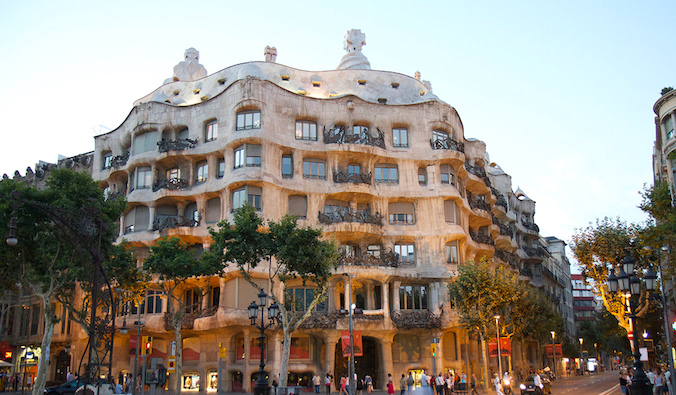
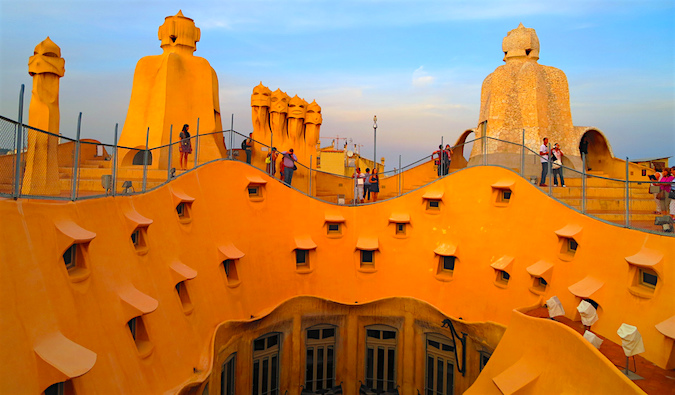
Antoni Gaudi's Casa Mila

Antoni Gaudi's Casa Mila
Updated: 1/5/19 | January 5th, 2018

Updated: 1/5/19 | January 5th, 2018

You can’t visit Barcelona without seeing Gaudi’s influence everywhere you go. He’s the city’s most famous architect helped shape the design of the city during its booming 19th and early 20th century. His influence still shapes the city today.

Born in 1852, Anton Gaudí belonged to the Art Nouveau movement, with his first designs being centered around Gothic and traditional Catalan architectural styles. It wasn’t long until he developed his own style that has set him apart from all others.

Referred to as “God’s Architect” for the religious themes in his work, several of Gaudi’s creations have actually been declared UNESCO World Heritage Sites. His most famous work, La Sagrada Familia is not only the most popular attraction in Barcelona but the most visited monument in all of Spain.

Gaudi died tragically in 1926 after being hit by a streetcar on his way to church. He was knocked unconscious and, because he didn’t have any identification on him, people assumed he was a beggar and just left him be. He was eventually taken to a hospital where he received basic care. By the time people realized who he was it was too late. He died of his injuries shortly thereafter.

No visit to Barcelona is complete without seeing Gaudi’s work. It will give you insight into the history and growth of the city.  Here is a guide to visiting all of Gaudi’s best sights in Barcelona:

La Sagrada Familia
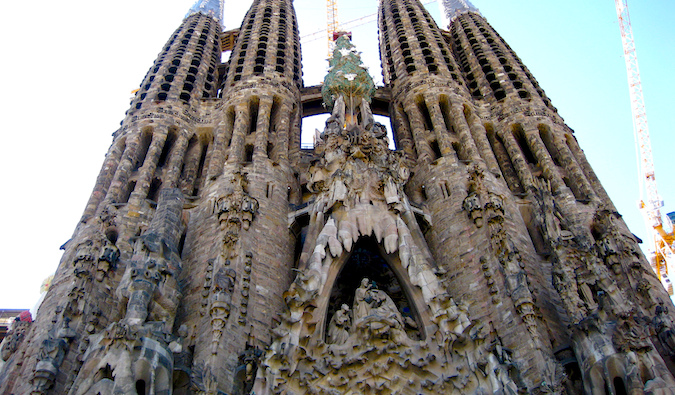
Gaudi's La Sagrada Familia in Barcelona Spain

Gaudi's La Sagrada Familia in Barcelona Spain
The most famous of Gaudí’s work….and one that seems to never be finished. The church has been under construction for over than 100 years (the groundbreaking was in 1882 and is supposed to be done in 2030!). Gaudí was a devout Catholic and spent the last 10 years of his life working on this project. The church blends influences of man, nature, and religion in its detailed architecture. The audio guide is worth purchasing as it covers the history of the church in great detail. Try to visit mid-morning to late afternoon so you can witness the sunlight cascade throughout all the stained glass.

The most famous of Gaudí’s work….and one that seems to never be finished. The church has been under construction for over than 100 years (the groundbreaking was in 1882 and is supposed to be done in 2030!). Gaudí was a devout Catholic and spent the last 10 years of his life working on this project. The church blends influences of man, nature, and religion in its detailed architecture. The audio guide is worth purchasing as it covers the history of the church in great detail. Try to visit mid-morning to late afternoon so you can witness the sunlight cascade throughout all the stained glass.

Carrer de Mallorca, +34 932-080-414, sagradafamilia.org. The church is open daily from 9am-8pm in the summer, 9am-7pm in the spring/autumn, and 8am-6pm in the winter. Admission is 15 EUR, 22 EUR for a ticket and audio guide, 24 EUR for a guided tour, and 29 EUR for a self-guided tour with an audio guide and access to the tower.

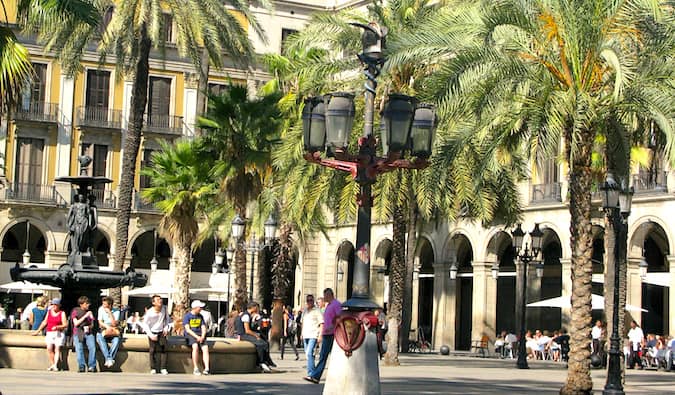
Gaudi Lampposts: Placia Real and Pla del Palau
Gaudi Lamppost in Barcelona Spain

Gaudi Lamppost in Barcelona Spain
The first commission that Gaudí received after graduating school was to construct street lamps for the city. At the request of the city council in 1878, he designed lamps with three and six arms and crowned by a winged helmet. They were symbolic of the commercial power of Barcelona, made of cast iron and marble. They’re all gone now except for the ones left in Placia Real and Pla del Palau.

The first commission that Gaudí received after graduating school was to construct street lamps for the city. At the request of the city council in 1878, he designed lamps with three and six arms and crowned by a winged helmet. They were symbolic of the commercial power of Barcelona, made of cast iron and marble. They’re all gone now except for the ones left in Placia Real and Pla del Palau.

Placia Real, just off La Rambla. They are located in a public square so are accessible 24/7 and free.

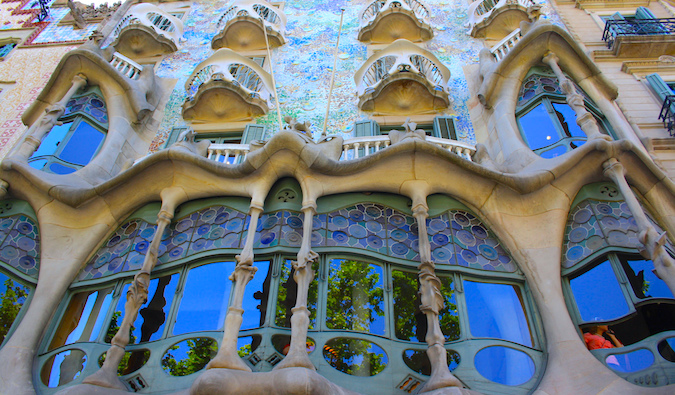
Casa Batllo
Caso Batllo in Barcelona Spain

Caso Batllo in Barcelona Spain
Casa Batllo is a building restored by Antoni Gaudí in the early 1900s. He spent 2 years on the project completely revamping the exterior, main floor, patio, and roof. With its undulating shape, it’s definitely one of the more eye-catching of his creations. Located in the Eixample district of Barcelona, it (like everything Gaudí designed) was heavy influenced by the Art Nouveau style. The facade was decorated with a mosaic made of broken ceramic tiles that he collected from the trash of a nearby glass shop. The roof is arched and has been likened to the back of a dragon. It’s one of my favorite Gaudí buildings.

Casa Batllo is a building restored by Antoni Gaudí in the early 1900s. He spent 2 years on the project completely revamping the exterior, main floor, patio, and roof. With its undulating shape, it’s definitely one of the more eye-catching of his creations. Located in the Eixample district of Barcelona, it (like everything Gaudí designed) was heavy influenced by the Art Nouveau style. The facade was decorated with a mosaic made of broken ceramic tiles that he collected from the trash of a nearby glass shop. The roof is arched and has been likened to the back of a dragon. It’s one of my favorite Gaudí buildings.

Passeig de Gràcia 43, +34 932-160-306, casabatllo.es. Open daily from 9am-9pm. Tickets are 24.50 EUR if you buy them online or 28.50 EUR in person. Skip the line tickets are available for 29.50 EUR (or 33.50 EUR at the office).

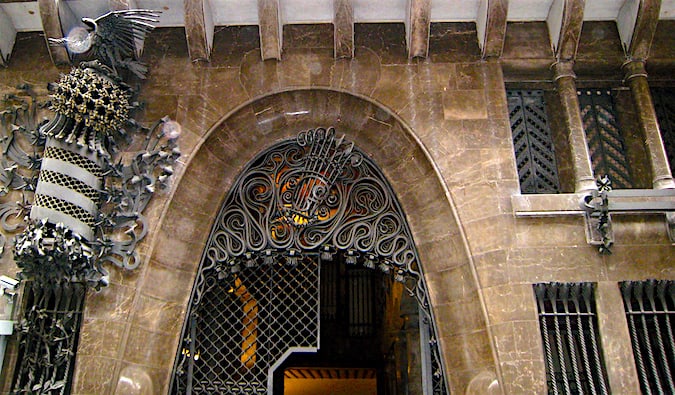
Palau Guell
Palau Guell

Palau Guell
Located off La Rambla, Palau Guell (Guell Palace) building doesn’t jump out at you like other Gaudí structures. Built from 1886-88, it was designed for one of Gaudi’s patrons, Eusebi Güell. The home is centered around the main room used to entertain high-society guests. The main party room has a high ceiling with small holes near the top where lanterns were hung at night from the outside to give the appearance of a starlit sky. There are colorful tree-like chimneys on top. It’s a bit creepy and gothic to me. One of my favorites too!

Located off La Rambla, Palau Guell (Guell Palace) building doesn’t jump out at you like other Gaudí structures. Built from 1886-88, it was designed for one of Gaudi’s patrons, Eusebi Güell. The home is centered around the main room used to entertain high-society guests. The main party room has a high ceiling with small holes near the top where lanterns were hung at night from the outside to give the appearance of a starlit sky. There are colorful tree-like chimneys on top. It’s a bit creepy and gothic to me. One of my favorites too!

Carrer Nou de la Rambla 3-5, +34 934-725-775, palauguell.cat. Open Tuesday-Sunday from 10am-5:30pm. Admission is 12 EUR, with discounts available for students, seniors, and children.

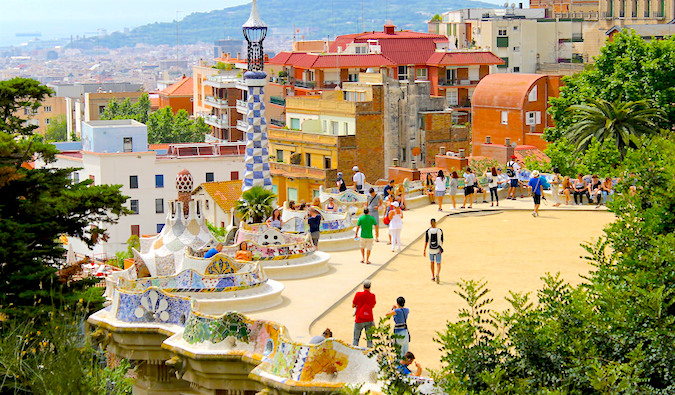
Park Guell
Gaudi's Park Guell in Barcelona

Gaudi's Park Guell in Barcelona
Park Güell is a 45-acre garden complex designed and built between 1900 to 1914. It’s since been converted into a municipal garden and is now a World Heritage Site. The focal point of the park is the main terrace, which is surrounded by a long bench in the form of a sea serpent. Known for incorporating various themes into his work, Gaudí incorporated artistic elements of Catalan nationalism as well as ancient poetry and mysticism into this work. The park is right near La Sagrada Familia so it’s easy to visit both. I like how colorful everything in the park is!

Park Güell is a 45-acre garden complex designed and built between 1900 to 1914. It’s since been converted into a municipal garden and is now a World Heritage Site. The focal point of the park is the main terrace, which is surrounded by a long bench in the form of a sea serpent. Known for incorporating various themes into his work, Gaudí incorporated artistic elements of Catalan nationalism as well as ancient poetry and mysticism into this work. The park is right near La Sagrada Familia so it’s easy to visit both. I like how colorful everything in the park is!

Carrer de Larrard (main entrance), +34 934-091-831, parkguell.cat. Open daily from 8am-9:30pm. Admission is 7.50 EUR, with discounts available. A ticket for La Sagrada Familia and Gaudi’s House Museum (in the park) is 24 EUR.

Casa Calvet
Casa Calvet

Casa Calvet
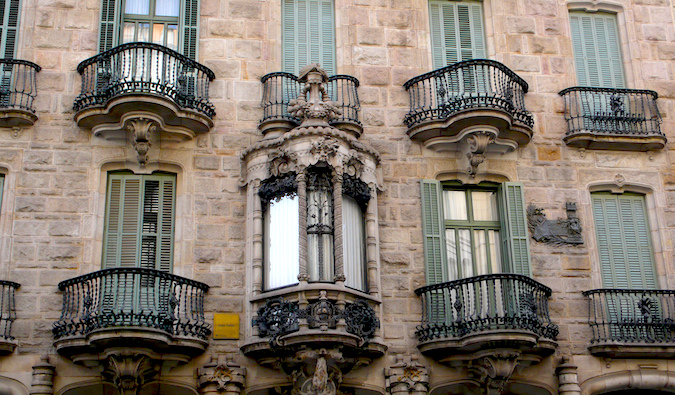
Built between 1898-1900, Casa Calvet was built for a textile manufacturer in the Eixample district of Barcelona. This building is the most conventional of his works, partly because it had to be squeezed in between older structures and partly because it’s in one of the nicest sections of Barcelona. The house’s symmetry, balance, and orderly rhythm are unusual for Gaudí’s works. The curves and double gable at the top and the projecting oriel at the entrance are modernist elements. He also incorporated mythological and natural motifs, which helped him win the award for best building in 1900 from the Barcelona City Council.

Built between 1898-1900, Casa Calvet was built for a textile manufacturer in the Eixample district of Barcelona. This building is the most conventional of his works, partly because it had to be squeezed in between older structures and partly because it’s in one of the nicest sections of Barcelona. The house’s symmetry, balance, and orderly rhythm are unusual for Gaudí’s works. The curves and double gable at the top and the projecting oriel at the entrance are modernist elements. He also incorporated mythological and natural motifs, which helped him win the award for best building in 1900 from the Barcelona City Council.

Carrer de Casp 48. You can only stop by to take pictures of the outside of the building as you aren’t allowed into this private residence. 

Casa Vicens
Casa Vicens in Barcelona, Spain

Casa Vicens in Barcelona, Spain
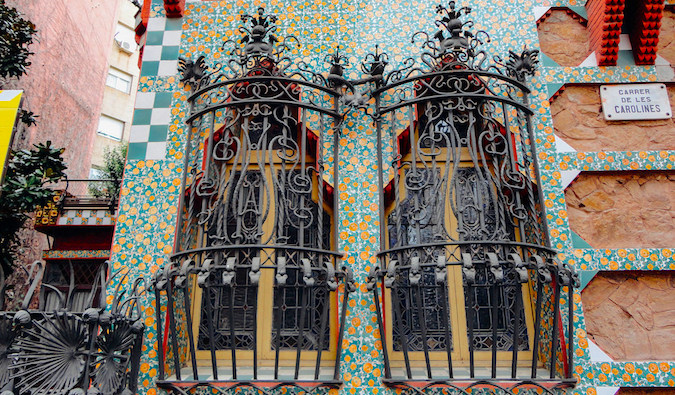
Casa Vicens was Gaudí’s first important work. The house was constructed between 1883-1888 and is made of undressed stone, rough red bricks, and colored ceramic tiles in checkerboard and floral patterns. The client was the owner of a brick and tile factory, so the ceramic tiles pay tribute to his employment.  This is one of Gaudi’s works that falls into his “orientalist” period, as his work has more Middle Eastern/Far Eastern influences. It’s very different from his other sites (and often has the shortest line).

Casa Vicens was Gaudí’s first important work. The house was constructed between 1883-1888 and is made of undressed stone, rough red bricks, and colored ceramic tiles in checkerboard and floral patterns. The client was the owner of a brick and tile factory, so the ceramic tiles pay tribute to his employment. This is one of Gaudi’s works that falls into his “orientalist” period, as his work has more Middle Eastern/Far Eastern influences. It’s very different from his other sites (and often has the shortest line).

Carrer de les Carolines 20, +34 935-475-980, casavicens.org. Open daily from 10am-8pm. Admission is 16 EUR for adults, with discounts available.

Casa Mila
Casa Mila, Barcelona

Casa Mila, Barcelona
From 1906 to 1910, Gaudi work on Casa Mila, also known as “La Pedrera” (the stone quarry) as the building has a facade of limestone. The goal was to evoke the sense of a snowy mountain. Gaudí, himself a Catholic and a devotee of the Virgin Mary, also planned for the Casa Milà to be a spiritual symbol and included many religious elements like an excerpt from the rosary prayer on the cornice and statues of Mary,  St. Michael, and St. Gabriel.  Casa Milà became run down and partially abandoned until it was restored in the late 1980s to its original form.

From 1906 to 1910, Gaudi work on Casa Mila, also known as “La Pedrera” (the stone quarry) as the building has a facade of limestone. The goal was to evoke the sense of a snowy mountain. Gaudí, himself a Catholic and a devotee of the Virgin Mary, also planned for the Casa Milà to be a spiritual symbol and included many religious elements like an excerpt from the rosary prayer on the cornice and statues of Mary, St. Michael, and St. Gabriel. Casa Milà became run down and partially abandoned until it was restored in the late 1980s to its original form.

Provença 261-265, +34 902-202-138, lapedrera.com/en. Open daily 9am-8:30pm (6:30pm during the winter). Night tours are available from 9pm-11pm. Standard admission (which includes an audio guide) is 22 EUR. A combination ticket for the day tour and a guided night tour is 41 EUR (with discounts available).

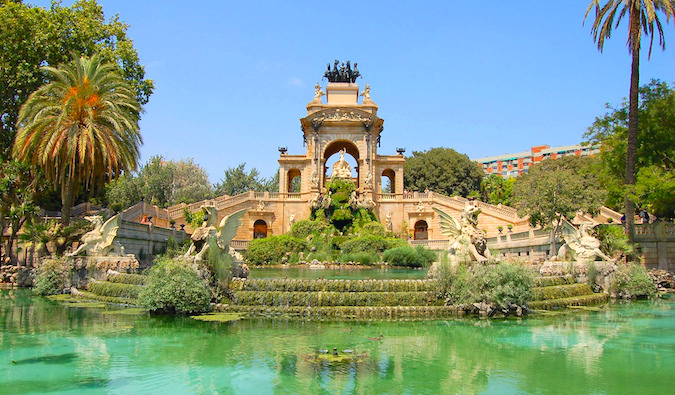
Cascada Fountain in Parc de la Ciutadella

Cascada Fountain in Parc de la Ciutadella
Gaudí helped design this while he was still a student. He was responsible for the design of the fountain, the bandstand, and the park’s entrance gate, a project that stretched from 1873 to 1882. Baroque in style, the fountain is massive, intricate, and awe-inspiring. I loved sitting in the park and just staring at it. If you visit most of the sites on this list, you’ll see the evolution of his style and how different this is from his other works.

Gaudí helped design this while he was still a student. He was responsible for the design of the fountain, the bandstand, and the park’s entrance gate, a project that stretched from 1873 to 1882. Baroque in style, the fountain is massive, intricate, and awe-inspiring. I loved sitting in the park and just staring at it. If you visit most of the sites on this list, you’ll see the evolution of his style and how different this is from his other works.

Passeig de Picasso 21. The park is open daily from 10am-10pm. Admission is free.

College of Saint Teresa
the college of saint teresa

the college of saint teresa
The building looks like a fortress, this is a convent school that Gaudí designed for The Order of Saint Teresa of Jesus. The project was already underway when Gaudi became involved, but he made some changes to the plans to better reflect his personal style and vision.

The building looks like a fortress, this is a convent school that Gaudí designed for The Order of Saint Teresa of Jesus. The project was already underway when Gaudi became involved, but he made some changes to the plans to better reflect his personal style and vision.

Carrer de Ganduxer 85-105, +932 123 354. The interior is not open to the public.

Bellesguard Tower
bellesguard tower

bellesguard tower
The Bellesguard Tower, also known as Casa Figueras, was built by Gaudí between 1900-1909. It was built as a second house for Figueras and meant to feel like a medieval fortress with sporting towers and battlements. There are some Art Noveaux elements mixed in here that gives it a modernist take on a classic Gothic structure.

The Bellesguard Tower, also known as Casa Figueras, was built by Gaudí between 1900-1909. It was built as a second house for Figueras and meant to feel like a medieval fortress with sporting towers and battlements. There are some Art Noveaux elements mixed in here that gives it a modernist take on a classic Gothic structure.

Carrer de Bellesguard 16-20, +932 504 093, bellesguardgaudi.com. Open Tuesday-Sunday from 10am-3pm. Tickets are 9 EUR and include an audio guide.

***Gaudí was a prolific architect and wandering around Barcelona, you’re sure to bump into many of his major and lesser works. More than that, you’ll see his influence throughout the city as other architects and his students copied his style in their own work. I often look at buildings and go “Ahh that must be by Gaudi too” only to find out it’s not. That’s how strong of an influence he has on Barcelona. If you plan to visit these places, keep in mind many of the houses are closed on Mondays. 

Gaudí was a prolific architect and wandering around Barcelona, you’re sure to bump into many of his major and lesser works. More than that, you’ll see his influence throughout the city as other architects and his students copied his style in their own work. I often look at buildings and go “Ahh that must be by Gaudi too” only to find out it’s not. That’s how strong of an influence he has on Barcelona. If you plan to visit these places, keep in mind many of the houses are closed on Mondays. As I love traveling with a theme , searching out Gadui’s works is a different way and unique to visit Barcelona.

Book Your Trip to Barcelona: Logistical Tips and Tricks

Book Your Flight
Find a cheap flight to Barcelona by using Skyscanner or Momondo. They are my two favorite search engines. Start with Momondo.

Book Your Accommodation
You can book your hostel in Barcelona with Hostelworld. If you want to stay elsewhere, use Booking.com as they consistently return the cheapest rates. (Here’s the proof.)

Don’t Forget Travel Insurance
Travel insurance will protect you against illness, injury, theft, and cancellations. I never ever go on a trip without it. I’ve been using World Nomads for ten years. You should too.

Need Some Gear?
Check out our resource page for the best companies to use!

Want More Information on Barcelona?
Be sure to visit our robust destination guide on Barcelona for even more planning tips!


Backpacking Through Europe? Get My Guide!

Nomadic Matt’s Backpacking Europe
My detailed, 200+ page guidebook is made for budget travelers like you! It cuts out the fluff found in other guidebooks and gets straight to the practical information you need to travel and save money while backpacking around Europe. You’ll find suggested itineraries, budgets, ways to save money, on and off the beaten path things to see and do, non-touristy restaurants, markets, and bars, and much more!!

Get the Europe Guide

Also look at my other Europe guides:

  • Amsterdam
  • Iceland
  • Paris
  • Stockholm

View all my guides —>

Photo Credits: 1, 2, 3, 4, 5, 6, 7, 8, 9, 10, 11, 12