

Updated: 1/5/2019 | January 5th, 2019
Updated: 1/5/2019 | January 5th, 2019
Most of the people who know me know that I love Sweden. It’s filled with beautiful landscapes, lakes, mountains, fjords, buildings, and of course people. If the country didn’t have such a harsh winter, I’d move to the capital city of Stockholm. It’s one of the most beautiful Old World cities I’ve ever been to. The people are nice, the city is easily walkable, it’s clean, it’s hip, and it has a great nightlife.
I think what makes Stockholm so charming is the setting. It’s a small city set among a bay full of little islands and inlets. Stockholm’s Old Town (Gamla Stan) was built on the central island in the 13th century. The city was the capital of the Swedish empire and rose to prominence as a major trading center. Now it’s known for its architecture, expensive drinks, beautiful people, and green initiatives.
Most of the city’s historical charm is preserved in Gamla Stan, where the Royal Palace is located. But even outside of Gamla Stan, the buildings look historic and beautiful. The red, green, and yellow painted houses are especially so juxtaposed with fall foliage.
Moreover, the city is filled with nature. Trees line most of the streets, there are a lot of squares and parks, and you are never too far from the water.
There are a lot of things to do in Stockholm. I’m never bored when I go there, and many of the activities cost little money, which is great because Stockholm isn’t a cheap city.
Here are my top picks for what to see while in Stockholm:
Walk through Gamla Stan
This is the “Old Town” of the city, with gorgeous architecture and cobblestone streets. This was the original part of the city, and here you’ll see centuries-old buildings, the Nobel Museum, the Royal Palace, and the ancient homes of the aristocracy. The winding roads and alleys make for some great exploring and photography. In the summer it can get quite busy, so get there early if you want to explore without a crowd.
Tour the archipelago
It’s worth spending a day island-hopping. Take a bus or car to one of the main islands, and from there you can travel by boat to explore some of the other islands in the vicinity. You can find tours from many points within the city. The good tours are the full-day ones that take you out to more secluded islands.

Spend the day at Djurgården Island
This gorgeous island is located right in the middle of Stockholm. It’s a very popular place to go in the summer, with locals and tourists alike coming to visit. It’s a great place to take a stroll or have a picnic, visit the amusement park (Gröna Lund) or visit the historic Swedish village Skansen (which I’ll talk about below!)
The Vasa Museum
This museum houses the world’s only preserved 17th-century ship. This massive ship was supposed to highlight the power of the Swedish empire. Instead, the ship actually sank as soon as it left the dock and set sail. The cold waters of the bay preserved it the ship and now you can view it all in its unsailable glory.
Galärvarvsvägen 14, +46 8-519-548-80, vasamuseet.se. Open daily from 8:30am-6pm (June-August) and 10am-5pm for the rest of the year. Admission is 130 SEK for adults with discounts available. Free for anyone under 8.
The Royal Palace
Sweden still has a monarchy, and the King is the official head of state (though it’s mostly just ceremonial). The palace was built between 1697-1754 in Gamla Stan and is where all the official duties are performed. It’s also where representatives from other countries can be met for official events. When there are no state events going on it’s open to the public.
Slottsbacken 1, +46 8-402-61-30, kungligaslotten.se/english.html. Open daily from 10am-4pm (5pm in the summer). Admission is 160 SEK for adults with discounts available for students and children.

Skansen
This was actually the first open-air museum in the world. It’s is also a zoological garden specializing in Nordic fauna (featuring moose, reindeer, bears, lynx, and wolverines). The museum and historic village are located on Djurgården (an island in Stockholm). There are over 150 historic buildings from previous centuries that give a glimpse at life in pre-industrial Sweden. The hosts and hostesses of the park dress in historic clothing to give you a more realistic sense that you’ve traveled back in time. The hosts also illustrate traditional skills and jobs such as spinning, weaving, and glass blowing.
Djurgårdsslätten 49-51, +46-8-442-82-00, skansen.se. The park opens daily at 10am, but some attractions open later. Avoid going in the winter. Admission is 125 SEK for adults, with discounts available for children, seniors, and students.
Swedish History Museum
If you’re interested in Scandinavian history, this museum covers the Stone Age to the Vikings. Here you’ll find ancient treasures that date back to the Bronze Age all the way to the 16th century. The museum was founded in 1866 and the first collections were all of the items gathered by the Swedish monarchy over the centuries.
Narvavägen 13-17, +46 8-519-556-00, historiska.se/home. Open daily from 10am-5pm from June-August with reduced hours of operation during the rest of the year. Admission is free.
National Museum
This art museum has works by famous painters and artists, including works by Rembrandt, Rubens, Goya, Renoir, Degas, and Gauguin, as well as famous Swedish artists like Carl Larsson, Ernst Josephson, C F Hill, and Anders Zorn. If you’re a not a huge art buff you’ll still enjoy the museum, and if you are a big fan then this collection will keep you busy for a while. It’s been under renovation recently but it reopened in October 2018.
Södra Blasieholmshamnen, +46 8-519-543-00, nationalmuseum.se/en. Open Tuesday-Sunday from 11am-7pm (9pm on Thursdays).
Medieval Museum
The Medieval Museum is actually located underneath the Royal Palace. It’s one of the better history museums in the city (most are not that great, to be honest). It covers life in medieval Sweden and life in Stockholm during the middle ages. The exhibits are detailed and informative, and the museum does a great job of illustrating how the city grew into what it is today.
Strömparterren 3, +46 8-508-316-20, medeltidsmuseet.stockholm.se. Open Tuesday-Sunday from 12pm-5pm (8pm on Wednesdays). Admission is free.
Fotografiska
Fotografiska is a photography gallery in the city that is home to numerous exhibits that showcase some awesome works of contemporary photography. The collections are quite expansive and there is also a bar on the top floor that also offers a great view of the city.
Stadsgårdshamnen 22, +46 8-509-005-00, fotografiska.com/sto. Open Sunday-Wednesday from 9am-11pm and Thursday-Saturday 9am-1am. Admission is 145 SEK for aduls and 115 SEK for students and seniors.
ABBA: The Museum
A trip to Stockholm wouldn’t be complete without a visit to the quirkiest museum in town: the ABBA museum. While admission isn’t cheap, this is a fun and interesting museum that’s worth checking out if you’re a fan of the pop sensation (or if you just want to see how silly the museum is!)
Djurgårdsvägen 68, +46 8-121-328-60, abbathemuseum.com/en. Open daily from 10am-6pm (7pm on Wednesdays and Thursdays). Tickets are 250 SEK for adults with discounts available for students, children, and families.
City Hall
Stockholm’s City Hall is a historic brick building with daily guided tours. On the tour, you’ll visit the official government areas and learn about the history of the building and local government> You can also go up the tower (for an additional 50 SEK) for amazing views of Gamla Stan and the city.
Hantverkargatan 1, Kungsholmen, +46 8-5082-9058, international.stockholm.se/the-city-hall. Tours are available several times a day, depending on the time of year. Tickets are 110 SEK per person, with discounts for students and seniors. No pre-booking.
***Stockholm is an expensive city to live in, but after having lived in many parts of the world, I found the city to be no more expensive than a bad day in New York. You can find cheap meals, relatively inexpensive cider and beer, and hostels that cost as much as a cheap motel. It’s more expensive than Paris, but it’s not as expensive as people expect it to be. (For that, go to Oslo!)Stockholm is an expensive city to live in, but after having lived in many parts of the world, I found the city to be no more expensive than a bad day in New York. You can find cheap meals, relatively inexpensive cider and beer, and hostels that cost as much as a cheap motel. It’s more expensive than Paris, but it’s not as expensive as people expect it to be. (For that, go to Oslo!)
I spent most of my money in Stockholm on food. While there are “cheap eats,” most restaurants turn out to be quite expensive when the price is converted back into dollars. A Vietnamese dinner in Stockholm, for example, cost me around $30 USD, and all I had was a beer and soup. Going out to dinner will ruin your budget.
But despite its costs, Stockholm is a magical city, and I’m happily willing to pay the price if it means I get to visit. There’s just so much beauty there, and in the summertime, the city is one of the most alive places on earth. Swedes value the small amount of nice weather they get, so expect lots of late nights (after all, the sun sets at 11pm and rises at 3am), festivals, and people looking to sociable time.
Be sure to visit Stockholm.
Get the In-Depth Budget Guide to Stockholm!
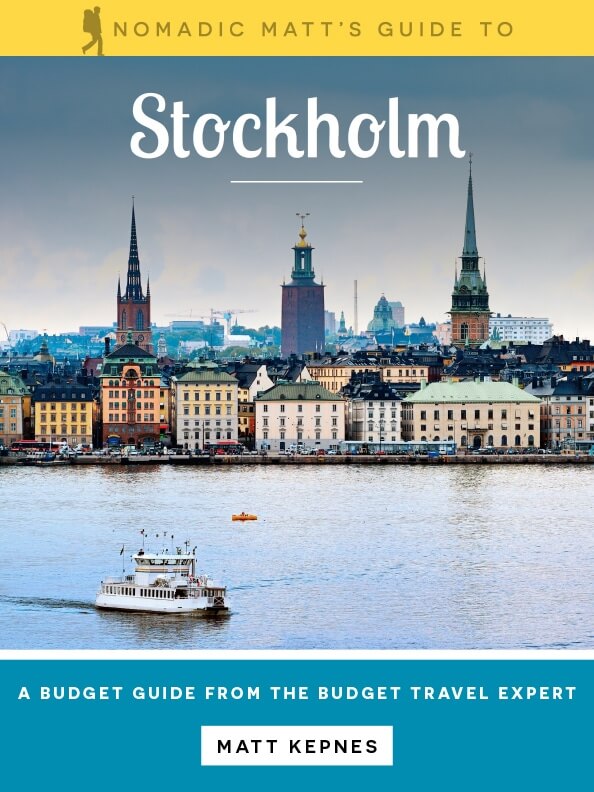 For more in-depth coverage of Stockholm, my 80-page guidebook is perfect for budget travelers like you! It cuts out the fluff found in other guides and gets straight to the practical information you need to travel and save money in one of the most beautiful cities in the world. You’ll find suggested itineraries, budgets, ways to save money, on- and off-the-beaten-path things to see and do, nontouristy restaurants, markets, and bars, and much more! Click here to learn more and get started.
Book Your Trip to Stockholm: Logistical Tips and Tricks
Book Your Flight
Find a cheap flight to Stockholm by using Skyscanner or Momondo. They are my two favorite search engines. Start with Momondo.
Book Your Accommodation
You can book your hostel in Stockholm with Hostelworld. If you want to stay elsewhere, use Booking.com as they consistently return the cheapest rates. (Here’s the proof.)
Don’t Forget Travel Insurance
Travel insurance will protect you against illness, injury, theft, and cancellations. I never ever go on a trip without it. I’ve been using World Nomads for ten years. You should too.
Need Some Gear?
Check out our resource page for the best companies to use!
Want More Information on Stockholm?
Be sure to visit our robust destination guide on Stockholm for even more planning tips!

 If you’ve got a budget traveler on your holiday list, a travel backpack is the gift that keeps on giving. A well-made bag will last for years and through dozens of adventures. Having a reliable travel backpack is one of the most important items for a traveler. My favorite bag is the Flash 45 from REI but other great companies worth checking out are Osprey, Nomatic, and MEC (for Canadians).
 Packing cubes are an awesome tool to help you stay organized while you travel. Whether you’re a budget backpacker or traveling with half a dozen suitcases, packing cubes will keep you organized as you travel the world. They come in a variety of sizes, allowing you to store items big and small. If you know a traveler who needs a hand staying organized, this is the gift for them!
 This simple item is one of the most important for the budget traveler. Since many hostels have lockers, backpackers need to have their own lock when they’re on the road. While you can usually rent them at hostels, those prices add up after a while. I never leave home without a lock because I never know when it will come in handy.
 These travel clothes are some of the most versatile on the market. Made from merino wool, Unbound’s clothing can be worn daily for weeks (and months!) without getting smelly. They are perfect for the traveler who wants to pack lighter. I really love the material, they feel great, they hardly ever need a wash, and they last forever!
 These shoes are super versatile and durable, making them great for traveling. Whether you’re just exploring the city or in need something that looks a bit fancier, these shoes can do it all so you don’t have to pack multiple shoes. They are flexible, light, washable, and breathable. I love them! (They look great too!)
 If you’re in need of proper luggage, Samsonite has been a go-to brand for durable, reliable luggage for ages. Now, I’m a backpack guy but I love this new luggage set. It’s made from 100% recycled plastic! Every little part of it! I can get behind something that environmentally friendly. It also comes with a limited 10 year warranty too in case something goes wrong.
 Anyone who has ever stayed in a hostel knows that a good pair of earplugs is a necessity. From chronic snorers to late-night drinkers to copulating couples in creaking bunks, hostels are known for their less-than-quiet accommodation. Add some earplugs to your shopping list. Because the gift of a good sleep is priceless!
 Having a lightweight, quick-drying towel makes a huge difference when you’re on the road. Big, bulky towels take up a lot of space in your backpack and they take a long time to dry. If you’re on the road, you don’t want a towel to delay your plans or stink up your bag. Enter the travel towel. It’s the compact, quick-drying solution that every backpacker needs.
 This is a great tool for both backpackers and anyone looking to do any hiking or camping. In a hostel, they’re helpful if you need to check in or out but don’t want to disturb your fellow travelers. For outdoorsy folks, they’re useful for hiking, setting up camp in the dark, and for emergencies.
 Environmentally, pollution from single-use plastics is something every traveler has witnessed. And, monetarily, when you’re traveling, continuiously buying water gets expensive. Do your part to help the planet by traveling with a reusable filter. LifeStraw is an awesome brand with a built in water filter. The filters last 5 years so you save money on changing them too.
 Travel pillows are perfect for those long-haul flights, delayed buses, and airport naps. Every traveler needs to have a travel pillow on hand to maxamize that downtime and time in transit, and Trtl pillows are the best on the market. They’re great for helping prevent jetlag and make even the longest, most uncomfortable trip a little more bearable.
 This is my favorite travel computer. It’s light, it’s powerful enough for regular use, and the battery life is great. While an iPad might be another potential travel choice, I find the Air much more versatile. You can do a lot more with it. When I’m on the road, this is the laptop I travel with.
 While not a cheap phone, the iPhone X has such a good camera that you don’t need to take a traditonal camera with you when you travel. It has a solid battery life, a grat lens, beautiful screen, and, is overall, just awesome. True, I’m an Apple fanboy so I might be biased but hey, it’s my list!
 These are great for those long flights or bus trips as they block out background noise so you can read, work, or sleep without being distrubed. The wireless Bose QuietComfort 35 headphones are fan favorites and my go-to brand. They are comfortable, rechargable, and do an amazing job at removing background noise. If you’re on a budget, consider the QuietComfort 25 instead.
 These days, we all travel with numerous electronic devices like phones and tablets. It can be hard to keep them all charged. This solves that problem. Two high-output USB ports make this external battery incredibly convenient, and it can charge up to 100 hours of battery in one go.
 While I personally prefer to read physical books, I can’t argue against the convenience and simplicity of the Kindle. Hauling around physical books is a pain if you’re traveling often. With a Kindle, you can pack hundreds of books into a single device, and many versions can also use apps and access the internet. It’s a great gift for the avid reader.
 Nothing is more tedious than arrving to a new destination only to realize you can’t charge your devices because the electrical outlets are different. Enter the travel adapter. They’re a simple accessory. There’s a million out there but this is one I use. I like that is also has USB outlets on it too.
 Every traveler needs a camera, and few are as versatile and durable as the GoPro. They’re great for photos and video no matter the climate. They’re waterproof and are perfect for both everyday city exploring as well as more extreme and adventurous activities. They’re just awesome.
 These maps are a fun way to keep track of your past travels while helping you stay inspired as you plan your future trips. You simply scratch off the parts of the world you’ve been. Simple. Easy. Landmass is my favorite company that makes these, though there are plenty of other companies that make them now, so you can also find them in all sorts of sizes and colors.
 These are unique, hand-drawn typographic maps of food from Legal Nomads and artist Ella Frances Sanders. They make a great gift for anyone who loves to eat and travel (and who doesn’t!). They come in a variety of sizes too! Jodi’s maps are the best!
 Kristin Addis created this detailed guide to solo female travel, addressing all the concerns women have about traveling. The book includes tons of tips and advice, as well as interviews with other female travelers and writers. It gives you the specific, actionable information you need to conquer the world on any trip!
 I never leave home without one of these. They are the perfect notebook for journaling during your trip as well as for writing down travel notes such as directions, contact information, and language tips. I think everyone needs to write more during their travels so they have something to look back on (other than photos).
 Few things can inspire you to travel like a great book. They can transport you to new places and keep your wanderlust stoked while you work towards making your own travel dreams a reality. If you’ve got an avid reader who loves to travel on your holiday list (or if you’re just looking for something to read over the holidays) one of my favorite travel books might be a great holiday choice!
 My friend Jodi from Legal Nomads created these helpful travel cards for anyone traveling with Celiac disease. They are in-depth resources that communicate your concerns to restaurant staff in a way that allows anyone traveling with the disease to have a worry-free meal. If you or someone you love has Celiac disease, these travel cards are a great resource!
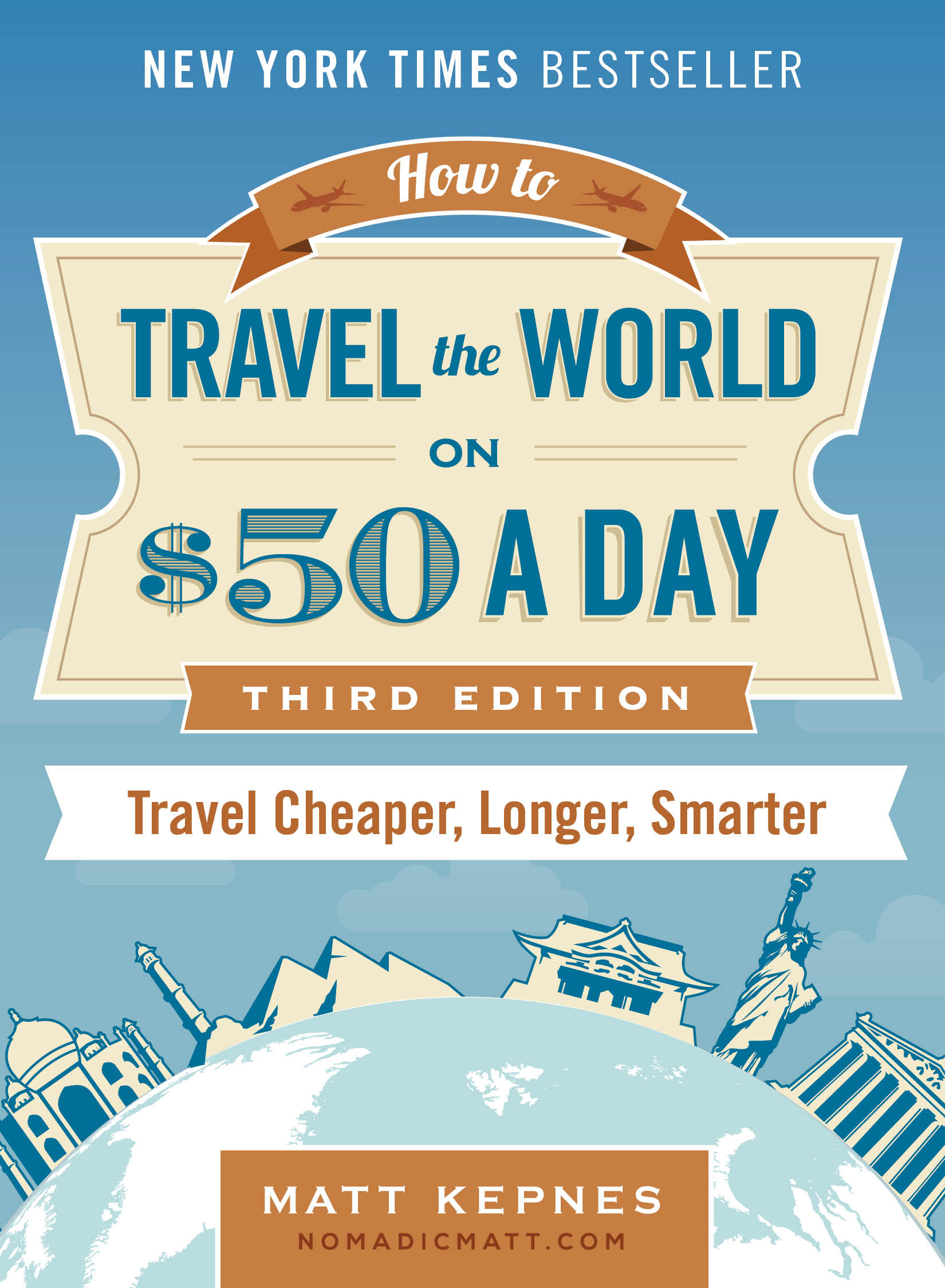 While I might be biased, I think this is a travel resource that every traveler needs in their arsenal! It will show you how I travel the world on a budget, illuminating all my best tips in one easy to follow format that you can take with you when you travel. It will show you how to become a master traveler and navigate the world — no matter where in the world you want to go!
 For the traveler in your life who has everything, why not make a donation to charity on their behalf! FLYTE is an awesome charity that I started back in 2015 to help high school students in underserved communities experience the transformational power of travel. Every year we send a new group of students abroad, but we can’t do it without your help!