显示标签为“wouldnt”的博文。显示所有博文

2019年7月26日星期五

Experiencing Local Cambodian Culture on Bamboo Island

bamboo island cambodiaPosted: 03/15/2012 | March 15th, 2012

Last week, I took my own advice about not wasting time and spent my last few days in Cambodia on the seculuded Bamboo Island. I’m glad I did — it turned out to be the highlight of my trip and my first glimpse into Khmer (Cambodian) culture.

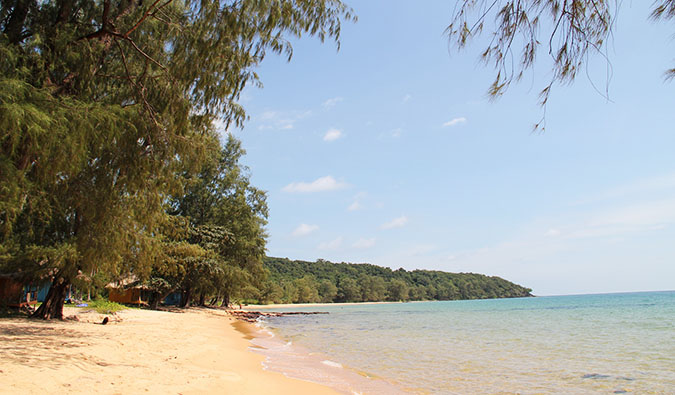
Bamboo Island is an hour off the country’s southern coast, near the town of Sihanoukville (where I’ve been the last month). It’s a small island that you can cross in 10 minutes and has only two beaches. There isn’t a lot of snorkeling here. There’s no Internet. No power except from 6pm to 11pm. No hot water. No fans. It’s just you, the beach, a good book, and a handful of other people (there are only ten bungalows).

I spent my days on the beach, did a freestyle poetry night, the limbo, and caught up on the last season of the Family Guy. After a few stressful months of writing trying to meet my book deadline, it was just what I needed.

But what I enjoyed most was my night with the Cambodians on the island. I had come to the island with two friends because they knew the manager of the hotel and he was having a “bungalow warming party” to celebrate his newly built bungalow. It would be him, the local staff, and us.

After the kitchen staff had served the other guest, they shut down early and we all went over to the new bungalow for food and drinks. I ate — and ate some more. They kept putting food on my plate and drinks in my hand. Curry dishes were poured onto my plate, filling my mouth with fire, spice, and unknown chicken parts. Savory BBQ fish was passed to me. There were also grilled squid, shrimp, and vegetables.

I was struck at how different cultures outside the West always seem to eat. Like much of the world, the locals in Cambodia enjoy communal eating. A tarp is put down, dishes are brought out and placed in the middle, and everyone sits crossed-legged around the table, grabbing what they want. There’s no my plate or your plate. My dish or your dish. It’s a shared communal experience.

Back home, we all order our own dish. There’s no sharing. It’s a solitary way to each, which seems typical given our solitary nature. In the west, there’s mine. Here, there was only ours.

bamboo island beach and volleyball

I was struck by not just how they ate, but what they ate as well. Like many rural communities I’ve visited, nothing here is wasted. The squid is cooked whole, the shrimp head is eaten, and no part of that chicken goes unused. This isn’t unique to Cambodian culture; it happens throughout the world and is in stark contrast to the wastefulness of the West. Everything we eat is super-sized and thrown away. If it’s not perfect or considered “icky”, it’s thrown away. Wasted even though it’s perfectly fine.

I could wax on poetically about this, divining great meaning about society, culture, and values from how people eat. I won’t though; instead, I’ll simply say that sitting down, watching the Khmers eat, talk, laugh, and bringing me into their community was a blissful and joyous experience.

After dinner, when the plates were cleared away, the music cranked up, and the locals performed traditional dancing. Not for tourists but for the joy of it. Khmer dancing involves a lot of slow hand movements, finger turning, and grace. Everyone was pushed up off the ground, and my friends and I were made (taught) to dance. We followed the Cambodians as they gave us instructions; unable to speak Khmer, we simply learned by following along. There was no one there to say do “left, right, left” so we did our best to keep up. Note: I’m really bad at Khmer dancing.

sunset on bamboo island

As the night continued, I learned some basic Khmer phrases, became buddies with one of the boatman and did a shot of some really bad Khmer liquor with one of the cooks.

Had I followed my original plans, I would have been on the island weeks ago, but I wouldn’t have come to know the manager, having only recently been introduced to him through my mainland friends. Even if there’d been another party, I wouldn’t have been invited. Getting stuck in Sihanoukville allowed me the chance to spend time with the locals in a way I wouldn’t have been able to otherwise.
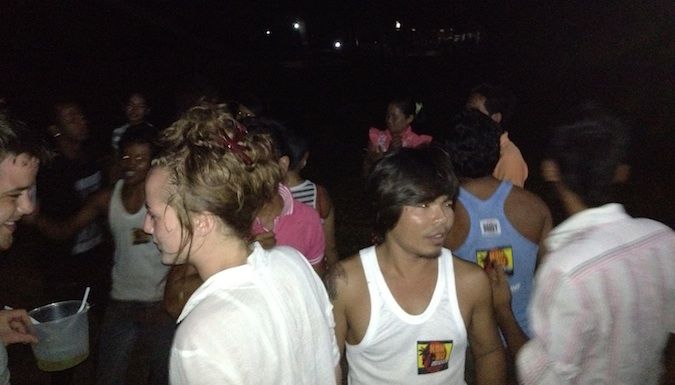
the bamboo island party

My time on Bamboo reminded me of what I learned in Greece, Bangkok, Amsterdam, and countless other places where I got stuck: culture only shows itself over time.

As travelers, we move around a lot. We scratch surfaces but never peel back the layers of the onion. There’s only so much you can do in a few days. If you really want to understand a place on a deeper level, at some point, you need to just stop, stay put, and soak in your environment.

Even if it means missing other places you wanted to visit.

So I guess in that sense, the month that I spent locked in my room wasn’t a waste of time that cost me my trip to Laos and Malaysia. That month was part of the journey to getting to know Cambodia a little more deeply.

Book Your Trip to Cambodia: Logistical Tips and Tricks

Book Your Flight
Find a cheap flight to Cambodia by using Skyscanner or Momondo. They are my two favorite search engines. Start with Momondo.

Book Your Accommodation
You can book your hostel in Cambodia with Hostelworld. If you want to stay elsewhere, use Booking.com as they consistently return the cheapest rates. (Here’s the proof.)

Don’t Forget Travel Insurance
Travel insurance will protect you against illness, injury, theft, and cancellations. I never ever go on a trip without it. I’ve been using World Nomads for ten years. You should too.

Need Some Gear?
Check out our resource page for the best companies to use!

Want More Information on Cambodia?
Be sure to visit our robust destination guide on Cambodia for even more planning tips!

For more Cambodia travel tips, check out my Cambodia travel guide and start planning your trip today.

Photo credits: 1

2019年7月25日星期四

Has Technology Ruined the Travel Experience?

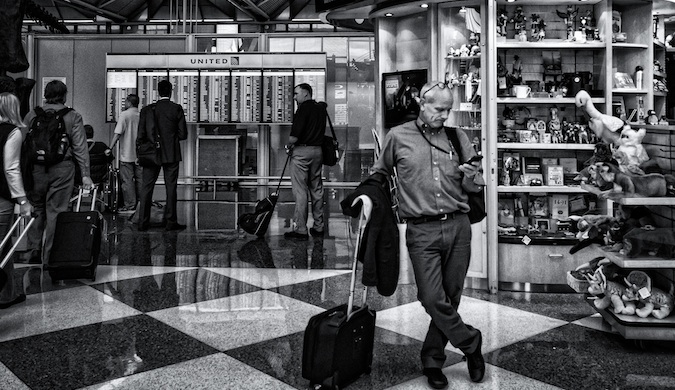
traveler at airport looking at phoneOn the first Tuesday of each month, Dave Dean from Too Many Adapters gives us great tips and advice on travel tech and gear. He is our resident expert, trying out new products and seeing what works so you end up with gear that doesn’t break and a laptop not filled with viruses! This month’s column is about the change technology has brought to travel.

If you’ve ever read the comments on an article about travel technology, you’ll likely have found someone insisting that gadgets cheapen the travel experience. It’s just “a weak excuse to stay connected to your old 9-to-5 consumer self, terrified by the enlightenment of travel,” according to one reader of this site. This is an easy argument to make when you see travelers sitting around a table glued to their smartphones or MacBook. No one seems very social.

By keeping us tethered to life back home, does technology rob us of the chance to make real connections on the road? With phones in our faces, are we now less likely to have those exciting, unexpected moments we craved before setting off on our adventure?

As a tech writer I clearly love technology, but I think this is an issue worth examining.

Poking your head into a hostel common room in 2015, you’d barely recognize it from 20 years ago. Gone are the small groups of backpackers playing cards, reading books, and swapping stories. Instead, Facebook’s blue logo shines from a dozen smartphones as statuses and photo albums are updated to let everyone at home know about the wonderful time being had. I used to consider it a failure if I spent an hour in a hostel and hadn’t made a new friend. It’s still not impossible to make that happen — but it’s much easier when the Wi-Fi goes down.

I miss being able to strike up a conversation with a fellow traveler without needing to drag them away from their Instagram feed. Despite hundreds of apps promising to combine “travel” and “social,” smartphones and tablets are largely responsible for making us less social when we travel, by keeping us distracted by our devices.

It’s even worse when we go outside. If we’ve got cellular data, checking a stream of notifications means we’re not immersed in the moment. If we don’t, the temptation to check for a Wi-Fi signal does much the same thing. Long journeys become a question of how much battery life is left and how many TV shows have been downloaded, rather than the people and places around us.

With a map of the entire world in our pockets and a little blue dot to tell us where we are, it’s easy to lose our spontaneity. Getting lost while traveling can be terrifying, fascinating, and eye-opening — often all at the same time — and by using technology to stop that from happening, we miss out on all the good and bad that goes with it.

So, with all of these downsides, it’s obvious that technology and travel don’t mix, right? Shouldn’t we all leave our gadgets at home and hit the road with just a guidebook and an open mind, casting off the shackles of our iPads and laptops for a more enlightened experience?

Not so much.

I traveled without technology for years in the late ’90s, and even though I sometimes miss those simpler times, I wouldn’t return to them. As much as I like to tell the story of the day I got separated from my girlfriend on an Italian train and spent the next eight hours unable to find her, it ruined our limited time in Venice. A quick call or Facebook message would have given us our day back.

traveler at airport looking at phoneBeing able to fire up the Hostelworld app to book accommodations at the last minute, then plug the address into Google Maps to find it, makes arriving in a new city late at night far less daunting. There was nothing glamorous about walking 20 minutes in the rain searching for a working public telephone to call home, or paying more for flights because I had to go through a travel agent to book them — give me Skype and Skyscanner any day.

I love that my phone has replaced everything from my alarm clock to my flashlight, and I no longer need to carry round a Walkman and half a dozen mix tapes to listen to my favorite songs on the road. I’m pretty damn happy I can check my bank balance without making an international phone call. While I once stood in the sun for an hour near the Zambian border waiting to cash a traveler’s check, I’m now able to get money out of the nearest ATM in under a minute, almost anywhere in the world.

When I moved to London 15 years ago, I went everywhere armed with only a paper map. Returning last month, I was amazed how much more of central London I saw on foot. With phone in hand, I didn’t think twice about using my feet. I knew how long the trip would take and which routes would get me to my destination. I doubt I would have done the same in 1999. It’s not that I couldn’t have — but I wouldn’t have. The fear of losing my way or not arriving on time held me back. Technology has made it easier to not only get lost but also find your way.

Even though rose-tinted memories sometimes have me pining for those technology-free travel days, I wouldn’t go back to them. I can still get as much challenge as I like with a smartphone in my pocket, just by turning it off. The path less traveled is often the better one, but sometimes all I want is to grab a decent meal without a three-hour adventure beforehand.

As with most other things in life, balance is key. It’s fine to have half an hour on your phone checking email or chatting with your mum, but put it away afterward to talk to the people around you. Buy your flights while lying in bed, but don’t be afraid to turn up somewhere without any plans. By all means take a few photos of the Taj Mahal to show your friends, but don’t spend 20 minutes composing the perfect selfie in front of it. Keep yourself safe in unfamiliar cities, but let yourself surrender to the unexpected when your gut tells you to.

Technology hasn’t ruined travel completely — it’s just made it easier, more accessible, and safer than ever before. What it can do, though, is lessen the experience if you let it.

So don’t let it.

The gadgets are just a tool to help you travel, like a backpack or a decent pair of shoes. They’re not a necessity, and they won’t always improve your trip — in fact, they’ll make it far less interesting if you become too attached to them.

There are always incredible moments waiting to be discovered on the road, and you’re not going to find them on Facebook. They are hidden in plain sight among the people, places, food, and culture of wherever you’re visiting. No matter how much technology you’ve got in your backpack, that hasn’t changed.

Use your laptop, smartphone, tablet, and camera when they’ll make your time on the road easier, then turn them all off to immerse yourself in the moment.

What do you think? Does technology make our travels better or rob us of a deeper experience?

Dave runs Too Many Adapters, a site devoted to technology for travelers. A geek for as long as he can remember, he worked in IT for 15 years. Now based out of a backpack long term, Dave writes about travel and tech from anywhere with half-decent Internet and a great view. You can also find him talking about the life of a long-term traveler at What’s Dave Doing?

Photo credits: 1, 2

How Prince Harry and Meghan Markle Sneak Out of Heathrow Airport

 cleanString alt

Getty Images [edited]

This story was originally published on August 22, 2017.

Prince Harry is a busy guy. As a member of the royal family his schedule is jampacked with meetings, charitable events and more, so we wouldn’t hold it against him if he couldn’t uphold the regular duties of a boyfriend as well.

But, as it turns out, Prince Harry is a true professional in that department, too.

Related: Pippa Middleton's Honeymoon Plans Are Just As Luxurious As You'd Expect

According to the Metro, Prince Harry pre-arranged for his girlfriend Meghan Markle to bypass the regular security line when she flies in and out of Heathrow Airport so that she can sneak in and out unseen, and so that Harry can be waiting for her on the tarmac when she arrives.

However, the plan to get Markle in and out of the airport unseen isn’t exactly easy. In fact, it involves onboard security checks, a waiting Audi RS6, and a very helpful group of airport staff.

“It’s been happening for a while,” an airport source told the Express.

The source added that Markle usually tries to only carry hand luggage when she travels to meet Prince Harry so she won’t have to find her checked luggage. Next, the source explained, “All the necessary security checks must be carried out in advance or onboard because she walks straight from the plane steps to Harry’s car.”

The source noted that the pair was offered the use of the Windsor Suite at Heathrow, a VIP lounge separate from the crowds. However, the VIP service costs nearly £3,000 for each use, so the pair decided to make their own arrangements.

Related: Here's a Breakdown of the Top 10 British Royals in Line for the Throne

And while Kensington Palace wouldn’t confirm the unique airport arrival, Dai Davies, the former head of royalty protection Chief Superintendent, told the Express that it is indeed typical for royals to be collected directly from the tarmac.

“Given who Harry is, given that he is accompanied by Met police officers and that any security checks would be preordained then I don’t find it that unusual,” Davies said.

Unusual or not, we still think it’s romantic.

The 15 Items You'll Want to Pack for a Long Trip

When you’re headed out of town for a weekend, you may not give a second-thought to what you’ll pack until the night before takeoff. And even with a week-long vacation, you probably wouldn’t stress too much about throwing in an extra pair of shoes, just because.

Related: The Best Personal Safety Alarms for Travel Emergencies

But if you’re considering going on a weeks-, month-, or even a year-long trip around the world, being pickier about what to pack is essential. Especially if your travels have you scaling mountains in Peru while also dancing until dawn in Mykonos, mindful buys will extend the value of your experience and hopefully, save you money in the long-run, too.

Alongside your usual packing list culprits, consider investing in these 15 items when you’re planning a lengthy excursion.