显示标签为“health”的博文。显示所有博文

2019年7月26日星期五

Embracing Change: Health Scares, Retirement, and Travel

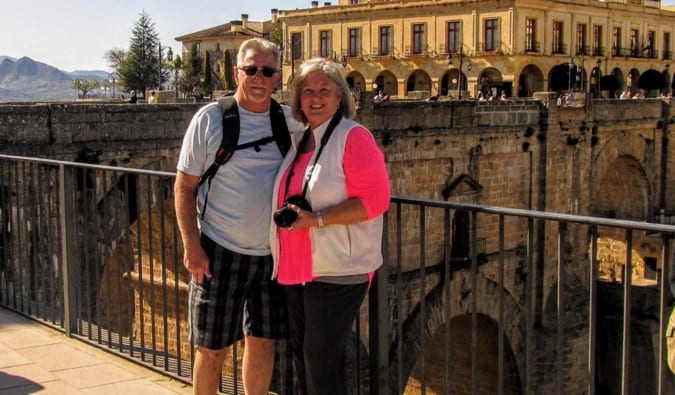
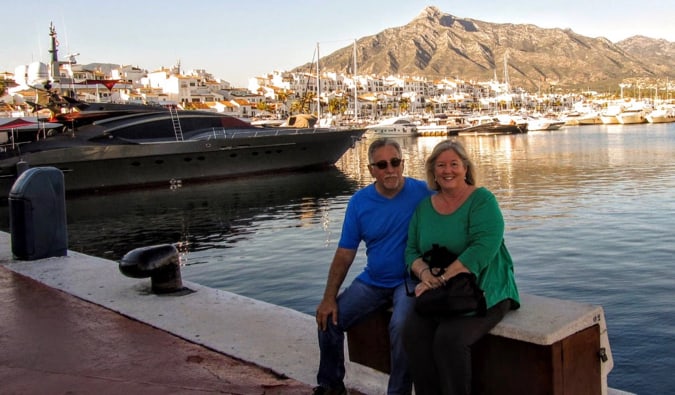
retired travelers posing for a photo
We have such a large community and I love sharing everyone’s story. I think highlighting a variety of perspectives and experiences helps inspire so many of us! This month we’re featuring Donella and her husband. After her husband had a health scare a few years ago, they decided to stop waiting, finally sell their stuff, and head on the road. As more and more adults consider a “nomadic” retirement (especially here in the U.S. where it wasn’t always so common), I wanted to interview them and have them share their advice.

Nomadic Matt: Hi Donella! Thanks for doing this. Tell everyone about yourself!
Donella: We have been raising children and grandkids for the past 30 years in South Florida. Now at 58 years of age, and with my husband retiring at 65, we decided to sell our home and take off to see the world.

I was a divorced single mother of two when I first met my husband, who was working in the construction of the hospital where I was employed. He stalked me for five weeks before getting the courage to ask me out. When he did, he said, “If I like you, I am going to marry you!” That was his proposal, and a few months later we were married. He has been a marvelous provider, father, and grandfather these past 30 years.

Fifteen years into our marriage he suffered renal failure, and the doctors did not expect he had enough life left in him to get a transplant. They asked me to prepare for his funeral, which I did. It was a nine-year journey, until we got a call late one night in 2008 that they had a kidney available for him. Since that time you would never know by looking at him that he had ever been sick a day in his life. It was truly a miracle!
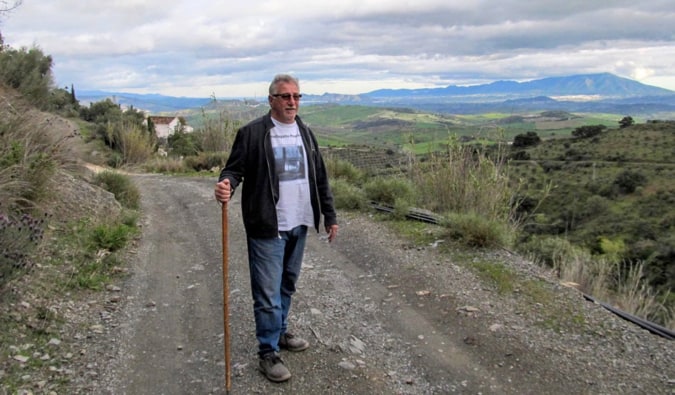
retired travelers

How did you get into travel?
For several years now, I have had the urge to travel, which has been a dream of mine before marriage and children. My husband was never keen on the idea until one afternoon last year he said, “Let’s do this!” The next day I began to sell, donate, and give away (almost) EVERYTHING so that the day we moved we wouldn’t need any trucks. I called a realtor, and our home sold within 24 hours for more than we were asking. We were able to drive away with everything we owned in our two vehicles. My husband was a bit shocked how quickly it all happened once he agreed to go!

Did you and your husband take a lot of trips before this big one?
Over the past 30 years we only went to visit family in Tennessee, North Carolina, and Delaware, though we also explored areas on the way, such as Savannah and Charleston. I visited Texas often to see my brother, Puerto Rico to see our son, and California to see our daughter. We are going to continue to visit family as we explore the country and travel abroad but take more time to see things that we have only read about. We have learned so much about the world in travel blogs, and we want to experience that.
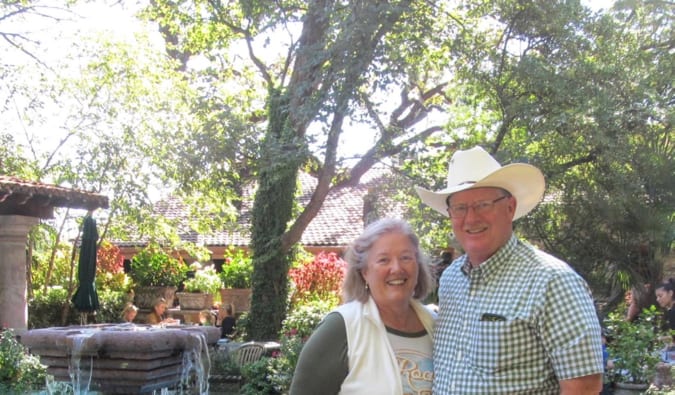
a retired couple posing

Tell me about your current trip. After you sold your house, what happened? Where did you go?
As soon as our house was sold we found a beautiful beach bungalow in Juno, Florida, directly across from the beach. Never in our wildest dreams did we ever imagine ourselves being able to live so close to the ocean. We saved just enough things to use to live here. We’ve basically done what we learned online from the nomadic community: living with less and enjoying our surroundings more. Our lease here is only until the end of the year; in the meantime we are getting our van prepared for full-time camping around the country next year.

This past March we took a long trip to Andalucia in Spain, which was the first time my husband had ever traveled to Europe. We went to enjoy but also to look into living there the next time we visit. We will do basically the same thing: find a small space so that we are able to take time to travel to other countries as well.

What inspired this current life change?
My daughter told me that my granddaughter was talking about traveling when she grew up. In an instant it brought back all the memories of my own plans at that same age. That rekindled the spark in me from my own childhood. Traveling was the way I grew up with my own parents, who were nomads in the ’50s and ’60s. I grew up in North Africa, Europe, Britain, and the United States all before the age of 10. My father continued traveling the United States until he passed away. My mother continues to travel the US and Europe while residing in Spain. It’s in my roots, and I long to visit new places and revisit other places that I have seen as a child. Sharing this with my husband seems like a dream come true.

retired couple traveling

Did people say you were crazy when you said you were setting off to travel the world?
We were surprised at how many people have been so excited to watch us start this journey. There are also people who look at us with that deer-in-the-headlights look, because they can’t imagine living life without their homes and their stuff. I get that, and don’t really believe this is for everyone, but it is definitely for us.

Has your husband’s health been an issue at all? What precautions do you have to take?
My husband is in good health now but he still needs blood work routinely and anti-rejection medicine. We decided to find a different doctor, who would be more accessible in case of emergency. She will be able to order blood work wherever we are and get the results. We will continue to return here to South Florida once a year for his follow-up. When traveling to Europe, we got travel insurance, and the cost was reasonable.
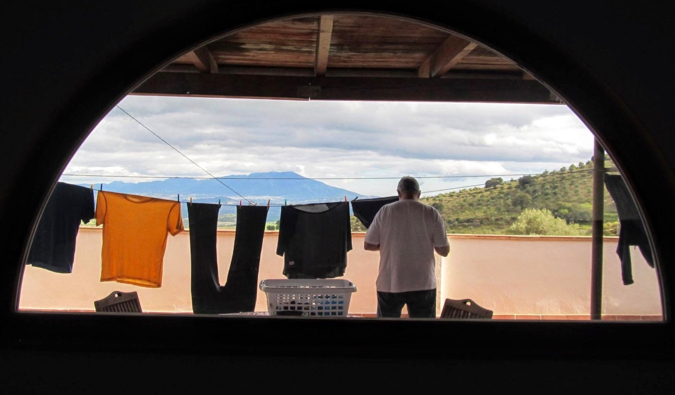
a retired couple traveling the world

Is it easy to see a doctor overseas? How do you handle medication? Have you ever had to get a prescription filled on the road?
Our doctor here in the States made sure my husband had all the medications needed for our trip. We contacted a doctor in Spain who said they would be able to write prescriptions if needed. Between the two doctors we felt my husband was in good hands, along with the travel insurance we purchased for our trip there. We haven’t had to fill any prescriptions while traveling, but our doctor says it would not be a problem.

What are your future travel plans?
Once my husband’s work commitments are complete, we plan to leave here and live on the road. In the meantime, this fall we are planning a road trip through Florida, Alabama, Mississippi, Louisiana, and Texas. Next spring we are planning a trip up the East Coast from Florida to Nova Scotia. Then we will travel across the northern states until we reach Chicago and take Route 66 west.

We plan to return to Spain, once we finish up the trips through the United States. We hope to have our kids and grandkids join us for a visit, too. Europe is cheap enough to find a small flat to reside in and use their public transportation to see other countries.

retired couple living abroad

How do you keep to a budget?
We have a budget in which we divide all our costs into home, auto, entertainment, food, gifts, medical, miscellaneous, personal, and travel. I keep envelopes with receipts for each item and calculate what we are spending in each area by month. We decide where we need to make adjustments and keep within our budget. It helps to determine if we have a realistic budget or not. Everyone’s priorities are different, but it is good to be able to see where your money is going routinely. It is the best way to determine how much we are able to spend in for our next travel adventure.

Young people are traveling like this and have wonderful advice on how to make it work, as we have read on your blog. Being retired, we have a pension for financial support, but we’ve found ideas for all types of work from young bloggers if more funding is needed.

We spend a lot of time reading and researching on the internet for great advice from people who are already living this lifestyle. We now plan smarter and more cost efficiently because of the knowledge that we have received and feel confident that we are going to be able to do more than we ever dreamed possible!
What advice do you have for travelers your age?
Some of the best advice we have received have been from all the young bloggers online such as yourself, Matt. We learned to plan our trips for dates that are less money. Our first trip to Europe cost us less than one of our family trips here in the States!

Another important travel lesson has been not to get our information from news media but instead to rely on the US Department of State Bureau of Consular Affairs. They don’t sensationalize what is going on in each country but give you the information you need in order to make good decisions.

Become the Next Success Story

One of my favorite parts about this job is hearing people’s travel stories. They inspire me, but more importantly, they also inspire you. I travel a certain way but there are many ways to fund your trips and travel the world. I hope these stories show you that there is more than one way to travel and that it is within your grasp to reach your travel goals. Here are more examples of people who made their travel dreams a reality:

P.S. Looking to step up your travel photography? We are hosting a Q&A with professional photographer Laurence Norah on October 29th, so mark your calendars!

10 Tips to Help You Avoid Getting Sick When You Travel

I get a lot of questions about health care on the road – “How can I avoid getting sick? What need vaccines? What happens when I do get sick?” Since I’m not a doctor, I don’t like giving medical advice so I’ve asked Mike Huxley, a registered nurse and author of the blog Bemused Backpacker to write a few articles on health and safety when you travel. His first article focused on creating the perfect first aid kit. This article features easy ways to stay healthy on the road.

Getting sick is a part of everyday life, and being on the road doesn’t exempt you from that fact, especially when travel itself it exposes you to a whole new range of bugs, parasites, and environments. The fact of the matter is the longer you are traveling, the more likely you are to pick up a bug or two.

The key to minimizing the chances of this, however, is to actively combat the risk factors of becoming sick in the first place. The last thing you want to do is to expose yourself to any more risk than you have to. Prevention is far better than any cure.

Wash your hands

Outdoor sinks used to ask your hands and prevent illness
I know this sounds basic, but it is surprising how many people forget it, and as a nurse, the simple act of washing your hands has been drilled into me since day one of basic training as a key component in infection control. The National Health Service (NHS) in the UK has had a huge impact on controlling infection in a clinical setting simply by reinforcing the importance of washing your hands, but the same is true for every aspect of day-to-day life, and traveling the world is no exception.

Hand hygiene is essential to stop the spread of infection and can dramatically reduce your chances of diarrhea, vomiting, food poisoning, gastroenteritis, flu, norovirus, MRSA, or even hepatitis A.

Many travelers carry small bottles of hand gel, and these are great as a backup, but they aren’t a replacement for good old soap and water. Wherever possible, wash your hands under hot water for at least thirty seconds before and after eating and always after going to the toilet.

Drink bottled water

Two bottles of water in the green grass
When you can’t be sure of the purity of the local water or you are traveling in areas where sanitation is not that great, then it should go without saying that you should avoid the local tap water. Even if locals drink it without any problems, your stomach may not have the right bacteria to protect you from becoming ill, avoid local water — even ice in your drinks — in countries that don’t purify their tap water.

I recommend that at the very least you should always drink bottled water and double-check that the seal is intact on the bottle top too (a common scam is to sell bottles refilled with tap water). It is also a good idea to use bottled water to brush your teeth. But personally I prefer to use a water bottle with a built-in filter as this reduces the need to buy bottles of water constantly, saving both money and the environment.

Be careful of food contamination

Thai feast of fish and noodles at an outdoor restaurant
Food contamination is one of the biggest causes of traveler’s diarrhea and gastrointestinal problems on any travel adventure. If you are not careful with your food on your travels, you could potentially be exposing yourself to diarrhea, E. coli, Shigella, Salmonella, Giardia, Entamoeba hystolytica, Campylobacter, Cryptosporidia, Cyclospora, cholera, and much more nastiness.

You should always ensure — as much as is practicably possible — that any food you eat is fresh, cooked thoroughly, and served piping hot.

I love street food for this very reason, as you can see how clean the cooking environment is, and the food is often prepared right in front of you. But look out for signs of good hygiene practice at any street food stall or food court you eat at. Does the person handling the food wear disposable gloves and change them frequently? Is there a separate person handling the money or, at the very least, does the person cooking the food remove and replace gloves every time they handle cash? Is hand washing a regular occurrence? Is raw food left out in the open or is it stored correctly? These things may seem inconsequential but they are important.

You may want to avoid — or be very careful of — the following:

  • Salads that may have been prepared in local untreated water
  • Raw fruit and vegetables that you haven’t peeled or skinned yourself (if you have, they are generally fine)
  • Food that has been left out and exposed for a period of time
  • Food that is shared, such as in buffets undercooked, raw, or reheated food, especially meat, fish, or rice.

You probably aren’t going to avoid a bit of stomach upset completely on your travels — especially if you are traveling long term — but if you are aware of good food hygiene practices and follow them as much as possible, then you can at the very least minimize the risk of becoming ill.

Don’t be afraid of having familiar food

Man sick in bed with food poisoning during his travels
Eating local food and delving into the local cuisine is one of the absolute true pleasures of traveling and one you should never miss out on, but that said, a degree of common sense is needed too. Jumping straight into a diet of spicy curries or predominantly red meat is a good way to ensure some form of gastrointestinal upset if your stomach isn’t used to it.

Food intolerances happen when your gut can’t properly digest the food you’ve eaten, or you’ve introduced something completely new and different to it, which can irritate the digestive tract and lead to stomach pain, cramps, gas, diarrhea, vomiting, and heartburn. Don’t worry — this generally isn’t serious and will pass relatively quickly. The trick to trying new foods and new cuisine is to mix it up a little bit.

If you have a sensitive stomach, take it easy at first and don’t be afraid of eating familiar food from time to time.

Try and stay active

Man who climbed to the top of a mountain overseas
One of the best ways to stay fit and healthy and fight off unwanted infections is exercise. The benefits of exercise are well known and well documented: it improves your overall health and well-being and strengthens your immune system, which makes you less susceptible to illness. And if you do get sick, your body is better able to fight off the infection and more quickly get you back on your feet. It isn’t foolproof, of course, because fit people still get sick, but in general the fitter you are, the better your body will be at shrugging off that annoying bug or illness. I always try and maintain a healthy lifestyle, and that doesn’t change because I am traveling.

If you aren’t active or fit before you start traveling, use it as an excuse to start! Go on a jungle trek, go hiking into the countryside or up a mountain, swim in the sea, go for a jog — whatever tickles your fancy as long as it gets you a little out of breath.

Protect yourself against the sun

Sun shining through tall plants
Sunburn can seriously ruin a good travel experience! I got very badly sunburned years ago in Thailand after snorkeling for too long and forgetting to reapply sun cream. It is not an experience I want to repeat!

Current recommendations on sun protection say you should use a minimum of factor 15, though I recommend at least SPF 30.

Protecting yourself from the sun goes beyond getting bad sunburn though. You should also stay well hydrated if you are traveling in a country or region with a hot or tropical climate, as well as cover up with loose clothing and even a hat or scarf. If you don’t, then dehydration can set in very quickly, and that can lead to more serious conditions such as exposure, heat exhaustion, and heatstroke, which if left unattended can become a medical emergency.

I once cut a day’s sightseeing short in Egypt when I spotted the signs and symptoms of heat exhaustion developing in another traveler and had to help her to get rehydrated and cooled down. It happens a lot more easily than many people think so be sensible, use sunscreen, cover up, and stay hydrated.

Get vaccinated

Backpacker getting vaccinated before he travels
Vaccinations are probably one of the most common travel health concerns that people ask my advice on in my capacity as a qualified nurse. There is no one-size-fits-all answer to those questions, however, due to the unique nature of individual circumstances, but there is one universal constant: If you can protect yourself, it is a good idea to do so.

Prevention is always better than the cure, and nothing is better at protecting you from the risk of getting a disease than being vaccinated against it.

Not all vaccinations are required for every individual for every trip, and a lot depends on what vaccinations you have already, what country or region you are visiting, and individual factors, such as your personal medical history, how long you will be traveling, and what you will be doing. This is why it is essential that you get one-on-one personal advice from your local travel clinic, nurse specialist, or physician before you travel.

To give you a basic understanding of the types of vaccinations you will need, however, they are often broken up into three distinct categories:

  • Routine vaccinations are the ones that everyone gets throughout their childhood and early adult life; specific schedules (and sometimes the vaccine administration itself) do differ from country to country, but these generally include the BCG vaccine, the pneumococcal conjugate vaccine, and vaccinations for diphtheria, tetanus, and pertussis (DTP); hepatitis B; hepatitis A (for at-risk groups); Haemophilus influenzae type b; rotavirus; measles, mumps, and rubella (MMR); and HPV (for young girls only, to prevent cervical precancers and cancers). It is important that you are fully up to date with all of your routine vaccinations, including boosters, if you plan to travel. If you aren’t, then a health professional’s office should be your first port of call, before even departing.
  • Recommended vaccinations include all the vaccines that aren’t included in the routine schedule of your own country and are specific to travel to any given destination. These can include vaccinations for hepatitis A (if you don’t have it already), rabies, Japanese encephalitis, cholera, and typhus, among others.
  • Required vaccinations refer to vaccinations for yellow fever, meningococcal disease, and polio. Many countries where yellow fever is present will require you to have proof of vaccination before you are allowed in, and if you are heading anywhere else after traveling to a country where these diseases are present, you will need to show proof of vaccination — known as an international certificate of vaccination or prophylaxis (ICVP) — before entry.

Protect yourself from mosquito bites

Beds in Africa protected by mosquito nets
Mosquito bites are an absolute nightmare for any traveler. At best they will simply annoy you with painful and itchy welts, but at worst they can transmit a whole variety of diseases, such as yellow fever, dengue, Japanese encephalitis, and chikungunya, not to mention malaria.

Mosquitoes can be a problem in many parts of the world, but the Centers for Disease Control and Prevention (CDC), the World Health Organization, and the NHS’s Fit For Travel site are excellent places to find out where there are outbreaks of diseases such as dengue or malaria.

Even if you are in a low- to no-risk area, it is still a good idea to prevent mosquitoes from biting you in the first place, even if it is only to avoid the annoyance of painful bites. It should go without saying that the best thing you can do to protect yourself from being bitten is to use preventive measures:

  • Air-conditioned rooms are great for minimizing mosquito bites, as they are often better sealed and less likely to let them in.
  • Cover up. Wearing the right clothing is essential. Wear light, loose cotton clothing that covers most of your skin, especially around peak exposure times and places, for example, near bodies of water or at twilight or after dark, the peak time for malaria-carrying mosquitoes to feed.
  • Sleep under permethrin-coated nets where necessary.
  • Use anti-mosquito coils and plug-in devices where appropriate.
  • Always apply a good dose of 30–50% DEET spray, and reapply it regularly. Some people prefer more natural alternatives, but these are often not as effective or are often not clinically proven to be effective at all.

It is important to remember that none of these methods is completely foolproof. You can do everything right and still get bitten. I once caught dengue fever in India despite taking all the usual preventive measures, and it was one of the most unpleasant travel experiences of my life. It isn’t nicknamed “breakbone fever” for nothing! However, you can always minimize your risks with the tips above.

Take antimalarials when necessary

Adult hand holding pills to take on the road
As a nurse I advise people on taking antimalarials all the time, and one of the biggest problems is the huge amount of misinformation and fear there is surrounding this issue.

Basically speaking, if the area you are heading to is considered a high risk for malaria then yes, antimalarials are usually strongly advised. If you are visiting an area that is a low to no risk, then antimalarials aren’t usually advised.

Antimalarials are medications, and like all medications they have side effects. There isn’t one type of antimalarial; there are a variety of prophylaxes available, each of which has a range of common and rare side effects.

The most important thing to remember, however, is that each antimalarial affects different people differently. Just because one person develops side effects, that doesn’t mean the next person will. In fact, the people who suffer from severe side effects are in the absolute minority. A lot of people will only suffer mild side effects, and most will have none at all.

Now, knowing when they are necessary and when they are not is a different matter, and a lot of different factors have to be taken into consideration. These factors include the following:

  • The level of risk in your destination
  • The time of year you are traveling
  • Whether there are any current outbreaks
  • How long you are staying in any high-risk areas
  • What you will be doing (spending extended time in rural areas or cities, spending time near bodies of water; other high-risk factors, etc.)
  • Your personal medical history
  • Past experience with antimalarials

Make an appointment with a travel health professional

Health care professional giving a shot to a traveler overseas
It is important that you discuss your plans with a health professional well before you head off on your ‘round-the-world adventure. Many travelers instead leave it until the last minute. Too many people contact me for an appointment at my travel clinic a week before they leave not realizing that vaccinations may need to be timed weeks apart!

The average recommended time to see a health professional is 6–8 weeks before you leave, but personally I would aim for a little earlier than that, especially if you will think you will need more than one vaccination or if you have specific health concerns. The worst that will happen is that you will get an appointment closer to your time of departure if it is determined that you don’t need that amount of time to get things sorted.

******
These very simple steps will dramatically reduce your risk of getting ill abroad, but they are often so simple that many people overlook them. Before you set off on your trip of a lifetime, take a moment to think about your health and prepare properly. That way you will be able to enjoy your trip with peace of mind.

These very simple steps will dramatically reduce your risk of getting ill abroad, but they are often so simple that many people overlook them. Before you set off on your trip of a lifetime, take a moment to think about your health and prepare properly. That way you will be able to enjoy your trip with peace of mind.

Remember that these are general health tips only, and while they are written by a qualified nurse, they are no replacement for a consultation with your travel health nurse or physician, where individual health concerns can be discussed based on your personal history.

Michael Huxley is a registered nurse from the U.K. (who is especially interested in emergency nursing and travel medicine) and writes about his travels on his blog Bemused Backpacker. There he blogs about backpacking, sustainable travel, and health related issues. It’s an awesome blog! Michael is also an active moderator in our community forums.

Important Note: The information provided here is for general travel health advice and information only. It is provided by a qualified nurse, but it is not a replacement for a personal consultation with a travel nurse specialist, your GP, or a doctor specializing in travel medicine who can tailor advice to your individual medical history and needs.

2019年7月25日星期四

53 Travel Health Essentials the Pros Swear By

2018 is shaping up to be a peak year for wellness tourism, and that’s reaching far beyond the yoga retreats and spas that come to mind.

The Global Wellness Summit's 2018 Wellness Trends report declared 2018 a "new era of transformative travel." A January 2017 report found travelers took 691 million wellness trips—defined as “travel associated with the pursuit of maintaining or enhancing one’s personal wellbeing”—in 2015, up from about 104 million in 2013.

Here at Travel + Leisure, we've also seen a shift in the destination spa category of the World’s Best Awards survey. It’s no longer just about endless pampering as travelers focus on finding time for fitness, nutrition, and nature on vacation. Health-conscious cruises and travel guide companies are on the rise. And the growing popularity of hotel workout classes and farm-to-table resorts are more than enough to tempt an escape from the bleary everyday-ness of our calendar-ruled lives.

If you’re not intentional about it, travel can truly wreak havoc on your health. The good habits you’ve worked hard to develop in your everyday routine—consistent sleeping patterns, regular workouts, summoning the strength to avoid ordering takeout—are easily upended on vacation.

Add to that the stress of long lines, tight connections, and close quarters with strangers, and it’s no wonder we’re craving getaways designed to refresh and renew.

While a weeklong trip to a spiritual retreat or a digital detox can be fitting short-term solutions, we need to be more mindful about incorporating wellness on every trip we take. That’s easier said than done—as most habit changes are—but there are tools to help you make healthy choices and feel less likely to derail physically or mentally when traveling, no matter where you’re headed.

Below, we’re sharing our favorite tried and true products to help you have more energy and less stress on your next trip.  

Travel Warnings

A deadly virus outbreak, an approaching storm, political upheaval, a police investigation, a public health emergency—travel warnings throw our impending trips into unfamiliar territory. When bound for a country affected by a natural or man-made threat, many questions need immediate answers: is the country safe to enter? What other areas are involved? Is my own health at risk? How are residents and incoming travelers being affected? Will it change future travel to the region? Should I leave where I currently am, and is it safe to do so? When will the situation be resolved? 

Travel Warnings vs. Travel Alerts

Warnings identify a long-term danger in a given country, either cautioning against all travel here or simply informing people of what risk they will face. Alerts, in contrast, involve threats of limited duration such as a hurricane or a public demonstration. Where travel safety is a concern, no matter the severity of the situation, Travel + Leisure is on top of breaking world news, acting as a travel advisory to dispatch critical information that keeps travelers and readers informed and prepared.

Do Your Research

Travel alerts can be frightening and confusing. When in doubt, head to trusted news sources for need-to-know information, such as who or what is affected and, if health related, what the telltale symptoms are. Get the facts, review important safety tips, and use common sense. If your travels are bound for an affected area, assess whether your safety or the safety of others will be at risk if plans move forward, use your best judgment on whether or not to cancel or postpone an itinerary—and act, be it to exercise caution, receive the appropriate vaccines or immunizations, or save your trip for another day.

Safety while traveling is always top priority. When the news breaks, check back here for coverage you can trust.