
Posted: 3/13/2019 | March 13th, 2019
Before I first visited, I imagined Budapest to be this rundown former Communist capital with little to do.
But I was wrong.
Dead wrong.
Budapest turned out to be a vibrant city with a rich history, beautiful parks and buildings, bustling food halls, cool underground bars, and centuries-old thermal baths.
There was indeed a lot to do.
Since then, I’ve been back many times and have even led tours there.
I love how Budapest’s drab exterior hides an inner warmth. It’s hip. It’s cool. There is so much more to the city if you can look beyond its concrete façade. Do that, and you’ll be rewarded with a visit to one of the best destinations on the continent.
Budapest is actually two cities straddling the Danube: Buda on the west side is hilly and classy, while Pest (pronounced “pesht”) on the east is its flatter, wilder neighbor. (A third, Óbuda, merged with the others in 1873.)
Each part has its own personality as if the river not only divides the city geographically but metaphysically too.
To help you plan your visit to this marvelous Central European capital, I’ve created this itinerary with the best things to see and do in Budapest, taking you on — and off — the beaten path so you not only check out the main sights but you also get to know the locals and culture too.
Visiting Budapest: Day 1
Since Budapest is so neatly divided, it’s best to tackle each half separately. Today, we’re going to start with the Buda (west) side of the Danube. This is the upper-class, ritzy area — complete with a castle — and it’s filled with lots of museums, historic streets, parks, and regal homes.
To kickstart your trip, start your visit with a free walking tour!
Take a Free Walking Tour
I love free walking tours. If you’ve read some of my other posts, you probably know that already, since I’m always recommending them. They give you a wonderful way to get an overview of a place, learn about its culture, and orient yourself. Budapest has a number of good tours. Check these out (and be sure to tip your guide!):
After the free walking tour, which will last about three hours, head over to Castle Hill.
Tour Castle Hill
This area has a lot of charm, with cobblestone streets and narrow alleys running through the Old Town. There are panoramic views of Pest and the Danube, great cafés and restaurants, and shops to explore.
The cheapest and easiest way to get up the hill is on the No. 16 bus. The funicular is another option, but it usually has a lengthy wait. I actually prefer walking, as I don’t think the hill is that steep.
Once there, explore some of the sights listed below:
Buda Castle
They call it a castle, but it’s more of a palace complex than anything else. Though it was originally constructed in the 13th century, the huge Baroque complex you see today was built between 1749 and 1769. The palace’s days of being a luxurious living space ended in World War II, though, when Nazi (and then Russian) troops looted it. Today, it’s home to a collection of museums (see below).
Beneath the castle, Vlad the Impaler (who we know colloquially as Count Dracula) was imprisoned for 14 years. In the dungeon area, there is a labyrinth that tourists used to be able to explore, though it’s now closed (which is too bad because it was really neat!).
Szent György tér 2, +36 1 458 3000, budacastlebudapest.com. The courtyards are open 24/7 while the castle has hours that align with the museum and gallery below. Admission to the labyrinth is 3,000 HUF for adults, with discounts available for students and seniors.
Budapest History Museum
This museum covers four floors of Buda Castle and will really give you a comprehensive overview of the city’s entire history (plus the views across town are amazing!). It has some rooms that date back to the 15th century, and you can also explore the old cellar, which also dates to the 15th century. Personally, I really liked the “1,000 Years of Budapest” area.
+36 1 487 8800 , budacastlebudapest.com/budapest-history-museum. Open Tuesday-Sunday 10am-4pm (6pm in the summer). Admission varies by season (2,000-2,400 HUF), with discounts for students and seniors, and an additional charge for taking pictures (free admission if you have the Budapest Card). An audio guide is available for 1,200 HUF. Admission is free on national holidays.
Hungarian National Gallery
Opened in 1957, this museum focuses on Hungarian artists and history, of which I knew very little before my visit. There are a lot of treasures here: besides the paintings and sculptures, you can see a collection of altarpieces from the 1400s and tour the building’s dome. To see what new temporary exhibits are on display, check the website.
1014 Budapest, +36 20 439 7325, mng.hu. Open Tuesday-Sunday 10am-6pm (last tickets sold at 5pm). Admission is 1,800 HUF, with discounts for students and seniors, and an additional charge for taking pictures. Audio guides are available for 800 HUF.
Hospital in the Rock
This museum is underneath Castle Hill and just a five-minute walk from the castle. It has a fascinating history, having served as a hospital, bomb shelter, prison, and nuclear bunker. You’ll learn about World War II, the 1956 revolution, and the Cold War. It opened as a museum in 2008 and is one of the most popular attractions in town. There’s a one-hour guided tour complete with wax figures, tools, equipment, and furnishings!
Lovas ut 4/c , +36 70 701 0101, sziklakorhaz.eu/en. Open daily 10am-8pm. Admission is 4,000 HUF for adults, with discounts available for seniors and anyone under 19.
Matthias Church
This neo-Gothic Roman Catholic church is not what you might expect. I’ve seen hundreds of churches and cathedrals across Europe, and this one is unique. The colorful roof almost looks like it was built from Legos. The original church was built in the 11th century, though nothing remains of it. The current building was constructed in the 14th century, though it saw significant renovations in the 19th century. Once inside, you’ll notice the vaulted ceilings and ornate décor. It was a mosque for a while, which explains its vibrant colors and painted designs that aren’t the norm in European churches.
Szentháromság tér 2, +36 1 355 5657, matyas-templom.hu. Open 9am-5pm on weekdays, 9am-1pm on Saturdays, and 1pm-5pm on Sundays. Admission is 1,800 HUF for adults, with discounts for students and seniors. Guided tours are available for 2,500 HUF.
Fisherman’s Bastion
This ornate, fairytale structure faces Pest and provides great panoramic views across the Danube River. Built between 1895 and 1902, the terrace comprises seven lookout towers that represent the seven Hungarian tribes who founded Budapest. (It was designed by the same architect who constructed the Matthias Church next door.) The name comes from either the fact that the terrace overlooks the fishermen’s guild or that the fishermen’s guild actually was responsible for protecting that area of the wall — no one is quite certain.
Szentháromság tér, +36 1 458 3030, fishermansbastion.com. Open daily 9am-11pm. Admission is free, with an additional charge of 1,000 HUF (500 HUF for students/seniors) to visit the upper turrets.
Hungarian Presidential Palace
The home of the Hungarian president is called Sándor-palota (Alexander Palace). It is not super eye-catching compared to the surrounding buildings, but if you time it right, you can see the changing of the guard ceremony at the top of each hour, from 9am to 5pm, excluding Sundays. If you’re really lucky, in the summer the palace will be open for tours, though this rarely happens.
Szent György tér 1-2, +36 1 224 5000. Admission to the changing of the guard is free. There is an additional fee for palace admission (when available).
Buda Tower
This reconstructed “tower” is all that remains of the Church of Mary Magdalene, which was built in the 13th century but nearly destroyed during an air raid in World War II. When the Turks occupied the city between 1541-1699, it was used as a mosque. Since reopening in 2017, you can now climb the 172 steps to the top, but given the great free views on Castle Hill, I’d skip it and just view the tower from the outside.
Kapisztrán tér 6, budatower.hu/en. Open daily 10am-6pm (but only on the weekends in January and February). Admission is 1,500 HUF for adults and 600 HUF for students.
Visiting Budapest: Day 2
Today, let’s tackle the Pest (eastern) side of town:
Visit Parliament
This massive building on the Danube is where the Hungarian legislature meets. The literal translation means “House of the Nation” or “House of the Country.” After the three cities that make up modern Budapest (Buda, Pest, and Óbuda) united in 1873, it was decided that a new parliament building was needed. This massive structure took 19 years to build, with construction finishing in 1904. Not only is it the tallest structure in Budapest but it’s actually the largest in the entire country.
These days, you can tour the Gothic Revival edifice and watch the changing of the guard. I recommend purchasing your tickets in advance, as the lines to buy tickets on-site can be incredibly long.
Kossuth Lajos tér 1-3, +36 1 441 4000, parlament.hu. Open daily 8am-6pm. Admission is 6,000 HUF for non-EU adults, 3,100 HUF for non-EU students, 2,400 HUF for EU adults, and 1,300 HUF for EU students.
Stroll Along the Danube
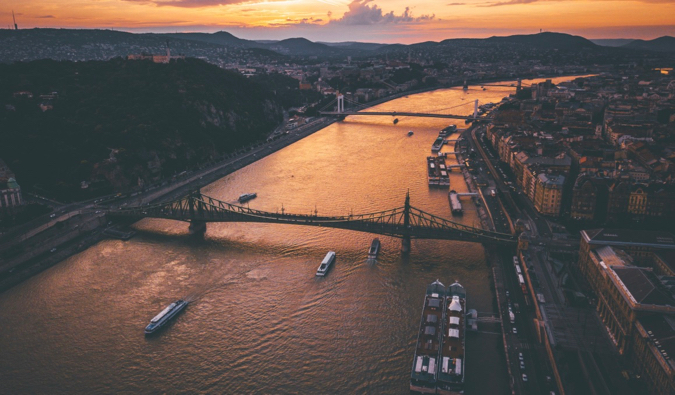
A walk along the river is a nice activity after visiting Parliament. Head south and check out the promenade and its many green spaces and sculptures, including the sobering “Shoes on the Danube Bank,” a memorial honoring the Jews who were shot here during World War II.
Walk Across the Chain Bridge
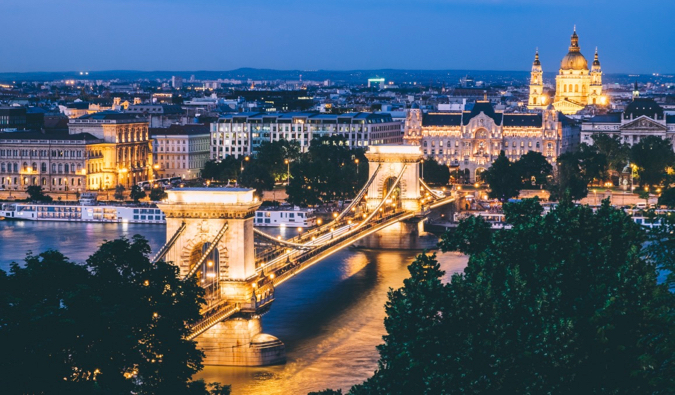
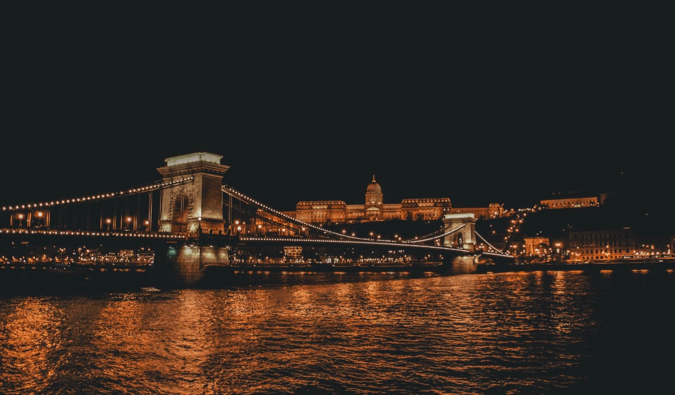
Continuing south, you’ll reach the Széchenyi Chain Bridge connecting Pest with Buda. This wrought-iron and stone suspension bridge is 375m in length. It opened in 1849, though it had to be rebuilt after World War II. At the Pest (east) end of the Chain Bridge is the Gresham Palace, a beautiful Art Nouveau building. It was once a luxurious office/apartment building and is now a luxurious hotel, the Four Seasons.
Eat at the Great Market Hall
Built in 1897, this is the oldest and largest indoor market in the country, a bit southwest of the Jewish Quarter. You’ll find mostly produce, meats, baked goods, and candy on the ground floor, while the upper floor is home to restaurants and souvenir shops. It has a lot of traditional places to eat, so be sure to walk around and explore first. Sure, it’s touristy (it’s the central market, after all!), but I still found the food tasty. My favorites are the shops on the second floor, on the right side, closest to the front.
Vámház körút 1–3. Open Monday 6am-5pm, Tuesday-Friday 6am-6pm , and Saturday 6am-3pm. Closed on Sundays. Admission is free.
Gaze at St. Stephen’s Basilica
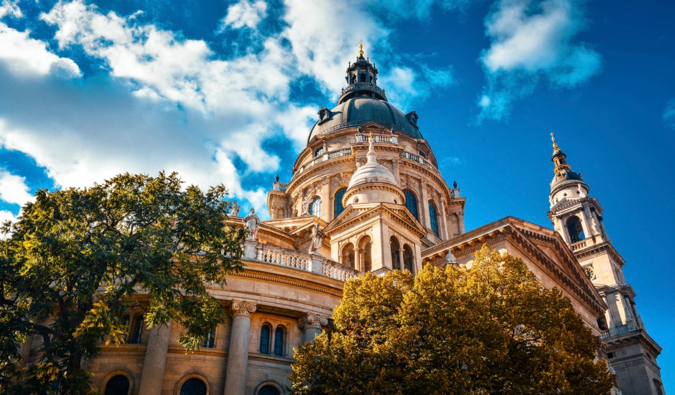
This is the largest church in Hungary and can’t be missed. It is beautiful inside and out, with ornate architecture, gorgeous artwork, sparkling marble, and a tall dome. No wonder it took 50 years to build! If you go inside, check out all the little chapels and St. Stephen’s mummified hand. If you’re there on a Monday, you can go to an organ concert.
Szent István tér 1, +36 1 311 0839, bazilika.biz. Open weekdays 9am-5pm, Saturday 9am-1pm, and Sunday 1pm-5pm. Entry to the basilica is by donation, though it’s 600 HUF per person for the tower/observation deck.
Check out Dohány Street Synagogue
Also known as the Great Synagogue, this is the second-largest synagogue in the world, built in 1854 and seating 3,000 people. Make sure you go on the guided tour (included with admission) to get more perspective on the building. The guides are super knowledgeable, and you’ll learn about the construction of the synagogue, Jewish life during wartime, and a lot more. Also check out Wallenberg Memorial Park (right behind the synagogue) and the nearby Hungarian Jewish Museum.
Dohány u. 2, +36 1-343-0420. Hours vary from month to month; call ahead for details. Admission is 4,000 HUF for adults and 3,000 HUF for students.
See the Hungarian State Opera House
You can go inside this neo-Renaissance masterpiece or just view it from outside. I recommend the latter, as the auditorium is being renovated, and the tour does not cover much of the building. If there are performances while you are in town, try to catch one. It may even cost less than a tour!
Andrássy u. 22, 1061, +36 1-81-47-100, opera.hu. Tour admission is 2,900 HUF for adults and 1,900 HUF for students.
Party at the Ruin Bars
Ruin bars are all the rage in Budapest and have been around since the 2001 founding of Szimpla Kert, the mecca of all ruin bars. They are in Budapest’s District VII neighborhood (the old Jewish Quarter) in the ruins of abandoned buildings, stores, or lots. This neighborhood was left to decay after World War II, so it was a perfect place to develop an underground bar scene. (Not so underground anymore, though!) From the outside, these bars look like normal homes. They don’t have large signs pointing the way, you don’t hear any loud noise, and there’s no line of people waiting to get in. Here are my favorites:
- Szimpla Kert – This is the original and most famous ruin bar and started this trend. Once an abandoned factory, it has a large open courtyard, a top floor with eclectic furniture, cocktail bars, and even an old, stripped-down Trabant (Communist-era car) you can have a drink in. Kazinczy u. 14, +36 20 261 8669, szimpla.hu. Open 12pm-4am on weekdays, 9am-4am on Saturdays, and 9am-5am on Sundays.
- Instant – Occupying an entire apartment building, Instant is the biggest ruin bar, with more than 20 rooms. They’ve knocked down many of the walls to connect the apartments and make space for the DJs and dancing. Akácfa u. 49-51, +36 70 638 5040, instant.co.hu/en. Open daily 10pm-6am.
- Fogasház – The “House of Teeth” got its name from an old dentist’s office sign they found when they were building the bar. It has bicycles and glasses hanging from the ceiling and is artsier than the other ruin bars. Akácfa u. 49-51, +36 1 783 8820. Open daily 4pm-6am.
- Anker’t – Located in a former factory in downtown Budapest, this minimalist but pretty big space is made up of large, connecting courtyards, a gigantic dance floor to get your party on, and plenty of couches to lounge on if dancing isn’t your thing. Paulay Ede u. 33, +36 30 360 3389. Open Monday-Wednesday 2pm-12am, Thursday 2pm-1am, Friday-Saturday 2pm-4am, and Sunday 2pm-12am.
For a longer list of the best ruin bars in Budapest, click here.
Visiting Budapest: Day 3
Explore Gellért Hill
Start your day back in Buda with a trip to Gellért Hill, south of Castle Hill. This hill offers the best views of Budapest, and it’s a popular spot to watch a sunset from. (If you go for the sunset, take a flashlight for the trip home!)
There are several monuments on the hill that you’ll want to stop and appreciate:
- Liberty Statue – This bronze statue was erected in 1947 to celebrate the liberating Soviet forces who defeated the Nazis. It’s 14m tall and sits on a 26m pedestal. When Hungary adopted democracy in 1989, the transcription and meaning of the statue was changed to reflect this.
- Statue of Queen Elisabeth – This statue is dedicated to the Empress of Austria and Queen of Hungary, Elisabeth, who married Franz Joseph I, Emperor of Austria.
- Statue of King Saint Stephen – This statue is dedicated to Hungary’s first king, who reigned from 1000 to 1038 CE. He helped establish the country as a Christian nation and provided a period of relative peace and stability.
- Szent Gellért Monument – This monument is dedicated to Saint Gerard, who was the first Bishop of Csanád in what was the Kingdom of Hungary in 1030 CE. He kicked off the conversion of Hungary to Christianity, and a monument was constructed in his honor in 1904.
See the Cave Church
Aside from these picturesque statues and the epic view, Gellért Hill is home to the most unusual church in the city. In the 1920s, monks built this church in a cave that had been previously used by a hermit monk. It was used as a hospital during World War II, and the Communist government covered the entrance in concrete after the war and executed the head monk. There’s a lot more to the history of this church than I have room to cover here, so make sure to use the audio guide.
Sziklatemlom út Gellért Hill, sziklatemplom.hu/web/fooldal.html. Open Monday-Saturday 9:30am-7:30pm. Admission is 600 HUF.
Visit the Museum of Terror
In this frightening museum, you’ll learn what life was like for Hungarians under the fascist and Communist regimes of the 1900s. The building was used by the ÁVH (Secret Police) and Arrow Cross Party (the Hungarian Nazi party). The permanent exhibits are spread over four floors and house all sorts of old propaganda, weapons, and informative multimedia displays. Over 700,000 Hungarians were killed or imprisoned by the Soviets, and the museum does a good job at illustrating just how dreadful their daily lives were. For information on the temporary exhibits, check the website for the most up-to-date information.
Andrássy út 60, +36 (1) 374 26 00, terrorhaza.hu/en. Open Tuesday-Sunday 10am-6pm. Admission is 3,000 HUF for adults and 1,500 HUF for students and seniors.
Tour Heroes’ Square
At the end of Andrássy Avenue is the largest square in Hungary. Its centerpiece is the Millennial Memorial and the statues of Hungarian kings and other historical figures, including the seven chiefs who led the Magyars (modern-day Hungarians) in the 9th century CE. The monument was built in 1896 to celebrate Hungary’s 1,000th anniversary. At this time, Hungary was part of the Austro-Hungarian Empire ruled by the Hapsburgs, and space was left for statues of future Hapsburg leaders.
The square is at the entrance to City Park, where you can visit the zoo and the Széchenyi Baths (see below) if there’s time. The Museum of Fine Arts and the Palace of Art are located nearby as well, making for interesting stops if you’re interested in art.
Soak at the Baths
Hungarians love their thermal spa baths. Budapest has more than 100 mineral hot springs that have been put to good use since Roman times. With 18 pools, the Széchenyi Baths in City Park are the largest and most famous in Europe. The stunning yellow buildings were built in 1913, and it’s a popular spot for locals and tourists alike. If you’re only going to one thermal spa, this is the one!
Állatkerti krt. 9-11, +36 1-363-3210, www.szechenyifurdo.hu. Open daily 6am-10pm. Admission starts at 4,900 HUF (2,000 HUF for a tour) and depends on the day/time of your visit.
These are some other baths around town:
- Király Baths – The building was first constructed under Ottoman rule in the 16th century and still retains elements of the traditional Turkish bath, including the large dome roof and octagonal pools. Open daily 9am-9pm. Admission starts at 2,800 HUF without a locker.
- Veli Bej Bath – This is another Turkish-style bath, with a luxurious feel. Constructed in 1575, it’s one of the oldest (and arguably most beautiful) in town. Open daily 6am-12pm and 3pm-9pm. Admission starts at 2,800 HUF.
- Dandár Bath – This is a no-frills bath that a lot of locals go to. Opened in 1930, it has an art deco style and was recently refurbished. You can also enjoy massages, a diving pool, and a sauna. Open weekdays 6am-9pm and weekends 8am-9pm. Admission starts at 1,500 HUF.
- Gellért Baths – Located in Hotel Gellért, this complex was built in the early 1900s and renovated in 2008. There are several indoor and outdoor pools that are great for relaxing and, some say, curing illnesses. The mosaic floors and stained glass windows are beautiful and make for quite the bathing experience! Admission starts at 6,100 HUF for a full-day experience. Guided tours are 2,000 HUF.
- Rudas Spa – At the foot of Gellért Hill, this spa’s interior dates back to 1550 and Ottoman rule. There are six therapy pools here as well as a swimming pool, with the water said to cure all sorts of illnesses. Admission varies greatly by day, time, and pool, starting at 1,700 HUF for a weekday evening visit to the swimming pool.
When visiting the baths, don’t forget your bathing suit and flip-flops. You can typically rent towels and lockers.
Other Things to See and Do in Budapest
If you have more than three days in Budapest, you’re in luck. There are plenty of other activities to fill your time.
Visit an Island
For a unique experience, visit an island on the Danube. Here are the ones I like best:
- Margaret Island – This popular island is smack in the middle of the Danube, connected by the Margaret and Árpád Bridges. Visitors mainly tour the park, visit the swimming pools, and watch the Musical Fountain, which sprays water high into the air in sync with the music. There are also some dance clubs (which are especially busy on the weekends).
- Óbuda Island – This island is known for its outdoor activities, including wakeboarding, jet skiing, and golf on the driving range. It comes alive in August when thousands of people visit for the Sziget Festival of music and culture, and a casino will soon open.
Visit the House of Houdini
Harry Houdini was one of the most famous and well-known illusionists in the world. He was known of his elaborate escape tricks, and he was actually born in Hungary. This is the only museum in Europe dedicated to the Budapest native. It’s home to quite a few Houdini props and pieces of memorabilia, as well as live magic shows.
11 Dísz Square, +36 1-951-8066, houseofhoudinibudapest.com. Open daily from 10am-7pm Admission is 2,600 HUF per person.
Take a Tour
Beyond free walking tours, Budapest has tons of other great walking, food, and historical tours. They aren’t free, but you’ll definitely get your money’s worth! Here are a few worth checking out:
***
Budapest is a fun city that really does have something for everyone. Don’t let the grim façade fool you. Budapest is vibrant and modern and packed with awesome things to see and do, whether you’re a history buff or night owl looking to party (or both!). It’s one of the best capitals to visit in all of Europe so you better make sure you add this quirky, historic destination to your bucket list!
Book Your Trip to Bangkok: Logistical Tips and Tricks
Get Your Guide
Check out my detailed guide to planning a visit to Bangkok with suggested itineraries and information on places to stay, things to do, where to eat, and how to get around. Just click here to get the guide and continue planning today!
Book Your Flight
Find a cheap flight by using Skyscanner or Momondo. They are my two favorite search engines, because they search websites and airlines around the globe, so you always know no stone is being left unturned.
Book Your Accommodation
You can book your hostel with Hostelworld. If you want to stay elsewhere, use Booking.com as it consistently returns the cheapest rates for guesthouses and cheap hotels. I use it all the time. My favorite places to stay in Budapest are:
- Retox – A big party hostel located next to Budapest’s biggest nightlife area. This one is for serious partiers!
- Carpe Noctem – The staff here will end up feeling like family, and there are organized trips out on the town every night.
- Wombats – Another party spot, but it’s clean and comfortable, and one of my all-time favorites.
- Hostel One – Great rooms, great staff, and plenty of common space to socialize in. The staff will even cook for you!
- Big Fish – This is a new hostel located right on the main boulevard of Budapest. New beds, a huge kitchen, and a cozy common room!
Don’t Forget Travel Insurance
Travel insurance will protect you against illness, injury, theft, and cancellations. It’s comprehensive protection in case anything goes wrong. I never go on a trip without it, as I’ve had to use it many times in the past. I’ve been using World Nomads for ten years. My favorite companies that offer the best service and value are:
- World Nomads (for everyone below 70)
- Insure My Trip (for those over 70)
Looking for the best companies to save money with?
Check out my resource page for the best companies to use when you travel! I list all the ones I use to save money — and I think they will help you too!


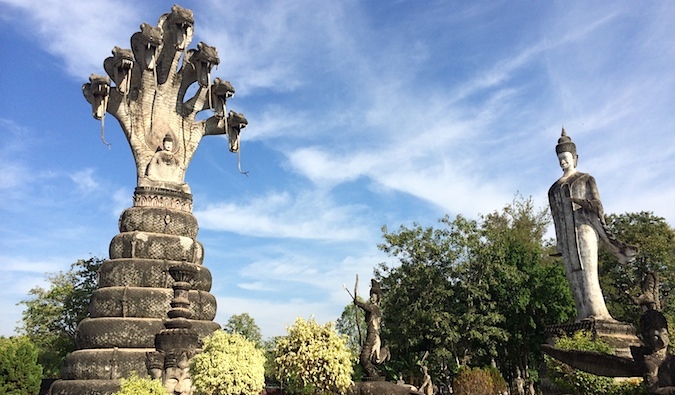
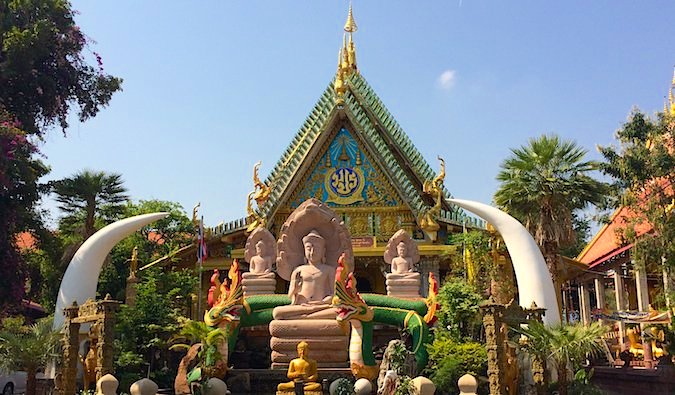
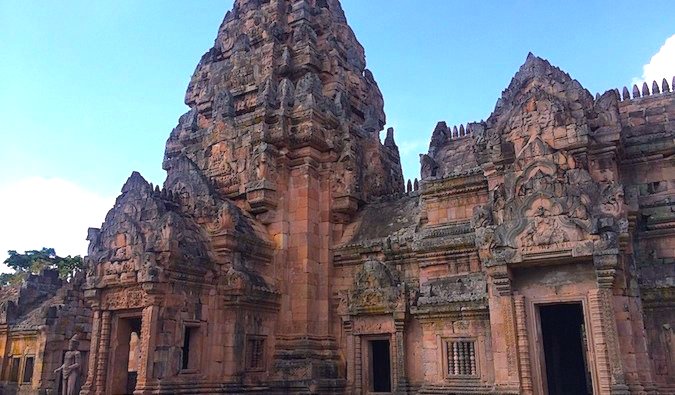
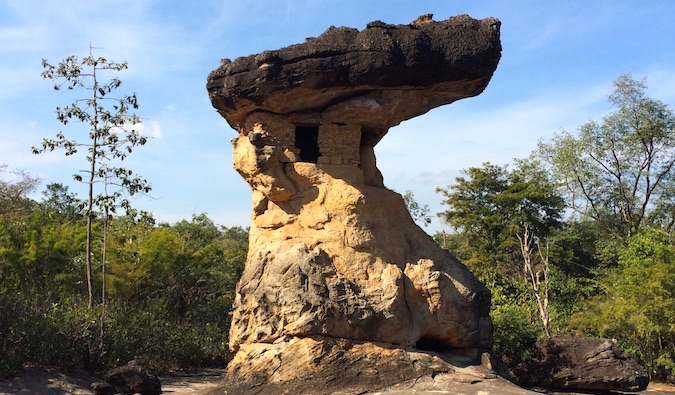
 My detailed, 170+ page guidebook is made for budget travelers like you! It cuts out the fluff found in other guidebooks and gets straight to the practical information you need to travel and save money while in Thailand, a country I used to call home (so I know it really well!). You’ll find suggested itineraries, budgets, ways to save money, on and off the beaten path things to see and do, non-touristy restaurants, markets, and bars, and much more!! Click here to learn more and get started.