显示标签为“built”的博文。显示所有博文

2019年7月26日星期五

How I Built This (What I Learned Being a Scammy Marketer)

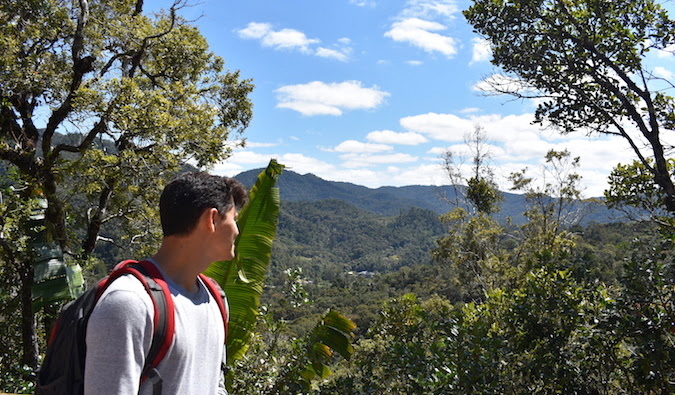
Matt hiking in nature
As I approach my ten-year anniversary of blogging, I want to tell a tale. The tale of an accidental travel writer who simply wanted to afford beer, dorm rooms, plane tickets, and backpacker pub crawls.

I shared part of this story before but, today, I want to go into more depth.

Once upon a time, I started this website with a selfish goal: to make money to keep myself traveling. I wanted my website to be an online résumé where editors could see my writing and go, “Yeah, we want to hire that guy!” — and then pay me to go somewhere and write a story about it. I imagined myself a cross between Bill Bryson and Indiana Jones. My dream was to write guidebooks for Lonely Planet. I imagined no cooler job than a guidebook researcher.

Anything was better than working in the cubicle I was sitting in at the time.

These days, it’s not about how I can keep myself traveling. It’s about how I can help others travel. Every day, the team and I constantly ask ourselves: “How do we help and inspire others to travel cheaper, better, and longer?”

Today, it’s all about you.

But, back then, the only thing I ever said was “How do I help myself?”

So how did I get from a “me centric” to a “reader centric” website?

In those early days, I worked as an English teacher in Bangkok and Taiwan. Blogging was never meant to support me full–time — let alone lead to book deals, conferences, speaking events, and so much more.

In fact, I didn’t care much about this website. I mean, sure, worked on it and didn’t want it to fail. I wanted it to become popular.

But building it into something bigger than myself was not the goal.

Instead, I wanted the dream: passive income. I wanted money to be coming in while I slept.

I was 27 with no responsibilities. I wasn’t looking toward the future. I just wanted the good times to never end.
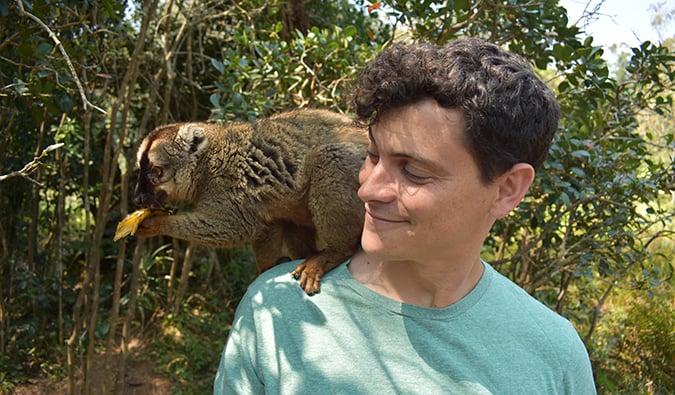
Matt in Africa

While I earned a little bit of money from affiliates and selling links on this site (back in those days, you could make a lot of money selling text links to companies looking to artificially increase their Google ranking), I spent most of my time creating AdSense websites, designed solely to get people to click on Google ads. Yes, I was a scammy internet marketer!

I put all that money I made back into these websites — getting people to write articles, optimizing the websites for search, and creating more websites — and lived off my teaching income.

I found keywords that paid well and designed very niche and ugly websites around those subjects. I had websites on teaching English, growing corn, taking care of dogs and turtles, and even raising pigs. At one point, if you went searching for advice on how to train your beagle, every website on the first page was mine.

Yes, those were some weird days. All the content was legit (I hired dog trainer friends to write the articles), but the websites lacked soul.

As time went on, between this website, my teaching job, and those AdSense sites, I made more than enough money, earning upwards of $8,000 a month.

Then one day it all changed.

I was part of this group called the Keyword Academy. It was run by two guys from Colorado, Mark and (I think) a guy named Brad. (We’ll call him Brad for this story.) As part of my membership, we had monthly consulting calls. During one, Brad said, “Matt, why are you building this crap? You know travel. You have a website that people read and like. You have a skill set. Focus on that. This shit is stupid. We only do it because it’s quick cash.”

And he was right. That shit was stupid. All I was doing was taking advantage of the fact that Google couldn’t differentiate spam websites from real websites. Travel was really my passion.

So, in late spring 2009, I shifted my focus back to this blog and, over time, let those other websites die or sold them off. (They made money for about a year after I stopped updating them.)

And, when Google finally learned to filter those spammy websites out, all the people I knew from those days were left with nothing. I have no idea what they do now. It’s certainly not running websites as I’ve never come across their names again.

But the experience taught me some important lessons about creating an online business:

First, until your hobby can pay your rent, don’t quit your day job. There are a lot of people telling you to “follow your passion” — but they neglect to tell you that unless your passion can pay your bills, you should keep your “unpassionate” day job. Teaching English and those scammy websites allowed me to have some income while I focused on “Nomadic Matt.” It wasn’t until the end of 2009 / early 2010 that Nomadic Matt earned enough where I needed no other sources of income.
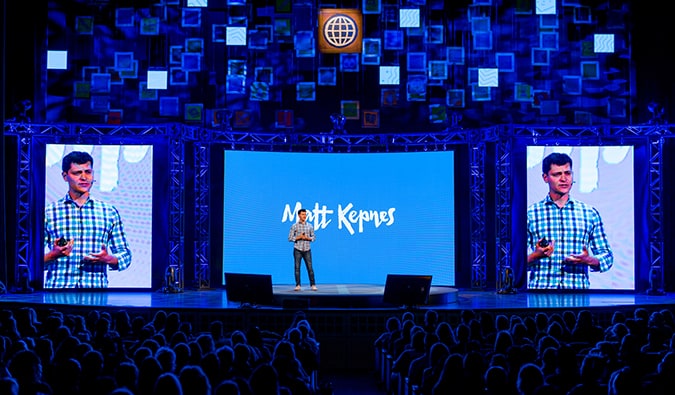
Matt speaking at a conference

Second, no matter how good or helpful your blog is, marketing is important. If no one knows how to find your website, it’s all for naught. Those crappy, scammy websites taught me how Google and SEO worked as well as the importance of marketing and messaging. I took that experienced to improve this website, optimizing my content for Google, created products, and started networking with bloggers outside travel.

I think this is one of the things that gave me an edge over other bloggers at this time. While they focused solely on writing and social media, I focused on that as well as SEO. This ensured that I ranked high in search engines, got visitors every day, and helped get my “brand” other there (I got interviewed on CNN once because the writer found me on Google).

And, as I built this community and saw my friends’ incomes collapse with the change of an algorithm, I learned the most important lesson of all: when you create a business that helps others, you create something sustainable and gives meaning and joy to your own life. I hated those other websites but I will work 24/7 on this one because I love what I do.

I don’t agree with basically anything I did in those early days. It was a very scammy way to make money. But I don’t regret one moment of it because it showed me a better way and helped get here. I guess the saying is right. When you find a job you love, you’ll never work a day in your life.

P.S. – If you’d like to learn how to start a blog the right way, avoid my early mistakes, and get a peek at all the processes and methods I use to continue to grow this website (without scammy ads), check out my blogging course. It gives you all my secrets as well as direct feedback on your website from me and tech support from my tech team.

Inside The Factory: How a Boeing is Built

Updated: 07/17/18 | July 17th, 2018

Though I’m terrified of flying, the experience also thrills me. There you are, cruising in a metal tube at 37,000 feet while watching a movie, texting your friends, and — if you’re a travel hacker (and you should be) — enjoying fine food and liquor.

I can never get over the fact that planes, which can weigh up to 485 tons and contain, like, up to 6 million parts, can even get into the air — and stay there! Yes, I know all about aerodynamics (“it’s just lift!”), but it’s still so damn cool!

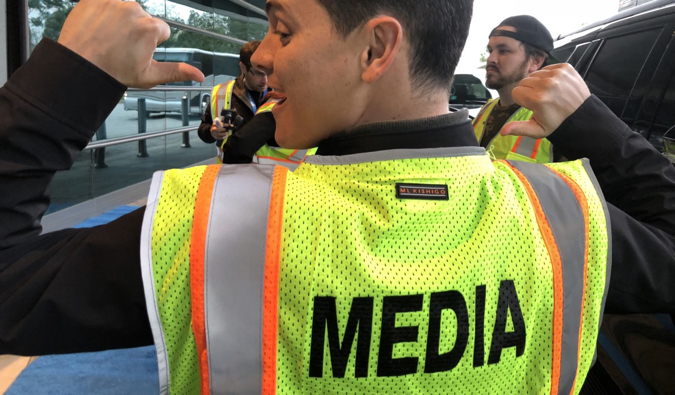
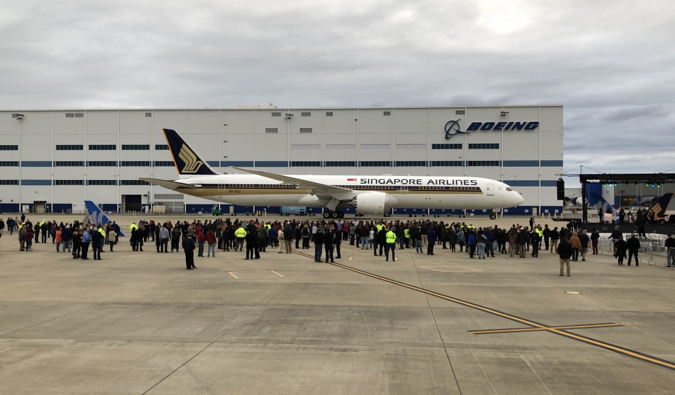
So when I was invited to my first aviation press event at the end of March, I was beyond excited. I don’t get a lot of media invites since I don’t report on breaking industry news, but when I was asked if I wanted to tour the Boeing facility in Charleston, South Carolina, as part of Singapore Airlines’ 787-10 launch, I immediately said yes.

Watch a plane get built? Fly a flight simulator? Yes. Yes! YES!

At the Boeing plant, we were treated to tours of the Dreamliner assembly process. We went to the production facilities where, after a long and boring press conference on flight specs and fuel savings, we finally got to go down to the factory floor to see the good stuff. Walking on the floor and seeing these metal behemoths really gave me a sense of wonder and awe.

Like, “Damn, that’s a plane!”

Before this, I had only a rough idea of how planes are built, how engines work, and the complicated manufacturing process that’s required to put it all together. I mean, I’ve watched a few documentaries on flying. But unlike most of the other aviation press there, I couldn’t tell one plane or engine from another, discuss avionics or contracts between suppliers, or who designs what seat fabric.

So I was excited to learn about the factory assembly process and how a plane becomes a plane.

At the plant, there are three areas to the plant: rear body, midbody, and final assembly.

The rear body process is where the tail of the plane is made, and the Charleston plant makes all the tail sections for all the 787 Dreamliners (minus the fins). One thing I did know before this trip was that they use carbon fibers, which have several advantages over traditional composite metal, including high tensile strength, low weight, high chemical resistance, high-temperature tolerance, and low thermal expansion. Basically, they are stronger and lighter than traditional metal. They take a tacky composite carbon fiber tape and spin it together around a shell to make the tail sections, called Section 47, where the passengers are (Why Section 47? No one knows. There aren’t actually 47 sections to the plane. That’s just what they call it!), and Section 48, which is the very end of the plane, where the fins will be attached. It’s kind of cool to think about. When you fly a 787, you’re basically flying a plane that mostly started as a thread. Science, man, science!

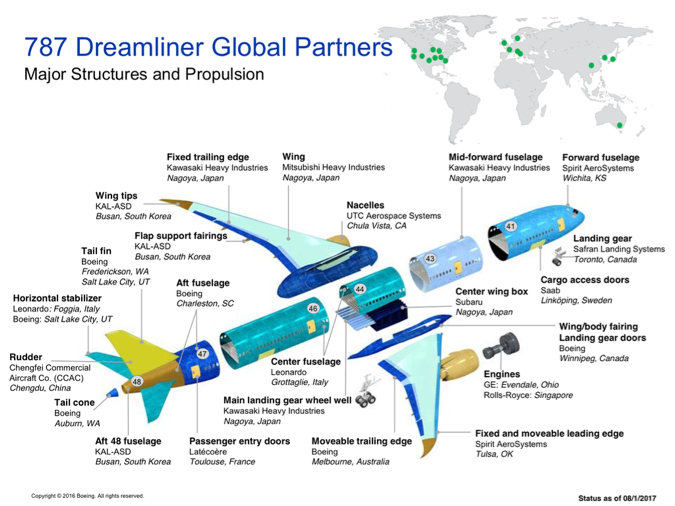
All the other parts of the plan are built elsewhere around the world and then flown in on this weird-looking plane called the Dreamlifter: part of the front of the body (called the forward fuselage) is built in Wichita, Kansas; another part of the forward fuselage is built in Kawasaki, Japan; the center fuselage is built in Alenia, Italy; and the wings are built in Japan, Oklahoma, and Australia. Here’s an image Boeing gave me to give ya an idea of how global Dreamliner production is:

a graphic of how a plane works

During the midbody process, some of the electrical systems and ducts are added to the plane. They also “snap” together the fuselage sections that are flown in from around the world. Basically, there’s a thin lip in each of the sections, and a machine use fasteners to put them together, which is both exciting and considerably unnerving to see because you realize just how amazing it is that it takes so few parts and how few things are holding this places together. For example, they have just seven rivets that snap the wing to the plane (later, during final assembly) and hold all that weight. Nope, they aren’t welded together. It’s like an oversized Lego set!”

Watching them put the fuselage together this was the most interesting part of the plant didn’t allow photographs, which was a shame. But, since Sam Chui is a badass aviation blogger, they gave him access to film it, so watch this video:

From there, it’s on to final assembly where, over the course of seven stations, all the sections are lined up and put together using a “just in time” factory model. It’s here the wings and engines get put on, the interiors are added, the plane is turned on for the first time, systems are tested, and the finished aircraft is driven out of the hangar for test flights.

This final assembly takes approximately 83 days.

Kinda crazy, huh? You never realize just how much goes into a plane. It’s quite impressive that such a coordinated, global operation can produce such a finely tuned piece of machinery that can essentially fly forever with proper maintenance.

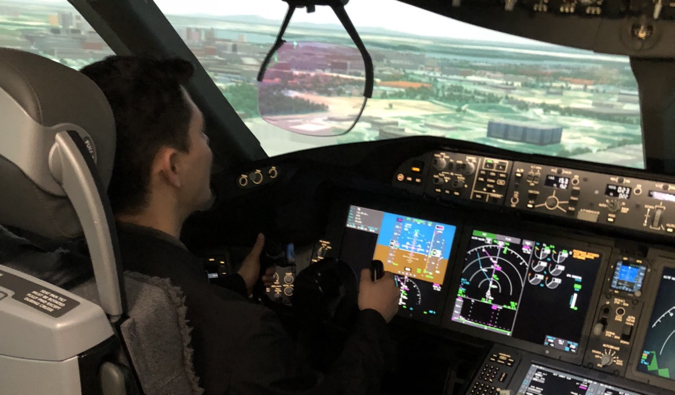
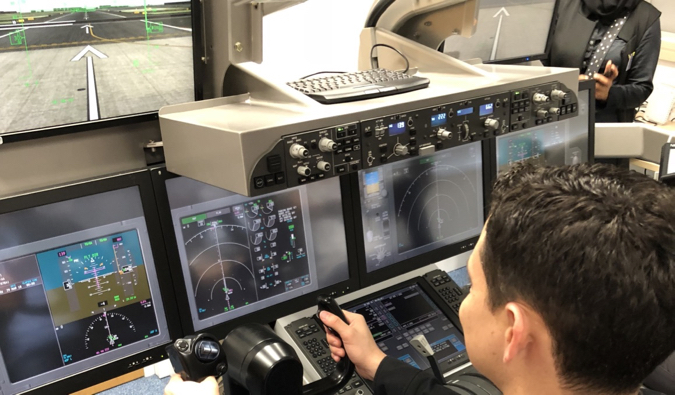
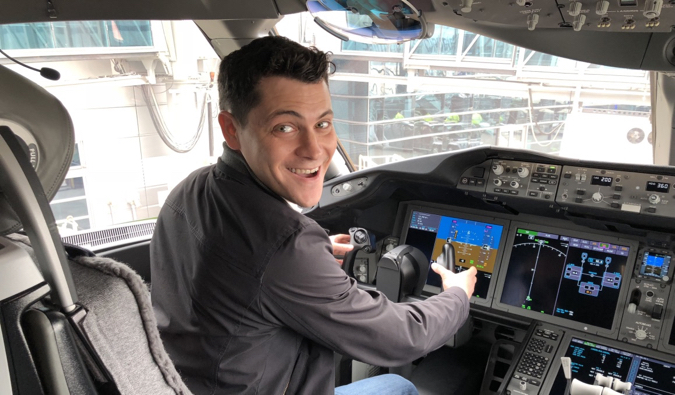
Then, after a 24 hour flight to Singapore, we were taken to where Singapore Airlines trains its crew in safety and service and, while I found it pretty interesting, the real fun was flying a 737 flight simulator back at the Boeing office in town. These multimillion-dollar machines simulate the full motion of a flight. After a brief demonstration, each journalist was allowed a few minutes to “fly.” I giddily sat down in the chair as the pilot let me cruise around for a bit.

I was like a kid in a candy store.

“Can I bank? Can I land? Let’s do a takeoff!” I exclaimed.

“If we have time, we can go again and I’ll release the autopilot,” the instructor coolly said after my thirty seconds was up.

Luckily, we did have time.

“Ready?” he asked as I stepped back into the seat.

“YES!”

We started in midair, he released the controls, and I flew around a simulation of Singapore for a bit.

“Not bad,” he said. “Ready to land?”

“Sure, but can we do a go-around?”

Taking the controls, I aborted my landing, turned up, and banked left so we could do one more circuit. Just as I was enjoying the bliss of the computer-generated scenery, I crashed!

I had forgotten to look at the screen and see my altitude, so while I thought I was just going left, I was actually banking down — and boom! We died.

I guess I won’t be a pilot anytime soon. There is a surprisingly large number of controls and numbers you need to pay attention to on a modern aircraft, especially when you release the autopilot!

Afterward, we got to go into another simulator that allowed pilots to practice takeoffs. It wasn’t a full-motion simulator, but it was designed to get you to take off and feel the movement of the controls.

This time, I successfully, took off and no one died. So you’re safe with me!

***

For a long time, I’ve been terrified of flying — and watching a plane get built and learning about aviation did nothing to assuage that fear. I’m still unnerved by every little bump (the flight I am currently writing this on has been nothing but bumps!), but I have a new appreciation for how complex and strong planes are, how many safety systems are built into them, how hard it is to fly one, and just how damn amazing it is we live in the age of jet travel!

Editor’s Note: I was a media guest of Singapore Airlines and Boeing for this event. They covered all my expenses during these press days.