显示标签为“inside”的博文。显示所有博文

2019年7月26日星期五

An Inside Look at Living and Working in Saudi Arabia

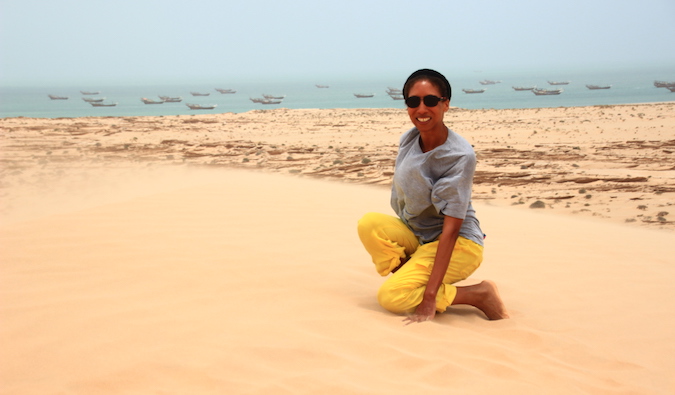
Teacher in Saudi Arabia poses on sand dune
Saudi Arabia is a country of mystery: it’s not easy to visit as a tourist, as tourist visas are rarely approved, non-Muslims can’t visit the holy sites like Mecca and Medina, and most workers live in special compounds. My friends who have lived there have told me that’s a weird life: you stay mostly in the work compounds, you can’t really travel many places, and it’s often suggested that you shouldn’t wander the streets alone, especially as a woman.

So when Ceil wrote to me that she was a Jamaican woman teaching English in Saudi Arabia (also referred to below as “the Kingdom”), I was instantly curious! “What would that be like?!” I wondered. Saudi Arabia is a lucrative place to teach, but what is life in the country actually like? Is it worth it? Ceil gives us insight:

NomadicMatt: Tell us about yourself.
Ceil Tulloch: My name’s Ceil Tulloch, and I’m 44 years old. I was born in Kingston, Jamaica, and raised in New York City. I’ve been teaching ESL/EFL abroad for the past 11 years — first in the Far East and more recently in the Middle East. Currently, I’m teaching at a university in northwestern Saudi Arabia and have been in the Kingdom for a total of two years. I’m a global adventurer who has traveled to 41 countries, a travel blogger and also the author of the nonfiction book, Remembering Peter Tosh (2013).

What is life like as a foreigner in the country? Sum it up as best as possible!
First, it’s conservative and provincial. This is the first country that I’ve resided in where the genders are segregated so severely and there are numerous restrictions on mobility. Since I’m accustomed to interacting and socializing with males, plus coming and going as I please, it was initially difficult coming to terms with the policy of not associating with men who aren’t relatives in public, the separate entrances to public establishments for males and females, or being denied total access to a facility due to my being female.

Second, it’s quiet and secluded. Due to there being no social venues (amusement parks, clubs, movie theaters, bars, public swimming pools, etc.) in the Kingdom, socializing is confined to the compound. So, unless somebody decides to throw a party or extend a dinner invitation, life’s very quiet here.

Third, it’s diverse. The expat population is approximately 20% of the total Saudi population; therefore, foreigners have the chance to meet people from the four corners of the earth right here. That’s pretty special.

Interesting. How did you end up teaching there??
Quite by accident. Although my master’s degree is in education and my BA in English literature, I never wanted to teach. While working as an admin at a firm in Manhattan, I saw an ad for becoming TESOL certified and decided to contact the director of the institute. He spoke so enthusiastically about his personal experiences of teaching ESL for a decade in South America that I decided to enroll in the course. The instructor was excellent, and after I’d completed the program, I decided to go to South Korea and teach there for two years. I had so much fun I ended up staying for seven years.

The opportunity then arose to teach in Saudi Arabia — and I was curious about life in the Middle East — so I accepted the contract. Afterward, I worked in the Sultanate of Oman for two years. Now, I’m back in Saudi Arabia for one final contract.

ESL teacher in South Korea with her elementary school students
What kind of work do you do in the Kingdom?
Since relocating to the Middle East, I’ve been teaching students at the collegiate level in what’s called the preparatory year program (PYP). The English-language PYP is a prerequisite for students prior to them being able to study their major. Its aim is to provide students with the rudiments of the four English language skills that will enable them to express themselves in English at the freshman level.

Is it easy to find work as a teacher in Saudi Arabia? What is the process like?
Understandably, retention is problematic here, so there are many teaching opportunities available in the Kingdom throughout the year — especially for males. The minimum credential required for native teachers here is a bachelor’s degree. The preferred disciplines are English, TESOL, and applied linguistics. Additionally, two or three references are usually required. If a candidate wants to teach at a secondary or an international school, a teaching license from his/her home country is mandatory. Applicants for university positions almost invariably need a master’s degree or higher in one of the aforementioned subjects, plus a CELTA or TESL certificate with over 100 hours. Naturally, having prior teaching experience in the region is advantageous. Currently, the age limit for teachers here is 60 years old. The Kingdom doesn’t accept online degrees either.

Upon arrival into the Kingdom, the employer will request a notarized and authenticated copy of your university degrees, two color photos, and your passport in order to apply for your resident permit/work visa, which is known as the iqama. It took me two months to get my iqama, but it can take several months. Once an expat has an iqama, s/he is now able to conduct business transactions such as banking, getting phone and Internet service, and mailing packages at the post office.

Due to the recent economic crisis and drop in oil prices, it’s becoming more challenging to find plum teaching positions here. In the past, I could pick and choose from several offers, but this last time, I only received one, and the package offered wasn’t as lucrative as it was four years ago. My friends at other universities across the Kingdom have also shared similar experiences. They’re being offered less attractive packages, and if they want to renew their contracts, are being asked to take a cut in salary.

Why did you take the job in Saudi Arabia?
To be quite frank, I wanted to do some more traveling in the Middle East and Africa. Saudi Arabia is the perfect location for me to achieve my goals because I can also save the most money here.

As a woman, how do you feel working and living in Saudi Arabia? It must be quite a different experience.
It’s been quite challenging being an expat here. As you already know, females aren’t allowed to drive or cycle in the Kingdom and many places such as parks, gyms, and eateries are off-limits to us. Plus, once I’m outdoors, I must wear the abaya, which is rather encumbering. So, being a very independent and liberal person, it took me a while to adjust to the Saudi lifestyle.

In terms of teaching here, it’s a bit frustrating, because education isn’t really valued and most students aren’t interested in learning. They basically come to school because their monarch gives them a monthly stipend (approx. $265 USD) to attend an institution of higher learning. Additionally, due to the culture, fun learning activities with music and film that can be implemented in the classrooms in places such as South Korea are prohibited here. So, the teaching experience for me hasn’t been as rewarding as it was in other places.

What advice do you have for people who want to live and work in Saudi Arabia? Are there other jobs open to foreigners there, or is it mainly teaching positions?
I’d recommend that people who desire to come to the Kingdom do a bit of research on the culture to ensure that this is the right place for them. If they opt to come, they must remember that the only thing that matters here is Sharia law… To survive here, they’ll need to leave their Western moral sensibilities behind.

Other employment opportunities in the Kingdom are in the fields of energy, health, construction, and domestic work, but they tend to be restricted by nationality. I’ve noticed that the male engineers at the oil companies such as Aramco are from the USA, the UK, and South Africa. The doctors and pharmacists are predominantly Egyptian, the nurses are females from the Philippines… The laborers/construction workers are primarily from India and Pakistan, while the housekeepers hail from Africa and Indonesia.
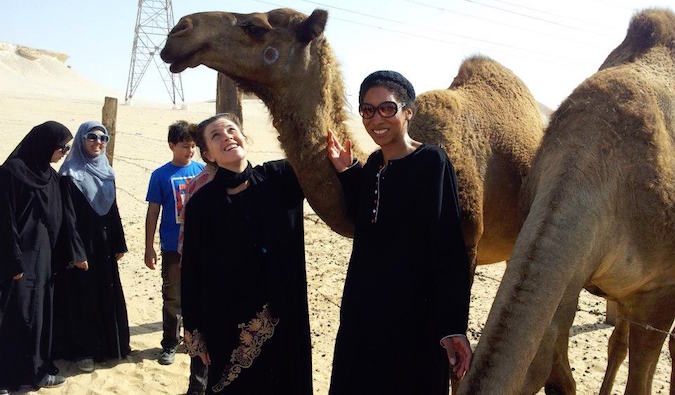
Woman teaching in Saudi Arabia at a camel farm wearing Middle Eastern clothes

How does one get a job teaching if you aren’t in Saudi Arabia?
The best way to job-hunt here is by networking. If you don’t have any contacts, the next best option is to use websites such as Dave’s ESL Cafe and Serious Teachers. They were very helpful when I was job hunting. Going through a recruiter is also an option since many institutions here seem to be leaning more towards the third-party method instead of the traditional direct-hire method. Once you’ve been offered a contract, you’ll have to return to your homeland in order to start the application process that I mentioned earlier.

I tend to prefer schools that are well established as opposed to start-ups. If I’m unfamiliar with the universities that I’m interested in working at, I’ll do a Google search of teachers’ reviews of those institutions to learn their experiences and opinions. The three things that matter most to me when considering a university offer are:

  1. The length of contract – I prefer one- instead of two-year contracts because if it isn’t working for me, having a commitment for more than a year will be very painful.
  2. The promptness in paying salary – There have been many horror stories of institutions here not paying teachers on time or in full. So I want to ensure that isn’t an issue at the university where I elect to work.
  3. The standard of accommodation – I like to see photos of the compound or hotel where I’ll be residing. I’ve been lucky to have decent housing, but other teachers haven’t been as fortunate. Some live in decrepit spaces and have to share rooms.

Why do you think teaching is a good option for people looking to live abroad?
I believe that teaching overseas is an excellent way for people to immerse themselves in a new culture, plus hone their teaching and communication skills. Since there are numerous teaching positions around the globe, this is a wonderful employment opportunity for people who enjoy traveling and want to stay in a particular country for several months or years. Most teaching contracts offer generous vacation/leave days during the school year and summer break, which is ideal for teachers to indulge their wanderlust.

For someone looking to live and work in Saudi Arabia (in general, not specific to teaching), what are three pieces of advice you would give them?

  1. Bring as much Saudi currency (riyals) as possible with you to tide you over until you receive your first paycheck. Depending upon your arrival date and the employer’s policy regarding payment, an expat might have to wait a couple of months before receiving his/her first wages.
  2. Expats need to understand that contracts here aren’t as binding as they are back in the West. Sometimes benefits that are initially promised don’t materialize. For example, relocation allowances and bonuses.
  3. A positive attitude and sense of humor are essential for enjoying your experiences in Saudi Arabia.

If you want to read more about life in Saudi Arabia, check out Ceil’s travel blog.

Become the Next Success Story

One of my favorite parts about this job is hearing people’s travel stories. They inspire me, but more importantly, they also inspire you. I travel a certain way, but there are many ways to fund your trips and travel the world. I hope these stories show you that there is more than one way to travel and that it is within your grasp to reach your travel goals. Here are more examples of people who gave up living a typical life to explore the world:

We all come from different places, but we all have one thing in common: we all want to travel more.

Want more information on teaching?
How to Teach English Overseas I wrote an in-depth, 186-page guide to teaching overseas. This book will help show you those tricks and eliminate your stress, fear, and anxiety about finding a job. It will save you weeks of online research and give you the most accurate and updated information you need. It is written by teachers for teachers, featuring dozens of interviews with teachers from around the world sharing their experiences, as well as job recruiters to help you cinch your interview and get hired. Click here to learn more!

Inside The Factory: How a Boeing is Built

Updated: 07/17/18 | July 17th, 2018

Though I’m terrified of flying, the experience also thrills me. There you are, cruising in a metal tube at 37,000 feet while watching a movie, texting your friends, and — if you’re a travel hacker (and you should be) — enjoying fine food and liquor.

I can never get over the fact that planes, which can weigh up to 485 tons and contain, like, up to 6 million parts, can even get into the air — and stay there! Yes, I know all about aerodynamics (“it’s just lift!”), but it’s still so damn cool!

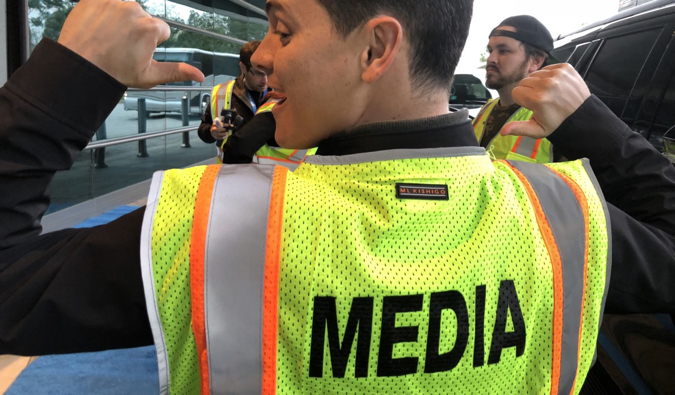
So when I was invited to my first aviation press event at the end of March, I was beyond excited. I don’t get a lot of media invites since I don’t report on breaking industry news, but when I was asked if I wanted to tour the Boeing facility in Charleston, South Carolina, as part of Singapore Airlines’ 787-10 launch, I immediately said yes.

Watch a plane get built? Fly a flight simulator? Yes. Yes! YES!

At the Boeing plant, we were treated to tours of the Dreamliner assembly process. We went to the production facilities where, after a long and boring press conference on flight specs and fuel savings, we finally got to go down to the factory floor to see the good stuff. Walking on the floor and seeing these metal behemoths really gave me a sense of wonder and awe.

Like, “Damn, that’s a plane!”

Before this, I had only a rough idea of how planes are built, how engines work, and the complicated manufacturing process that’s required to put it all together. I mean, I’ve watched a few documentaries on flying. But unlike most of the other aviation press there, I couldn’t tell one plane or engine from another, discuss avionics or contracts between suppliers, or who designs what seat fabric.

So I was excited to learn about the factory assembly process and how a plane becomes a plane.

At the plant, there are three areas to the plant: rear body, midbody, and final assembly.

The rear body process is where the tail of the plane is made, and the Charleston plant makes all the tail sections for all the 787 Dreamliners (minus the fins). One thing I did know before this trip was that they use carbon fibers, which have several advantages over traditional composite metal, including high tensile strength, low weight, high chemical resistance, high-temperature tolerance, and low thermal expansion. Basically, they are stronger and lighter than traditional metal. They take a tacky composite carbon fiber tape and spin it together around a shell to make the tail sections, called Section 47, where the passengers are (Why Section 47? No one knows. There aren’t actually 47 sections to the plane. That’s just what they call it!), and Section 48, which is the very end of the plane, where the fins will be attached. It’s kind of cool to think about. When you fly a 787, you’re basically flying a plane that mostly started as a thread. Science, man, science!

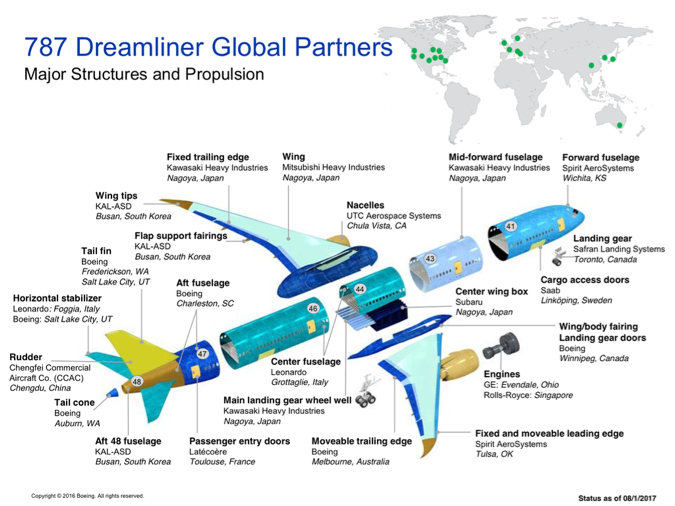
All the other parts of the plan are built elsewhere around the world and then flown in on this weird-looking plane called the Dreamlifter: part of the front of the body (called the forward fuselage) is built in Wichita, Kansas; another part of the forward fuselage is built in Kawasaki, Japan; the center fuselage is built in Alenia, Italy; and the wings are built in Japan, Oklahoma, and Australia. Here’s an image Boeing gave me to give ya an idea of how global Dreamliner production is:

a graphic of how a plane works

During the midbody process, some of the electrical systems and ducts are added to the plane. They also “snap” together the fuselage sections that are flown in from around the world. Basically, there’s a thin lip in each of the sections, and a machine use fasteners to put them together, which is both exciting and considerably unnerving to see because you realize just how amazing it is that it takes so few parts and how few things are holding this places together. For example, they have just seven rivets that snap the wing to the plane (later, during final assembly) and hold all that weight. Nope, they aren’t welded together. It’s like an oversized Lego set!”

Watching them put the fuselage together this was the most interesting part of the plant didn’t allow photographs, which was a shame. But, since Sam Chui is a badass aviation blogger, they gave him access to film it, so watch this video:

From there, it’s on to final assembly where, over the course of seven stations, all the sections are lined up and put together using a “just in time” factory model. It’s here the wings and engines get put on, the interiors are added, the plane is turned on for the first time, systems are tested, and the finished aircraft is driven out of the hangar for test flights.

This final assembly takes approximately 83 days.

Kinda crazy, huh? You never realize just how much goes into a plane. It’s quite impressive that such a coordinated, global operation can produce such a finely tuned piece of machinery that can essentially fly forever with proper maintenance.

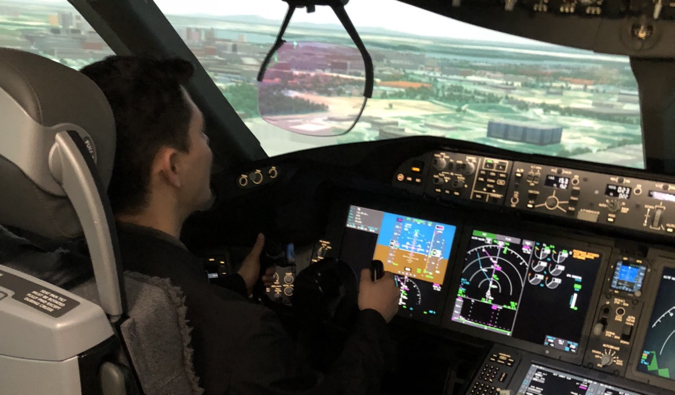
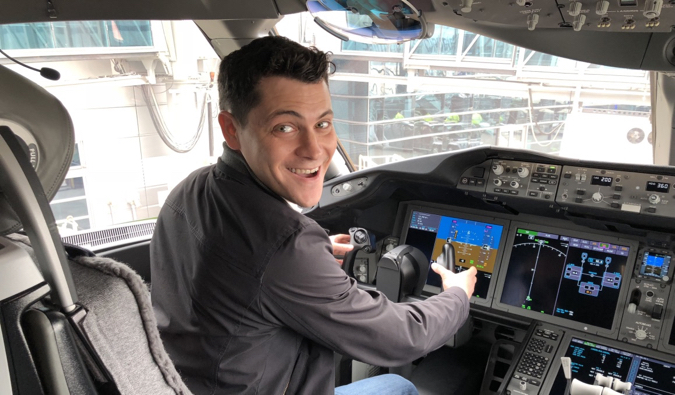
Then, after a 24 hour flight to Singapore, we were taken to where Singapore Airlines trains its crew in safety and service and, while I found it pretty interesting, the real fun was flying a 737 flight simulator back at the Boeing office in town. These multimillion-dollar machines simulate the full motion of a flight. After a brief demonstration, each journalist was allowed a few minutes to “fly.” I giddily sat down in the chair as the pilot let me cruise around for a bit.

I was like a kid in a candy store.

“Can I bank? Can I land? Let’s do a takeoff!” I exclaimed.

“If we have time, we can go again and I’ll release the autopilot,” the instructor coolly said after my thirty seconds was up.

Luckily, we did have time.

“Ready?” he asked as I stepped back into the seat.

“YES!”

We started in midair, he released the controls, and I flew around a simulation of Singapore for a bit.

“Not bad,” he said. “Ready to land?”

“Sure, but can we do a go-around?”

Taking the controls, I aborted my landing, turned up, and banked left so we could do one more circuit. Just as I was enjoying the bliss of the computer-generated scenery, I crashed!

I had forgotten to look at the screen and see my altitude, so while I thought I was just going left, I was actually banking down — and boom! We died.

I guess I won’t be a pilot anytime soon. There is a surprisingly large number of controls and numbers you need to pay attention to on a modern aircraft, especially when you release the autopilot!

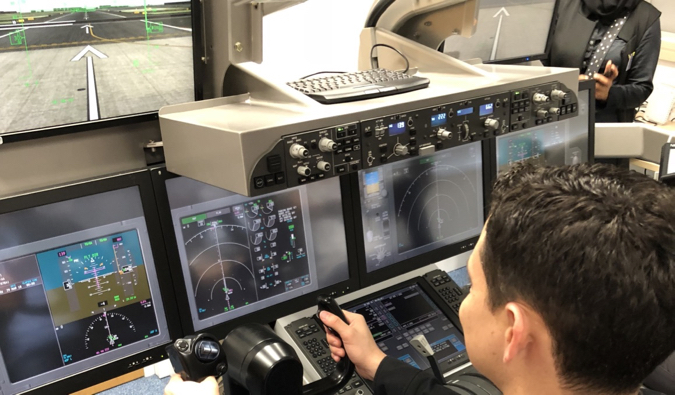
Afterward, we got to go into another simulator that allowed pilots to practice takeoffs. It wasn’t a full-motion simulator, but it was designed to get you to take off and feel the movement of the controls.

This time, I successfully, took off and no one died. So you’re safe with me!

***

For a long time, I’ve been terrified of flying — and watching a plane get built and learning about aviation did nothing to assuage that fear. I’m still unnerved by every little bump (the flight I am currently writing this on has been nothing but bumps!), but I have a new appreciation for how complex and strong planes are, how many safety systems are built into them, how hard it is to fly one, and just how damn amazing it is we live in the age of jet travel!

Editor’s Note: I was a media guest of Singapore Airlines and Boeing for this event. They covered all my expenses during these press days.

2019年7月25日星期四

Grape, Olive, Pig: Inside Spain’s Food Culture with Matt Goulding

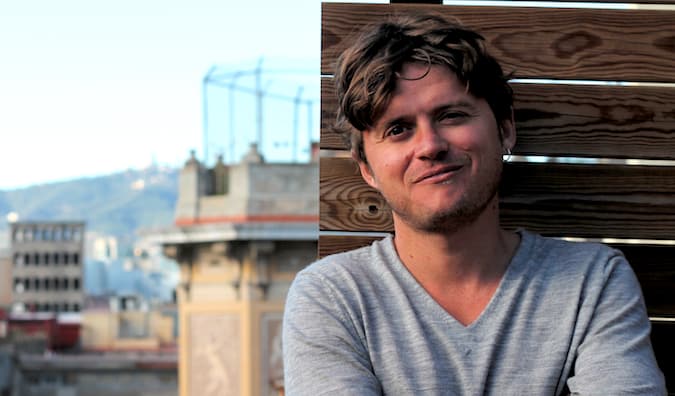
Matt Goulding, author of Grape, Olive, Pig
Many moons ago, a friend emailed me and said “Hey, my buddy is starting a website. Can you give him some advice?” I hate those emails, but as a favor to my friend, I said yes. That guy, Nathan Thornburgh, turned out to be really cool, and we became good friends. But this article isn’t about Nathan; it’s about his partner, Matt Goulding. Together they started one of my favorite travel websites, Roads and Kingdoms. It’s one of the few websites I read daily. Last year, they partnered with Anthony Bourdain (they introduced me to him at an event last year and I babbled incoherently for a bit — it was highly embarrassing), and as part of their partnership, they created a book, Rice, Noodle, Fish, about Japan. Now they have a new book called Grape, Olive, Pig about food in Spain.

In a long overdue interview, I sat down and talked to Matt about the intersection between food and travel, and where to find the best food in Spain (disclaimer: I did this for selfish reasons, as I wanted to know for an upcoming trip I’m taking!)

Nomadic Matt: How did you become a traveling food writer?
Matt G.: Wanderlust was emblazoned in my DNA from the onset. My mom was a travel agent, and my parents would take me and my three older brothers on some pretty staggering trips in our younger years: New Zealand, Fiji, Barbados, the Yucatán. Later, I thought cooking was going to be my ticket to see the world, so I studied and worked in the kitchen and wrote short stories on the side. I cooked wherever they’d have me: at an oyster house in North Carolina, fancy cafés in Los Angeles, on a fishing boat in Patagonia. But I saw pretty quickly that cooking required more patience and discipline than I had. I was writing bad fiction and cooking average food, which felt doubly frustrating. So I took off the toque and put away tortured prose and started to write about what I knew most: food and travel. It just so happens that the two go hand and hand, and that food became both the bridge and decoder ring for understanding the world at large.

I found out what a million writers before me already discovered: that writing about something I knew so intimately made a huge difference in the quality of my prose and the depth of my reporting. I started publishing longer, food-focused travel pieces in magazines and eventually landed a job as the food editor at Men’s Health.

Then something new came along when I met Nathan Thornburgh. We connected in Mexico City at a sprawling temple of smoked meat and pulque on the outskirts of the DF [Mexico City] and hatched a plan to leave behind our cushy jobs and try something new. He wanted more food and culture in his life as a writer and editor; I wanted more politics and foreign correspondence.

We toiled in relative obscurity for the first year or two, but it turned out that one of our early readers was Anthony Bourdain. I’m still not entirely sure how he found us or what he saw in R&K, but when we approached him in 2013 with the idea of a book series dedicated to the great food cultures of the world, he gave us his full support. Eventually, that support grew into a formal partnership, which, to put it lightly, changed the trajectory of Roads & Kingdoms substantially.

Your last book was about Japan. Why did you pick Spain this time?
I was passing through Barcelona six years ago, met a lovely Catalan girl in a bar, and never left. (At least, that’s the Cliff Notes version.) Since then, I’ve spent a lot of time eating my way across the country, falling deeper and deeper in love with Spain’s food culture. This book follows the same format and design as Rice, Noodle, Fish, but whereas the Japan book was about a newcomer experiencing the awesome power of Japanese food culture for the first time, Spain is more intimate, personal book, told from the perspective of someone with one foot inside and the other foot outside of the country.

What do you want people to get out of this book?
At the very minimum, I want to arouse in the reader an uncontrollable desire to travel to Spain. If someone reads the book and buys a plane ticket, then I am happy. But the easiest part of a travel writer’s job is to evoke wanderlust, just as the easiest part of a food writer’s job is to stir hunger. The more challenging part is to write a book that goes beyond food or travel — to give the reader a deeper understanding of Spain, its people, its ebbs and flows. I’m less interested in telling you where to go and what to eat than I am in giving you the tools and the context to understand what you see once you get here and begin to make your own discoveries.

That means not just telling you where to eat a good cocido, Madrid’s famous garbanzo-and-meat stew, but explaining where it comes from and what it says about Spanish history and culture. I dedicate 8,000 words in the book to three sisters who hunt gooseneck barnacles along the coast of Galicia — not because you need to stop everything you’re doing and travel to northwest Spain to eat barnacles but because theirs is a beautiful story that says a lot about Galicia and Spain in general. In the end, food is simply the lens through which I try to examine the DNA of this extraordinary country.
Matt Goulding, author of Grape, Olive, Pig

What makes Spanish cuisine so special?
Spanish cuisine has a certain split personality that I find deeply attractive: On one hand, you have modernist (what some people call “molecular” cuisine, to the annoyance of every Spanish chef I know), that highly technical, whimsical, sophisticated style of cooking popularized at El Bulli in the 1990s and 2000s and carried on to this day by many ambitious, deeply talented practitioners. It was this type of cooking that made Spain a serious food destination over the past decade. But really, it represents the tiniest fraction of Spain’s culinary greatness. At the heart of Spanish cuisine is an infallible formula: great ingredients + solid technique = good eating. The best Spanish food — a melting wedge of tortilla, a rosy slice of acorn-fed ham, a plate of sweet red shrimp bathed in garlic oil — is at its core very simple. But simple doesn’t mean easy. You have to take the time to buy the right ingredients and to treat them properly, and most Spanish cooks excel in both categories.

Is there really Spanish food, or a diverse set of food we really call Spanish food?
Spanish cuisine, like all great cuisines, is highly regionalized, but the homogenizing forces of modernity in general, and tourism specifically, threaten this diversity. These days you’ll find paella and sangria and patatas bravas in every corner of the country. But that just means as a traveler you need to be aware of where you are and make your food choices accordingly. Up in Galicia? Eat octopus and shellfish and gooseneck barnacles and wash it down with a crisp Albariño. When in Andaulsia, eat jamón and fried little fish and drink sherry. In Basque country, feast on thick-cut steaks and whole-grilled fish and a world of pintxos. The people who find Spanish food disappointing are the ones who order paella in Madrid and sangria in San Sebastián. Of course, there is a common language that unifies Spain’s cooking — high-quality olive oil, cured pork, an abiding love of seafood — but it expresses itself in very different ways as you move around the country.

I always tell people who come to Spain to first and foremost know where you are and eat and drink accordingly. Paella, for example, has a historical connection to Valencia and is at its very best in the region, but elsewhere, it’s often used to make a quick buck from tourists looking for a “typical” Spanish experience. (The worst-kept secret in Spain is that a huge percentage of paella is made industrially and sent out frozen across the country.) Instead, spend a bit of time learning about the great regional specialties of the country and seek them out aggressively. Grape, Olive, Pig tries to give the reader the type of detailed understanding of the Spanish culinary tapestry, so that he or she is equipped to eat as well as possible in every corner of the country. But even an hour or two of reading online will make your food experience exponentially better.

Why is Spain such a foodie culture? Food is life in Spain. How did that come about?
Spain thrives on the same foundational principles of all the great Mediterranean cuisines, where the forces of geography, climate, and history conspired to create not just a group of national recipes but a pervasive food culture that informs all aspects life on the Iberian Peninsula. There’s a very important word in Spanish that I use to explain to visitors the beauty of Spanish food culture: sobremesa, which literally means “on top of the table” but actually refers to the period after a meal that Spaniards use to linger at the table. Long after the last courses have been cleared, after the coffee has come and gone, Spaniards remain firmly planted at the table, talking, arguing, laughing, enjoying an extra hour or two together. No waiter is hovering with the bill; people aren’t on their phones messaging their other friends. There may be a digestivo or a round of gin and tonics, but no one is there to get drunk. They’re there to be with each other: to debate policy, air out grievances, celebrate a loved one, and to generally bask in the warm glow of each other’s company. In Spain, food is the means, not the end.

Matt Goulding, author of Grape, Olive, Pig

Do you see the Spanish food scene changing into a more “quick eats” American style or is it going to remain slow forever?
Spain is not immune to international food trends, including ones imported from the States. Burger joints have been sprouting like fungus across the country for the past five years, and there appears to be no end in sight. (Though I’m still waiting for a single great burger to break out from the sea of mediocrity.) Tacos are the new thing in the bigger cities, and there is no doubt some other amorphous food fad waiting in the wings (bao?). But Spanish food has roots deep enough to withstand the existential threats that might topple a weaker food culture. When the burger lust dies out and the taco fervor fades away, there will still be a bar down the street serving tortilla and croquetas.

If someone was heading to Spain soon, where should they go eat?
You’ll find amazing food across the country, but if eating well is your primary mission, go north. I’d rent a car and work my way across the Atlantic Coast. Start in the Basque Country, hitting up the pintxos bars in San Sebastián and Bilbao and asadores (grill restaurants) in coastal and mountain villages. Stop in Cantabria for some of the world’s finest anchovies, then push into Asturias to feast at the region’s heroic cider houses. End the adventure on the coast of Galicia, the heart of Spain’s seafood culture, where the Atlantic’s treasures require little more than salt and a splash of olive oil.

What region of Spain has the most underrated food?
Asturias isn’t a region on most people’s radars, but the food is extraordinary. You have a deep culture of mar y montaña (surf and turf), thanks to the dramatic combination of rugged coastline and soaring peaks. You can be in a cider house in a mountain town eating cave-aged cheeses and fabada (a stew of fat white beans, chorizo, and blood sausage — the king of the Asturian kitchen) for lunch and in a seafood restaurant on the coast feasting on spider crabs and sea urchin before the sun sets. To write the Asturias chapter of the book, I spent a week with the chef José Andrés, born in a coal mining town in Asturias, who went on to create one of the world’s greatest restaurant empires. José is a force of nature, and he unlocked the magic of that region in a way that keeps me coming back year after year.

OK, final questions. We’re going to do a lightning round:

  • #1 restaurant people need to go visit?
    Extebarri in the mountains of Basque country. Bittor Arguinzoniz is a grill god, and everything that comes out of his kitchen will haunt you for years to come.
  • #1 thing visitors should avoid in Spain?
    Eating or drinking anything on La Rambla in Barcelona.
  • Madrid or Barcelona?
    Barcelona, but I am far from objective. If I said Madrid, a few family members might disown me.
  • La Tomatina: Drunk idiot fest or fun cultural experience?
    A little bit of both, but with each passing year, it slouches sadly towards the former.

You can find more about Matt at his website, Roads and Kingdoms, or just get the book Grape, Olive, Pig (which was one of my favorites of 2016) and learn more about Spain!

WIN A COPY:
I’m giving away TWO signed copies of the book. It’s signed by Matt AND Bourdain! How do you win? Just leave a comment sharing your favorite food experience on the road and we’ll randomly select a winner on Sunday!

Take a Tour Inside the Restricted Passages of Versailles

We know the Palace of Versailles as the iconic French castle — immortalized in pop culture as Marie Antoinette's gilded stomping ground for lavish parties, fashion debuts and other debaucheries.

The landmark, which began as a smaller hunting lodge, saw the reign of four kings, which spanned more than a century. While French historians and locals smirk at the sensationalized rumors behind Château du Versailles and its royal occupants, the site is not without its secrets and controversies.

The kings' mistresses (Louis XIII – Louis XV) are portrayed as outcasts in modern films like Sophia Coppola's, Marie Antoinette. In reality, they had their own luxury apartment in the palace, fit with a private stairway the king could discreetly access.

Marie Antoinette would often retreat to Petit Trianon, her private home a few minutes from the main palace. There, she would lounge in a pastel blue salon with sliding walls that could be lowered for sunlight, and raised to prevent her fans or enemies from snooping.

We were allowed to explore the prohibited areas of Versailles, along with historian and research director, Mathieu Da Vinha. Da Vinha gave us the scoop on the more confidential, dark details of this historic gem.

10 Secret Rooms Inside Famous Landmarks

There's something inherently fascinating about hidden rooms—doubly so when they're hidden inside landmarks visited by thousands of people every day. Take Mount Rushmore, for example. The attraction, visited by more than three million people every year, boasts a secret room behind Abraham Lincoln's head. Gustave Eiffel, the designer of Paris's famous tower, created an apartment at the very top of the landmark.

And that's just the beginning. Read on for the coolest secret spaces within monuments.