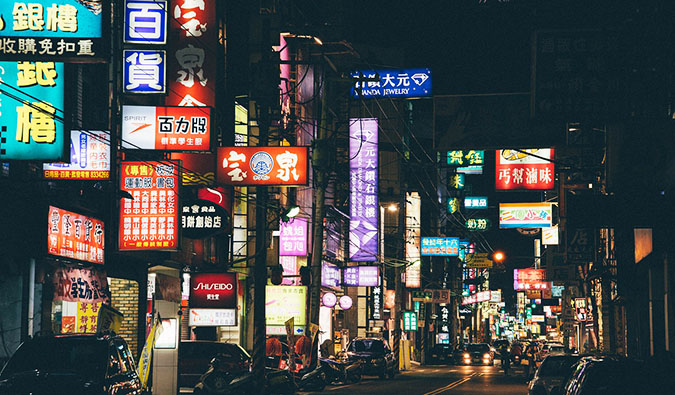
China is a fascinating and rapidly changing country. Old customs and habits hang on as modern skyscrapers go up every second, the country becomes more of a global powerhouse, and people from around the world move there. Last year, my friend Scott Young, best known as a learning hacker who learned MIT’s entire computer science program in one year, said to me, “I’m going to travel the world for a year and learn languages.” I was thrilled with the idea! Today, he shares what he learned while living in China for three months — and how the media portrays countries is often very wrong.
Recently my friend Vat and I finished a three-month stay in China. The plan was, with minimal preparation, to arrive in China and speak as little English as possible, in order to learn Mandarin Chinese.
We shot a mini-documentary about the experience here:
The trip transformed my perception of China, from the unfair image it sometimes has in the West. In this article, I want to share the biggest lessons I learned about China, life, and travel from that experience.
Once you’re interested in the local culture, people open up more
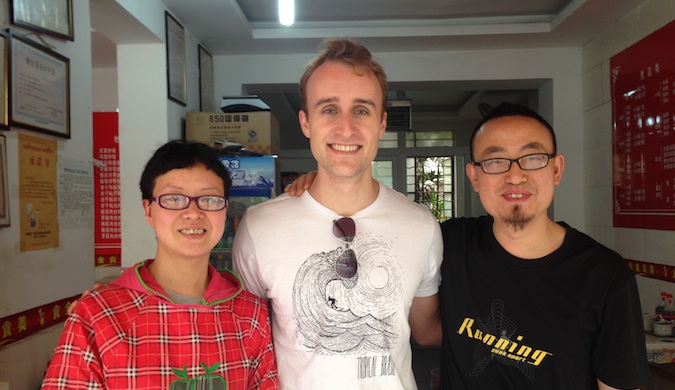
Originally Vat and I hadn’t planned on going to China at all. We were warned that China might not be the best place to meet friends, because people were unfriendly to Westerners. Instead, we were told to go to Taiwan.
Some visa complications made it impossible to stay the full three months in Taiwan, so we switched to a three-month stay in China at the last minute.
From the first day I arrived in Kunming, I had my perceptions flipped. Far from being insular and hostile to foreigners, people came up to talk to me the first time I went out on the street. It happened to be all in Chinese, so I didn’t understand much, but it did cause me to rethink my assumptions.
As my Chinese improved, this continued throughout my stay, from my landlord introducing me to people who could help us learn Chinese, to getting to know the couple who ran a noodle restaurant nearby.
If you’re interested in other people, their culture, and their language, they’ll be friendly to you. China isn’t an exception.
Don’t judge a country by its media coverage

Hating China is a popular pastime of Western media. Some of the accusations are at least partially true: parts of China are quite polluted, political freedom isn’t the same as in the West, the Internet is firewalled, and some parts of China are quite poor.
I saw a very different kind of China. Kunming, where I lived for most of my stay, wasn’t polluted. I had frank conversations with Chinese people about communism, Tibet, and democracy. Some sites are blocked, but China has its own versions of YouTube, Netflix, eBay, and Google.
China is still developing, but the economic growth means that most people have seen their living standards improve rapidly in the last 20 years. People I spoke with were generally optimistic about the future.
Everything is food here
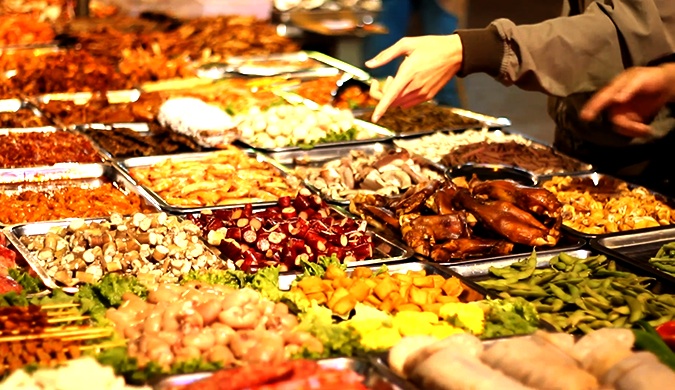
The relationship with food in China is fascinating, and I was amazed at the diversity of ingredients and flavors.
Western countries tend to simplify Chinese food down to chow mein, fried rice, and General Tso’s chicken. That’s a bit like saying Western cuisine is just burgers and sandwiches.
Chinese food in China, on the other hand, is some of the most varied food on the planet. Not only does regional diversity mean food can change completely from province to province, but nearly every imaginable ingredient finds its way into some kind of Chinese dish. Chicken, pork, beef, and vegetarian dishes are all options, of course, but where else can you eat fried insects, try stewed frog, or shop at a Walmart selling live turtles?
Food is also an avenue for connection. In the West, each individual has his or her own plate, separate from others. In China, each person has a bowl of rice and eats directly from shared plates in the center. While this style of eating makes it hard to dine individually in some restaurants, it creates a communal feeling, making food more than just nutrition.
Chinese is both incredibly interesting and extremely difficult
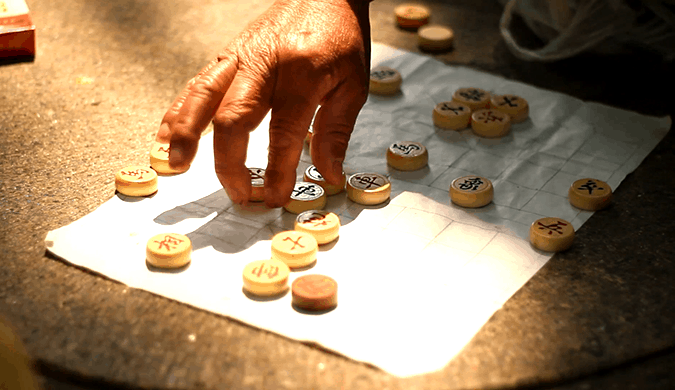
I won’t lie to you, learning Mandarin Chinese was a struggle. Thousands of characters, with many almost exactly alike. For example, try and spot the difference between these two characters:
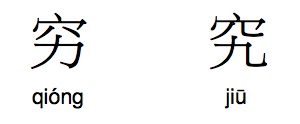
Chinese is a tonal language, which means that the intonation doesn’t just change emphasis but also what words mean. My friend went to a restaurant and attempted to order “shu? ji?o” (boiled dumplings) but instead ordered “shuì jiào” (go to sleep).
Finally, few English words borrowed into the language survive unscathed, often sounding completely different from their original. McDonald’s, which is available throughout China, adopts the Chinese name “Mài dàng láo.”
While the Chinese language, like China itself, may seem daunting, it hides one of the most interesting linguistic systems on the planet. Chinese words have a tendency to be built up out of simpler pieces, like building a sentence out of Lego:
- panda = “bear cat” (xióngm?o)
- chameleon = “color change dragon” (biànsèlóng)
- pumpkin = “south melon” (nángu?)
- potato = “soil bean” (t?dòu)
- university = “big learn” (dàxué)
- movie = “electric shadow” (diàny?ng)
With great difficulties also come great rewards. Learning Chinese may have been mind-bending at times, but it also allowed Vat and me to interact with completely different people in China than an English-only perspective would allow.
Near the end of our stay, I conversed over tea with a tattooed Buddhist. Together we talked about Tibet, religion, and cultural differences. That conversation would never have happened had I refused to learn any Chinese.
You can count to 10 with one hand
The language differences extend even to simple gestures. The Chinese, for example, have a system of gestures for counting all the way up to 10 with just one hand.
If you’ve only been counting to five with one hand, you’ve been missing out. The Chinese have a system for counting 6, 7, 8, 9, and 10 all with just one hand. Months after leaving China, I caught myself using this method to count things while I held a book with the other hand.
One to five are what you’d expect, but see this video for six to ten:
The first time I saw this, I was in a store and the shopkeeper was telling me the price was 10 yuan, indicating it with forefinger and middle fingers crossed. I saw this several times before I realized they were telling me the price and not just holding out hopes that I’d come back to buy more.
China has the best places you’ve never heard of
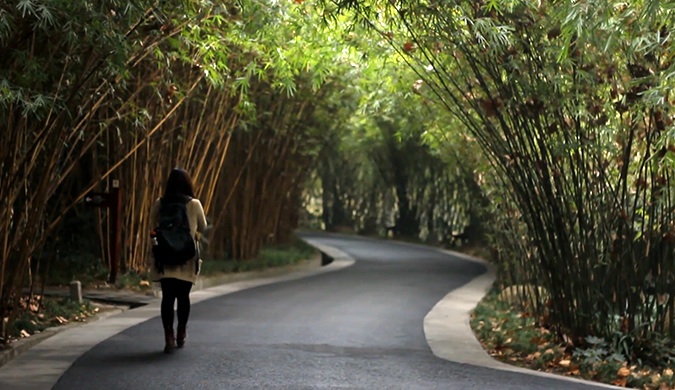
Ask people which places they know of in China and most people will raise their hand for Shanghai and Beijing. The more geographically inclined might get Sichuan, Guangdong, or Xi’an. But what about the tropical island of Hainan? The impressive winter festivities in Harbin? The bamboo forests in Chengdu?
It’s arguable that China has the same linguistic and cultural diversity as the entirety of Europe, except far fewer tourists. While — until the last few decades — China’s closed borders made travel in the country a daunting experience, China is full of great places you’ve probably never thought to explore.
I had never heard of Kunming, a “small” city of around seven million in the southwestern province of Yunnan, before researching places to live. It ended up being one of my favorite places I’ve ever lived in, with weather a perpetual spring, mountain temples, and lunch for under a dollar.
My advice: don’t settle just on Beijing or Shanghai as places to visit. Doing a little research online can turn up dozens of places that will offer the Chinese experience for less money and fewer tourists.
Everything you say is right and wrong all at once

I imagine that my American friends from Washington state would probably scoff at the generalization that they’re the same as everyone in Texas (and vice versa). Seattle isn’t the same as Houston. There are enormous variations in culture, food, and even language across the United States.
Now imagine that instead of having a history of a few hundred years as a nation, you had a few thousand. Instead of one or two mutually unintelligible languages, you had dozens, possibly hundreds. Now quadruple the population and you have modern China.
The biggest lesson to learn about China is just how big it is. China is hard to describe because few generalizations are very accurate. Depending on where you go, China will be impoverished or opulent, polluted or pristine, densely packed or nearly isolated. As such, everything I experienced and have written about will be true of some people who go to visit China and false for others.
China began as the backup country when visa complications came up. It ended as a place I can’t wait to go back to.
I can’t sell China as being a perfect experience, free of worries. English is sparse. You need to watch out for pickpockets and scams in the bigger cities. Pollution can be bad. The Internet can be frustrating. But if you want an adventure and a chance to change your mind about the world’s biggest, oldest, and possibly soon-to-be the most powerful nation on Earth, I highly recommend going yourself.
Scott Young writes about learning, travel and productivity at his blog, ScottHYoung.com. He tries to take complex things and make forming habits and learning easy and simple. You can click here to sign up to get a free copy of his ebook detailing strategies to learn anything faster.


